
Journal of Nutrition & Food Sciences
Open Access
ISSN: 2155-9600
ISSN: 2155-9600
Research Article - (2021)Volume 11, Issue 7
Poor people residing in the coastal areas result to artisanal fishing for food security and also to supplement their livelihood activities. This study examines the impact of restricted number of daily fish catch policy of South Africa on sustainable livelihood systems of the artisanal fishermen/women in the rural coastal area of Port Elizabeth. Snowball sampling method was used to identify 60 artisanal fishers and questionnaire was used to obtain first hand data on their fishing activity as well as how legislation, local governance and access right has influenced their activities. Expectations from government and private sector ideas were also explored towards the development of fisheries sector for the benefits of all stakeholders. Descriptive statistics and stakeholder analysis methods were used to analyse the data collected from the respondents.
Tropical coastal and marine systems are highly productive and biodiverse, home to around a third of all fish species described (Moberg and Rönnbäck, 2003). Human populations in coastal areas are increasing as a result of migration, development and globalization (Cinner et al. 2011; Curan et al. 2002). Coastal and marine environments across the world are being severely degraded by amosaic of anthropogenic effects ranging from overexploitation eutrophication and pollution to habitat destruction and climate change (UN, 2011).
In developing-countries, fisheries include a substantial small-scale or artisanal sector employs over 90% of the world’s fisherfolk (World Bank/FAO/WorldFish 2010). Artisanal fishing are the small-scale fishing practices that are performed by the fishing households that do not possess enough capital to own fisheries and who fish with less technological advanced tools for survival (Garcia, 2009). The most prominent example of human dependence on coastal and marine ecosystems is that of subsistence fishing. Dependence on subsistence fishing for an efficient and high quality source of protein and income is still high, especially in Africa, Asia and Latin America (Bell et al. 2009). Most traditional fishers reside in coastal areas and use cheap, hand-made fishing tools they can afford, such as rod and tackle, fishing arrows and harpoons, cast nets, and small traditional fishing boats (Garcia, 2009).They fish for household consumption and to sell the remainder of their catches, but unlike recreational fishing, artisanal fishing is not identified to be for pleasure purposes. Artisanal fishers are efficient when they are achieving maximum output (fish catch) with minimum wasted effort or expense, such as the time spent fishing and the fishing equipment (Béné et al, 2007).
Artisanal fishing from different countries help improve the livelihoods and reduce poverty in many coastal families. This type of fishing provided the households of Chanyanya and the overall national citizens of Zambia with employment, income, money making skills and food security (Sonjiwe, 2015). The fishing proceeds got used in the housing provision, to buy fishing tools and household necessities and to pay for children’s school fees and for health care, which all leads to their improved standards of living and food security (Sonjiwe, 2015). Small scale fishing sector receives less recognition in terms of fish permits and business licensing from the governments of under-developed and of developing countries (Thamm, 2015).
Governance, capacity and political will have been ascribed as the main causes of the current poor condition of ecosystems of fisheries. Carbonetti et al. (2014) highlighted factors such as corruption, conflicts of interest, lack of political will, inadequate resources (physical,human and financial) available for fisheries management, poor enforcement, lack of stakeholder participation in decision-making by both men and women, and lack of a clear vision for the fishing sector are major issues. Ratner and Allison (2012) state that inefficient, poorly developed fish markets and state interference in the fishery sector are misguided and ineffective. More recent debates have revisited the theme of economic inefficiency, but are now focused on addressing the inadequate rights of property over common-pool or open-access resources, which result in diminished resource rents because of a combination of wasteful overcapacity and threats to productivity and sustainability from harvesting rates exceeding those commensurate with producing theoretical maximum economic yields (Cunningham et al., 2009; Leal, 2010). There have been calls for governance reform through reforming property rights within the fishing sector, rather than through the more generalised economic liberalisation and modernisation agenda of the 1980s, or the cross-sectoral, multiple-entry-point approaches of the livelihoods programmes of the 1990s and 2000s ( Ratner and Allison, 2012).
South African government has developed a framework of granting a limited number of fishing permits to small scale-fishers because the government has very little data about the available fish quantity of different species and about the catch per unit effort in the coastal areas of South Africa. This is said to grant limited number of small scale fishing permits in an effort to avoid over-exploitation of marine life (Isaacs & Hara, 2015). There is however no inclusinve forum where all stakeholders discussed this framework. The artisanal fishers on the ground are of different opinion about the quantity of available fishes. Small-scale fishers are also restricted to increase revenue by the constraint set by the South African government through the Small-scale fisher’s policy, which limits the number and species of fish catch each small-scale fisher can catch (Wild, 2016).
The purpose of this paper is to provide intrigues or rather lack of common understanding and satisfaction among stakeholders with the operation of the current fishing regulations of South Africa in the rural coastal areas as its affect their livelihood. It explores how different stakeholders view the agenda for the development of the small scale fishing section in South Africa. Specifically, it will determine the satisfaction levels of the local fishers over the fisheries sector governance and contribute to the evinsaged strategies towards economic development of marine resources by the stakeholders for the benefits of all.
To successfully interogate the purpose of this paper, we present here two theories that underpines this study:
Stakeholder theory is an organisational management and business ethics theory. Mitroff (1983) pioneered stakeholder theory in his book “Stakeholders of the Organizational Mind”. However, Freeman (1984) published an article and a book titled “Strategic Management: A Stakeholder Approach” that described stakeholder analysis in a manner that made him to be recognised as the father of stakeholder theory by most scholars (Fontaine et al. 2006).
Freeman (1984) identified stakeholders as the group of customers, employees, suppliers, political associations, environmentalists, and residents of local communities, media, financial institutions, government, and many more. He suggested that without the stakeholder’s support, a company will fail, opposing Friedman’s shareholder theory. According to the Friedman’s shareholder theory of capitalism, a company has an obligation to satisfy only its shareholders and nobody else by making more and more profits continuously. Freeman’s stakeholder theory further suggests that a company has to maintain transparency and cooperation with all its stakeholders in order to succeed, and not only to those that benefit from the company’s profits (Fontaine, et al. 2006).
Stakeholder analysis is the first step in the three steps of a stakeholder theory. The first step is to identify the stakeholders of the organisation, second step involves assessing how much power and influence each stakeholder has, the final step is to study the stakeholders like a book, in order to understand how to win each stakeholder’s support (Fontaine, et al. 2006).
In this paper, the concept of stakeholder analysis is responsible for identifying the stakeholders according to their powers and interests towards the fishing operations. Mackinson, et al. (2011) identifies stakeholders in the fishing sector to be the fishermen, fishermen’s representative organisations, fishing communities, private fisheries organizations, government representatives in the fishing sector and politicians.
Fisheries sector stakeholders are categorized into primary stakeholders, the most affected by the changes in the fishing sector such as climate change or changes in policy implementations. Secondary stakeholders, the persons or organisations indirectly affected by the fisheries sector’s actions. Tertiary stakeholders are least impacted by the fisheries sector changes. Key stakeholders are high powered with important influence and have high interests with high incentives towards their interests (Mackinson, et al. 2011). Turner et al. (2002) developed a process of identification, assessment of awareness, support, and influence, leading to strategies for communicating and assessing stakeholder satisfaction, and determining who is aware or ignorant and whether their attitude is supportive or opposing.
Optimal foraging means hunting or searching for food in the wild waters or land successfully without being exposed to the predators. When the forager invests more time and energy in food hunting, the foraging process rewards the forager with most energy per unit time or cost.
The optimal foraging theory was pioneered by Mac Athur and Pianka in the year 1966. Optimal foraging theory assists in forecasting how people or animals act while food hunting. The main aim of the optimal foraging theory is to indicate the action plan that will yield the optimal benefits for the forager and to clarify why foragers restrict themselves to limited variety of food. According to the authors, good tactics help foragers gain positive return in acquiring enough food or energy each time spent hunting, preparing and eating the target (Aswani, 1998).
Optimal foraging theory’ pioneers anticipated that a forager will have two strategies to choose from, whether to spend a long time and more energy hunting for extremely gainful food, or to hunt in less time and energy for less valuable food items. However environmental influences can deter the forager’s ability to maximize food per unit time. Beating the environmental constraints with their strong influence and maximising food per unit time is the best foraging strategy (Begossin et al, 2005).
Artisanal fishers search for fish in the wild waters, they do not practise fish farming or aquaculture. Artisanal fishers walk along the river banks in order to find the area that has enough targeted fish species, they do not own boats for deep sea fishing. As the optimal foraging Theory's prey choice model has forecasted foragers to ignore low profitability prey items when there are more profitable items. Artisanal fishers also catch and sell bait when the weather and water conditions do not allow for fishing and when the fish have mmigrated to other locations due to environmental constraints.
Optimal foraging theory’s legitimacy and boundaries are criticised by various authors. (Pierce & Ollason, 1987) give the most commanding critique of optimal foraging theory, that it might not be testable. The assumption that natural selection will maximise foraging strategies of foragers in outcome, such as food, safety and reproduction is not certain, instead foragers’ success is determined by bloodline and foraging location. They further state that the variables of optimal foraging theory such as the type of prey, the degree predators run into prey, nor even the prey location are unpredictable in quantity, whereas the theory gives the exact predictions about a predator’s optimal decision rule (Pierce & Ollason, 1987).
This study was conducted in Port Elizabeth which is the largest city in the Eastern Cape Province with a sea port that also plays an important role in South Africa. The study area is under the Nelson Mandela Bay Metropolitan Municipality and is one of the eight metropolitan municipalities in South Africa. Port Elizabeth’s borders are between the Cassie Mountain View in the north, Cape Recife in the south, Sundays River Mouth in the east, and Van Stadens River Mouth in the west. This city is known for its windy weather
The Nelson Mandela Bay Metropolitan Municipality had a total population of 1.26 million people, 18% of the overall Eastern Cape residents in year 2016. Where 653 000 (51.67%) were female residents and 610 000 (48.33%) were male residents. Most members of the population (432 000) 34.2% were the working class between 25 and 44 years of age. Children between 1 and 14 years of age were the second most age group with a total share of 25.0% (315 000), followed by the teenagers and youth (15-24 years) age category with 218 000 people. The age group that had the least number of people were the retired, citizens aged between 65 years and older with only 83 000 people (ECSECC, 2017).
Nelson Mandela Bay Metropolitan Municipality's population is made up of 63.23% African people (799 000), 12.81% White people (162 000), 22.97% Coloured people (290 000) and 0.98% Asian (12 400) people. 61.1% of the overall Nelson Mandela Bay Metropolitan Municipality households is made up of African Black people, 20.2% by coloured people households, 17.1% by white people households and the remaining 1.5% of the area’s population ranked by households comprised of Asian households in 2016 (ECSECC, 2017). Port Elizabeth is known as the friendly and windy city.This city’s weather is pleasant with average temperature of 17.4°C, it is warm in summer, cold in winter and it also becomes rainy even in winter (CLIMATE-DATA.ORG).
Snowball sampling technique was used to collect information from 60 artisanal fishers in the Swartkops Valley and Amsterdamhoek areas in Port Elizabeth. These two areas were chosen because both of them are located on estuary fed by two major river systems namely Swartkops River and Elands River 11 kilometre from Port Elizabeth and 1.6 km to Indian ocean. Snowball sampling became applicable because of the referral method where an artisanal fisher directs the fishing sites of other artisanal fishers they know.
Data were collected through the use of structured questionnaires which were administered to the artisanal fishers in the study area with the help of enumerators who were available to translate to the fisher men unable to communicate in English. The questionnaires covered variables about the socio-economic characteristic, livelihood activities, the level of involvement and inclusivity of decision making process in fisheries sector and ideas needed to move the sector foward for the benefits of all.
Descriptive statistics in form of charts and percentages were used to analyse the data on artisanal perception about national fishing legislation and policy, governance, indigenous and tenure rights and their impacts on their livelihoods. Section two presents the stakeholder matrixes highlighting the relationship of all the stakeolders and their expections in the fishing section. Section three is the presentation of the ideal expectation from the stakeholders on the development of the fishing sector and the evisaged planned strategies towards the local economic marine development.
The perception of artisanal fishers on the impact of regulations, governance and institutional arrangement on their livelihood activities are illustrated in Figures 1 to 8. Approximately 72% the respondents disagreed that South African fishing legislation has any positive impact on artisanal fishing business. Only 3.3% of the respondents are neutral about the impact of legislation towards artisanal fishing activity. However, 25% of the respondents agreed that the South African artisanal legislation is helping their artisanal fishing activities. This result showed that although the majority of the artisanal fishers do not like the legislation, a few of them had to support it. A study by Piazza (2017) states that South African legislations gave preferential treatment to large-scale and commercial fishing sector before democracy, which led to extreme resource scarcity in small-scale fisheries.
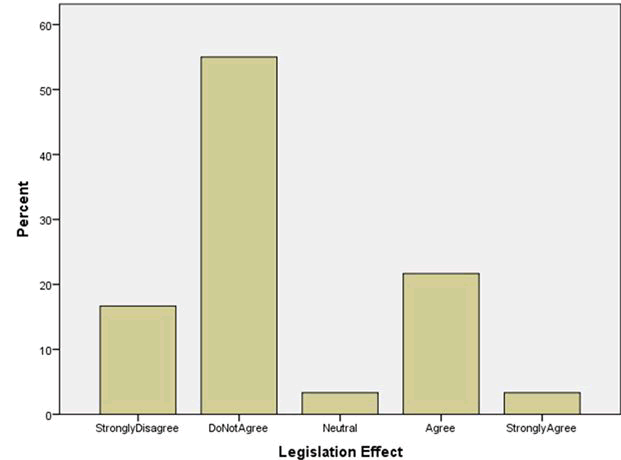
Figure 1: Perception on the effect of legislation on artisanal fishing
On the impact of tenure right on artisanal fishing, Figure 2 shows that 92% of the small scale fishers interviewed disagree to the fact that tenure rights are positive towards their livelihood activity. About 3.3% of the respondents are neutral to whether tenure rights are to the fishers’ benefit or not, whereas only 5% of the respondents agree that tenure rights were positive towards artisanal fisher’s business in the study area. South Africa failed to keep the small-scale fishers as the marine resource custodians, by failing to make out and include customary tenure systems into fisheries (Isaacs & Hara, 2015).
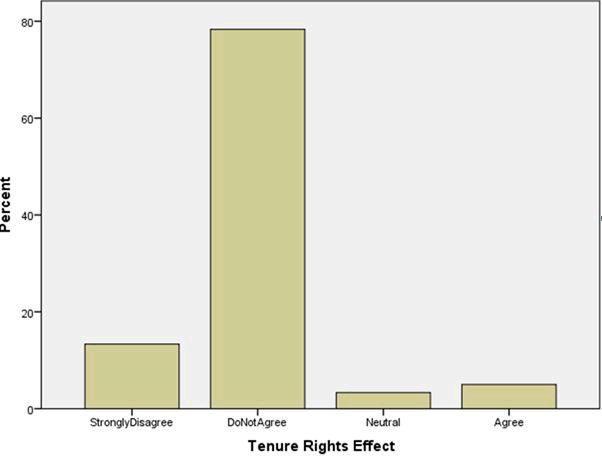
Figure 2: Tenure rights effect on artisanal fishing
The effect of customary rights on small scale fishing among the interviewed small scale fishers in South Africa is presented in figure 3. The result shows that approximately 68% of the respondents were not satisfied about the effect of customary rights on artisanal fishing. About 7% of the respondents are neutral to decide whether customary rights have negative or positive impact. However, 25% of the respondents agree that customary rights have had positive impact on their small scale fishing livelihood.
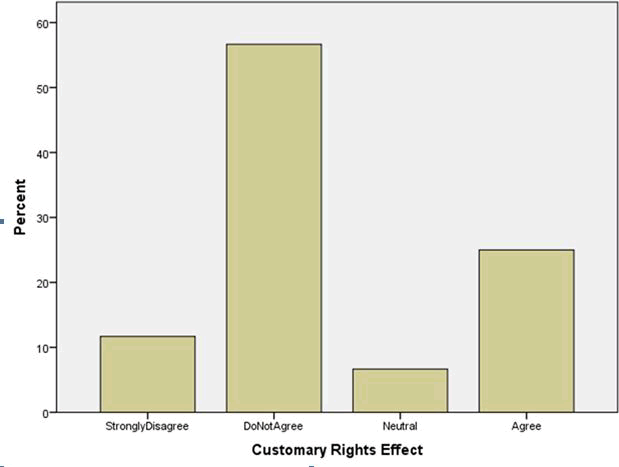
Figure 3: Customary rights effect on artisanal fishing
The impact of indigenous right and small scale fishing activity is presented in figure 4. The results showed that only 3% of the artisanal fishers believed their means of livelihood is protected and enhanced under indigenous right. However, 67% of the interviewed artisanal fishers disagree that indigenous rights protection has been positive towards their fishing livelihood.
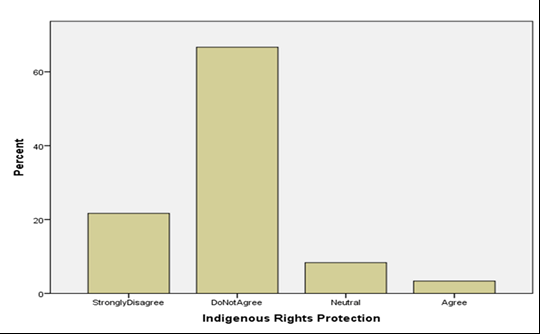
Figure 4: The effect of indigenous right on artisanal fishing
Sectoral inclusivity in decision making process is illustrated in Figure 5. The chart shows the ratio of involvement of the artisanal fishers in the fishing sector’s decision making. A large percentage, 88% of the interviewed fishers stated that they were excluded in important sector decision making. As usual, few (5%) artisanal fishers stated that they do not pay attention or participate in any fishing decision making process. However, only 6.7% of the respondents agree that artisanal fishers are indeed part of the fishing sector decision making. This situation is further corroborated in a study by Pretorius (2017) which states that that South African small-scale fishers have been excluded in the fishing sector decision making. However, Schultz (2016) suggests that the implementation of the small-scale fishing co-operatives will encourage small scale fishers’ involvement in the sector’s decision making.
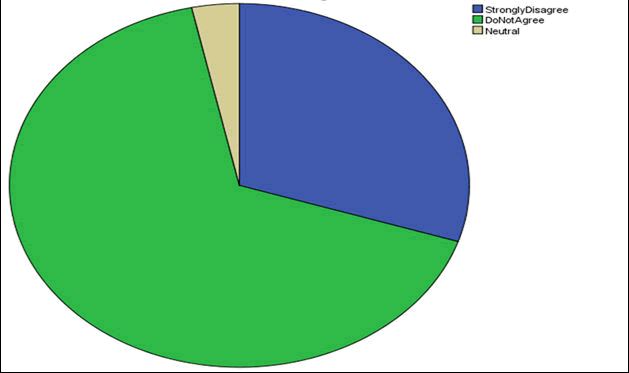
Figure 5: Artisanal fishers’ involvement in fishing sector’s decision making
Figure 6 illustrates the perception about women involvement in artisanal fishing livelihood activity. Approximately 82% of the respondents interviewed disagree to the fact that women should be involved in artisanal fishing. About 15% of the respondents believe that women should be involved in artisanal fishing in the area. Masifundise (2015) stated that women commonly participate in pre and post-harvest activities in the fisheries sector. This explains the reason only 13% of the respondents are women.
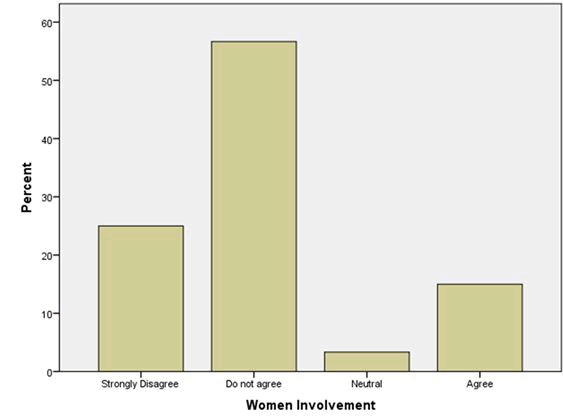
Figure 6: Women involvement in Port Elizabeth artisanal fishing
Figure 7 illustrates artisanal fishers’ membership in the local fishers’ associations. The respondents that have subscribed to any fisher’s association are 83% while only 7% of the respondents were subscriber to a fishing association to become a member. The proximate reason for this is the existing fishing associations have been recently launched in the area few small scas have joined thus far. Before then, only national fishing associations existed that had offices in other provinces.
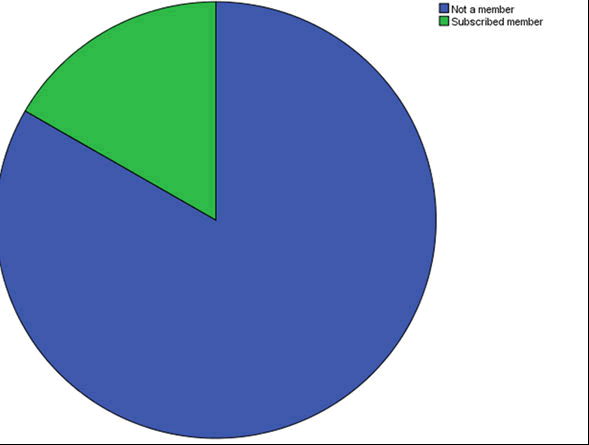
Figure 7: Respondents’ membership in fishing associations
In the context of the study on which this paper was based, artisanal fishers, government, private sector and the fisheries associations are the stakeholders. The stakeholders are the individuals and the institutions that have influence towards the success or failure of development, such as artisanal fishing. Stakeholders are categorised according to their level of influence. The result is presented in table 1.
Table 1: Stakeholder Analysis Matrix
| Stakeholder name | How much does the artisanal fishing impact them (Low/ medium/high)? | How much influence do they have over artisanal fishing (low/medium/high)? | What is important to the stakeholder? | How could the stakeholder contribute to the artisanal fishing? | How could the stakeholder block project? |
|---|---|---|---|---|---|
| Artisanal fishers | High | High | Sustaining livelihood and improving the standard of living. | By following the rules and regulations governing the fishing sector and by obtaining good fishing equipment. | By catching too much fish and destroying catching bait in the process. |
| Government | Low | High | Conserving marine life. | By listening to the views of the artisanal fishers and acting towards fulfilling their interests. | By granting fishing permits to limited local people and allowing artisanal fishers to catch fewer fish by implementing rules that exclude artisanal fishers from the market. |
| Private sector fisheries | Low | Low | Catching more fish and increasing profits. | By giving artisanal fishers business management skills. | By fishing everywhere, both in coastal and in deep water. |
| Fisheries associations | Medium | Medium | Artisanal fishers’ satisfaction. | Keeping artisanal fishers informed about changes that might impact their operation, maintaining artisanal fishers’ satisfaction and making sure that their voice is heard. | By transferring false information between the artisanal fishers, private commercial fisheries and government on artisanal fishers’ benefit. |
Figure 8 illustrates the respondents ideas on how to move fishing sector forward in which small scale fishers can thrive. About 37% of the respondents believe there is nothing they can do in their personal capacity that could contribute to the long-term economic development of artisanal fishing, 7% of the respondents believe that sharing ideas could lead to a development breakthrough. About 15% of the respondents believed that being environmentally cautious could help in the process of developing fishing in the area. The 3% of respondents believed that local economic development of the fishery sector could be achieved when both the artisanal fishers and the commercial fisheries are allowed to sell fish at a standard market price. Approximately 15% of respondents believed working harder could result in the fishing local economic development. Also, 7% of the respondents that believed that development could be achieved faster in the fishing sector if fishers could be united and work together. About 7% of the respondents believe that local economic development could be achieved quickly only if they had the means to contribute financially towards the sector. Only 2% of the total respondents believe that mentoring young artisanal fishers will develop the artisanal fishing in the area. While the remaining 8% of the respondents believe that saving some of their fishing proceeds now in order to contribute in the future development of the fishing sector is an important step in achieving development.
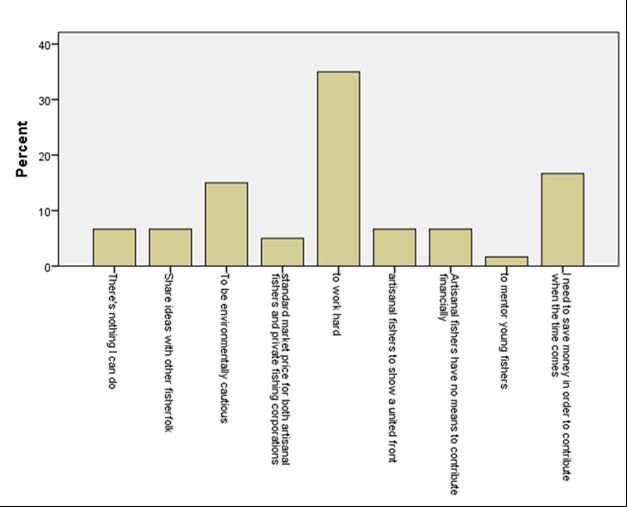
Figure 8: Artisanal Fishers wishes to achieve the long-term economic benefit of artisanal fishing
Figure 9 illustrates the expectation from the governemt in order to achieve the long-term economic benefit for artisanal fishers in the study area. About 29% of the respondents that believe government needs to increase artisanal fishers’ fish quota in order to achieve the local economic fishing development. Approximately 24% of the respondent believe the government needs to listen to the artisanal fishers’ grievances in order to achieve the local long-term economic benefit of fishing.About 31% of the respondents that believe that government grants with reduced fishing restrictions and more support will lead to o fishing sector local economic development. Other important issues raised were access to market, more access permit and training artisanal fishers on business management skills.
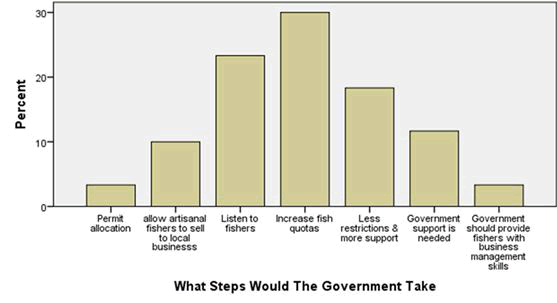
Figure 9: Steps to be taken government in order to achieve the long-term economic benefits for artisanal fishing.
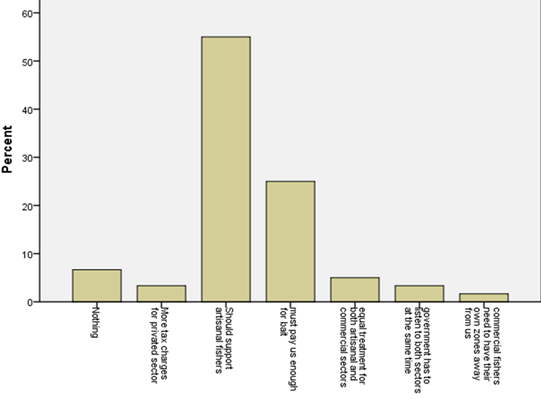
Figure 10: Suggested private sector to achieve the long-term economic benefit artisanal fishing
Figure 10: illustrates the respondents’ views on the steps the private sector can take in order to achieve the long-term economic benefit of artisanal fishing. While some artisanal fishers do not trust commercial and private sectors, about 55% of the respondents that believe that synergies between private commercial fisheries will go in long way. About 24% of the respondents believe that when the private commercial fisheries should engage the artisanal fishers and pay them enough money for bait would enable them to achieve the long-term economic benefits for artisanal fishing sector.
This paper explored the meeting point among the various stakeholders in the artisanal fishing sector in a rural coastal area of South Africa. We employed stakeholder analysis and optimal foraging theories to explain the phenomenum of sustainable livelihood and economic development strategies among artisanal fishers and balancing the objective of conservation. The stakeholder analysis framework in this study showed that sustaining the livelihood of artisanal fisher’s household is the important factor on the artisanal fishers side, whereas the conservation of marine life is important to the government. This paper established a disequlibrum and disatisfaction among all the stakeholders, both at the local and national legislative levels. We also found a strange fact that, as much as the artisanal fishers are not satisfied with fishing governance, most of them are not subscribed to any fishing associations and unwilling to be mentored by the private commercial fishing companies. This pointed out a potential distrust among the stakeholders.
Since it is an established fact that the people in the rural and coastal areas who largely depend on the marine resource for their livelihood and food security, this study suggest that all the stakeholders need to come together to find solution to ensure a sustainable livelihood and a better way to ensure conservation of natural resources. These papers also underscore the importance of inclusive decision making process in the local level.
Published: 11-Sep-2021
Copyright: This is an open access article distributed under the terms of the Creative Commons Attribution License, which permits unrestricted use, distribution, and reproduction in any medium, provided the original work is properly cited.