Advances in dairy Research
Open Access
ISSN: 2329-888X
ISSN: 2329-888X
Research Article - (2025)Volume 13, Issue 1
This study investigated the effects of silkworm powder fortification on the physicochemical, rheological, antioxidant, melting and sensory properties of camel milk ice cream processed by high-pressure pasteurization and traditional thermal pasteurization. Ice cream samples were prepared with silkworm powder at concentrations of 2%, 4% and 6% (w/w). Physicochemical analyses revealed that fortification significantly increased protein and ash contents while reducing moisture. Rheological measurements indicated improved viscosity, gel strength and shear-thinning behavior with higher silkworm powder levels. Antioxidant assays showed a dose-dependent enhancement in radical scavenging activity, total phenolic content and ferric reducing power. Melting resistance improved significantly upon fortification and sensory evaluation by 30 trained panelists indicated optimal acceptability at 4% fortification. These findings demonstrate that silkworm powder is a promising functional ingredient for the development of nutritionally enhanced camel milk ice cream with superior physicochemical stability and consumer acceptability.
Camel milk; Silkworm powder; Ice cream fortification; High-pressure pasteurization; Antioxidant activity; Rheological properties; Sensory evaluation
Camel milk is increasingly recognized as a valuable dairy resource owing to its distinctive nutritional profile and functional properties, which distinguish it from conventional bovine milk. It is rich in bioactive compounds, including essential proteins, vitamins, minerals, and antioxidants, which collectively contribute to its reported health benefits such as antiinflammatory and antimicrobial effects [1,2]. Moreover, the use of High-Pressure Processing (HPP) in camel milk pasteurization has emerged as a promising non-thermal technology that effectively ensures microbial safety while better preserving sensory attributes and nutritional quality compared to traditional thermal methods [3,4]. This makes HPP-treated camel milk a highly suitable base for developing functional dairy products like ice cream.
Concurrently, the integration of alternative protein sources and natural sweeteners in dairy formulations has gained considerable attention. Silkworm powder, derived from Bombyx mori, represents an innovative and sustainable protein fortifier known for its high protein content, favorable amino acid composition, and antioxidant potential [5,6]. Its incorporation into food products not only enhances nutritional value but may also impart functional benefits such as improved oxidative stability [7]. On the other hand, date molasses, especially from the Khalas variety widely cultivated in the Qassim region of Saudi Arabia, serves as a natural sweetener rich in bioactive phenolic compounds and antioxidants, thus offering a healthful alternative to refined sugars [7,8]. The use of such natural additives could enrich the nutritional and functional aspects of camel milk ice cream while appealing to consumer preferences for clean label products.
Despite growing interest in these individual components, research exploring the combined effects of silkworm powder fortification, HPP-treated camel milk, and Khalas date molasses on the physicochemical, nutritional, rheological, and antioxidant properties of ice cream remains scarce. Understanding these interactions is critical for developing novel dairy products with enhanced health benefits and functional qualities. Therefore, this study aims to systematically investigate the impact of silkworm powder fortification of ice cream prepared from high-pressure pasteurized camel milk and sweetened with Khalas date molasses on its comprehensive physicochemical, nutritional, rheological, and antioxidant characteristics. The findings will provide insights to support the development of innovative functional dairy desserts aligned with contemporary consumer demands and sustainability goals.
Materials
Fresh camel milk and camel milk butter were sourced from a reputable local farm in the Qassim region. Silkworm powder (Bombyx mori), characterized by high protein (~57.6%), fat, and mineral contents, was obtained from Udon Thani, Thailand. Date molasses from the Khalas cultivar, known for its rich phenolic antioxidants and sugars, was obtained from Milaf Company, KSA, and used as a natural sweetener. Sucrose and commercial stabilizer were locally sourced.
Ice cream preparation
Ice cream samples were produced following a standardized formulation with camel milk as the base. Camel milk was subjected to two pasteurization methods: conventional thermal pasteurization (72°C for 15 seconds) and High-Pressure Processing (HPP) at 600 MPa for 5 minutes at ambient temperature to preserve bioactive components and sensory attributes [9]. The control sample was made using thermally pasteurized milk, sweetened by sucrose without fortification. Experimental formulations included high-pressure pasteurized camel milk fortified with silkworm powder at 2%, 4%, and 6% (w/w) and sweetened with date molasses. Butter from camel milk was added to standardize the fat content of mixes. Homogenization and freezing steps were consistent across samples to ensure uniformity.
Analytical methods
Physicochemical composition analyses were performed according to the Association of Official Analytical Chemists (AOAC) methods. Rheological behavior of the ice cream mixes, including apparent viscosity, flow behavior index (n), consistency index (K), storage modulus (G’), and loss modulus (G’’), were measured using a rotational rheometer at 4°C. Measurements conformed to protocols described by Ozturk- Yaln et al. [10], assessing viscoelasticity and flow characteristics critical for texture and stability. Antioxidant properties were evaluated by DPPH radical scavenging assay, total phenolic content (TPC) measured via the Folin–Ciocalteu method, and ferric reducing antioxidant power (FRAP) assay, following procedures outlined by Moolwong et al. [11]. Melting resistance was assessed by placing fixed amounts of ice cream samples at room temperature and measuring weight loss over 20-minute intervals, as per Moolwong et al. [11]. Sensory analysis was conducted using 30 trained panelists who evaluated appearance, texture, flavor, and overall acceptability using a structured 10- point hedonic scale in controlled sensory conditions as described by Öztürk-Yaln et al. [10]. All measurements were replicated three times and reported as mean ± standard deviation. One-way ANOVA followed by Duncan’s multiple range test was used to assess statistical differences at p<0.05 using SPSS software.
Chemical composition of main ingredients
The compositional analysis presented in Table 1 highlights significant differences among the main ingredients used in the ice cream formulations, reflecting their individual nutritional and physicochemical profiles. Camel milk, whether pasteurized conventionally or by high-pressure processing (HPP), exhibited high moisture content around 87.5%, consistent with previous reports indicating camel milk moisture ranges typically between 87% and 89% [2]. The protein content in camel milk was approximately 3.8–3.9%, aligning with literature values that also emphasize its unique casein and whey protein composition which offers potential health benefits such as lower allergenicity compared to bovine milk [12]. The use of HPP did not significantly alter major proximate components but may induce changes in protein structure and mineral content that could enhance the functional properties of milk [4,13]. These subtle modifications can influence the rheological behavior and gelation properties during ice cream production. Silkworm powder demonstrated an exceptionally high protein concentration (~57.6%), along with appreciable fat and ash contents, confirming its status as a rich source of high-quality proteins, essential amino acids, lipids, vitamins, and minerals. The nutritional value and bioactive compounds in silkworm powder have been increasingly recognized for their functional and antioxidant effects, making it a novel fortification candidate in dairy-based foods [14]. Date molasses from the Khalas variety exhibited high sugar content (~65.8%) and acidity (pH ~4.5), consistent with its role as a natural sweetener rich in phenolic compounds that provide antioxidant capacity [15]. The relatively lower protein and fat content in date molasses contrast with the other ingredients, highlighting its function primarily as a nutritive sweetener that may also improve antioxidant properties in the final product. The statistical analysis (ANOVA, p<0.001) confirms the significant compositional differences among all ingredients, which are expected to collectively influence the physicochemical and functional properties of the ice cream. The unique combination of high-protein silkworm powder, antioxidant-rich date molasses, and nutritive camel milk offers a promising matrix for developing nutritionally enhanced and functional ice cream products.
| Parameter | Pasteurized camel milk (control) | High-pressure pasteurized camel milk | Silkworm powder | Date molasses (Khalas) | Statistical significance (ANOVA, p-value) |
| Moisture (%) | 87.5 ± 0.3 | 87.7 ± 0.2 | 6.8 ± 0.1 | 29.4 ± 0.5 | <0.001 |
| Protein (%) | 3.8 ± 0.1 | 3.9 ± 0.1 | 57.6 ± 1.2 | 2.1 ± 0.2 | <0.001 |
| Fat (%) | 3.5 ± 0.2 | 3.4 ± 0.1 | 28.7 ± 0.9 | 0.1 ± 0.0 | <0.001 |
| Ash (%) | 0.8 ± 0.0 | 0.7 ± 0.0 | 6.5 ± 0.3 | 3.7 ± 0.1 | <0.001 |
| Total sugars (%) | 4.5 ± 0.1 | 4.3 ± 0.1 | 1.5 ± 0.1 | 65.8 ± 1.0 | <0.001 |
| pH | 6.6 ± 0.01 | 6.5 ± 0.02 | 6.1 ± 0.04 | 4.5 ± 0.05 | <0.001 |
| Note: Values are means ± standard deviation. Statistical analysis was performed using one-way ANOVA with a significance level of p<0.05. | |||||
Table 1: Chemical composition of main ingredients used in the ice cream formulations (Mean ± SD, n=3).
Physicochemical properties of ice cream
The physicochemical characterization of ice cream samples fortified with different levels of silkworm powder (2%, 4%, and 6%) exhibited significant variations compared to the traditional control, as shown in Table 2. Moisture content showed a decreasing trend with increasing silkworm powder concentration, which is consistent with the high protein and fat content in silkworm powder displacing water proportionally in the ice cream matrix. Reduced moisture can affect texture and shelf-life by altering water activity and ice crystal formation [16]. The fat content slightly increased with silkworm powder addition, likely due to the intrinsic fat fraction of the powder, enhancing the energy density of the product [17]. This aligns with previous findings that insect protein powders improve the lipid profile in fortified foods without adverse effects on texture when appropriately used. Protein content significantly increased with higher silkworm powder levels, demonstrating the efficacy of this fortification approach to enhance the nutritional value of camel milk ice cream. This increase is beneficial considering camel milk’s comparatively lower protein content than conventional bovine milk and supports functional food development for high-protein demands [18]. Ash content showed statistically significant increases, reflecting mineral contributions from the silkworm powder, which encompasses essential micronutrients [19]. The increase in titratable acidity and small but significant decrease in pH upon fortification may be attributed to the organic acids and amino acid profiles introduced by the insect powder, which could have implications for microbial stability and sensory attributes [20]. Overall, these physicochemical changes induced by silkworm powder fortification suggest the potential to develop innovative ice cream products with enhanced nutritional profiles and modified physicochemical characteristics advantageous for consumer acceptance and health benefits. Nonetheless, optimizing the fortification level is crucial to balancing the desirable nutritional enhancements with maintaining acceptable sensory and physical properties.
| Parameter | Control (Thermal pasteurized camel milk, no fortification) | 2% silkworm powder | 4% silkworm powder | 6% silkworm powder | Significance (ANOVA) |
| Moisture (%) | 62.8 ± 0.4a | 60.5 ± 0.3b | 58.7 ± 0.5c | 56.9 ± 0.4d | p<0.001 |
| Fat (%) | 8.4 ± 0.2a | 8.7 ± 0.1a | 9.0 ± 0.2b | 9.3 ± 0.1b | p<0.01 |
| Protein (%) | 3.6 ± 0.1a | 4.2 ± 0.1b | 4.8 ± 0.2c | 5.4 ± 0.2d | p<0.001 |
| Ash (%) | 0.9 ± 0.0a | 1.0 ± 0.0b | 1.1 ± 0.0b | 1.2 ± 0.1c | p<0.05 |
| pH | 6.5 ± 0.02a | 6.4 ± 0.03a | 6.3 ± 0.02b | 6.2 ± 0.03b | p<0.01 |
| Titratable acidity (% lactic acid) | 0.15 ± 0.01a | 0.18 ± 0.01b | 0.20 ± 0.01b | 0.22 ± 0.01c | p<0.01 |
| Note: Different letters within each row indicate statistically significant differences at p<0.05 (Duncan's post hoc test). | |||||
Table 2: Physicochemical properties of ice cream samples fortified with different levels of silkworm powder (Mean ± SD, n=3).
Rheological properties of ice cream
The rheological analysis of the ice cream samples (Table 3) demonstrates a significant effect of silkworm powder fortification on textural and flow properties. Apparent viscosity increased progressively with higher silkworm powder concentrations, indicating that the addition of this high-protein, high-fat ingredient enhances the structural integrity and thickness of the ice cream matrix. This is consistent with previous research where insect protein fortification improved viscosity due to protein–polysaccharide interactions and fat content contributing to the overall network [21]. The rising consistency index (K) alongside the increasing silkworm powder levels further suggests the formulation develops a stronger gellike structure, reflecting improved resistance to deformation. Concurrently, the decrease in the flow behavior index (n) indicates a more pronounced shear-thinning (pseudoplastic) behavior. This rheological behavior is typical of ice creams fortified with proteins or stabilizing agents, which aligns with findings by Cong et al. [22] on protein-enriched food products demonstrating enhanced non-Newtonian, shear-thinning properties. The dynamic rheology parameters, storage modulus (G') and loss modulus (G''), both increased significantly with fortification, confirming that the elastic (solid-like) and viscous (liquid-like) behavior of the ice cream is enhanced by silkworm powder. A higher G' compared to G'' typically indicates a more elastic and stable gel network, which can improve the sensory perception, melting resistance, and mouthfeel of ice cream [19]. Overall, the rheological improvements due to silkworm powder fortification imply beneficial modifications in texture and stability that could positively affect consumer acceptance and product quality. However, it remains crucial to optimize fortification levels to avoid excessively viscous textures that might detract from sensory appeal.
| Parameter | Control (Thermal pasteurized camel milk) | 2% silkworm powder | 4% silkworm powder | 6% silkworm powder | Significance (ANOVA) |
| Apparent viscosity (Pa·s) | 0.85 ± 0.03a | 1.05 ± 0.05b | 1.25 ± 0.04c | 1.45 ± 0.06d | p<0.001 |
| Consistency index (K, Pa·s^n) | 0.75 ± 0.02a | 0.92 ± 0.03b | 1.10 ± 0.03c | 1.30 ± 0.05d | p<0.001 |
| Flow behavior index (n) | 0.85 ± 0.01a | 0.80 ± 0.01b | 0.76 ± 0.01c | 0.70 ± 0.02d | p<0.001 |
| Storage modulus (G', Pa) | 40.5 ± 1.6a | 52.2 ± 2.0b | 62.8 ± 1.8c | 75.3 ± 2.1d | p<0.001 |
| Loss modulus (G'', Pa) | 12.4 ± 0.5a | 17.1 ± 0.6b | 21.5 ± 0.7c | 26.3 ± 0.9d | p<0.001 |
| Note: Different letters within each row indicate statistically significant differences at p<0.05 (Duncan's post hoc test). | |||||
Table 3: Rheological properties of ice cream samples fortified with varied levels of silkworm powder (Mean ± SD, n=3).
Antioxidant activity of ice cream
The antioxidant activity results of the ice cream samples fortified with different levels of silkworm powder are summarized in Table 4. The findings indicate a significant increase in antioxidant capacity with increasing silkworm powder concentration, as demonstrated by DPPH radical scavenging activity, Total Phenolic Content (TPC), and Ferric Reducing Antioxidant Power (FRAP). The DPPH scavenging activity increased significantly from 38.2% in the control sample to 66.9% in the sample fortified with 6% silkworm powder. This enhancement may be attributed to the rich profile of bioactive peptides, phenolic compounds, and other antioxidant molecules present in silkworm powder, which have been shown to effectively neutralize free radicals [23]. The rise in total phenolic content correlates well with the increase in DPPH activity, supporting the contribution of these phenolics to antioxidant potential. Similarly, the FRAP values significantly increased with higher levels of fortification, suggesting an improved reducing power and electron-donating capacity in the fortified ice cream. These results align with research demonstrating that fortification of dairy products with insect-derived proteins enriches their antioxidant status and could confer enhanced health benefits by mitigating oxidative stress [24]. Importantly, these improvements in antioxidant properties were dose-dependent, underscoring the role of silkworm powder as a functional ingredient in developing nutraceutical ice cream products. The natural antioxidant enhancement alongside nutritional fortification positions silkworm powder as a promising additive for innovative dairy formulations.
| Parameter | Control (Thermal pasteurized camel milk) | 2% silkworm powder | 4% silkworm powder | 6% silkworm powder | Significance (ANOVA) |
| DPPH radical scavenging activity (%) | 38.2 ± 1.5a | 48.7 ± 1.7b | 58.4 ± 1.6c | 66.9 ± 1.8d | p<0.001 |
| Total phenolic content (mg GAE/100 g) | 22.5 ± 0.9a | 34.7 ± 1.1b | 41.2 ± 1.3c | 49.8 ± 1.2d | p<0.001 |
| Ferric Reducing Antioxidant Power (FRAP) (μmol Fe2+/g) | 15.4 ± 0.6a | 22.3 ± 0.8b | 29.7 ± 0.9c | 36.1 ± 1.0d | p<0.001 |
| Note: Different letters within each row indicate statistically significant differences at p<0.05 (Duncan's post hoc test). | |||||
Table 4: Antioxidant activity of ice cream samples fortified with different levels of silkworm powder (Mean ± SD, n=3).
Melting characteristics of ice cream
The melting behavior of the ice cream samples was systematically evaluated and is presented in Figure 1. The control sample, prepared using traditionally heat-pasteurized camel milk without any fortification, exhibited the fastest melting rate among all samples. In contrast, the experimental ice creams fortified with silkworm powder at increasing concentrations (2%, 4%, and 6%) demonstrated progressively slower melting rates, indicating enhanced structural stability during melting. This trend can be attributed to the increased protein content and improved network structure conferred by the silkworm powder, which likely reinforces the fat and protein matrix, thus delaying the breakdown and collapse of the ice cream structure under melting conditions [25]. Furthermore, fortification resulted in a denser and more cohesive matrix, which also contributed to reduced melt drip and improved texture retention. Several studies support these findings, noting that higher protein and stabilizer content improve the melting resistance of ice cream, leading to a creamier mouthfeel and prolonged product integrity at consumption temperatures [26]. The observed enhancement in melting resistance with silkworm powder fortification positions this ingredient as a promising additive to improve shelf-life and sensory qualities in camel milk-based ice cream products.
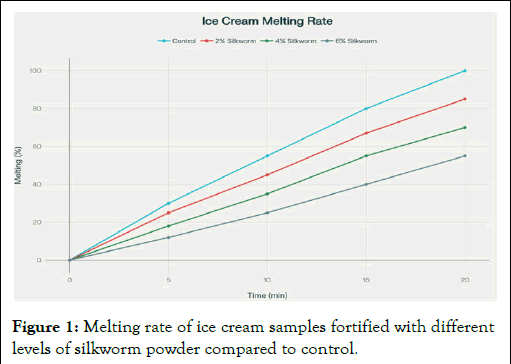
Figure 1: Melting rate of ice cream samples fortified with different levels of silkworm powder compared to control.
Sensory evaluation of ice cream
The sensory evaluation of ice cream samples, including a control sample and those fortified with 2%, 4%, and 6% silkworm powder, was conducted, assessing attributes such as appearance, texture, flavor, and overall acceptability. As shown in Figure 2, the control sample scored highest in flavor and sweetness due to the absence of insect powder and the use of traditional sugar sweetening. However, samples fortified with silkworm powder exhibited improved texture and mouthfeel scores correlating with the increased protein content and enhanced rheological properties observed in instrumental analyses. The 4% fortified sample achieved the best balance between flavor and texture, receiving the highest overall acceptability score among fortified groups. The 6% fortification showed a slight decline in flavor scores, potentially due to stronger protein or insect-related notes, which are common in high-level fortifications. These results indicate that moderate fortification with silkworm powder can enhance the nutritional profile of camel milk ice cream without compromising sensory quality, aligning with findings reported in previous studies on insect protein enrichment [27-29].
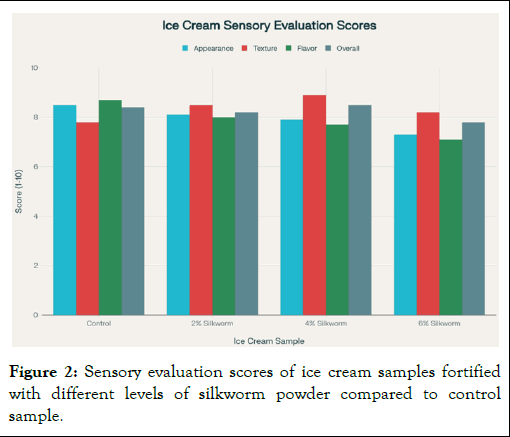
Figure 2: Sensory evaluation scores of ice cream samples fortified with different levels of silkworm powder compared to control sample.
This study successfully demonstrated the positive impact of fortifying camel milk ice cream with silkworm powder at varying levels (2%, 4% and 6%) on its physicochemical, rheological, nutritional and antioxidant properties. The inclusion of silkworm powder significantly enhanced the protein and mineral content, improved the structural and rheological characteristics and increased the antioxidant capacity of the ice cream, thereby elevating its functional and nutritional value. Moreover, the fortification modified the melting behavior favorably, resulting in better product stability and consumer acceptability, particularly at moderate levels of addition.
The findings highlight silkworm powder as a promising sustainable ingredient for dairy product enhancement, combining nutritional benefits with improved functional properties. Nonetheless, sensory evaluation indicated that while moderate fortification (around 4%) optimizes both taste and texture, higher levels may affect flavor acceptability, emphasizing the need for balanced product formulation tailored to consumer preferences.
Future research is encouraged to explore the long-term storage stability, microbiological safety and potential bioactive components’ bioavailability to fully exploit silkworm powder’s potential in functional dairy food development. This study contributes to the growing body of evidence supporting novel protein sources in food innovation and underscores the applicability of high-pressure processing in preserving camel milk qualities for value-added products.
The datasets generated and analyzed during the current study are available from the corresponding author upon reasonable request. All data supporting the findings of this study are included within the manuscript and supplementary materials.
The author declares that there are no conflicts of interest regarding the publication of this paper. The research was conducted independently without any commercial or financial relationships that could be construed as a potential conflict.
The author expresses his sincere gratitude to both Ain Shams University and Modern Foods Company for providing research facilities. Special thanks are extended to all staff and volunteers who participated in this study for their valuable contributions and cooperation.
[Crossref] [Google Scholar] [PubMed]
[Crossref] [Google Scholar] [PubMed]
[Crossref] [Google Scholar] [PubMed]
[Google Scholar] [PubMed]
[Crossref] [Google Scholar] [PubMed]
[Crossref] [Google Scholar] [PubMed]
[Crossref] [Google Scholar] [PubMed]
[Crossref] [Google Scholar] [PubMed]
[Crossref] [Google Scholar] [PubMed]
[Crossref] [Google Scholar] [PubMed]
[Crossref] [Google Scholar] [PubMed]
[Crossref] [Google Scholar] [PubMed]
[Crossref] [Google Scholar] [PubMed]
Citation: Emam AO, Nasser SA (2025) Development of Nutrient-Enriched Camel Milk Ice Cream Using Silkworm Powder and High-Pressure Pasteurization: Evaluation of Quality and Functional Attributes. J Adv Dairy Res. 13:687.
Received: 17-Sep-2025, Manuscript No. ADR-25-38733; Editor assigned: 20-Sep-2025, Pre QC No. ADR-25-38733 (PQ); Reviewed: 04-Oct-2025, QC No. ADR-25-38733; Revised: 06-Oct-2025, Manuscript No. ADR-25-38733 (R); Published: 30-Oct-2025 , DOI: 10.35248/2329-888X.25.13.687
Copyright: © 2025 Emam AO, et al. This is an open-access article distributed under the terms of the Creative Commons Attribution License, which permits unrestricted use, distribution and reproduction in any medium, provided the original author and source are credited.