Advances in dairy Research
Open Access
ISSN: 2329-888X
ISSN: 2329-888X
Research Article - (2025)Volume 13, Issue 1
In Ethiopia, cattle play a crucial role as essential assets in households, comprising an estimated population of 59.5 million, predominantly local breeds. They are integral to the livelihoods of approximately 70% of the population. Annually, Ethiopia's beef production reaches 1 million tons, valued at USD 5.1 billion, with ruminants contributing over 3.2 million tons of meat, more than half of the country's total meat production. Beef alone accounts for over 70% of the red meat output and more than 50% of Sub-Saharan Africa's total meat production, underscoring cattle's pivotal role in the regional livestock sector. This study examines cattle fattening opportunities and constraints in the Jimma and Iluababor zones, known for their favorable agroecology conducive to cattle fattening. The study objectives were to identify these opportunities and constraints through secondary data collected from zones agricultural offices, published and unpublished articles and other relevant sources. Cattle fattening in Ethiopia holds promising prospects for enhancing agricultural productivity, improving livelihoods and strengthening food security. The sector benefits from a robust market demand for beef, farmers interest, vast livestock population offering opportunities to enhance value through strategic feeding and management practices. Despite challenges such as limited access to inputs and infrastructure deficiencies, the potential for profitability and economic growth remains substantial. Improving access to inputs, infrastructure development, upgrading market facilities, slaughterhouses and transportation networks, capacity building, strengthening market linkages, supportive policies, research and innovation, can unlock the full potential of its cattle fattening sector, improve food security, boost rural livelihoods and contribute to sustainable economic growth in the agricultural sector.
Cattle fattening; Challenges; Opportunities
Agriculture is a key sector for Ethiopia's economy. The general economic growth of the country is highly dependent on the success of the agricultural sector. The entire sector offers employment to 72.7% of the population and contributes 43% to the GDP. The sector remains largely dominated by rain-fed subsistence farming by smallholders who cultivate an average landholding of less than one hectare [1]. Despite these challenges, Ethiopia has favorable economic opportunities and prospects. The country has abundant natural resources, a low cost and trainable labor force, an emerging middle class and a developmental state with an ambitious vision, commitment and a strong sense of policy ownership. Meat production and consumption is important in the Ethiopian economy and ruminants contribute over 3.2 million tons, representing over 72% of the total meat production.
The cattle population is Ethiopia was estimated to be 59.5 million among which 99% were local cattle and 1% were cross breeds. Cattle are a very common asset in Ethiopian households and 70% of the total population depend on cattle for their livelihoods and the country produces about 1 million tons of beef per year valued at USD 5.1 billion. The annual contribution of ruminants to meat production in Ethiopia was estimated to be over 3.2 million tones representing over 72% of the total meat production. From which beef accounted for over 70% of the total red meat production and over 50 % of the total meat output in Sub-Saharan Africa. According to in Ethiopia the consumption expenditure on Animal Source Foods (ASF) increased by 13.4% in 2011 from which beef accounted for 42 %. It also noted that the value of exported of meat products increased from 18 million USD in 2005 to 107 million USD in 2015 due to the increase in international livestock trade [2].
Cattle fattening is one of the newly incipient activities. The sector is an emerging for employment and income generation for urban and peri urban dwellers. Particularly, for those vacant farmers due to urbanization and cattle fattening associations organized at small scale micro finance level. Cattle fattening is an effective tool for poverty alleviation and become an important business sector. Simultaneously, attention needs to be focused on smallholder cattle fatteners as well as private sector as engines of economic vitality. In Ethiopia, governmental and non-governmental organizations currently encourage the emerging small scale as well as commercial fattening farms and support establishments of the sector either in cooperative or private form. However, there is limited information about their constraints, opportunities, challenges, economic efficiencies, production potentials and performances of beef animals under this sector. Despite good fattening potentials associated with ample feed resources, market access, indigenous animal with huge potential for meat production have been expected in the region, because little attention to livestock development in general and animal fattening in particular and much has not been studied about the utilization of available feed, fattening practices and marketing system of animals in the region. Therefore, understanding the role and function of local production and marketing system as well as production constraints is of considerable relevance in future research and development directions and strategies would be given due priority [3].
The majority of Ethiopia's rural areas grow beef cattle using one of the three main fattening systems: The traditional system, the product-based method and the Hararghe fattening system. In the traditional system, farmers usually sell their oxen after the harvest when the plow season comes to an end since they are in bad condition and too old to be employed during a drought. When there is no grazing pasture available, a byproduct-based fattening strategy is used, primarily based on agro-industrial waste products including molasses, byproducts of cereal milling and oilseed meals. Young oxen that were obtained from surrounding lowland pastoral areas for fattening were fed intensively on the available feed supply as part of the Hararghe fattening method. Which could depend on feeding on the individually tethered animals on the cut-and-carry system and on the stored crop stover during the dry season, as well as on the thinning of annual crops during the growing season. During the brief wet season, they let their oxen graze on the boundaries of field plots or by the sides of roadways for roughly 3 h each morning before sunrise. A farmer who owns more than one ox lends the surplus animal to a relative or neighbor in the same village so that they can feed it after he uses it for traction. The primary sources of feed employed in this system include sorghum straw, sorghum and maize leaves, thinned sorghum and maize seedlings, sterile plants, crop field weeds and maize stover.
Description of the study area
Jimma is a zone in Oromia region of Ethiopia. Jimma is named after former Kingdom of Jimma, which was absorbed into the former province of Kaffa in 1932. Jimma is bordered on the south by the southern nations, nationalities and people’s region, the northwest by Illubabor zone, on the north by east Welega zone and on the northeast by west Shewa zone; part of the boundary with west Shewa zone is defined by the Gibe river. The highest point in this zone is Mount Maigudo (2,386 m). Towns and cities in Jimma include Agaro, Limmu Inariya and Saqqa. The town of Jimma was separated from Jimma Zone and is a special zone now [4].
The Central Statistical Agency (CSA) reported that 26,743 tons of coffee were produced in this zone in the year ending in 2005, based on inspection records from the Ethiopian coffee and tea authority. This represents 23.2% of the region's output and 11.8% of Ethiopia's total output and makes Jimma one of the three top producers of these goods, along with the Sidama and Gedeo zones.
Illubabor (Oromo: Illuu Abbaa Booraa) is a zone in Oromia region of Ethiopia. Illubabora is named for the former province Illubabor. It is bordered on the south by the southern nations, nationalities and people’s region, on the southwest by the Gambela region, on the west by Kelem Welega zone, on the north by west Welega zone and Benishangul-Gumuz region, on the northwest by East Welega Zone and on the east by Jimma. Towns and cities in Illubabora include Bedele, Gore and Metu.
The Central Statistical Agency (CSA) reported that 14,855 tons of coffee were produced in this zone in the year ending in 2005, based on inspection records from the Ethiopian coffee and tea authority. This represents 12.9% of the region's output and 6.5% of Ethiopia's total output.
Data collection and data analysis
This study utilizes secondary qualitative and quantitative data sources to examine opportunities and constraints of cattle fattening business in Ethiopia for small holder farmers. Data was sourced from key institutions including the Woreda agricultural office, trade and market development office and a review of published and unpublished documents. These sources were selected for their relevance and comprehensive coverage of their relevance for the sectors. Additionally, secondary data sources on output and other socioeconomic variables were utilized to provide a holistic perspective. Moreover, secondary data sources on output and data on other socioeconomic variables were taken. Descriptive methods of data analysis were used to analyze data collected. Descriptive method was used to characterize and give socioeconomic explanations of the collected secondary data [5].
Cattle fattening is an increasing business at different scales in Ethiopia. Various research activities in cattle fattening have been conducted over the years to fill the production gaps, identify the challenges and opportunities of cattle fattening and support needs of the sector. Therefore, there is a need to review and avail information on cattle fattening for those who wish to engage on small or large-scale cattle fattening as well as on commercial feedlot enterprises in Ethiopia.
An estimate indicates that the country is a home for about 54 million cattle, 25.5 million sheep and 24.06 million goats. From the total cattle population 98.95% are local breeds and the remaining are hybrid and exotic breeds. 99.8% of the sheep and nearly all goat population of the country are local breeds. The livestock subsector currently supports and sustain livelihoods for 80% of all rural population. The GDP of livestock related activities valued at birr 59 billion. Despite high livestock population and existing favorable environmental conditions, the current livestock output of the country is little. This is associated with a number of complex and inter-related factors such as inadequate feed and nutrition, widespread diseases, poor genetic potential of local breeds, market problem, inefficiency of livestock development services with respect to credit, extension, marketing and infrastructure. In Ethiopia, livestock production and markets vary substantially across space due to different reasons including topographical variations, market access, feed and water availability and population characteristics. Studies indicate that livestock production is higher in areas nearer to the major livestock market centers. In 2007/08, more than 75% of cattle in the four major highland regions of Ethiopia were located within 5 hours travel time of a livestock market. On the other hand, the Ethiopia lowland pastoral areas which are affected by recurrent drought found to have spares livestock population. The country has abundant livestock resources and is ranked first in Africa and fifth globally in terms of livestock population. The livestock population includes over 71 million cattle, 43 million sheep, 54 million goats, 57 million poultry/chickens, 13.33 million equines and 7 million bee colonies [6].
Opportunities of cattle fatting
Cattle fattening presents significant opportunities for farmers to enhance their agricultural enterprises and contribute positively to the livestock sector. By focusing on improving the weight and condition of cattle through strategic feeding and management practices, farmers can capitalize on the potential for increased profitability. This approach not only meets the growing market demand for high-quality beef but also adds considerable value to livestock assets. Additionally, integrating cattle fattening with existing agricultural activities allows for resource optimization, such as utilizing crop residues and grazing lands effectively. This not only boosts overall farm productivity but also mitigates risks through diversification. Furthermore, cattle fattening contributes to food security by augmenting the availability of nutritious meat products, thereby enhancing dietary diversity within local and regional markets. Overall, embracing cattle fattening as part of a comprehensive agricultural strategy empowers farmers to build resilience, foster economic stability and promote sustainable agricultural practices.
High number of livestock population
The two zones, livestock populations are notably high across various districts, influenced by several factors. In Jimma zone, 90% of farmers engage in cattle fattening primarily for marketing purposes, whereas in Illubabur zone, 56.82% of farmers focus on cattle fattening primarily for sale. Additionally, farmers in both zones commonly reserve some of these cattle for household consumption during special occasions such as holidays, cultural events and social ceremonies.
Specifically, in Illubabur zone, the livestock population includes a significant number of local breeds, with 1,050,721 cattle, comprising 241,666 oxen, 147,101 heifers, 378,260 cows and 167,101 bulls. Alongside cattle, there are also 439,212 sheep and 207,752 goats spread across various districts like Mettu, Yayu and Dorani, which are notable for their rapidly growing livestock populations within the zone (Figure 1).
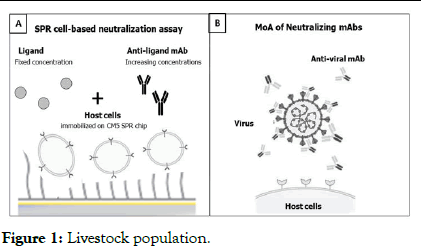
Figure 1: Livestock population.
Farmers interest
The primary objective of farmers engaged in mixed farming in tropical regions is to optimize the synergistic benefits of integrating both crop and livestock production. This approach helps farmers diversify their income sources and manage financial and risk exposure more effectively across both sectors. According to this integrated farming system allows farmers to utilize labor more efficiently, generate cash flow for investing in farm inputs, add value to crops or their by-products and as noted by, enhance food security while preserving socio-cultural and environmental assets [7].
In Ethiopia, smallholder livestock fattening is gaining popularity among farmers in both rural and urban areas, driven by the same goal of maximizing agricultural productivity and resilience. This practice underscores the importance of integrating livestock rearing with crop production to achieve sustainable economic, social and environmental outcomes.
Farmers' interest in cattle fattening is pivotal for bolstering food security in Ethiopia, addressing both economic and nutritional dimensions. Cattle fattening offers farmers a viable opportunity to diversify their income streams beyond traditional crop farming. This diversification not only enhances household finances but also contributes to economic resilience, particularly in rural areas where agriculture is the primary livelihood. By engaging in cattle fattening, farmers produce a steady supply of high-protein meat, which is essential for improving dietary diversity and nutrition within their communities.
Moreover, cattle fattening optimizes the use of local resources such as crop residues and grazing lands, which may otherwise be underutilized. These resources are converted into valuable livestock feed, thereby increasing agricultural productivity without expanding into new lands. This approach aligns with sustainable agricultural practices, promoting resource efficiency and environmental stewardship.
In addition to economic benefits, cattle fattening enhances livelihood security by providing farmers with a buffer against income volatility associated with crop production. It offers a reliable source of income through the sale of fattened cattle in local markets or to meat processing industries. This income stability contributes significantly to overall household food security, ensuring access to nutritious food and essential goods (Figure 2).
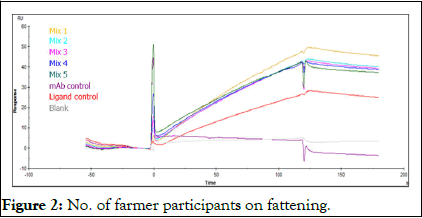
Figure 2: No. of farmer participants on fattening.
High market demand
According to various studies, the demand for beef among Ethiopians has been steadily rising, driven by factors such as population growth, urbanization, increasing literacy rates and rising family incomes. Meat consumption serves as a significant indicator of an individual's economic status, with higher social classes demonstrating a greater preference for high-quality meat products.
This trend underscores a broader shift in dietary preferences and economic behavior within Ethiopian society. As urbanization and income levels continue to rise, there is a notable increase in the consumption of beef and other meat products. This demand not only reflects changing lifestyles and preferences but also presents opportunities and challenges for the agricultural sector and food industry in meeting evolving consumer needs [8].
The graph illustrates the total consumption of cattle for both home use and market purposes. In Jimma zone, 90% of farmers primarily engage in cattle fattening for marketing purposes, highlighting a strong focus on commercialization within this region. Conversely, in Ilubabor zone, over 55% of farmers utilize cattle fattening for marketing purposes, indicating a significant but slightly lower emphasis compared to Jimma zone.
This distinction underscores regional variations in agricultural practices and economic strategies among farmers in Ethiopia. The emphasis on cattle fattening for market purposes reflects broader economic goals aimed at generating income and leveraging market opportunities. Understanding these trends is crucial for policymakers and stakeholders involved in agricultural development and rural livelihood improvement initiatives.
In the marketing of cattle and shoats (small ruminants) in Ethiopia, several key actors play crucial roles in the value chain. These include farmers, traders, brokers (both local and urban), individual consumers and hotel owners. Each actor contributes differently to the process of buying and selling livestock, influencing market dynamics and economic outcomes for farmers (Figure 3).
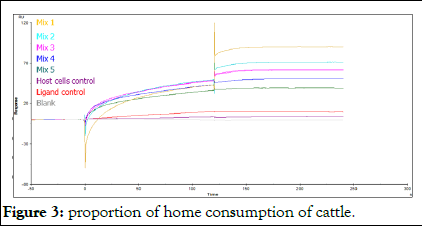
Figure 3: proportion of home consumption of cattle.
Constraints of the sectors
As indicated by the assessment, the cattle fattening sector in Ethiopia encounters numerous challenges that limit its ability to reach its full potential, despite the opportunities it presents. These constraints span several critical areas that are pivotal for enhancing agricultural productivity and ensuring economic sustainability within the sector.
Lack of input supply
Inputs required for cattle fattening encompass a range of resources and materials essential for the successful management and growth of cattle. At the core of these inputs is nutrition, which is crucial for achieving optimal growth rates and overall health. Ensuring access to clean water, proper housing and shelter are also essential inputs and medicine are particularly important for efficient cattle fatting. to protect cattle from adverse weather conditions and minimize stress, which can adversely affect growth and health.
Based on the secondary data, several significant issues regarding input supply in cattle fattening have been identified. One of the primary challenges is the scarcity of adequate cattle feed and veterinary drugs, leading to increased susceptibility to diseases among livestock. A striking observation is that over 95% of farmers rely on crop residues and grazing lands for feed, indicating heavy dependence on traditional and often insufficient sources.
In the Buno Bedele zone, the situation is slightly alleviated by a brewery factory that supplies concentrated feed from factory byproducts, although this primarily benefits dairy farmers in Bedele town rather than those in other parts of the zone. Moreover, in Argo Dedesa district within the same zone, farmers have access to molasses, but the high cost makes it unaffordable for many, thereby limiting its widespread use [9].
Despite these challenges, farmers across the three zones generally have good access to extension services, which provide training on feeding practices and other aspects of cattle fattening. However, there remains a gap in training provided to extension agents from research centers like JARC (Jimma Agricultural Research Center) regarding updated information and innovations in cattle fattening practices. This gap underscores the need for improved knowledge dissemination and capacity building among extension agents to ensure that farmers receive timely and relevant information to enhance their livestock management practices effectively (Figure 4).
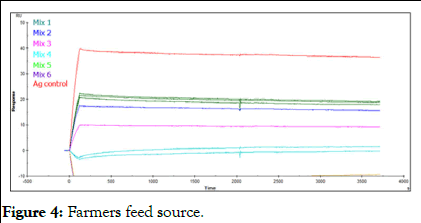
Figure 4: Farmers feed source.
Illegal marketing of cattle
Cattle and shoats (small ruminants) play a significant role in contributing to Ethiopia's foreign currency exchanges, second only to coffee exports. However, across the entire three zones, there exists a notable gap in the formal marketing channels for these livestock. Currently, no licensed actors are involved in the export process, leading to cattle being traded unofficially across borders, particularly to countries like Sudan and other neighboring nations.
The primary actors engaged in the marketing of cattle and shoats include farmers, traders, brokers (both local and urban), individual consumers and hotel owners within the value chain. Brokers, in particular, play a pivotal role as intermediaries in setting prices for cattle and small ruminants. This intermediary role often creates challenges for farmers to receive fair prices and fully benefit from their livestock sales.
The predominant market for farmers to sell their cattle remains local markets within the respective zones. However, the infrastructure supporting these markets is inadequate in some areas. For instance, in the Ilubabor and Buno Bedele zones, the slaughterhouses are described as old and lacking standardization, with issues such as inadequate water supply. Although the slaughterhouse in Jimma is relatively better equipped, it also faces challenges with water supply, impacting its efficiency and operations within the livestock value chain.
Improving the marketing infrastructure and formalizing trade processes could potentially enhance profitability for farmers by ensuring fair pricing mechanisms and improving access to broader markets, including international opportunities. Addressing these challenges requires concerted efforts to upgrade slaughterhouse facilities, strengthen regulatory frameworks and establish formalized export channels to maximize the economic benefits of Ethiopia's livestock sector.
Poor infrastructure
In the entire three zones, farmers face significant challenges related to infrastructure, particularly concerning poor road access. This issue is particularly acute in areas such as Mecho Dega district in the Buno Bedele zone, where inadequate road infrastructure severely hampers farmers' ability to transport their cattle and shoats to market.
The road conditions in Mecho Dega district are described as highly problematic, forcing farmers to travel long distances, approximately 70 kilometers or more, to reach markets where they can sell their livestock. This lengthy and arduous journey not only causes stress and discomfort to the animals but also results in significant weight loss during transit. In severe cases, the prolonged travel times can lead to livestock becoming too weak or even perishing before reaching their destination.
The poor road infrastructure exacerbates the challenges already faced by farmers in accessing markets and securing fair prices for their livestock. It not only increases transportation costs but also reduces the overall profitability of cattle and shoat farming in these regions. Moreover, the inefficiencies in transportation contribute to delays in getting products to market, impacting market dynamics and potentially reducing market competitiveness for local farmers.
Addressing the road infrastructure challenges in Mecho Dega district and similar areas requires investment in road maintenance, upgrades and possibly the construction of new roads where feasible. Improving transportation networks not only facilitates easier and faster access to markets but also reduces the stress on livestock during transportation, thereby improving their health and market readiness. Such improvements are essential for enhancing the economic viability of livestock farming and improving the livelihoods of farmers in these rural areas.
Unavailability of supporting organization
In the two zone, there is currently a lack of viable organizational support specifically dedicated to the fattening of cattle, sheep and goats. Unlike other agricultural sectors or initiatives such as honey production, which have benefited from organized support structures, the livestock fattening industry faces significant challenges in accessing coordinated assistance and resources.
The absence of a feasible organization to support cattle, sheep and goat fattening limits the sector's potential for growth and development. Farmers engaged in livestock fattening operations often struggle with various issues such as access to quality feed, veterinary services, market linkages and technological innovations that could enhance productivity and profitability.
Efforts to establish supportive organizational frameworks could address these challenges effectively. Such organizations could play a crucial role in providing technical assistance, training programs, access to veterinary care and medicines, facilitating market access and promoting sustainable practices among livestock farmers in Jimma zone.
By fostering a structured support system tailored to the needs of cattle, sheep and goat fattening, stakeholders can potentially enhance the resilience of livestock farmers, improve production outcomes and contribute to the overall economic development of the region.
In conclusion, cattle fattening in Ethiopia presents a promising avenue for enhancing agricultural productivity, improving livelihoods and contributing to food security. The sector benefits from strong market demand for beef, with opportunities to add value through strategic feeding and management practices. Despite challenges such as limited access to inputs and infrastructure issues, the potential for profitability and economic growth remains substantial. Addressing these challenges requires concerted efforts from stakeholders to improve access to quality feed, veterinary services and market linkages. By leveraging these opportunities and addressing challenges effectively, Ethiopia can further strengthen its position in the regional livestock market and ensure sustainable development in the agricultural sector.
Based on the assessment the following recommendation is recommended to unlock the fatting potentials of the zones facilitate access to quality feed, veterinary drugs and other essential inputs through targeted support programs and partnerships with private sector stakeholders, invest in upgrading road networks, market facilities and slaughterhouses to facilitate efficient transportation and market access for livestock producer, strengthen market linkages through improved market information systems, farmer cooperatives and value chain collaborations to ensure fair pricing and market stability, provide training and extension services to farmers on modern fattening techniques, animal health management and market-oriented practices to enhance productivity and profitability, develop and implement supportive policies that incentivize investment in the livestock sector, promote sustainable practices and ensure equitable benefits for smallholder farmers, support research initiatives to introduce and adopt innovative technologies and practices that enhance efficiency, productivity and resilience in cattle fattening.
The author declares no conflict of interest.
Citation: Temesgen M, Erko B (2025) Challenges and Opportunities in Cattle Fattening: Navigating Constraints for Agricultural Development in Ethiopia. J Adv Dairy Res. 13:687.
Received: 08-Aug-2024, Manuscript No. ADR-24-33444; Editor assigned: 13-Aug-2024, Pre QC No. ADR-24-33444 (PQ); Reviewed: 27-Aug-2024, QC No. ADR-24-33444; Revised: 12-Jan-2025, Manuscript No. ADR-24-33444 (R); Published: 19-Jan-2025 , DOI: 10.35248/2329-888X.25.13.687
Copyright: © 2025 Temesgen M, et al. This is an open-access article distributed under the terms of the Creative Commons Attribution License, which permits unrestricted use, distribution and reproduction in any medium, provided the original author and source are credited.