
Journal of Chromatography & Separation Techniques
Open Access
ISSN: 2157-7064
ISSN: 2157-7064
Research Article - (2025)Volume 16, Issue 3
Vortioxetine is a singular antidepressant drug gaining recognition for its capacity in treating principal depressive disease and cognitive dysfunction. Accurate and dependable quantification methods are vital for satisfactory manipulate, pharmacokinetic studies and clinical packages. This work aimed to increase and validate a simple, fast, touchy and Particular Reversed-Segment High-Performance Liquid Chromatography (RP-HPLC) technique for quantifying Vortioxetine in bulk drug and pharmaceutical dosage bureaucracy. The take a look at affords the improvement and validation of an RP-HPLC technique for quantifying Vortioxetine, a remedy used to deal with despair and mood issues. The method involved optimizing chromatographic conditions and evaluating parameters such as linearity, precision, accuracy, specificity, robustness and system suitability. The method demonstrated excellent linearity, precision, accuracy and specificity, indicating its reliability for quantifying Vortioxetine in pharmaceutical formulations. The validated method ensures quality control and regulatory compliance, facilitating pharmaceutical research and development in neuropsychiatric therapeutics.
Vortioxetine; RP-HPLC; Method development; Validation; Quantification; Pharmaceutical analysis
Vortioxetine, also known by the brand name Trintellix, is a medication used to treat Major Depressive Disorder (MDD) in adults. It belongs to a class of drugs called Serotonin Modulators and Stimulators (SMS). It works by increasing the levels of serotonin, a natural chemical in the brain that helps regulate mood. The precise mechanism of action of Vortioxetine isn't always absolutely understood, but it's far concept to paintings with the aid of increasing the degrees of serotonin within the mind. Serotonin is a neurotransmitter that plays an essential position in temper law via increasing serotonin degrees, Vortioxetine may additionally help to enhance temper and reduce signs and symptoms of melancholy [1].
Vortioxetine need to no longer be taken through people who are allergic to it or to any of its elements. It ought to also no longer be taken by way of folks who are taking certain other medicinal drugs, which include Monoamine Oxidase Inhibitors (MAOIs), tricyclic antidepressants or different serotonin-enhancing tablets. Vortioxetine is available as a tablet that is taken by mouth, once a day, with or without food. The dosage of Vortioxetine will vary depending on the individual and their response to the medication. structure of Vortioxetine are as follows.
Chromatography
The pharmaceutical business makes substantial use of highperformance liquid chromatography as an analytical tool. It is employed to give details on the makeup of samples connected to drugs. The information gathered might be quantitative, giving the precise quantities of the compounds in the sample or qualitative, identifying the compounds contained in the sample. Drug manufacturing frequently uses HPLC. The sample's characteristics and growth stage will determine the analysis's goal. Since HPLC is a chromatographic technology, comprehension of the fundamentals of chromatography is required to comprehend how it operate [2].
High-performance liquid chromatography
For quantitative research, just one of the greatest helpful instruments is HPLC. Instead of using a normal phase having a nonpolar mobile phase, a polar mobile phase and a nonpolar stationary phase are used in opposite phase chromatography. Each constituent in a mixture network with its atmosphere inversely from other components under the same circumstances, which is the basis of liquid chromatography. HPLC is commonly employed in combination with supplementary analytical equipment for both quantitative as well as qualitative examination because it is essentially a separating procedure. Modern developments in column technology, such as sensitive detectors and high-pressure pumping systems, have made liquid column chromatography a fast and effective technique of separation. Tiny bore columns with an inner diameter of 2.5 mm besides tiny particle sizes (3.5 μm) are the foundation of this cutting-edge technology, which enables quick equilibrium between stationary and mobile phases. To attain flow rates of several milliliters per minute, this fine-particle column technique needs a high-pressure pumping arrangement that can feed the mobile phase under high pressure, up to 300 atmospheres. Sensitive detectors are required because it is frequently essential to employ small quantities of analyte with column packing. When compared to many situations where gas chromatography is the method of choice, liquid chromatography can achieve high-speed separation with this technology. One benefit is that it is not necessary to chromatograph non-volatile or thermally unbalanced compounds for breakdown or the production of volatile compounds (Figure 1) [3].
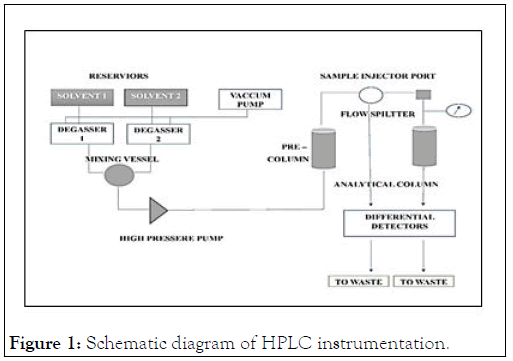
Figure 1: Schematic diagram of HPLC instrumentation.
Chemical reagents
Vortioxetine, Merck provided HPLC grade methanol, acetonitrile, analytical grade ethanol, DMF, DMSO and HPLC grade water.
Instrumentation and analytical conditions
The HPLC device (HPLC Binary gradient system) is consisted of a pump (DEAX02386) equipped l loop model-1260 Infinity II injection valve. The analytical column Kromasil C18, 250 mm × 4.6 mm, 5 μm. (Isocratic elution with Acetonitrile) was operated at ambient temperature. The mobile phase was prepared freshly and degassed by sonicating for 10 min before use (bio-technic ultra sonicator). The UV spectrum of Vortioxetine for selecting the working wavelength of detection was taken using a UV 550 UV visible spectrophotometer [4].
Selection of solvent
Methanol was selected as the solvent for dissolving Vortioxetine hydrobromide.
Preparation of standard solutions for UV scan
In order to prepare stock solution, weighed accurately 25.41 mg Vortioxetine hydrobromide (equivalent to 20 mg of Vortioxetine) and transferred into 20 ml volumetric flask, added 15 ml of methanol and sonicated to dissolve the standard completely and diluted up to the mark with methanol (1000 PPM). Further diluted 0.4 mL to 20 mL with methanol (20 PPM).
Selection of analytical wavelength
The drug was tested using methanol as a blank and Vortioxetine standard solution (20 ppm) from 800 nm to 200 nm, with the absorbance at 226 nm.
Preparation of standard stock solution
The stock solution was prepared by dissolving 25.41 mg Vortioxetine hydrobromide into a 20 ml clean and dried volumetric flask, added about 15 mL of methanol to dissolve it completely and make volume up to the mark with methanol (1000 PPM). Further diluted 2 ml of stock solution to 20 mL with mobile phase (100 PPM) [5].
Selection of analytical wavelength for HPLC method development
The wavelength of the maximum absorption from the spectrophotometric examination, 226 nm was selected as the analytical wavelength for the purpose of this study.
Preparation of system suitability test (Vortioxetine standard solution)
Weighed about 12.70 mg of Vortioxetin hydrobromide (approx equivalent to 10 mg of Vortioxetine) and transferred in 20 mL volumetric flask, added 15 mL of methanol, sonicate to dissolve it, made volume up to the mark with methanol. Pipette out 0.5 ml from standard stock solution and transferred into 25 ml volumetric flask and made volume up to the mark with mobile phase (Approx 10 μ/mL=working concentration), chromatograms were recorded [6].
Analysis of marketed test sample
Marketed test sample Voxigain 5 mg tablets are selected for analysis and validation.
Average weight of test sample (Voxigain 5 mg)
Weighed the 20 tablets at a time and calculated average weight of tablet by following formula:
Average weight (mg)=Weight of 20 tablets (mg)/20
Sample preparation of test sample
20 tablets that were weighed, moved to a mortar and pestle and crushed into a fine powder. Using butter paper, evenly mix all of the parts. The 10 mg powdered material was weighed and then transferred to a 50 ml volumetric flask, then cleaned and dried. Added 35 ml of methanol and sonicated with sporadic shaking for 10 min. Allow the solution to reach room temperature after 10 min, then add methanol to bring the volume up to the desired level. 3-5 mL of the original filtrate were discarded after filtering the mix through a suitable 0.45 μ syringe filter. 20 ml of mobile phase were used to further dilute 1.0 ml of the filtered stock solution (20 mcg of Vortioxetine) [7].
Filtration study
The analytical process of filtration research verifies that the filter is compatible with the sample, that the filter does not interact with extraneous components and that the filter is deposited on the filter bed. This study was conducted with Vortioxetine test sample (Tablet solution). Filtration study carried out by using both unfiltered and filtered test solution. Throughout filtration activity 0.45 μm PVDF and 0.45 μm Nylon syringe filters used by discarding 5 mL of aliquot sample.
Stability of analytical solution
A stability study was conducted on both standard and test sample solutions under normal laboratory conditions. The solution was stored and analyzed after 12 and 24 hours. The study calculated the difference between test solution results at each stability time point to the initial results [8].
Specificity
Specificity is the ability to access unequivocally the analyte in the presence of components which may be expected to be present.
Placebo sample solution preparation
Placebo material weighed 347.69 mg (which is equivalent to 10 mg of Vortioxetine) transferred to clean and dried 50 mL of volumetric flask. Added 35 mL of methanol, sonicated for 10 min with intermittent shaking. After 10 minutes allow to cool the solution to normal temperature and made volume up to the mark with methanol. Filter the solution through suitable 0.45 μ nylon syringe filter discarding 3-5 mL of initial filtrate. Further dilute 1 ml of filtered stock solution to 20 ml with mobile phase, injected the resultant solution and chromatograms were recorded [9].
Solubility study of Vortioxetine HBr
Vortioxetine was soluble in methanol and insoluble in water, hence methanol was selected as the solvent for dissolving Vortioxetine.
Selection of solvent
Methanol was selected as the solvent for dissolving Vortioxetine HBr.
Selection of analytical wavelength
Figure 2: UV spectrum of methanol as a blank.
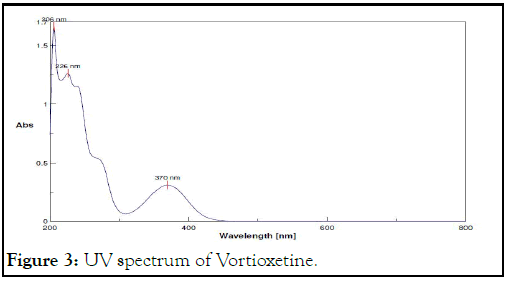
Figure 3: UV spectrum of Vortioxetine.
Observation: The standard solution was scanned between 200 nm to 800 nm. Wavelength of maximum absorption was determined for drug. Vortioxetine showed maximum absorbance at 226 nm. It is shown in above Figures 2 and 3. Therefore 226 nm considered as an analytical wavelength for further determination.
Method development by RP-HPLC
Trial 1:
Observation: Vortioxetin not eluted (Figure 4).
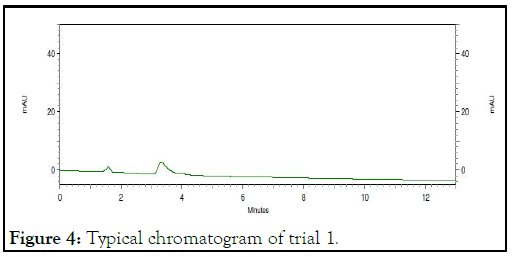
Figure 4: Typical chromatogram of trial 1.
Trial 2:
Observation: Vortioxetin eluted at RT of 4.52 and good chromatography observed. Tried to reduce R.T by change in M.P. Composition in next trial (Figure 5).
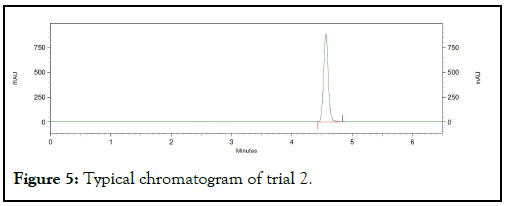
Figure 5: Typical chromatogram of trial 2.
Trial 3:
Observation: Vortioxetin eluted at RT of 2.70 and good chromatography observed (Figure 6).
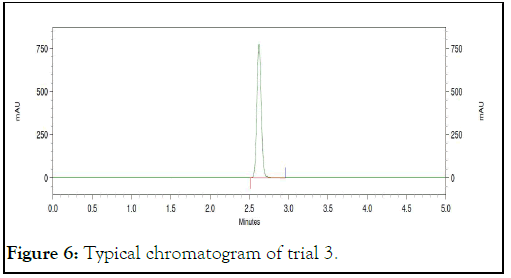
Figure 6: Typical chromatogram of trial 3.
System suitability test
The results for system suitability test of Vortioxetine is shown in Table 1.
| Sr no. | Standard solution | Area | Asymmetry | Theoretical plates |
| 1 | Standard-1 | 6241602 | 1.05 | 8763 |
| 2 | Standard-2 | 6265841 | 1.05 | 8778 |
| 3 | Standard-3 | 6253090 | 1.04 | 8749 |
| 4 | Standard-4 | 6257928 | 1.05 | 8756 |
| 5 | Standard-5 | 6249781 | 1.05 | 8768 |
| Mean | 6253648 | 1.05 | 8763 | |
| STD dev | 9046.53 | |||
| % RSD | 0.145 | |||
Table 1: Results for system suitability test of Vortioxetine.
System suitability acceptance criteria
Relative standard deviation of the area of analyte peaks in standard chromatograms should not be more than 2.0%. Theoretical plates of analyte peak in standard chromatograms should not be less than 2000. Tailing factor (asymmetry) of analyte peaks in standard chromatograms should be less than 2.0.
Analysis of test samples
Voxigain 5 mg:
Weight of 20 tablets=3.6040 gm
Average weight of tablet=3.6040/20=0.1802 gm=180.2 mg (Table 2).
| Sample | Area | % Assay | Mean assay |
| Sample 1 | 6218461 | 99.28 | 99.85 |
| Sample 2 | 6160347 | 98.43 |
Table 2: Results of Voxigain 5 mg tablet.
Filtration study
The analytical procedure included a filtration study to assess the contribution of the filter material, sample deposition and filtersample compatibility to potential interference (Table 3).
| Sample description | Area | % Absolute difference |
| Unfiltered | 6268714 | NA |
| 0.45 µ PVDF filter | 6246413 | 0.36 |
| 0.45 µ Nylon filter | 6252879 | 0.25 |
Table 3: Results of filter study.
Solution stability
To assessed the stability of both the standard and test sample, a study was conducted under typical laboratory conditions. The solutions were stored in a normally lit environment and analyzed at the beginning, after 12 hours and after 24 hours (Table 4).
| Sample solution | Standard solution | ||||
| Time point | Area | % Absolute difference | Time point | Area | % Absolute difference |
| Initial | 6256584 | NA | Initial | 6248965 | NA |
| 12 hours | 6236581 | 0.32 | 12 hours | 6232941 | 0.26 |
| 24 hours | 6208164 | 0.77 | 24 hours | 6219628 | 0.47 |
Table 4: Results of solution stability.
The developed and validated RP-HPLC method offers a simple, rapid, sensitive, specific and robust approach for quantifying Vortioxetine in bulk drug and pharmaceutical dosage forms. This method can be effectively applied for quality control, pharmacokinetic studies and clinical research involving Vortioxetine.
[Crossref] [Google Scholar] [PubMed]
[Crossref] [Google Scholar] [PubMed]
[Crossref] [Google Scholar] [PubMed]
[Crossref] [Google Scholar] [PubMed]
[Crossref] [Google Scholar] [PubMed]
[Crossref] [Google Scholar] [PubMed]
[Crossref] [Google Scholar] [PubMed]
Citation: Thete PV, Kumbhare MR, Patil AV, Pawar RD, Sapkale GA, Chaudhari PD (2025) Rapid and Selective Analysis of Vortioxetine Using RP-HPLC. J Chromatogr Sep Tech. 16:621.
Received: 26-Oct-2024, Manuscript No. JCGST-25-34832; Editor assigned: 30-Oct-2024, Pre QC No. JCGST-25-34832 (PQ); Reviewed: 13-Nov-2024, QC No. JCGST-25-34832; Revised: 18-Jun-2025, Manuscript No. JCGST-25-34832 (R); Published: 25-Jun-2025 , DOI: 10.35248/2157-7064.25.16.621
Copyright: © 2025 Thete PV, et al. This is an open-access article distributed under the terms of the Creative Commons Attribution License, which permits unrestricted use, distribution, and reproduction in any medium, provided the original author and source are credited.