
Journal of Hotel and Business Management
Open Access
ISSN: 2169-0286
ISSN: 2169-0286
Research Article - (2025)Volume 14, Issue 3
Strategic flexibility is a key capability for sustaining firm performance particularly on the market driven firm paradigm. Intrapreneurship led flexibility is aimed at quickly responding to both customer preference changes and competitor actions through innovative organizational means and leads to sustain firm’s competitive advantage in a highly volatile environment. However, empirical observations in the hotel industry of Sri Lanka created a puzzle as to why some tourist hotels that had adopted certain market oriented and competitively important eco-friendly initiatives did not feel a taste of superior performance and enduring competitive advantage although theory supported that market driven business strategies lead to sustainable performance. On this ground, the purpose of the study is to explain how green based intrapreneurship and its associated strategic flexibility affect green based sustainable business performance of the industry. It was hypothesized that green intrapreneurial flexibility positively influences the green based sustainable competitive advantage namely; green based financial performance, green market place position and green inimitability. Structured questionnaires were administered to a random sample of senior managers of the listed hotels in Sri Lanka. Linear regression analysis revealed a significant path coefficient which explained green intrapreneurial flexibility positively influenced green based sustainable competitive advantage of the hotel firms in Sri Lanka. The findings have implications that hotel firms should develop green specific intrapreneurial capabilities so that they can flexibly and quickly adapt their green based product and service offerings in responding to changes of the green market requirements by focusing on green based new venture creation, green innovations, green related self-renewal exercises and eco-friendly proactive decision making in order to sustain their competitive advantage from green initiatives.
Green intrapreneurship; Hotel industry; Strategic flexibility; Sustainable competitive advantage
Background of the study
As firms note the positive gains that can accrue through environmentally friendly marketing strategies and the potential pitfalls associated with non-environmentally friendly strategies, going green is beginning to take center stage in boardrooms around the world. There is a growing interest among top managers, stakeholders and academics regarding green marketing strategies and the potential impact on the triplebottom line. Firms are increasingly adhering to a triple-bottom line performance evaluation, a concept coined to reflect the growing tendency of stakeholders to evaluate organizational performance on the basis of economic prosperity (i.e., profits), environmental quality (i.e., the planet) and social justice (i.e., people). Specifically, firms are expected to commit to green based strategies as (1) The cost of materials and energy continue to rise, (2) Public pressure continues to increase, (3) There is increasing awareness that subscribing to triple-bottom line practices can increase consumer demand and (4) Consumers’ growing antipathy to globalization is leading to strengthening NGO activity relative to green performance. In addition, while the costs of such efforts can be substantial, improved environmental performance has been linked to greater financial performance, competitiveness and innovation benefits [1].
Empirical issue of the hotel industry in Sri Lanka
As per above highlighted theoretical underpinnings as well as tourism industry experts’ expectations, green initiatives, which cover a broad range of practices aimed at reducing the negative environmental impacts generated by a firm’s products and services, are supposed to make hotels competitive from different perspectives leading to low cost and/or differentiation as well as focus strategy specially targeting European countries. With this hope, Sri Lanka hotels are increasingly adopting it in different ways making green orientation as a mainstream route to competitive advantage and performance. This is made very explicit by the fact that increasing number of green based certification and awards won by local star category hotel during last few years as well. However, certain industry data presented above reveals the following inconsistencies relating to the industry performance of graded hotels in Sri Lanka:
Hotels managers claim that some competitively important green initiatives involve huge cost and investment which make it difficult to recover in the medium term and hence difficulty in achieving competitive advantage and superior performance. Further, this argument is supported by the facts that the average occupancy rate of graded hotels has been 77% for the last few years. Occupancy is a key performance indicator of the performance of the hotel. Insufficient occupancy means hotels running at a cost/inability to recover overhead expenses. Star category/graded hotels have faced this destiny. It is also observed that the incapability to be price competitive and adapt packages and prices in far with competitive hotels in the South-Asian region (higher unjustifiable prices even in the off-season) though the industry justifies that this price increases has been mainly due to the rapid increases in cost accommodation in the last year in Sri Lanka. Anyway, industry experts relate that these price increases cannot be justified without adding sufficient value of the offering [2].
With this empirical understanding, it is worthwhile to make the following intellectual query about the graded star category hotels in Sri Lanka. Many star hotels have committed to green based initiatives in varying levels. Some have even implemented green at their hotels at a greater extent with huge investment and been awarded for green initiatives. At the same time, many of hotels do not show signs of sustainable competitive advantage and superior performance on a constant basis. Some of them complain about unsatisfactory level of occupancy level and greater cost in their operations and hence, being less price competitive in the subsidiary establishments in the local market as well as star hotels in the region. However, theoretically as well as practically, green is supposed to make firms competitive and sustainable in performance. This instance presents puzzling situation in the industry that is difficult to answer straightforwardly [3].
In order to clarify the above anomaly conceptually, some scholars provide theoretically rigorous bases in the literature with special reference to the domains of organizational, capabilities and competitive advantage. Being the highly volatile nature of Sri Lankan tourism industry, the hotels should possess the capacities to develop dynamic capabilities which lead to sustain superior performance and competitive advantage by responding to changing needs of customers and stakeholders and adapting hotels’ offerings. Hence, organizational capabilities are strategically important to respond to the market demands especially in a dynamic environment. In a highly dynamic environment, strategic management literature identifies firm’s strategic flexibility as one of important capability to quickly respond and adapt market offerings. In this circumstances, marketing and innovation literature highlight that intrapreneurship as one of the main core organizational processes that help generate the flexibility in firm’s strategy in order to generate superior performance and maintain the competitive performance of the firm [4].
As per this theoretical understanding, the study identifies a valid knowledge gap in relation to green initiatives and competitiveness in the industry. As an approach to elucidate this phenomenon, the present study has limited the scope to investigate the link between the strategic flexibility of green based intrapreneurship and sustained competitive advantage. Thus, in order to address the above knowledge gap, this study raises the research problem as to whether strategic flexibility associated with green based intraprenurship affects superior business performance and sustained competitive advantage of the local tourist hotels [5].
The purpose of the study
In order to address the above research problem, the study presents its major purpose as to identify the present level of strategic flexibility of green based intrapreneurship and green based sustained competitive advantage of the hotels in Sri Lanka and explain the nature of relationship between the concepts [6].
What is green based sustained competitive advantage?
Competitive advantage can be conceptualized as a superior “marketplace position” that captures the provision of superior customer value and/or the achievement of lower relative costs, which results in market share dominance and superior financial performance. Much of the existing research uses superior financial performance or “rent” as an indicator of competitiveness. Further, sustained competitiveness is thought to be in reality a competitive benefit that lasts a protracted length of calendar time. The present have a look at identifies sustained competitiveness as a situation wherein an organization reflects more than simply monetary performance. It's also performed when the advantage resists erosion through competitor or the resources and capabilities underlying an enterprise's aggressive benefit that need to resist duplication by using other corporations. Sustained competitiveness can bring about superior financial and marketplace advantages and distinct skills. This study defines sustainable aggressive benefit as a company to gain not simplest superior economic and marketplace overall performance but also firm exclusive competencies that competitor are unable to replicate because of projects. Theoretical trends within the field of the strategic management has targeted to provide an explanation for how company reap and preserve competitive benefit. The present observe adopts the theoretical framework that underlies herbal useful resource based view and dynamic functionality view of competitive advantage as this framework justify affiliation among herbal environment, firm sources and talents for sustainable overall performance of firm in a dynamic environment [7].
What are the competitively important green initiatives for the hotel industry?
According to Dief and Font green and environmental practices can be generally classified into two categories: “organizational or software” and “operational or hardware”. As cited by Dief and Font, organizational practices are relevant to the development and implementation of an Environmental Management System (EMS); a system that helps companies identify and manage environmental issues and consequences related to their operations in a holistic and consistent way (International Hotel and Restaurant Association (IH and RA), United Nations Environment Programme (UNEP) and EUHOFA). Dief and Font report that organizational practices related to green initiatives refer to the extent to which a company has modified its systems and structures to accommodate an environmental program, which defines an environmental policy, establishes environmental objectives and targets, evaluates the firm’s environmental performance in a regular basis, delegates environmental responsibilities and provides environmental training for employees. In identifying operational factors related to green based initiatives, Dief and Font cite that that cutting operating costs and minimizing resource consumption is the most convincing strategy to engage hotel management. Dief and Font recognize that opportunities for cutting operational costs revolve around four areas: Water and wastewater management, energy management, solid waste reduction and management and green purchasing.
Linkage between green intrapreneurial flexibility and green based sustained competitive advantage
One important insight generated from research is that sustainable competitive advantage from organizational capabilities may lie in their influence on value-creating, firmspecific and hard-to-copy resources and capabilities. In other words, organizational resources and capabilities may enhance a firm’s bottom-line performance by supporting its efforts to build and exploit valuable, unique and non-imitable resources and capabilities.
Under dynamic capability perspective, green intrapreneurial flexibility leads firm to develop ability to more creative and new ideas and seeking, forward-looking involving introducing new products or services ahead of the competitor and acting in anticipation of future wants and needs in the marketplace. In addition, firm is brave to take actions such as committing large amounts of resource to operation with uncertain outcomes and willingness to break away from the venture into the unknown. Firm which develops green related intrapreneurial capability may also benefit from the innovative and proactive efforts toward pioneering the development of new products, process and services related to energy and water, savings, waste reduction and pollution prevention. Hence, the study argues that strategic flexibility in green based intrapreneurial endeavors of the hotel firms would result in green based sustainable competitive advantage in a highly volatile tourism industry [8].
Conceptual model of the study
The above review of literature paved the way to develop the following conceptualization as shown in the Figure 1.
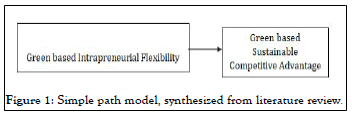
Figure 1: Simple path model, synthesized from literature review
Hypothesis of the study
The study has developed the following hypothesis based on the literature review undertaken above as depicted in the conceptual model.
Hypothesis: Green intrapreneurial flexibility of the hotel positively influences green based sustainable competitive advantage.
Following the positivistic research tradition and the quantitative research approach, survey research strategy was adopted.
Population and sample of the study
The population of the study consisted of the 266 local star category and unclassified hotels of Sri Lanka registered with the Sri Lanka tourism development authority. 100 hotels covering different categories of the hotels as it satisfies rules of thumb proposed by Roscoe. The random sampling techniques were employed in selecting the hotels in each stratum. The response rate was around 60% as some respondents did not return the completed questionnaire.
Operationalization, reliability and validity of the constructs
Green intrapreneurial flexibility scale consisted of a composite measure of four factors adapted from using Antoncic and Hisrich’s. Green based sustained competitive advantage was measured using a composite measure by adapting 13 items developed by Day and Wensley, which consists of namely financial performance, market place position and inimitability of firm’s green strategy and distinctive green capabilities. Selfadministrative questionnaires consisting of five-point Likert scales were used to collect the predetermined data. As depicted in the Table 1, Cronbach’s alpha was calculated to measure the reliability/internal consistency of the measurement scales. If the value is ≥ 0.7, the scales were sufficiently reliable. The face/ content validity of the scales was assured through experts’ reviews and literature survey. In order to test the dimensionality of the measurement constructs, an exploratory factor analysis was performed by following the procedure recommended by Churchill [9].
| Variable | No. of items | Cronbach’s alpha |
| Green intrapreneurial flexibility | 14 | 0.78 |
| Green based sustained competitive advantage | 13 | 0.7 |
Table 1: Reliability analysis.
Data analysis strategy
Data analysis strategy in the study consisted of both descriptive statistical analysis and inferential statistical analysis. The hypothesis test was carried out using multiple linear regression analysis. The Statistical Package for Social Sciences (SPSSR) version 17.0 was used for data analysis.
A descriptive analysis based on mean values were carried out. The results revealed the following as depicted in the Table 2.
| Variable | Mean | Standard deviation |
| Overall green intrapreneurial flexibility | 4.07 | 0.51 |
| 1) Green based new business ventures | 3.76 | 0.56 |
| 2) Green innovation | 4.08 | 0.44 |
| 3) Green self-renewal | 4.26 | 0.24 |
| 4) Green proactiveness | 4.16 | 0.62 |
| Green based sustained competitive advantage | 4.16 | 0.48 |
Table 2: Descriptive analysis.
The overall mean value of 4.7 for the green intrapreneurial flexibility implies that hotels have strategic flexibility from green initiatives to a sufficient level. However, the mean analysis of the sub scales of green intrapreneurial flexibility highlights that the hotels in the sample have less flexibility in green based new business ventures (3.76 on a five point Likert scale) whilst they have satisfactory level of flexibility in the areas of green innovation, green self-renewal and green proactivity (respectively 4.08, 4.26 and 4.16 on five point Likert scale). The mean value for the green based sustained competitive advantage is 4.16 (on a five point Likert scale) which describes that the average hotel in the sample enjoy green based sustained competitive advantage to a considerable extent.
In testing the hypothesis depicted the conceptual model, the linear regression analysis revealed the following results as shown in the Table 3.
| Green based sustainable competitive advantage | ||
| Independent variable | β | P value |
| Green intrapreneurial flexibility | 0.31 | 0.01 |
| Adjusted R2 | 0.36 | |
| Note: *Dependent variable is green based sustainable competitive advantage | ||
Table 3: Linear regression results.
The findings empirically support that these hotels have undertaken green initiatives which reflect intrapreneurail capabilities and their associated strategic flexibilities in order to quickly respond to the green market demands in the hotel industry in Sri Lanka. These have paved the way forward to improve green based financial performance, inimitability of green based capabilities and competitive position of the hotels. In the regression model predicting sustained competitive advantage, the goodness of fit is predicted using R2 which is 0.36.
This implies that green intrapreneurail flexibility can predict only 36% of the total change of green based sustained competitive advantage whilst there are other important factors that predict green based sustained competitive advantage of the industry.
In final analysis, developing green market based capabilities from an intrapreneurial perspective is a prerequisite to implement the resource- productivity model and acquire sustained competitive advantage in green based product markets of the hotel sector in Sri Lanka.
Citation: Ahsan FJ, Samarasinghe GD (2025) Sustaining Green Based Competitive Advantage through Green Intrapreneurial Flexibility Evidence Sri Lanka Based Hotel Industry. J Hotel Bus Manag. 14:232.
Received: 12-Sep-2024, Manuscript No. JHBM-25-33982; Editor assigned: 16-Sep-2024, Pre QC No. JHBM-25-33982 (PQ); Reviewed: 30-Sep-2024, QC No. JHBM-25-33982; Revised: 08-Apr-2025, Manuscript No. JHBM-25-33982 (R); Published: 14-May-2025 , DOI: 10.35248/2169-0286.25.14.232
Copyright: © 2025 Ahsan FJ, et al. This is an open-access article distributed under the terms of the Creative Commons Attribution License, which permits unrestricted use, distribution, and reproduction in any medium, provided the original author and source are credited.