Journal of Agricultural Science and Food Research
Open Access
ISSN: 2593-9173
ISSN: 2593-9173
Research Article - (2025)Volume 16, Issue 1
Indian sandalwood, renowned for its aromatic heartwood and essential oil, holds a revered status in traditional practices and modern industries. It’s essential oil, celebrated for its exquisite fragrance, is a staple in perfumery, cosmetics and traditional medicine due to its antimicrobial, anti-inflammatory and potential anti-cancer properties. Culturally, sandalwood is deeply embedded in Indian traditions, where it is utilized in religious ceremonies and for crafting sacred artifacts symbolizing purity and serenity. From an economic perspective, the high demand for sandalwood, coupled with its slow growth rate, has led to significant challenges in its cultivation and conservation. The review addresses the over-exploitation of natural sandalwood resources, necessitating the development of sustainable cultivation practices to ensure its future availability. This involves enhancing genetic strains, adapting to climate change and promoting biodiversity through agroforestry systems that provide multiple income streams for farmers. The review also highlights the critical challenges in cultivating sandalwood, including its need for specific climatic conditions and susceptibility to pests and diseases. These challenges are compounded by the economic risks associated with the high value of sandalwood and its long maturity period, which can deter investment and conservation efforts. Technological advancements play a pivotal role in addressing these challenges, with innovations in biotechnology and precision agriculture improving yields and sustainability. The review advocates for a balanced approach that meets commercial demands while maintaining ecological and cultural integrity. It calls for continued research, international cooperation and adaptive management strategies to secure a sustainable future for Indian Sandalwood cultivation and trade. The review emphasizes the need for integrated approaches combining traditional knowledge with modern scientific and technological advances to optimize sandalwood cultivation.
Sustainable cultivation; Essential oil; Medicinal properties; Conservation efforts; Technological advancements
Indian sandalwood, scientifically known as Santalum album, is a highly valued plant species native to the Indian subcontinent and is now found in other parts of the world like Australia due to cultivation efforts. Known for its aromatic heartwood and oil, sandalwood has been celebrated for centuries in various cultural, medicinal and economic contexts. The essential oil derived from sandalwood is renowned for its fragrance and therapeutic properties, making it a staple in perfumes, cosmetics and aromatherapy products. Recent studies have demonstrated that sandalwood essential oil possesses significant antimicrobial and anti-inflammatory properties, enhancing its value in cosmetic and therapeutic applications [1].
Culturally, sandalwood holds a revered place in Indian traditions and rituals. It is extensively used in religious ceremonies and for crafting idols, temple doors and other religious artifacts. Its presence is ubiquitous in Hindu rituals, where it is used in the form of paste or oil for anointing deities and participants during sacred ceremonies, believing it to purify the environment and calm the mind and spirit. Moreover, sandalwood's cooling properties make it a popular choice in spiritual practices to promote clarity and focus. Studies have indicated that sandalwood paste can effectively reduce stress levels and promote relaxation during meditation practices.
Medicinally, sandalwood oil features prominently in traditional Ayurvedic medicine. It is credited with anti-inflammatory, antiseptic and astringent properties, making it beneficial in the treatment of a range of conditions from skin disorders to respiratory ailments. Recent research has expanded its medicinal profile to include anti-cancer properties, particularly in skin and breast cancers. A study found that sandalwood oil exhibits cytotoxic effects on breast cancer cells, suggesting its potential as a complementary treatment. Additionally, its soothing effect is utilized in products aimed at mental health, where it is believed to reduce anxiety and stress. A clinical trial demonstrated that sandalwood oil aromatherapy significantly decreased anxiety in patients undergoing medical procedures.
Economically, the demand for Indian sandalwood has significant implications. It is one of the most expensive woods in the world, driven by its demand in perfumery and pharmaceutical industries. As a result, sandalwood has become a lucrative crop, encouraging both large-scale and small-scale cultivation. However, the high value also makes it a target for illegal harvesting and smuggling, which has led to considerable declines in wild populations, making cultivation under controlled conditions increasingly important. Recent conservation studies have highlighted the importance of sustainable cultivation practices to ensure the long-term availability of sandalwood resources. Efforts to genetically enhance sandalwood trees for better yield and disease resistance are also underway, offering promising solutions to meet growing demand.
Furthermore, the impact of climate change on sandalwood cultivation has become a subject of recent investigation. Studies suggest that changing climate patterns could affect the growth and oil composition of sandalwood trees, necessitating adaptive strategies in cultivation practices. Another study has explored the economic benefits of integrating sandalwood cultivation with agroforestry systems, which can provide additional income streams for farmers and promote biodiversity [2].
In addition to its primary uses, sandalwood by-products are also gaining attention for their potential applications. Research indicates that sandalwood sawdust and other residues can be utilized in the production of high-value byproducts, contributing to a circular economy. Moreover, advancements in extraction techniques are improving the efficiency and sustainability of sandalwood oil production, ensuring higher purity and yield.
The integration of sandalwood in modern pharmacological formulations is also being explored, with studies showing promising results in the development of new therapeutic agents for various diseases. These developments underscore the continued relevance and potential of Indian sandalwood in contemporary research and industry.
The purpose of this review is to dissect these various elements comprehensively. It seeks to explore the current state of sandalwood in terms of its cultivation practices, focusing on sustainable methods that can help in preserving this precious resource for future generations. Additionally, the review aims to analyze the market trends that shape the global demand and supply of sandalwood. This includes understanding price dynamics, exploring new markets and evaluating the impact of international trade policies on trade.
Botanical description and geographic distribution
Indian sandalwood or Santalum album, belongs to the family Santalaceae and is one of the most precious and aromatic woods known globally. Santalum album is a small tropical tree, which can grow up to 10-15 meters in height, characterized by its highly fragrant heartwood. The tree possesses a dark brown bark with a deep orange wood underneath. It is a hemi parasitic plant, requiring host plants from which it derives nutrients through specialized root structures called haustoria. Sandalwood leaves are thin, ovate and have a shiny appearance, which helps minimize water loss, an adaptation to its dry habitat [3].
The tree’s flowers are small, purple-brown and while not visually striking, are quite fragrant, reflecting the tree’s use in perfumes and aromatics. The fruit is a small, round, fleshy drupe, turning black upon maturity. Typically, it takes about 10-15 years for Indian sandalwood to reach maturity, when it starts producing oil; however, the best quality wood and oil are obtained from trees that are 40-60 years old.
Indian sandalwood was predominantly found in the forests of Southern India (Figure 1), particularly in the states of Karnataka, Tamil Nadu and Kerala. Its natural habitat spans dry deciduous to semi-evergreen forests, thriving in regions with moderate rainfall and dry conditions for part of the year. The tree grows well in red ferruginous loam, found abundantly in these areas. Over the years, due to high demand and consequent overharvesting, its presence in the wild has diminished, leading to it being listed as a vulnerable species by the IUCN.
Efforts to cultivate Santalum album have expanded its geographic distribution. It is now also grown in plantations in various parts of India and has been introduced in other countries such as Australia, Indonesia and the islands of the Pacific and Indian oceans. These regions mimic its native climatic conditions, allowing for successful growth and development outside its indigenous range [4].
Understanding the taxonomy and natural habitat of Indian sandalwood is crucial for effective cultivation and conservation. Its unique requirements and slow growth rate make it a challenging yet rewarding tree to cultivate. The knowledge of its botanical characteristics helps in developing better plantation practices that can ensure healthy growth and sustainable production. Moreover, recognizing the regions conducive to its growth allows for strategic planning in terms of global cultivation efforts, which is vital given the tree's economic and ecological significance.
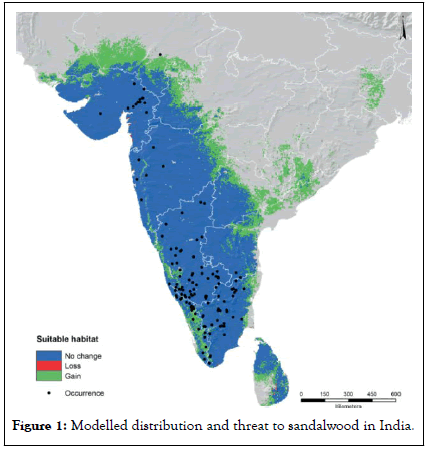
Figure 1: Modelled distribution and threat to sandalwood in India.
Sustainable cultivation practices
The cultivation of Indian sandalwood (Santalum album) involves specific practices tailored to its unique botanical needs and slow growth cycle.
Site selection and soil requirements: Successful cultivation of Indian sandalwood begins with proper site selection. The ideal location should mimic its native habitat conditions, which includes a climate characterized by dry periods followed by moderate rainfall. The tree thrives at altitudes ranging from 600 to 900 meters above sea level, although it can adapt to a variety of altitudes as long as other conditions are met. Soil quality is paramount sandy loam soils with good drainage and a neutral to slightly acidic pH (6.0-7.5) are preferred. The soil must be deep enough to accommodate the extensive root system and must be capable of supporting the host plants required for the tree's hemiparasitic nature. Pre-planting soil treatment to improve structure and fertility can enhance growth conditions, particularly if organic matter is added to increase the soil's nutrient and water-holding capacity.
Propagation methods: Propagation of Indian sandalwood can be achieved through seeds or vegetative methods. Seed propagation is the most common approach due to its simplicity and effectiveness [5]. Seeds require careful handling as they are prone to losing viability quickly when dried. Stratification (pretreatment to overcome dormancy) involving soaking seeds in water for 48 hours improve germination rates. The seedlings are then typically grown in nursery conditions before being transplanted to the field. Vegetative propagation, involving methods like grafting or tissue culture, is utilized to preserve desirable genetic traits and enhance disease resistance. Tissue culture, in particular, allows for the rapid multiplication of superior strains and is beneficial for large-scale plantations looking to maintain consistency in wood and oil quality.
Plantation management: Effective management of a sandalwood plantation covers several aspects, including irrigation, pest and disease management. Irrigation needs to be carefully managed; sandalwood does not tolerate waterlogging, yet it requires consistent moisture, especially in the dry season. Drip irrigation systems are often preferred as they provide controlled water delivery directly to the root zone. Pest and disease management are critical, given sandalwood’s susceptibility to issues like root rot, sandalwood spike disease and attacks from insects such as borers. Regular monitoring and integrated pest management strategies, including the use of biological control agents and selective pesticide application, help maintain plant health.
Harvesting techniques and age of maturity: Indian sandalwood trees are typically ready for initial harvesting after 10-15 years, which is when they start producing significant amounts of oil. However, for optimal heartwood and oil quality, trees are ideally harvested between 30 to 60 years. The harvesting process involves the complete removal of the tree, including roots, since the valuable heartwood extends into the root system. The techniques of harvesting must ensure minimal damage to the wood to preserve its quality. After harvesting, the wood is processed to extract the oil, which is done through steam distillation, a method that efficiently captures the essence of sandalwood while preserving the integrity of the oil.
The cultivation of Indian sandalwood requires detailed attention to various agricultural practices from the selection of the site and soil preparation to the care throughout the growth period and the harvesting of mature trees. Given its economic value and slow growth, each step must be meticulously planned and executed to ensure the sustainability of cultivation and profitability of the crop.
Market trends
The market dynamics for Indian sandalwood (Santalum album) provide a fascinating insight into its economic impact and global significance. Historically, Indian sandalwood has been a symbol of luxury and exclusivity, with its use dating back thousands of years in India for purposes ranging from religious ceremonies to medicinal applications. The demand for sandalwood in ancient times was fueled primarily by its use in crafting religious artifacts and its revered status in ayurvedic medicine. Over the centuries, this demand has only increased, but the context has expanded significantly, especially with the advent of global trade [6].
In modern times, the market for Indian sandalwood has evolved, driven by its popularity in perfumes, cosmetics and pharmaceuticals. The aroma industry, particularly in the west, has revered sandalwood oil for its unique, deep, woodsy scent and its ability to blend well with other fragrances. This has established Indian sandalwood as a staple in high-end fragrance formulations. The demand for Indian sandalwood is primarily driven by the perfume industry, which consumes a significant portion of the global supply. Additionally, there is a robust market in the pharmaceutical and cosmetic sectors, where the oil and wood are used for their various supposed health benefits and luxurious appeal.
However, the supply of Indian sandalwood has historically been restricted due to over-harvesting and inadequate cultivation practices, leading to a scarcity that only inflates its market value. In response, countries like Australia have entered the market, cultivating Indian sandalwood to meet global demands, which has slightly eased the supply shortage but also introduced new challenges and competition.
The price of Indian sandalwood has been notably volatile, subject to the classic economic pressures of supply and demand. Over the past few decades, prices have skyrocketed as natural supplies dwindled and demand continued to rise unabated. The introduction of cultivated sandalwood has begun to stabilize prices somewhat, but they remain high due to the long maturity period of the trees (10-15 years) and the high cost of cultivation and extraction.
Major markets (domestic and international): Domestically, India remains a significant consumer of sandalwood, not just for traditional and religious purposes but also in domestic industries such as handicrafts and small-scale aromatic products. Internationally, the United States, Europe and Japan are major markets for Indian sandalwood oil, primarily driven by the perfume industry. China has also emerged as a significant player, with increasing use in aromatherapy and traditional Chinese medicine.
The trade of Indian sandalwood has been heavily impacted by both domestic and international regulations. In India, sandalwood is classified as a "reserved tree," meaning its cutting and transports are regulated by the government. This was a response to rampant illegal cutting and smuggling due to the high value of the wood. Internationally, CITES (the Convention on International Trade in Endangered Species of Wild Fauna and Flora) regulates its trade to prevent over-exploitation.
Such regulations have had mixed impacts. While they have helped somewhat in conservation efforts and stabilizing legal supplies, they have also inadvertently fueled a black market where illegal wood can fetch extraordinarily high prices. Additionally, regulations have led to significant paperwork and bureaucracy in the legal trade, sometimes delaying shipments and affecting the freshness and quality of the wood and oil.
The market for Indian sandalwood is complex and influenced by a myriad of factors from cultural heritage and industrial demand to conservation efforts and global economics. As we move forward, the sustainability of sandalwood production will hinge on advanced cultivation techniques, stricter enforcement of harvesting regulations and a balanced approach to meeting commercial demands without compromising the ecological and cultural integrity of this valuable species. Moving forward, the sustainability of the Indian sandalwood market will increasingly depend on innovations in cultivation and regulatory frameworks that effectively balance economic benefits with ecological conservation. As global awareness of environmental issues grows, consumers and businesses are beginning to prioritize sustainably sourced products, which could shift market preferences and influence pricing structures significantly. Furthermore, advancements in biotechnology, such as genetic modification and improved propagation techniques, hold the potential to increase yields and reduce the maturity time of sandalwood trees, thereby addressing some of the supply constraints. Additionally, the development of synthetic alternatives to sandalwood oil may relieve some pressure on natural stocks, but it's also likely to create a market segmentation between 'natural' and 'synthetic' products, each catering to different consumer bases. These evolving dynamics underscore the need for ongoing research, international cooperation and adaptive management strategies to ensure that the Indian Sandalwood industry thrives in a manner that is both economically viable and environmentally responsible.
| Title | Main focus | Author(s) and year |
| Analysis of policies in sustaining sandalwood resources in India | Discusses policies affecting sandalwood cultivation and highlights the need for policy liberalization | Rao, et al. 2016 |
| Looking ahead-global sandalwood production and markets in 2040 and implications for Pacific Island producers | Provides a prognosis for global sandalwood production and demand, predicting strong markets up to 2040 | Thomson, 2020 |
| Tropical forestry services: A case study of embracing entrepreneurial leadership in charting east-west markets for ancient Indian sandalwood | Highlights the entrepreneurial strategies of tropical forestry services in the sandalwood market | Peden, et al. 2017 |
| Progress and future research trends on Santalum album: A bibliometric and science mapping approach | Analyzes research trends on Indian sandalwood and suggests future research areas | Ramanan S, et al. 2020 |
| Economics of Santalum album L. cultivation under semiarid tropics of Karnataka, India | Evaluates the economic viability of sandalwood cultivation under different intercropping systems | Divakara Bn, et al. 2018 |
| The population decline of Indian sandalwood and people’s role in conservation-an analysis | Discusses the decline in sandalwood population and the role of policy changes in its conservation | Arunkumar, et al. 2016 |
| Biopriming of seeds with plant growth promoting bacteria Pseudomonas fluorescens for better germination and seedling vigour of the East Indian sandalwood | Investigates the effect of biopriming on sandalwood seed germination | Chitra and Jijeesh, 2021 |
| Sandalwood plantations-points to ponder | Examines the ecological and silvicultural aspects of sandalwood plantations | Anon and Chittapur, 2021 |
| Identification of market adulterants in East Indian sandalwood using DNA barcoding | Uses DNA barcoding to identify adulterants in the sandalwood market | Dev, et al. 2013 |
| Trends in the marketing of some important medicinal plants in Uttarakhand, India | Analyzes marketing trends of medicinal plants including sandalwood | Kuniyal, et al. 2013 |
| Population dynamics of the striped mealy bug ferrisia virgata (Cockerell) (Hemiptera, Pseudococcidae) and the scope of its biological suppression in the present scenario of cultivation of Indian sandalwood | Investigates the population dynamics and biological control of a major pest affecting sandalwood | Shanbhag, 2017 |
| Santalum album L. (Indian sandalwood) oil content variation of Welimada region, Sri Lanka | Examines the variation in oil content of sandalwood trees in Sri Lanka | Samarasekera, et al. 2012 |
| A threat to sandalwood cultivation in the naturalised Marayoors sandalwood reserve (Kerala, India) through single and mixed phytoplasma infections | Reports on the threats to sandalwood cultivation from phytoplasma infections | Ramachandran, et al. 2020 |
| Participatory value chain study for yasi sandalwood (Santalum yasi) in Fiji | Presents a value chain analysis for yasi sandalwood in Fiji | Thomson, et al. 2020 |
Table 1: Studies on market trends and cultivation practices of Indian sandalwood.
Sustainable practices and challenges
The cultivation and conservation of Indian sandalwood (Santalum album) present a unique set of challenges and opportunities. Sustainable cultivation of Indian sandalwood involves several practices designed to ensure the long-term viability of sandalwood resources while minimizing environmental impact. One fundamental technique is the use of host plants that provide the necessary nutrients to the parasitic sandalwood trees without depleting the soil. Leguminous plants, which fix nitrogen in the soil, are commonly used as host plants and help in maintaining soil fertility.
Another technique is the implementation of Integrated Pest Management (IPM) strategies that use biological pest control methods, reducing the reliance on chemical pesticides. This approach not only protects the plantation from pests but also preserves the surrounding biodiversity and prevents the buildup of chemical residues in the environment.
Additionally, rotational harvesting and selective logging are employed to ensure that not all trees are harvested at once, allowing younger trees more time to mature fully and ensuring a continuous supply of sandalwood. Water conservation measures, such as drip irrigation, are also critical in regions prone to drought, ensuring that sandalwood cultivation does not strain local water resources [7].
Challenges in cultivation
The cultivation of Indian sandalwood faces several significant challenges:
Climatic challenges: Sandalwood trees require specific climatic conditions to thrive, including well-defined dry and wet seasons. Climate change poses a significant threat by altering rainfall patterns and increasing temperatures, which can lead to stress on plants, reduced growth rates and increased susceptibility to diseases.
Biological challenges: Being a hemiparasitic plant, sandalwood requires appropriate host plants throughout its lifecycle. The choice of host plants, their management and the timing of their introduction all play critical roles in the health and productivity of sandalwood plantations. Additionally, the trees are susceptible to a range of pests and diseases, such as the sandalwood spike disease, which can devastate plantations if not managed promptly.
Economic challenges: The high value of sandalwood can lead to over-exploitation and illegal trading. The long maturity period of the trees (10-15 years at a minimum for initial harvesting) requires substantial upfront investment and poses financial risks, particularly for smallholders. Price volatility in the global market can also impact growers, who might face years of low prices after investing heavily in plantation development.
Conservation status and efforts
Indian sandalwood is classified as vulnerable by the IUCN Red List due to its declining natural populations, primarily driven by habitat loss and over-harvesting. Conservation efforts are thus focused on both protecting existing forests and encouraging the sustainable cultivation of sandalwood.
In-situ conservation efforts include protecting natural habitats and implementing strict regulations on the harvesting of wild sandalwood. Ex-situ conservation strategies involve the establishment of sandalwood plantations that utilize sustainable practices, thereby reducing the pressure on wild populations. Government and non-governmental organizations are working to strengthen the enforcement of laws against illegal logging and trading of sandalwood. Additionally, there is a significant push towards community involvement in sandalwood cultivation, which not only provides economic benefits to local communities but also promotes a stewardship model of conservation, where those who live with the resource are its most passionate protectors.
Sustainable practices in the cultivation of Indian sandalwood are crucial for its survival and for the ecological health of its native and adopted regions. Addressing the challenges in cultivation through advanced research, community engagement and strict enforcement of conservation laws will be key to ensuring that this valuable species thrives in the future. These efforts not only protect the species but also secure the livelihoods of those dependent on sandalwood for economic and cultural reasons.
Furthermore, advancing technology and research in the field of agriculture and forestry can greatly enhance the sustainability of sandalwood cultivation. Modern techniques such as precision agriculture, which utilizes GPS and IoT sensors, can optimize water usage and monitor plant health on a granular level, thereby increasing yield while minimizing waste. Research into genetically improved varieties of sandalwood that are more resilient to diseases, pests and variable climatic conditions can also contribute significantly to the sustainable cultivation practices. Collaborative international research and sharing of best practices are crucial for developing such innovations. These technological advancements, combined with traditional knowledge and sustainable management practices, have the potential to revolutionize sandalwood cultivation, making it both environmentally sustainable and economically viable for generations to come.
Technological advances
The cultivation and trade of Indian sandalwood (Santalum album) have significantly benefited from technological advancements in recent years. Innovations in cultivation and harvesting techniques, biotechnological interventions and the application of information technology have all played pivotal roles in enhancing the efficiency, sustainability and profitability of sandalwood production. Technological innovations have revolutionized the way Indian sandalwood is cultivated and harvested. Precision agriculture technologies, including the use of GPS and drones, allow for precise mapping and monitoring of sandalwood plantations. This technology aids in efficient land management, optimizing irrigation schedules and applying fertilizers and pesticides more judiciously. Drones, in particular, can be used for aerial seeding and spraying, significantly reducing labor costs and improving coverage accuracy.
Harvesting technologies have also seen significant improvements. Automated harvesting machines have been developed to carefully extract sandalwood trees with minimal damage to the wood, preserving its quality for further processing. These machines can adjust to the size and shape of the tree, ensuring efficient and sustainable harvesting practices. Biotechnology has provided powerful tools for improving the propagation and health of Indian sandalwood trees. Tissue culture techniques have been particularly transformative, enabling the mass production of disease-free and genetically uniform plantlets. This method not only ensures the rapid propagation of sandalwood but also helps in preserving genetic diversity and selecting traits such as improved growth rates and oil content.
Genetic engineering and molecular marker-assisted selection are being explored to develop disease-resistant sandalwood strains. These techniques can identify and enhance specific genetic traits that make plants less susceptible to common diseases like root rot or the sandalwood spike disease, significantly reducing crop losses and chemical use in plantations.
Information technology has dramatically transformed market analysis capabilities for Indian sandalwood. Big data analytics and artificial intelligence are now used to analyze market trends, consumer preferences and price fluctuations, providing stakeholders with actionable insights. These technologies help in forecasting demand and supply dynamics, enabling producers and traders to make informed decisions about production scales, marketing strategies and resource allocation.
Blockchain technology is also making its way into the sandalwood market, providing a transparent and secure method for tracking the provenance and trade of sandalwood products. This not only helps in combatting illegal trading but also enhances consumer trust by guaranteeing product authenticity.
Additionally, digital platforms for trading sandalwood have expanded the market reach, allowing producers to connect directly with buyers around the world. These platforms often incorporate tools for secure payments, contract management and logistics planning, streamlining the entire trade process [8].
The integration of advanced technologies in the cultivation, propagation and trading of Indian sandalwood is crucial for addressing current challenges and tapping into new opportunities. These technologies not only enhance the economic viability of sandalwood production but also contribute to sustainable practices that are essential for the longterm preservation of this valuable species. By continuing to invest in and adopt these technological advancements, the sandalwood industry can ensure a prosperous and sustainable future.
The exploration of market trends, cultivation practices and the technological advancements associated with Indian sandalwood (Santalum album) underscores its significant cultural, medicinal and economic value. As the industry moves forward, it faces the dual challenge of meeting growing global demand while ensuring the sustainability of both the tree species and the ecosystems in which it thrives. This comprehensive review highlights the importance of integrating traditional knowledge with modern scientific and technological innovations to cultivate and utilize sandalwood more efficiently and sustainably. Moreover, the evolving global market landscape demands continual adaptation and vigilance to protect this valuable species from over-exploitation and ensure its availability for future generations. Ultimately, the future of the Indian sandalwood industry will hinge on its ability to innovate, adapt and conscientiously manage this unique natural resource, reflecting a broader commitment to balancing economic development with environmental stewardship. Furthermore, the ongoing development of new markets and the discovery of novel uses for Indian Sandalwood offer exciting prospects for expanding its economic impact while contributing to global wellbeing. The potential applications in pharmaceuticals, aromatherapy and luxury goods exemplify how this ancient resource can meet modern needs. However, these opportunities also bring responsibilities, particularly in terms of ethical sourcing and maintaining biodiversity. To sustainably harness the full potential of Indian sandalwood, a collaborative approach involving researchers, cultivators, industry stakeholders and policymakers is essential. Such a multifaceted strategy will ensure that the benefits of sandalwood cultivation are distributed equitably and that this venerable tree continues to thrive in its native habitats and beyond, safeguarding its legacy and ecological benefits for future generations.
Very glad to thank Dean-school of post graduate studies Tamil Nadu Agricultural University Coimbatore and tree outside forest USAID for funding.
There is no conflict of interest among all coauthors in this manuscript.
[Crossref] [Google Scholar] [PubMed]
[Crossref] [Google Scholar] [PubMed]
Citation: Gowsalya M, Sudhagar RJ, Mathivanan M, Sekar I, Radha P, Kiruba M (2025) Market Trends and Sustainable Cultivation Practices of Indian Sandalwood-A Comprehensive Review. J Agri Sci Food Res. 16:200.
Received: 17-Sep-2024, Manuscript No. JBFBP-24-34106; Editor assigned: 20-Sep-2024, Pre QC No. JBFBP-24-34106 (PQ); Reviewed: 04-Oct-2024, QC No. JBFBP-24-34106; Revised: 16-Feb-2025, Manuscript No. JBFBP-24-34106 (R); Published: 23-Feb-2025 , DOI: 10.35248/2593-9173.24.16.200
Copyright: © 2025 Gowsalya M, et al. This is an open-access article distributed under the terms of the Creative Commons Attribution License, which permits unrestricted use, distribution and reproduction in any medium, provided the original author and source are credited.