
Journal of Chromatography & Separation Techniques
Open Access
ISSN: 2157-7064
ISSN: 2157-7064
Research Article - (2026)Volume 17, Issue 1
Bromate is a harmful environmental contaminant and a suspected human carcinogen that is increasingly found in drinking water (categorised as class 2B carcinogens). Although bromate is not a natural constituent of water, it is introduced through various industrial and chemical processes, as well as water disinfection itself. The use of chemicals like potassium bromate, hypochlorite’s, processes like ozonisation being the chief contributors. There are many techniques available to quantify bromate ion. However, many of the techniques does not provide sufficient sensitivity and selectivity. Ion exchange chromatography is one of the best techniques to quantify bromate ion present in drinking water. It is a cost-effective and efficient technique for detecting bromate in water samples at sub-ppb levels. By using a pre-concentration column, higher sensitivity can be achieved without the use of expensive detectors like UV-vis or mass spectrometers and colouring chemicals. This approach not only makes the process more affordable but also ensures that even very low concentrations of bromate (0.1 ppb), well below the maximum permissible levels set by various agencies (~1.5 ppb), can be accurately quantified. This could be substantially helpful in achieving better quality and safety of drinking water.
Ion exchange chromatography; Bromate content; Drinking water; Conductivity detection; Anion exchange column
IC: Ion Chromatography; MS: Mass Spectrometer; UV-Vis: Ultraviolet Visible; LOD: Limit of Detection; LOQ: Limit of Quantification; ppm: parts per million; ppb: parts per billion; BrO3: Bromate; WHO: World Health Organization; EPA: Environmental Protection Agency; PCC: Pre Concentration Column; RSD: Relative Standard Deviation; RT: Retention Time; S/N ratio: Signal to Noise ratio
Bromine [Ar]4s2,3d10,4p5, a halogen exists in various oxidation forms as bromide, a monovalent negative ion, Bromine radical in neutral form, hypo bromous acid, hypo bromide in monovalent positive, bromine dioxide (trivalent positive), and the bromate (pentavalent positive) besides hypobromite radical. Out of these forms the monovalent bromide is found in the ground water. Bromide concentration in groundwater varies from 10 μg/L to 1000 μg/L in fresh waters and at higher levels (67 mg/L) in seawater [1]. Out of these forms, the pentavalent oxygenated compound of bromine, namely the Bromate anion (BrO3-), is the chief contaminant and a class 2B carcinogen is found in the drinking water. Bromate does not exist in the natural water, however ground water contamination has been reported in the past with one of the sources being the waste from the chemical plants that manufacture this compound [2]. Use of potassium bromate is also one of the main reasons for the presence of bromate in drinking water. Potassium bromate is used in treating barley in beer making, in food industry for making breads as it is a good oxidiser and gives that puffiness in breads. It is also used as an oxidizer to mature flour during milling, and in fish paste products, although JECFA (Joint FAO/WHO Expert Committee on Food Additives) has concluded that the use of potassium bromate in food processing is not appropriate. European Union, most of the western countries, Australia, China and India has already banned the use of potassium bromate in food industry. USFDA permits its use but with stringent restrictions and concentration limits. Water disinfection is one of the key processes executed by every potable water distributing bodies and monitored by regulatory authorities for packaged drinking water as this is essential to mitigate if not eliminate the potential health hazards to human life. Bromate is also formed during the disinfection process using chlorine or ozone [3]. Owing to its highly efficient, strong oxidizing and disinfection ability, Ozone is widely used in drinking water treatment technology [4] not only to disinfect but also to remove iron, manganese, arsenic compounds besides sulfides. Diverse studies showed that the ozone dose, concentration of bromide, pH, alkalinity, temperature, and the presence of ammonia are the most important parameters that influence the bromate formation during the water ozonation process [5,6]. Work by Macalady et al. [7]; Richardson et al. [8], reveals that oxygenated forms of bromide could be formed from it through the oxidation of intermediate hypobromite ion through the action of sunlight, or even in the dark [9]. Some studies reveal that even in the absence of bromide in water, bromate can be formed because of hypochlorite solution usage in treatment. Likewise, brine used in the on-site electrolytic generation of chlorine can contain bromide, which can undergo electrolysis to form bromate [10]. Drinking water produced from thermal desalination of seawater was also studied for determining bromate concentration [11]. International Agency for Research on Cancer (IARC) categorise Bromate as Class 2B carcinogens; i.e., substances that are possibly carcinogenic to humans. Articles indicates that water treatment processes affected bromate content in the bottled drinking water more significantly than the presence of bromide in it. With ground water levels depleting in many countries in 21st century in comparison to 20th century, drinking water generation is rapidly increasing. Many of the desert-based countries depends entirely on sea water desalination followed by enriching water with minerals. In arid conditions, although the initial bromide content is low, the final bromate concentration is higher in drinking water when subjected to ozonation process, in comparison with the same water disinfected through UV treatment (B). Some countries have forbidden the usage of bacteriostatic agents and the application of treatment processes that alter the microflora in water. There are many methods and techniques available for determination of bromate. A spectroscopic method involving addition of metabisulfite solution in acidic medium followed by addition of 1-2 mL of citrate buffer to reduce bromate to bromide, followed by addition of Fuchsin solution, which is a mixture of rosaniline, pararosoaniline, magenta II and new fuchsine. Bromide in this medium reacts with fuchsine, forms quinoide structure, which after a period of 20 min to reach to maximum colour, is absorbed at 530 nm. With this technique one can quantify from 5 ppb. Electrochemical techniques like cyclic voltammetry, amperometry, electrochemiluminescence, differential pulse voltammetry, electrochemical impedance spectroscopy are also employed for the bromate studies. These techniques use the relation between the analyte concentration and current produced. However, the need for surface coated electrocatalytic material with special electrodes and their stability are the bottlenecks for its wide use(c). In another way, bromate is first extracted and enriched using an electro membrane followed by determination by capillary electrophoresis(d). Currently, bromate analysis is being carried out using ion chromatography technique with conductivity detection, UV-vis detection, and mass spectrometry detection based on the ionic strength of water.
Various reference methods like EPA 300.1 for bromate detection in low ionic strength water using conductivity detection, EPA 317 and EPA 326 for negating the high ionic strength interferences with UV-vis detection, and EPA 557 employing mass spectrometry detection. Our current work demonstrates the detection of bromate upto 0.1 μg/L in drinking water samples with a preconcentration technique, thus avoiding the need for hyphenated techniques and the use of complexing and colouring agents as required for UV-vis detection, thereby providing a simple and cost-effective procedure for the determination of bromate in drinking water.
Apparatus
A 940 professional ion chromatography instrument from Metrohm (Herisau, Switzerland), together with 858 professional IC sample processor. 800 Dosino with 10 mL Dosing Unit are used for sample pre-concentration. The instruments were controlled, and data acquisition was done through the MagIC Net 4.2 software. Metrosep A Supp 5-250 (Anion exchange column), which is based on a polyvinyl alcohol polymer with quaternary ammonium groups as functional group is used for the separation of bromate and other common anions. Metrosep A Supp 1 which is based on polystyrene divinylbenzene copolymer with quaternary ammonium groups as functional group is used as a guard column. Metrosep A PCC 2 VHC, a Polymethacrylate with quaternary ammonium groups based pre concentration column is used in this study. Only for water samples having concentration of chloride more than 50 mg/L, IC-Ag and IC-H sample preparation cartridges were used. The schematic diagram is as follows.
Chemicals and reagents
All solutions were prepared using ultrapure water (conductivity<0.055microsiemens/cm) purified by an Elga Purelab Flex 1 system (Elga Veolia, UK). Sodium carbonate (Merck Emsure), sodium bicarbonate (Merck Emsure) and sulfuric acid (Merck Emparta). Certified reference material bromate standard for IC (1000 mg/L bromate in water) from Merck. Sodium carbonate (3.2 mmol/L) and sodium hydrogen bicarbonate (1 mmol/L) was used as an eluent. Sulphuric acid (100 mmol/L) and ultra-pure water were used as the suppressor regenerants. All the lower concentration bromate standards were prepared freshly by diluting the 1000 mg/L certified reference standard solution in ultrapure water.
Sample preparation
Drinking water samples are filtered using 0.22 μm Nylon filter (RanDisc) and then injected into the ion chromatograph system. If the water sample has high chloride (>50 mg/L), then it should be passed through IC-Ag followed by IC-H sample preparation cartridges to trap chloride ions. 4 mL of the prepared sample solution is preconcentrated and then injected into the ion chromatograph system (Figures 1 and 2).
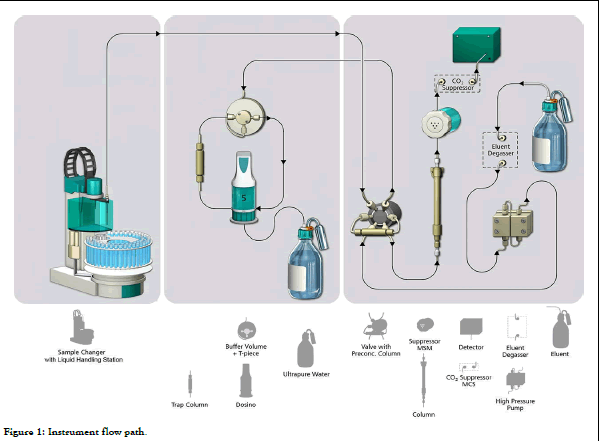
Figure 1: Instrument flow path.
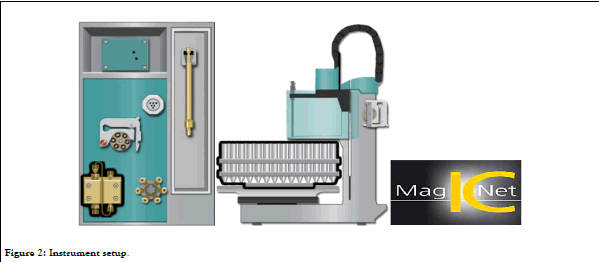
Figure 2: Instrument setup.
Method specificity
Blank solution, mixed anion standards with fluoride, chloride, nitrite, bromide, nitrate, phosphate and sulfate were injected to check the specificity. There was no peak observed at the retention time of bromate for blank solution analysis. Also bromate peak is well separated from all other common anions. This shows that, method is specific. The chromatogram of blank and mixed anions standard is shown in Figures 3 and 4.
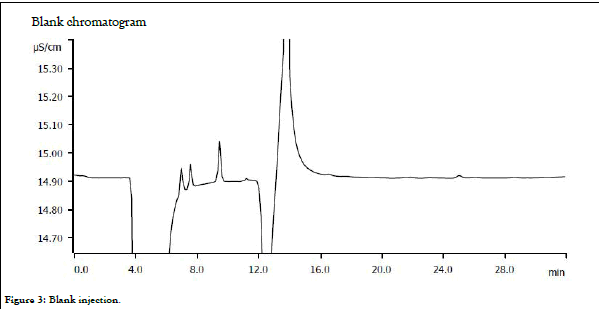
Figure 3: Blank injection.
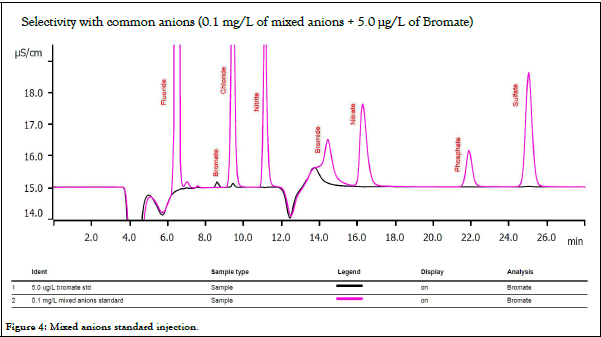
Figure 4: Mixed anions standard injection.
Method precision
Method precision was evaluated using the Relative Standard Deviation (RSD) values of peak area obtained from five consecutive injections of 0.1 ppb bromate standard. The RSD value for area was 9.3%. The chromatogram and RSD value of 0.1 ppb bromate standard is shown in Figures 5 and 6.
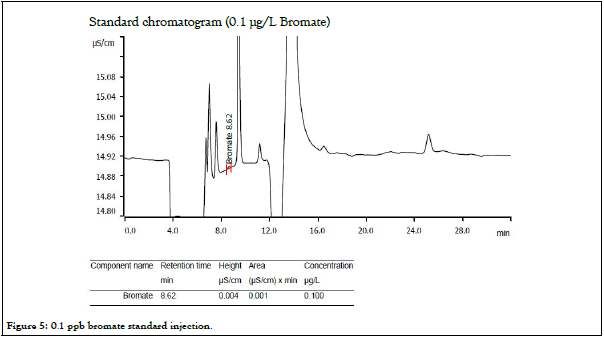
Figure 5: 0.1 ppb bromate standard injection.
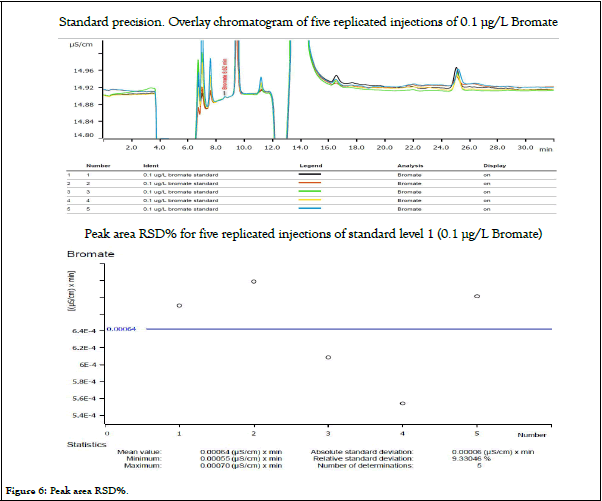
Figure 6: Peak area RSD%.
Linearity
Bromate standard concentrations of 0.1, 0.25, 0.5, 0.75, 1.0, and 2.0 ppb were prepared by diluting 1 ppm bromate stock standard with ultra-pure water. The prepared low-level concentrations were injected to check the linearity. A regression line was obtained by plotting peak area (μS/cm × min) of the bromate using the least square method. The relationship between peak response and concentration was found to be linear between the ranges of 0.1 to 2 ppb of bromate, with the coefficient of determination (r2) of 0.9994. The calibration curve along with the overlay of the standard chromatograms are shown in Figures 7 and 8.
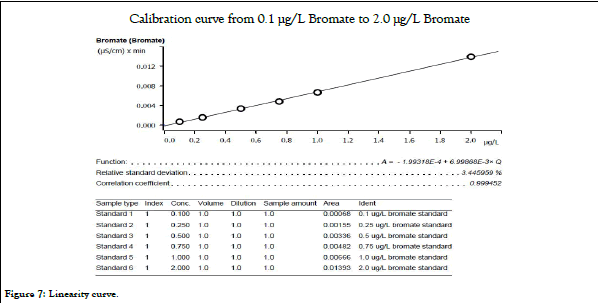
Figure 7: Linearity curve.
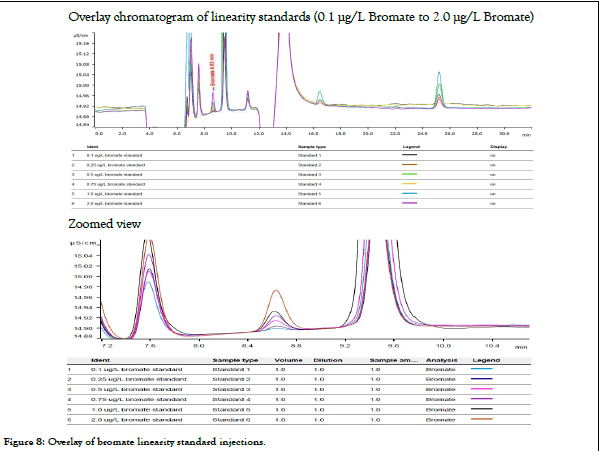
Figure 8: Overlay of bromate linearity standard injections.
Limits of detection and quantification
Based on the linearity of calibrations and the response of the bromate ion for the given chromatographic conditions the Limit of Detection (LOD) is fixed as 0.034 ppb and the Limit of Quantification (LOQ) is fixed as 0.1 ppb. LOD and LOQ is calculated based on signal-to-noise ratio. Generally, a Signal-to- Noise (S/N) ratio of >3 is considered as LOD, and a ratio of >10 is considered as LOQ. The measured S/N ratio for 0.1 ppb is 95. Because the LOD concentration is approximately one-third of the LOQ, it yields a robust S/N ratio of 33, allowing bromate to be reliably detected down to a level of 0.03 ppb (Figure 9).
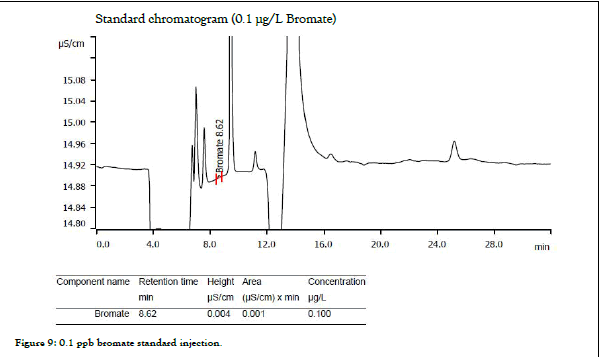
Figure 9: 0.1 ppb bromate standard injection.
Sample preparation
Drinking water samples can be injected directly after filtration using 0.22 μm syringe filter. If the water sample has high chloride ions (>25 ppm), it should be passed through IC-Ag followed by IC-H sample preparation cartridge to trap chloride ions. Otherwise bromate peak may merge with chloride peak as they elute very close to each other. The cartridges were first rinsed with ultra pura water twice and then sample solution is passed through the same. Ag ions present in the IC-Ag cartridge traps chloride ions and thereby reducing their concentration in the sample. IC-H cartridge is used to trap any silver ion which may come out from IC-Ag cartridge. The sample collected from the outlet of Ag cartridge is passed through 0.22 μ filter and then loaded in the auto sampler. The effect of sample preparation cartridge in reducing chloride peak and detection of bromate is shown in Figures 10-12.
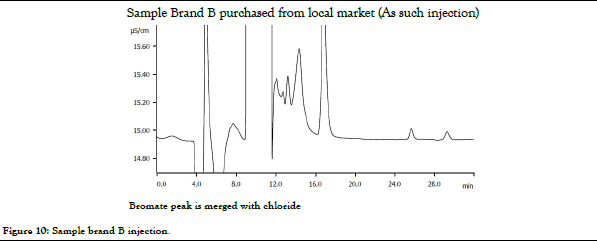
Figure 10: Sample brand B injection.
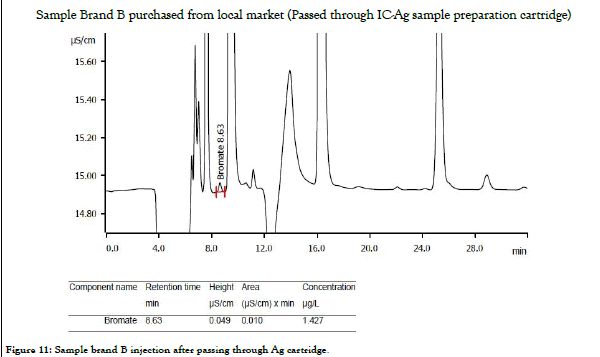
Figure 11: Sample brand B injection after passing through Ag cartridge.
Method accuracy
Method accuracy was checked by spiking study. Known amount of bromate standard is spiked with sample and recovery value is calculated. 1 ppb of bromate standard is spiked with water sample (brand B) and spiking study was carried out. The recovery value was 93%. This shows that method is accurate. The chromatogram of spiking study is shown in Figure 12.
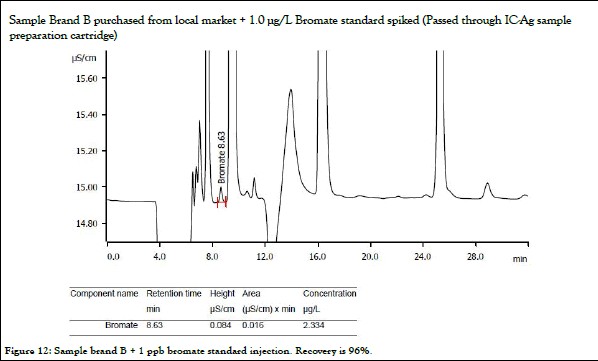
Figure 12: Sample brand B+1 ppb bromate standard injection. Recovery is 96%.
In this study, Bromate ion (BrO3-) in sub ppb levels are detected and quantified by suppressed conductivity detection using anion exchange column. In ion chromatography, the separation of sample components occurs because of ion exchange between the competing ion of the eluent and analyte component ions at the stationary phase. First the competing ions in the mobile phase interact with the positively charged ion exchange group at the column. When sample is injected, the anionic component in the sample replaces the competing ions and bind to the column. As eluent is flowing continuously, the competing ions in it elutes the analyte components from the column based on its charge and size and thus effects the separation. The use of suppressor is to reduce the background conductivity which is due to ions in mobile phase and to enhance the sensitivity of analyte. These are achieved by converting the strongly ionic mobile phase to weak electrolyte and converting the eluting analytes to a strong electrolyte. The pre concentration column like the analytical column has sites with same charge is used to accumulate the analyte present in depressed concentration and then injected it to the analytical column with the flow of mobile phase. Preconcentration can be achieved either with time dependent or volume-based programme. Time based pre-concentration involves passing the sample through the column for an extended period, allowing more of the target analyte to be retained. We passed the standards and samples through the pre-concentration column for a fixed period of four minutes allowing more of the bromate to be accumulated. Elevated chloride and sulfate in some water samples, are removed by passing through silver cartridge. The available chromatographic method for the quantification of bromate in water samples using a common conductivity detector are in the ppb levels. For detection at sub ppb levels, one need to make use of UV-vis detector along with the post column reagents or need a hyphenated detector like (MS) Mass Spectrometer connected to the ion chromatograph. To overcome these extravagant spending, the illustrated method just employees pre-concentration column to achieve pertinent sensitivity. According to EPA method 300.1, the detection limits are in the range of 1.5 μg/L with conductivity detection for drinking water. Although different agencies set the maximum permissible concentration of bromate in drinking water from 2 ppb to 10 ppb, with this simple economical method we could quantify the bromate concentration in drinking water samples in the sub ppb range in presence of common anions.
This could be beneficial in the process of further enhancing the drinking water quality.
A simple and reliable method has been optimized for the determination of trace level bromate in drinking water by ion exchange chromatography with conductivity detection method. Highly selective anion exchange column was used for the separation. This method is well suitable for drinking water samples. There is no special sample preparation or derivatization required prior to analysis. This method has lot of advantages compared to other methods, in terms of sensitivity, selectivity and running cost.
This work was supported by Metrohm India Private Limited, and we greatly acknowledge their support.
[Crossref] [Google Scholar] [PubMed]
[Crossref] [Google Scholar] [PubMed]
[Crossref] [Google Scholar] [PubMed]
[Crossref] [Google Scholar] [PubMed]
[Crossref] [Google Scholar] [PubMed]
Citation: Uvaraj M, Surendiran A, Sriram B (2026) An Improved Ion Chromatographic Method for Ultra Trace Level Bromate Analysis in Drinking Water Using Conductivity Detection. J Chromatogr Sep Tech. 17:622.
Received: 11-Aug-2026, Manuscript No. JCGST-26-44965; Editor assigned: 13-Aug-2026, Pre QC No. JCGST-26-44965 (PQ); Reviewed: 27-Aug-2026, QC No. JCGST-26-44965; Revised: 08-Sep-2026, Manuscript No. JCGST-26-44965 (R); Published: 15-Sep-2026 , DOI: 10.35248/2157-7064.26.17.622
Copyright: © 2026 Uvaraj M, et al. This is an open-access article distributed under the terms of the Creative Commons Attribution License, which permits unrestricted use, distribution, and reproduction in any medium, provided the original author and source are credited.