
Journal of Agricultural Science and Food Research
Open Access
ISSN: 2593-9173
ISSN: 2593-9173
Research Article - (2025)Volume 16, Issue 2
The research aim was to assess the impact of training in organic agriculture methods on the understanding, beliefs and behaviors of extension workers in Karnali province. This paper reviewed past results for secondary data and for primary research purposive selection of qualified extension workers from the Karnali province was conducted for the study. The sample size consisted of thirty individuals, who were analyzed using statistical analytical tools in the field of social science such as Microsoft Excel and SPSS. The findings indicated the importance of utilizing BACI design and a multiple regression factor analysis revealed that the majority of participants had been working as employees for the past decade, with an average age of 33-43 years. They had expertise in areas such as agriculture extension, agriculture economics, plant protection and horticulture. Nevertheless, organic issue prioritization revealed that input administration posed significant obstacles, which were followed by limitations in organic marketing and certification. Additionally, the ICS/PGS training was deemed effectively executed through the organic Train-the-Trainer program focusing on examining the training impact of extension workers who received organic training. Factors such as education level, work experience and frequency of training were identified as statistically significant at the 5% level, with corresponding coefficients of 2.3, 0.72 and 0.59, respectively. Furthermore, their correlation coefficient was determined to be 0.86, 0.75 and 0.73 correspondingly. Comparative BASI values suggested that OSDBT underwent assessment in terms of organic service provision, organic obstacles, adoption of technology methodology and gap in service provision.
Adoption; Efficacy; Organic; Pest; Productivity
Agriculture extension services are essential for spreading information and technologies to farmers, ultimately boosting agricultural productivity and improving livelihoods in rural regions. The significance of these services is particularly pronounced in challenging areas like Karnali province in Nepal, known for its rough terrain and scarce resources. Here, agriculture extension workers play a crucial role as intermediaries between farmers and agricultural specialists, offering vital insights into modern farming practices, pest control methods, connections to markets and updates on government regulations. Through their efforts, these workers contribute to the overall growth and sustainability of agricultural practices in these remote and resource-constrained regions [1].
In the vast and diverse Karnali province, the Ministry of Land Management, Agriculture and Cooperatives (MoLMAC) occupies a prominent and crucial position as a provincial governmental entity entrusted with the task of delivering specialized agricultural extension services to farmers throughout the province, aiming to drive agricultural development. MoLMAC is steadfast in its primary objective of providing customized and effective extension services to farmers belonging to all strata of society, thereby assisting them in optimizing the utilization of resources to propel sustainable growth in both agriculture and socioeconomic domains. Within the framework of MoLMAC, a network of 26 offices has been established to extend the reach of extension services, staffed with a variety of extension personnel dedicated to the cause. The Agriculture and Livestock Business Promotion Training Center (ALBPTC) plays a pivotal role in this landscape by orchestrating comprehensive capacity-building training programs, both long-term and shortterm, designed for agriculture extension workers and farmers alike, geared towards enhancing self-sufficiency through increased agricultural production and productivity. As part of the MoLMAC ecosystem, AEWs assume the critical role of frontline employees, serving as the face of the organization to the farming community. The effectiveness and success of agricultural extension activities hinge greatly on the presence of a substantial number of competent, skilled, confident and efficient AEWs who are adept at engaging with predominantly illiterate rural farmers. Unfortunately, due to a dearth of expertise in the realm of extension services, AEWs often grapple with the challenge of delivering adequate support and services to the agricultural populace, thereby highlighting the pressing need for further training and capacity building initiatives [2]. Professional training plays a pivotal role in equipping AEWs with the necessary knowledge and skills to proficiently impart valuable information to farmers regarding diverse agricultural production practices. The effectiveness and impact of AEWs' performance in the field are intricately tied to the caliber and thoroughness of the training they receive, shaping their ability to communicate, advice and support farmers in enhancing their agricultural productivity. It is imperative to prioritize the continuous improvement and refinement of training programs for AEWs to ensure they are well-prepared and capable of effectively addressing the evolving needs and challenges faced by farmers in the agricultural sector. Training serves as a priceless asset when it comes to boosting an individual's adeptness in carrying out tasks with increased accuracy and finesse. It is crystal clear that undergoing training plays a pivotal role in elevating the competency and expertise of those involved. The realm of professional training revolves around equipping individuals with the know-how that is directly relevant to a particular line of work, thereby enhancing their proficiency in a targeted manner. Engaging in training activities not only refines skills but also cultivates a deeper understanding of the intricacies involved in a specific occupation, thereby laying a strong foundation for continuous growth and development. A perfect scenario for a training session would consist of receiving guidance from a person with a profound depth of knowledge and experience in the relevant field [3]. A variety of personal, economic, social and psychological elements might influence the impact of professional training provided to Agricultural Extension Workers (AEWs) on the advancement of agricultural growth. Gaining a deeper understanding of how the attributes of AEWs intertwine with the effectiveness of their professional training stands to benefit not only the strategists but also the extension workers who are actively engaged in crafting and executing training schemes. Regrettably, there exists a significant dearth of research endeavors aimed at scrutinizing the efficacy of professional training initiatives designed for AEWs, specifically within the contexts of Nepal and South Asia. Consequently, this gap in the literature presents a ripe opportunity for further exploration and investigation to shed light on this crucial aspect of agricultural development. The repetition of training was shown to be more beneficial than the combination of diverse training methods, which were proven to be ineffective [4].
Past findings
Badodiya, et al. conducted a research on analyzing organic training impact through purposive selection of trained farmers and found that 7.5 percent of trainees were aware of organic farming before training and was increased up to 26.67 percentages. The result also showed that agriculture inputs management were found detrimental on organic agriculture production [5].
Mwamakimbula carried a research on assessing factors affecting agricultural extension training and found that both socio demographic and technical factors were parallel influential on training effectiveness identification. On which age of respondent, service delivery skills and methods, distance of service delivery and need of service were major factors influence on the training service efficacy.
Halawi and Hayder carried a research on training assessment of employee and performance improvement and found that the training influences on the skill, knowledge and methods of working system along with time of work. Furthermore, the result showed that employee was more satisfied on their work after training. The structural and institutional change were happened through training participant's feedback [6].
Huang and Jao; Elnaga and Imran; Quartey, et al. applied two different methods of training impact assessment and concluded that cognitive training methods were more productive and that might be of on-job or off-job. The training changed on the working performance of the participants and the rate of drudgery was reduced so as to employee got satisfied on their work and beneficiaries' were also found positive reflection.
The conceptual paper by Elnaga and Imran sought to investigate the impact of training on employee performance and to make recommendations for how firms might increase employee performance through effective training programs. The study's research approach is qualitative, as it evaluates the literature and numerous case studies on the role of training in improving workforce performance.
Jagirti, et al. revealed that the greatest skill gap was found in designing and conducting farmer training, assessing farmers' training needs, their ability to use computers (internet) and power point presentations, knowledge and awareness of adult education approaches and their ability to prepare visual aids to help deliver information. Their ability to present the seminar and coordinate work with their peers received the lowest mean weighted discrepancy score. Inadequate finance surfaced as a major impediment to attaining the requisite competencies. Because skill development is so important at the national level, skill gap analysis should be given special attention [7].
This study was conducted using a selective sampling of organic training participants organized by Karnali province's Agriculture and Livestock Business Promotion and Training Center in 2023 A.D (Figure 1) [8].
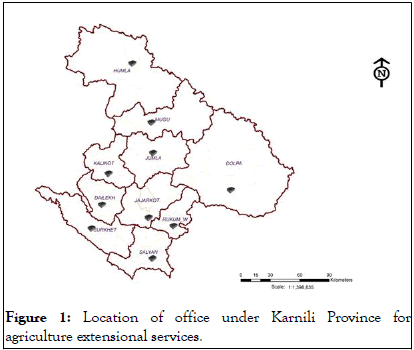
Figure 1: Location of office under Karnili Province for agriculture extensional services.
The primary data was gathered using an online individual sample survey of thirty training participants, while the secondary data was gathered from published journal publications, progress reports and working performance reports. Both descriptive and inferential statistical analyses were performed on qualitative and quantitative data using Microsoft Excel and Statistical Software for Social Science (SPSS). The training efficacy was analyzed through before after counterfactual analysis tool. The organic extension service delivery was evaluated through following BACI design as;
Organic actions and interventions (BACIorganic service delivery)=Organic Service Delivery after Training (OSDAT)- Organic Service Delivery before Training (OSDBT)
The organic training efficacy was determined through a simple multiple regression model as follows;
Factors affecting organic training efficacy(Y)=Intercept(c)+a1 (Age)+a2 (Education)+a3 (Experience)+a4 (Gender)+a5 (Training frequency)
The result of survey data showed that most of the trainees were Hindus. Whereas average participants had average age of 31.43 years on which maximum and minimum age were 56 and 23 respectively. The participants followed the ethnicity with majority of Chhetri (66%) followed by Janajati (13.33%) and Brahamin (10.0%) respectively (Figure 2) [9].
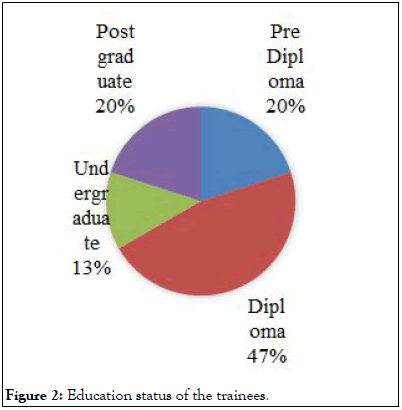
Figure 2: Education status of the trainees.
Figure 3 showed that the total training participants of the surveyed result were found to be expertise on the five different agricultural disciplines and served as extension workers worked within the provincial agricultural offices on Karnali province of Nepal (Figures 4-6).
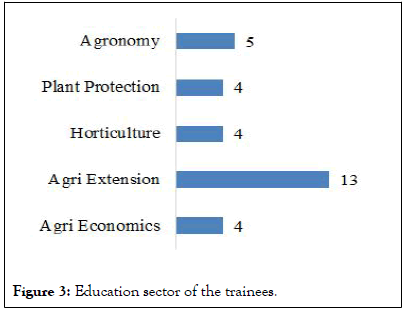
Figure 3: Education sector of the trainees
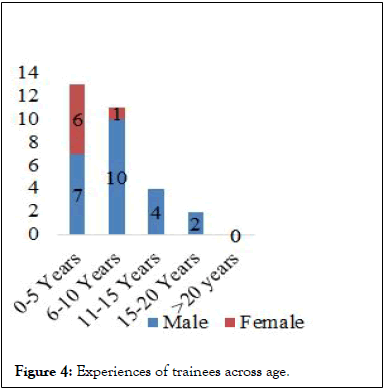
Figure 4: Experiences of trainees across age.
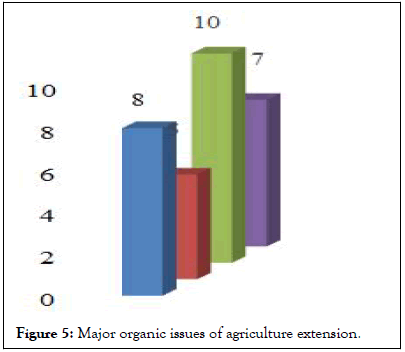
Figure 5: Major organic issues of agriculture extension.
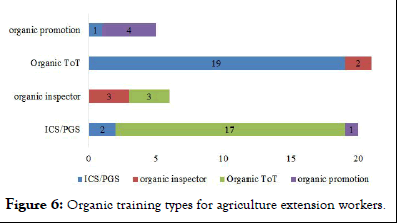
Figure 6: Organic training types for agriculture extension workers.
Correlation and regression analysis of factors affecting organic training efficacy
Organic training efficacy was mainly affected by age, education, experience, training frequency, age and gender. However, the respondent education, their experience and training frequency were found significant at five percent level of significance. The regression model compatibility was found analyzed with the adjusted R2 value of 0.97.
Factors affecting organic efficacy (Y)=4.92+0.97 (Age)+2.3 (Education)+0.72 (Experience)+0.012 (Gender)+0.59 (Training frequency)
The result showed that organic efficacy was mainly affected by education with the value of 2.3 times the rate of efficacy increment whereas other factors like experience contributed by the value of coefficient of 0.72 times of organic service delivery changes and training frequency imparts the value of coefficient of 0.59 times respectively. Besides, all the factors mention on the model other residual values was expected to influence on organic service efficacy delivery by the value of intercept of 4.92 times of reference mentioned by the model as elaborated on the upper section of the result section herein (Table 1).
| Training issues | Organic Service Delivery after Training (OSDAT) | Organic Service Delivery before Training (OSDBT) |
| Organic service delivery difficulties | Organic zoning and specialized area declarations based on the default organic (natural), less synthetic chemical used besides bio fertilizer and bio-pesticide used. | Deficit policy document and policy intervention |
| Formulations and implementation through prioritization of organic promotion programs like FFS, IPM, organic mission program and organic village declaration programs. | Lack of standards and regulatory guidelines for actions to implement and disseminate over the target farmers | |
| Governments promotion and parliamentary interventions on the organic policy formulation like organic acts and regulation. | Technical human resource gap | |
| Conductions of organic training and workshop for agriculture extension workers and leader farmers. | Deficit time bound strategic planning and actions for short term, midterm and long term intervention on organic state declarations | |
| Organic challenges' | Alternative way of disease pest management on and off the field. | Low production and crop pest challenge |
| Branding and valuable logo creation emphasizes on provincial organic identity. | Market identity and organic production competition | |
| Networking and corporate responsibility sharing on technological interventions and standard setting of local provincial produce for domestic and global market. | Organic certification, accreditation and branding challenge | |
| Adaption methodology | Appropriate techno-friendly reaching and assuring the value of ideas and constrict the coverage of digital literacy through balance responsibility skill up. | Digital divide |
| Consumers will to have the goods and services of organic origin imparts on the acquired peruse preferences over other non-organic produce. | Skills and technology acceptance | |
| Cost minimization | ||
| Economic disparities | ||
| Cultural and social changes | ||
| Psychological acceptance | ||
| Service delivery gap | Organic and natural resources identify and optimization through sustainable agriculture planning and support system development at provincial and local level. | Access and reach out to resource gap |
| Exposure and enlighten values of organic principles at local, national and global standard to reach out through assurance and adoption of newly acknowledged innovations and ideas over the smart agriculture utilization and dissemination. | Quality and relevancy on training and expertise | |
| Governmental awareness and publications for knowledge expansion and ideas synchronization at community level through effective communication medias. | Technological gap | |
| Engagement and trust for on community involvement | ||
| Coordination and integration gap |
Table 1: Comparative qualitative analysis of organic training effectiveness of agriculture extension workers.
Organic training for agriculture extension workers in Karnali province is expected to have a significant impact, resulting in positive changes in both the extension workers' practices and the agricultural practices of the farmers they support. It is concluded that the extension workers are expected to get frequent training opportunities for their growth and adds expertise on the working sectors. Technological familiarity on the both ways of extension service providers and beneficiaries are expected to have continued learning platform and will for the dissemination of extension services. On addition, training adds on the knowledge, skill, attitude and persuasion of trainees which have direct relation on the quality service delivery of the extension services. This study set the path for subsequent researchers to focus on longitudinal, comparative and context-specific effect evaluation work. Similarly, the government should continue to prioritize capacity building, technology transfer and formulation while contemplating smart and innovative organic identity promotion in Karnali.
[Crossref] [Google Scholar] [PubMed]
Citation: Rana YB, Acharya M, Khatri BK, Suraj BC (2025) Qualitative Impact Analysis of Organic Agriculture Training in Extension Workers of Karnali Province, Nepal. J Agri Sci Food Res. 16:207.
Received: 26-Nov-2024, Manuscript No. JBFBP-24-35416; Editor assigned: 29-Nov-2024, Pre QC No. JBFBP-24-35416 (PQ); Reviewed: 13-Dec-2024, QC No. JBFBP-24-35416; Revised: 01-Apr-2025, Manuscript No. JBFBP-24-35416 (R); Published: 08-Apr-2025 , DOI: 10.35248/2593-9173.25.16.207
Copyright: © 2025 Rana YB, et al. This is an open-access article distributed under the terms of the Creative Commons Attribution License, which permits unrestricted use, distribution, and reproduction in any medium, provided the original author and source are credited.