
Journal of Agricultural Science and Food Research
Open Access
ISSN: 2593-9173
ISSN: 2593-9173
Research Article - (2025)Volume 16, Issue 2
Cooking bananas possess a distinctive salty taste, posing challenges for their consumption as dessert bananas in regions of high production. This study aimed to enhance the utilization of cooking bananas by developing nutrientdense bread using a blend of cooking banana varieties and wheat flour in a 15:85 ratio. A control sample made from 100% wheat flour was also prepared. Proximate composition, functional properties and sensory attributes were evaluated through standard methods. Results indicated moisture, ash, fat, fiber, protein and carbohydrate contents varied among the composite flours, with energy values ranging from 356.47 to 362.34 kcal/100 g. Functional properties, including water absorption capacity, also showed significant differences. This research supports blending cooking bananas with wheat flour to produce nutritious and acceptable bread suitable for diverse age groups.
Cooking banana; Crispness; Nutritional value; Bread; Sensory analysis
Bananas originated in Asia. The species of banana known as Musa acuminate is the one, which originated in Malaysia while the species of banana known as Musa balbisiana originated in India. In banana growing regions of the world, bananas and cooking bananas have the greatest nutritional significance, being the key staple food in much of Uganda and parts of Tanzania and a major component of the diet across much of central and western Africa and in parts of South and Central America [1].
Cooking bananas can be prepared in a variety of ways boiled, roasted, fried, steamed, baked, sun-dried and ground to flour. The advantages of cooking bananas as a staple food are; that they grow vigorously; are more drought-resistant, are not easily attacked by diseases and their fruits have a lot of starch and a little sugar even in ripening. Moreover, cooking bananas are one of the cheapest food crops to produce. The cost of production of 1 kg of cooking banana (and of 1000 kcal) is less than that for most other staples, including sweet potato, rice, maize and yam. Consequently, cooking bananas is usually a very cheap food to buy and hence is an important food for low-income groups. They are used as foods providing a good source of energy, rich in vitamins A, C and B6.
Banana first among fruits cultivated in Ethiopia in area coverage and quantity of production. Ethiopia is supposed to be the center of diversity for bananas. Multi-purpose banana has been cultivated in Ethiopia for a long time, but the nutritional composition of its recipes (bread) has not been characterized so far and the utilization and processing methods of those recipes also were not popularized among the farmers and other stakeholders. The uses of plantain or banana and wheat flour in composite bread, cakes and biscuits have been widely reported. Bread is a universally accepted, convenient form of food for all populations, rich and poor, rural and urban. Production of bread from plantain and banana flour could help to produce nutritionally rich and sensorial acceptable food products. Therefore, this research aimed to evaluate the nutritional composition and organoleptic quality of cooking banana cultivars [2].
Description of study area
The experiment was conducted at Melkassa Agricultural Research Center, Food Science and Nutrition Research Laboratory. The center is geographically located at a latitude of 8°24’N, longitude of 39°21’E and an altitude of 1,550 meters. It is situated about 117 km from Addis Ababa and 17 km from Adama on the way to Assela.
Sample collection
Four varieties of green matured cooking bananas were collected from Melkassa Agricultural Research Center from the field of horticulture breeding program. Healthy, clean and well-matured bunch of cooking bananas were selected and representative fingers from the middle of the bunch of each variety were collected wheat used for the experiment was brought from Kulumsa Agricultural Research Center, wheat breeding program [3].
Formulation of flour
The blending ratio of cooking banana with wheat to develop bread was based on a previous study and a preliminary study we have done so far (Table 1).
|
Run |
Cooking banana varieties |
Wheat variety |
Blending ratio |
|
1 |
Nijuru |
Daka |
85% Wheat: 15% Nijuru |
|
2 |
Cardaba |
Daka |
85% Wheat: 15% Cardaba |
|
3 |
Kitawira |
Daka |
85% Wheat: 15% Kitawira |
|
4 |
Matoke |
Daka |
85% Wheat: 15% Matoke |
|
5 |
- |
Daka |
100% Wheat |
Table 1: The study of the blending ratio of cooking banana with wheat.
Extraction of cooking banana flour
Wheat used for the experiment was brought from Kulumsa Agricultural Research Center, a wheat improvement and breeding program. The grain was cleaned manually, washed and drained. Then grain was placed on clean material and sun-dried. Then, wheat was milled by using a Cyclotec Miller of 0.5 sieve size and flour was sieved and kept in a clean polyethylene bag for blending. Cooking banana flour was prepared and extracted, following the major unit operations (Figure 1) [4].
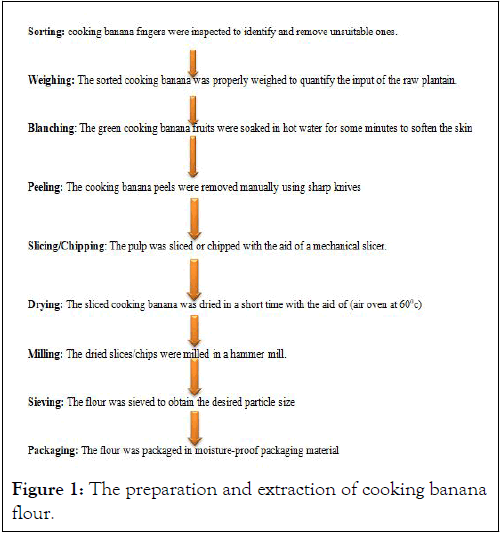
Figure 1: The preparation and extraction of cooking banana flour.
Functional properties of cooking banana and wheat composite flour
Bulk density was determined according to the procedure described by Narayana. Water Absorption Capacity (WAC) was determined using the method and dispersibility was determined by the method. Oil Absorption Capacity (OAC) can be determined by the procedure where a sample is mixed with a known volume of oil until saturation and the amount of oil absorbed is measured. Water solubility was assessed by adding a known weight of the sample to a specified volume of water, stirring for a set time and then filtering to determine the soluble fraction. Swelling power was calculated by measuring the increase in volume of the sample when it was heated in water.
Cooking banana and wheat composite flour-based bread baking procedure
Bread baking was performed based on the method of bread baking procedure (straight dough method) with little modifications. All ingredients flour (100 g blended flour), salt (2.5 g), water (65 ml) and yeast (2.5 g) were added at the mixing stage and kneaded to obtain a uniform dough. The dough samples were placed in baking pans smeared with vegetable oil and covered for the dough to ferment resulting in gas production. The dough was then baked in an oven (Electric ovens SIMPLY 2T, China) at an average temperature of 230°C for 30 minutes. The baked loaf was carefully removed from the pans and allowed to cool and then packaged in polyethylene bags for further analysis [5].
Sensory evaluation of the bread
Each bread samples were evaluated by a semi-trained panel (a panel briefed about the scoring of sensory attributes) of 25 people on a 5- 5-point hedonic scale. Where; 5-like very much, 4- like, 3-neither like nor dislike, 2-dislike and 1-dislike very much. The sensory acceptability of bread was evaluated based on its appearance/color, aroma, taste, mouthfeel and overall acceptability.
Proximate composition of cooking banana bread
The proximate composition of bread developed from composite flour of cooking banana and wheat flour such as moisture (AOAC 925.10), ash (AOAC 923.03), fat (AOAC 945.16), fiber and protein content were determined following AOAC methods. The carbohydrate content of composite flour was determined by different methods and the energy value was calculated using the Atwater and Benedict coefficients according to the following formula;
Energy (Kcal/100 g)=% Utilizable carbohydrates × 4 (Kcal)+% proteins × 4 (Kcal)+% fat × 9 (Kcal)
Statistical analysis
All the means of duplicate samples for the proximate composition and sensory properties of the bread were calculated. The data obtained was then subjected to Analysis of Variance (ANOVA), where a significant difference existed; the LSD test was employed in separating the means as described by Heteronym, et al.
Functional properties of cooking banana composite flour
The functional properties of flour are the physical properties that show how the final product behaves. It is also used to identify which procedure to follow for food product development and predict the final quality of food products [6].
The functional properties of cooking banana and wheat-based composite flours are presented in Table 2. According to the statistical analysis, the water absorption capacity value was significantly (p<0.05) different among some treatments. Water absorption capacity varied significantly, with cardaba having the highest (1.41%). This property affects dough consistency and the final bread texture. Findings from Mabogo, et al. corroborate these results, suggesting that flour blends can enhance water retention, and improve texture. The lowest water absorption capacity was recorded for kitawira cooking banana combined with wheat flour while the highest value was noted for cardaba cooking banana combined with wheat flour. The value of water absorption capacity obtained in this study was closely related to the water absorption capacity reported by Mabogo, et al. for a mixture of unripe banana and wheat flour.
| Treatments | Functional properties | |||||
| Water absorption capacity | Swelling power | Solubility | Oil absorption capacity | Dispersibility | Bulk density | |
| Treatment 1 | 1.41 ± 0.02a | 678.00 ± 0.00a | 73.24 ± 0.00a | 152 ± 0.02a | 72.30 ± 0.01ab | 0.78 ± 0.01c |
| Treatment 2 | 0.75 ± 0.05c | 677.30 ± 0.04a | 38.00 ± 0.00b | 160 ± 0.00a | 69.50 ± 0.03b | 0.90 ± 0.0b |
| Treatment 3 | 0.95 ± 0.05b | 635.25 ± 0.01b | 83.50 ± 0.01a | 145 ± 0.04a | 73.00 ± 0.00a | 1.01 ± 0.01a |
| Treatment 4 | 1.05 ± 0.05b | 656.60 ± 25.1ab | 79.50 ± 0.03a | 160 ± 0.00a | 70.50 ± 0.04b | 0.97 ± 0.02a |
| Treatment 5 | 1.30 ± 0.01ab | 653.25 ± 0.02ab | 64.5 ± 0.02a | 120 ± 0.03b | 69.50 ± 0.02b | 1.01 ± 0.01a |
| Grand mean | 1.01 | 655.6 | 146.25 | 66.38 | 0.96 | 70.63 |
| CV | 6.53 | 2.22 | 6.16 | 19.32 | 1.27 | 1.84 |
| Note: **Treatment 1-100% wheat (control), Treatment 2-kitawira, Treatment 3-matoke, Treatment 4-nijuru, and Treatment 5-cardaba. Means represented with different letters are significantly different from others | ||||||
Table 2: Functional properties of composite flours.
The results of the swelling power analysis for cooking banana and wheat-based composite flour indicated that there were no statistically significant differences among the various treatments applied. Swelling power ranged around 655 g/100 g, with solubility from 38% to 83.5%. These properties indicate the starch characteristics of the flour, influencing the baking quality. Blazek, et al. noted similar starch behaviors in blends, indicating the potential for desirable baking properties. The swelling power of flour indicated a useful predictive tool of amylose content and pasting characteristics of the wheat starches. Statistically, there were no significant differences between all treatments for the oil absorption capacity of composite flour. Oil absorption capacity is the ability of the flour protein to physically bind fat by capillary attraction and it is of great importance for flavor retention and increases the mouth feel of foods, especially bread and other baked foods. The rate of oil absorption is very high in foods with high protein content [7].
The water solubility of composite flour ranged from 38% to 83.5%. The highest value of water solubility, 83.5% was recorded for composite flour containing matoke cooking banana followed by the lowest value, 38% noted for composite flour containing kit wire cooking banana. The dispersibility of composite flour was in the range of 69.5% to 72.3%.
Bulk density ranged from 0.78 to 1.01 g/mL. Lower bulk density indicates better aeration, which is important for the texture of baked products. Studies, such as those by Mepba, et al. reported similar densities in composite flours, reinforcing the consistency in findings across different studies.
The bulk density of composite cooking banana-wheat flour ranged from 0.9 to 1.0. Bulk density reflects the mass of many particles of flour material divided by the total volume they occupy and can be used in determining the type of required packaging material. The higher starch content of the flour indicates an increase in bulk density. The result of bulk density in the present study was slightly higher than the bulk density reported by Mepba, et al. for plantain and wheat-based composite flour. This might be due to the varied proportion of the composite flour and agroecology.
Proximate composition of cooking banana-wheat composite flour
The proximate composition of wheat and cooking banana composite flours is presented in Table 3. The moisture content of the composites was in the range of 7.44% to 8.74%. Lower moisture content indicates better shelf stability. This is crucial for storage and longevity, as higher moisture can lead to spoilage. Similar studies, such as those report moisture values in composite flours that align with these findings, emphasizing the importance of moisture control for product stability [8].
| Treatment | Parameters | ||||||
| Ash (%) | Moisture content (%) | Crude fiber (%) | Crude fat (%) | Crude protein (%) | Carbohydrate (%) | Energy (KCal) | |
| Treatment 1 | 2.68 ± 0.04a | 8.78 ± 0034a | 4.10 ± 0.01a | 4.50 ± 0.04a | 11.38 ± 0.04a | 71.24 ± 0.03b | 370.98 ± 0.02a |
| Treatment 2 | 1.5 ± 0.02c | 8.74 ± 0.03a | 2.84 ± 0.76ab | 0.60 ± 0.02b | 4.90 ± 0.03b | 82.97 ± 0.04a | 356.47 ± 0.03b |
| Treatment 3 | 1.95 ± 0.04b | 7.44 ± 0.01b | 2.85 ± 0.43ab | 0.70 ± 0,01b | 5.14 ± 0.01b | 83.87 ± 0.04a | 362.34 ± 0.01b |
| Treatment 4 | 1.50 ± 0.03c | 8.25 ± 0.03ab | 2.53 ± 0.02b | 0.65 ± 0.02b | 4.71 ± 0.03b | 83.86 ± 0044a | 360.15 ± 0.02b |
| Treatment 5 | 1.20 ± 0.02c | 8.01 ± 0.03ab | 2.61 ± 0.03b | 0.74 ± 0.01b | 5.01 ± 0.02b | 83.63 ± 0.00a | 361.24 ± 0.02b |
| Grand mean | 1.6 | 8.16 | 2.81 | 0.96 | 5.43 | 82.63 | 360.89 |
| C.V | 13.31 | 5.86 | 19.27 | 20.98 | 6.96 | 0.67 | 0.87 |
| Note: **Treatment 1-100% wheat (Control), Treatment 2-85% wheat: 15% kitawira, Treatment 3-85% wheat: 15% matoke, Treatment 4-85% wheat: 15 nijuru, Treatment 5-85% wheat: 15% cardaba. Means represented with different letters are significantly different from others | |||||||
Table 3: Proximate composition of wheat-cooking banana composite flours.
The composite flours were not significantly different (p<0.05) in their moisture content except treatment 3 which was significantly different from treatment 1 and 2. Moisture content is an indication of how much the product is shelf-stable or not. Grain of higher moisture content is highly susceptible to deterioration. Treatment 1 (Control) had the highest moisture content which is 8.78% and is more susceptible to deterioration.
Ash content is an indicator of the total minerals present in a food sample. Ash content varied, with the highest in the cardaba variety (1.95%) and the lowest in matoke (1.50%). Its content reflects the mineral content of the flour. Higher values suggest better nutritional profiles, vital for dietary diversity. Studies like those by Vivienne, et al. show that similar blends of plantain and wheat also exhibit comparable mineral content, reinforcing the nutritional value of these composite flours. The composite flours were not significantly different in ash content except in treatment 1 and 3 which were significantly different from other treatments and among themselves. The ash content of treatment was high in treatment 3 while low in treatment 5. The fat content of the composite flours was not significantly different (P<0.05) among the treatments except treatment 1. Treatment 5 had the highest fat content (0.74%) while treatment 2 had the lowest fat content (0.56%). The higher the fat sample of the food sample, the higher the level of rancidity. It was found that the highest and lowest fiber content was obtained in treatments 3 and 4 with values of 2.85% and 2.53% respectively [9].
Protein content ranged from 4.71% to 11.38%, with 100% wheat showing the highest. Protein is essential for growth and repair. The lower protein in composite flours suggests a need for additional protein sources in diets. Research indicates that composite flours often have lower protein than pure wheat flour, aligning with the findings from this study.
The protein content of the composite flours was significantly different among treatments (p<0.05) with the control sample having the highest value (11.38%) and followed by treatment 3 which had a value of (5.138%).
Fat content ranged from 0.56% to 0.74%. Low-fat content is favorable for shelf life; however, some fat is necessary for flavor and mouthfeel. Similar findings were reported, indicating a consistent trend in low-fat content in plantain-wheat blends.
Crude fiber content was highest in-car data (2.85%) and carbohydrates ranged from 71.24% to 83.87%.
High fiber content can aid in digestion and has health benefits, including reducing the risk of certain diseases. Highlight the health benefits of high-fiber foods, supporting the functional food potential of these composite breads.
The carbohydrate content of the composite flours ranged from 82.97% to 83.87%. Treatment (Control) had the highest calorie value of 370.98 Kcal followed by treatment 3 with 362.34 kcal.
Sensory characteristics of cooking banana-wheat composite flour-based bread
The mean sensory score of cooking banana composite flour of bread samples was presented in Table 4. The statistical analysis showed that there was no significant difference (P>0.05) among the treatments in texture and overall acceptance regardless of their variety.
| S. code | Sensory attributes | |||||
| Appearance | Aroma | Taste | Texture | Color | Overall acceptance | |
| T1 | 4.07ab | 3.73ab | 4.33a | 3.93a | 4.13ab | 4.47a |
| T2 | 3.60 ± 0.40c | 3.40 ± 0.2b | 3.60 ± 0.20c | 3.53 ± 0.46a | 3.6 ± 0.20c | 3.93 ± 0.31b |
| T3 | 3.73 ± 0.12bc | 4.13 ± 0.31a | 3.73 ± 0.12bc | 3.6 ± 0.35a | 4.27 ± 0.31a | 4.20 ± 0.20ab |
| T4 | 3.73 ± 0.12bc | 3.53 ± 0.31ab | 3.87 ± 0.23bc | 3.67 ± 0.23a | 3.87 ± 0.23bc | 4.00 ± 0.40ab |
| T5 | 4.13 ± 0.12a | 3.80 ± 0.53ab | 4.00 ± 0.35ab | 4.00 ± 0.00a | 4.33 ± 0.12a | 4.27 ± 0.31ab |
| G.M | 3.85 | 3.72 | 3.91 | 3.75 | 4.04 | 4.1733 |
| CV | 5.36 | 9 | 5.61 | 7.55 | 5.57 | 6.78 |
| Note: **Treatment 1-100%wheat (Control), Treatment 2-85 wheat: 15 kitawira Treatment 3-85 wheat:15 matoke, Treatment 4-85 wheat:15 nijuru, Treatment 5-85 wheat:15 cardaba. Means represented with different letters are significantly different from others | ||||||
Table 4: Mean values of sensorial properties of bread.
Appearance: The appearance of bread is a primary factor influencing consumer choice. A visually appealing product is often associated with quality. The control sample (100% wheat) received the highest scores for appearance, reflecting consumer familiarity with traditional bread aesthetics.
Treatment 1 scored an average of 4.07, while treatment 2 scored 3.60, indicating a significant preference for the control. Similar findings by Mepba, et al. showed that consumers favor visually traditional bread over new formulations.
Aroma: Aroma plays a crucial role in the sensory experience of bread. The aroma of the control was favored due to its traditional wheat smell, while the composite bread exhibited varying degrees of aroma based on the cooking banana variety used. Treatment 1 had an aroma score of 3.73, compared to Treatment 2’s 3.40; indicating a slight decline in consumer preference for the aroma of composite samples. Mepba, et al. similarly reported that the addition of plantain flour did not significantly modify aroma.
Taste: Taste is arguably the most significant factor in overall acceptability. The control sample was preferred due to its familiar taste, while treatment 5 (15% cardaba) also received high scores, indicating that certain banana varieties can enhance flavor without overwhelming the wheat base. Treatment 1 scored 4.33 in taste, while treatment 5 followed with 4.00. Treatments with higher banana content scored lower overall, with treatment 2 scoring 3.60. This trend aligns with findings from Adeniyi, et al., which indicated that consumer preferences lean towards traditional flavors, reinforcing the importance of maintaining familiar tastes.
Texture: Texture affects mouthfeel and overall enjoyment of the product. The study found that texture scores were consistent across all treatments, suggesting that the addition of cooking banana flour did not negatively impact the bread’s texture. The control scored 3.93, while treatments 2-5 ranged from 3.53 to 4.00, indicating acceptable texture across the board. This finding is consistent with Olaoye, et al. composite flours can maintain desirable textural properties in bread.
Color: The color of bread influences consumer perception of freshness and quality. The control sample had a lighter color, which is often preferred. However, treatment 5 received high scores, suggesting that the specific cooking banana variety may enhance visual appeal. Treatment 5 scored 4.33, while treatment 2 scored 3.60, indicating significant differences in consumer preferences. Jaja, et al. Highlighted the importance of color in food acceptance, reinforcing that darker bread (due to banana inclusion) can be appealing if the color is perceived positively.
Over acceptability: Overall acceptance integrates all sensory attributes and reflects the likelihood of repurchase. The control sample scored highest, but treatment 5 showed strong potential, indicating that certain cooking banana varieties can be effectively integrated into bread formulations. Treatment 1 scored 4.47 in overall acceptance, while treatment 5 scored 4.27. Treatment 2 scored the lowest at 3.93. These results align with findings from Mabogo, et al. which emphasized that overall acceptability is deeply tied to sensory attributes, particularly taste and appearance (Figure 2).
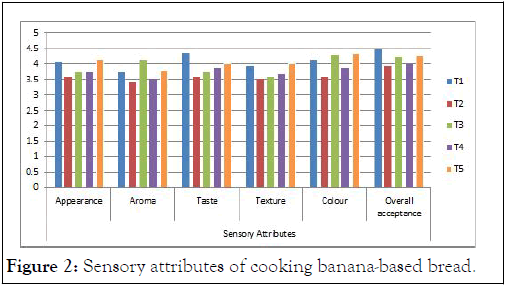
Figure 2: Sensory attributes of cooking banana-based bread.
The findings indicate that cooking bananas are nutritionally valuable, containing substantial levels of ash, fiber, carbohydrates and energy, along with low moisture and fat content. The study highlights the potential of cooking bananas as a beneficial ingredient in bread production, promoting dietary diversity. Notably, the Cardaba variety exhibited excellent baking quality. Overall, cooking bananas represent a nutritious alternative food source, contributing positively to the dietary culture of communities.
Citation: Ariti KD, Feyera M, Jebo KK (2025) Proximate Composition, Functional and Sensory Properties of Cooking Banana and Wheat- Based Bread. J Agri Sci Food Res. 16:206.
Received: 13-Nov-2024, Manuscript No. JBFBP-24-35147; Editor assigned: 16-Nov-2024, Pre QC No. JBFBP-24-35147 (PQ); Reviewed: 30-Nov-2024, QC No. JBFBP-24-35147; Revised: 01-Apr-2025, Manuscript No. JBFBP-24-35147 (R); Published: 08-Apr-2025 , DOI: 10.35248/2593-9173.25.16.201
Copyright: © 2025 Ariti KD, et al. This is an open-access article distributed under the terms of the Creative Commons Attribution License, which permits unrestricted use, distribution, and reproduction in any medium, provided the original author and source are credited.