
Journal of Clinical and Experimental Ophthalmology
Open Access
ISSN: 2155-9570
ISSN: 2155-9570
Research Article - (2025)Volume 16, Issue 4
Purpose: To report 5-year outcomes in a cohort of patients who received anti-VEGF therapy for macular edema secondary to Central Retinal Vein Occlusion (CRVO) in routine clinical practice.
Design: In this retrospective observational study, anonymized data from various countries contributing to the CRVO module of the Fight Retinal Blindness! Registry was analyzed. Methods: A total of 593 treatment-naïve eyes that commenced anti-VEGF treatment between January 1, 2010 and 2019 were analyzed. Outcome measures included mean changes in Visual Acuity (VA) and Central Subfield Thickness (CST).
Results: In the entire cohort (593), the mean VA changed by +8 letters and the mean CST by 298 μm. The entire cohort includes eyes with completed 5-year follow-up and non-completers who dropped out before the end of the observation period. Eyes that completed the 5-year follow-up (202/593, 34%) had a mean VA and CST change of +11 letters and -320 μm with a median of 25.5 injections at 39.5 visits. Non-completers with a final VA of >70 letters (95/593; 16%) experienced a change in mean VA of +23 letters. The average follow-up duration was 731 days, with a median of 8 injections. In non-completers with a final VA between 35 and 70 letters (163/593; 27%), the mean VA increased by 12 letters. Over an average follow-up period of 774 days, 11 injections were received. In non-completers with a final VA of <35 letters (133/593; 22%), the mean VA declined by 12 letters. Over a mean follow-up period of 752 days, an average of 7 injections was administered.
Conclusion: Patients with macular edema secondary to CRVO who continue treatment can achieve meaningful improvements in vision over an extended period. Patients with initially poor vision tend to have large improvements but the worst outcomes. In contrast, eyes with very good initial VA can achieve excellent functional results and may even stop treatment at some point with adequate therapy.
Macular edema; CRV; Anti-VEGF; Intravitreal injection
AI Central Retinal Vein Occlusion (CRVO) is one of the most common retinal vascular diseases and is a common cause of blindness in older populations. Cystoid Macular Edema (CME) is an acute complication of CRVO impacting patient's vision [1,2]. Long-term consequences of retinal hypoxia are neovascularisation of the retina and rubeosis caused by the release of VEGF [3,4]. The first-line treatment for CME secondary to CRVO is intravitreal injection of anti-vascular endothelial growth factor (anti-VEGF) agents [5]. If there is an ischemic central retinal vein occlusion, laser therapy can also be applied to reduce the risk of anterior segment neovascularization [6].
Multiple Randomised Controlled Trials (RCT) reported a reduction of vascular leakage as well as an improvement in VA after the use of anti-VEGF treatment [6,7]. But what distinguishes RCTs from real-world data is that the patient group is highly selected and the treatment regimen is subject to strictly controlled conditions [6]. As a consequence, outcomes may not always be generalisable to the broader population in routine clinical practice. Moreover, existing observational studies demonstrate a persistent need for intense therapy, but with follow-up rates of a maximum of 2-3 years and only including eyes that completed the observation period [5]. This study assessed the real-world outcomes of the long-term management of CME secondary to CRVO in various countries. With a follow-up of 5 years, long-term outcomes, safety data as well as treatment burden in routine clinical practice were evaluated. Eyes that did not complete the observation period were classified into three groups based on final VA.
Design and Setting
In this retrospective observational study, anonymised data from the CRVO module of the Fight Retinal Blindness! Registry were used [8]. This study included patients from Australia, Switzerland, France, the United Kingdom, New Zealand, Italy, Ireland, Spain, Slovakia and Portugal. At the baseline visit, defined by the time of diagnosis, demographic data, as well as risk factors such as smoking, arterial hypertension, and diabetes, were collected. Data entry at the follow-up visits required Visual Acuity (VA) in letters LogMar (the best of uncorrected, corrected, or pinhole) using a logarithm of the minimum angle of resolution chart, Central Subfield Thickness (CST [μm]) assessed with OCT, treatment given, as well as ocular adverse events. All treatment decisions were made under real-world conditions and at the discretion of the physician in consultation with the patient.
Institutional ethics and data protection approval was obtained from all participating centers: Australia and New Zealand-Royal Australian and New Zealand College of Ophthalmologists (HREC#16.09); United Kingdom-Caldicott Guardian (Until Sept 2024); Ireland-Mater Private Hospital (IRB, 1/378/2130); Spain-Comité Etico de Investigación Medica, Hospital Clínic de Barcelona (2015/57-OFT-HUSC); Italy-IRCCS Ca Granda Foundation Maggiore Policlinico Hospital; France-Société Française d’Ophtalmologie (2017_CLER-IRB_ll-05); Switzerland University Hospital Zurich. Patients gave their informed consent, which was “opt-in” in European centers and “opt-out” in Australia and New Zealand, as approved by local ethics committees. Because of the noninterventional nature of the registry, the Medical Ethics Committees in Italy ruled that approval was not required for this study the research described adhered to the tenets of the declaration of Helsinki [9].
Patient selection and definitions
In this study, treatment-naïve eyes with CME secondary to CRVO that commenced anti-VEGF treatment with either ranibizumab (0.5 mg Lucentis, Genentech Inc/Novartis), aflibercept (2 mg Eylea, Bayer) or bevacizumab (1.25 mg Avastin, Genentech Inc) between January 1, 2010 and January 1, 2019 were included. Data from the baseline visit until the last followup visit closest to 5 years -90 days/+6 months were analyzed. The overall cohort was categorized into “monotherapy”, “VEGFswitchers”, and “steroid-switchers”; “VEGF-switchers” included eyes that received at least 1 injection that was not their initial anti-VEGF agent before completing 5 years of treatment, “steroid-switchers” included eyes that received at least one steroid injection before completing 5 years of treatment. Suspension of therapy was defined as an observation period that included ≥ 1 visit without therapy spanning at least 540 days, either concluding with resumption of therapy within the 5-year follow-up or implying cessation if extending to the final review. For eyes in which more than one visit but no injection was documented within the last 6 months of the observation period, it was assumed that the condition was stabilised. Completers were defined as eyes meeting the above selection criteria that have completed at least 5 years -90 days/+6 months of follow-up. Patients who did not complete the 5-year follow-up due to early drop-out were divided into eyes with final VA of <35 letters, eyes with final VA of >70 letters, and eyes with final VA between 35 and 70 letters. VA and treatment intensity per year of all eyes, divided into the three groups based on baseline VA, were also evaluated.
Primary outcome
The mean change in Visual Acuity (VA) in letters Logarithm of the Minimum Angle of Resolution (LogMAR) was the primary outcome measure from baseline to the last visit.
Secondary outcomes
Secondary outcomes included mean change in Central Subfield Thickness (CST), number of injections, follow-up duration (treatment regimen) and ocular safety events. The use of steroids, monotherapy as well as anti-VEGF switching were reported. We analyzed the impact of macular laser therapy on the subsequent requirement for injections. Additionally, treatment discontinuation reasons were evaluated.
Statistical analysis
The primary outcome of change in VA from baseline to a 5-years follow-up was explored using appropriate descriptive measures according to the data distribution (mean, SD or mean, 95% CI for normally distributed data, median, IQR for non-normally distributed data). A generalised additive mixed effects model was used to predict VA outcomes with VEGF inhibitors combined (censoring if “steroid-switched”). Secondary outcomes, such as number of laser procedures, switching of treatment regimens, occurrence of adverse ocular events, was described across followup periods in an exploratory fashion. Additionally, the change in frequency of injections before and after a laser treatment were reported, where relevant. All analyses were performed in R (version 4.4.1).
Baseline demographic characteristics
Overall cohort: The overall cohort included 593 treatmentnaïve eyes from 579 patients with macular edema secondary to CRVO. The majority of these eyes were from Switzerland (156), Australia (148), France (112), the United Kingdom (54), and New Zealand (51). Female patients made up 42% of included eyes. Baseline mean (SD) age was 71 (± 12) years. At baseline, mean VA was 41 (± 26) letters and mean CST was 636 (± 231) μm. Known hypertension was recorded in 59% of patients.
Completers: The 5-year follow-up was completed by 202 eyes. Of these, 44% were from female patients, and the average age at start of therapy was 70 (± 12) years. Mean VA and CST at baseline were 45 (± 24) letters and 656 (± 228) μm, respectively.
Non-completers with final VA of <35 letters: Non-completers with a final VA of <35 letters (133/593; 22%) had a baseline mean VA of 21 (± 24) letters and mean CST of 670 (± 267) μm. The proportion of female patients was 50%, and the mean age was 76 (± 12) years.
Non-completers with final VA of 35-70 letters: Non-completers with a final VA between 35 and 70 letters (163/593; 27%) had a mean VA of 42 (± 22) letters and a mean CST of 636 (± 221) μm at baseline, with 40% of the eyes being from female patients and a mean age of 73 (± 11) years.
Non-completers with final VA of >70 letters: In the group of non-completers with a final VA of >70 letters (95/593; 16%), a baseline mean VA of 58 (± 19) letters and a mean CST of 555 (± 188) μm were observed. 33% of the eyes were from f emale patients, and the average age was 64 (± 13) years. (Table 1).
| Eyes, n | 593 |
|---|---|
| Patients, n | 579 |
| Aflibercept, n (%) | 201 (34) |
| Bevacizumab, n (%) | 148 (25) |
| Ranibizumab, n (%) | 244 (41) |
| Female, %patients | 43 |
| Age, mean (SD) | 71 (12) |
| VA, mean (SD) letters | 41 (26) |
| Very poor VA<19 letters, n (%) | 152 (26) |
| Trial eligible VA 19-73 letters, n (%) | 396 (67) |
| Very good VA>73 letters, n (%) | 45 (8) |
| CST, mean (SD) microm | 636 (231) |
| Pseudophakia, % | 20 |
| Hypertension, % | 60 |
| Glaucoma, % | 15 |
Note: n=number; SD=standard deviation; VA=visual acuity; CST= central subfield thickness
Table 1: Baseline demographic characteristics of all eyes included in the study.
Visual and anatomic outcomes
Overall cohort: In the entire cohort (593), the mean VA (95% CI) changed by +8 (6, 10) letters to 48 (± 29) letters. Eyes that received monotherapy (367/593, 62%) had an improvement in mean VA of 9 (7, 12) letters, VEGF-switchers (148/593, 25%) gained only 7 (2, 13) letters, and steroid-switchers (78/593, 13%) gained 2 (-5,8) letters. At the time of the drug switch, the mean VA was 51 (± 23) letters for VEGF-switchers and 41 (± 22) letters for steroid-switchers.
Completers: Completers (202/593, 34%) showed an increase in mean VA by 11 (7, 14) letters over 5 years, reaching 55 (± 27) letters. The mean CST decreased by -320 (-358, -281) μm to 337 (± 161) μm.
Non-completers with final VA of <35 letters: Non-completers with a final VA of <35 letters (133/593; 22%) had a mean VA change of -12 (-17, -8) letters, with a final mean of 9 (± 11) letters. The mean CST changed by -300 (-367, -233) μm to 367 (± 216) μm.
Non-completers with final VA of 35-70 letters: In noncompleters with a final VA between 35 and 70 letters (163/593; 27%), mean VA improved by 12 (8, 15) letters to a final mean of 53 (± 12) letters. The mean CST decreased by 292 (-336, -247) μm to 342 (± 158) μm at the final measurement.
Non-completers with final VA of >70 letters: The group of noncompleters with a final VA of >70 letters (95/593; 16%) had the highest mean VA change with +23 (19, 26) letters and a mean CST change of -263 (-304, -222) μm. The final mean VA was 80 (± 5) letters and CST 293 (± 89) μm.
Treatments and visits
Overall, a median of 13 (6, 24) injections and 23 (13, 37) visits were received. In year 1, the median number of injections was 7; each preceding year (2-5) had a median of 4 injections per year. Eyes that completed a follow-up of five years had a median of 25.5 (15.25, 34) injections and 39.5 (32, 46) visits in total. In the non-completer groups with a final VA of <35 letters and >70 letters, the median number of injections was similar at 7 (3, 13) and 8 (4, 16), respectively. In eyes with a final VA between 35 and 70 letters, a median of 11 (5, 17.5) injections were administered. All three non-completer groups had a similar number of follow-up days: 752 (± 506) for final VA <35 letters; 774 (± 481) for final VA between 35 and 70 letters; and 731 (± 451) for final VA >70 letters.
Overall, suspension of therapy lasting at least 540 days occurred in 103 of 593 (17%) eyes. In 89 (15%) eyes, suspension lasted until the final visit without resumption of therapy within the 5-year follow-up. Eyes that resumed therapy (14, 2%) showed an anatomical improvement, with a mean CST reduction of 39 μm, reaching a mean CST of 405 μm after re-starting therapy. However, mean VA did not change.
This study experienced a dropout rate of 66%, meaning that 66% of the eyes were classified as non-completers and 34% as completers. In years 1 to 4, attrition rates of 16%, 25%, 20% and 18% per year were identified. Reasons for discontinuation of treatment were available for 142 eyes: 52 eyes discontinued treatment because the patient died, in 18 eyes further treatment was deemed futile, in 6 eyes treatment was declared successful by the clinician, in 19 eyes the patient declined further treatment, in 44 eyes the patient went to another doctor and in 3 eyes treatment was medically contraindicated.
In the entire cohort, the condition was considered stabilised in 117 eyes. Stabilised condition was defined as more than one visit but no injections within the last 6 months of the observation period, or as being declared successfully treated by the clinician. Thus, the condition was considered stabilised in 17% of eyes in the completers group, in 25% of non-completers with a final VA of <35 letters, in 14% of non-completers with a VA between 35 and 70 letters, and in 28% of non-completers with a VA of >70 letters at the final visit.
Laser
Overall, at least one macular laser procedure was performed in 21 eyes. Following the laser therapy, neither the median injection frequency nor the median VA changed significantly. Before and after laser treatment, the median of per eye median number of days between injections was nearly identical with 39 and 38. The median VA changed from 50 (35,70) letters to 53 (39,69) letters.
A total of 206 eyes (35%) received Panretinal Photocoagulation (PRP) at least once, with a median of 3 (95%-QI:2, 5) laser procedures. For eyes that did not receive PRP laser treatment, the baseline mean VA was 45 (± 23) letters and the final mean VA 56 (± 26) letters, whereas for eyes that received laser treatment, the baseline mean was 32 (± 27) letters and the final mean 34 (± 30) letters.
Outcomes of all eyes grouped by baseline VA
Table 2,3 shows visual outcomes and the cumulative number of injections per year for all eyes grouped by baseline VA. Eyes with a baseline VA of <35 letters had a mean age of 73 (± 12) years. During the first year, the mean VA increased substantially from 9 (± 10) to 35 (± 27) letters. Over the following two years, the mean VA further improved to around 40 letters and then remained constant for the rest of the observation period (Figure 1,2). In the group with an initial VA between 35 and 70 letters, a functional improvement of approximately 8 letters was observed within the first year. Thereafter, the mean VA remained stable at around 60 letters in the following years. In eyes with a baseline VA of >70 letters, the mean VA initially decreased from 77 (± 4) to 69 (± 23) letters during the first year. In the second year of follow-up, the mean VA slightly increased to 75 (± 19) letters but subsequently declined linearly, reaching 66 (± 25) letters at five year. The total median number of injections was highest in the group with a baseline VA of >70 letters, at 32.5 injections. In contrast, eyes with an initial VA of <35 letters received the fewest injections, with a median of 21.
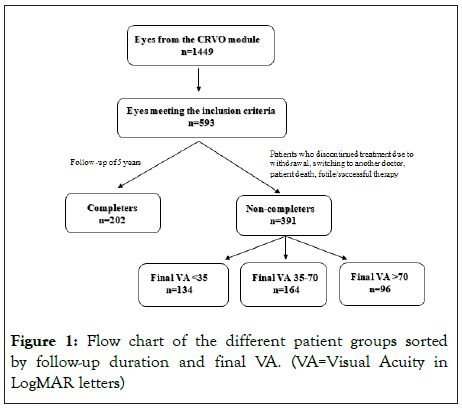
Figure 1: Flow chart of the different patient groups sorted by follow-up duration and final VA. (VA=Visual Acuity in LogMAR letters)
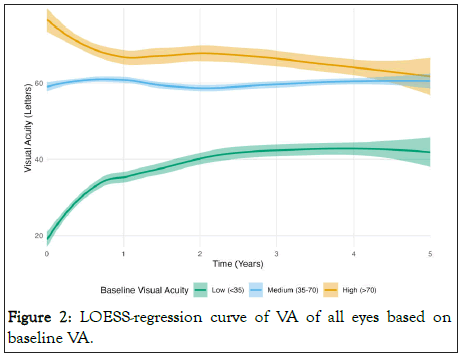
Figure 2: LOESS-regression curve of VA of all eyes based on baseline VA.
| Completers | Non-completers Final VA <35 |
Non-completers Final VA 35-70 |
Non-completers Final VA>70 |
|
|---|---|---|---|---|
| Eyes, n (% entire cohort) | 202 (34) | 133 | 163 | 95 |
| Female, % patients | 43 | 50 | 40 | 33 |
| Age baseline, mean (SD) | 70 (12) | 76 (12) | 73 (11) | 64 (13) |
| VA baseline, mean (SD) | 45 (24) | 21 (24) | 42 (22) | 28 (19) |
| VA final, mean (SD) | 55 (27) | 9 (11) | 53 (12) | 80 (5) |
| VA change (95% CI) | +11 (7, 14) | -12 (-17, -8) | +12 (8, 15) | +23 (19,26) |
| CST baseline, mean (SD) | 656 (228) | 670 (267) | 636 (220) | 555 (188) |
| CST final, mean (SD) | 337 (161) | 367 (216) | 342 (158) | 293 (89) |
| CST change (95% CI) | -320(-358, -281) | -300 (-367, -233) | -292 (-336, -247) | -263 (-304, -222) |
| Injections, median (Q1, Q3) | 25.5 (15.25,34) | 7 (3,13) | 11 (5,17.5) | 8 (4,16) |
| Visits, median (Q1, Q3) | 39.5 (32,46) | 16 (9,26) | 16 (10,26) | 13 (9,20.5) |
| Days of follow-up, mean (SD) | 1826 (40) | 752 (506) | 774 (481) | 731 (451) |
Note: n=Number; VA=Visual Acuity; SD=Standard Deviation; CI=Confidence Interval; CST= Central Subfield Thickness; Q1=First Quartile; Q3=Third Quartile
Table 2: Baseline demographics and final outcomes of different groups.
| Baseline VA <35 | Baseline VA 35-70 | Baseline VA >70 | ||
|---|---|---|---|---|
| Baseline, n=593 | VA, mean (SD) | 9.2 (10.2) | 53.7 (11.2) | 77 (4) |
| Age, median (SD) | 72.7 (11.8) | 71.5 (12.1) | 66.1 (14.3) | |
| Year 1, n=507 | VA, mean (SD) | 34.6 (26.4) | 62 (20.2) | 69.4 (22.5) |
| Injections, median (Q1, Q3) | 7 (5, 9) | 8 (6, 10) | 9 (5.5, 10) | |
| Year 2, n=385 | VA, mean (SD) | 36.5 (26.7) | 58.9 (23.2) | 74.6 (17.8) |
| Injections, median (Q1, Q3) | 12 (7, 15.5) | 14 (10, 17) | 15 (7, 18) | |
| Year 3, n=302 | VA, mean (SD) | 39.7 (27.3) | 61.6 (22.1) | 69.4 (17.5) |
| Injections, median (Q1, Q3) | 16 (9, 21) | 18 (12, 23) | 22 (13, 26) | |
| Year 4, n=249 | VA, mean (SD) | 39.5 (29.1) | 59.4 (22.4) | 67.1 (20.8) |
| Injections, median (Q1, Q3) | 20 (9, 28) | 22 (16, 28) | 24 (14.5, 34) | |
| Year 5, n=202 | VA, mean (SD) | 40.3 (30.1) | 60 (23.9) | 65.6 (25.1) |
| Injections, median (Q1, Q3) | 21 (8, 32) | 26 (19.25, 34) | 32.5 (18, 38.75) |
Note: n=number; SD=standard deviation; VA=visual acuity; Q1=first quartile; Q3 third quartile
Table 3: Outcomes per year of all eyes based on baseline VA.
Adverse events
Throughout the entire observation period, a total of 9323 injections were administered. Reported adverse events included 5 cases of endophthalmitis, 1 case of retinal detachment, 3 vitreous hemorrhages from injection, 2 traumatic cataract and 1 case of anterior uveitis. Macular changes affecting vision were detected in 14% of the eyes and 5% had a vitreous haemorrhage. Neovascularisations of the disc were found in 2% of the eyes and elsewhere in 3%, while neovascularisations in the anterior chamber developed in 4%; as a result, 5% developed rubeotic glaucoma.
The Results of 593 treatment-naïve eyes with CME secondary to CRVO from baseline to up to 5 years were evaluated. The aim was to provide insights into prognosis and treatment modalities for eyes managed with aflibercept, bevacizumab, or ranibizumab in routine clinical practice. After 5 years, 34% of the eyes still received intensive therapy, while 24% had ceased therapy and the remaining 42% were considered lost to follow-up. Long-term outcomes of completers (202/593) showed a mean change in VA of +11 letters and a mean CST change of -320 μm at 5 years. The functional results of the non-completers with a final VA between 35 and 70 letters (163/593) were comparable, with a change in mean VA of +12 letters. In non-completer eyes with poor final VA of <35 letters (133/593), the baseline mean VA of 21 letters decreased by 12 letters. In non-completer eyes with good final VA of >70 letters (95/593), the baseline mean VA of 58 letters improved by 23 letters.
In this study, both completers and the results of non-completers were evaluated. Observational studies often include only data from completers [10,11]. Given that the average attrition rate per year is around 20%, a significant portion of the actual data is excluded from analysis depending on the observation period [12]. Therefore, “completers-only” analyses are susceptible to selection bias. Using the overall results as a benchmark is of great importance when describing outcomes and treatment regimens in routine clinical practice.
To evaluate which patients are likely to complete the follow-up, the baseline characteristics of completers and non-completers were compared: With an average age of 70 versus 72 years and the same gender distribution, no differences between the groups were found. A more comprehensive analysis of baseline characteristics, including comorbidities as well as social and occupational background, would provide valuable insights into the determinants of compliance and adherence. A corresponding analysis could be considered in an extension study. However, it must be considered that based solely on the baseline data, it is not possible to explain over an extended period whether the patient will complete the 5-year follow-up. Reasons for dropout, such as changing doctors, good/bad treatment response, or life events, are difficult to predict at baseline.
The dropout rates measured in our study ranged between 16% and 25% per year, which is comparable to the attrition rates we normally observe in routine clinical practice [12]. In the overall cohort, 593 eyes were identified, while the completers group consisted of only 202 eyes. 21% of non-completers dropped out of the study due to stabilised condition. Other frequently cited reasons were patient death or transfer to another ophthalmologist. Eyes that dropped out within one year of follow-up showed a strong response to therapy, but with a low baseline VA and an improvement to only 41 letters. Given the poor baseline and final VA, it is likely that the treatment was deemed clinically ineffective and was consequently discontinued. Additionally, the mean VA at baseline in the overall cohort was lower than that of the completers. This is why other studies speculate that eyes with poor final VA are more likely to drop out [5]. Our study results do not support this assumption. By grouping non-completers based on their final visual acuity and measuring the average follow-up duration, we demonstrated a comparable treatment duration for eyes with both good and very poor final VA. Non-completer eyes with a final VA of <35 letters had a mean number of follow-up days of 752, whereas in eyes with a VA of >70, it was 731 days.
Evidence derived from routine care regarding long-term management for CRVO is currently scarce. A large portion of studies in the literature have follow-up rates of 1 to 3 years [5,13]. Furthermore, RCTs analyze data with an observation period of up to 2 years, often in tightly controlled settings rather than real-world conditions [14,15]. When comparing our results with those of similar long-term extension studies, it can be observed that our visual outcomes (mean VA change of completers: +11 letters) align well with the existing literature despite the longer observation period. After 2-3 years, changes in mean VA ranging from +6 to +12 letters were demonstrated [5,13,16,17]. RCTs published better results with changes in mean VA of +9.8 up to +16.9 letters depending on the VEGF agent, with a correspondingly higher injection frequency. It should be noted that the number of injections within the first 12 months averaged 10, whereas in clinical practice, an average number of around 5 to7 injections was typically delivered [12,14,16,18,19]. Another consideration is that patients in RCTs often have characteristics that make them more likely to comply with the study protocol, respond to the treatment, and complete the trial. This can result in better outcomes than would be seen in a more diverse, real-world population [20].
The only study that also analyzed long-term results with a followup of more than 3 years reported a higher mean VA improvement from 52.0 to 66.4 letters at 8 years [12]. The mean change in CST was lower than that of our study (-268 μm versus -320 μm). The average number of injections per year was similar, with a higher frequency in the first year, which stabilized to 3-4 injections over time [12]. The existing data indicates that intensive and, most importantly, long-term anti-VEGF therapy over years plays a crucial role in improving visual outcomes. Patients who continue treatment can achieve meaningful improvements in vision over an extended period.
Non-completers were categorized based on final VA rather than baseline VA to assess a potential impact of treatment intensity on long-term outcomes, assuming that more intense treatment may result in better visual acuity results. Treatment intensity can vary over a 5-year period, regardless of baseline VA, potentially influencing final outcomes. By focusing on final VA, we can better evaluate how treatment regimens affect visual outcomes. This approach helps identify factors that predict good or poor visual prognosis at the time of dropout.
It was notable that the data of non-completers with a final VA of 35 to 70 letters were nearly identical to those of the completers. The follow-up duration was substantially shorter, with a mean of 774 days. However, it is worth noting that the most common reasons for discontinuation were patient death or switching to another doctor. This suggests that eyes with moderately good baseline VA of 42-45 letters can expect a sustained need for injections and visual outcomes ranging between 35 and 70 letters.
In non-completer patients with very poor functional outcomes of <35 letters, a comparatively lower mean VA at baseline was observed. In this group, a change in mean VA of -12 letters and a relatively short follow-up duration were recorded. Consequently, injection therapy in this patient group most likely does not lead to substantial vision improvement. This suggests that significant and irreversible damage may have already occurred due to ischaemic zones. However, without treatment the prognosis could have been even worse.
In non-completer patients with very good final outcomes of >70 letters, high VA was identified at the start of anti-VEGF treatment. Since the follow-up duration was also relatively short, averaging 731 days, we can assume that anti-VEGF injections in this patient group help to maintain good vision. It is highly likely that patients with good baseline VA, due to minimal tissue damage, can successfully discontinue therapy after approximately two years.
Considering potential risk factors, advanced age appears to be linked to worse visual outcomes. Patients in the group with poor final VA (<35) were, on average, 12 years older than the high final VA (>70) group (76 versus 64 years). This suggests that advanced age is associated with a worse visual prognosis and tends to correlate with more severe tissue damage.
Focal laser therapy seems to have limited impact on improving visual outcomes in treatment-resistant macular edema. As a secondary outcome, we assessed the effect of focal laser therapy in such cases. During the 5-year follow-up, a total of 21 eyes received at least one laser treatment, with 33% of these laser procedures occurring within the first year. This suggests that the treating physician waits for the effect of the VEGF inhibitor and subsequently applies laser therapy as an alternative. However, our analysis shows that after macular laser treatment, the mean VA did not change significantly, nor did it show significant improvement. Moreover, the intervals between injections could not be extended [21].
We also compared the VA progression of eyes without PRP laser therapy to those with PRP laser therapy. It was noticeable that eyes with a poor final VA and thus a more ischaemic form of CRVO were more likely to require PRP laser treatment [22].
The strengths of this study are that it includes a relatively large patient cohort over a long observation period. Since patients were recruited from several countries and both private and public hospitals, the data set is generalisable to a broad population.
In conclusion, continued anti-VEGF therapy provides meaningful outcomes in patients with CME secondary to CRVO after 5 years. Functional outcomes are strongly dependent on initial visual acuity and age. Patients with very low VA and advanced age have a poor prognosis despite intensive anti-VEGF treatment. In contrast, younger patients with good vision can achieve substantial improvement with injections and may even successfully complete the therapy after approximately 2 years.
The authors thank the Fight Retinal Blindness! investigators: Australian Capital Territory (Dr. J Wells. Dr. R Essex); Central Coast Eye Specialist, New South Wales (Dr. S Young); Eye Wide Bay, Queensland (Dr. Z Louw); Gladesville Eye Specialists, New South Wales (Dr. S Young); Gordon Eye Surgery, New South Wales (Dr. S Fraser-Bell); Hospital Clinic de Barcelona, Spain (Dr. M Figueras-Roca); New South Wales (Dr. S Nothling); Retina & Macula Specialists (Miranda), New South Wales (Dr. S Nothling); Retina Associates, New South Wales (Dr. S Fraser- Bell); Southern Eye Specialists (NZ), New Zealand (Dr. S Every); Sydney Eye Hospital, New South Wales (Dr. S Fraser-Bell); Tamworth Eye Centre, New South Wales (Dr. P Hinchcliffe)
[Crossref] [Google Scholar] [PubMed]
[Crossref] [Google Scholar] [PubMed]
[Crossref] [Google Scholar] [PubMed]
[Crossref] [Google Scholar] [PubMed]
[Crossref] [Google Scholar] [PubMed]
[Crossref] [Google Scholar] [PubMed]
[Crossref] [Google Scholar] [PubMed]
[Crossref] [Google Scholar] [PubMed]
[Crossref] [Google Scholar] [PubMed]
[Crossref] [Google Scholar] [PubMed]
[Crossref] [Google Scholar] [PubMed]
[Crossref] [Google Scholar] [PubMed]
[Crossref] [Google Scholar] [PubMed]
[Crossref] [Google Scholar] [PubMed]
[Crossref] [Google Scholar] [PubMed]
[Crossref] [Google Scholar] [PubMed]
Citation: Rudolph K, Rosso M, Gillies M, Hunt A, O´Toole L, Invernizzi A, et al (2025). Five-year Treatment Outcomes of Macular Edema Secondary to CRVO in Routine Clinical Practice: The Fight Retinal Blindness! Registry. Clin Exp Ophthalmol.16:1001
Received: 30-Sep-2025, Manuscript No. JCEO-25-38798; Editor assigned: 03-Oct-2025, Pre QC No. JCEO-25-38798 (PQ); Reviewed: 17-Oct-2025, QC No. JCEO-25-38798; Revised: 27-Oct-2025, Manuscript No. JCEO-25-38798 (R); Published: 03-Nov-2025 , DOI: 10.35248/2155-9570.25.16.1001
Copyright: This is an open access article distributed under the terms of the Creative Commons Attribution License, which permits unrestricted use, distribution, and reproduction in any medium, provided the original work is properly cited.