Journal of Clinical & Experimental Dermatology Research
Open Access
ISSN: 2155-9554
ISSN: 2155-9554
Research Article - (2025)Volume 16, Issue 6
Background: Sensitive skin is characterized by reduced barrier integrity, increased Transepidermal Water Loss (TEWL), and proneness to irritation and redness. Cosmetic formulations targeting hydration and barrier repair can improve comfort and visible skin condition.
Objective: This study aimed to assess, in vivo, the moisturizing, soothing, and barrier-protecting efficacy of a cosmetic formulation in cream formulation (Jaluronius B complex, Cantabria labs Difa Cooper) in female volunteers with sensitive skin and mild to moderate skin ageing.
Methods: A single-center, open-label, randomized intra-individual (half-face) controlled study was performed on 20 healthy female volunteers aged 21-45 years. The tested product was applied twice daily for 6 weeks to one side of the face, while a neutral base cream served as the control on the contralateral area. Stratum corneum hydration, TEWL, and redness were quantified using corneometry, tewametry, and Antera 3D imaging. Subjective assessments of efficacy and pleasantness were collected at study end.
Results: Nineteen subjects completed the study. Compared with baseline, hydration increased significantly by +13.97% at 24 h (p<0.0001) and +15.54% after 6 weeks (p<0.0001) in the active treated sides. No increase in hydration was observed in the control treated sides. At week 6, the hydration level in active treated sides was significantly higher in comparison with control (46 ± 4 A.U vs. 40 ± 3 A.U; p<0.0001). TEWL decreased by -3.97% and -5.70% at the same time points (p<0.01), remaining within physiological limits (6-12 g/m²h). No modification of TEWL values was observed in the control treated sides at week 6 in comparison with baseline. Redness was reduced by 10.24% after 6 weeks (p<0.0001) in the active treated sides, whereas a small increase was observed in the control treated sides (p<0.001 at week 6; active vs. control). No adverse reactions were observed during the treatment period.
Conclusion: The tested formulation significantly improved hydration and reduced redness while preserving barrier integrity with an efficacy greater than the control cream. These results support its suitability for sensitive skin. Longer and blinded studies are warranted to confirm potential anti-age benefits in the medium-long term.
Sensitive skin; Hydration; Transepidermal water loss; Redness; Cosmetic efficacy; In vivo study; Skin barrier; Jaluronius B Complex.
Sensitive skin is a prevalent condition characterized by subjective sensations of stinging, burning, or tightness, often occurring in the absence of visible lesions [1]. Its pathophysiology is multifactorial and involves increased neurosensory reactivity, impairment of the stratum corneum barrier, and low-grade inflammation [2]. These factors result in increased Transepidermal Water Loss (TEWL), decreased hydration, and a predisposition to redness or discomfort [3]. Restoring barrier function and optimizing hydration are thus central goals in the cosmetic management of sensitive skin [4]. Hydration and barrier reinforcement can be achieved through humectants, emollients [5], and bioactive ingredients that restore lipid organization, improve corneocyte cohesion, and modulate the skin microbiota [6]. Glycerin and sodium hyaluronate are benchmark humectants capable of binding water molecules in the stratum corneum, thereby increasing skin hydration and flexibility [7]. Opuntia ficus-indica seed extract contributes additional moisturizing and anti-inflammatory properties through its polysaccharide and polyphenolic components, which enhance lipid barrier integrity and reduce cytokine-mediated redness [8]. This extract has also interesting anti-ageing activities [9]. More recently, prebiotic and postbiotic actives have emerged as valuable allies in sensitive skin care. Fructooligosaccharides (FOS) provide a selective substrate for commensal microorganisms, helping maintain microbiome balance and improving tolerance to environmental stress [10,11]. Lactobacillus ferment, a postbiotic derivative of lactic acid bacteria, has been reported to strengthen the skin barrier, reduce inflammation, and mitigate irritation responses [12]. Similarly, Ahnfeltiopsis concinna extract (a red algae derivative) contains sulphated polysaccharides with documented antioxidant and soothing activity, capable of reducing erythema and oxidative stress in reactive skin [13]. In addition, this extract is rich in mineral salts, proteins, polysaccharides, and amino acids. This replenishes skin with deficient ingredient and helps nourish skin, contributing to anti age effect. Folic acid complements these effects at the cellular level by acting as a coenzyme in nucleic acid synthesis and repair, supporting epidermal renewal and protecting against oxidative damage [14]. Topical vitamin B12 (cobalamin) may support skin homeostasis by participating in cellular energy metabolism and erythrocyte function within the dermis, which can help bolster the skin’s resilience to irritants [15]. In the context of sensitive skin, vitamin B12 may contribute to maintaining epithelial integrity and supporting repair processes, potentially aiding in barrier reinforcement and improving tolerability of cosmetic formulations [16,17]. Therefore, the combination of these bioactive ingredients represents a comprehensive strategy to enhance skin hydration, soothe irritation, and reinforce the barrier, potentially leading to secondary improvements in skin comfort and appearance in subjects with sensitive skin and mild to moderate skin ageing. The present in vivo study was designed to evaluate the efficacy of a cosmetic formulation containing Jaluronius B complex® (Cantabria labs Difa Cooper), composed of these functional ingredients, in women with sensitive skin. Quantitative biophysical techniques [18], were employed to assess stratum corneum hydration, TEWL, and redness variation, alongside subjective assessments of efficacy and tolerance. The working hypothesis was that the formulation would improve hydration and barrier function while reducing redness and discomfort, thereby confirming its suitability for sensitive skin.
Study design
A monocentric, randomised, split face open label, controlled in vivo study was conducted at the Department of Drug Sciences, University of Pavia (Pavia, Italy). The trial complied with the ethical principles of the Declaration of Helsinki (2013 revision), EU Regulation 1223/2009, Commission Regulation (EC) 655/2013, and EEMCO (European group on efficacy measurement and evaluation of cosmetics and other products) guidelines [19] for skin biophysical measurements. All participants provided written informed consent prior to enrolment. The study employed an intra-individual, half-face design: The test formulation was applied to one side of the face, and a neutral base cream (without active ingredients) served as control on the contralateral side. Side allocation was randomized. The study lasted six weeks, with evaluations performed at baseline (T0), after 24 hours (T24h, for hydration and TEWL), and after six weeks (T6w, all parameters).
Subjects
Twenty healthy female volunteers aged 21-45 years (mean age 41 years) with clinically sensitive skin and mild to moderate skin ageing were recruited. The inclusion to the study was determined based on the responses to a preliminary questionnaire submitted to all subjects. It includes a first part regarding the recurrent occurrence of phenomena attributable to a skin-sensitive condition, and a second part of screening for pathologies or familial conditions related to the sensitive skin condition. Sensitive skin was confirmed by self-assessment questionnaire (minimum score ≥ 2 in at least two of the following sensations: stinging, pain burning, tightness, itching, general discomfort or redness) The scores range from 0, sign or symptom absent to 4, sign or symptom very severe. Exclusion criteria included active dermatological disease, pregnancy or breastfeeding, chronic medication affecting skin physiology, recent participation in similar studies, or use of corticosteroids or retinoids within four weeks prior to inclusion. Nineteen subjects completed the study (one dropout unrelated to the product). All participants were instructed to maintain their regular skincare routine but to refrain from applying any other facial products on test areas during the study period.
Test formulation
The evaluated product was a cosmetic cream (Jaluronius B Complex® Cantabria Labs Difa Cooper) containing, a proprietary blend of hydrating, soothing, and microbiome-supportive ingredients, formulated as follows: Opuntia ficus-indica seed extract; Glycerin; Fructooligosaccharides (FOS); Lactobacillus ferment (postbiotic); Sodium hyaluronate; Ahnfeltiopsis concinna extract (red algae); Vitamin B12 and Folic acid. These actives were selected to provide synergistic moisturizing, barrier-reinforcing, anti-redness effects and potential anti-ageing effects. The control product was an identical emulsion base without these functional ingredients. Both were manufactured and supplied by Cantabria Labs Difa Cooper (Caronno P, Italy) under standard cosmetic GMP conditions.
Product application
Participants applied a pea-sized amount of each product twice daily (morning and evening) on the randomised assigned facial area, gently massaging until complete absorption. Applications were performed for six consecutive weeks under normal daily conditions. Compliance was monitored through diary entries and periodic investigator verification. Randomisation list was generated by a computer dedicated software.
Environmental conditions
All instrumental evaluations were carried out in a climate-controlled room (temperature=22°C ± 2°C; relative humidity=50 ± 5%) after a 20-minute acclimatisation period. During measurements, subjects remained seated and the series of probes were free of discomfort, pain or individual damage.
Instrumental evaluations
Skin hydration was measured using a Corneometer CM 825 (Courage+Khazaka Electronic GmbH, Cologne, Germany), expressed in Arbitrary Units (A.U.) on a scale from 0 to 100 [20]. Transepidermal Water Loss (TEWL) was assessed with a Tewameter TM Hex (Courage + Khazaka), expressed in g/m2·h. Normal values in healthy facial skin range from 6 to 12 g/m2·h. Redness was quantified using Antera 3D (Miravex, Dublin, Ireland) imaging, which computes a numerical redness index based on optical reflectance. High-resolution imaging of representative areas was performed using Vectra H2 (Canfield Scientific, NJ, USA) to document visual changes over time. Measurements were performed in triplicate at each site and averaged for analysis.
Subjective evaluation
At study completion, volunteers filled a structured questionnaire rating perceived product performance (hydration, softness, soothing effect, pleasantness) on a 4-point scale (0=not at all; 3=very). Scores ≥ 2 were considered positive. Participants also reported any discomfort or adverse effects during the study duration.
Statistical analysis
Data were analysed using GraphPad Prism 10 (GraphPad Software, San Diego, CA, USA). Results are presented as mean ± Standard Deviation (SD). Intra-group comparisons (T0 vs. T24h and T0 vs. T6w) were conducted using the paired student’s t-test after testing normality via Shapiro-Wilk. Differences were considered statistically significant at p<0.05. No corrections for multiple comparisons were applied, as each parameter was tested independently. This was a pilot study, therefore, no formal calculation of the sample size was needed. We decided to enrol at least twenty subjects.
Participants
Nineteen of 20 participants completed the study (95% retention). No adverse events or intolerance reactions were reported. Compliance with the application protocol was confirmed through participant logs and investigator verification.
Hydration
Baseline hydration values were comparable between test and control sides (39.9 ± 3.5 A.U. vs 40.0 ± 3.1 A.U., p=0.93). After 24 h, hydration on the treated area increased by +13.97% (p<0.0001), and by +15.54% after 6 weeks (p<0.0001). No significant changes were observed on the control side (≤ +1%, ns). The improvement was consistent across subjects, with SD ≈ 4-5 A.U. At week 6, the hydration level in active treated sites was significantly higher in comparison with control (46 ± 4 vs 40 ± 3; p<0.0001; difference within the tested products: -6,000 ± 1,136 A.U; (Figure 1). These results indicate a clear and sustained moisturizing effect of the tested product.
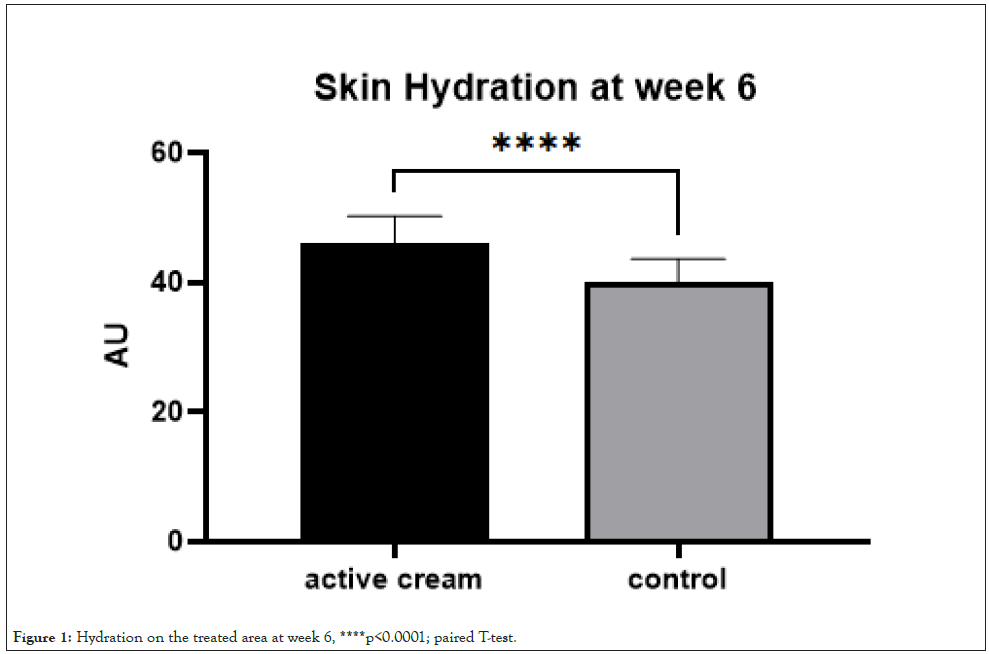
Figure 1: Hydration on the treated area at week 6, ****p<0.0001; paired T-test.
Transepidermal Water Loss (TEWL)
Baseline TEWL values (11.56 ± 1.03 g/m2h for the tested product; 11.37 ± 0.94 for control) were within the physiological range and not significantly different (p=0.51). After 24 h, TEWL decreased by -3.97% (p=0.0071) and by -5.70% after 6 weeks (p=0.0108) in the active product tested sides. In contrast, the control side showed non-significant increases of +1-3%. Importantly, TEWL values remained between 10-12 g/m2h, confirming barrier preservation and suggesting improved moisture retention.
Redness (Antera 3D)
Redness index at baseline was similar between sides (2.26 ± 0.47 A.U. vs 2.19 ± 0.45 A.U.; p=0.56). After 6 weeks, redness decreased by -10.24% on the treated area (p<0.0001), whereas the control area remained unchanged (+1.79%, ns). At week 6 the redness index in the active product treated sides was significantly lower in comparison with control treated sides (p<0.0001; Figure 2). Representative Vectra H2 Antera 3D images confirmed visibly reduced erythema intensity and distribution (Figures 3A and 3B).
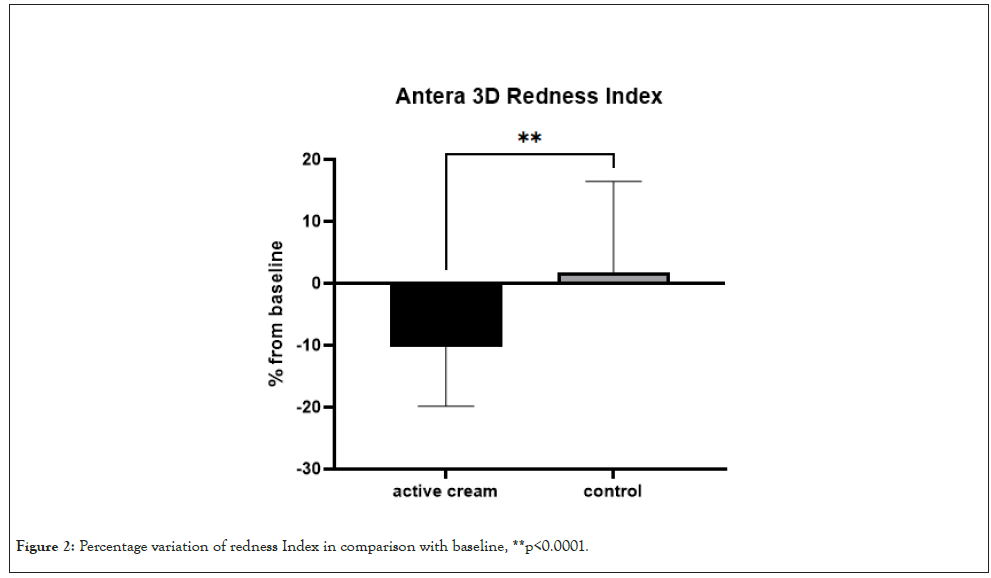
Figure 2: Percentage variation of redness Index in comparison with baseline, **p<0.0001.
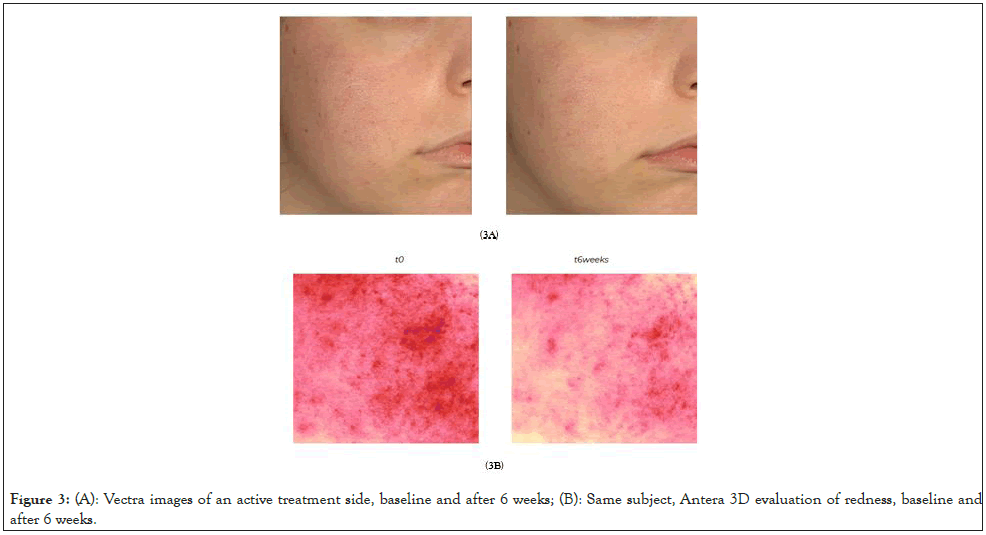
Figure 3: (A): Vectra images of an active treatment side, baseline and after 6 weeks; (B): Same subject, Antera 3D evaluation of redness, baseline and after 6 weeks.
Subjective assessment
At the end of the study, 84% of participants rated the product as “effective” or “very effective” in improving hydration and comfort, and 89% rated it as “pleasant” or “very pleasant” in sensory experience (texture, absorption, scent). No volunteer reported irritation, dryness, or unpleasant sensations.
The results of this in vivo evaluation demonstrate that the cosmetic formulation containing Jaluronius B Complex significantly increased skin hydration, reduced visible redness, and maintained physiological TEWL values in subjects with sensitive skin. These findings confirm the formulation’s moisturizing and soothing efficacy and align with the mechanistic expectations derived from its composition. The observed +15% increase in hydration after six weeks can be attributed to the combined humectant and film-forming effects of glycerin and sodium hyaluronate, both known to bind water within the stratum corneum and reduce superficial dryness. Glycerin has been shown to enhance aquaporin-3 expression and promote barrier lipid organization [21], while hyaluronate forms a hygroscopic matrix that improves water retention and smoothness [22]. Opuntia ficus-indica seed extract, rich in mucilaginous polysaccharides and unsaturated fatty acids, likely contributed to sustained hydration and barrier reinforcement [23]. Its antioxidant and anti-inflammatory compounds may have also supported the significant 10% decrease in redness, consistent with previously reported reductions in erythema and cytokine activity in Opuntia-based formulations. The TEWL decrease (-5.7%), while modest, indicates improved moisture retention and barrier integrity. This may stem from the synergistic action of FOS and Lactobacillus ferment, representing prebiotic and postbiotic components that modulate the skin microbiome [24]. Balanced microbiota composition is known to strengthen barrier lipids, enhance tight-junction integrity, and reduce inflammatory mediators-factors particularly relevant to sensitive skin [25]. The inclusion of Ahnfeltiopsis concinna extract provides an additional soothing mechanism. Its sulfated polysaccharides, chemically similar to carrageenans, possess anti-inflammatory and antioxidant activity, which can mitigate oxidative stress and vascular hyperreactivity underlying facial redness [26]. Vitamin B12, also present in the formulation, may further contribute to these effects by reducing cutaneous inflammation through modulation of nitric oxide synthase and cytokine signalling [27]. Topically, cobalamin has been shown to alleviate erythema and discomfort in sensitive or atopic skin, likely by stabilizing epidermal immune responses and supporting barrier recovery [28]. In addition, Vitamin B12 plays a role in cellular methylation and energy metabolism, processes essential for dermal fibroblast function and collagen synthesis, thereby offering a theoretical anti-aging contribution when used in combination with DNA-supportive actives [29]. Finally, folic acid contributes to epidermal homeostasis by promoting DNA synthesis and repair, supporting keratinocyte proliferation and renewal-potentially enhancing the skin’s resilience and long-term appearance [30]. The coexistence of folic acid and Vitamin B12 within the same formulation may also exert synergistic benefits, as both cofactors cooperate in the methionine–homocysteine cycle to sustain methylation reactions crucial for cellular turnover and antioxidant defense. This interaction could help prevent the so-called “folate trap,” [31] a condition in which folate remains metabolically inactive in the absence of adequate Vitamin B12, thereby ensuring full bioavailability of both vitamins and optimizing epidermal renewal and repair [32]. The magnitude of hydration improvement observed here (+13-15%) aligns with previously reported results for moisturizers containing humectants and botanical polysaccharides. For example, studies using glycerin-based formulations have documented 10-20% increases in corneometric hydration after 4-8 weeks [33]. Similarly, TEWL reductions between 5-10% are typical for barrier-enhancing products incorporating microbiome-supportive actives or lipid-replenishing extracts. The 10% reduction in redness corroborates findings from formulations containing red algae or cactus-derived polysaccharides, which exert anti-inflammatory and photoprotective actions. These results thus place the tested formulation within the expected efficacy range of well-designed dermocosmetic moisturizers targeting sensitive skin. Some limitations must be acknowledged. The study was open-label and not blinded for evaluators or participants, which introduces potential bias. The sample size (n=19) is modest and restricts statistical power, though variability was low and significance values robust. The 6-week duration is appropriate for assessing hydration and redness but insufficient for confirming structural “anti-aging” effects such as wrinkle reduction or collagen remodelling. Furthermore, the absence of a fully disclosed formulation restricts independent reproducibility and mechanistic certainty. Despite these constraints, the study complies with international guidelines for cosmetic efficacy evaluation and provides reliable in vivo data on performance and tolerance. The improvement in hydration and reduction in redness observed suggest that Jaluronius B Complex acts through multi-targeted mechanisms addressing hydration, barrier integrity, microbiome balance, and inflammation control. These results are particularly relevant for the management of sensitive or reactive skin, where barrier repair and comfort restoration are primary objectives. Future research should involve double-blind, randomized, vehicle-controlled trials with larger sample sizes and extended follow-up. Additional endpoints such as cutometry, profilometry, and high-frequency ultrasound imaging could provide deeper insight into potential anti-aging benefits and dermal structural changes.
The cosmetic formulation of Jaluronius B Complex demonstrated statistically and clinically significant increases in skin hydration and decreases in redness, while maintaining physiological TEWL values in subjects with sensitive skin. No adverse effects were observed, confirming excellent tolerability in sensitive skin. Although these findings substantiate the product’s hydrating and soothing efficacy, they do not yet provide evidence of anti-aging activity in the strict dermatological sense. Further blinded and long-term studies are needed to validate such claims and to elucidate the contribution of individual ingredients.
The authors thank the volunteers who participated in the study and the technical staff of the Department of Drug Sciences, University of Pavia, for their assistance in data collection and instrumentation.
The study was sponsored by DIFA-COOPER S.p.A. The experimental work was conducted by ETICHUB Srl (Pavia, Italy) under contract research. The authors are employees of Cantabria Labs Difa Cooper.
The study was conducted in accordance with the Declaration of Helsinki (Ethical Principles for Medical Research Involving Human Subjects). The study was conducted in compliance with: European Regulation No. 1223/2009- Commission Regulation (EC) No. 655/2013- Guidelines of the EEMCO group (European group on efficacy measurement and evaluation of cosmetics and other products):EEMCO Guide for the assessment of transepidermal water loss in cosmetology sciences (Skin Pharmacol Appl Skin Physiol. Mar-Apr 2001;14(2):117-28.)The revised EEMCO guide for in vivo measurement of water in the skin (Skin Research & Technology, 2018, 24, p. 351-358). All subjects gave their written informed consent before the participation of the study.
Citation: Alfano S, Colombo F, Milani M (2025) In vivo Assessment of Hydration, Skin Barrier Function, and Redness Reduction of a Cosmetic Cream Formulation Containing Vitamin B 12, Folic Acid and Red Algae Extract (Jaluronius B Complex) in Subjects with Sensitive Skin and Moderate Skin Ageing: A Randomised, Split Face, Controlled Trial. J Clin Exp Dermatol Res. 16:687. DOI:10.35841/2155-9554.16.6.687.
Received: 11-Nov-2025 Editor assigned: 12-Nov-2025 Reviewed: 19-Nov-2025 Published: 25-Nov-2025 , DOI: 10.35841/2155-9554.25.16.687
Copyright: ©Alfano S, et al. This is an open-access article distributed under the terms of the Creative Commons Attribution License, which permits unrestricted use, distribution, and reproduction in any medium, provided the original author and source are credited.