Journal of Clinical Trials
Open Access
ISSN: 2167-0870
ISSN: 2167-0870
Review Article - (2025)Volume 15, Issue 10
Recent studies have examined the use of supplements as a preventative measure against heart disease, along with the development of pharmaceutical drugs. Policosanol, a particularly interesting supplement, improves conditions such as hypertension, dyslipidemia, obesity, and inflammation. In addition, in patients diagnosed with hyperlipidemia, policosanol enhances lipid metabolism with respect to Low Density Lipoprotein (LDL) and High-Density Lipoprotein (HDL). The efficacy of plant-derived policosanol varies depending on its specific type and origin. Therefore, this systematic review and meta-analysis investigated the effect of Cuban sugarcane-derived policosanol on the lipid profile of healthy individuals with normal LDL cholesterol levels via randomized placebo-controlled trials. A comprehensive search of PubMed, Cochrane, Web of Science, Radelyc and Ichushi was conducted until August of 2025. The quality of the studies was assessed using the Cochrane risk-of-bias tool (RoB 2). The mean difference of lipid concentrations in the policosanol and placebo arms were pooled using a random-effects meta analysis. A subsequent meta-analysis of seven randomized controlled trials (395 participants) revealed that policosanol supplementation resulted in a significant reduction in serum LDL- cholesterol levels (17.8 mg/dL) in comparison with the placebo (effect size: -17.8 mg/dL; 95% CI: -26.8 to -8.8). Additionally, it was observed to increase the HDL- cholesterol levels by an average of 3.5 mg/dL, with this effect being adjusted for the placebo effect (effect size: 3.5 mg/dL; 95% CI: 1.9-5.1). Moreover, the Cuban policosanol supplementation group exhibited a substantial increase in HDL cholesterol levels.
In conclusion, policosanol, a derivative of Cuban sugarcane, was effectively improved lipid profiles in healthy individuals with normal LDL cholesterol concentrations.
Cuban policosanol; Sugarcane; LDL cholesterol; HDL cholesterol; Cholesterol ratio
Cardiovascular Disease (CVD) remains the leading cause of mortality worldwide and in the United States, accounting for approximately one-quarter of all deaths [1,2]. Among the modifiable risk factors, dyslipidemia plays an important role in the development of CVD [2-4]. Several epidemiological studies have consistently shown that lower High-Density Lipoprotein Cholesterol (HDL-C) and higher Low-Density Lipoprotein Cholesterol (LDL-C) levels are strongly associated with atherosclerotic CVD and mortality across diverse populations [5-10]. Importantly, large-scale randomized trials have revealed that decreasing LDL-C levels reduces the risk of CVD events not only among patients with established diseases but also in primary prevention populations [10]. Consequently, contemporary cardiovascular prevention guidelines recommend comprehensive lipid management strategies that address LDL-C and HDL-C levels to reduce long-term risk [11,12].
Against this background, nutritional interventions that may regulate lipid profiles have attracted growing interest as complementary therapeutic strategies. Among the nutritional interventions examined, policosanol, a compound with notable antioxidant properties, has been reported to enhance lipid profiles. Policosanol is a mixture of long-chain aliphatic alcohols (24-34 carbons), including tetracosanol, hexacosanol, heptacosanol, octacosanol, nonacosanol, triacontanol, dotriacontanol and tetratriacontanol. It was originally isolated from purified sugarcane wax. However, similar alcohols are also found in rice bran and beeswax [13-15].
In addition, policosanol is widely distributed in plants such as sugarcane, rice bran, and apples, and various techniques can be used for extraction to isolate and purify policosanol from them. Policosanol comprises eight aliphatic alcohol components. However, the ratio of these elements varies significantly based on the plant species and cultivation region [16-18]. Therefore, differences in function and bioavailability have been reported among policosanol products.
Mechanistic studies have demonstrated that policosanol may improve lipid metabolism not only by inhibiting HMG-CoA reductase activities as well as statins, but also by inhibiting Cholesterol Ester Transfer Protein (CETP) [19,20]. This mechanism contributes to elevated HDL-C levels and improved HDL functionality, thereby facilitating reverse cholesterol transport. In addition, previous research has shown that policosanol exerts antioxidant effects, thereby increasing the resistance of LDL to oxidative modification and potentially exerting protective effects on lipoproteins from atherogenic transformation [21]. These processes may act synergistically to promote cardiovascular protection.
Although several randomized and nonrandomized studies have investigated policosanol, not all have found it to be effective [22,23]. One possible explanation for these discrepancies is the considerable variability in the composition of long-chain aliphatic alcohols within policosanol, which depends on the source material, geographical origin, harvesting season, and extraction method [16,17]. Supporting this notion, different commercial preparations of policosanol exhibit various bioactivities in animal studies [16,17].
As mentioned in the previous text, policosanol has several effects on lipid metabolism [13,24]. According to recent studies on some types of policosanol, supplementation with Cuban sugarcane- derived policosanol can not only decrease Total Cholesterol (TC) and LDL-C levels but also increase HDL-C levels [25,26]. However, the mechanisms can vary according to the source plant and its origin, and the underlying reasons for these differences remain unclear.
Therefore, this systematic review and meta-analysis aimed to investigate the effects of Cuban sugarcane-derived policosanol supplementation on lipid profiles in healthy adults with normal LDL-C levels.
This systematic review and meta-analysis were prepared in accordance with the PRISMA 2020 reporting standards (Supplementary Figure 1), ensuring transparency and completeness in the review process [27]. The protocol was prospectively documented and registered in the UMIN Clinical Trials Registry (UMIN000059394).
Study strategy
This study was designed using the guidelines of the Preferred Reporting Items for Systematic Reviews and Meta-Analyses statement. Records were identified via electronic database searching (PubMed, Cochrane, Web of Science and Ichushi (Japanese)) and additional manual searches (“hand search”) in regional sources (Redalyc). To identify relevant published literature, the following databases were systematically searched up to August 2025 without limitations in terms of time and language. A combination of MeSH and non-MeSH terms, including “Policosanol AND RCTs AND lipids”, was used. Supplementary Table shows the details of the search strategy and study types.
Inclusion criteria
We included all clinical trials that evaluated the effect of policosanol supplementation on lipid profile in the present meta-analysis. The inclusion criteria or study selection criteria were Randomized Controlled Trials (RCTs) that included participants with normal baseline LDL levels (<140 mg/dL) and studies for which data can be disclosed.
Exclusion criteria
The exclusion criteria and data exclusion criteria were nonhuman trials, non-peer-reviewed publications, review articles, policosanol derived from non-sugarcane sources, products derived from non-Cuban sources, concomitant use of other supplements and pharmacological or therapeutic interventions, and the presence of dyslipidemia or hypercholesterolemia (LDL-C ≥ 140 mg/dL). In addition, studies were excluded if they were conducted in infants, animals, or breastfeeding or pregnant women; were designed as non-RCT formats such as observational studies, study protocols, letters, or conference papers; lacked a placebo comparison group; or examined policosanol in combination with other ingredients such that the independent effects of policosanol could not be determined.
Screening and data extraction
The processes of database screening, eligibility assessment, and extraction of relevant information were conducted independently by two reviewers (Taiki Yamamoto and Yoshinari Uehara). For each included study, detailed trial characteristics were retrieved, including participants’ mean age, trial design (parallel or crossover), first author name, health condition of the participants, publication year, duration of the intervention, and sample size in both the intervention and placebo groups. Outcome-related numerical information, such as mean values and standard deviations in lipid parameters at baseline and after supplementation, was transferred into a preformatted spreadsheet. When studies assessed more than one dose of policosanol, each dosage arm was treated as an independent comparison by allocating the sample size appropriately, allowing each evaluated dose to contribute separately to the analysis.
Risk of bias assessment
The Cochrane Risk of Bias 2 (RoB 2) tool was used to examine the methodological quality of the included RCTs [28]. This tool evaluates the potential sources of bias across multiple aspects of study design and conduct, which included the randomization process, deviations from intended interventions, handling of missing outcome data, and measurement and reporting of outcomes. According to the signaling questions and elaboration criteria described in the RoB 2 guidance, each domain was considered as low risk, some concerns, or high risk. The overall risk of bias for each study was determined according to the highest level of risk across the five domains.
Data analysis and synthesis
All statistical data analyses were performed using SAS software (Version 9.4, SAS Institute Inc. Cary, NC, USA) and Stata software (Version 19, Stata Corp LLC, College Station, TX, USA). Meta- analyses followed the recommendations outlined in the Cochrane Handbook for Systematic Reviews of Interventions [29].
The effect sizes (raw mean difference between treated group and placebo group) were first computed using SAS software. Among the 7 studies synthesized, individual participant level data of lipid and lipoprotein concentrations were obtained from the authors of 5 studies. Therefore, calculation of the effect sizes was based on individual data for the 5 studies [25,26,30-32] and based on the reported means at the study level for the other 2 studies that individual participant level data were not available [21,33]. Among the 5 studies with individual data, 3 studies had single arm (one dose), and 2 studies had multiple arm (two doses) [25,26,30-32]. For the 3 single arm studies with individual data, the effect size (mean differences between the treated and control group) and Standard Error (SE) for lipid and lipoprotein concentrations were computed using mixed effects model adjusting for individual level baseline values using SAS Proc Mixed [34]. For studies with multiple post-treatment time points, mean post-treatment values were calculated. For the 2 multiple arm (2 doses) studies with individual data, the mean and Standard Deviation (SD) of the Changes From Baseline (CFB) were calculated using individual data for each of the 3 group (two treated group of different doses and a placebo group). For the 2 studies that individual level data were not available, the CFB for each group were calculated based on means and SD of pre-treatment and post-treatment assuming a correlation of 0.7 [29,35]. The mean and SE of the differences between the treated and placebo group were then calculated using the CFB for each pair of treated and placebo groups [35]. For the 3 two arm (two doses) studies, the sample size of the placebo group was halved [29,36]. The computed effect size and SE for the 5 single dose studies and 3 multiple dose studies were exported as Excel file for import into STATA software.
The meta-analysis was then conducted on the raw mean difference between treated group and placebo group using STATA software [37]. The effect size and SE were declared using the meta set command in Stata. The study-level effect sizes were synthesized using a random-effects model (DerSimonian-Laird) to account for between-study heterogeneity. Pooled estimates were computed using the meta summarize command. Forest plots were used to display individual and pooled effect sizes with 95% Confidence Interval (CI). Statistical heterogeneity was assessed using Cochran’s Q test and quantified with the I² statistic. Subgroup analyses were conducted based on study-level baseline HDL-C levels (<= 40 mg/ dL and >40 mg/dL). Meta-regression analyses were conducted using a random-effects model (DerSimonian-Laird) to explore the relation between effect sizes and study-level baseline lipid and lipoprotein concentrations. The relationships between effect sizes and study-level covariates were visualized as bubble plots. Statistical significance was set at the two-tailed 0.05 level for hypothesis testing. Unadjusted P values were reported throughout. In addition, publication bias was evaluated through a funnel plot.
Study selection
According to the initial search, a total of 597 studies, including 139 records from PubMed, 220 from Web of Science, 237 from the Cochrane Library, 0 from the Ichushi and 1 record identified via hand-searching (Redalyc), were identified. After removing 251 duplicates, 346 records remained for further screening. Figure 1 depicts the overall selection process [38]. After cautiously reviewing the titles and abstracts, 331 studies (such as animal studies, studies beyond those on policosanol, conference abstracts, and unpublished studies) were excluded from the analysis. The full texts of 15 articles were then assessed for eligibility. This resulted in the exclusion of an additional eight articles due to the following reasons: products other than Cuban (n=4), including those for which no data were available, irrelevance to the study topic (n=1), and duplicate study populations (n=2). Moreover, for studies that included participants with elevated LDL-C levels, the corresponding authors were contacted to obtain additional data. Then, data were incorporated only after receiving responses (n=1). Finally, seven RCTs meeting the inclusion criteria were included in the quantitative analysis (Figure 1).
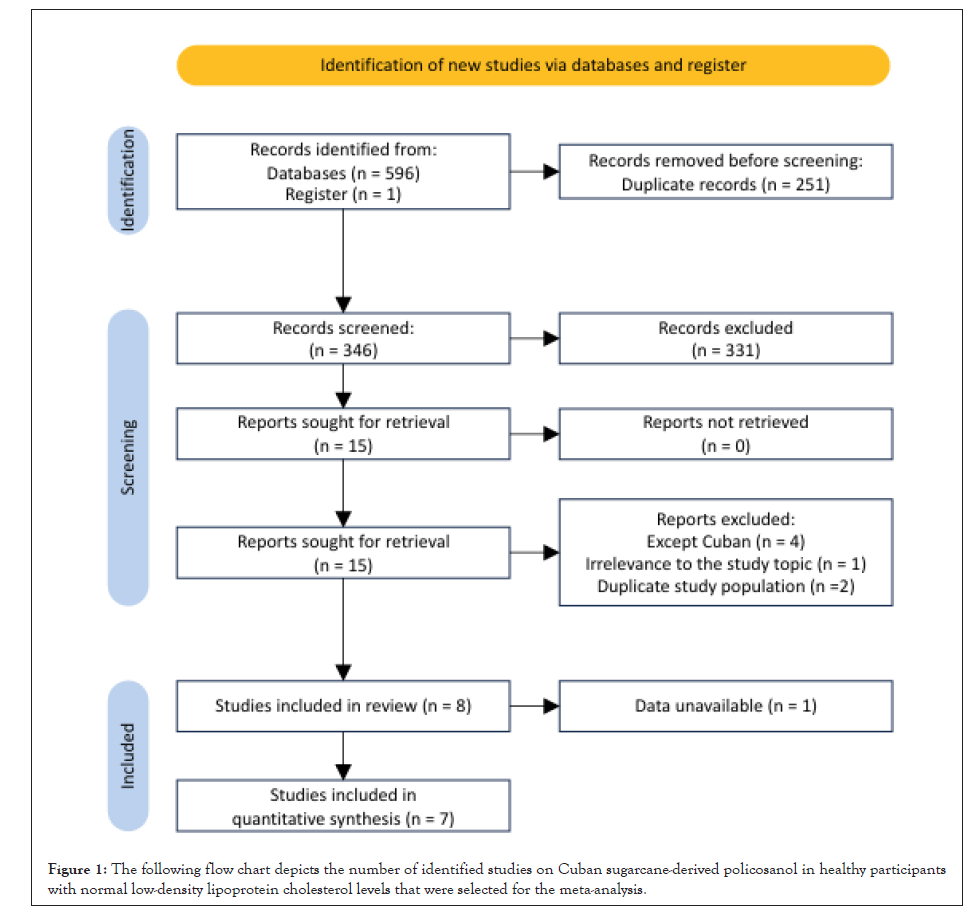
Figure 1: The following flow chart depicts the number of identified studies on Cuban sugarcane-derived policosanol in healthy participants with normal low-density lipoprotein cholesterol levels that were selected for the meta-analysis.
Study characteristics
This meta-analysis included seven RCTs investigating the effects of Cuban policosanol in participants whose baseline LDL-C levels were <140 mg/dL, corresponding to the normal LDL-C range. Among these, four studies included participants with both normal LDL-C levels (<140 mg/dL) and hypercholesterolemia (≥ 140 mg/ dL) at baseline. In these trials, only data from participants with normal LDL-C levels (<140 mg/dL) were extracted for the current analysis [25,30-32]. Similarly, two studies exclusively enrolled participants with normal baseline LDL-C levels (<140 mg/dL) [21,26]. However, two trials did not have individual-level data [21, 33]. Therefore, the LDL-C/HDL-C ratio could not be analyzed [21,33]. Revueltas, et al., have reported the presence of dyslipidemia among the study participants [33]. Nevertheless, the corresponding author confirmed that this was attributed to elevated TG levels. Therefore, the reported data did not meet the exclusion criteria of the current analysis. In addition, another study had missing data on TG levels. Finally, quantitative analysis included seven RCTs with 395 participants. Table 1 shows the characteristics of the included studies.
| Study | Group | Dose | n | Period | TC(mg/dL) | TG(mg/dL) | HDL-C(mg/dL) | LDL-C(mg/dL) | LDL-C /HDL-C |
|---|---|---|---|---|---|---|---|---|---|
| Hernandez, et al., 1992 | Placebo | 11 | baseline | 171 ± 21 | 75 ± 33 | 47.8 ± 11.4 | 108 ± 20 | 2.45 ± 1.03 | |
| 4 weeks | 186 ± 32 | 87 ± 38 | 58.3 ± 19.3 | 108 ± 20 | 2.01 ± 0.66 | ||||
| Policosanol | 10mg | 10 | baseline | 173 ± 19 | 113 ± 54 | 42.5 ± 17.9 | 110 ± 23 | 4.06 ± 0.65 | |
| 4 weeks | 157 ± 25 | 80 ± 34 | 45.2 ± 11.8 | 96 ± 21 | 2.28 ± 0.88 | ||||
| Policosanol | 20mg | 7 | baseline | 164 ± 14 | 91 ± 52 | 42.0 ± 15.5 | 104 ± 19 | 3.93 ± 0.70 | |
| 4 weeks | 152 ± 27 | 79 ± 44 | 54.4 ± 15.0 | 82 ± 20 | 1.57 ± 0.44 | ||||
| Menéndez, et al., 2000 | Placebo | 23 | baseline | 170 ± 26 | 107 ± 37 | 37.1 ± 9.7 | 116 ± 24 | n.d n.d | |
| 8 weeks | 177 ± 21 | 121 ± 58 | 36.3 ± 8.1 | 121 ± 20 | n.d n.d | ||||
| Policosanol | 5mg | 24 | baseline | 178 ± 28 | 101 ± 43 | 37.9 ± 8.5 | 123 ± 26 | n.d n.d | |
| 8 weeks | 159 ± 24 | 91 ± 43 | 41.4 ± 10.8 | 102 ± 26 | n.d n.d | ||||
| Policosanol | 10mg | 22 | baseline | 179 ± 21 | 94 ± 40 | 37.1 ± 8.5 | 127 ± 24 | n.d n.d | |
| 8 weeks | 157 ± 25 | 80 ± 35 | 41.8 ± 8.1 | 102 ± 26 | n.d n.d | ||||
| Castaño, et al., 2003 | Placebo | 23 | baseline | 190 ± 3 | 131 ± 42 | 42.7 ± 6.4 | 127 ± 6 | 3.03 ± 0.48 | |
| 8 weeks | 194 ± 12 | 134 ± 42 | 42.2 ± 5.2 | 130 ± 13 | 3.13 ± 0.47 | ||||
| Policosanol | 5mg | 16 | baseline | 192 ± 4 | 130 ± 55 | 41.1 ± 7.6 | 130 ± 9 | 3.27 ± 0.74 | |
| 8 weeks | 165 ± 11 | 130 ± 64 | 45.5 ± 10.2 | 99 ± 13 | 2.27 ± 0.53 | ||||
| Lopez, et al., 2010 | Placebo | 7 | baseline | 190 ± 4 | 113 ± 55 | 56.1 ± 22.0 | 115 ± 17 | 2.39 ± 1.09 | |
| 6 weeks | 188 ± 3 | 122 ± 54 | 56.8 ± 21.7 | 109 ± 14 | 2.22 ± 0.95 | ||||
| 12 weeks | 188 ± 7 | 143 ± 63 | 49.7 ± 11.0 | 117 ± 14 | 2.49 ± 0.76 | ||||
| Policosanol | 10mg | 7 | baseline | 188 ± 6 | 100 ± 35 | 55.9 ± 12.5 | 119 ± 13 | 2.24 ± 0.66 | |
| 6 weeks | 189 ± 4 | 100 ± 32 | 56.8 ± 12.0 | 117 ± 11 | 2.17 ± 0.60 | ||||
| 12 weeks | 165 ± 23 | 104 ± 59 | 60.8 ± 12.6 | 87 ± 20 | 1.52 ± 0.62 | ||||
| Kim, et al., 2018 | Placebo | 8 | baseline | 171 ± 18 | n.d n.d | 38.3 ± 8.1 | 114 ± 16 | 3.13 ± 0.85 | |
| 24 weeks | 176 ± 30 | n.d n.d | 44.9 ± 14.7 | 112 ± 29 | 2.93 ± 1.84 | ||||
| Policosanol | 10mg | 6 | baseline | 164 ± 16 | n.d n.d | 35.0 ± 4.7 | 109 ± 19 | 3.11 ± 0.25 | |
| 24 weeks | 156 ± 26 | n.d n.d | 40.0 ± 8.8 | 98 ± 28 | 2.74 ± 1.67 | ||||
| Policosanol | 20mg | 8 | baseline | 172 ± 11 | n.d n.d | 44.0 ± 8.8 | 111 ± 11 | 2.64 ± 0.74 | |
| 24 weeks | 149 ± 16 | n.d n.d | 44.9 ± 4.6 | 86 ± 16 | 1.95 ± 0.42 | ||||
| Uehara, et al., 2024 | Placebo | 17 | baseline | 222 ± 21 | 75 ± 27 | 66.1 ± 9.9 | 133 ± 15 | 2.06 ± 0.37 | |
| 4 weeks | 222 ± 20 | 85 ± 37 | 65.2 ± 13.5 | 131 ± 13 | 2.09 ± 0.47 | ||||
| 8 weeks | 219 ± 21 | 86 ± 43 | 63.8 ± 13.1 | 129 ± 14 | 2.09 ± 0.40 | ||||
| 12 weeks | 215 ± 16 | 100 ± 68 | 61.8 ± 10.0 | 134 ± 11 | 2.23 ± 0.41 | ||||
| Policosanol | 20mg | 15 | baseline | 218 ± 15 | 98 ± 47 | 63.7 ± 11.4 | 127 ± 11 | 2.04 ± 0.38 | |
| 4 weeks | 219 ± 17 | 94 ± 31 | 66.1 ± 12.0 | 126 ± 12 | 1.97 ± 0.42 | ||||
| 8 weeks | 213 ± 16 | 126 ± 81 | 63.9 ± 11.0 | 119 ± 13 | 1.92 ± 0.45 | ||||
| 12 weeks | 218 ± 14 | 102 ± 58 | 67.7 ± 14.1 | 131 ± 13 | 2.02 ± 0.48 | ||||
| Revueltas, et al., 2025 | Placebo | 96 | baseline | 168 ± 34 | 74 ± 33 | 45.6 ± 15.1 | 116 ± 31 | n.d n.d | |
| 12 weeks | 180 ± 37 | 88 ± 49 | 46.4 ± 13.5 | 126 ± 32 | n.d n.d | ||||
| Policosanol | 20mg | 95 | baseline | 168 ± 32 | 75 ± 38 | 46.4 ± 15.5 | 115 ± 32 | n.d n.d | |
| 12 weeks | 155 ± 27 | 89 ± 54 | 49.9 ± 13.5 | 97 ± 25 | n.d n.d |
Note: Values were expressed as the mean ± Standard Deviations (SD). n.d., not determined
Table 1: Lipid concentrations of the policosanol-treated and placebo groups at baseline and during the study.
All seven RCTs examined Cuban sugarcane-derived policosanol. The studies were published between 1992 and 2025, with follow- up durations of 4-24 weeks, sample sizes of 6-96 participants, and intervention doses of 5-20 mg/day. In all seven trials, the posttreatment lipid profile was analyzed based on the mean values across all posttreatment time points.
Risk of bias assessment
The risk of bias assessment for the included RCTs is represented in supplementary Figure 2. Most studies showed a low to moderate risk of bias across the five domains. Most trials were considered to be at low risk for deviations from intended interventions (D2), missing outcome data (D3) and outcome measurement (D4). However, several studies have revealed some concerns regarding the randomization process (D1) and selection of the reported result (D5).
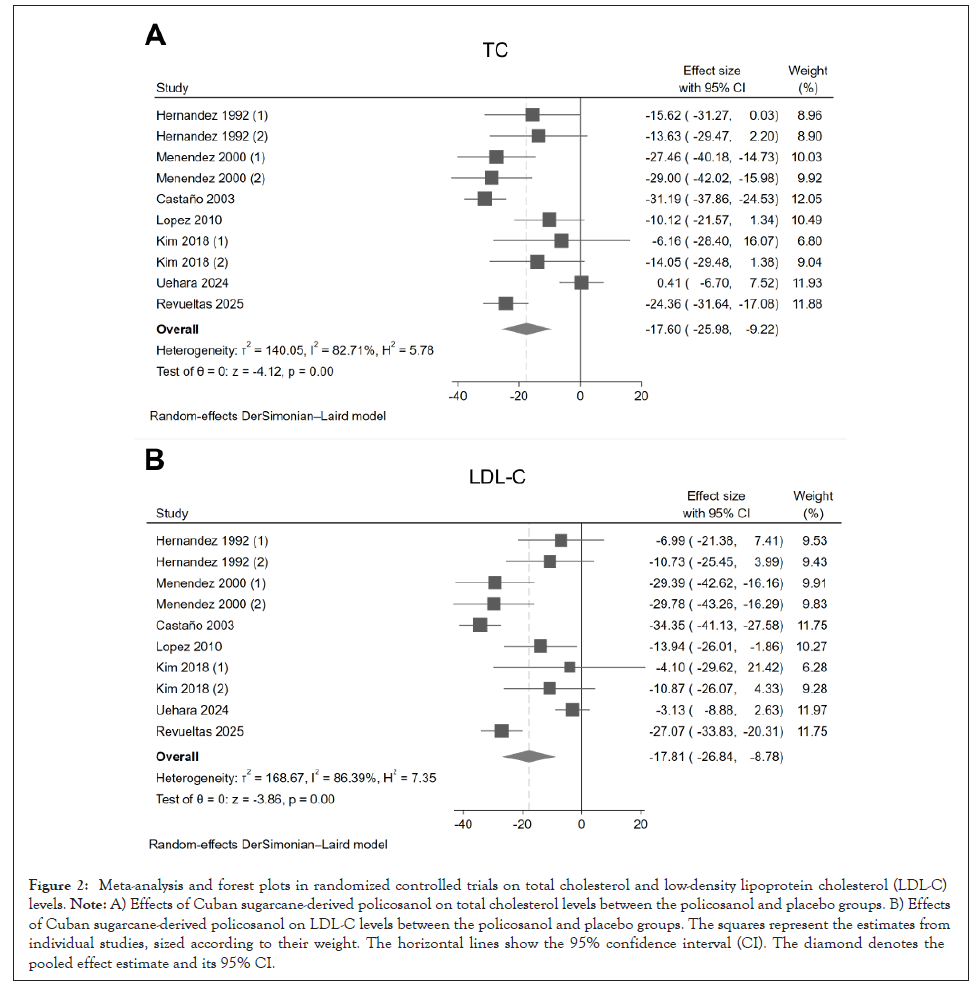
Figure 2: Meta-analysis and forest plots in randomized controlled trials on total cholesterol and low-density lipoprotein cholesterol (LDL-C) levels. Note: A) Effects of Cuban sugarcane-derived policosanol on total cholesterol levels between the policosanol and placebo groups. B) Effects of Cuban sugarcane-derived policosanol on LDL-C levels between the policosanol and placebo groups. The squares represent the estimates from individual studies, sized according to their weight. The horizontal lines show the 95% confidence interval (CI). The diamond denotes the pooled effect estimate and its 95% CI.
In particular, due to unclear randomization procedures and the absence of preregistration, the study of Hernandez , et al was rated as high risk [30]. Menéndez, et al., was considered as having some concerns for D5 owing to the selective reporting of outcomes [21]. The research of Castaño, et al., was also rated as high risk because of unclear allocation concealment and incomplete trial registration [31]. In contrast, the study of Uehara, et al and Revueltas, et al., was considered to have a low risk in all domains [26,33]. These findings indicate that, despite some limitations in early studies, recent trials that use a better methodology provide more reliable evidence on the lipid-modifying effects of policosanol.
Publication bias
The potential for publication bias was assessed through the implementation of both the Egger regression test and the trim- and-fill method. For TC, LDL-C, and the LDL-C/HDL-C ratio, Egger's test indicated no significant small-study effects (all p ≥ 0.41). Furthermore, the trim-and-fill procedure did not impute any missing studies, suggesting no substantial publication bias. In contrast, Egger’s test revealed significant small-study effects for TG (p=0.023) and HDL-C (p=0.047). For TG, the trim-and-fill method imputed three studies on the right side of the funnel plot, shifting the pooled estimate from -7.28 mg/dL to -3.95 mg/dL, with the latter becoming statistically non-significant. For HDL-C, two studies were imputed on the right; however, the adjusted pooled effect slightly increased from 3.53 mg/dL to 4.03 mg/dL, remaining significant. Overall, publication bias was suggested for TG and HDL-C, whereas no evidence of bias was observed for the other lipid outcomes (Supplementary Figure 3).
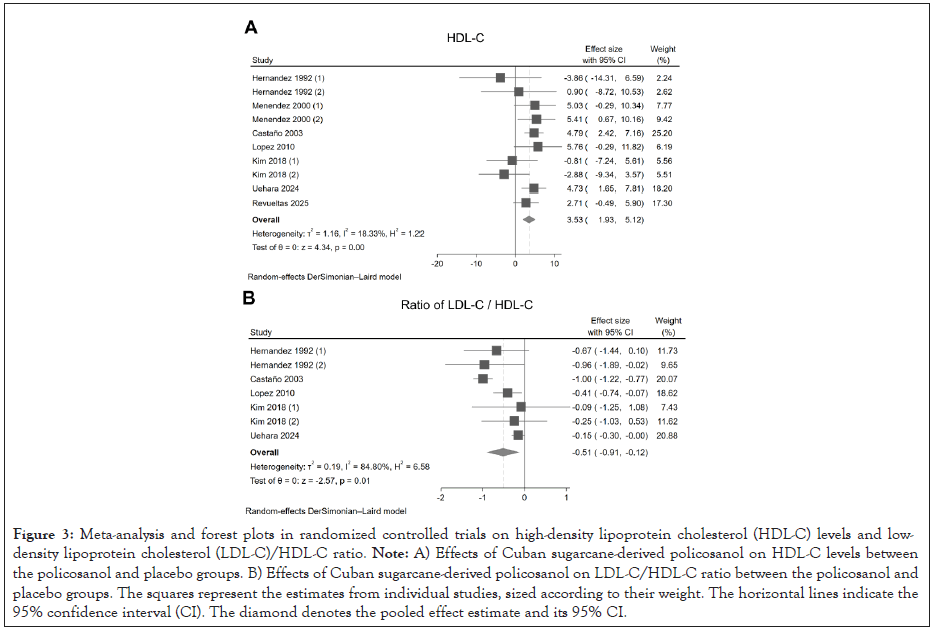
Figure 3: Meta-analysis and forest plots in randomized controlled trials on high-density lipoprotein cholesterol (HDL-C) levels and low- density lipoprotein cholesterol (LDL-C)/HDL-C ratio. Note: A) Effects of Cuban sugarcane-derived policosanol on HDL-C levels between the policosanol and placebo groups. B) Effects of Cuban sugarcane-derived policosanol on LDL-C/HDL-C ratio between the policosanol and placebo groups. The squares represent the estimates from individual studies, sized according to their weight. The horizontal lines indicate the 95% confidence interval (CI). The diamond denotes the pooled effect estimate and its 95% CI.
Effects of Cuban policosanol on total and LDL cholesterol levels
This meta-analysis included seven RCTs that investigated the effects of Cuban sugarcane-derived policosanol. Ultimately, 395 participants with baseline LDL-C levels below 140 mg/dL (i.e., within the normal LDL-C range) were included in this analysis. The follow-up durations of the studies ranged from 4 to 24 weeks, and the intervention doses ranged from 5 to 20 mg per day. The postintervention lipid profile was analyzed in all seven trials using the mean value of all posttreatment time points (Table 1).
Cardiovascular Disease (CVD) remains the leading cause of mortality worldwide and in the United States, accounting for approximately one-quarter of all deaths [1,2]. Among the modifiable risk factors, dyslipidemia plays an important role in the development of CVD [2-4]. Several epidemiological studies have consistently shown that lower High-Density Lipoprotein Cholesterol (HDL-C) and higher Low-Density Lipoprotein Cholesterol (LDL-C) levels are strongly associated with atherosclerotic CVD and mortality across diverse populations [5-10]. Importantly, large-scale randomized trials have revealed that decreasing LDL-C levels reduces the risk of CVD events not only among patients with established diseases but also in primary prevention populations [10]. Consequently, contemporary cardiovascular prevention guidelines recommend comprehensive lipid management strategies that address LDL-C and HDL-C levels to reduce long-term risk [11,12].
Against this background, nutritional interventions that may regulate lipid profiles have attracted growing interest as complementary therapeutic strategies. Among the nutritional interventions examined, policosanol, a compound with notable antioxidant properties, has been reported to enhance lipid profiles. Policosanol is a mixture of long-chain aliphatic alcohols (24-34 carbons), including tetracosanol, hexacosanol, heptacosanol, octacosanol, nonacosanol, triacontanol, dotriacontanol and tetratriacontanol. It was originally isolated from purified sugarcane wax. However, similar alcohols are also found in rice bran and beeswax [13-15]. In addition, policosanol is widely distributed in plants such as sugarcane, rice bran, and apples, and various techniques can be used for extraction to isolate and purify policosanol from them. Policosanol comprises eight aliphatic alcohol components. However, the ratio of these elements varies significantly based on the plant species and cultivation region [16-18]. Therefore, differences in function and bioavailability have been reported among policosanol products.
Mechanistic studies have demonstrated that policosanol may improve lipid metabolism not only by inhibiting HMG-CoA reductase activities as well as statins, but also by inhibiting Cholesterol Ester Transfer Protein (CETP) [19,20]. This mechanism contributes to elevated HDL-C levels and improved HDL functionality, thereby facilitating reverse cholesterol transport. In addition, previous research has shown that policosanol exerts antioxidant effects, thereby increasing the resistance of LDL to oxidative modification and potentially exerting protective effects on lipoproteins from atherogenic transformation [21]. These processes may act synergistically to promote cardiovascular protection.
Although several randomized and nonrandomized studies have investigated policosanol, not all have found it to be effective [22,23]. One possible explanation for these discrepancies is the considerable variability in the composition of long-chain aliphatic alcohols within policosanol, which depends on the source material, geographical origin, harvesting season, and extraction method [16,17]. Supporting this notion, different commercial preparations of policosanol exhibit various bioactivities in animal studies [16,17]. As mentioned in the previous text, policosanol has several effects on lipid metabolism [13,24]. According to recent studies on some types of policosanol, supplementation with Cuban sugarcane-derived policosanol can not only decrease Total Cholesterol (TC) and LDL-C levels but also increase HDL-C levels [25,26]. However, the mechanisms can vary according to the source plant and its origin, and the underlying reasons for these differences remain unclear.
Therefore, this systematic review and meta-analysis aimed to investigate the effects of Cuban sugarcane-derived policosanol supplementation on lipid profiles in healthy adults with normal LDL-C levels.
Study selection
According to the initial search, a total of 597 studies, including 139 records from PubMed, 220 from Web of Science, 237 from the Cochrane Library, 0 from the Ichushi and 1 record identified via hand-searching (Redalyc), were identified. After removing 251 duplicates, 346 records remained for further screening. Figure 1 depicts the overall selection process [38]. After cautiously reviewing the titles and abstracts, 331 studies (such as animal studies, studies beyond those on policosanol, conference abstracts, and unpublished studies) were excluded from the analysis. The full texts of 15 articles were then assessed for eligibility. This resulted in the exclusion of an additional eight articles due to the following reasons: products other than Cuban (n=4), including those for which no data were available, irrelevance to the study topic (n=1), and duplicate study populations (n=2). Moreover, for studies that included participants with elevated LDL-C levels, the corresponding authors were contacted to obtain additional data. Then, data were incorporated only after receiving responses (n=1). Finally, seven RCTs meeting the inclusion criteria were included in the quantitative analysis (Figure 1).
Study characteristics
This meta-analysis included seven RCTs investigating the effects of Cuban policosanol in participants whose baseline LDL-C levels were <140 mg/dL, corresponding to the normal LDL-C range. Among these, four studies included participants with both normal LDL-C levels (<140 mg/dL) and hypercholesterolemia (≥ 140 mg/dL) at baseline. In these trials, only data from participants with normal LDL-C levels (<140 mg/dL) were extracted for the current analysis [25,30-32]. Similarly, two studies exclusively enrolled participants with normal baseline LDL-C levels (<140 mg/dL) [21,26]. However, two trials did not have individual-level data [21,33]. Therefore, the LDL-C/HDL-C ratio could not be analyzed [21,33]. Revueltas, et al., have reported the presence of dyslipidemia among the study participants [33]. Nevertheless, the corresponding author confirmed that this was attributed to elevated TG levels. Therefore, the reported data did not meet the exclusion criteria of the current analysis. In addition, another study had missing data on TG levels. Finally, quantitative analysis included seven RCTs with 395 participants. Table 1 shows the characteristics of the included studies.
All seven RCTs examined Cuban sugarcane-derived policosanol. The studies were published between 1992 and 2025, with follow-up durations of 4-24 weeks, sample sizes of 6-96 participants, and intervention doses of 5-20 mg/day. In all seven trials, the posttreatment lipid profile was analyzed based on the mean values across all posttreatment time points.
Risk of bias assessment
The risk of bias assessment for the included RCTs is represented in supplementary Figure 2. Most studies showed a low to moderate risk of bias across the five domains. Most trials were considered to be at low risk for deviations from intended interventions (D2), missing outcome data (D3) and outcome measurement (D4). However, several studies have revealed some concerns regarding the randomization process (D1) and selection of the reported result (D5).
In particular, due to unclear randomization procedures and the absence of preregistration, the study of Hernandez , et al was rated as high risk [30]. Kim, et al., was judged as having some concerns for D3 owing to issues related to the reporting and handling of missing outcome data [25]. Lopez, et al., was also rated as some concerns because of unclear allocation concealment and incomplete trial registration [32]. In contrast, the study of Uehara, et al and Revueltas, et al., was considered to have a low risk in all domains [26,33]. These findings indicate that, despite some limitations in early studies, recent trials that use a better methodology provide more reliable evidence on the lipid-modifying effects of policosanol.
Publication bias
The potential for publication bias was assessed through the implementation of both the Egger regression test and the trim-and-fill method. For TC, LDL-C, and the LDL-C/HDL-C ratio, Egger's test indicated no significant small-study effects (all p ≥ 0.41). Furthermore, the trim-and-fill procedure did not impute any missing studies, suggesting no substantial publication bias. In contrast, Egger’s test revealed significant small-study effects for TG (p=0.023) and HDL-C (p=0.047). For TG, the trim-and-fill method imputed three studies on the right side of the funnel plot, shifting the pooled estimate from -7.28 mg/dL to -3.95 mg/dL, with the latter becoming statistically non-significant. For HDL-C, two studies were imputed on the right; however, the adjusted pooled effect slightly increased from 3.53 mg/dL to 4.03 mg/dL, remaining significant. Overall, publication bias was suggested for TG and HDL-C, whereas no evidence of bias was observed for the other lipid outcomes (Supplementary Figure 3).
Effects of Cuban policosanol on total and LDL cholesterol levels
This meta-analysis included seven RCTs that investigated the effects of Cuban sugarcane-derived policosanol. Ultimately, 395 participants with baseline LDL-C levels below 140 mg/dL (i.e., within the normal LDL-C range) were included in this analysis. The follow-up durations of the studies ranged from 4 to 24 weeks, and the intervention doses ranged from 5 to 20 mg per day. The postintervention lipid profile was analyzed in all seven trials using the mean value of all posttreatment time points (Table 1).
The TC level significantly decreased with Cuban sugarcane-derived policosanol supplementation in this meta-analysis (effect size: -17.6 mg/dL; 95% CI: -26.0 to -9.2) (Figure 2A). Policosanol supplementation resulted in a significant reduction in serum LDL-C levels (17.8 mg/dL) compared with placebo (effect size: -17.8 mg/dL; 95% CI: -26.8 to -8.8) (Figure 2B). However, policosanol did not have a dose-dependent effect on LDL-C and TC levels (Supplementary Figure 4). In addition, regarding the effects of policosanol on TC and LDL-C levels, the respective heterogeneity values were 82.7% and 86.4%, respectively, which indicated substantial variations between studies.
Effects of Cuban policosanol supplementation on HDL-C levels and LDL-C/HDL-C ratio
In contrast, based on the meta-analysis results, Cuban policosanol increased the HDL-C levels by an average of 3.5 mg/dL (effect size: 3.5 mg/dL; 95% CI: 1.9-5.1) (Figure 3A). Policosanol at different doses did not affect changes in HDL-C level (Supplementary Figure 4). Further, policosanol supplementation also significantly reduced the LDL-C/HDL-C ratio by decreasing LDL-C levels and increasing HDL-C levels (effect size: -0.51 mg/dL; 95% CI: -0.91 to -0.12; Figure 3B). However, there were no differences in terms of dose-dependency.
Subgroup analysis according to baseline HDL-C levels
A subgroup analysis of two groups those with normal HDL-C levels (>40 mg/dL) and those with low HDL-C levels (≤ 40 mg/dL) revealed that Cuban policosanol reduced LDL-C levels more substantially in the low HDL-C group (effect size: -25.1 mg/dL; 95% CI: -37.2 to -12.9) than in the normal HDL-C group (effect size: -15.8 mg/dL; 95% CI: -26.8 to –4.8) (Figure 4A). However, Cuban policosanol increased the HDL-C levels in both groups (Figure 4B).
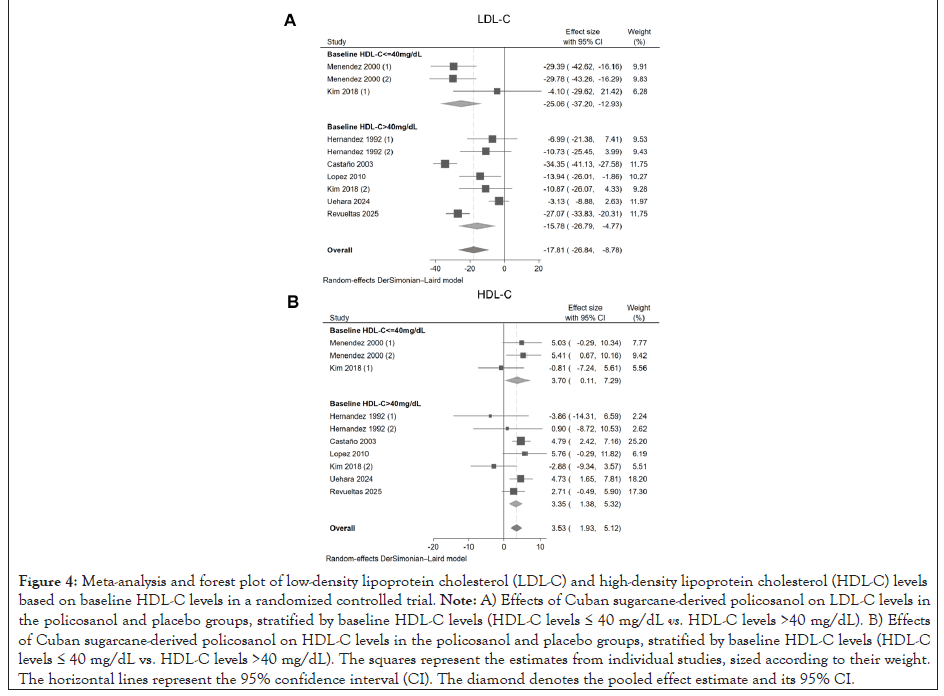
Figure 4: Meta-analysis and forest plot of low-density lipoprotein cholesterol (LDL-C) and high-density lipoprotein cholesterol (HDL-C) levels based on baseline HDL-C levels in a randomized controlled trial. Note: A) Effects of Cuban sugarcane-derived policosanol on LDL-C levels in the policosanol and placebo groups, stratified by baseline HDL-C levels (HDL-C levels ≤ 40 mg/dL vs. HDL-C levels >40 mg/dL). B) Effects of Cuban sugarcane-derived policosanol on HDL-C levels in the policosanol and placebo groups, stratified by baseline HDL-C levels (HDL-C levels ≤ 40 mg/dL vs. HDL-C levels >40 mg/dL). The squares represent the estimates from individual studies, sized according to their weight. The horizontal lines represent the 95% confidence interval (CI). The diamond denotes the pooled effect estimate and its 95% CI.
Effects of Cuban policosanol on TG levels
In addition to its effects on cholesterol levels, policosanol supplementation significantly reduced TG levels (effect size: –7.3 mg/dL; 95% CI: -14.5 to -0.1). However, the extent of reduction varied among studies (Figure 5A). In addition, a subgroup analysis according to baseline HDL-C levels showed that Cuban policosanol decreased TG levels only in the low HDL-C group (effect size: -22.8 mg/dL; 95% CI: -40.2 to -5.4) (Figure 5B).
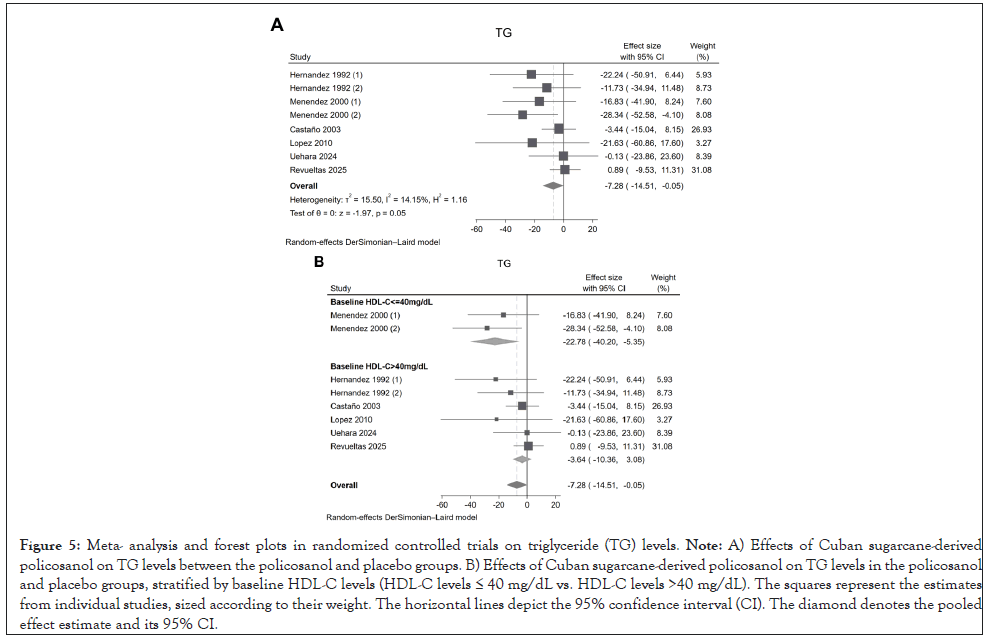
Figure 5: Meta- analysis and forest plots in randomized controlled trials on triglyceride (TG) levels. Note: A) Effects of Cuban sugarcane-derived policosanol on TG levels between the policosanol and placebo groups. B) Effects of Cuban sugarcane-derived policosanol on TG levels in the policosanol and placebo groups, stratified by baseline HDL-C levels (HDL-C levels ≤ 40 mg/dL vs. HDL-C levels >40 mg/dL). The squares represent the estimates from individual studies, sized according to their weight. The horizontal lines depict the 95% confidence interval (CI). The diamond denotes the pooled effect estimate and its 95% CI.
Random-effects meta-regression analyses of the effect of policosanol vs. baseline HDL-C levels
The subgroup analysis based on baseline HDL-C levels revealed that the LDL-C-lowering effect of policosanol was more evident in individuals with lower baseline HDL-C levels. Therefore, the current study examined the association between baseline HDL-C levels and the effect of policosanol on LDL cholesterol levels. Our findings indicated a substantially positive correlation (R2=0.64, p=0.02) between baseline HDL-C levels and the effect of policosanol on LDL-C levels (Figure 6A). However, no significant association was identified between baseline HDL-C levels and the effect of policosanol on HDL-C levels (Figure 6B) or TG levels (Figure 6C).
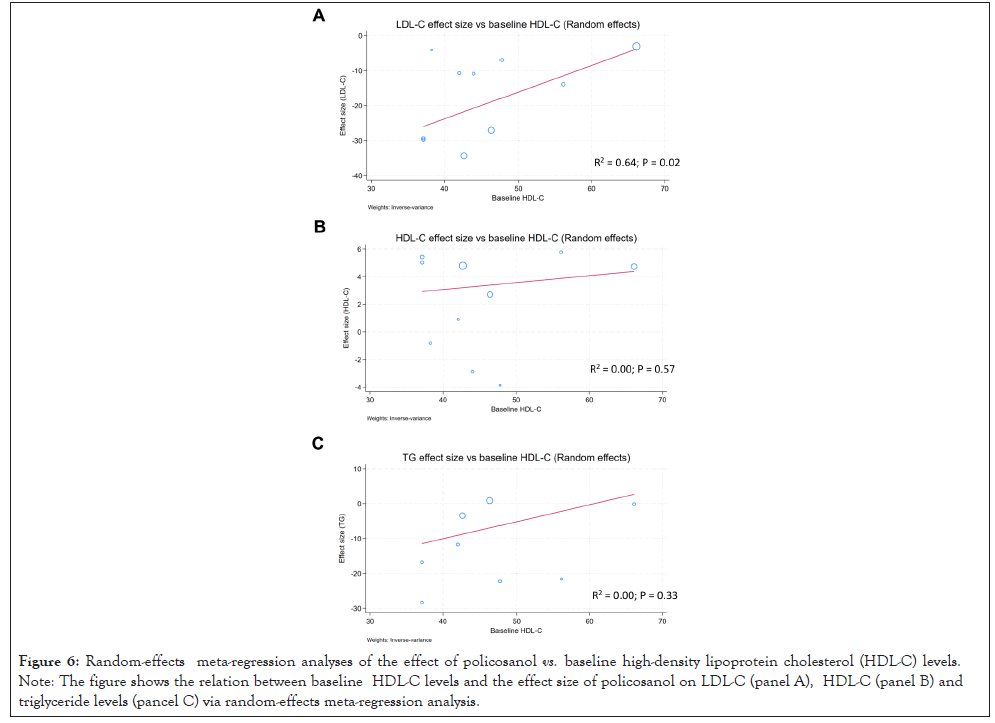
Figure 6: Random-effects meta-regression analyses of the effect of policosanol vs baseline high-density lipoprotein cholesterol (HDL-C) levels Note: The figure shows the relation between baseline HDL-C levels and the effect size of policosanol on LDL-C (panel A), HDL-C (panel B) and triglyceride levels (pancel C) via random-effects meta-regression analysis
This meta-analysis showed that Cuban sugarcane-derived policosanol improves the serum lipid profiles of healthy adults with normal baseline LDL-C levels (<140 mg/dL). Across seven RCTs, policosanol supplementation was associated with reduced TC, LDL-C, and TG levels and LDL-C/HDL-C ratio. Concurrently, there was an observed increase in HDL-C levels. Based on these results, policosanol has favorable lipid-modifying effects, even in non-hypercholesterolemic populations.
A previous meta-analysis on dyslipidemia reported decreases in LDL-C and TC levels and increases in HDL-C levels when studies that used various policosanol products were pooled [39]. However, the policosanol products have heterogeneity related to different countries and manufacturers. In particular, some policosanol trials using non-Cuban or non-sugarcane-derived products did not show significant changes in lipid levels [23]. These differences could potentially be attributed to variations in long-chain aliphatic alcohols composition or product bioavailability. In this regard, our results are in accordance with those of clinical and experimental reports showing the lipid-lowering effects of policosanol. Further, they are consistent with those of narrative reviews describing the benefits of policosanol for metabolic syndrome factors [22].
This meta-analysis showed that Cuban sugarcane-derived policosanol significantly decreased LDL-C and TC levels and LDL-C/HDL-C ratio and increased HDL-C levels. While the lipid-lowering effect appears to manifest more distinctly in the 20 mg/day high-dose group, no statistically significant difference was observed, and an absence of a clear dose-response relationship was noted. These differences may reflect variations in sample size, intervention duration, and reduced statistical power in dose-restricted subgroup analyses.
The effect of policosanol on TC and LDL-C levels exhibited high heterogeneity, ranging from 82%-86%. This is believed to be caused by significant variability in the efficacy of individual trials, which indicated that differences in the backgrounds of participants strongly influence efficacy. One suggested factor is the strong association with baseline HDL-C levels. In particular, the LDL-C-lowering effect of policosanol may be more evident in populations with lower baseline HDL-C levels. Conversely, the effect of policosanol on HDL-C levels had low heterogeneity. This finding indicated that small sample sizes were the main contributor to the observed variability.
The tolerability of policosanol is as important as its lipid-modulating efficacy. This meta-analysis primarily evaluated the efficacy of policosanol among individuals with normal baseline LDL-C levels. However, safety data from the original trials indicated a favorable profile. The treatment discontinuation rates were <1%, and adverse events, consisting mainly of mild symptoms such as headache, arthralgia, and somnolence, were not frequently observed (2.2%; 95% CI: 0.9%-5.6%) [21, 31, 32]. Only one participant discontinued the intervention due to mild arthralgia, and none of the patients reported major adverse events [32]. These findings indicate that policosanol is generally well tolerated within the dosage ranges examined.
The contemporary lipid management guidelines categorize statins according to their LDL-C-lowering efficacy: High-intensity (≥50%), moderate-intensity (30%-49%), and low-intensity (<30%) [11]. Typical low-intensity regimens, such as simvastatin 10 mg or pravastatin 10-20 mg daily, reduce LDL-C levels by an average of <30%. Our meta-analysis found that policosanol reduced the LDL-C levels by 17.6 mg/dL. This magnitude clearly corresponds to the low-intensity statin range, though at the lower end. Moreover, notably, the participants in this meta-analysis had normal LDL-C levels.
In addition, policosanol increased the HDL-C levels by 3.5 mg/dL and decreased the TG levels by 7.3 mg/dL. These effects are not used to define statin intensity. However, they have clinically favorable secondary lipid improvements. Previous RCTs have shown that supplementation with Cuban sugarcane-derived policosanol significantly increases HDL-C levels and improves HDL functionality, including cholesterol efflux capacity [21]. According to these results, policosanol promotes qualitative improvements in lipoprotein quality, not merely quantitative ones, such as increasing HDL cholesterol levels.
According to the Cholesterol Treatment Trialists’ Collaboration, a 1.0 mmol/L reduction in LDL-C levels confers a 20%-22% relative decrease in the risk of major vascular events, independent of baseline risk [8, 40]. This finding supports the principle that “lower is better” for LDL-C levels, as stated in the contemporary AHA guidelines [11]. Extrapolating proportionally, the 0.54 mmol/L decrease observed in our analysis would correspond to an estimated 11%-12% reduction in major cardiovascular events under comparable conditions [11]. This interpretation remains theoretical because the absolute benefit depends on the baseline LDL-C level and the overall risk of atherosclerotic CVD. Nevertheless, the clinical relevance of early lipid management, even among adults with normal lipid levels, is supported by the observed reduction in LDL-C levels.
However, this meta-analysis has some limitations. First, the number of available RCTs was only seven, and most of which had modest sample sizes and short, various follow-up durations (4-24 weeks). Second, the inclusion of smaller subgroups reduced precision and require cautious interpretation. Third, individual-level data on the characteristics of participants were not available, precluding stratified analyses by sex or age. Finally, gaps in the data restricted the secondary analysis. In particular, the study of Kim , et al had missing data on TG levels [25]. Further, the study of Menéndez , et al and Revueltas , et al lacked individual-level data on the LDL-C/HDL-C ratio [21, 33].
In conclusion, policosanol, a derivative of Cuban sugarcane, is effective in enhancing lipid profiles in individuals with normal LDL-C concentrations. In the future, large and longer-term RCTs that use standardized Cuban policosanol with pre-specified quality metrics, balanced sex distribution, and age-stratified reporting should be performed to validate reliable efficacy and define clinical relevance. The LDL-C-lowering effect of policosanol reduces the risk of CVD. However, regarding primary and secondary prevention, direct outcome trials on Cuban sugarcane-derived policosanol may be required to confirm its role as an alternative medicine.
TY created the research. Data screening and literature searches were carried out by TY and YU. TY and YU independently extracted the data and evaluated its quality. The text was written by TY, BZ, TK, SY, and YU after data interpretation. The study was headed by YU. The final manuscript was read and approved by all writers.
The author(s) declare financial support was received for the research, authorship, and/or publication of this article. This research was partly funded by Fukuoka University (Grant number 240022 to YU).
The authors declare that the research was conducted in the absence of any commercial or financial relationships that could be construed as a potential conflict of interest.
Supplementary data associated with this article can be found in the online version.
[Crossref] [Google Scholar] [PubMed]
[Crossref] [Google Scholar] [PubMed]
[Crossref] [Google Scholar] [PubMed]
[Crossref] [Google Scholar] [PubMed]
[Crossref] [Google Scholar] [PubMed]
[Crossref] [Google Scholar] [PubMed]
[Crossref] [Google Scholar] [PubMed]
[Crossref] [Google Scholar] [PubMed]
[Crossref] [Google Scholar] [PubMed]
[Crossref] [Google Scholar] [PubMed]
[Crossref] [Google Scholar] [PubMed]
[Crossref] [Google Scholar] [PubMed]
[Crossref] [Google Scholar] [PubMed]
[Crossref] [Google Scholar] [PubMed]
[Crossref] [Google Scholar] [PubMed]
[Crossref] [Google Scholar] [PubMed]
[Crossref] [Google Scholar] [PubMed]
[Crossref] [Google Scholar] [PubMed]
[Crossref] [Google Scholar] [PubMed]
[Crossref] [Google Scholar] [PubMed]
[Crossref] [Google Scholar] [PubMed]
[Crossref] [Google Scholar] [PubMed]
[Crossref] [Google Scholar] [PubMed]
[Crossref] [Google Scholar] [PubMed]
[Crossref] [Google Scholar] [PubMed]
[Crossref] [Google Scholar] [PubMed]
[Crossref] [Google Scholar] [PubMed]
[Crossref] [Google Scholar] [PubMed]
[Crossref] [Google Scholar] [PubMed]
[Crossref] [Google Scholar] [PubMed]
Citation: Yamamoto T, Zhang B, Komatsu T, Yasunaga S, Uehara Y (2025). Effects of Cuban Sugarcane-Derived Policosanol on Lipid Profiles in Healthy Individuals with Normal LDL Cholesterol Levels: A Systematic Review and Meta-Analysis. J Clin Trials. 15:622.
Received: 01-Dec-2025, Manuscript No. JCTR-25-39604; Editor assigned: 03-Dec-2025, Pre QC No. JCTR-25-39604 (PQ); Reviewed: 17-Dec-2025, QC No. JCTR-25-39604; Revised: 24-Dec-2025, Manuscript No. JCTR-25-39604 (R); Published: 31-Dec-2025 , DOI: 10.35248/2167-0870.26.15.622
Copyright: © 2025 Yamamoto T, et al. This is an open-access article distributed under the terms of the Creative Commons Attribution License, which permits unrestricted use, distribution, and reproduction in any medium, provided the original author and source are credited.