
Journal of Yoga & Physical Therapy
Open Access
ISSN: 2157-7595
ISSN: 2157-7595
Research Article - (2025)Volume 15, Issue 2
Background: Yoga is a method of developing a body and mind that serve as stepping stones rather than obstacles toward a joyful and contented existence. The combined effects of a standard yoga program, which typically consists of Asana, Pranayama, Kriya, deep relaxation and meditation, include body relaxation, breath slowing and mental calmness. However, there are other factors such as lifestyle, mental and physical wellbeing of an individual, weight and body awareness, etc. which plays a role in developing and complicating any health condition. Keeping in mind all these factors we have developed a structured intervention exercise program for these patients which will cover all aspects. However, individuals are encouraged to start the program only after a thorough assessment and under the guidance of a qualified yoga practitioner.
Objective: To determine the effect of yoga on body mass index, mental wellbeing, physical wellbeing and body awareness in young overweight adults.
Method: The study was a randomized control trial. Sample size was sixty. Participants included were sedentary individuals, overweight and belonging to 18-25 years of age group. They were randomly assigned to group A (yoga group) and group B (controlled group). Group A was given intervention protocol of yoga and group B was given pamphlets to refer. An intervention of 12 weeks was carried out in which in patients received Asana, Pranayama, Kriya, deep relaxation and meditation. Baseline BMI, mental wellbeing, physical wellbeing and body awareness was recorded on data collection sheet pre and post intervention.
Results: The result concluded that the interventions given to both the groups can be effectively used in BMI, mental wellbeing, physical wellbeing and body awareness in young overweight adults. Whereas, group A was found to be more effective in improving all these factors than group B as it is controlled group and group A is that group which was given intervention.
Conclusion: The study concluded that yoga intervention found to be effective in improving BMI, mental wellbeing, physical wellbeing and body awareness.
Yoga; Supervised exercise program; Overweight adults; Mental wellbeing; Physical wellbeing; Body awareness
In yoga, the individual self or jeevatma and the universal self or paramatma are united. It is the exchange of messages between the divine and the human spirit. Our unique principle of consciousness, or the literal translation of "Yog" as "union," is the fundamental component of who we are. Yoga is the union and balance of the mind, heart and hands or the union of words,deeds and thoughts. Author of the yoga sutras, a fundamental yogic treatise, patanjali defines yoga as "full control over the various patterns or modifications of consciousness". The impact of yoga on Body Mass Index (BMI), a measurement of body fat based on height and weight, has been the subject of several research. Some researchers have suggested that yoga may help lower BMI, especially in overweight or obese people, though the findings have been inconsistent [1]. A group of overweight and obese people who practiced yoga for 45 minutes a day, five days a week, for 12 weeks saw a significant decrease in their body weight, BMI and body fat percentage, according to a 2007 study published in the journal of alternative and complementary medicine. Another study indicated that doing yoga for 12 weeks significantly lowered BMI and was published in the journal of physical activity and health in 2016. It's crucial to remember, too, that not all research has shown a conclusive link between yoga and BMI. For instance, a 2015 study that was published in the journal of physical therapy science discovered that although yoga enhanced body composition, it had no discernible effect on a group of obese and overweight women's BMI [2]. Yoga is a form of exercise or physical activity that calls for certain physical fitness requirements, particularly as it incorporates all body parts. Since yoga is safe for this population, it might be suggested as a method to help younger individuals who are overweight. It is crucial to investigate how yoga affects young adults who are overweight in terms of bodily awareness, mental health and body mass index for a number of reasons.
Being overweight is a serious health issue
Being overweight is an epidemic that is affecting individuals of all ages and can result in diabetes, heart disease, stroke and other conditions. We can better understand whether yoga can be a useful strategy for managing weight and lowering the risk of these diseases by looking at its impact on body mass index [3].
Research on yoga's effects on mental health has revealed that it can improve mental health by lowering stress, anxiety and depressive symptoms. Considering that young adults who are overweight may be more susceptible to mental health problems, researching how yoga affects mental health will help ascertain whether it can be a useful remedy for this population [4].
Yoga can increase body awareness
Keeping a healthy weight can be greatly influenced by one's capacity to comprehend and observe one's own body. Yoga encourages mindfulness and body awareness, which may assist overweight young adults become more conscious of their bodies and what they require.
The present study was aimed to investigate the effect of yoga on body mass index, mental wellbeing and body awareness in young overweight adults.
The study followed a randomized control trial design, conducted at a Yoga Kendra in Maharashtra, India. Method of data collection was primary. Type of data was quantitative. The sample size was 60. The study was single blinded. Sampling method random sampling allocation done by permitted block allocation with allocation ratio of 1:1. Participants were distributed in to two groups with help of chits which were given to another faculty member who was not a part of the study. The intervention period spanned 5 days a week for 12 weeks [5]. The overall study duration was 6 months. After receiving approval from the institutional ethical committee, the CTRI registration was done (CTRI/2023/11/060244) and written informed consent was obtained from the participants before enrolling in to the program. Inclusion criteria to enrol the participants is as follows: 1) Both genders, 2) Age 18 to 25 years, 3) BMI: 23-24.9 (according to Asian classification), 4) Sedentary lifestyle (low score on the International Physical Activity Questionnaire), 5) Willingness to provide written informed consent.
Participants excluded were having any physical impairments precluding participation in easy yoga exercises, regular physical activity or yoga practice within the preceding 3 months, currently following a weight loss diet or planning to start such a diet within the next 24 weeks, diagnosed psychosis being treated with psychopharmaceutical drugs, any cardiovascular diseases, diabetes mellitus type 1 or type 2 requiring insulin, current participation in other clinical studies or planning to enter into a study within the following 24 weeks [6].
Materials used for data collection included patient information brochure, consent form, SF12 (health-related quality of life questionnaire), Asian classification of BMI, German body awareness questionnaire, feedback form instruments used were weighing machine, measuring tape and yoga mat.
Primary outcome measures were: Body mass index (Asian classification), mental wellbeing (SF12) and body awareness assessed by body awareness questionnaire. Secondary outcome was physical awareness assessed by SF12 scale. The permissions to use the scales were obtained before commencing the study [7].
Protocol
Starting Asanas:
Poses in prone position:
Poses in supine position:
Poses in sitting position:
Poses in standing position:
Pranayama:
Closing asanas: 10 mins
Total duration: 1 hour 15 mins (Figure 1).
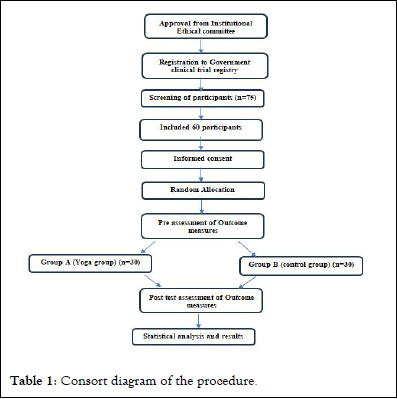
Figure 1: Consort diagram of the procedure.
Demographics
A total of 60 participants were selected according to the selection criteria. They were divided onto two groups according to randomization: Group A (yoga group) and group B (controlled group) (Table 1 and Figures 2-5).
|
|
Group A |
Group B |
|
Gender distribution |
||
|
Male |
13 participants (43%) |
14 participants (47%) |
|
Female |
17 participants (57%) |
16 participants (53%) |
|
Age (years) |
22.03 ± 2.28 |
21.76 ± 2.30 |
|
Height (cm) |
166.4 ± 3.25 |
168.2 ± 2.10 |
|
Weight (kgs) |
65.86 ± 2.48 |
67.9 ± 2.10 |
Table 1: Demographic characteristics of both groups.
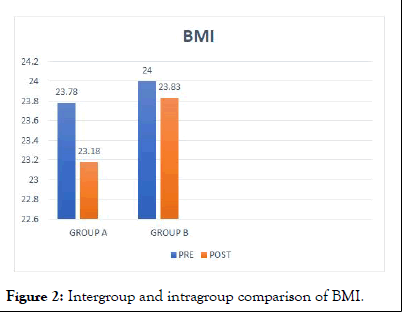
Figure 2: Intergroup and intragroup comparison of BMI.
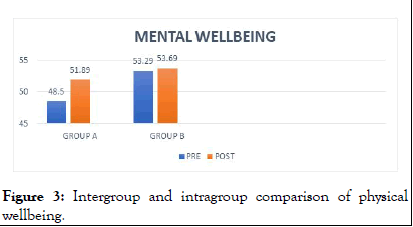
Figure 3: Intergroup and intragroup comparison of physical wellbeing.
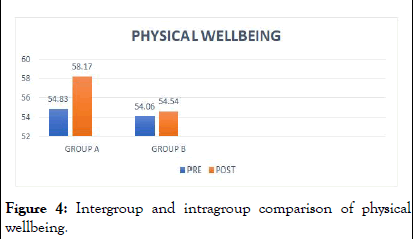
Figure 4: Intergroup and intragroup comparison of physical wellbeing.
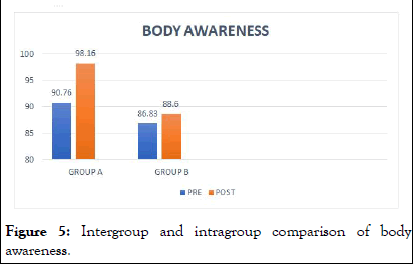
Figure 5: Intergroup and intragroup comparison of body awareness.
When compared group A and group B using unpaired t-test there was extremely significance seen in body mass index, mental wellbeing, physical wellbeing and body awareness with a p value of (<0.0001).
This study aimed to compare the effects of yoga on Body Mass Index (BMI), physical well-being, mental well-being and body awareness in young overweight adults. It included 60 participants who were divided into two groups, with 30 participants in each group. The study was conducted at Swasth Bharat Yoga Kendra and Apjakcopt. Both groups received treatment for 12 weeks, 5 days per week and 1 hour 15 minutes per session. Post-treatment data analysis revealed that the effects on BMI, physical wellbeing, mental well-being and body awareness were significantly more improved in group A (yoga group) compared to group B (controlled group) [8].
Holger Cramer and colleagues suggested that while beginner yoga may not meet cardiovascular exercise recommendations, more intensive yoga styles can lead to higher energy consumption and contribute to weight loss. They noted that the anthropometric effects of yoga are unlikely due solely to increased physical activity, citing a reduction in body fat equivalent to 12,000 kcal in the yoga group. They emphasized that yoga's effects go beyond physical activity, as it can reduce back and joint pain and increase overall physical activity levels.
Alice Tulloch stated that, to our knowledge, this is the first meta-analysis of randomized controlled trials to evaluate the impact of physical yoga on HRQOL and mental well-being in older adults. This systematic review was prospectively registered with PROSPERO prior to screening the data and was not restricted by publication language or date [9]. A key strength of this study is that included trials involved participants with a broad range of health conditions, including chronic back pain, Parkinson’s disease, osteoarthritis, COPD, cancer and also included people residing in elderly care homes as well as healthy community-dwelling older adults, demonstrating the suitability of yoga-based exercise for older people with differing health states and abilities as well as for healthy older people. This result indicates to health professionals that yoga interventions are a safe and feasible exercise option for people aged 60 years and over to improve HRQOL and mental well-being.
Adam M. Bernstein's analysis suggests that while yoga may aid in managing conditions associated with overweight and obesity, such as low back pain, its impact on weight loss or maintenance beyond diet and exercise remains unclear [10]. The review, conducted up to September 2012, found that studies on yoga and weight are limited by small sample sizes, short durations and lack of control groups. Despite these challenges, studies indicate that yoga may be linked to weight loss or maintenance through various mechanisms: Energy expenditure during yoga sessions, enabling additional exercise by reducing pain, enhancing mindfulness and mood and improving body awareness leading to better control overeating. Yoga shows promise as a behavioural change tool for weight management, but further research is needed to clarify its role.
The study concluded that intervention of yoga is found to be effective in improving BMI, mental wellbeing, physical wellbeing and body awareness individually. As group A (yoga group) was having greater post results then group B as group B was controlled group. Due to which intervention group showed better results in young overweight adults.
[Crossref] [Google Scholar] [PubMed]
[Crossref] [Google Scholar] [PubMed]
[Crossref] [Google Scholar] [PubMed]
[Crossref] [Google Scholar] [PubMed]
[Crossref] [Google Scholar] [PubMed]
[Crossref] [Google Scholar] [PubMed]
[Crossref] [Google Scholar] [PubMed]
Citation: Punjabi SS, Kulkarni MS (2025) Effect of Yoga on Body Mass Index, Mental Wellbeing, Body Awareness in Young Overweight Adults: A Randomized Control Trial. J Yoga Phys Ther. 15:430.
Received: 15-May-2024, Manuscript No. JYPT-24-31455; Editor assigned: 20-May-2024, Pre QC No. JYPT-24-31455 (PQ); Reviewed: 03-Jun-2024, QC No. JYPT-24-31455; Revised: 15-Apr-2025, Manuscript No. JYPT-24-31455 (R); Published: 22-Apr-2025 , DOI: 10.35248/2157-7595.25.15.430
Copyright: © 2025 Punjabi SS, et al. This is an open-access article distributed under the terms of the Creative Commons Attribution License, which permits unrestricted use, distribution, and reproduction in any medium, provided the original author and source are credited.