
Journal of Clinical and Experimental Ophthalmology
Open Access
ISSN: 2155-9570
ISSN: 2155-9570
Research Article - (2026)Volume 17, Issue 3
Contact lens intolerance and related complications remain among the most significant drivers of refractive dissatisfaction. A study peer-reviewed literature search was performed relating to contact lens complications as a clinical inflection point in refractive care and explored the translational pathway from chronic contact lens dependence toward laser vision correction.
Multiple studies demonstrate increasing rates of contact lens dropout secondary to discomfort and dry eye disease. Refractive surgery, when properly selected and managed, offers high patient satisfaction, reduced dependence on corrective devices and improved lifestyle outcomes. Clinical conversion from contact lens intolerance to refractive surgery represents a significant opportunity for earlier intervention and multidisciplinary co-management potential by reducing long-term ocular surface morbidity while improving patient quality of life.
Laser-Assisted in Situ Keratomileusis (LASIK); Excimer lens intolerance; Dry eye disease; Refractive surgery; Corneal complications; Small Incision Lenticule Extraction (SMILE); PRK (Photorefractive Keratectomy); Ocular disease; Optometric co-management
Since the widespread adoption of soft contact lenses in the latter half of the twentieth century, millions of patients worldwide have relied upon contact lenses for functional and cosmetic refractive correction. Contact lenses provide excellent optical performance and remain an effective modality for myopia, hyperopia, astigmatism and presbyopia correction. However, long-term contact lens wear is associated with cumulative ocular surface stress and multiple inflammatory, infectious and mechanical complications [1-5].
The evolution of modern refractive surgery including Laser Assisted in Situ Keratomileusis (LASIK), Photorefractive Keratectomy (PRK) and more recently Small-Incision Lenticule Extraction (SMILE) has transformed the refractive landscape by offering highly predictable and safe alternatives to chronic contact lens dependence [6-9]. Despite these advances, many patients continue to wear long-term lens even in the presence of clinically significant discomfort, dryness, or recurrent inflammatory events [10-13].
This translational review proposes that contact lens complications represent an important clinical inflection point in refractive care. Rather than treating each complication as an isolated ophthalmic event, clinicians should recognize progressive contact lens intolerance as a marker for refractive transition. Earlier refractive consultation and treatment may improve patient outcomes while reducing cumulative ocular surface morbidity.
Epidemiology of contact lens wear
Fresh globally, an estimated 140-150 million individuals wear contact lenses. In the United States alone, approximately 45 million adults use contact lenses on a regular basis. The majority are soft contact lens wearers, with daily disposable lenses representing a growing segment [14-16].
Myopia prevalence continues to rise worldwide, especially among younger adults and digital device users. Consequently, the long-term burden of contact lens wear and associated complications is expected to increase substantially over the next two decades [17-19].
Contact lens dropout remains a major issue within refractive care. Studies report dropout rates ranging from 15%-30%, primarily due to discomfort, dryness, fluctuating vision, and ocular fatigue. Dry eye symptoms represent the single most common cause of contact lens discontinuation [20-22].
Pathophysiology of contact lens complications
Ocular surface stress
The ocular surface is a highly integrated system involving the cornea, conjunctiva, lacrimal and meibomian glands, eyelids, and tear film. Contact lens wear alters this environment through several factors including:
Chronic disruption of tear film homeostasis contributes to inflammatory dry eye disease and progressive intolerance.
Corneal hypoxia
Although silicone hydrogel lenses have improved oxygen permeability, hypoxic stress remains clinically relevant in extended wear and noncompliant patients. Hypoxia may contribute to:
Inflammatory cascade
Long-term contact lens wear may induce chronic low-grade inflammation characterized by increased cytokines including IL-1, IL-6, TNF-alpha, and matrix metalloproteinases. This inflammatory environment contributes to ocular surface instability and symptom progression.
Major contact lens complications
Dry eye disease
Dry eye disease is among the most prevalent complications of contact lens wear and a leading cause of contact lens dropout. Symptoms include:
Contact lens wear may destabilize the lipid layer and accelerate tear evaporation. Meibomian gland dysfunction is particularly common among long-term wearers (Table 1).
| Symptom | Estimated prevalence (%) |
|---|---|
| Dryness | 50-70 |
| Burning/Stinging | 35-55 |
| Fluctuating vision | 30-50 |
| End-of-day discomfort | 60-80 |
| Reduced wearing time | 40-60 |
| Foreign body sensation | 25-45 |
Table 1: Common symptoms associated with contact lens intolerance.
Microbial keratitis
Microbial keratitis remains one of the most serious contact lens complications. Risk factors include:
Pseudomonas aeruginosa is among the most common pathogens associated with severe microbial keratitis.
Giant Papillary Conjunctivitis (GPC)
GPC is characterized by papillary hypertrophy of the superior tarsal conjunctiva associated with mechanical irritation and immune-mediated inflammation. Symptoms include mucus production, itching, lens awareness, and reduced tolerance.
Corneal neovascularization
Peripheral corneal neovascularization may develop secondary to chronic hypoxia and inflammatory stress. While often mild, severe neovascularization can threaten corneal transparency.
Contact Lens Peripheral Ulcer (CLPU)
CLPU presents with localized inflammatory infiltrates and epithelial defects. While frequently sterile, differentiation from infectious keratitis is clinically essential.
Superior Epithelial Arcuate Lesions (SEALs)
SEALs are associated with mechanical friction and tight-fitting lenses, particularly silicone hydrogel lenses.
Quality of life implications
Contact lens intolerance significantly affects occupational performance, athletic activity, digital device use, and social functioning.
Patients frequently report:
Quality-of-life metrics consistently demonstrate improved satisfaction after successful refractive surgery compared with long-term contact lens dependence.
Laser vision correction as a translational solution
Laser Assisted in Situ Keratomileusis (LASIK)
LASIK remains one of the most commonly performed elective surgical procedures worldwide. Technological improvements involving femtosecond flaps, wavefront-guided ablation and advanced eye tracking have significantly enhanced safety and predictability.
Benefits include:
Photorefractive Keratectomy (PRK)
PRK remains an important option for patients with thinner corneas, epithelial basement membrane disease or occupational considerations.
Small Incision Lenticule Extraction (SMILE)
SMILE is emerging as a minimally invasive refractive procedure with reduced biomechanical disruption and potentially reduced postoperative dry eye symptoms (Figure 1).
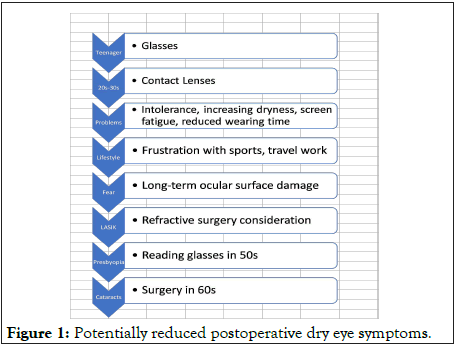
Figure 1: Potentially reduced postoperative dry eye symptoms.
This pathway to LASIK is particularly strong among (Table 2,3):
| Parameter | Contact lens wear | Laser vision correction |
|---|---|---|
| Daily maintenance | High | Minimal |
| Dryness symptoms | Common | Variable/Usually reduced |
| Sports convenience | Moderate | Excellent |
| Water activities | Limited | Improved |
| Infection risk | Persistent | Low |
| Long-term device dependence | Continuous | Reduced |
| Night vision satisfaction | Variable | Generally High |
Table 2: Comparative lifestyle limitations: Contact lens wear versus laser vision correction.
| Feature | LASIK | PRK | SMILE |
|---|---|---|---|
| Visual recovery | Rapid | Slower | Rapid-moderate |
| Postoperative discomfort | Mild | Moderate | Mild |
| Dry eye risk | Moderate | Moderate | Potentially lower |
| Flap creation | Yes | No | No |
| Corneal biomechanics | Altered | Preserved better | Preserved better |
| Return to activity | Rapid | Delayed | In between |
Table 3: Comparative characteristics of major refractive procedures
The following figure summarizes the progressive pathway frequently encountered in patients who develop contact lens intolerance and subsequently seek refractive surgical correction. The framework emphasizes symptom progression, functional impairment, comprehensive refractive evaluation, individualized procedure selection, and expected postoperative outcomes (Figure 2).
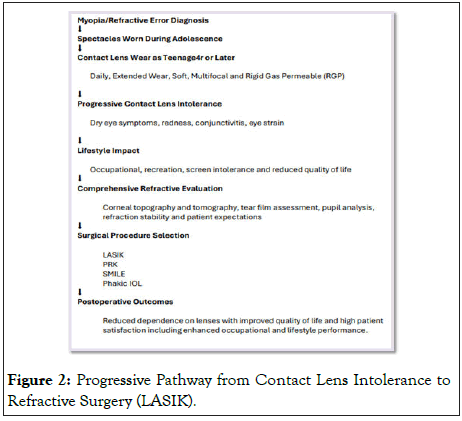
Figure 2: Progressive Pathway from Contact Lens Intolerance to Refractive Surgery (LASIK).
Economic and healthcare burden
The economic burden of chronic contact lens wear includes:
Over a lifetime, the cumulative contact lens expenditures far exceeds the one-time cost of refractive surgery (Table 4).
| Clinical findings | Referral Significance |
|---|---|
| Contact lens intolerance | High |
| Recurrent dry eye symptoms | High |
| Reduced wearing time | Moderate-High |
| Recurrent infiltrative events | High |
| Occupational limitations | Moderate |
| Sports-related inconvenience | Moderate |
| Cosmetic dissatisfaction with spectacles | Moderate |
Table 4: Clinical referral indicators for refractive surgery consultation
Patient selection and safety
Not all contact lens intolerant patients are candidates for refractive surgery. Appropriate patient selection remains essential [23-25].
Contraindications to surgical treatment may include:
Comprehensive counseling is critical to optimize satisfaction and reduce postoperative dissatisfaction.
Optometric co-management
Role of the optometrist
Optometrists play a central role in identifying patients who may benefit from refractive surgery consultation. Clinical indicators include:
Preoperative evaluation
Key elements include:
Postoperative co-management
Postoperative care frequently includes:
Collaborative co-management models may improve continuity of care while strengthening interdisciplinary refractive pathways.
Future directions
Future developments in refractive care may include:
The refractive care paradigm is evolving beyond simple optical correction toward integrated ocular surface preservation and quality-of-life optimization. Contact lens complications represent more than isolated ophthalmic events. They frequently signify progressive failure of chronic device-dependent refractive management. As refractive surgery technologies continue to improve, earlier transition pathways may become increasingly appropriate for selected patients [23-25]. Importantly, refractive surgery should not be viewed solely as a cosmetic elective intervention but rather as part of a broader continuum of visual rehabilitation. The growing prevalence of myopia globally suggests that the future burden of contact lens intolerance and associated ocular surface disease may rise substantially. This creates increasing importance for proactive patient education, screening, and interdisciplinary co-management. From a translational perspective, the refractive surgeon and optometrist must work collaboratively to identify the point at which ongoing contact lens wear produces greater cumulative risk than refractive surgical intervention. Although the proposed clinical framework offers a structured approach for identifying patients who may benefit from refractive surgery after contact lens intolerance, several limitations should be acknowledged. Not all patients with contact lens discomfort are appropriate candidates for corneal refractive surgery. Ocular surface disease, unrealistic expectations, progressive ectatic disorders, unstable refraction, autoimmune disease, various treatments and inadequate corneal thickness may limits suitability for refractive surgery. Furthermore, contact lens intolerance exists on a spectrum and may fluctuate with environmental exposure, screen time, systemic medications, hormonal influences and compliance patterns. Some patients may improve with ocular surface management, changes in lens materials or dry eye therapy without requiring surgical intervention. The framework must also be individualized across different patient populations. Younger myopic patients may prioritize lifestyle convenience and occupational flexibility, whereas older presbyopic patients may have more complex visual expectations involving monovision or blended vision strategies. Athletes, military personnel, and patients in high performance professions may favor flapless procedures such as SMILE or PRK due to concerns regarding flap-related trauma. Conversely, patients requesting rapid visual recovery may prefer LASIK [26-39]. Socioeconomic factors including access to refractive care, cost consideration and patient tolerance for recovery time also influence decisions. Consequently, the proposed framework should not be interpreted as a rigid algorithm, but rather as a flexible clinical guide that supports individualized patient-centered refractive surgery evaluation. Recent studies continue to demonstrate high long-term efficacy, safety and patient satisfaction across modern refractive surgical procedures. Comparative analyses published between 2024 and 2026 report that LASIK, SMILE, and PRK all achieve excellent refractive predictability and high rates of uncorrected visual acuity approaching or exceeding 20/20 in appropriately selected patients. Long-term follow-up studies demonstrate sustained refractive stability and durable visual outcomes extending beyond five years for both LASIK and SMILE procedures. LASIK continues to provide the most rapid visual rehabilitation and strong refractive predictability. PRK remains an important option for patents with thinner corneas, irregular corneal surfaces, or elevated risk profiles where flap-based procedures may be less desirable. SMILE may demonstrate advantages in preservation of corneal biomechanics and possibly lower rates of postoperative dry eye symptoms. Limitations are slower rates of achieving 20/20 with enhancements being difficult and problematic. Patient-reported outcome studies indicate consistently high satisfaction rates across all three refractive procedures, commonly ranging from approximately 85% to greater than 90%. A recent five-year comparative analysis of SMILE and femtosecond LASIK reported overall patient satisfaction exceeding 90% with stable visual outcomes and sustained reduction in spectacle dependence. Contemporary reviews additionally suggest that technological advances in eye tracking, femtosecond laser precision, wavefront-guided treatments and corneal imaging have further improved safety profiles and visual quality compared with earlier generations of refractive surgery. Importantly, no single refractive procedure demonstrates universal superiority across all patient groups. Current evidence supports individualized procedure selection based upon refractive error, corneal anatomy, occupational demands, ocular surface status, recovery expectations, and patient preference [26-39].
Contact lens complications remain a major source of ocular morbidity, reduced quality of life, and refractive dissatisfaction. Increasing evidence suggests that progressive contact lens intolerance may represent a critical clinical inflection point within refractive care.
Modern laser vision correction procedures including LASIK, PRK, and SMILE offer highly effective alternatives to chronic contact lens dependence for appropriately selected patients. Earlier identification and referral of symptomatic contact lens wearers may reduce cumulative ocular surface damage while improving long-term visual function and patient satisfaction.
Collaborative co-management between optometrists and refractive surgeons will likely become increasingly important as refractive medicine continues to evolve toward integrated patient-centered care.
This manuscript represents a narrative translational review and is therefore limited by the heterogeneity of available literature and absence of formal meta-analysis. Additional prospective longitudinal studies are required to quantify the exact timing and predictive factors associated with transition from contact lens intolerance to refractive surgery candidacy.
Lisa Blaker of Joffe Foundation, Cincinnati, Ohio, USA, is acknowledged for medical writing assistance and manuscript preparation. Artificial intelligence tools, including ChatGPT, were used to assist with drafting, organizing, and structuring portions of the manuscript, the author accepts full responsibility for the content.
Stephen N. Joffe conceived the manuscript concept, interpreted the translational clinical framework, and approved the final manuscript.
This manuscript represents a narrative translational review of published literature and clinical perspectives. No human subjects or identifiable patient data were directly involved.
[Crossref] [Google Scholar] [PubMed]
[Crossref] [Google Scholar] [PubMed]
[Crossref] [Google Scholar] [PubMed]
[Crossref] [Google Scholar] [PubMed]
[Crossref] [Google Scholar] [PubMed]
[Crossref] [Google Scholar] [PubMed]
[Crossref] [Google Scholar] [PubMed]
[Crossref] [Google Scholar] [PubMed]
[Crossref] [Google Scholar] [PubMed]
[Crossref] [Google Scholar] [PubMed]
[Crossref] [Google Scholar] [PubMed]
[Google Scholar] [PubMed]
[Crossref] [Google Scholar] [PubMed]
[Crossref] [Google Scholar] [PubMed]
[Crossref] [Google Scholar] [PubMed]
[Crossref] [Google Scholar] [PubMed]
[Crossref] [Google Scholar] [PubMed]
[Crossref] [Google Scholar] [PubMed]
[Crossref] [Google Scholar] [PubMed]
[Crossref] [Google Scholar] [PubMed]
[Crossref] [Google Scholar] [PubMed]
[Crossref] [Google Scholar] [PubMed]
[Crossref] [Google Scholar] [PubMed]
[Crossref] [Google Scholar] [PubMed]
[Crossref] [Google Scholar] [PubMed]
[Crossref] [Google Scholar] [PubMed]
[Crossref] [Google Scholar] [PubMed]
[Crossref] [Google Scholar] [PubMed]
[Crossref] [Google Scholar] [PubMed]
[Crossref] [Google Scholar] [PubMed]
[Crossref] [Google Scholar] [PubMed]
Citation: Joffe SN (2026). Contact Lens Complications as a Clinical Inflection Point in Refractive Care: Translational Pathways to Laser Vision Correction. Clin Exp Ophthalmol.17:1001038.
Received: 15-May-2026, Manuscript No. JCEO-26-42131; Editor assigned: 08-May-2026, Pre QC No. JCEO-26-42131 (PQ); Reviewed: 01-Jun-2026, QC No. JCEO-26-42131; Revised: 08-Jun-2026, Manuscript No. JCEO-26-42131 (R); Published: 16-Jun-2026 , DOI: 10.35248/2155-9570.26.17.1052
Copyright: © 2026 Joffe SN. This is an open-access article distributed under the terms of the Creative Commons Attribution License, which permits unrestricted use, distribution, and reproduction in any medium, provided the original author and source are credited.