
Journal of Clinical Chemistry and Laboratory Medicine
Open Access
ISSN: 2736-6588
ISSN: 2736-6588
Research Article - (2026)Volume 9, Issue 1
CLSI: Clinical Laboratory and Standards Institute; CP: Centipoise; CV: Coefficient of Variation; DBV: Diastolic whole Blood Viscosity; SBV: Systolic whole Blood Viscosity; SCTV: Scanning Capillary Tube Viscometer; SD: Standard Deviation; WBV: Whole Blood Viscosity; RDW: Red cell Distribution Width; ESR: Erythrocyte Sedimentation Rate
Blood viscosity is a key hemorheological parameter that determines vascular resistance and blood flow dynamics and has been reported to be directly or indirectly associated with various pathophysiological conditions, including cardiovascular and cerebrovascular diseases, metabolic disorders, and microcirculatory dysfunction [1,2]. Although several studies have proposed reference values for blood viscosity [3-6], their clinical applicability remains limited because of inadequate definition of “healthy” reference individuals and insufficient sample sizes, which do not meet current standards for the establishment of laboratory reference intervals. Therefore, there is a clear need to establish robust, clinically applicable reference ranges based on strict eligibility criteria and a sufficiently large reference population.
Over the years, rotational viscometers have been the standard in clinical studies investigating hemorheological properties of whole blood [1,2]. Although rotational viscometers have been widely used in many studies, they retain a critical drawback that limits their clinical applicability in measuring WBV. One of the concerns is the need to clean the test section after each measurement [7]. Not only is this procedure time-consuming, but also it poses a potential risk for contact with contaminated blood. In addition, the torque-measuring sensor should be calibrated at factory periodically [7], requiring the transfer of the equipment to the manufacturer.
A new SCTV has been developed for the measurement of WBV which utilizes a disposable part for blood contact, eliminating the risk with contaminated blood [8]. Furthermore, the SCTV does not use a torque sensor for viscosity measurement [8] so that there is no need of periodic calibration.
The first generation SCTV, referred to as Hemovister in this study, requires manual operation, including manual loading of the blood sample into a disposable U tube and manual replacement of the U tube after each WBV measurement. In contrast, the second generation SCTV, Hemovister A2.0, represents a significant advancement. It features a cartridge containing twenty disposable U tubes, a tray accommodating twenty blood sample vacutainer tubes, built in 37°C temperature control, automated blood sample loading into the U tubes, and automated, safe disposal of both used U tubes and sample tubes. The objectives of this study are:
1. To evaluate the analytical performance of the first and second generation scanning capillary viscometers, including assessments of precision, method comparison, and reference interval verification.
2. To establish sex specific reference intervals for WBV in healthy Korean adults.
WBV exhibits non Newtonian, shear thinning behavior, with a minimum value of approximately 4 cP under high shear flow conditions, primarily due to dispersed red blood cells [1]. In the present study, the WBV measured at a shear rate of 300 s-1 is used as the representative value for systolic flow conditions and is referred to as systolic blood viscosity (SBV). Similarly, the WBV measured at a shear rate of 5 s-1 is used as the representative value for diastolic flow conditions (excluding coronary flow), which is characterized by flow velocities of approximately <0.4 cm/s [9].
Samples
Precision and comparison evaluations between the manual and fully automated SCTV were performed using two Quality Control (QC) materials prepared by Ubiosis, Korea. These QC materials represented two viscosity levels: normal viscosity and abnormally high viscosity.
For the reference interval verification study, whole blood samples from 20 healthy males and 27 healthy females were analyzed to determine WBV using the automated SCTV. In addition, a separate reference interval study was conducted using whole blood samples from 150 healthy males and 150 healthy females, also measured with the automated SCTV. All viscosity measurements were performed at 37°C.
Blood samples for WBV measurement were collected from the antecubital vein into Ethylenediaminetetraacetic Acid (EDTA)-containing vacuum tubes [7]. Tubes were gently inverted 8-10 times to ensure homogeneous cell distribution and then allowed to stabilize at room temperature (22-25°C) for 30 minutes before viscosity assessment. This stabilization period was included to reduce variability related to transient erythrocyte aggregation and temperature equilibration. Vigorous shaking was avoided to prevent hemolysis and foam formation. Samples showing visible hemolysis were excluded, and a hemolysis index was evaluated using automated chemistry analyzer parameters; samples exceeding predefined thresholds were also excluded.
Blood samples stored at 4°C were likewise equilibrated to room temperature for 30 minutes before being loaded into the viscometer. After twenty EDTA vacutainers with blood samples were placed into the automated SCTV, samples were maintained at 37°C for at least 5 minutes prior to viscosity measurement to ensure complete thermal equilibration. Temperature stabilization was verified using the instrument’s internal temperature sensor before measurements were initiated.
The study protocol was approved by the Ethics Committee of the Hanmaeum Blood Center (Korea), and informed consent was obtained in accordance with institutional guidelines.
Methods for Viscosity Measurement
The SCTV uses a disposable U tube to measure WBV, consisting of a horizontal capillary tube that connects the lower ends of two vertical tubes [8]. The capillary tube is made of stainless steel with a circular cross section, an inner diameter of 0.8 mm, and a length of 10 cm. The transparent vertical tubes have an inner diameter of approximately 3.0 mm and a height of about 14 cm.
The pressure drop across the capillary tube is determined from the time dependent height difference between the two transparent vertical tubes, which is then used to calculate the wall shear stress in the capillary tube [8]. The wall shear rate is obtained by differentiating the height versus time curve measured in the vertical tube [8]. The mathematical algorithm used to calculate shear stress, shear rate, and apparent blood viscosity is based on the Casson non Newtonian viscosity model, as previously described [8].
Analytical Performance Evaluation
For the precision studies, the mean, SD and CV in WBV were calculated for both normal and abnormal QC materials. Analytical performance validation was conducted in accordance with the Clinical Laboratory Standards Institute (CLSI) guidelines, evaluating both within run and between day precision using 10 separate runs per day, with two replicates at each of the two QC levels, over a period of 10 days [10].
A comparison study was performed between the first generation device (Hemovister) and the second generation device (Hemovister A2.0) to evaluate WBV measured at two representative shear rates, 5 s-1 and 300 s-1, using 42 whole blood samples measured at 37°C. The distribution of WBV values used for the comparison evaluation was assessed for normality in accordance with the CLSI protocol [11].
Study Population and Subject Selection for Reference Interval Study
Participants in this study were adult men and women who voluntarily visited the Hanmaeum Blood Center or designated blood donation cafés in Seoul, Korea. Individuals who consented to blood donation and met the standard eligibility criteria for donation were considered for inclusion. Among these, those who received a full explanation of the study and provided written informed consent were enrolled.
Eligible participants were adults aged 19 to 69 years who were assessed as being in good health based on a standardized pre donation health questionnaire and interview. Final consent for study participation was obtained immediately after completion of the donor screening process, followed by blood sampling and data collection.
Individuals were excluded if they had a history of cardiovascular or cerebrovascular disease, malignancy, or chronic inflammatory conditions (e.g., rheumatoid or other autoimmune rheumatic disorders). Those diagnosed with diabetes mellitus, hypertension, or dyslipidemia and currently receiving pharmacologic treatment for these conditions were also excluded. The use of non-pharmaceutical health supplements, such as vitamins or red ginseng products, was not considered an exclusion criterion.
Statistical Analysis
Statistical analyses were performed using Statistical analysis system software (Procedure T-Test). Continuous variables are presented as mean ± SD. Differences between males and females were assessed using the Welch two-sample t-test, which does not assume equal variances between groups. Degrees of freedom were estimated using the Satterthwaite approximation, and all statistical tests were two-sided. A p-value<0.05 was considered statistically significant.
Table 1 summarizes the results of the precision evaluation performed with the normal and abnormal QC samples. As shown, the Hemovister A2.0 demonstrated excellent CVs in both within day and between day assessments for both QC levels at shear rates of 5 and 300 s-1.
| Within-day | Between-day | |||||||||||
|---|---|---|---|---|---|---|---|---|---|---|---|---|
| Normal | Abnormal | Normal | Abnormal | |||||||||
| Shear rate | Mean (cP) | SD (cP) | CV (%) | Mean (cP) | SD (cP) | CV (%) | Mean (cP) | SD (cP) | CV (%) | Mean (cP) | SD (cP) | CV (%) |
| 5 (s-1) | 10.82 | 0.23 | 2.1 | 24.37 | 0.47 | 1.91 | 10.82 | 0.13 | 1.29 | 24.37 | 0.19 | 0.8 |
| 300 (s-1) | 3.73 | 0.06 | 1.57 | 7.85 | 0.2 | 2.6 | 3.73 | 0.04 | 1 | 7.85 | 0.11 | 1.4 |
Table 1: Results of within-day and between-day precision tests of the SCTV (Hemovister A2.0) using QC materials with two (normal and abnormal) different levels of viscosity.
Figure 1 presents the results of the comparison study of viscosity measurements between the first generation Hemovister and the Hemovister A2.0 using 42 whole blood samples. Table 2 provides the statistical summary of the comparison analysis, indicating acceptable normality and strong agreement, with a correlation coefficient (R) of 0.95 and a mean bias of less than -3.3% at both shear rates.
| Hemovister | Hemovister A2.0 | Hemovister | Hemovister A2.0 | |
|---|---|---|---|---|
| SBV (at 300 s-1) | DBV (at 5 s-1) | |||
| Correlation coefficient (R) | 0.954 | 0.9525 | ||
| Slope | 0.8715 | 1.1038 | ||
| Intercept | 0.4991 | -1.7834 | ||
| Bias mean | -0.21 | -0.07 | ||
| Bias% mean | -3.28% | -1.17% | ||
| ABS Bias% mean | 6.02% | 6.92% | ||
| Max visc (cP) | 9.5 | 8.2 | 24.6 | 23.5 |
| Min visc (cP) | 3.2 | 3.2 | 8.3 | 7.1 |
| Mean visc (cP) | 5.5 | 5.3 | 16.5 | 16.4 |
| Diff visc (cP) | -0.21 | -0.07 | ||
| Diff visc% | -3.80% | -0.43% | ||
Table 2: Results of comparison evaluation of non-newtonian shear-thinning characteristics of WBV with 42 blood samples using Hemovister and Hemovister A2.0. SBV
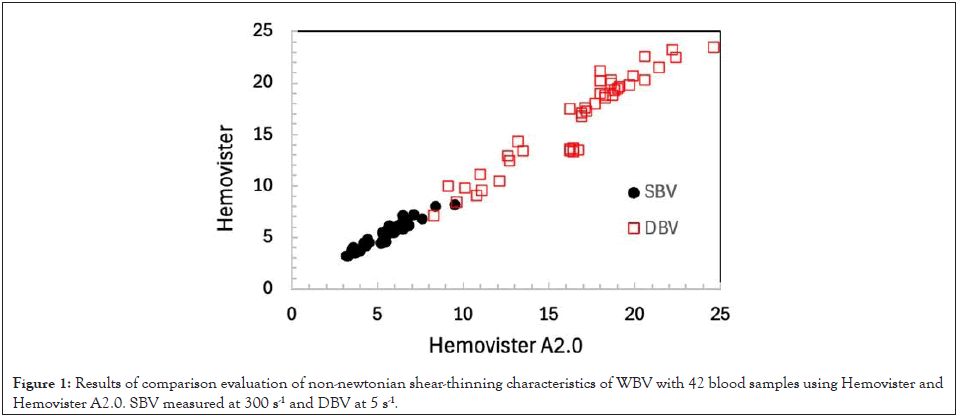
Figure 1: Results of comparison evaluation of non-newtonian shear-thinning characteristics of WBV with 42 blood samples using Hemovister and Hemovister A2.0. SBV measured at 300 s-1 and DBV at 5 s-1.
Table 3 shows the results of the reference interval verification study conducted with 47 blood samples using the Hemovister A2.0. The verification was performed using the reference intervals previously established with the first generation Hemovister as the baseline. All WBV measurements were marked as “Passed,” and the observed ranges for all 47 samples fell within the proposed reference intervals.
| Shear rate (s-1) | Sex | Reference Interval (proposed) (cP) | Results | Passes | Mean (cP) | SD (cP) | Median (cP) | Range (cP) | ||
|---|---|---|---|---|---|---|---|---|---|---|
| (total/outside) | Max/Obs | outside | ||||||||
| 5 | M (n=20) | 11.3 to 19.5 | 20/0 | 10%/0% | Passed | 13.1 | 1 | 13 | 12.10-16.50 | |
| 300 | 3.8 to 5.9 | 20/0 | 10%/0% | Passed | 4.3 | 0.3 | 4.3 | 4.00-5.30 | ||
| 5 | F (n=27) | 9.8 to 16.8 | 27-Feb | 10%/7% | Passed | 11.5 | 1.2 | 11.5 | 8.70-14.00 | |
| 300 | 3.4 to 5.0 | 27/0 | 10%/0% | Passed | 4 | 0.3 | 3.9 | 3.40-5.00 | ||
Table 3: Results of reference interval verification of non-newtonian shear-thinning characteristics of WBV with male and female blood samples using Hemovister A2.0.
Table 4 summarizes the baseline characteristics of the healthy male and female subgroups selected according to the exclusion criteria for the reference interval study. In the whole blood analysis, there was no significant difference in age between males and females (35.5 ± 11.3 vs. 35.5 ± 11.3 years, p=0.165). Compared with females, males exhibited significantly higher levels of WBC, RBC, Hemoglobin (Hb), and Hematocrit (HCT) (all p<0.001). Conversely, RDW and ESR were significantly higher in females than in males (p<0.001). Platelet counts did not differ significantly between groups (262.7 ± 57.9 vs. 266.0 ± 65.0 × 10³/μL, p=0.644).
| Male (n=150) | Female (n=150) | p value | ||
|---|---|---|---|---|
| Mean ± SD (cP) | Mean ± SD (cP) | |||
| Age | 35.5 ± 11.3 | 35.5 ± 11.3 | 0.165 | |
| Blood test | WBC | 6.2 ± 1.4 | 6.7 ± 1.7 | <0.004 |
| RBC | 5.0 ± 0.4 | 4.4 ± 0.3 | <0.0001 | |
| Hb | 14.7 ± 1.1 | 12.7 ± 1.0 | <0.0001 | |
| HCT | 44.5 ± 3.0 | 39.3 ± 2.7 | <0.0001 | |
| RDW | 12.5 ± 1.3 | 13.2 ± 1.4 | <0.0001 | |
| Platelet | 262.7 ± 57.9 | 266.0 ± 65.0 | 0.644 | |
| ESR | 2.9 ± 2.2 | 6.5 ± 6.8 | <0.0001 | |
| Male (n=150) | Female (n=134) | |||
| Serum test | Protein, total | 7.1 ± 0.9 | 6.8 ± 1.1 | <0.024 |
| Albumin | 4.3 ± 0.5 | 4.0 ± 0.6 | <0.0001 | |
| BUN | 13.7 ± 3.8 | 11.8 ± 3.7 | <0.0001 | |
| Creatinine | 1.0 ± 0.2 | 0.7 ± 0.1 | <0.0001 | |
| AST | 26.6 ± 9.9 | 21.4 ± 8.2 | <0.0001 | |
| ALT | 26.4 ± 18.6 | 15.6 ± 10.3 | <0.0001 | |
| T. Chol | 196.8 ± 18.6 | 196.2 ± 43.8 | 0.916 | |
| TG | 176.3 ± 169.0 | 108.6 ± 67.1 | <0.0001 | |
| HDL-C | 53.4 ± 13.7 | 63.6 ± 16.9 | <0.0001 | |
| LDL-C | 112.3 ± 30.3 | 106.8 ± 32.8 | 0.142 | |
| Ferritin | 91.0 ± 94.1 | 43.2 ± 46 | <0.0001 |
Table 4: Baseline characteristics of subgroups of healthy male and female selected according to the exclusion criteria of the present study.
In the serum analysis, males demonstrated significantly higher concentrations of total protein, albumin, Blood Urea Nitrogen (BUN), creatinine, AST, ALT, triglycerides, LDL cholesterol, and ferritin compared with females (all p<0.05). In contrast, HDL cholesterol concentrations were significantly higher in females (p<0.001). No significant difference was observed in total cholesterol between males and females (196.8 ± 18.6 vs. 196.2 ± 43.8 mg/dL, p=0.916).
Table 5 presents the reference intervals for WBV at nine shear rates, determined using the central 90th percentile distribution from measurements in 150 healthy males and 150 healthy females using the Hemovister A2.0. Figure 2 illustrates the WBV curves for males and females, demonstrating that WBV is consistently higher in males. The sex related difference is small at high shear rates but becomes more pronounced at lower shear rates. For example, at a shear rate of 300 s-1, male WBV is approximately 4% higher than female WBV, whereas at a shear rate of 5 s-1, male WBV is approximately 18% higher.
| Shear rate (s-1) | Male (n=150) | Female (n=150) | ||||||
|---|---|---|---|---|---|---|---|---|
| Mean (cP) | SD (cP) | Median (cP) | 90% Ref. Range (cP) | Mean (cP) | SD (cP) | Median (cP) | 90% Ref. Range (cP) | |
| 1 | 36.19 | 6.18 | 35.15 | 25.3-54.3 | 29.57 | 3.2 | 29.6 | 22.7-36.3 |
| 2 | 23.34 | 3.98 | 22.55 | 16.6-35.1 | 19.12 | 1.92 | 19.2 | 15-23.1 |
| 5 | 14.28 | 2.47 | 13.65 | 10.4-21.6 | 11.76 | 1.07 | 11.8 | 9.4-13.9 |
| 10 | 10.52 | 1.8 | 10 | 7.8-15.8 | 8.72 | 0.73 | 8.7 | 7.1-10.3 |
| 50 | 6.34 | 1.03 | 6 | 4.9-8.8 | 5.38 | 0.38 | 5.4 | 4.5-6.3 |
| 100 | 5.57 | 0.89 | 5.3 | 4.3-7.9 | 4.7 | 0.32 | 4.7 | 3.9-5.5 |
| 150 | 5.2 | 0.79 | 4.9 | 4.1-7.1 | 4.41 | 0.28 | 4.4 | 3.7-5.1 |
| 300 | 4.72 | 0.69 | 4.5 | 3.7-6.6 | 4.02 | 0.27 | 4 | 3.4-4.6 |
| 1000 | 4.16 | 0.67 | 4 | 3.1-6.1 | 3.51 | 0.32 | 3.5 | 2.8-4.4 |
Table 5: Results of reference intervals for WBV by central 90 percentiles in healthy men and women for specific shear rates using Hemovister A2.0. Note that 90% reference range was evaluated with the nonparametric method, which is recommended by the clsi guidelines (c28-a3) for sample sizes of 120 or more.
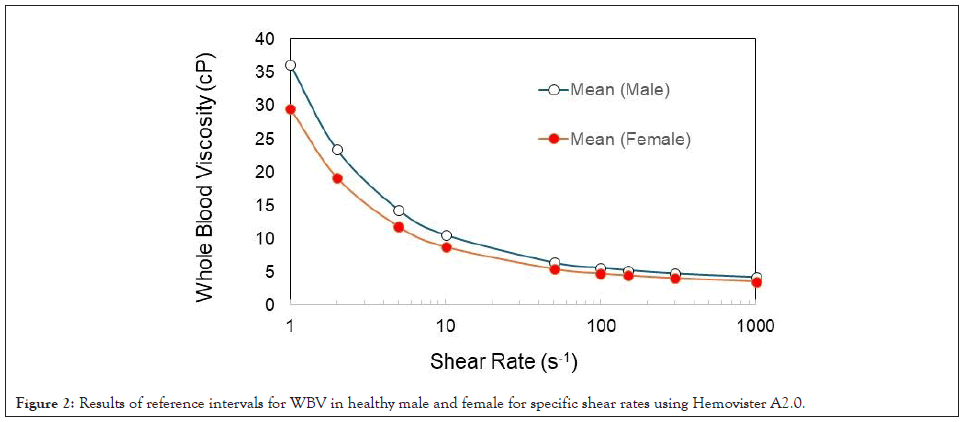
Figure 2: Results of reference intervals for WBV in healthy male and female for specific shear rates using Hemovister A2.0.
The present study reports the analytical validation of the second generation SCTV (Hemovister A2.0) for WBV measurements. The instrument demonstrated low CV across the tested shear rates (5 and 300 s-1), confirming high precision under both low and high shear conditions. Furthermore, comparison testing between the first generation Hemovister and the Hemovister A2.0 showed strong agreement at both representative shear rates, indicating that the two instruments yield interchangeable WBV results. In addition, this study establishes reference intervals for WBV at nine different shear rates in healthy male and female subjects, with CVs lower than 3% for shear rates ≥ 5 s-1.
Hemorheology focuses on the flow and deformation behavior of blood and their implications for vascular function, offering mechanistic insights into hemodynamic alterations relevant to laboratory medicine and clinical pathology [1,2,12]. Whole blood exhibits non Newtonian, shear thinning behavior, characterized by a decrease in apparent viscosity with increasing shear rate [2]. This phenomenon arises largely from erythrocyte deformability, reversible RBC aggregation, and the macromolecular composition of plasma [1,13]. From a laboratory standpoint, WBV is a composite physiological parameter that reflects the combined influences of Hematocrit, plasma protein concentration, red blood cell rheological properties, and inflammatory status [1].
WBV is a key determinant of vascular resistance and plays an essential role in maintaining effective microcirculatory perfusion [1]. In the microvasculature, where flow velocities are low and the surface to volume ratio is high, the influence of viscous forces and blood-wall interactions becomes markedly more pronounced [1]. Elevated WBV increases frictional resistance along the vessel wall, which can impair capillary perfusion and hinder adequate tissue oxygen delivery [1]. Because direct assessment of microvascular flow in vivo is technically challenging, in vitro WBV measurement provides a clinically meaningful surrogate for evaluating microvascular resistance and the risk of flow impairment. This approach offers actionable insight into hemorheological abnormalities that may contribute to the development, progression, or therapeutic responsiveness of diseases characterized by microvascular dysfunction.
Elevated WBV has been consistently linked to increased cardiovascular risk [1,2,14], and accumulating clinical evidence implicates abnormal WBV in a broad spectrum of vascular diseases, including ischemic stroke [1,15,16], peripheral arterial disease [17], hypertension [18], and chronic kidney disease [19,20]. In end organ circulations with inherently limited flow reserve such as the cerebral and renal microvasculature increased WBV further elevates flow resistance, impairs oxygen delivery, and contributes to the progression of target organ damage [1,16,20].
WBV exhibits a broad biological and pathological dynamic range (approximately 4-45 cP), which exceeds that of many conventional biochemical markers and underscores its analytical sensitivity. However, meaningful clinical application of WBV requires the establishment of method specific and shear rate-specific reference intervals that account for biological variability, sex, Hematocrit, and key preanalytical conditions. Notably, Hematocrit plays an important role in estimating the Tissue Oxygen Delivery Index (TODI), defined as the ratio of Hematocrit to WBV at a shear rate of 5 s-1 [21]. Together, these characteristics support the potential utility of WBV as a quantitative hemorheological biomarker capable of providing clinically additive information beyond standard laboratory tests. With careful attention to analytical standardization and control of preanalytical variables, WBV may be effectively incorporated into risk stratification, therapeutic monitoring, and outcome prediction frameworks.
In conclusion, the present study provides a comprehensive analytical validation of the second generation SCTV for WBV measurement and establishes reference intervals for WBV in healthy male and female subjects. Based on these findings, the SCTV is recommended for use in both clinical chemistry and hematology laboratories for measuring WBV across a wide range of shear rates.
Declaration of interest
The authors report no conflicts of interest. The authors alone are responsible for the content and writing of the paper.
Acknowledgments
This work was supported by Ubiosis, Korea. We acknowledge that Ubiosis provided disposable tubes used in the present study.
[Crossref] [Google Scholar] [PubMed]
[Crossref] [Google Scholar] [PubMed]
[Google Scholar] [PubMed]
[Google Scholar] [PubMed]
[Google Scholar] [PubMed]
[Crossref] [Google Scholar] [PubMed]
[Google Scholar] [PubMed]
[Google Scholar] [PubMed]
[Crossref] [Google Scholar] [PubMed]
[Crossref] [Google Scholar] [PubMed]
[Google Scholar] [PubMed]
[Crossref] [Google Scholar] [PubMed]
[Crossref] [Google Scholar] [PubMed]
Citation: Han Y, Kap NL, Kim J, Kim IT, Cho YI (2026). Analytical Performance Evaluation and Reference Intervals for Whole Blood Viscosity Using a Scanning Capillary Viscometer. J Clin Chem Lab Med. 9:313.
Received: 08-Mar-2026, Manuscript No. JCCLM-26-40994; Editor assigned: 10-Mar-2026, Pre QC No. JCCLM-26-40994 (PQ); Reviewed: 24-Mar-2026, QC No. JCCLM-26-40994; Revised: 31-Mar-2026, Manuscript No. JCCLM-26-40994 (R); Published: 07-Apr-2026 , DOI: 10.35248/2736-6588.26.9.313
Copyright: © 2026 Han Y, et al. This is an open-access article distributed under the terms of the Creative Commons Attribution License, which permits unrestricted use, distribution, and reproduction in any medium, provided the original author and source are credited.