
Annals and Essences of Dentistry
Open Access
ISSN: 0975-8798, 0976-156X
ISSN: 0975-8798, 0976-156X
Research Article - (2025)Volume 17, Issue 1
Objective: To design an application for cephalometric diagnosis with results comparable to manual tracing; an application (UCeph) for Android was designed to analyze the concordance of the diagnosis of the application and the "manual tracing", the radiographic image was loaded and printed on photographic paper; nine measurements were plotted: six linear and three angular, using the Björk-Jarabak analysis. The results of the application were compared using the kappa test; no significant differences (p>0.05) were found between the two groups, demonstrating very good reliability in the use of the application. In addition, a financial feasibility analysis and an impact evaluation were carried out. The results of the impact evaluation suggest that UCeph had a greater impact in reducing time to detection and human error, as well as helping to produce better diagnostics and positive effects on the environment.
Cephalometric diagnosis software; Cephalometric manual tracing; Concordance analysis; Digital radiograph; Financial feasibility analysis; Impact evaluation
Dento Maxillofacial Alterations (DMFA) include alterations in the growth, development and physiology of the anatomical components that make up the stomatognathic system [1], for which the Angle classification system, based on anteroposterior relationships of the maxillae with each other [2]. DMFAs are classified into dentomaxillofacial disorders I (of the soft tissues and of the gums), dentomaxillofacial alterations II (of the teeth), and dentomaxillofacial alterations III (of the temporomaxillary joints and of the occlusion), which must have criteria of alterations of space, volume, shape, number, position and direction [2]. DMFAs are of multifactorial origin because they present one or more causative agents conjugated to each other, which makes diagnosis difficult [3,4]. The diagnosis is usually made based on a radiographic evaluation, since the radiograph is the most valid and reliable tool [5,6]. It is worth mentioning that digital images have many benefits compared to a conventional physical image, such as manipulating contrast, sharpness, among others, which helps to correctly perform a cephalometric tracing [2,7,8].
The software-based techniques are better at storing and diagnosing medical data and tend to minimize the human errors; these techniques, however, are not readily available in poorer countries where private insurance is not quite common and limited to non-sumptuary issues and private health services must deal with a reduced market that does not allow easily for software investments [9]. Thus, these software-based techniques are used little, since the tracing is usually done manually or, outsourced to companies that carry out the computer-based technique for a group of dental offices. On the other hand, in more developed European and North American countries, the consistent use of computer programs to diagnose began since 1982. It has been shown that the main advantages are the possibility of analyzing and sharing the data and at a higher speed, less radiation, among others [10,11]. By 2020, the cephalometric software available for orthodontics are NemoCast, NemoCeph 3D, Dolphin, Ortomed and Planners [12], but Nemocheph ©, Dolphin © and Ortomed © stand out for being one of the most used in Orthodontic clinics in Europe and the USA States [7]. Notice that, given the target population, most of these software only Caucasian standards.
Therefore, our purpose is to design an affordable application tailored to the requirements of the emerging economies with a special focus on the Latin American market, with an unrestricted number of users per license. The software must be robust-tested on a large sample of cephalometric data-and considering the most common DMFA for the Latin American population. Android devices tend to be quite affordable and can operate away from the energy grids where several patients may be located. The degree of coincidence in the diagnosis carried out by our software was analyzed and compared to manual tracing, and finally impact and financial assessments were carried out.
Occurrence data
This study used a data set, collected first-hand with the specific objective of the work itself, such as the different measurements (linear and angular), tracing time, Liker scale questions that measure perception of the new software, recommendations, usability and preferences. The X-rays were provided by the dental clinic of the UAQ, where the bio-ethics committee reviewed and approved the procedure, protocol to be followed and informed consent. There was no interaction with the patient at any time and only the data was provided; with ID, instead of name. The data set included the lateral X-ray of the skull, sociodemographic data of the patient such as: Age, gender, socioeconomic level, municipality of origin and schooling, this with the aim of obtaining the best case-control, for the users of the software, they were informed consent was given and participation was completely voluntary, there were no vulnerable people in the contest and there were no gender conflicts.
Analysis by Björk-Jarabak
Björk's analysis was modified and adapted by Jarabak; a notable aspect of this analysis is the use of the Na-S-Ar-Go-Me polygon, to evaluate the anterior and posterior facial height relationships, as well as to predict the direction of facial growth, For our work, points, planes and angles that are related to the facial biotype determination method will be analyzed (Figure 1).
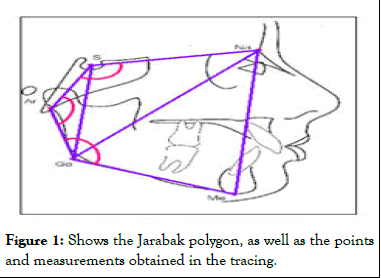
Figure 1: Shows the Jarabak polygon, as well as the points and measurements obtained in the tracing.
The points of reference are defined as follows:
• Nasion (Na): Point located at the anterior limit of the frontonasal suture.
• Turkish saddle (S): Geometric center of the Turkish saddle.
• Articular (Ar): Located on the posterior border of the neck of the condyle, where it intersects the inferior border of the spheno occipital massif.
• Gonial (Go): Intersection of the tangent to the posterior border of the ramus and the tangent to the inferior border of the mandibular body.
• Menton (Me): Lowest point of the mandibular symphysis.
Once these points have been identified, the following planes are drawn:
• S-Na: Anterior cranial base.
• S-Ar: Posterior cranial base.
• Ar-Go: Branch height.
• Go-Me: Length of the mandibular body.
From these planes, the following angles are formed:
• Na-S-Ar: Saddle angle.
• S-Ar-Go: Articular angle.
• Ar-Go-Me: Gonial angle.
Figure 1 shows exactly the points, planes and angles (linear and angular measurements) to trace, to determine whether the measurements are within the standard measurement interval; if the measurements are outside the standard range, the patient is considered to have a DMFA. Manual tracing, which has long been the gold standard per excellence, consists of reproducing Jarabak’s polygon on a translucid tracing paper, which can show the points on the lateral skull radiograph.
Pilot test
A first version of the application was prototyped in GeoGebra, and a comparative study between a digital and a manual cephalometry was carried out with 2 digital radiographs. The test application used the method obtained in the analysis of requirements, Jarabak’s method, with the objective of demonstrating that the design and use of the application is as practical as the manual tracing and does not require a steep learning curve for potential users. This test was carried out with a random sample of students from the 10th Semester of the Bachelor of Dentistry at UAQ from January to June 2019, from the subject of Orthodontics. In this pilot test, the students were first reminded of the method, and then they performed the manual tracing of 2 radiographs and then the same radiographs were traced in the sample application. One survey was conducted per session. The data and statistical tests were processed with Stata 10.0 and R software.
Determination of a statistical sample
The inclusion and exclusion criteria were verified
Inclusion criteria:
• Digital lateral cephalic radiographs of male and female patients belonging to “Dr. Benjamin Moreno Perez” hospital, taken in the years 2017, 2018 and 2019.
• X-rays that meet the ideal imaging requirements such as: adequate definition of the structures, sharpness, contrast and resolution.
• X-rays where all the anatomical structures necessary to perform the cephalometric analysis are observed, for example: chin.
Exclusion criteria:
• Digital lateral radiographs not from the “Dr. Benjamin Moreno Perez” hospital.
• X-rays that do not meet imaging requirements.
• X-rays that cut out anatomical structures.
• Patients with deforming syndromes that compromise the analysis of the structures.
Description of the sociodemographic characteristics of the patients
In order to find the best control of each case, we described the characteristics of the individuals; a statistical analysis of frequencies of the sociodemographic and health data of the study population was carried out (age, gender, height, socioeconomic level, weight, etc), In order to reduce the effect of possible confounding variables. A descriptive analysis of the data was carried out, using measures of central tendency and dispersion. The most suitable patients (case-control) were matched according to the sociodemographic characteristics obtained.
Application design
An application is designed, programmed in Java or Android API; improving the orientation to the user and the application in general, based on the results obtained from the pilot test and thinking about portability to Android.
An application for Android was designed (UCef), this allows the portability of the application to any mobile device such as tablet or cell phone; This application was made with the points required in the pilot test, focused on digital cephalometry to provide an easy-to-use tool that allows locating key points of an X-ray and obtaining a report with the necessary measures to make decisions. related to orthodontics.
The objective was to reduce time and costs in carrying out calculations that can be automated with the use of this application, as well as to facilitate the exchange of the results obtained by different electronic means.
The development was carried out in Java language using Android API Version 28, focused on Android 9.0 (Android Pie) but having Android 5.0 (Android Lollipop) support. The application uses only the client's platform; that is, it does not save or send anything to any server. All data is stored locally.
Application test
Applying the same inclusion and exclusion criteria that were applied in the pilot test, only now 5:1 simple random sampling; subsequently, the detection of points and the required measurements were executed, 3 types of users participated:
Case: Students of 9th and 10th semester of dentistry.
Control 1: Students of lower semesters of the degree in dentistry.
Control 2 (experts): Specialty or master's degree students in orthodontics or graduates.
First, the cephalometric tracings were made manually, and then the angles and measurements; then you did the same procedure with UCeph.
Financial analysis
An analysis of the legal framework corresponding to the project, value assessed by end users, as well as an analysis of comparable software in the market is carried out. To carry out our financial viability analysis, we opted for a hybrid model based on discounted cash flows (net present value) and real option valuation, although the discounted cash flow model has become a classic of financial analysis, the effectiveness has been proven, part of it lies in the need for historical information and little volatility. It seeks to obtain the value that does not consider a conservative estimate of cash flows, while protecting itself from the risks of assuming high uncertainty projects, on the other hand, the real options model is avoided because, unlike the welldefined financial options, the former are difficult to estimate due to their multifactorial nature and the fact that they typically ignore the initial investments made to the project (which is later solved by establishing an abandonment value), in addition to focusing on the risks associated with returns, but not those associated with costs. But if an approximate value will be sought by comparable in the market.
The main point is that it seeks to obtain the value that is not taken into account in a conservative estimate of cash flows, while still protecting against the risks of taking on projects with high uncertainty. Additionally, the Black-Scholes-Merton model and Montecarlo simulation model were made with 1000 interactions.
For the analysis of comparable, we must mention that, for cephalometric tracing, the gold standard is manual tracing, but there is a considerable number of authors who have compared software, as shown in Table 3, which shows the most recent works. The vast majority of which point to the use of software as the best tracing method, which apart from benefits such as ICT, gives additional advantages. One of the main methods of valuing goods, including intangibles as is the case, is by comparable, an investigation of the software that exists in the market is done, and a value is obtained based on their cost. There is different cephalometric software on the market, used in different countries, especially with advanced levels in ICT and advanced economies; although there is already one in Mexico, in the following table we will show the characteristics of the most used, as shown in Table 4. As shown in Table 5, the first value could be obtained from the pilot test, which is for savings at the Autonomous University of Querétaro in a school semester; where we show that on average 13 students enter the specialty of dentistry, requiring 10 patients, who need four x-rays during their treatment, four generations at the same time.
So far, this model does not take into account the fact that the abandonment value of a project, that is, in the event of giving up or failing, there is a certain value that can be recovered. The following formula remains at the end.
PTV=NAV+VOA+VAB
Where:
VTP=Total Project Value.
NPV=Net Present Value.
VOA=Adjusted Option Value.
VAB=Abandonment value
Finally, we consider that due to the nature of this analysis (financial feasibility of a software) the UCef project will be evaluated in a more realistic way with this hybrid method than using each of these separately, these values are achievable since it has a well-defined initial investment, the projected cash flows said elements will serve to build an initial valuation which will be adjusted over time according to the difference between projected and actual flows.
Determination of diagnostic agreement
In any research study, a key issue is the reliability of the measurement procedures used; "In the context of clinical studies, not even the most elegant of designs would be able to mitigate the damagecaused by an unreliable measurement system". An important source of measurement error in interobserver variability has been identified in the literature. In this sense and for this work, two different aspects enter into the study of reliability: on the one hand, the bias between observers; Said less rigorously, the tendency of one observer to consistently give higher values than another and of another, which is minimized with matching and the agreement between observers; that is, to what extent the observers coincide in their measurement and this is where we occupy the Kappa coefficient that relates the agreement exhibited by the observers, beyond chance, with the potential agreement also beyond chance. In essence, the process of constructing the index is as follows: The difference between the observed proportion of agreement and the proportion of agreement expected by chance is calculated; if it is equal to zero, then the degree of agreement that has been observed can be attributed entirely to chance; if the difference is positive, this indicates that the degree of concordance is greater than what would be expected if only chance were to operate and vice versa: if the difference were negative, then the data would be showing less concordance than expected only due to of opportunity. Kappa is the quotient between that quantity and the maximum concordance that can be expected without the intervention of chance. This index complies with the characteristics that a concordance measure should have according to Hirji and Rosove, first, when the observers are independent, it takes the value 0; second, it reaches the maximum value of 1 only if there is perfect agreement between the observers and, finally, it is never less than -1.
To measure the matching ratio, the kappa (κ) coefficient method is used, it corresponds to the proportion of concordance achieved over the total number of observations, having excluded concordances attributable to factor. In addition, inferential statistics for hypothesis verification: t and Chi-square test. All casecontrol students will perform manual cephalometry, then use the app.
Analysis of the effect of the program
There are various methodological strategies that can be used to evaluate the impact of a computer program or social policy; In general, this type of evaluative study relies on a posteriori or posthoc observational designs, commonly called observational studies. They basically consist of the use of regression models to identify the effects of an intervention after the program has been implemented. In essence, this procedure compares the results of the intervention in at least two groups of individuals: Intervention versus control, with the intervention group receiving the benefits of the program, while the control group does not. All this taking into consideration a variety of characteristics or variables that have been previously measured or observed; when working with people, for example, are the sociodemographic characteristics. Observational studies of this type may have shortcomings; the most common and unfavorable is the so-called selection bias. Selection bias arises from the fact that observational studies do not control for who has access to the program, or who receives the intervention. The result is that there may be unobservable characteristics that influence participation in the program and that are also related to the observed response to the program. The use of conventional regression analysis cannot overcome the problems of selection bias arising from unmeasured or unobservable factors, as there is no way to control for bias at the program reduction level.
Regression discontinuity design has become a widely used methodology for identifying and estimating program effects in the field of program evaluation of this type. This design may be useful if there is a 'cut-off point' in treatment assignment or treatment assignment probability. In fact, and under certain conditions of regularity, the assignment near the cut-off point behaves almost randomly. This implies that regression discontinuity models use only the information close to the cutoff point to estimate the treatment effect without having to make assumptions about the distribution of the variables of interest or about the functional form of the relationship between the event of interest and the variable that identifies the status of assignment to the program or other covariates, if:
• That all people on one side of the cut-off point will be assigned to the control group.
• That all people on the other side of the cut-off point will be assigned to the intervention group.
• The need for a continuous variable, measured before the program.
Due to its results, the regression discontinuity design can share the strengths of an experimental design, although with differences. In the case of the experimental design, and due to the randomization process, it is assumed that the comparison groups are equivalent in all their characteristics, except in receiving the treatment, so that the differences found after exposure to the treatment can be attributed to the implementation of the program. From this, it is possible to affirm that the implementation of this design will allow an estimation of the average effect of the program when comparing the indicators of interest between the control group and the treatment group.
We do evaluation of the impact of the application, use of discontinuous regression and the cut-off point for the ninth semester.
Pilot test
In the pilot test, the means and standard deviation of each of the variables measured with the UCEF application and with the manual technique were the following, respectively, radiographs 1 and 2.
In the Table 1, it can be seen that both, the measures of central tendency and dispersion are comparable in all measures, that is proof that both methods: Manual and UCeph are equally reliable and comparable and being the manual method the gold standard, test the effectiveness of UCeph; so we proceeded to apply the statistical comparison tests.
|
|
Manual R1 |
|
Manual R2 |
|
CefUAQ R1 |
|
CefUAQ R2 |
|
|
|
|
Measure |
Mean |
DesvE |
Mean |
DesvE |
Mean |
DesvE |
Mean |
DesvE |
|
Lineal |
LBCA |
71.39 |
2.54 |
71.21 |
2.81 |
71.43 |
2.03 |
61.57 |
1.99 |
|
LBCP |
32.07 |
1.44 |
31.93 |
1.94 |
32.21 |
1.89 |
32.14 |
1.83 |
|
|
LRM |
40.93 |
4.1 |
44.43 |
4.88 |
44.64 |
2.1 |
44.57 |
2.34 |
|
|
LCM |
71.5 |
3.37 |
71.14 |
2.11 |
71.57 |
2.03 |
71.43 |
2.17 |
|
|
AFP |
77.14 |
5.29 |
77.93 |
3.2 |
77.64 |
3.48 |
76.57 |
1.65 |
|
|
AFA |
111.6 |
5.33 |
111.2 |
5.21 |
111.9 |
4.55 |
112.1 |
4.73 |
|
|
Angular |
Saddle |
121.9 |
2.64 |
121.9 |
2.79 |
121.9 |
1.95 |
121.9 |
1.88 |
|
Articular |
142.9 |
2.6 |
142.3 |
3.07 |
142.9 |
1.88 |
142.9 |
1.9 |
|
|
Gonial |
138.7 |
2.14 |
138.8 |
2.17 |
138.6 |
4.78 |
138.8 |
4.95 |
|
|
Jarabak Axis |
75.08 |
2.6 |
73.21 |
2.12 |
74.57 |
3.32 |
72.57 |
3.3 |
|
|
Jarabak LRM Axis |
54.07 |
3.15 |
54.14 |
2.93 |
54.08 |
2.81 |
54.08 |
2.81 |
Table 1: Comparative measurements of arithmetic mean and variance of linear and angular measurements, of two radiographs, with manual tracing and tracing with UCeph with the Björk-Jarabak method.
The t-test was applied for different variances according to the case, the results are shown in the Table 2. We look at the t-test; i.e., Comparison of two independent populations (manual tracing and UCephtracing), where H0: Tracing measurements are equal between manual tracing and UCeph. It is concluded that the average of the manual measures and those of the UCeph application are equal to each other, with an accuracy level of 95%.
| Two-sample t test with unequal variances | ||||||
| Group | Obs | Mean | Std. err. | Std. dev. | (95% Conf. interval) | |
| 0 | 28 | 66.5 | 1.018999 | 5.392038 | 64.40919 | 68.59081 |
| 1 | 28 | 71.30357 | 0.496908 | 2.62939 | 70.284 | 72.32314 |
| Combined | 56 | 68.90179 | 0.648352 | 4.851822 | 67.60246 | 70.20111 |
Table 2: T-pair test, for comparison of means of a normal population and different variances, with a confidence level of 95% and with H0:µ1=µ2. As p>0.05, it is statistically shown that the means are the same in both groups, which is what was wanted to demonstrate.
Application design
The application fulfills the following functions:
• Open and create projects: Each project determines a different patient.
• Upload X-rays: From the photo gallery of the phone, tablet or device used.
• Edit radiographs: The following editing functions can be carried out on a radiograph:
• Crop and rotate: To fit the image to the correct size and position.
• Negative: Creates the negative of the image.
• Brightness, saturation and sharpness: To improve image quality.
• Assign key points: The necessary key points can be added on the image.
• For the Björk Jarabak analysis: It also allows maneuvering with tangent lines necessary for the generation of another key point.
• Create report: Once the key points have been assigned, the report can be generated that calculates all the measures necessary for analysis and prints them in a report.
Because it was widely requested by end users in the pilot, it was done, although it is not something that was originally planned. However, it was considered necessary, this was done most focused on the final user, final version is showing in the Figure 2.
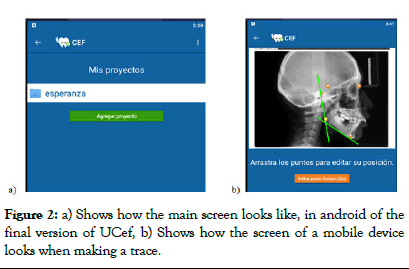
Figure 2: a) Shows how the main screen looks like, in android of the final version of UCef, b) Shows how the screen of a mobile device looks when making a trace.
Financial analysis
For the analysis of comparable, we must mention that for cephalometric tracing, the gold standard, is manual tracing, but there is a considerable number of authors who have compared software, as shown in Table 3.
| Autors | Year | Sample size | Methods | Digital tracing software |
| Tsorovas and Karsten | 2010 | 30 | Manual tracing method vs. scanned digital image | Viewbox, OnyxCeph, OrisCeph, FACAD and Winceph |
| Krishnaraj R, et al. | 2010 | 10 | Manual tracing method vs. scanned digital image | Dolphin |
| Paixao MB, et al. | 2010 | 50 | Manual tracing method vs. scanned digital image | Dolphin |
| Guedes PA, et al. | 2010 | 50 | Manual tracing method vs. scanned digital image | Cef-X 2001 |
| Cavdar K, et al. | 2011 | 90 | Manual tracing method vs. scanned digital image | JOE, Quick Ceph Image Pro |
| Murali, et al. | 2011 | 80 | Manual tracing method vs. scanned digital image | Vistadent |
| Albarakati, et al. | 2012 | 30 | Manual tracing method vs. scanned digital image | Dolphin |
| Erkan, et al. | 2012 | 30 | Manual tracing method vs. scanned digital image | Dolphin®, Vistadent TM, Nemoceph NX and Quick Ceph |
| Albarakati, et al. | 2012 | 30 | Manual tracing method vs. scanned digital image | Dolphin |
| Bonilla M, et al. | 2013 | 11 | Manual tracing method vs. scanned digital image | Cephapoint |
| Tikku T, et al. | 2014 | 40 | Manual tracing method vs. scanned digital image | Nemoceph NX |
| Prabhakar R, et al. | 2014 | 30 | Manual tracing method vs. scanned digital image | Dolphin and Nemoceph NX |
| Kumar D, et al. | 2014 | 60 | Manual tracing method vs. scanned digital image | Nemoceph NX |
| Segura, et al. | 2014 | 20 | Manual tracing method vs. scanned digital image | Nemoceph NX |
| Goracci and Ferrari | 2014 | 20 | Manual tracing method vs. scanned digital image | Smile Ceph and Nemoceph NX |
| Pellicer | 2014 | 30 | Manual tracing method vs. scanned digital image | Nemoceph, Ortomed, Dolphin |
| Esteva F, et al. | 2014 | 20 | Manual tracing method vs. scanned digital image | Nemoceph NX |
| Agrawal M, et al. | 2015 | 25 | Manual tracing method vs. scanned digital image | CADCAS |
| Nouri M, et al. | 2015 | 150 | Scanned digital image | Dolphin, ICC 0.570-1.0 |
| Farooq, et al. | 2016 | 50 | Manual tracing method vs. scanned digital image | FACAD |
| Hardik, et al. | 2016 | 60 | Manual tracing method vs. scanned digital image | FACAD |
| Kamath and Arun | 2016 | 20 | Manual tracing method vs. scanned digital image | FACAD |
| Borja and Nicole | 2016 | 70 | Manual tracing method vs. scanned digital image | Dolphin Imaging |
| Calle | 2016 | 30 | Manual tracing method vs. scanned digital image | Nemoceph |
| Aksakalli, et al. | 2017 | 20 | Scanned digital image | CephNinja, SmartCeph Pro, Dolphin |
| Sayar and Kilinc | 2017 | 55 | Manual tracing method vs. scanned digital image | CephNinja app |
| Sangroula P, et al. | 2018 | 60 | Manual tracing method vs. scanned digital image | Dolphin, AutoCEPH |
| Arslan C, et al. | 2018 | 10 | Manual tracing method vs. scanned digital image | Dolphin |
| Maspero C, et al. | 2019 | 18 | Tridimensional cephalometric analysis: 3T-MRI vs. CBCT | 3T-MRI, CBCT |
| Jodeh D, et al. | 2019 | 62 | Scanned digital image | Dolphin, Mimics 19.0 |
| Kishore S, et al. | 2019 | 20 | Manual tracing method vs. scanned digital image | FACAD |
| Hassan N, et al. | 2019 | 110 | Manual tracing method vs. scanned digital image | TrophyDicom |
Table 3: Articles from recent years are shown, where they compare software with manual tracing, which is the gold standard and even compared to more software, in general it is shown that the software is equally reliable than the gold standard.
In Most studies point to the use of software as the best tracing method, which, in addition to benefits such as ICT, provides additional advantages. One of the main methods of valuation of assets, including intangibles, is by comparable: an investigation of the software that exists in the market is carried out, a value is obtained based on their cost. There are different cephalometric software on the market, used in different countries, especially with advanced levels in ICT and advanced economies: in Mexico it is already in tests of one, in the following table we will show the characteristics of the most used.
In Table 4, we can observe the characteristics of the main comparable of UCeph, some of the items are put in intension, since it has not yet been released on the market. From the pilot test it is obtained that the average of the manual measurements and those of the application are equal to each other, with a level of precision of 95%, the data acquisition process gives more solidity to the result; In addition, the time to scan with UCeph is 10 to 15 times less than manual scan (On average it took 4.2 minutes to apply and 51.7 minutes to manually trace*). Likewise, 100% of users will like the application in its trial version and will pay between $500 MXN and $ 3,000 MXN (23.83USD and 142.96 USD 09/19/2020) to use the application in its trial version. From this pilot test the first value be obtained, which is for savings at the University Autonomous of Querétaro.
| Name | Dolphin Imaging | Ortomed | NemoCeph | CEFAX | CefMed | OrisCeph RxCE | CefUAQ |
| Beta | 1989 | 2019 | |||||
| Geographic location | U.S.A | Spain | Spain | Mexico | Argentina | Madrid-Italy-Portugal | Mexico |
| Use in schools | 97% U.S.A | Not mentioned | Not mentioned | Not mentioned | Not mentioned | Not mentioned | The intention |
| Quality | ISO 13485 (2016) | FDA (USA), Canada medical regulation | Not mentioned | Not mentioned | not mentioned | Decreto Legislativo 231/2001 | The intention |
| Cost | $1895 USD | Not available | 72,840 MXN | 12,500 MXN | USD 6.45 (10 trace) | Special quote | Free for schools |
| Term of the license | 12 months | Not available | Not mentioned | Forever | 60 days | Different | Forever |
| Flexibility | Yes (up to 120) | Yes (50 types analysis, customizable) | Yes (customizable) | Yes | Yes | Yes (customizable) | Yes |
| Industrial partners | Yes | No | Yes | No | Yes | Yes | The intention |
| Technical support | Yes | No | Yes | Yes | Yes | Yes | Yes |
| Free trial | No | No | Yes (online) | Yes (30 days) | Yes (3 traced) | No | Yes |
| Requirements (web listing) | Yes | Yes | Not mentioned | Yes | Not mentioned | Yes | Yes |
| Validation of its latest version | No | No | No | No | No | No | Yes |
| Online help or technical support | Yes (Paid) | No | No | Yes (internet) | Yes (With charge) | Yes | The intention |
Table 4: The most used applications for cephalometric tracing are shown, with the characteristics that can make them comparable with UCef, one of the important ones is the price, which will be used as a value by comparable of UCef.
In Table 5 we show the savings with a generation of students in a public university such as UAQ, taking into account that it is one of the smallest generation, being a little conservative, it is below the average of students at the national level in orthodontics.
| Average students during specialty: | 13 |
| Patients required per student: | 10 |
| X-rays per patient: (2 begin/2 final) | 4 |
| X-ray cost approx. | $1,200 MXN |
| 57.19 USD | |
| Specialty time: | 4 semesters |
| At least used in 3 generations per semester | 936000 MXN 44,609.76 USD |
| Each generation of the specialty on average spends: | 156000 MXN 7,434.96 USD |
| Each student spends approx. | 12000 MXN $571.92 USD |
Table 5: The annual value of the program is showing, by the cost method to the end user; that is, what saves the final user in expenses when using UCef, compared to the currently used gold standard.
To finish, 3 more values were obtained: Terminal value, market value and intrinsic value, for more information, consult the attached file. In Table 6, we obtain the possible value of UCeph, with different methods: Terminal value, company value and vompany value; This is how we obtain the value of the intangible, from different points of view.
| Terminal value | |
| Gordon growth model (perpetual growth) | $4,024,103.19 MXN; 191,788.76 USD |
| Multiple output model | 3,013,883.29 MXN; 143,641.68 USD |
| Terminal value | $3,013,883.29 MXN; 143,641.68 USD |
| Market value | |
| Market capitalization | 1,883,624.60 MXN; 89,773.54 USD |
| "+ Debt " | 915,091.53 MXN; 43,613.26 USD |
| "- Cash " | 1,054,862.00 MXN; 50,274.72 USD |
| Company value | 1,743,854.13 MXN; 83,112.09 USD |
| Intrinsic value | |
| Company value | $1,659,278.65 MXN; 79,081.22 USD |
| "+ Cash" | 1,054,862.00 MXN; 50,274.72 USD |
| "- Debt" | 915,091.53 MXN; 43,613.26 USD |
| Company value | $1,799,049.13 MXN; 85,742.68 USD |
Table 6: The terminal value of UCef is obtained, based on market value, intrinsic value and company value.
Determination of diagnostic agreement
As in the pilot test, in the principal test obtain the detection of 14 measurements is carried out, using the Jarabak analysis in two phases:
•Expert orthodontists, dentists with experience in orthodontics, actively working in the State of Querétaro, participation was voluntary in the months of December 2020, January, February and March 2021.
•Students of the bachelor's degree in dentistry or stomatology and specialty or master's degree in orthodontics from La Salle Bajio University and UNAM, during the month of April and May 2021.
The purpose of this work was to evaluate the concordance in the cephalometric measurements obtained manually and by means of the UCeph computational application. The results obtained in this study reflect that all the measured parameters have an intraclass correlation coefficient greater than 0.38 and the majority are greater than 0.7, which means a good agreement strength. The results coincide with those recorded in the international literature, where various authors such as Farooq, Chen and Tsorovas report that there is no significant difference between the results of both methods.
In Table 7, the measurements and the global kappa index show agreement. In general, the correlation coefficient for all measurements was greater than 0.67 (which is a considerable, substantial, or good agreement) except for the linear measure, which had a correlation of 0.41 and an angular correlation of 0.39. That is, the reliability was good and the examiner's error was small. The results of the impact evaluation in its baseline stage suggest that the UCeph program has had a greater impact in reducing the time of drawing, in addition to having had an impact on better diagnoses and positive effects on the reduction of resources by students and professionals of orthodontics. There is evidence that some of the cephalometric tracing programs focused on the adult population have had an impact on greater confidence in the diagnostic results.
| Category | Kappa | IC (95%) | Valor P | |
| LBCA | 0.949 | 0.943 | 0.956 | 0 |
| LBCP | 0.892 | 0.826 | 0.933 | 0 |
| LRM | 0.415 | 0.287 | 0.543 | 0 |
| LCM | 0.756 | 0.608 | 0.848 | 0 |
| AFP | 0.784 | 0.754 | 0.814 | 0 |
| AFA | 0.782 | 0.593 | 0.876 | 0 |
| Saddle | 0.884 | 0.813 | 0.928 | 0 |
| Articular | 0.389 | 0.137 | 0.638 | 0 |
| Gonial | 0.868 | 0.786 | 0.918 | 0 |
| Kappa Global | 0.671 | 0.645 | 0.696 | 0 |
Table 7: The concordance measures are shown by the global kappa index, in each of the angular and linear measures, as well as the global.
Analysis of the effect of the program
For the evaluation, a quasi-experimental design was carried out. After 3 years of exposure to the program, the results indicate a significant impact on the diagnostic efficiency of UCeph (P<0.05) and a reduction in screening time (2 hours’ difference, P<0.1, compared to the gold standard). An increase attributed to the program was also observed, with respect to the adequacy of the method compared to the gold standard (95.9%, P<0.05). Also, there were heterogeneous effects in both screening methods. In general, and as the main finding of the qualitative component of the study, receiving the application of the program allowed beneficiaries to buy food that seems to improve their diet and more work materials, and had a significant impact on the level of empowerment of their beneficiaries. Among professional orthodontists, it has a positive impact on their daily work, the results are statistically the same (95% confidence with the paired t-test) as when they are sent to the office.
Cephalometric analysis is essential for the diagnosis of dentofacial anomalies. Applications of cephalometric analysis include diagnostic cases, treatments, evaluation of treatment results, and growth prediction. In this way, it is clear that cephalometry is crucial during the treatment in orthodontic patients.
The rise of digital cephalometry is justified by its advantages, such as the easy manipulation of radiographs; digital analysis provides us with faster and more precise identification of points and anatomical structures than traditional analysis, and by using radiographs in digital format, environmental pollution is reduced. One of the advantages is the low amounts of radiation to which the patient is exposed and the ease of storage. Thus, digital tracing is as practical as manual tracing, but has some advantages. However, the fact of needing special software implies the acquisition of a license for digital cephalometric analysis, which may be prohibitive for Latin American markets.
The project was reviewed from various points of view, an arithmetic mean of all the values is taken and it is $1,117,100.30, so it is concluded that the value of the project is $1,120,000 and it is not only feasible, but a necessity. Using a comprehensive evaluation design for rigorous measurement of changes in the well-being of beneficiaries attributable to the program, the evaluation found evidence that the program is associated with significant effects that improve the mental and nutritional health of its beneficiaries, as well as the career empowerment of orthodontist.
Considering both validity and reliability as requirements of every measurement instrument, ranging from basic levels to advanced levels with rigorous methodological processes, this initial proposal of a small scale that can objectively and accurately reflect all the most relevant indicators related to all the linear and angular measurements. It is recommended to continue with follow-up studies, whose review and exhaustive analysis will allow us to recommend the use of the program, starting from procedures of face validity and content hand in hand with reliability procedures, because both will demonstrate the robustness of the application, so that its correspondence with the reality in patients and its practical applicability in orthodontics is guaranteed.
Because of the results obtained in this research, where an intraclass correlation index was obtained that does not report a significant difference in the measurements made with both methods, we can conclude that the UCeph application is a diagnostic tool as accurate as the manual one and with greater advantages over it. Due to the growing technological update and its inclusion within the area of dentistry, the acquisition of auxiliary digital systems for daily clinical practice must be facilitated.
[Crossref] [Google Scholar] [PubMed]
[Crossref] [Google Scholar] [PubMed]
[Crossref] [Google Scholar] [PubMed]
[Crossref] [Google Scholar] [PubMed]
[Crossref] [Google Scholar] [PubMed]
[Crossref] [Google Scholar] [PubMed]
[Crossref] [Google Scholar] [PubMed]
[Crossref] [Google Scholar] [PubMed]
[Crossref] [Google Scholar] [PubMed]
[Crossref] [Google Scholar] [PubMed]
[Crossref] [Google Scholar] [PubMed]
Citation: Sanchez ET, Vazquez DV, Sanchez ARJ, Loenzo RAG, Hernandez AC (2025) Android Design and Assessment of a Björk-Jarabak- Based Application for Cephalometric Diagnosis in Latin-American People. Ann Essence Dent. 17:311.
Received: 11-Jun-2024, Manuscript No. AEDJ-24-31943; Editor assigned: 13-Jun-2024, Pre QC No. AEDJ-24-31943 (PQ); Reviewed: 27-Jun-2024, QC No. AEDJ-24-31943; Revised: 18-Mar-2025, Manuscript No. AEDJ-24-31943 (R); Published: 25-Mar-2025 , DOI: 10.35248/0976-156X.25.17.311
Copyright: © 2025 Sanchez ET, et al. This is an open-access article distributed under the terms of the Creative Commons Attribution License, which permits unrestricted use, distribution, and reproduction in any medium, provided the original author and source are credited.