
Journal of Geography & Natural Disasters
Open Access
ISSN: 2167-0587
ISSN: 2167-0587
Research Article - (2025)Volume 15, Issue 2
A very severe tropical cyclonic storm Yaas crossed over the north Odisha coast at Balasore in the morning of 26th May 2021. The cyclonic storm was associated with heavy rainfall, high wind speed and high tidal surge at the coast. Due to its impact 11 coastal and adjoining districts were affected with 6 districts severely affected along the track of the cyclone. The coastal part of the state is highly populated with agrarian economy on fertile deltic plain. In addition to agriculture people have milching domesticated animal to support family income. These people are highly vulnerable to cyclonic storms as their life, livelihood and houses are easily affected by the cyclonic storm. In the past due to lack of proper disaster management plan of the govt. there was heavy loss of life and property. People were only advised to take precautionary measures for the safety of life and property. In the past the state experienced severe cyclonic storms occasionally, hence not much planning was made to prevent its impact. In the recent past the super cyclone of Odisha of 1999 is a grim reminder of the severe impact as more than 20,000 people died, lakhs of animals killed and crores of rupees of property damaged. In comparision to the super cyclone the loss of life due to Yaas was only 3. This could be possible due to the proper implementation of national disaster management policy by the state govt. After huge loss of life in 1999 super cyclone govt. took necessary measures to reduce the loss of life and to reach the target of zero casualty. The success of cyclone disaster management to minimize human casualty is possible due to accurate forecasting. Monitoring and dissemination of warning to the community, evacuation of highly vulnerable people to the shelters before the cyclone could strike the coast, adequate shelter with all necessary facilities and community willingness to volunteer for their safety unlike super cyclone people were unwilling to shift to shelters.
Cyclonic storm; Vulnerability; Warning; Evacuation; Shelters; Response
Tropical cyclones develop over the tropical waters where the winds are light, high humidity and the surface temperature is warm. A tropical cyclone develops from an incipient low pressure system over a period of a few days existing over warm tropical ocean with the SST exceeding 26°C. These conditions prevail in north Indian Ocean from pre-monsoon to postmonsoon season. It is a well-known fact of climatology that the cyclonic storms occur prominently in the Indian seas during the pre-monsoon season (March-April-May) and the post-monsoon season (October-November-December). Maximum frequency is in the two months of October and November. Nearly half the number of cyclones forming in the Bay of Bengal have struck the coastal states of India. A cyclone would move along its westward path so long as it is located south of the ridgeline in broad upper tropospheric easterly flow. The storm would re-curve north-tonorth eastward under the influence of an approaching westerly trough in the upper troposphere. The height of storm surge and wind force along the coast increases as the cyclone approach the area. The cyclones weaken on entering the land. The storm surge, gale wind and heavy rainfall cause a lot of damage to life and properties [1].
Data base and methods
The research work is based on the information of Special Relief Commissioner Odisha-Yaas memorandum, Indian Meteorological Department (IMD) and print media. The information analysed and presented in maps and diagrams for better understanding of the impact of Yaas [2].
The study area
Odisha is located in the east coast of India with coast line of 480 km along the Bay of Bengal. The state has an area of 1,55,707 sq.km and consists of 30 districts. The state has been divided in to four physiographic divisions,
• The northern plateau
• The central river basin
• The eastern hills
• The coastal plain
It is drained by major rivers, Subernarekha, Budhabalanga, Brahmani, Baitarani, Mahanadi, Rushikulya and Vamsadhara. The coastal Odisha is economically developed in comparison to other parts of the state. The geographical location makes Odisha coastal zone vulnerable to frequent cyclonic, storms. The high wind, torrential rain and storm surge associated with the cyclone bring heavy damages to the coastal infrastructure and loss of life. The state generally experiences two cyclone seasons, one during pre-monsoon period (April, May and June up to onset of monsoon) and another post monsoon (October to December). The state is mostly affected by post monsoon season cyclonic storms. The state is hit by the cyclones originated over the Bay of Bengal and move in north west direction The East Coast of India is one of the six most cyclone-prone areas in the world. The North Indian ocean (the Bay of Bengal and Arabian sea) develop only 7% of the world’s cyclones, their impacts are very high and devastating. The Odisha coast is highly vulnerable to cyclonic storms in comparison to other eastern coastal states. The recurrence of a severe cyclonic storm to Odisha coast is about four years and for West Bengal coast is five years. Based on the cyclone vulnerability study, 14 coastal and adjoining districts of the state are highly vulnerable. Some of the recent cyclonic storm affected the state are the Super cyclone-1999, Phailin-2013, Hudhud-2014, Titli-2018, Fani-2019, Bulbul-2019 and Amphan-2020. It has been observed that the magnitude, intensity and frequency of the cyclones are increasing in the recent past. Due to the impact of the climate change, the cyclones are changing their direction, life cycle, magnitude and frequency, thus posing a challenge to predict using modern forecasting techniques (Table 1) [3].
| Date/Year | Category of cyclone | Landfall place | No. of districts affected | No. of loss of life |
| 25-31 October, 1999 | Super cyclone with wind speed of 260 km/h | Crossed Odisha coast near Paradeep at noon of 29th October | 12 | 9885 |
| 12-14 October, 2013 | Very severe cyclonic storm Phailin with wind speed of 200-220 km/h | Crossed Odisha coast near Gopalpur in the evening of 12th October | 14 | 23 |
| 12-14 October, 2014 | Very severe cyclonic storm Hudhud with wind speed 80-100 km/h | Crossed Andhra Pradesh coast at Visakhapatnam and impacted Southern Odisha | 15 | 3 |
| 10-12 October, 2018 | Very severe cyclonic storm Titli with wind speed of 140-150 km/h | Crossed Andhra Pradesh coast at Palasa and severely affected southern Odisha | 17 | 59 |
| 3 May, 2019 | Extremely severe cyclonic storm Fani with wind speed of 170-180 km/h | Crossed Odisha coast near Puri | 14 | 64 |
| 8-10 November, 2019 | Very severe cyclonic storm Bulbul with wind speed of 70-80 km/h | Affected the coastal district of Odisha | 6 | 0 |
| 20 May, 2020 | Super cyclone Amphan with wind speed of 155-165 km/h | Crossed West Bengal coast and affected coastal districts of Odisha | 10 | 0 |
Table 1: History of cyclones affected Odisha in the recent past.
Impact of Yaas in Odisha
The very severe cyclonic storm "Yaas" crossed North Odisha coast about 20 km South of Balasore with a maximum sustained wind speed of 130-140 km/h gusting to 155 km/h between 10.30 and 11.30 hrs of 26th May 2021. It then moved northwestward and entered to the Mauarabhanj district and weakened gradually. The Yaas resulted heavy rainfall of more than 150 mm. At the coast the storm surge of 3.7 to 4 mtrs occurred. it impacted 11 coastal and adjoining districts. Severely affected 6 districts were Balasore, Bhadrak, Kendrapara, Jagatsinghpur, Mayurabhanj and Keonjhar. 125 C.D blocks, 35 urban local bodies and 13541 villages were affected. Total population affected were 87,420,00 and human casualty was only 3.18094 houses damaged are mostly temporary houses not able to sustain impact of high wind speed. Heavy damages of infrastructure, power, telecommunication, irrigation, agriculture, horticulture and natural vegetation. Total loss of property estimated at Rs. 82348.724 lakh (Table 2 and Figure 1) [4].
| Characteristics | Super cyclone 1999 | Very severe cyclonic storm Yaas 2021 |
| Forecast of the cyclone | 25th October | 20th May |
| Cyclone warnings | 26th October | 24th May |
| Direction of movement | North-west | North-west |
| Maximum wind speed in km/h | 270-300 | 130-155 |
| Maximum rainfall in mm | 955 | 319.7 |
| Cyclone duration in hours | 3 days | 24 hours |
| Storm surge height in mtrs | 5-7 | 3.7-4 |
| Landfall site | Near Paradeep | 20 km south of Balasore |
| Land fall time | 29th October, 10.30 am | 26th May 10.30 and 11.30 am. |
| Number of districts affected | 12 | 11 |
| Number of people affected in lakh | 130 | 87.42 |
| Number of people evacuated in lakh | 1.5 | 7.02 |
| Number of shelters built | 23 | 860 |
| Number of people died | 9885 (8119 from Jagatsinghpur district) | 3 |
| Community response | Lacking | Responded |
| Number of rescue teams deployed | - | 404 |
| Number of houses damaged | 15,795,82 | 18094 |
| Financial loss in Rs. (Lakh) | Rs. 622759 | Rs. 82348.724 |
Table 2: Comparision between super cyclone 1999 and Yaas of 2021.
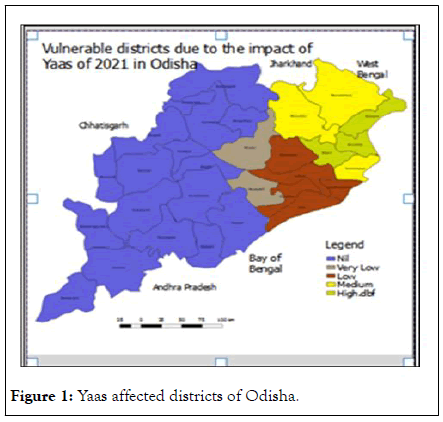
Figure 1: Yaas affected districts of Odisha.
Cyclone warning and preparedness
Cyclone warning: India Meteorological Department (IMD) predicted on 20th May that a low pressure area would likely to develop over north Andaman Sea and adjoining East Central Bay of Bengal around 22nd May, 2021. The low pressure would very likely to intensify into a cyclonic storm by 24th May, 2021. The cyclonic storm would move northwestwards and reach near Odisha-West Bengal coasts around 26th May morning. Under this influence, light to moderate rainfall at most places with heavy rainfalls at isolated places would occur over the coast. On 22nd May, IMD informed that a low pressure area formed over east central Bay of Bengal on morning at 8.30 hrs on the same day. It would very likely to concentrate into a depression over East Central Bay of Bengal by 23rd May morning. As per the special bulletin issued by IMD at 8.30 hours on 24th May, the deep depression over East Central Bay of Bengal remained practically stationary during past 6 hours, intensified into cyclonic storm ‘Yaas’ (pronounced as ‘Yass’) and located at 5.30 hrs IST over East Central Bay of Bengal about 600 km North- Northwest of Port Blair (Andaman Islands), 540 km South- Southeast of Paradip (Odisha), 650 km South-Southeast of Balasore (Odisha) and 630 km South-Southeast of Digha (West Bengal). It would very likely to move slowly north northwest wards, intensify further into a severe cyclonic storm during next 24 hours and into a very severe cyclonic storm during subsequent 24 hours. It would continue to move north-north westwards, intensify further and reach north west Bay of Bengal near North Odisha and West Bengal coasts by 26th May early morning. IMD issued red warning with heavy to very heavy rainfall over the districts of Balasore, Bhadrak, Jajpur, Kendrapada, Jagatsinghpur, Cuttack, Mayurbhanj, Keonjhar and Dhenkanal and yellow warning with heavy rainfall over the districts of Anugul, Deogarh, Khurdha, Puri and Sundergarh from 8.30 hrs of 26 to 8.30 hrs of 27 May (Figures 2 and 3) [5].
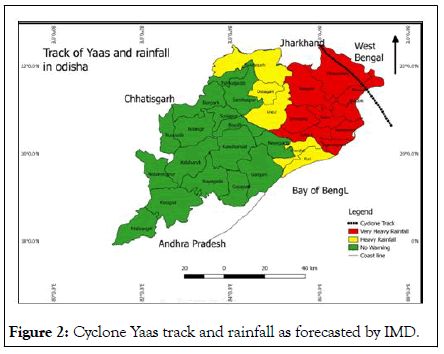
Figure 2: Cyclone Yaas track and rainfall as forecasted by IMD.
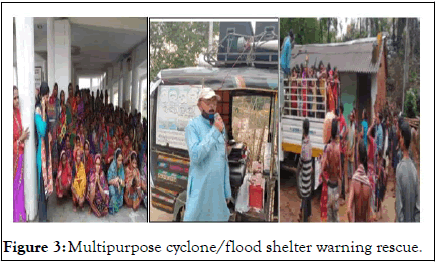
Figure 3: Multipurpose cyclone/flood shelter warning rescue.
Dissemination of IMD warnings and bulletins: Soon after receiving the meteorological warning, the state government closely monitoerd the situation based on the forecast issued from IMD, Regional Integrated Multihazard Early Warning Systems (RIMES), Thailand and Joint Typhoon Warning Center (JTWC), USA. The tracking of the cyclone was done by Odisha State Disaster Management Authority (OSDMA) in GIS platform with regard to possibility of its likely impact over Odisha [6].
IMD cyclone warnings were disseminated to collectors, departments and other stake holders at regular intervals. Early warning voice messages were disseminated through alert siren systems installed in coastal areas under Early Warning Dissemination System (EWDS). District administration disseminated the warning through official channels and PRI members. Public address systems were used for dissemination at local level. Fishermen Warnings were issued to collectors and fishermen were advised not to venture into sea [7].
All cyclone bulletins and warning messages of IMD were disseminated with key state level officers, collectors and media. Community level volunteers and task force team members of multipurpose cyclone/flood shelters were engaged for ensuring family preparedness, warning dissemination and expediting evacuation. Social, television, radio, SMS and newspapers both local language and English were effectively used not only for dissemination of warnings but also for sending vital information to the general public for safety and survival [8].
Preparedness measures
The state government took essential measures for restoration of essential public services in least possible time to minimize hardship to the people well before the cyclone could strike the state. Professionally skilled groups of manpower along with required equipment relating to disaster response like search and rescue, evacuation, relief, line/tree cutting, road clearance and energy restoration were prepositioned in strategic locations in the district jointly decided by collector and SP of the districts. The manpower and equipment were mobilized from the districts which were not likely to be affected and deployed in the 4 most vulnerable districts i.e., Balasore, Bhadrak, Kendrapada and Mayurbhanj. The measures helped for quick restoration of the normalcy with optimum utilization of skilled manpower [9].
Hon’ble Chief Minister reviewed the status of preparedness for impending cyclone with Secretaries of Line Departments and Collectors on 22nd May through VC (Video Conferencing). Three rounds of preparatory meetings were taken by Chief Secretary and Special Relief Commissioner (SRC) with collectors of 14 districts likely to be affected by the cyclone. Preparatory meetings with NDRF, ODRAF, Fire Services, IMD, Indian Coast Guard and Indian Navy undertaken. Preparedness review meeting with line departments by special relief commissioner and chief secretary. SRC physically reviewed the preparedness in Balasore, Bhadrak and Kendrapara districts on 22 and 23 May.
All district administrations were instructed to be in readiness for an impending cyclone. On forecast of cyclone by IMD about impending cyclone collectors of 14 coastal and adjoining districts (Balasore, Bhadrak, Cuttack, Dhenkanal, Gajapati, Ganjam, Jagatsinghpur, Jajpur, Kendrapada, Keonjhar, Khordha, Mayurbhanj, Nayagarh and Puri) were alerted and advised to undertake required preparedness measures to effectively handle the disaster. The district administration of 14 vulnerable districts were directed to keep Multipurpose Cyclone Shelters (MCS)/Multipurpose Flood Shelters (MFS) in readiness and to identify adequate safe RCC roofed public buildings for use as additional shelters to accommodate evacuees observing COVID-19 protocol. Total 6891 (860 MCS/MFS and 6031 additional shelters) shelters were identified and kept in readiness with cumulative capacity to accommodate more than 9 lakh people, maintaining social distancing norms, in 14 districts. Necessary arrangements were made for food, drinking water, lighting and sanitation facility in each MCS/MFS and additional shelter in readiness and also instructed to make arrangement for alternate power supply and drinking water arrangement in case of failure of electric supply. Arrangement was also made for hand wash, sanitizer, soaps, phenyl, bleaching powder, 3 ply mask etc. in each shelters. It was directed to operate the District Emergency Operation Centres (DEOC) and control rooms of other offices round the clock in three shifts under charge of responsible officers with required supporting staff on 24 × 7 basis. Comprehensive plan was prepared to identify all vulnerable people and to shift them to safe shelters in the event of cyclone. For that purpose, all people living in Kutcha (temporary) houses/huts or living near the coast or in low lying areas were identified and were evacuated to shelter them in multipurpose cyclone/flood shelters and other safe shelters. Detailed vulnerability assessment of the houses having COVID-19 persons in home isolation was made and they were kept in special isolated shelters during cyclone. Special care was taken to shift the old, physically challenged, women and children to shelters much before the cyclone approached. In vulnerable locations, all pregnant women having their Expected Date of Delivery (EDD) in June 1st week were shifted to the nearest district HQ hospital or sub-divisional hospital having adequate child birth facilities. All ASHA and Anganwadi workers were kept in readiness to provide required support to the pregnant and lactating women in the cyclone affected areas. Shelters used as TMCs were thoroughly and visibly sanitized not only to ensure prevention of infection but also to gain the psychological confidence of the evacuated people. The households, whose houses are damaged in the cyclone/heavy rain and storm surge, were provided with temporary shelter materials (polythene sheet). Necessary dry food like chuda, guda etc. were also provided to the affected people. Satellite phones in each district were kept in readiness with test calls to use those in case the telecommunication systems fail. Besides, satellite phone and digital mobile radio communication systems were established in six coastal districts under the EWDS project were kept in readiness to be used during need.
Mobile health teams were organised in advance and kept in readiness for deployment in the affected areas. Necessary steps like miking were taken up to create awareness among people to follow COVID-19 guidelines during evacuation as well as in cyclone/temporary shelter/free kitchens. Collectors were requested to take immediate steps to remove all hoardings in ULB areas and roadside hoardings put in rural areas to avoid any casualty/damage during cyclone.
52 teams of NDRF, 60 teams of ODRAF, 206 Fire Service teams and 86 Wood Cutting teams of Forest and Environment Department (Total 404 teams) were pre-positioned in 10 coastal and adjoining districts for search and rescue operation and road clearance. Chief Engineer, drainage was instructed for clearance of weeds, causeways for free flow of water to prevent flooding. As part of the preventive measures the govt. declared holidays of the educational institutions in the likely affected districts, suspended all kinds of road and rail transport.
Response measures
Rescue and relief measures: As part of the preventive measure, 7.02 lakh people were evacuated from vulnerable areas to 8410 shelters. They were provided with dry food, drinking water and free kitchen. Besides this, chuda, gud, biscuits, matchbox and candle were also provided. Hand wash, sanitizer, soaps and 3 ply mask were arranged for the people in each shelters for the evacuees. Relief for inundated people announced for 7 days. Free kitchen centers opened 8410 nos. All pregnant women having EDD in 1st week of June were shifted to the nearby DHH and SDH 4510 pregnant women identified as having their expected date of delivery in 1st week of June. 365 nos. of pregnant women were shifted to hospitals. Mobile health teams were kept in readiness at the district level. No. of health teams mobilized-308, no. of medical relief centers-635, no. of generators available-215 essential medicines, ORS packets, halazone tablets, anti-snake venum injections ppes, triple layer face masks, bleaching powder made available in district headquarter hospitals. Power back up arrangement was made in all hospitals with sufficient quantity of fuel. Sufficient stock of essential medicines, anti-snake venom was kept. Nodal officers were identified for districts and blocks for continuous monitoring of disaster response activities. Contingency plans were made for opening of medical relief centers and providing treatment to the trauma patients at health facilities. Contingency plan for sanitation was in place and stocking of bleaching power/ORS/Halogen tablets at PHC, CHC, DHHs and up to ASHA level was ensured. To provide human resource, material and logistics support to the cyclone affected districts, government holidays were cancelled, government officials were instructed to stay in headquarters. Leave of all govt. employees was cancelled till further orders. Govt. employees on leave were called back to duty. Senior IAS Officers were deputed to Balasore, Bhadrak, Kendrapara, Mayurbhanj and Jagatsinghpur districts to provide guidance and support to the district administrations in management of the cyclone.
After the 1999 super cyclone, the state government has taken measures like the installation of modern communication systems, construction of cyclone shelters and other improved infrastructure including Pucca houses for the poor in the cyclone prone areas under Prime Minister Awas Yojana and Biju Pucca house to reduce the physical vulnerability of the coastal districts to cyclonic winds and tidal surges. However, with the increase in population in the coastal areas and depletion of mangroves and shelter belts, the state continues to be vulnerable to cyclones.
Unlike the super cyclone of 1999, the IMD improved its prediction and intensity of very severe cyclonic storm Yaas. The super cyclone was more destructive due to higher hind speed, heavy rainfall and more duration of impact. The state govt. developed disaster management plan after bitter experience of 1999 super cyclone in line with the national plan of disaster management. Trained manpower and machinery were deployed much ahead of the Yaas hit the coast. Large number of cyclone/ flood shelters were constructed against only 23 before super cyclone 1999. Under central and state Govt. plan large number of RCC buildings are constructed for the rural poor people. Maximum number of vulnerable people were evacuated to the shelters with all facilities keeping in view of the COVID-19 norm against less people evacuated in super cyclone. Special care were taken for the old, children and pregnant women. Community responded positively for evacuation measures. In 1999 callousness of the people to the govt. warning resulted heavy casualty. Warning dissemination process improved helped the people for safety measures. The govt. policy for zero casualty yielded good results in cyclone disaster management in the state and highly praised by international organization for successfully managing the crises.
Citation: Panda D (2025) Warning, Evacuation and Community Response Reduced Loss of Human Life Due to the Impact of Tropical Cyclone Yaas in Odisha. J Geogr Nat Disasters. 15:341.
Received: 03-Sep-2024, Manuscript No. JGND-24-33821; Editor assigned: 06-Sep-2024, Pre QC No. JGND-24-33821 (PQ); Reviewed: 20-Sep-2024, QC No. JGND-24-33821; Revised: 10-Apr-2025, Manuscript No. JGND-24-33821 (R); Published: 17-Apr-2025 , DOI: 10.35241/2167-0587-25.15.341
Copyright: © 2025 Panda D. This is an open-access article distributed under the terms of the Creative Commons Attribution License, which permits unrestricted use, distribution, and reproduction in any medium, provided the original author and source are credited.