
Medicinal & Aromatic Plants
Open Access
ISSN: 2167-0412
ISSN: 2167-0412
Research Article - (2025)Volume 14, Issue 2
Lavender (Lavandula angustifolia Mill.) is a perennial crop that belongs to the Lamiaceae family. This study aimed to examine the essential oil compositions of two lavender cultivars grown in Wondo Genet, Ethiopia. The chemical composition of essential oils obtained by hydro-distillation from fresh leave and flowers of lavender samples were analyzed using Gas Chromatography-Mass Spectrometry (GC-MS). The result showed that the major essential oil constituents obtained in flowering lavender were camphor 1,8-cineole, β-Pinene, beta-caryophyllene oxide, Isooctyl alcohol, endo-Borneol, and thujene. The major compound obtained in local lavender essential oils were 1,8-cineole, camphor, β-Pinene, endo-Borneol, alpha. Terpineol, beta-phellandrene, and 1,3-cyclopentadiene. The major compounds found in this study were reported in other research findings done on the same sample. Some compounds found in one cultivar didn’t find in the other. For instance, thujene, trans-beta-ocimene, and verbenone were found in only flowering lavender whereas beta-phellandrene, trans-β-terpineol, alpha-bisabolol, and adamantane were found only in local lavender. This shows the slight difference between the two cultivars.
Composition; Cultivars; Essential oils; Hydro distillation; GC-MS; Lavender
Lavender (Lavandula angustifolia Mill.) is a perennial crop that belongs to the Lamiaceae family [1]. The genus Lavandula (Lamiaceae family) is one of the most well-known essential oil crops in the world with 39 species, numerous hybrids, and about 400 officially registered cultivars [2]. The main producing regions are Europe, the Middle East, Asia, Northern Africa, France, and Bulgaria. Those dominate the production but also Morocco, Yugoslavia, Hungary, Italy, Russia, Spain, Romania, Ukraine, and Turkey have production in different amounts [3]. The industrial cultivation and production of lavender as a medicinal and aromatic plant have been rapidly raised during the last years and the world’s interest in its essential oil is still increasing. The trade value of essential oil export in the world is approximately 1.90 billion dollars-2.00 billion dollars and about 50 million dollars of this currency belongs to Lavandula essential oil [4].
Lavender has been used for centuries as an herbal remedy. Nowadays, these plant essential oils have become commercially popular due to their impression of a “well-being” lifestyle. It yields a highly effective essential oil with very sweet overtones and can be used in balms, salves, and topical applications. Internally, lavender essential oil is believed to be of benefit for a multitude of problems, including stress, anxiety, exhaustion, irritability, headaches, migraines, insomnia, depression, colds, digestion, flatulence, upset stomach, liver and gallbladder problems, nervousness, loss of appetite, and as a breath freshener and mouthwash [5-9].
Essential oils are fragrant volatile oils obtained from plants. They are complex mixtures of several chemical compounds including terpenes, alcohols, aldehydes, and phenols. Lavender oil, obtained from the leaves and flowers of the plant part by hydrodistillation, is chiefly composed of linalyl acetate (3,7-dimethyl-1,6-octadien-3-yl acetate), linalool (3,7-dimethylocta-1,6-dien-3-ol), lavandulol, 1,8-cineole, lavandulyl acetate, and camphor. Whole lavender oil and its major components linalool and linalyl acetate are used in aromatherapy, and in the flavoring and fragrance industries [10].
The essential oils of the Lavandula species have the same chemical composition but these components are present in different proportions. The oil composition and oil yield of Lavandula differentiate from each other [11]. Common criteria for the determination of oil quality are camphor, linalool, and linalyl acetate levels of essential oils. According to the ISO 3515:2002 standard, lavender essential oil contains linalool (25%-38%), linalyl acetate (25%-45%), and camphor (0.5%-1.0%). Due to these specifications, the lavender essential oil is used in the food manufacturing industry as a flavoring agent, and a preservative additive for the cosmetics and fragrance industry including soaps, colognes, perfumes, and skin lotions [12-15]. Particularly, lavender essential oil is used in industrial areas such as perfumery, pharmaceuticals, and cosmetics due to its high linalool and linalyl acetate content. Lavender essential oil, with the main active constituents linalool, linalyl acetate, 1,8-cineole, cis and trans-ocimene, terpinene-4-oil and camphor, has been reported to have antimicrobial, anticholinesterase, and antioxidant activities [16-18].
Wondo Genet agricultural research center was the only research center among around 20 agricultural research centers in the Ethiopian institute of agricultural research, which performs research activities on aromatic and medicinal plants. The essential oil composition of lavender essential oil was not done yet in Ethiopia. Therefore, it is important to do a detailed analysis of essential oils to figure out their quality and quantity for the selection of industrial usage. This study aimed to examine the chemical composition of the lavender cultivar's essential oils which were grown in Wondo Genet, Ethiopia.
Sample collection and preparation
The experiment was carried out in the Wondo Genet agricultural research center. The samples of two lavender cultivars namely flowering lavender and local lavender were collected from the Wondo Genet agricultural research center experimental field at optimum harvesting age. The sampling site was located at an altitude of 1800 m.a.s.l., latitude and longitude of N 39° 1' 44" E 8° 25' 59". The collected samples were weighed and taken to Wondo Genet food science and nutrition research laboratory for essential oil extraction and chemical composition analysis.
Essential oil extraction
The essential oil was extracted from fresh leaves and flowers of lavender cultivars by hydro-distillation method for 3 hours and dried with anhydrous Na2SO4 [19].
Chemical composition of essential oil
The chemical composition of the extracted essential oil was analyzed according to K, with some modifications. Essential oil samples in hexane (1:100) were analyzed on an Agilent 7820A gas chromatography system equipped with an Agilent 5975C mass spectrometer detector. The HP-5 MS capillary column (30 m × 0.25 mm, film thickness 0.25 μm) was used. GC and MS conditions were as follows: Oven temperature at 60°C (0 min), 3°C/min to 240°C (1 min), and at the end increased to 280°C at a rate of 10°C/min (1 min); helium, as the carrier gas, at a flow rate of 1 ml/min; injector temperature 220°C. 1 μl of each sample was injected at a split ratio of 1:10. The mass spectrometry conditions were: Ionization voltage 70 eV, ion source temperature 230°C, transfer line temperature 280°C, and mass range from 50 Da to 550 Da. The MS was operated in scan mode.
Data analysis
Data were analyzed from GCMSD data analysis of the spectrum by using the NIST library.
The chemical composition of two lavender cultivars was analyzed using GC/MS. Essential oil compositions were displayed in Tables 1 and 2. Total ion chromatograms of essential oil of two lavender cultivars were displayed in Figures 1 and 2. GC/MS analysis of essential oils of flowering lavender shown in Table 1 showed that the major constituents of flowering lavender essential oils were camphor with a large peak area followed by 1, 8-cineole, β-pinene, beta-caryophyllene oxide, isooctylalcohol, endo-borneol, (+)-epi-bicyclosesquiphellandrene, alpha-terpineol, thujene respectively and some other compounds. This result showed that the flowering lavender essential oils in this study contain the major constituents (compounds) found in lavender essential oils reported (Figure 1) [20-24].
| No. | Compound name | RT | PA |
|---|---|---|---|
| 1 | Thujene | 3.55 | 1.23 |
| 2 | β-pinene | 3.61 | 5.48 |
| 3 | Beta-thujene | 3.87 | 0.64 |
| 4 | 1,8-Cineole | 4.76 | 36.14 |
| 5 | Trans-beta-ocimene | 4.89 | 0.67 |
| 6 | Terpinolene | 6.15 | 1.01 |
| 7 | Linalool | 6.53 | 0.91 |
| 8 | Camphor | 7.9 | 40.25 |
| 9 | Endo-borneol | 8.5 | 1.93 |
| 10 | Terpinen-4-ol | 8.91 | 0.83 |
| 11 | Alpha-terpineol | 9.39 | 1.32 |
| 12 | Benzenemethanol, alpha.-2-cyclohexen-1-yl- | 9.54 | 1.3 |
| 13 | Verbenone | 9.98 | 0.69 |
| 14 | Caryophyllene | 17.88 | 1.09 |
| 15 | beta-caryophyllene oxide | 24.04 | 2.74 |
| 16 | (+)-epi-bicyclosesquiphellandrene | 26.29 | 1.38 |
| 17 | Isooctyl alcohol | 27.93 | 2.37 |
| Note: RT: Retention Time; PA: Peak Area | |||
Table 1: Chemical composition of flowering lavender.
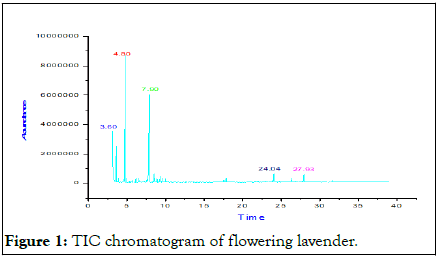
Figure 1: Chemical composition of local lavender.
GC/MS analysis of essential oils of local lavender shown in Table 2 showed that the major constituents of local lavender essential oils were 1,8-cineole with a large peak area followed by camphor, β-pinene, endo-borneol, alpha-terpineol, betaphellandrene, 1,3-cyclopentadiene,1,2,3,4,5-pentamethyl-,trans-2,7-dimethyl-4,6-octadien-2-ol,alpha-bisabolol respectively, and many other compounds. This result showed that the local lavender essential oils in this study also contain the major constituents (compounds) found in lavender essential oils reported by Taylor P, et al. and Kivrak S (Figure 2).
| S.N | Compound name | RT | PA |
|---|---|---|---|
| 1 | Beta-phellandrene | 3.55 | 3.36 |
| 2 | Beta-pinene | 3.61 | 9.51 |
| 3 | 1,8-Cineole | 4.76 | 38.5 |
| 4 | Trans-β-terpineol | 5.57 | 0.73 |
| 5 | Linalool | 6.52 | 0.74 |
| 6 | Camphor | 7.82 | 20.91 |
| 7 | Endo-borneol | 8.52 | 8.71 |
| 8 | Trans-2,7-dimethyl-4,6-octadien-2-ol | 8.58 | 1.98 |
| 9 | Terpinen-4-ol | 8.9 | 0.95 |
| 10 | 2-cyclohexen-1-one, 4-(1-methylethyl)- | 9.19 | 1.63 |
| 11 | Alpha-terpineol | 9.4 | 4.42 |
| 12 | Alpha-thujenal | 9.54 | 1.16 |
| 13 | 1,3-Cyclopentadiene, 1,2,3,4,5-pentamethyl- | 21.56 | 2.38 |
| 14 | (+)-epi-bicyclosesquiphellandrene | 26.28 | 1.67 |
| 15 | Alpha-bisabolol | 27.95 | 1.8 |
| 16 | Adamantane | 30.23 | 1.54 |
| RT: Retention Time; PA: Peak Area | |||
Table 2: Chemical composition of local lavender.
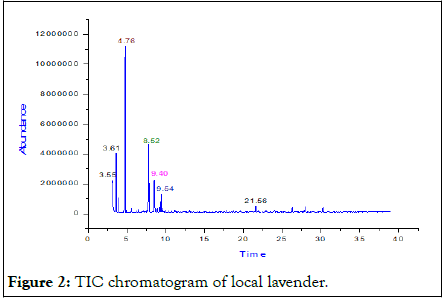
Figure 2: TIC chromatogram of local lavender.
Table 3 showed the comparison of compounds found in two lavender cultivars. As we have seen in the Table 3 most of the compounds found in both lavender cultivars are similar even if they differ in amount. However, some compounds which were found in one cultivar did not found in the other one. As we have seen in Table 3 some compounds like thujene, trans-beta-ocimene, and verbenone were found in only flowering lavender, and some compounds such as beta-phellandrene, trans-β-terpineol, alpha-bisabolol and adamantane were found only in local lavender.
| SN | Compound Name | Flowering lavender | Local lavender | ||
|---|---|---|---|---|---|
| RT | PA | RT | PA | ||
| 1 | Thujene | 3.55 | 1.23 | ND | ND |
| 2 | Beta-phellandrene | ND | ND | 3.55 | 3.36 |
| 3 | β-pinene | 3.61 | 5.48 | 3.61 | 9.51 |
| 4 | Beta-thujene | 3.87 | 0.64 | ND | ND |
| 5 | 1,8-Cineole | 4.76 | 36.14 | 4.76 | 38.5 |
| 6 | Trans-beta-ocimene | 4.89 | 0.67 | ND | ND |
| 7 | Trans-β-terpineol | ND | ND | 5.57 | 0.73 |
| 8 | Terpinolene | 6.15 | 1.01 | ND | ND |
| 9 | Linalool | 6.53 | 0.91 | 6.52 | 0.74 |
| 10 | Camphor | 7.9 | 40.25 | 7.82 | 20.91 |
| 11 | Endo-borneol | 8.5 | 1.93 | 8.52 | 8.71 |
| 12 | Terpinen-4-ol | 8.91 | 0.83 | 8.9 | 0.95 |
| 13 | Trans-2,7-dimethyl-4,6-octadien-2-ol | ND | ND | 8.58 | 1.98 |
| 14 | Alpha-terpineol | 9.39 | 1.32 | 9.4 | 4.42 |
| 15 | Benzenemethanol, alpha-2-cyclohexen-1-yl- | 9.54 | 1.3 | ND | ND |
| 16 | 2-Cyclohexen-1-one, 4-(1-methylethyl)- | ND | ND | 9.19 | 1.63 |
| 17 | Verbenone | 9.98 | 0.69 | ND | ND |
| 18 | Alpha-thujenal | ND | ND | 9.54 | 1.16 |
| 19 | Caryophyllene | 17.88 | 1.09 | ND | ND |
| 20 | 1,3-Cyclopentadiene, 1,2,3,4,5-pentamethyl- | ND | ND | 21.56 | 2.38 |
| 21 | Beta-caryophyllene oxide | 24.04 | 2.74 | ND | ND |
| 22 | (+)-epi-Bicyclosesquiphellandrene | 26.29 | 1.38 | 26.28 | 1.67 |
| 23 | Isooctyl alcohol | 27.93 | 2.37 | ND | ND |
| 24 | Alpha-bisabolol | ND | ND | 27.95 | 1.8 |
| 25 | Adamantane | ND | ND | 30.23 | 1.54 |
Table 3: Comparison of chemical composition between flowering and local lavender essential oils.
From the GC-MS analysis, the essential oil compositions for two lavender cultivars were analyzed. Both cultivars contain major compounds found in lavender essential oils but differ in amount. Flowering lavender contains high camphor and low beta-thujene whereas local lavender contains high 1,8-cineole and low trans-beta-terpinol. Some compounds found in one cultivar didn’t found in the other and vice versa. This shows there is little difference between the two cultivars. This study gives information for other works that will be done on lavender essential oil composition.
The authors should declare if exist or not conflict of interest with the data contained in the manuscript.
We would like to acknowledge the Ethiopia institute of agricultural research, Wondo Genet agricultural research center the medicinal and aromatic plants research program, and the food science and nutrition laboratory for their technical support for this study.
[Crossref] [Google Scholar] [PubMed]
[Crossref] [Google Scholar] [PubMed]
[Crossref] [Google Scholar] [PubMed]
[Crossref] [Google Scholar] [PubMed]
[Crossref] [Google Scholar] [PubMed]
[Crossref] [Google Scholar] [PubMed]
[Crossref] [Google Scholar] [PubMed]
[Crossref] [Google Scholar] [PubMed]
[Crossref] [Google Scholar] [PubMed]
[Crossref] [Google Scholar] [PubMed]
[Crossref] [Google Scholar] [PubMed]
Citation: Buta BM, Kinki AB (2023) Essential oil Composition of Lavender (Lavandula angustifolia Mill.) Cultivars Grown in Wondo Genet, Ethiopia. Med Aromat Pant. 12:447.
Received: 22-Feb-2023, Manuscript No. MAP-23-21901; Editor assigned: 24-Feb-2023, Pre QC No. MAP-23-21901 (PQ); Reviewed: 10-Mar-2023, QC No. MAP-23-21901; Revised: 09-May-2023, Manuscript No. MAP-23-21901 (R); Published: 13-Jun-2025
Copyright: © 2023 Buta BM, et al. This is an open-access article distributed under the terms of the Creative Commons Attribution License, which permits unrestricted use, distribution, and reproduction in any medium, provided the original author and source are credited.