
Journal of Information Technology & Software Engineering
Open Access
ISSN: 2165- 7866
ISSN: 2165- 7866
Research Article - (2025)Volume 15, Issue 2
Livestock farming is an essential component of the agricultural sector, contributing significantly to the global economy and providing a source of livelihood for millions of farmers. However, managing livestock presents several challenges, particularly in ensuring the health and safety of the animals. Traditional methods of livestock management are often labour-intensive and inefficient, leading to issues such as undetected health problems, lost or stolen animals and overall decreased productivity. However, Fluctuations in body temperature were used to detect signs of fever or infection early, abnormalities in heart rate helped identify stress, fatigue or potential health issues, Changes in movement behavior, such as reduced activity or lameness, provided early signals of injury or illness. System design, data collection, experimental validation and analysis and metrics were employed as methodology for this research. Sensors were deployed on livestock to continuously monitor vital health parameters such as body temperature, heart rate and movement. GPS modules were used to track their location in real-time. Sensor data and GPS coordinates were transmitted to a cloud-based platform via IoE technology, where the information was processed and analysed. Data was collected over a defined period to assess the system's reliability and performance in real-world conditions, field tests were conducted to evaluate the system's accuracy in monitoring livestock health and detecting location. The study focused on resolving challenges such as early disease detection, prevention of livestock theft, and reducing manual labour involved in tracking and monitoring. The introduction of IoE technology significantly enhanced the detection and management of livestock health issues, such as early disease detection, automated alerts, location tracking, the performance of the system was analysed based on metrics like data accuracy, real-time response capability, system durability in various weather conditions and ease of use for farmers. Moreover, the new methods led to significant changes in various aspects of livestock management improved productivity, enhanced animal wellbeing, reduced farmer workload.
Health monitoring; Livestock; Location tracking system; GPS; IoE
Livestock farming plays a crucial role in the agricultural sector, providing essential resources such as meat, milk and wool. However, effective livestock management is often challenged by issues such as health monitoring, location tracking and theft prevention. To address these challenges, we propose a livestock health monitoring and GPS location tracking system using IoE technology. This system will enable farmers to monitor the health and location of their livestock in real-time, ensuring timely interventions and improving overall farm management. The rapid advancement of technology, especially in the fields of the Internet of Everything (IoE) and wireless communication, offers innovative solutions to these challenges. IoE-based systemshave the potential to revolutionize livestock management by providing real-time monitoring and automated data collection. These systems can significantly enhance the efficiency, accuracy and reliability of livestock management practices.
Importance of the research
Implementing a livestock health monitoring and GPS location tracking system offers numerous benefits:
Enhanced animal welfare: Continuous health monitoring ensures that any health issues are detected early, allowing for prompt treatment and improved animal welfare.
Increased efficiency: Automated data collection and real-time monitoring reduce the need for manual labor, saving time and resources for farmers.
Cost savings: Early detection of health problems and efficient management of grazing can lead to significant cost savings by reducing veterinary expenses and improving feed utilization.
Security: GPS tracking helps prevent livestock theft and loss, ensuring that farmers' investments are protected.
Data-driven decision making: Access to accurate and timely data enables farmers to make informed decisions regarding livestock management, leading to increased productivity and profitability.
Aim and objectives
The aim of this research is to monitor livestock health and GPS location tracking system using IoE technology.
The primary objectives of this project are:
•To provide real-time health monitoring of livestock using IoE sensors.
•To track the location of livestock using GPS technology.
•To transmit health and location data to a central server GSM for analysis and monitoring.
•To generate alerts for abnormal health parameters or unauthorized movement.
•To improve livestock management, reduce losses and enhance productivity
The integration of IoE (Internet of Everything) in agriculture has gained substantial attention in recent years, aiming to enhance productivity and sustainability in farming practices. Among various applications, IoT-based livestock health monitoring and GPS location tracking systems have emerged as a crucial area of research and development [1]. This literature review explores the current state of knowledge, existing technologies and future directions in IoT-based livestock management systems, particularly focusing on health monitoring and GPS tracking using GSM technology.
IoT in agriculture
IoT technology in agriculture, often referred to as "smart farming," involves the use of connected devices to monitor and manage agricultural processes. According to Wolfert, et al. IoT applications in agriculture can lead to increased efficiency, reduced waste and enhanced productivity by providing real-time data and automation capabilities. The adoption of IoT in livestock farming has shown promising results in improving animal health, tracking movements and optimizing resource use.
Livestock health monitoring
Importance of health monitoring: Health monitoring is vital for maintaining the well-being and productivity of livestock. Early detection of health issues can prevent disease outbreaks, reduce mortality rates and minimize veterinary costs. IoT sensors can continuously monitor vital parameters such as body temperature, heart rate and activity levels, providing valuable data for timely interventions.
Technologies and methods
Various studies have explored the use of different sensors and techniques for livestock health monitoring:
Temperature sensors: Ds18B20 and similar sensors have been widely used for monitoring body temperature in livestock. Research by Shabani I, et al. demonstrated the effectiveness of temperature sensors in detecting fever and other health anomalies in cattle.
Heart rate monitors: Pulse sensors and similar devices can measure the heart rate of animals, providing insights into their stress levels and overall health. Kumar and Hancke highlighted the use of heart rate monitors in identifying stress responses in dairy cows.
Activity sensors: Accelerometers and gyroscopes are used to monitor the activity levels and movements of livestock. Studies by Jaen and Catala showed that activity sensors could effectively track grazing patterns and detect abnormal behaviours.
GPS location tracking
Importance of GPS tracking: GPS tracking is essential for managing livestock in extensive grazing systems, preventing theft and ensuring the safety of animals. Real-time location data allows farmers to efficiently manage grazing areas, monitor animal movements and quickly locate lost or stolen animals.
Technologies and methods
GPS modules such as NEO-6M have been commonly used in livestock tracking systems:
Real-time tracking: Real-time GPS tracking enables continuous monitoring of livestock movements. According to Jindarat and Wuttidittachotti real-time tracking systems can improve grazing management and reduce labor costs.
Geofencing: Geofencing technology creates virtual boundaries and sends alerts when animals cross these boundaries. Research by Nasirahmadi et al. demonstrated the effectiveness of geofencing in preventing livestock from straying into restricted areas.
GSM technology for data transmission
Role of GSM technology: GSM (Global System for Mobile Communications) technology facilitates data transmission in remote areas where other communication infrastructures may be limited. GSM modules such as SIM800L and SIM900 enable IoT devices to send data to central servers via mobile networks.
Applications in livestock monitoring:
GSM technology has been successfully integrated into livestock monitoring systems for data transmission:
Remote monitoring: GSM-enabled systems allow farmers to monitor livestock health and location remotely. According to Valsalan P, Ali TAB GSM-based data transmission ensures that real-time data is available even in rural areas with limited internet connectivity [2].
Alerts and notifications: GSM technology can send SMS alerts to farmers in case of abnormal health parameters or unauthorized movements. Studies by Kamilaris, et al. highlighted the importance of timely alerts in managing livestock health and security.
System overview
The system consists of the following key components:
IoE devices and sensors: Livestock health monitoring and GPS location tracking systems, IoE devices and sensors play a pivotal role in gathering and transmitting crucial data for effective farm management. These devices include a variety of sensors such as heart rate monitors, temperature sensors and GPS trackers embedded in wearable tags or collars. They continuously collect real-time data on livestock health parameters and location coordinates, which are essential for monitoring animal wellbeing and optimizing grazing patterns [3]. By leveraging IoE devices and sensors, farmers can proactively detect health issues, ensure timely interventions and enhance overall farm productivity. Integration with communication modules like GSM technology enables seamless data transmission to centralized systems, facilitating remote monitoring and enabling data-driven decision-making for sustainable agricultural practices.
GPS modules: GPS modules are essential components in livestock health monitoring and GPS location tracking systems, providing accurate and real-time geographical data for efficient farm management. These modules are typically integrated into wearable devices such as collars or ear tags, enabling precise tracking of livestock movements across large agricultural landscapes. GPS modules utilize satellite signals to determine and transmit location coordinates, which are crucial for monitoring grazing patterns, preventing theft and ensuring the safety of livestock. By integrating with GSM technology, GPS modules facilitate continuous data transmission over mobile networks, ensuring connectivity even in remote areas. This capability allows farmers to monitor and manage livestock effectively, optimize resource allocation and make informed decisions based on real-time location information, thereby enhancing operational efficiency and overall farm productivity.
Microcontrollers: Microcontrollers are fundamental components in livestock health monitoring and GPS location tracking systems, serving as the central processing units that manage data acquisition, sensor interfacing and communication. These compact integrated circuits are tailored to handle specific tasks within the system, such as collecting realtime data from sensors measuring parameters like temperature and heart rate in livestock. They execute algorithms to analyze this data, enabling immediate detection of health anomalies or deviations in animal behavior. Microcontrollers also facilitate communication between IoE devices, sensors and central servers via wireless modules like GSM, ensuring seamless data transmission and enabling remote monitoring and control capabilities [4]. Their efficient operation and low-power consumption make them ideal for deployment in agricultural settings, where reliability, responsiveness and energy efficiency are paramount for effective farm management and livestock welfare.
GSM (Global System for Mobile communications): GSM (Global System for Mobile communications) is a crucial technology in IoE-based livestock health monitoring and GPS location tracking systems, providing reliable wireless communication capabilities over mobile networks. Designed for global compatibility and efficiency, GSM modules enable bidirectional data transmission between IoE devices, sensors and central management systems. They utilize standard SIM cards to connect to mobile networks (2G, 3G, 4G LTE), ensuring broad coverage even in remote agricultural areas where traditional wired infrastructure may be unavailable. GSM technology supports real-time data updates on livestock health metrics and GPS coordinates, facilitating proactive monitoring and timely intervention by farmers. Its integration with IoE ecosystems enhances operational efficiency, enables remote management capabilities and supports sustainable farming practices by leveraging data-driven insights for optimized livestock management and resource allocation.
Power supply management: Livestock health monitoring and GPS location tracking systems is crucial for ensuring uninterrupted operation and reliable data transmission in agricultural settings. By integrating energy-efficient components and leveraging renewable energy sources like solar power, these systems optimize power consumption and extend battery life. Backup systems, such as secondary batteries or alternative energy generators, provide redundancy to mitigate the impact of power fluctuations or interruptions. Regular monitoring of battery levels and system performance enables proactive maintenance, ensuring continuous functionality and minimizing downtime. Effective power supply management not only enhances operational efficiency but also supports sustainable farming practices by reducing environmental impact and enhancing the welfare and productivity of livestock through reliable monitoring and management capabilities.
Vi data storage and processing: Data storage and processing in livestock health monitoring and GPS location tracking systems are pivotal for enabling efficient and proactive agricultural management. Cloud-based solutions provide scalable and secure storage for vast amounts of sensor data, ensuring accessibility and redundancy. Edge computing enhances real-time data processing at the device level, reducing latency and enabling immediate responses to livestock health issues. Advanced analytics, including real-time and historical data analysis, empower farmers with actionable insights for optimizing feeding schedules, managing grazing patterns and enhancing overall animal welfare. This integrated approach not only improves operational efficiency but also supports sustainable farming practices by leveraging data-driven decision-making to mitigate risks and maximize productivity
User interface: Livestock health monitoring and GPS location tracking systems, the User Interface (UI) serves as the primary gateway for farmers to interact with and manage agricultural data effectively. A well-designed UI provides intuitive dashboards that visually represent real-time health metrics and GPS coordinates, enabling farmers to monitor livestock conditions and locations at a glance. Interactive features such as customizable alerts and notifications ensure timely responses to critical events, enhancing operational efficiency and animal welfare. Mobile accessibility of the UI supports remote monitoring and control, empowering farmers to oversee farm activities from anywhere [5]. By integrating advanced analytics and reporting functionalities, the UI facilitates data-driven decision-making, enabling farmers to optimize feeding schedules, manage grazing patterns and improve overall farm productivity with ease and confidence (Figures 1-3).
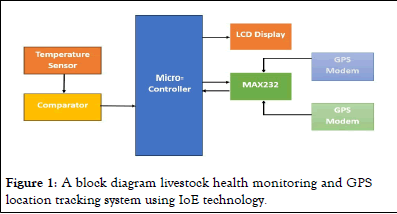
Figure 1: A block diagram livestock health monitoring and GPS location tracking system using IoE technology.
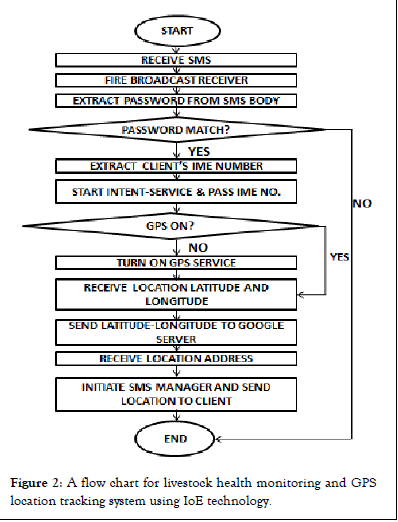
Figure 2: A flow chart for livestock health monitoring and GPS location tracking system using IoE technology.
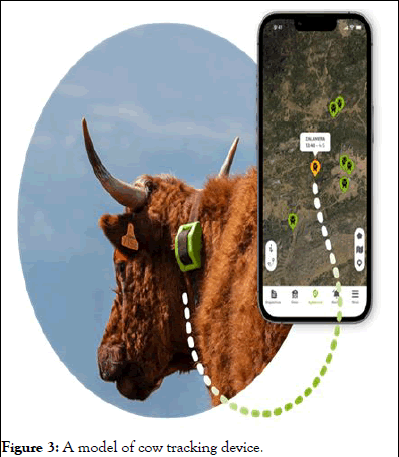
Figure 3: A model of cow tracking device.
Technical details
Hardware components
IoE sensors: Temperature sensors (e.g., DS18B20); Heart rate monitors (e.g., Pulse sensors); Activity sensors (e.g., ADXL345 accelerometer);
GPS module: NEO-6M GPS module
Microcontroller: Arduino Uno or Raspberry Pi
GSM module: SIM800L or SIM900
Power supply: Solar panels; Rechargeable batteries
Software components
Microcontroller programming: C/C++ for Arduino; Python for Raspberry Pi
Data transmission and storage: GSM communication protocols; Cloud server (e.g., AWS, Firebase) or local server; Database management (e.g., MySQL, Firebase)
User interface: Web application (HTML, CSS, JavaScript); Mobile application (Android/iOS)
Implementation plan
Phase 1: Requirements analysis and design: Requirements analysis and design are critical phases in developing livestock health monitoring and GPS location tracking systems. During requirements analysis, understanding the specific needs and challenges of agricultural operations, such as monitoring multiple livestock health metrics in real-time and tracking animals across vast geographic areas is essential. This phase involves gathering stakeholder requirements, defining system functionalities and identifying technical constraints. Designing the system involves translating these requirements into a comprehensive architecture that integrates sensors, microcontrollers, GPS modules, GSM technology and efficient power management solutions. The design phase also includes user interface design to ensure intuitive interaction and data visualization for farmers. By conducting thorough requirements analysis and meticulous design, agricultural enterprises can develop robust IoE systems that enhance operational efficiency, improve decision-making and optimize livestock management practices.
Phase 2: Prototype development: Prototype development in livestock health monitoring and GPS location tracking systems involves creating an initial version of the system to demonstrate key functionalities and validate design concepts. This phase begins with translating the requirements and design specifications into a tangible prototype that integrates essential components such as sensors, microcontrollers, GPS modules and GSM technology. The prototype aims to simulate real-world scenarios, allowing stakeholders to evaluate system performance, user interface usability and data accuracy in a controlled environment. Iterative testing and refinement are crucial during this phase to identify and address technical challenges, optimize power efficiency and ensure seamless integration of hardware and software components. By refining the prototype based on feedback and testing results, developers can iteratively improve the system's reliability, functionality and scalability before moving towards full-scale deployment in agricultural settings [6].
Phase 3: Data storage and user interface development: Data storage and user interface development are critical aspects of designing livestock health monitoring and GPS location tracking systems. Effective data storage solutions involve selecting scalable platforms capable of managing large volumes of sensor data securely, ensuring accessibility and reliability for real-time monitoring and historical analysis. Concurrently, user interface development focuses on creating intuitive dashboards and interfaces that present actionable insights clearly and concisely. These interfaces enable farmers to monitor livestock health metrics and track GPS locations efficiently, supporting informed decision-making and proactive management. By integrating robust data storage with user-friendly interfaces, these systems empower agricultural enterprises to optimize operations, enhance animal welfare and achieve sustainable farming practices effectively.
Phase 4: Testing and optimization: Testing and optimization play crucial roles in ensuring the reliability, functionality and performance livestock health monitoring and GPS location tracking systems. During testing, rigorous evaluation of hardware components, software functionalities and system integrations is conducted to identify and rectify any potential issues or vulnerabilities. This phase includes simulation of realworld scenarios to validate data accuracy, sensor reliability and system responsiveness. Iterative optimization involves fine-tuning algorithms, refining user interfaces for usability and optimizing power management strategies to enhance operational efficiency and minimize resource consumption [7]. Continuous testing and optimization cycles help developers and stakeholders refine system capabilities, improve overall reliability and ensure that the system meets the specific needs of agricultural environments before full deployment.
Phase 5: Deployment and training: Deployment and training are pivotal stages in the implementation of livestock health monitoring and GPS location tracking systems, ensuring effective utilization and maximizing benefits in agricultural settings. Deployment involves installing and integrating hardware components such as sensors, microcontrollers, GPS modules and communication technologies into the farm infrastructure. It also includes configuring software systems, setting up data storage solutions and establishing connectivity with cloud platforms for seamless data management. Concurrently, comprehensive training programs are essential to educate farmers and agricultural personnel on system operation, data interpretation and troubleshooting procedures. Training ensures that users understand how to leverage the system's capabilities for monitoring livestock health metrics, tracking GPS locations and making data-driven decisions to enhance farm management practices. By combining robust deployment practices with tailored training initiatives, agricultural enterprises can optimize system performance, improve operational efficiency and achieve sustainable agricultural outcomes effectively.
Contribution to knowledge
The implementation of livestock health monitoring and GPS location tracking systems is expected to yield significant outcomes for agricultural enterprises. By leveraging real-time data on livestock health metrics and GPS coordinates, farmers can proactively monitor animal welfare, detect health anomalies early and optimize feeding and grazing practices [8]. Enhanced visibility into livestock locations enables better management of herd movements, ensuring efficient resource allocation and minimizing risks such as theft or straying. Furthermore, datadriven insights derived from these systems empower farmers to make informed decisions that improve overall farm productivity, enhance animal welfare standards and support sustainable agricultural practices. Ultimately, the adoption of IoE technologies promises to streamline operations, reduce costs and foster more resilient and profitable farming operations in diverse agricultural landscapes [9].
In conclusion, IoE-based livestock health monitoring and GPS location tracking systems represent a transformative advancement in modern agriculture, offering farmers unprecedented capabilities to monitor, manage and optimize livestock operations. These systems integrate sophisticated technologies from sensors and microcontrollers to GPS modules and cloud-based data storage that collectively enable real-time monitoring of animal health metrics and precise tracking of livestock locations. By leveraging actionable insights derived from data analytics, farmers can improve decision-making processes, enhance operational efficiency and ultimately achieve sustainable farming practices. The seamless integration of these technologies not only enhances productivity and profitability but also elevates animal welfare standards, ensuring healthier livestock and more resilient agricultural ecosystems. As IoE continues to evolve, its potential to revolutionize agriculture underscores its role in shaping the future of farming towards greater efficiency, sustainability and global food security.
The study on livestock health monitoring and GPS location tracking system using IoE technology identified several limitations that may have influenced its results and interpretation. First, the system was tested in a limited geographic scope, making it challenging to generalize the findings to different climates, terrains or farming practices. Environmental factors, such as extreme weather, could also affect sensor performance and data accuracy. Technical reliability was another concern, with occasional issues like temporary data transmission failures and GPS inaccuracies in remote or densely vegetated areas, impacting the continuity of monitoring. The reliance on battery-powered sensors and GPS modules posed a challenge due to the need for regular recharging or replacement, particularly for larger farms with limited electricity access. The high cost of implementation, including sensors, GPS devices and cloud storage, may be prohibitive for small-scale farmers, with the study not fully addressing economic feasibility. Additionally, the system generated large amounts of data, which required interpretation.
While automated alerts were beneficial, some farmers struggled to understand and respond to health indicators without further training, highlighting the need for more user-friendly interfaces and better end-user support.
Based on the findings of the study on livestock health monitoring and GPS location tracking system using IoE technology, several suggestions for future research and practical applications are recommended. Improving the power efficiency of sensors and exploring alternative energy sources, such as solar power, would enhance sustainability, particularly for remote farms. Future studies could also adapt the system for smaller livestock like sheep, goats or poultry and explore its use in both intensive and extensive farming practices. Addressing economic feasibility, researchers could develop cost-effective solutions for small-scale farmers and explore cooperative models or subsidies. Further research in data analytics and predictive health models using machine learning could optimize disease prediction and grazing patterns. Improving user interfaces for farmers with varying levels of technical expertise, such as integrating voice commands or visual alerts, would enhance usability. Additionally, exploring the environmental and long-term animal welfare impacts of the system, as well as integrating it with other smart farming technologies like automated feeding or climate monitoring, could provide comprehensive solutions to modern farming challenges.
[Crossref] [Google Scholar] [PubMed]
[Crossref] [Google Scholar] [PubMed]
[Crossref] [Google Scholar] [PubMed]
[Crossref] [Google Scholar] [PubMed]
[Crossref] [Google Scholar] [PubMed]
[Crossref] [Google Scholar] [PubMed]
[Crossref] [Google Scholar] [PubMed]
[Crossref] [Google Scholar] [PubMed]
Citation: Friday EA, Olanrewaju AA, Agbalaya KK (2025) Smart Livestock Health and GPS Tracking Solution Powered by IoE Technology. J Inform Tech Softw Eng. 15:438.
Received: 18-Nov-2024, Manuscript No. JITSE-24-35261; Editor assigned: 21-Nov-2024, Pre QC No. JITSE-24-35261 (PQ); Reviewed: 05-Dec-2024, QC No. JITSE-24-35261; Revised: 09-Apr-2025, Manuscript No. JITSE-24-35261 (R); Published: 16-Apr-2025 , DOI: 10.35248/2165-7866.25.15.438
Copyright: © 2025 Friday EA, et al. This is an open-access article distributed under the terms of the Creative Commons Attribution License, which permits unrestricted use, distribution, and reproduction in any medium, provided the original author and source are credited.