
Reproductive System & Sexual Disorders: Current Research
Open Access
ISSN: 2161-038X
ISSN: 2161-038X
Research Article - (2025)Volume 14, Issue 2
Objective: This study sought to broaden the limited evidence on violence against adolescent girls in non-conflict zones of the Democratic Republic of the Congo (DRC). We aimed to complete representative research on prevalence, related factors and consequence of sexual violence against girls in Kinshasa by conducting a cross-sectional study among middle school girls.
Methods: 3100 girls from five randomly selected schools were recruited and given the questionnaires. Among them, 3011 (97.1%) participants who filled the questionnaires were included in the study for further analysis.
Results: The prevalence of sexual violence of adolescents identified in this study was 76.5% for attempted rape without intercourse, 73.9% for rape with intercourse and 93.0% for sexual verbal harassment. Physical violence without a weapon and physical violence with a weapon was strongly associated with sexual victimization. Living in low-class districts (AOR (Adjusted Odds Ratio): **, 95% CI (Confidence Interval): **), having either divorced or widowed parents (AOR: **, 95% CI: **) presented the highest risk associated with sexual violence (p˂0.05). Further, socio-demographics including living either in low-class or middle-class districts were associated with sexual violence and with mental health conditions (TAD, TID and PTSD).
Conclusion: Sexual violence is rife among middle school girls and is associated with serious mental health problems. These associated factors require multisectoral responses to hinder sexual violence or moderate its consequences.
Sexual violence; Middle school girls; Prevalence; Correlates; DRC
Violence against girls and women is a worldwide public health hassle that affects one in 3 girls and one in 4 girls under the age of 18 years. Global, ladies are at higher hazard for violence in the course of adolescence and violence is the second leading motive of dying for adolescent women. The dangers of being a sufferer of violence growth primarily based on each gender and age: Patriarchal societies that broadly speaking support male dominance and restriction the jobs of ladies are related to the best ranges of violence in opposition to girls. In these varieties of situations, adolescents additionally have less get admission to social offerings due to their age. Many predictors of violence towards girls and girls had been recognized in developed and growing international locations, in large part from research of intimate accomplice violence. Those research have shown that the prevalence rates of sexual violence depend on the setting; tiers of said sexual violence appear to be relatively lower in nonconflict settings than they may be inactive war settings. As an example, the lifetime history of sexual violence in women inside the U.S.A. and Germany became approximately 13% and studies conducted in South Africa, Kenya, Ghana and Uganda had located the prevalence of coerced intercourse starting from 14% in rural Uganda to 32% in urban Cape city. But, conflict-torn areas together with the Democratic Republic of Congo (DRC), when as compared to Colombia, Burundi, and Rwanda, offered better charges of conflict-associated sexual violence. As an example, the prevalence of sexual violence experienced through the populace living in the Japanese areas stricken by armed warfare became estimated at 40% amongst girls. A examine carried out among adolescent girls in DRC and refugee camps inside the Benishangul-Gumuz location of Ethiopia observed that maximum of the ladies (54.4%) in both the DRC and (50.5%) in Ethiopia skilled at least one shape of violence within the previous one year, 32% said that they had been hit or beaten, 37% mentioned being screamed at loudly or aggressively and 27% pronounced being sufferers of unwanted sexual touching, compelled intercourse and/or sexual coercion. Up to now, maximum research that have examined violence within the DRC had been performed on conflict-affected samples inside the Japanese a part of the united states of America and shortage information on both the prevalence of and the predictors of bodily and/or sexual abuse against adolescent girls in non-battle zones. But, our group believes that accounting for the ecological framework to higher recognize the reasons of violence in nonwar zones is profitable. Our study took place in Kinshasa-the capital city of the DRC-which obtained millions of refugees from the DRC's struggle zones, leaving their houses, jobs and property in the back of to discover an area wherein they may live in peace. As a side effect of this beyond method, most people of this populace lives with their extended families in casual settlements characterized by way of poorly constructed shanties, overcrowding and a loss of primary offerings and security [1].
Moreover, a study that investigated "juvenile violence in Kinshasa" confirmed that Kinshasa confronted intensive insecurity, which has similarly deteriorated on the grounds that 2009 because of the outbreak of the "Kuluna phenomenon". The Kuluna phenomenon refers to younger guys armed with machetes, screwdrivers or razor blades who terrorize the city by way of hurting, amputating or killing any character they see. Faced with the outbreak of the Kuluna phenomenon and the vulnerability of younger adolescents to violence and considering the social, financial and epidemiological importance of the problem alongside its repercussions on circle of relative’s dynamics, the improvement of future studies is a really essential issue of know-how the extent of violence in those non-struggle zones and the hazard factors related to the sorts of violence committed against the populations in these groups [2].
To address those problems, an ecological version allows for a big examination of the associated hazard elements as it proposes that violence can be understood because the end result of human behavior at the individual, relational, community and societal ranges. An aggregate of man or woman (e.g., age), relationships (e.g., parental marital status or district of house), network-stage (e.g., housing reputation) and societal-stage (e.g., mother and father' career) traits can be used to perceive the most vital elements concerning the chance of violence and victimization and expand suitable interventions on a societal level that stretches past a normative layout of interventions. We could not discover any previous dependable examine of adolescent sexual abuse that assessed the entire range of feasible abuses consisting of contact abuse (i.e., physical touch among the younger adolescent and the abuser), publicity abuse (e.g., publicity to undesirable touch) and sexual harassment) in nonwarfare zones of DRC. Certainly, what is the prevalence and correlates associated with sexual abuse in non-conflict zones of DRC? This have a look at objectives to fill the gap of records on the prevalence of various varieties of sexual violence and their correlates amongst middle college ladies aged 11-18 years in nonstruggle zones in Kinshasa [3].
Study design and participants
The DRC is a rustic positioned in valuable Africa and is, by way of location, the most important country in sub-Saharan Africa and the second largest in all Africa. The country has suffered from bad governance, wars and different numerous armed clashes since it won independence in 1960; from 1996 onwards, the DRC has been worried in further armed conflicts characterized via excessive violence, that are nevertheless dragging on as proven in the crimson areas in Figure 1. The highlighted areas additionally represent warfare zones that are situated in (southern, eastern and northern areas of) the DRC which can be stricken by struggle, while the inexperienced regions constitute non-battle zones located inside the western regions. Kinshasa is positioned inside the western regions (in a non-conflict area) and is the political and administrative capital city of the country. A cross-sectional look at become carried out amongst ladies aged 11-18 years in Kinshasa. Kinshasa has 2,123 mixed public and private secondary schools; collectively, those faculties host 585,588 center college students and amongst them, 291,252 had been girl as of the 2013-2014 census [4].
Of the 2,123 colleges listed, 5:3 public and non-public have been randomly selected through a scientific sampling approach. As a result, of the 5 colleges, (one public and one private) were positioned in a higher-elegance district, one (public) become from a center-class district and the alternative two (one public and one non-public) were from a lower-elegance district, respectively. All-woman college students from the five decided on colleges that have been registered under the 2018-2019 college year have been invited to take part. A pattern length of three, a hundred girl college students was acquired and given self-administered questionnaires at some stage in a ordinary class period. A number of the college students, 3,011 (97.1%) members finished the questionnaires and have been protected within the take a look at; 89 (2.9%) refused to fill the questionnaires and had been excluded from further analysis [5].
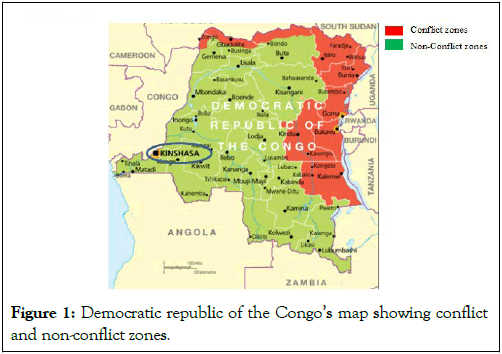
Figure 1: Democratic republic of the Congo’s map showing conflict and non-conflict zones.
Measures of correlates of sexual victimization
Demographic characteristics: Including age (i.e., from 11-13 years antique, 14-15 years vintage, or 16-18 years), parental marital popularity (i.e., married, divorced or widowed), determine's profession (i.e., unemployed, part-time task, employed or retired), housing reputation (i.e., live-in proprietor house or live in a rental residence), quantity of humans with whom they shared a room at night (i.e., one or extra), house districts (i.e., live in the top-class district, live inside the middle-class district or live in the decrease elegance district) [6].
Experience of other forms of violence against girls: Including physical violence without a weapon and physical violence with a weapon. The questionnaire became from the JVQ above described. Measures had been classified in analyses as any experience of a specific shape of violence vs. no experience.
Respondents symptoms of anxiety and depression: Assessed by use of the revised child anxiety and depression scale RCADS. Items are rated on a 4-point Likert scale from 0 "never" to 3 "always". To estimate the scale score, we took the sum of the completed items within that scale and divided that by the number of items completed, then multiplied by the total number of items on that scale.
Respondents symptoms of post-traumatic stress disorder: Respondents' PTSD symptoms were assessed using the Posttraumatic Stress Disorder Checklist (PCL-5). The PCL-5 is a 20-object self-report degree that measures the DSM-5 signs and symptoms of PTSD in children less than 18 years of age and adults. Each object is scored on a 5-factor Likert scale (0=on no account; 4=extraordinarily). Examples of items on the PCL-5 include feeling distant or cut off from other people, being "superalert", watchful or guarding. The total scores were obtained from the sum of all answers (range from 0 to 80) and a cutoff point of 33 was considered to assess provisional PTSD symptomatology. A score lower than 33 indicated no PTSD symptomatology, while a score higher than 33 indicated greater PTSD symptomatology. The PCL-5 is psychometrically sound, demonstrating good test-retest reliability (r=0.82) and strong convergent validity with other measures of PTSD (r=0.85). Cronbach's alpha obtained in the present study was 0.86. Additionally, the test (PCL) has been translated for use with French, Spanish and Chinese populations [7].
Procedures
The students had been informed approximately the study by educated researchers and specific appointments have been made with every college so students could be given time to finish the questionnaires. Signed knowledgeable consent to participate inside the have a look at become received from each the parents/ guardians and the scholars. The most important of each school provided us with an empty room where students have been invited by means of class (in-organization) to fill out nameless questionnaires, which took approximately 25 mins in step with pupil to fill out. Each feasible association which undoubtedly affected the students' privacy turned into made. After finishing the questionnaires, assistant instructors accrued them and taken them to the essential investigator [8].
Respondent's sexual violence experience: We used the Juvenile Victimization Questionnaire (JVQ) to evaluate youth' sexual violence revel, with minor modifications to mirror the DRC legislative surroundings, inclusive of aligning the definitions of rape and sexual assault. The item-level scores were used to produce variables of a frequency of a number of incidents in the last 12-months. Construct validity tests and endorsements of JVQ items showed a good correlation with the measures of traumatic symptoms. The tool showed also adequate test-retest reliability in a 3 to 4-week re-administration.
The JVQ can be scored in different ways to produce variables of interest in different contexts. For this study, we selected the most relevant items related to physical and/or sexual violence from the different modules for the administration. The most basic scores are item-level scores and module scores. For analysis, score measures were categorized as 1=yes or 0=no. Thus, a "yes" or 1 for any item for each type of abuse indicated that at least one form of victimization on that type of abuse (physical abuse or sexual abuse) was reported. The questionnaire was translated from English into the French official language; this language is spoken sufficiently well by the population. Translations were checked by back translation, by consensus with the multilingual fieldwork team [9].
Statistical methods
Association between sexual abuse and potential correlates were assessed in logistic regression models, in which correlates were grouped theoretically probable association with sexual abuse, correlates included: Other forms of violence exposure; risk and protective factors; and consequences of sexual abuse. Age was controlled in each model. For each correlates, the unadjusted Odds Ratio (OR) was estimated from a model including only that correlate, whereas the adjusted OR was estimated by modeling the simultaneous effect of all correlates considered.
Descriptive analyses of the participants
Out of 3011 participants who completed the questionnaire, 539 (17%) of them were in range age between 11-13 years, 1194 (39.7%) were between 14-15 years and 1278 were between 16-18 years old. Also, 1733 (57.6%) of participants their parents were married, 763 (25.3%) of them their parents were divorced and 515 (17.1%) had widowed parents, while 596 (19.8%) their parents were unemployed, 1245 (41.3%) their parents holding a part-time job, 1129 (37.5%) parents were employed, 41 (1.4%) their parents retired. Moreover, 1342 (44.6%) of participants their parents were the owner, while 1669 (55.4%) their parents rented a house. Finally, 290 (9.6%) of participants shared a room with one person, 2721 (90.4%) shared a room with more than two people, 1010 (33.5%) lived in upper-class districts, 583 (19.4%) lived in middle-class districts and 1418 (47.1%) lived in low-class districts respectively.
Prevalence of sexual violence among girls aged 11-18 and socio-demographic characteristics
The prevalence rates of sexual violence of middle school girls aged 11-18 related to their socio-demographic characteristics. All participants investigated in this study reported that they had been experienced some forms of sexual violence. The most prevalent form of sexual violence was verbal harassment (90.3%), followed by attempted rape without intercourse (76.5%) and then rape with intercourse (73.9%). In addition, it was observed that there were associations between all sociodemographics of the participants and any type of sexual violence (p<0.05).
Bivariate odds ratio of age and other forms of violence as correlates of sexual violence
The physical violence without a weapon was reported as having prevalence rates around 70.1%. While physical violence with a weapon was also observed as having prevalence rates of 66.3%. Besides, bivariate analyses revealed that the girls who reported physical violence without a weapon were at higher risk of experiencing sexual violence: attempted rape (OR=15.6, 95% CI: 12.8-19.2), rape with intercourse (OR=32.7, 95% CI: 26.2-40.8) and verbal harassment (OR=8.4, 95% CI: 6.1-11.7), as well as physical violence with a weapon: Attempted rape (OR=11.1, 95% CI: 9.1-13.5), rape with intercourse (OR=17.9, 95% CI: 14.6-22.0), and verbal harassment (OR=6.1, 95% CI: 4.4-8.3) compared to the reference group (P<0.05).
Association between age and other forms of violence and sexual violence
The adjusted OR for risk of experienced sexual violence correlated to the age of participants and other forms of violence. The findings revealed that the girls who reported physical violence without a weapon were at the highest risk of experienced sexual violence: (AOR=8.6, 95% CI: 6.9-10.7) for attempted rape, (AOR=20.5, 95% CI: 16.0-26.2) for rape with intercourse, and (AOR=5.9, 95% CI: 4.1-8.6) for verbal harassment compared to the reference group. Further, the girls who reported physical violence with a weapon were also at risk of experiencing sexual violence: (AOR=5.5, 95% CI: 4.4-6.8) for attempted rape, (AOR=10.3, 95% CI: 8.0-13.2) for rape with intercourse and at (AOR=3.2, 95% CI: 2.2-4.5) for verbal harassment compared to the reference group. Furthermore, the girls who were aged 14-15 and 16-18 years were at higher risk of experiencing verbal harassment but they were at lower risk of experiencing rape with intercourse compared to the reference group (P <0.05).
Risk and protective factors for any form of sexual violence
Table 1 provides the adjusted odds ratio for risk and protective factors associated with any form of sexual violence. The findings showed that having either divorced or widowed parents, having a parent who lived in a rental house, sharing a room with more than two people and living either in low-class, or middle-class districts were statistically significant associated with sexual violence experienced in both unadjusted and adjusted models (P<0.05). Living in low-class districts, having either divorced or widowed parents carried the highest risk of experiencing sexual violence (P<0.05). Besides, the unadjusted and adjusted ORs suggested a lower risk of sexual violence when the participants had either employed or retired parents (P<0.05) while having a parent who holds a part-time job was not significantly associated with the experience of sexual violence (P>0.05).
| Factors | Attempted rape AOR (95% CI) | Rape with intercourse AOR (95% CI) | Verbal harassment AOR (95% CI) |
| Age (years) | |||
| 11-13 | ref. | ref. | ref. |
| 14-15 | 0.5 (0.4-0.7)* | 0.4 (0.3-0.5)* | 1.3 (0.9-1.9) |
| 16-18 | 0.4 (0.3-0.5)* | 0.2 (0.1-0.3)* | 1.8 (1.2-2.7)* |
| Parental marital status | |||
| Married | ref. | ref. | ref. |
| Divorced | 1.9 (1.5-2.4)* | 1.7 (1.3-2.2)* | 2.3 (1.5-3.7)* |
| Widowed | 2.8 (2.0-3.8)* | 3.9 (2.9-5.5)* | 2.5 (1.5-4.2)* |
| Parents occupation | |||
| Unemployed | ref. | ref. | ref. |
| Part-time job | 1.2 (0.9-1.6) | 1.1 (0.8-1.5) | 1.4 (0.8-2.3) |
| Employed | 0.4 (0.3-0.6)* | 0.3 (0.2-0.4)* | 0.5 (0.3-0.8)* |
| Retired | 0.3 (0.1-0.6)* | 0.1 (0.1-0.3)* | 0.5 (0.2-1.2) |
| Housing status | |||
| Live in owner house | ref. | ref. | ref. |
| Live in rental house | 2.2 (1.8-2.6)* | 2.1 (1.8-2.6)* | 1.4 (1.0-1.9)* |
| Shares room with | |||
| One person | ref. | ref. | ref. |
| More than two persons | 1.7 (1.3-2.3)* | 1.4 (1.0-1.9)* | 1.3 (0.8-2.0) |
| Home residence | |||
| Upper class | ref. | ref. | ref. |
| Middle class | 2.2 (1.7-2.8)* | 2.3 (1.8-3.0)* | 2.0 (1.4-2.9)* |
| Low class | 6.2 (4.9-7.8)* | 8.2 (6.5-10.3)* | 5.0 (3.4-7.5)* |
| Note: AOR: Adjusted Odds Ratio; CI: Confidence Interval, *P<0.05 | |||
Table 1: Risk and protective factors for any form of sexual violence (N=3011).
Potential health problems as consequence of sexual violence among girls aged 11-18 related to sociodemographics
Table 2 provides the results of potential health problems as a consequence of sexual violence among girls aged 11-18 related to socio-demographics. The results showed that the girls who lived either in low-class or middle-class districts and had parents who lived in a rental house were at higher risk of being screened with mental health problems followed sexual violence (i.e., total anxiety disorders, total internalizing anxiety and depression disorders and posttraumatic stress disorder) P 0.05. While, the girls who were aged 14-15 and 16-18 years were at high risk of being screened with mental health problems total anxiety disorders, but were at lower risk of mental health problems: Total internalizing anxiety, depression disorders and posttraumatic stress disorder (P 0.05).
| Factors | TAD | TID | PTSD |
| AOR (95% CI) | AOR (95% CI) | AOR (95% CI) | |
| Age (years) | |||
| 11-13 | ref. | ref. | ref. |
| 14-15 | 1.6 (1.3-2.1)* | 1.2 (0.9-1.6) | 0.7 (0.5-0.8)* |
| 16-18 | 2.3 (1.8-2.9)* | 0.6 (0.5-0.8)* | 0.5 (0.4-0.6)* |
| Parental marital status | |||
| Married | ref. | ref. | ref. |
| Divorced | 1.2 (1.0-1.5) | 1.3 (1.0-1.7)* | 1.7 (1.4-2.1)* |
| Widowed | 0.8 (0.6-1.0)* | 1.1 (0.9-1.5) | 2.3 (2.3-3.3)* |
| Parents occupation | |||
| Unemployed | ref. | ref. | ref. |
| Part-time job | 1.4 (1.1-1.8)* | 1.2 (0.9-1.6) | 1.3 (1.0-1.6)* |
| Employed | 0.8 (0.6-1.0)* | 0.6 (0.5-0.8)* | 0.5 (0.4-0.6)* |
| Retired | 0.9 (0.4-1.7) | 0.5 (0.2-0.9)* | 0.5 (0.2-0.9)* |
| Housing status | |||
| Live in owner house | ref. | ref. | ref. |
| Live in rental house | 1.4 (1.2-1.7)* | 1.6 (1.4-2.0)* | 1.4 (1.2-1.6)* |
| Shares room with | |||
| One person | ref. | ref. | ref. |
| More than two persons | 1.0 (0.8-1.4) | 1.2 (0.9-1.6) | 0.9 (0.7-1.2) |
| Home residence | |||
| Upper class | ref. | ref. | ref. |
| Middle class | 1.7 (1.3-2.1)* | 1.7 (1.4-2.2)* | 1.5 (1.2-1.8)* |
| Lower class | 2.8 (2.3-3.4)* | 3.0 (2.5-3.7)* | 2.4 (2.0-2.9)* |
| Note: TAD: Total Anxiety Disorder; TID: Total Internalizing Disorder; PTSD: Post-Traumatic Stress Disorder; AOR: Adjusted Odds Ratio for consequence of sexual violence; CI: Confidence Interval; *P<0.05 | |||
Table 2: Potential health problems as consequence of sexual violence among girls aged 11-18 related to socio-demographics.
Before this study, we could identify no reliable data for the prevalence of sexual and other forms of violence of middle school girls aged 11-18 in non-conflict zones in Kinshasa. Our work now joins a developing number of such studies in subSaharan Africa, e.g., studies in Swaziland, Tanzania, Kenya, and in South Africa and in other continents e.g., Europe and Asia. As in these other countries, our study shows that sexual violence is prevalent in DRC, that young adolescents are victims and that victims of sexual violence are highly likely to have experienced other forms of violence. Sexual violence is also associated with other serious threats to health, including physical violence without weapons and physical violence with a weapon. Our study also revealed that disclosure of sexual violence is more in confidential self-completed questionnaires administered than in interviewer-administered.
The prevalence of sexual violence of adolescents identified in this study was 76.5% for attempted rape without intercourse, 73.9% for rape with intercourse and 93.0% for sexual verbal harassment. This prevalence was higher than those identified by other nationally representative studies of child maltreatment in Africa, such as the UNICEF violence against children in Swaziland 38%, Tanzania 32% for girls and 18% for boys. In addition, our findings are higher than those of the USB Optimus study in China 7% for girls and 9% for boys and the prevalence identified in the Optimus study in Switzerland 15% of children reported contact sexual abuse and 29% reported non-sexual contact abuse.
However, our study showed that the choice of methods used is important. The prevalence rates of sexual violence of middle school girls in non-conflict zones in Kinshasa identified in the school-based administered questionnaire are higher than those identified in other studies in Africa. Given that we had greater disclosure of sexual violence in school among the participants. The use of confidential questionnaires completed by the participants without an interviewer's assistance must be encouraged in future studies since this form of study seems to facilitate disclosure of victimization. Our findings showed that this method could be done successfully even in contexts in which literacy could be a concern.
This study is one of few investigating exposure violence in nonconflict zones of DRC and we showed that the prevalence of exposure violence is especially higher among this sample of middle school girls in Kinshasa than that found in Eastern regions of DRC, higher than that in the Optimus studies in China and Switzerland. In addition, based on the prevalence rates obtained in the confidential self-completed questionnaire, we found an almost similar prevalence of experience of attempted rape without intercourse and rape with intercourse, while exposure to sexual verbal harassment was found to be much higher in our sample. The reason for this high rate could be due to psychological violence being often prevalent among girls than boys and it can be explained by family life and cultural issues. It could be also because older adolescents spent more time outside of the home than younger ones. Moreover, prior research pointed out that, economic aspects of social inequality such as skin color and schooling were found as causes influencing violent acts. Again, in area where there are bigger social and income inequality, adolescents have proven to be more likely to either become victims or commit violent acts.
Our findings suggest that sexual violence is one of the more prevalent forms of violence against young adolescents and then adolescents who have been sexually abused are at greater risk of other forms of violence and that adolescents who have experienced violence are at a higher risk of sexual violence. Violence in communities and families, whether physical violence of children or violence between other family members, is a particular problem because of both its serious developmental consequences and the possible intergenerational transmission of such violence in society. Given the association between physical violence and sexual violence of young adolescents, evidence-based programmers that assist caregivers with non-violent approaches managing children's behavior and that aimed to decrease community violence, must be done widely available and assessed for their effect on the sexual violence of young adolescents.
The association between adolescents ages, parental marital status and district of residence with sexual violence point to the need to target urban-dwelling of adolescents in prevention efforts. Adolescents whose parents are unemployed are another risk group who would need specific and targeted preventive interventions. The strong association between housing status (adolescents whose parents live in a rental house) and adolescent's risk for sexual violence indicates that fight against poverty should be worldwide to reduce all forms of violence in families which live in promiscuity conditions. Indicators of socioeconomic status (i.e., having either divorced or widowed parent, having a parent who lives in a rental house, living either in low-class or middle-class districts).
[Crossref] [Google Scholar] [PubMed]
[Crossref] [Google Scholar] [PubMed]
[Crossref] [Google Scholar] [PubMed]
[Crossref] [Google Scholar] [PubMed]
[Crossref] [Google Scholar] [PubMed]
Citation: Jonas KAWM, Meng H, Lasong J (2025) Prevalence of Sexual Violence against Middle School Girls in Democratic Republic of the Congo (DRC): A Cross-Sectional Study. Reprod Syst Sex Disord. 14:470.
Received: 03-Dec-2024, Manuscript No. RSSD-25-35583; Editor assigned: 06-Dec-2024, Pre QC No. RSSD-25-35583 (PQ); Reviewed: 20-Dec-2024, QC No. RSSD-25-35583; Revised: 01-Mar-2025, Manuscript No. RSSD-25-35583 (R); Published: 08-Mar-2025 , DOI: 10.35248/2161-038X. 25.14.470
Copyright: © 2025 Jonas KAWM, et al. This is an open-access article distributed under the terms of the Creative Commons Attribution License, which permits unrestricted use, distribution, and reproduction in any medium, provided the original author and source are credited.