
Forest Research: Open Access
Open Access
ISSN: 2168-9776
ISSN: 2168-9776
Research Article - (2025)Volume 14, Issue 3
Forests and forest resources are inextricably linked to humans and provide the sole means of subsistence in many places of the world. Forest products, particularly in emerging and undeveloped countries, serve as lifelines for the underprivileged. India is bestowed with a rich biodiversity and traditional knowledge systems. The Northeastern parts of India bordering internationally with Bangladesh, Bhutan China, Myanmar and Nepal are well known for their richness in bio resources and ethnic diversity having remarkable traditional knowledge systems. The minor or nontimber forest products, particularly the food and medicinal plants found abundantly, have the potential for livelihood improvement. A better understanding and awareness of the highly potent plants of the Northeastern region of India could help to save and better the lives of consumers. These resources could provide them with a substitute for pharmaceutical medicines and commercial nutrition. The current study was carried out to investigate the availability and significance of potent minor forest products in the livelihood of the local communities. Based on available information and data the results are presented. It has been found that the region harbors diversified minor forest produces in good numbers. A total of 50 species have been narrowed down based on the information currently available about their usage and significance. These species have been shown to be particularly supportive of nutrition and medicine, making them a viable alternative to synthetic pharmaceutical and nutraceutical products.
North East India; Forest; Plant resources; Food; Medicine; Livelihood; Economy; SDG
Forests have an essential role in global health, the environment and economics. The majority of populations throughout the world that rely on forests for their livelihood and socioeconomic development are significantly impacted by forest resources. Forest always play a vital role in our existence and development [1].
Even though forests supply numerous commodities and services, forest products are often divided into two categories: Timber (wood) based products and non-timber-based products. Although lumber is the most important forest product, non-timber or minor forest products are widely used for nutrition and livelihood. Because they are collected in smaller amounts, Non- Timber Forest Products (NTFPs) are also known as Minor Forest Products (MFPs). The indigenous and tribal communities have a rich traditional knowledge system regarding utilizing the nontimber forest produced particularly to meet their food, medicinal and nutritional requirements. NTFP plays a crucial role in socioeconomic development, enhancing the quality of life and culture and the civilization of forest-dependent communities. As per the data of the world health organization, around 80% of the population in developing and underdeveloped countries satisfies their health and nutritional requirements through NTFPs. Since time immemorial the rural and indigenous populations have relied greatly on NTFPs.
India is a biodiversity-rich country and has diversified forest ecosystems. The rural and indigenous populations of the country are highly dependent on forest resources for the fulfillment of their daily requirements. It is estimated that about 3000 NTFPs yielding plant species are being used in country which contributes more than 2.5 billion USD per year and contribute about 50% of the forest-based employment. Due to the supreme court timber ban order in the country, presently the revenue generation from the timber is almost nil and thus the minor forest produces play a significant role in the revenue generation from forests [2].
The Northeastern states lying in the Indian eastern Himalayan region comprising the eight states have a remarkable forest cover of 1,69,521 square km, which is 7.98 percent of the country’s geographical area. Occurrence of more than 50 forests types have been reported from the region. The occurrence of about 8500 species of angiosperms has been reported from the region contributing 50% of India’s flora. The region is not only rich in forests and biodiversity but also rich in traditions and culture with more than 200 indigenous and tribal communities inhabiting mostly the rural and forested areas. The tribal communities are still entirely dependent on forest and bio resources for their livelihood and socio-economy. The forests are rich in different useful resources like bamboo, medicinal plants, food plants, orchids, palms, figs, ornamental plants, spices and condiments, fiber plants, dye plants, etc. The region is also rich in the diversity of animal species. The region harbors the highest diversity of mammals and birds in the country. Many endangered and vulnerable species of mammals like capped langur, golden langur, hoolock gibbon, tiger, snow leopard, etc. Despite the richness of biodiversity and forest resources, the socio-economic condition of the rural communities is poor. The proper management and utilization of bio resources of the region with the rich and diverse Traditional Knowledge System (TKS) could be supportive to fulfill the Sustainable Development Goals (SDG) of the United Nations (UN).
An attempt has been made in this article to highlight the potentiality of non-timber or minor forest products of Northeastern parts of India and the potentialities of the minor forest produces as an alternative to the high-cost pharmaceutical and nutraceutical products and also in the socio-economic development of the local communities.
The major objectives of the paper are
The research conducted a comprehensive analysis of published literature and authoritative websites to gather information on forests, biodiversity, forest resource utilization and the commercial potential of various resources in the biodiversity-rich Northeastern region. The collected data was subsequently analyzed and presented in the study's results section. Both online and offline sources were utilized to obtain the necessary information.
Additionally, the expertise and assistance of specialists were sought in identifying the listed plant species, which involved visiting the department of forestry at the north eastern regional institute of science and technology in Nirjuli, Arunachal Pradesh.
Diversity of minor forest products in North East India
The North East region of India (Figure 1) comprises 8 administrative states namely Assam, Arunachal Pradesh, Manipur, Meghalaya, Mizoram, Nagaland, Sikkim and Tripura with the highest percentage of tribal population in the country representing more than 80% in most of its states (Ministry of DoNER, GoI). It is one of the most biodiverse and agroclimatically diverse regions in the world, featuring two biodiversity hot spots, namely, the eastern Himalayas and the Indo-Burma. The states of the region share their boundaries with countries like Bhutan, Myanmar, Nepal, Bangladesh and China. The region contains almost every form of forest. All forest types, including temperate and alpine forests, have been known to harbor high-value medicinal plants and other non-timber items. Particularly the tropical and subtropical climates with the lush evergreen forests are found to be the home of numerous valuable resources including both timber and non-timber yielding species. Among the non-timber forest resources, the highest species diversity is found for bamboo medicinal plants, food plants, etc [4]. The different types of non-wood forest produce are highlighted with their estimated species diversity presented in the following table (Table 1).
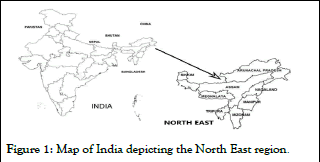
Figure 1: Map of India depicting the North East region.
| Sl. no. | Some important minor forest produces | Estimated number of species | Remarks |
| 1 | Bamboo | 70 + | All indigenous species |
| 2 | Rattan | 20+ | All indigenous species |
| 3 | Medicinal plants | 1000 + | Includes common medicinal and ethnomedicinal plants |
| 4 | Food plants | 650+ | Includes vegetables, fruits, spices and condiments, etc. |
| 5 | Edible mushroom | 40+ | Used by the local communities |
| 6 | Fiber yielding plants | Â 50 + | Â Excluding bamboo and cane |
| 7 | Dye and resins | Â 90+ | Â All categories but from higher plants only |
| 8 | Orchids | Â 800+ | All the species |
| 9 | Thatches and brooms | Â 20+ | Exclude occasionally used species |
| 10 | Fodder | 250+ | Including the tree crops |
Table 1: Different groups of minor forest produce occurring in North East India.
(Due to the non-availability of comprehensive data, the numbers given is a probable estimation but with minimum possible value).
The wild food plants use for medicine and nutrition
As per the recent publication made by the forestry researcher of the region the use of a large number of wild plants for food by the indigenous communities of the region has been highlighted indicating the potentiality of wild plants to fulfill the nutritional and medicinal requirements. More than 630 species used as wild edibles for food and medicines have been reported only from the state of Arunachal Pradesh.
Based on their nutritional and medicinal potential along with their easy availability and traditional recognition, 40 species are selected (Table 2) here all of which are edibles. These selected edible plants serve the purpose of food, medicines and nutrition and can be used by all the masses for their common needs as an alternative to many high-value medicines and nutrition [5]. Proximate and mineral analysis carried out by different researchers for the selected wild vegetables revealed that they serve as a good source of nutrition. They are found to be rich in minerals like Nitrogen(N), Phosphorus(P), Potassium(K), Iron (Fe), Calcium (Ca), Zinc (Zn), Copper (Cu) and Sodium (Na). Additionally, they contain various vitamins, dietary fiber, ash and proteins. Importantly noting that the nutritional value of these wild edible plants can vary significantly from species to species. Some of the macro elements can sufficiently meet the Recommended Daily Allowance (RDA) and Adequate Intakes (AI) for certain life stages and groups if consumed in ideal quantities. Besides, wild plants possess good antioxidant properties as well as volatile compounds like aldehydes, ketones, hydrocarbons, esters, alcohols, terpenes and furans which have medicinal and therapeutic properties. The calorific values of many of the wild foods are found suitable with a good amount of protein indicating their potentiality in nutrition. The vegetables and fruits have satisfactory edible proteins with high quality qualifying them in food industries and as nutrition. Total proteins and nitrogen are related to albumins, globulins, free amino acids, enzymes, hormones, peptides and other nitrogen components. The proteins that contain essential amino acids have high nutritional values therefore they are suitable for consumption because body cells need such proteins [6].
| Sl. no. | Name of plant species | The family name of the species | Edible parts | Used as | Habit |
| 1 | Actinidia callosa L. | Actinidiaceae | Fruits | Fruits | Climber |
| 2 | Allium hookeri Thwaites | Liliaceae | Whole plant | Spices | Herb |
| 3 | Amaranthus spinosus L. | Amaranthaceae | Leaves, tender shoots | Vegetable | Herb |
| 4 | Amomum dealbatum Roxb. | Zingiberaceae | Seed, young sprouts, pith | Vegetable | Herb |
| 5 | Artocarpus lakoocha Roxb. | Moraceae | Fruit | Fruit | Tree |
| 6 | Baccaurea sapida (Roxb.) Müll. Arg. | Phyllanthaceae | Fruit | Fruit | Tree |
| 7 | Centella asiatica L. | Apiaceae | Leaves, flowers, tender shoots | Medicine | Herb |
| 8 | Clerodendrum glandulosum Lindl. | Lamiaceae | Flowers, leaves, tender shoots | Vegetable medicine | Shrub |
| 9 | Choerospondias axillaris (Roxb) Burt. and Hill. | Anacardiaceae | Fruit | Raw fruit, pickle | Herb |
| 10 | Crassocephalum crepidioides (Benth.) S. Moore | Asteraceae | Leaves, young shoots, flower | Vegetable | Herb |
| 11 | Dendrocalamus hamiltonii Nees and Arn. ex Munro | Poaceae | Young shoots | Vegetable | Herb |
| 12 | Dioscorea alata L. | Dioscoreaceae | Tuber | Vegetable | Climber |
| 13 | Dioscorea bulbifera L. | Dioscoreaceae | Tuber, bulbil | Vegetable | Climber |
| 14 | Diplazium esculentum (Retz.) Sw. | Pteridaceae | Young frond | Vegetable | Herb |
| 15 | Elatostema sessile J.R. Forst. and G. Forst. | Urticaceae | Leaves, tender shoots | Vegetable | Herb |
| 16 | Elaeocarpus floribobus Bl. | Elaeocarpaceae | Fruit | Fruit | Tree |
| 17 | Eryngium foetidum L. | Apiaceae | Leaves | Spice | Herb |
| 18 | Fagopyrum esculentum Moench | Polygonaceae | Leaves, fruits, tender shoots | Vegetable | Herb |
| 19 | Garcinia pedunculata Roxb.ex Buch.-Ham. | Clusiaceae | Fruit | Medicine | Tree |
| 20 | Gnetum gnemon L | Gnetaceae | Leaves and shoots | Vegetable | climber |
| 21 | Gynura cusimbua (D.Don) S. Moore | Asteraceae | Tender stem, leaves, flower | Vegetable | Herb |
| 22 | Houttuynia cordata Thunb. | Saururaceae | Tender shoots, leaves, roots | Vegetable medicine | Herb |
| 23 | Litsea cubeba (Lour.) Pers. | Lauraceae | Fruits, seeds | Spice, medicine | Tree |
| 24 | Murraya koenigii (L.) Spreng. | Rutaceae | Fruits | Spice, medicine | Tree |
| 25 | Musa acuminata Colla | Musaceae | Fruits, inflorescence | Fruits, vegetable | Herb |
| 26 | Musa balbisiana Colla | Musaceae | Fruits, inflorescence | Fruits, vegetable | Herb |
| 27 | Myrica esculenta Buch.-Ham. ex D. Don | Rutaceae | Fruits | Fruit | Tree |
| 28 | Oenanthe javanica (Blume) DC. | Apiaceae | Whole plant | Vegetable | Herb |
| 29 | Perilla frutescens (L.) Britton | Lamiaceae | Seeds | Food | Herb |
| 30 | Phoebe cooperiana P.C. Kanjilal and Das | Lauraceae | Fruits | Pickle, fruits | Tree |
| 31 | Piper pedicellatum C. DC. | Piperaceae | Leaves, young shoots | Vegetable, medicine | Herb |
| 32 | Piper longum L | Piperaceae | Fruits, roots | Medicine | Â Shrub |
| 33 | Plantago major L. | Plantaginaceae | Leaves | Salad, medicine | Herb |
| 34 | Pouzolzia hirta Blume ex Hassk. | Urticaceae | Leaves, tender shoots | Vegetable | Herb |
| 35 | Rhynchotechum ellipticum (Dietr.) A. DC. | Gesneriaceae | Stem and leaves | Vegetable, medicine | Herb |
| 36 | Solanum kurzii Brace ex Prain L | Solanaceae | Shoot and fruits | Vegetable | Shrub |
| 37 | Solanum torvum Sw. | Solanaceae | Fruits, tender leaves | Vegetable | Shrub |
| 38 | Spondias pinnata (L. f.) Kurz | Anacardiaceae | Fruits, young leaves | Fruit | Tree |
| 39 | Zanthoxylum armatum DC. | Rutaceae | Leaves, fruits, seeds | Spice, medicine | Tree |
| 40 | Zanthoxylum rhetsa DC. | Rutaceae | Tender leaves, fruits, seeds | Spice, medicine | Tree |
Table 2: Some highly preferred food plants in North East India have nutraceutical and pharmaceutical values.
The local communities of the region extensively used wild food plants for nutritional and medicinal requirements and can manage their health system by selecting the wild food plants with their inborn traditional knowledge system. Many of these species are used regularly like Actinidia callosa, Amaranthus spinosus, Diplazium esculentum, Houttuynia cordata, Litsea cubeba, Plantago major, Pouzolzia hirta, Solanum kurzii, Spondias pinnata, etc. have shown good nutritional contents in their edible parts. Hence their selection and preference to supplement the nutrition requirement are justified. Thus the uses of these plants directly help them to get good nutrition and medicines to cure their health ailments. It is seen in the local markets of the region that these species have good market demand and have become an alternative source of earning. In comparison to some of the conventional commercial vegetables, these organic wild vegetables are easily sold out. At the same time, the medicinal properties of the species like Clerodendrum glandulosum, Houttuynia cordata, Litsea cubeba, Piper pedicellatum, Centella asiatica, etc are so useful that people can cure common health problems like indigestion, diarrhea, dysentery, body ache, hypertension, fever, malaria, jaundice, etc. So regular consumption of these species may keep ones away from expensive nutritious materials and medications [7].
Wild food plants play a vital role in fulfilling the health and nutritional requirements of rural communities all over the world, particularly in developing and biodiversity-rich nations. They certainly fulfill the basic needs of health management of the poor. The scarcity, high cost and unreliable supply of healthy food in developing countries have resulted in the search for cheap and alternative sources of healthy and nutritious food. Wild Edible Plants (WEPs) are one of the alternative sources of healthy and nutritious food and they are crucially important in supporting the global food basket in all parts of the world.
Prospects of economic benefits from nutritional and medicinal plants
The plant resources particularly used for food, nutrition and medicine have high demand among the masses. Due to the continuous consumption of commercially but cultivated vegetables and food plants through the unscientific application of chemical fertilizers, pesticides, fungicides, etc., people are suffering from various health issues like gastritis, indigestion, etc. To avoid such problems there is high demand for wild edible and medicinal plants grown naturally or through organic cultivation. There are high market demands for wild food and vegetable plants like the species of Clerodendrum, Eryngium, Musa, Piper, Pouzolzia and Zanthoxyllum which are known for their high nutritional and medicinal values. These plant species can easily be cultivated for sustainable uses and economic benefits by the local communities. As consumption of these species is found beneficial for health they have high economic potentiality through their sustainable management, value additions if any and proper marketing [8].
Some of the selected species used as vegetables could be a potential substitute for conventional vegetables as a source of nutrition, especially in rural areas where the cultivation of conventional vegetables is not in practice. Domestication coupled with sustainable utilization of wild vegetables, in the long run, may also contribute toward the conservation of the local gene pool of important bioresources. The region has enough land to undertake cultivation as per the suitability of the habitat of each species. The cultivation of these highly demanded organic food plant species in the available land would pave the way for sustainable development of the poor communities and can open the scope for the generation of employment. The management of these plants using suitable agricultural technology will produce enough raw materials for consumption and marketing. These will not only help the people to get health and economic benefits from the resources surrounding them but also act in fulfillment of the following Sustainable Development Goals (SDG) of the United Nations [9].
The North East region of India is a storehouse of numerous potential forest resources supporting the livelihood of the local communities and economy of the region. However, these resources are not being efficiently utilized to harness their full benefits. As there is continuous forest and habitat loss due to developmental activities, there is an urgent need to act together with all the stakeholders to manage and conserve the resources. To support the sustainability, health and economic benefits, the standardization of post-harvest handling and proper storage facilities at the village level is highly essential. Awareness of the socio-economic and ecological values of the beneficiaries like the collector and harvesters, middlemen and vendors may be helpful in the proper management and marketing of the minor forest produces. However, the government in collaboration with the industries and research institutions should take appropriate strategies for harnessing the benefits from such valuable resources. As indicated above, the forest resources of the biodiversity-rich Northeast region of India may significantly contribute to some of the SDGs of the UN particularly to end poverty and hunger, achieve food security and improve nutrition.
I express my deep gratitude to Prof. B. Singh and Prof. P. R. Gajurel from the department of forestry at the North Eastern Regional Institute of Science and Technology (NERIST) in Arunachal Pradesh, India. Their guidance and provision of valuable publications and information have been instrumental in gaining a comprehensive understanding of the subject and shaping this article. I would also like to extend my thanks to the research scholars of the forestry department at NERIST for their assistance and support in finalizing the article and helping me to know about the listed plants. My interest and motivation to explore the rich bio resources of the region and write this article were sparked during my participation in the National Child Science Congress (NCSC) competition in 2018 and 2019 while I was in middle school. The NCSC, promoted by the Department of Science and Technology, Government of India, served as a source of inspiration for me.
[Crossref] [Google Scholar] [PubMed]
Citation: Gajurel T (2025). Potentiality of the Minor Forest Produces Occurring in Biodiversity-Rich North East India for Livelihood Improvement and Achieving the Sustainable Development Goals (SDGs). J For Res. 14:571.
Received: 28-Aug-2024, Manuscript No. JFOR-24-33703; Editor assigned: 02-Aug-2024, Pre QC No. JFOR-24-33703 (PQ); Reviewed: 16-Aug-2024, QC No. JFOR-24-33703; Revised: 02-Jan-2025, Manuscript No. JFOR-24-33703 (R); Published: 09-Jan-2025 , DOI: 10.35248/2168-9776.25.14.571
Copyright: © 2025 Gajurel T. This is an open-access article distributed under the terms of the Creative Commons Attribution License, which permits unrestricted use, distribution and reproduction in any medium, provided the original author and source are credited.