
Immunome Research
Open Access
ISSN: 1745-7580
ISSN: 1745-7580
Research Article - (2026)Volume 22, Issue 1
Mycobacterium tuberculosis (Mtb), the etiological agent of Tuberculosis (TB), has evolved sophisticated strategies to survive and persist within host macrophages despite robust innate and adaptive immune defenses. A growing body of evidence highlights the crucial role of the Proline-Glutamic Acid/Proline-Proline-Glutamic Acid (PE/ PPE) family of proteins, unique to pathogenic mycobacteria and constituting nearly 10% of the Mtb genome, in orchestrating immune evasion. Among the host defense pathways targeted by Mtb, autophagy has emerged as a critical cell-intrinsic antimicrobial mechanism that restricts intracellular bacterial growth and facilitates antigen presentation. However, virulent Mtb strains actively suppress autophagy through diverse molecular strategies, many of which are mediated by PE/PPE proteins. In this Review, we synthesize genomic, structural, molecular, and immunological evidence demonstrating how PE/PPE proteins function as master regulators of autophagy, apoptosis, ubiquitin signaling, and inflammatory responses. We integrate mechanistic paradigms involving PE_PGRS47- and PE_PGRS20-mediated inhibition of canonical autophagy, PPE51-driven rewiring of TLR2-MAPK signaling, PE6-dependent MTOR activation, and the paradoxical ubiquitin-dependent xenophagy mediated by Rv1468c. We propose a unifying model in which PE/PPE proteins act as modular effectors that fine-tune autophagy and immune signaling to promote long-term persistence, facilitate drug tolerance, and enable transmission. Finally, we discuss the translational implications of targeting PE/PPE-autophagy interfaces for host-directed therapies, vaccine design, and biomarker development in drug-resistant TB.
PE/PPE proteins; Autophagy inhibition; Xenophagy; Host-pathogen interactions; Innate immune evasion; Ubiquitin signaling; Drug-resistant tuberculosis.
Tuberculosis remains a major global health burden, with approximately 10.6 million new cases and more than 1.3 million deaths annually despite decades of research and therapeutic advances [1-3]. The disease continues to disproportionately affect low- and middle-income countries, and the emergence of Multidrug-Resistant (MDR) and Extensively Drug-Resistant (XDR) Mycobacterium tuberculosis (Mtb) strains has further complicated global control efforts. The success of Mtb as a pathogen lies not only in its intrinsic resistance to environmental stress and antibiotics but also in its remarkable ability to manipulate host immune defenses at multiple levels. These immune-modulatory strategies enable Mtb to persist within the host for prolonged periods, often resulting in latent infection that can reactivate years or even decades later [3-7].
Following inhalation, Mtb is phagocytosed by alveolar macrophages, which constitute the first line of cellular defense in the lung. Rather than being eliminated, Mtb establishes a protected intracellular niche within these cells, where it actively subverts phagosomal maturation, resists lysosomal degradation, and adapts to hostile conditions such as hypoxia, nutrient limitation, and oxidative stress [4,8,9]. This intracellular persistence is a defining feature of Mtb pathogenesis and underlies both latent infection and chronic disease. Macrophages deploy a wide array of antimicrobial mechanisms to control intracellular pathogens, including the production of Reactive Oxygen Species (ROS) and Reactive Nitrogen Species (RNS), secretion of inflammatory cytokines, activation of programmed cell death pathways, and induction of autophagy. Among these, autophagy has emerged as a central host defense mechanism against intracellular pathogens, including Mtb [10-12]. Autophagy not only mediates the lysosomal degradation of bacteria through xenophagy but also contributes to immune regulation by enhancing antigen processing and presentation, thereby bridging innate and adaptive immunity [11, 13-19]. Through these dual functions, autophagy plays a critical role in shaping the outcome of Mtb infection.
Pharmacological induction of autophagy using agents such as rapamycin, vitamin D, metformin, and gefitinib has been shown to restrict intracellular Mtb growth in vitro and in vivo, revealing the therapeutic potential of targeting this pathway (16,20-22). These observations have fueled interest in Host-Directed Therapies (HDTs) that augment autophagic responses to improve bacterial clearance and treatment outcomes, particularly in drug-resistant TB. However, virulent Mtb strains actively counteract autophagy. Increasing evidence indicates that this suppression is not a passive consequence of infection but rather the result of targeted bacterial effector functions that interfere with autophagy initiation, progression, or completion. Among the most prominent mediators of this immune evasion are the Proline-Glutamic Acid/Proline- Proline-Glutamic Acid (PE/PPE) family of proteins, unique to pathogenic mycobacteria and massively expanded in the Mtb genome [5,18,19,23-27]. While PE/PPE proteins were initially associated with antigenic variation and immune modulation, recent studies have uncovered their direct involvement in autophagy suppression, ubiquitin signaling, apoptosis regulation, and inflammatory pathway rewiring [3,28-30].
This Review critically examines the role of PE/PPE proteins as central regulators of autophagy and immune evasion in Mtb infection. By integrating genomic organization, molecular mechanisms, lineage-specific variation, and translational implications, we provide a comprehensive framework for understanding how these proteins shape host-pathogen interactions and contribute to TB pathogenesis.
Genomic organization and structural diversity of PE/ PPE proteins
The Mtb genome encodes approximately 168 PE/PPE proteins, including 99 PE and 69 PPE family members, representing nearly 10% of the coding capacity [19,23,31]. This extraordinary expansion contrasts sharply with the reductive evolution observed in many intracellular pathogens and suggests a strong selective advantage for maintaining and diversifying these proteins. Such a large investment of genomic resources implies that PE/PPE proteins perform functions critical for survival, virulence, and adaptation within the host. PE proteins are characterized by a conserved ~110-amino-acid N-terminal Proline-Glutamic Acid (PE) motif, whereas PPE proteins possess a longer ~180-aminoacid Proline-Proline-Glutamic Acid (PPE) motif [19,32]. These conserved domains are thought to provide a structural scaffold that supports heterodimerization, stability, and secretion. In contrast, the C-terminal regions of PE/PPE proteins are highly variable in both length and amino acid composition, conferring functional diversity and enabling interactions with a wide range of host targets.
Based on C-terminal features, PE/PPE proteins are further classified into subfamilies such as PE_PGRS (polymorphic GCrich repetitive sequence) and PPE-MPTR (major polymorphic tandem repeat), which exhibit extensive polymorphism and repetitive sequences [33-35]. This variability is believed to contribute to immune evasion by altering antigenic epitopes and modulating host immune recognition. Moreover, polymorphisms within these regions often show lineage-specific patterns, suggesting roles in host adaptation and epidemiological success. PE/PPE genes are non-randomly distributed across the Mtb genome and frequently occur as bicistronic operons, with a PE gene positioned immediately upstream of a PPE gene (Figure 1) [35,36]. This genomic arrangement facilitates co-transcription and the formation of stable PE-PPE heterodimers. Many of these operons are associated with ESX type VII secretion system loci, particularly ESX-1 and ESX-5, suggesting co-evolution of secretion machinery and effector proteins [37-39]. The ESX systems are essential for exporting PE/PPE proteins across the mycobacterial cell envelope and delivering them to host cell compartments.
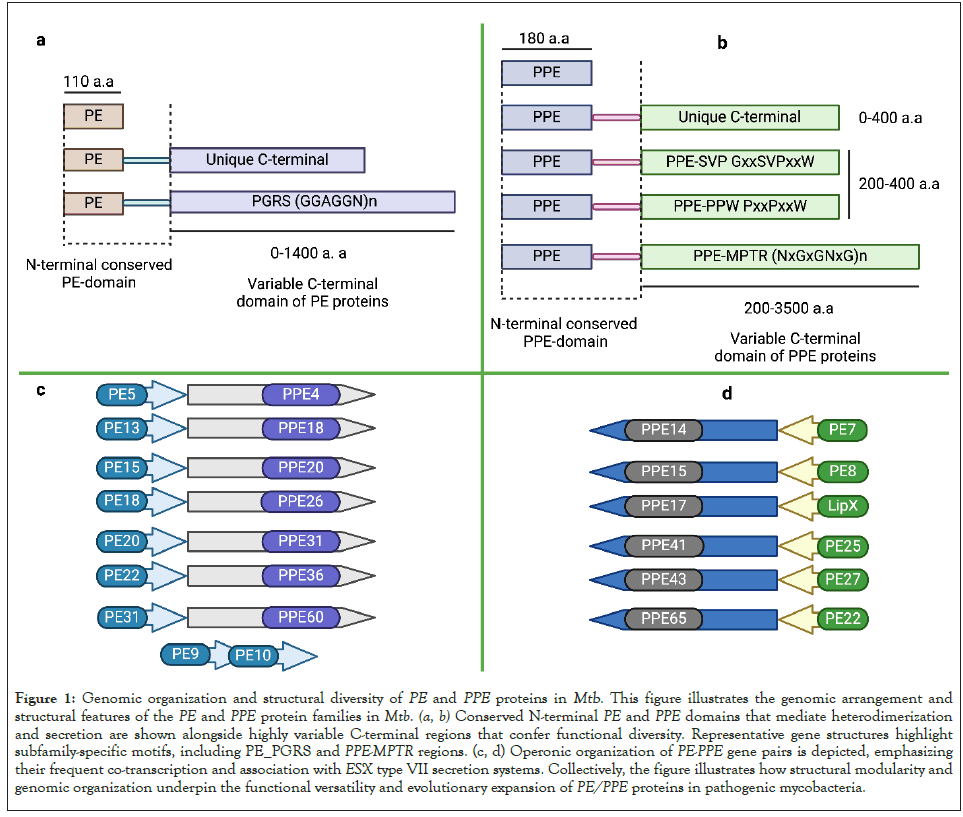
Figure 1: Genomic organization and structural diversity of PE and PPE proteins in Mtb. This figure illustrates the genomic arrangement and structural features of the PE and PPE protein families in Mtb. (a, b) Conserved N-terminal PE and PPE domains that mediate heterodimerization and secretion are shown alongside highly variable C-terminal regions that confer functional diversity. Representative gene structures highlight subfamily-specific motifs, including PE_PGRS and PPE-MPTR regions. (c, d) Operonic organization of PE-PPE gene pairs is depicted, emphasizing their frequent co-transcription and association with ESX type VII secretion systems. Collectively, the figure illustrates how structural modularity and genomic organization underpin the functional versatility and evolutionary expansion of PE/PPE proteins in pathogenic mycobacteria.
Structural studies of PE25/PPE41 and PE8/PPE15 complexes revealed that conserved N-terminal domains mediate dimerization, whereas variable C-terminal domains project outward to interact with host targets [40-44]. These findings support a modular model in which the conserved regions ensure structural integrity, while the variable regions drive functional specificity. Comparative genomics across mycobacterial species highlights the pathogenic relevance of PE/PPE proteins. Pathogenic species such as Mtb, M. bovis, and M. ulcerans harbor large PE/PPE repertoires, whereas non-pathogenic mycobacteria encode far fewer such proteins (45, 46). Moreover, lineage-specific polymorphisms in certain PE/ PPE genes correlate with geographic distribution, virulence, and immune evasion, suggesting roles in host adaptation and disease outcome [27,36].
Autophagy as a cell-intrinsic defense against Mtb
Autophagy is a conserved cellular process that maintains homeostasis by degrading damaged organelles, protein aggregates, and invading pathogens [11,17,19]. Canonical autophagy is initiated by activation of the ULK1 complex, followed by nucleation of the phagophore membrane through the class III PI3K complex and elongation mediated by ATG proteins and LC3 lipidation [47,48]. The completed autophagosome subsequently fuses with lysosomes to form autolysosomes, where cargo is degraded. During Mtb infection, autophagy is induced by multiple stimuli, including nutrient deprivation, inflammatory cytokines, and phagosomal damage [49-52]. The ESX-1 secretion system plays a central role by permeabilizing the phagosomal membrane, allowing mycobacterial DNA to access the cytosol [50,51]. Cytosolic DNA is sensed by cyclic GMP-AMP Synthase (cGAS), leading to STING activation, TBK1 recruitment, and induction of autophagy and type I interferon responses [50,51, 53]. This pathway represents a key link between pathogen sensing and autophagic defense.
In parallel, exposed bacteria are ubiquitinated by host E3 ligases such as Parkin (PRKN), SMURF1, and NEDD4, enabling recognition by autophagy receptors including p62, OPTN, NBR1, and TAX1BP1 (Figure 2) [54-56]. These receptors bridge ubiquitinated bacteria to LC3-decorated membranes, facilitating xenophagic degradation. Autophagy also enhances antigen processing and MHC class II presentation, thereby linking innate and adaptive immunity and promoting effective T cell responses [57-59]. Despite these defenses, virulent Mtb strains efficiently suppress autophagic flux, demonstrating the importance of bacterial countermeasures that directly target autophagy-related pathways.
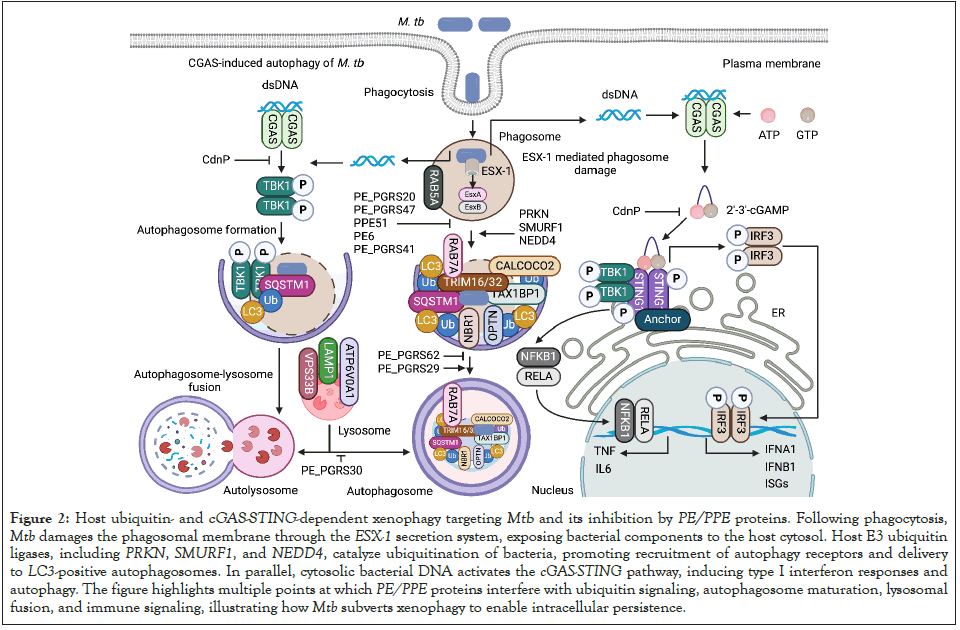
Figure 2: Host ubiquitin- and cGAS-STING-dependent xenophagy targeting Mtb and its inhibition by PE/PPE proteins. Following phagocytosis, Mtb damages the phagosomal membrane through the ESX-1 secretion system, exposing bacterial components to the host cytosol. Host E3 ubiquitin ligases, including PRKN, SMURF1, and NEDD4, catalyze ubiquitination of bacteria, promoting recruitment of autophagy receptors and delivery to LC3-positive autophagosomes. In parallel, cytosolic bacterial DNA activates the cGAS-STING pathway, inducing type I interferon responses and autophagy. The figure highlights multiple points at which PE/PPE proteins interfere with ubiquitin signaling, autophagosome maturation, lysosomal fusion, and immune signaling, illustrating how Mtb subverts xenophagy to enable intracellular persistence.
PE/PPE proteins as direct inhibitors of canonical autophagy
PE_PGRS47 and PE_PGRS20: Inhibition of ULK1- dependent autophagy
A growing body of evidence demonstrates that a functionally defined subset of PE/PPE proteins acts as direct inhibitors of canonical autophagy (Figure 3) [60]. Among these, PE_PGRS47 emerged as a key regulator of autophagy and antigen presentation. Deletion of PE_PGRS47 resulted in enhanced LC3 lipidation, increased autophagic flux, improved antigen presentation, and attenuated bacterial growth during chronic infection in mice [61]. These findings provided the first direct genetic evidence linking a PE/PPE protein to autophagy suppression in vivo. Mechanistically, PE_PGRS47 and the related PE_PGRS20 interact with the host GTPase RAB1A, a critical regulator of vesicular trafficking and autophagy initiation [61]. RAB1A is required for recruitment and activation of the ULK1 complex at nascent autophagosome formation sites. By sequestering RAB1A, PE_PGRS47 and PE_PGRS20 impair ULK1 activation and block canonical autophagy at an early stage. Importantly, this inhibition selectively targets canonical autophagy without broadly compromising host cell viability or other trafficking pathways [61]. Beyond autophagy suppression, PE_PGRS47 inhibits MHC class II-restricted antigen presentation, thereby impairing CD4⺠T cell activation and linking autophagy inhibition to adaptive immune evasion [61, 62]. Together, these findings illustrate how distinct PE/PPE-encoding genes converge on autophagy initiation, antigen presentation, and vesicular trafficking to promote intracellular survival of Mtb (Table 1).
| Protein | Host target | Pathway affected | Functional role | Immune consequence | References |
|---|---|---|---|---|---|
| PE_PGRS47 | RAB1A | Canonical autophagy | Inhibits autophagosome maturation | Reduces antigen presentation and intracellular killing | Saini, N.K., et al., Suppression of autophagy and antigen presentation by Mycobacterium tuberculosis PE_PGRS47. Nat Microbiol, 2016. 1(9): p. 16133. |
| PE_PGRS41 | CASP3/9, MAP1LC3B2 | Apoptosis, autophagy | Suppresses apoptosis and autophagy | Enhances intracellular persistence | Deng, W., et al., Mycobacterium tuberculosis PE_PGRS41 Enhances the Intracellular Survival of M. smegmatis within Macrophages Via Blocking Innate Immunity and Inhibition of Host Defense. Sci Rep, 2017. 7: p. 46716. |
| PPE51 | TLR2 → MAPK1/3 | Autophagy signaling | Blocks phagolysosomal fusion | Modulates ROS and cytokine release | Strong, E.J., et al., Mycobacterium tuberculosis PPE51 Inhibits Autophagy by Suppressing Toll-Like Receptor 2-Dependent Signaling. mBio, 2022. 13(3): p. e0297421. |
| PE6 | TLR4, MTOR | Immune signaling, apoptosis | Alters cytokine signaling, triggers apoptosis | Increases bacterial replication | Sharma, N., et al., Mycobacterium tuberculosis Protein PE6 (Rv0335c), a Novel TLR4 Agonist, Evokes an Inflammatory Response and Modulates the Cell Death Pathways in Macrophages to Enhance Intracellular Survival. Front Immunol, 2021. 12: p. 696491. |
| Rv1468c (PE_PGRS29) | Ubiquitin (UBA domain) | Xenophagy | Mediates host ubiquitin binding | Modulates inflammation via xenophagy | Chai, Q., et al., A Mycobacterium tuberculosis surface protein recruits ubiquitin to trigger host xenophagy. Nat Commun, 2019. 10(1): p. 1973. |
| PE_PGRS20 | MTOR, S6K | Autophagy signaling | Inhibits autophagosome formation via mTOR pathway | Enhances intracellular survival; suppresses pro-inflammatory cytokines (TNF-α, IL-1β) | Strong, E.J., et al., Identification of Autophagy-Inhibiting Factors of Mycobacterium tuberculosis by High-Throughput Loss-of-Function Screening. Infect Immun, 2020. 88(12). |
| PE_PGRS21 | MTOR | Autophagy signaling | Suppresses LC3B-II conversion and autophagosome formation | Reduces antigen processing and favors bacterial persistence | Strong, E.J., et al., Identification of Autophagy-Inhibiting Factors of Mycobacterium tuberculosis by High-Throughput Loss-of-Function Screening. Infect Immun, 2020. 88(12). |
| PE_PGRS30 | MTOR | Autophagy inhibition | Activates mTOR, reduces LC3 puncta in macrophages | Impedes xenophagic clearance | Strong, E.J., et al., Identification of Autophagy-Inhibiting Factors of Mycobacterium tuberculosis by High-Throughput Loss-of-Function Screening. Infect Immun, 2020. 88(12). |
| PPE44 | Unknown | Autophagy inhibition | Reduces autophagy markers in macrophages | Promotes intracellular persistence | Strong, E.J., et al., Identification of Autophagy-Inhibiting Factors of Mycobacterium tuberculosis by High-Throughput Loss-of-Function Screening. Infect Immun, 2020. 88(12). |
Table 1. PE/PPE proteins employ diverse mechanisms to suppress autophagy and modulate host immunity in Mtb. This table summarizes key PE and PPE proteins implicated in autophagy regulation and immune modulation, highlighting their host targets, affected signaling pathways, functional roles, and immunological consequences. The table integrates evidence from genetic, biochemical, and infection studies to illustrate how distinct PE/PPE proteins converge on common host defense pathways, such as autophagy, apoptosis, and inflammatory signaling, to promote bacterial survival and pathogenesis.
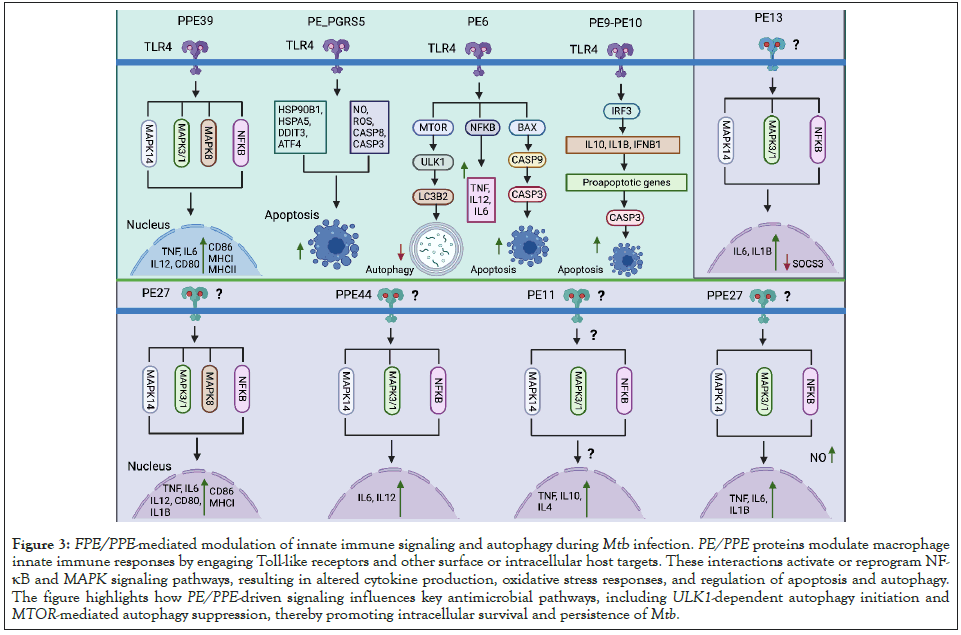
Figure 3: FPE/PPE-mediated modulation of innate immune signaling and autophagy during Mtb infection. PE/PPE proteins modulate macrophage innate immune responses by engaging Toll-like receptors and other surface or intracellular host targets. These interactions activate or reprogram NF-κB and MAPK signaling pathways, resulting in altered cytokine production, oxidative stress responses, and regulation of apoptosis and autophagy. The figure highlights how PE/PPE-driven signaling influences key antimicrobial pathways, including ULK1-dependent autophagy initiation and MTOR-mediated autophagy suppression, thereby promoting intracellular survival and persistence of Mtb.
PPE51: Rewiring TLR2-MAPK signaling to suppress autophagy
PPE51 exemplifies an alternative strategy for autophagy suppression through manipulation of innate immune signaling. PPE51 interacts with Toll-like Receptor 2 (TLR2), triggering downstream MAPK signaling that paradoxically suppresses autophagic flux rather than activating antimicrobial responses (Figure 4) [63]. This atypical signaling outcome reflects the ability of the corresponding PE/PPE proteins to reprogram host receptor pathways for immune evasion. PPE51-mediated signaling disrupts ERK1/2-dependent autophagy induction and impairs phagolysosomal fusion, thereby enhancing intracellular bacterial survival [63]. In addition, PPE51 influences cytokine production and ROS generation, further shaping the intracellular environment to favor persistence. This mechanism unveils how PE/PPE proteins exploit pattern recognition receptors to subvert host defenses.
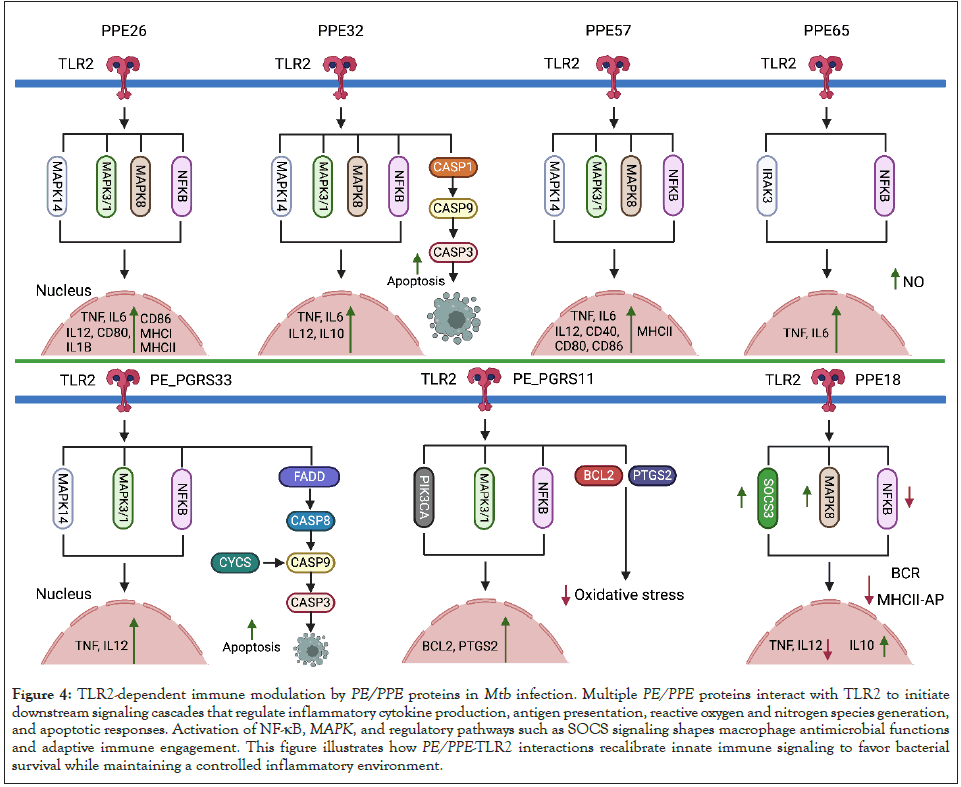
Figure 4: TLR2-dependent immune modulation by PE/PPE proteins in Mtb infection. Multiple PE/PPE proteins interact with TLR2 to initiate downstream signaling cascades that regulate inflammatory cytokine production, antigen presentation, reactive oxygen and nitrogen species generation, and apoptotic responses. Activation of NF-κB, MAPK, and regulatory pathways such as SOCS signaling shapes macrophage antimicrobial functions and adaptive immune engagement. This figure illustrates how PE/PPE-TLR2 interactions recalibrate innate immune signaling to favor bacterial survival while maintaining a controlled inflammatory environment.
PE6: mTOR activation and integrated control of autophagy and apoptosis
PE6 (Rv0335c) is a multifunctional PE protein that integrates autophagy inhibition with modulation of inflammatory signaling and cell death pathways. PE6 interacts with TLR4, activating the MYD88-NF-κB axis and inducing pro-inflammatory cytokines [19]. Concurrently, PE6 activates MTOR signaling, suppressing ULK1 activation and autophagy initiation, thereby antagonizing a key antimicrobial pathway. PE6 localizes to multiple cellular compartments, including mitochondria and the nucleus, and its C-terminal domain is essential for inducing mitochondrial dysfunction, ER stress, and caspase-dependent apoptosis [64]. This dual regulation enables PE6 to fine-tune host cell fate, balancing inflammation, autophagy suppression, and apoptosis to optimize bacterial persistence and dissemination.
Ubiquitin-dependent xenophagy and the paradoxical role of Rv1468c
Rv1468c (PE_PGRS29) represents a unique exception within the PE/PPE gene family. This surface-exposed protein contains a eukaryotic-like Ubiquitin-Associated (UBA) domain that directly binds host ubiquitin chains, promoting recruitment of the autophagy receptor p62 and delivery of bacteria to autophagosomes [10, 65]. Surprisingly, loss of Rv1468c leads to increased bacterial burden and heightened inflammation, suggesting that controlled xenophagy may benefit Mtb by limiting excessive immune activation [65]. This finding supports a model in which Mtb fine-tunes autophagy rather than completely abolishing it, balancing bacterial clearance with host tolerance.
Integration of autophagy, cell death, and inflammatory pathways
PE/PPE proteins exert pleiotropic effects on host cell death pathways, including apoptosis, necrosis, and pyroptosis. PE_ PGRS41 suppresses caspase-3 and caspase-9 activation while inhibiting autophagy, thereby enhancing bacterial persistence (Figure 5) [66]. PPE60 and PPE32 promote inflammasome activation and IL-1β maturation, contributing to inflammatory pathology [67, 68]. These overlapping functions emphasize that PE/PPE proteins target interconnected host defense pathways, autophagy, apoptosis, and inflammatory signaling, through diverse yet convergent mechanisms (Table 1).
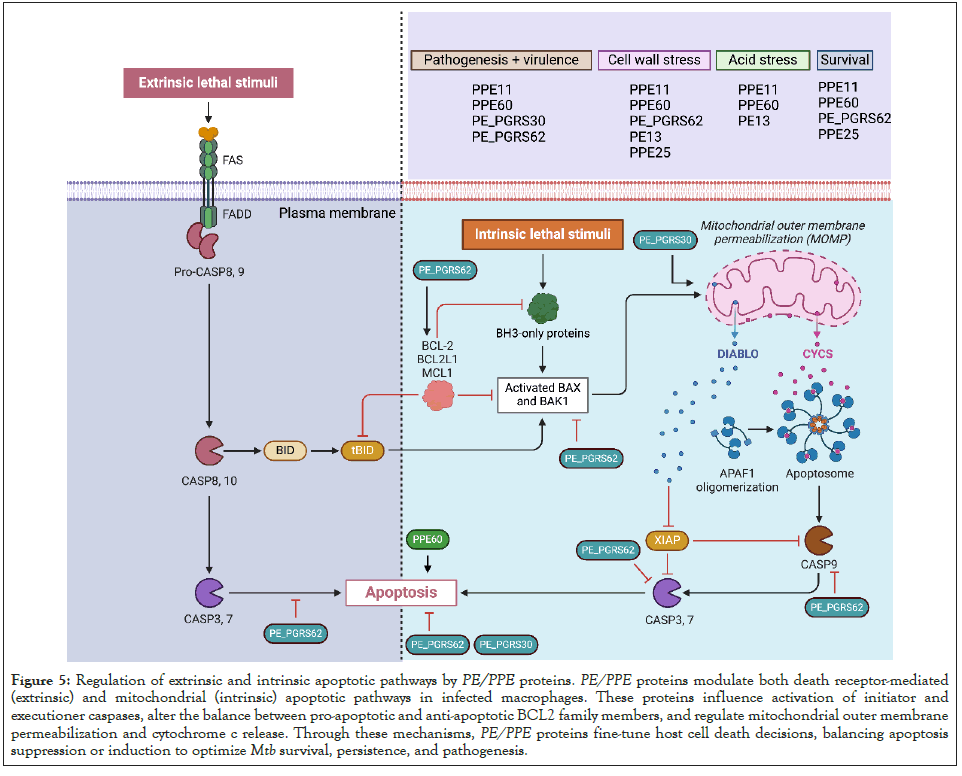
Figure 5: Regulation of extrinsic and intrinsic apoptotic pathways by PE/PPE proteins. PE/PPE proteins modulate both death receptor-mediated (extrinsic) and mitochondrial (intrinsic) apoptotic pathways in infected macrophages. These proteins influence activation of initiator and executioner caspases, alter the balance between pro-apoptotic and anti-apoptotic BCL2 family members, and regulate mitochondrial outer membrane permeabilization and cytochrome c release. Through these mechanisms, PE/PPE proteins fine-tune host cell death decisions, balancing apoptosis suppression or induction to optimize Mtb survival, persistence, and pathogenesis.
Lineage-specific variation, persistence, and drug resistance
Lineage-specific variation in PE/PPE genes is increasingly recognized as a determinant of virulence and immune evasion. The Beijing lineage, strongly associated with MDR and XDR TB, exhibits enhanced capacity to suppress autophagy and phagolysosomal maturation [4,30,51]. Differential expression and polymorphism of PE/PPE proteins may contribute to these phenotypes. Importantly, PE/PPE proteins are among the most sequence-diverse gene families in the Mtb genome, and many members, particularly PE_PGRS and PPE-MPTR proteins, display hypervariable regions that can alter protein folding, secretion efficiency, and host-target engagement. Such diversity is likely to shape how individual lineages tune macrophage responses, influencing both intracellular fitness and transmissibility. In this context, the Beijing lineage may represent an evolutionary solution in which augmented autophagy suppression and altered inflammatory calibration enable sustained bacterial replication while limiting bactericidal clearance.
Beyond sequence variation, lineage-associated differences in PE/ PPE transcriptional programs may also contribute to pathogenic outcomes. Infection-stage-specific regulation, early establishment versus chronic persistence, could allow Mtb to deploy distinct PE/PPE modules depending on immune pressure and tissue microenvironment. For example, in early infection, enhanced inhibition of canonical autophagy and antigen presentation may promote successful establishment in naive macrophages, whereas during chronic infection, modulation of inflammatory thresholds may prevent excessive tissue damage that could compromise bacterial persistence. Moreover, as PE/PPE proteins frequently interface with secretion systems and cell envelope components, lineage-dependent alterations may indirectly affect phagosomal trafficking, membrane damage, or bacterial surface ubiquitination, each of which influences xenophagic targeting and downstream immune activation [26,36,69-74].
Autophagy suppression may also facilitate phenotypic drug tolerance by stabilizing intracellular niches that favor bacterial quiescence and reduced antibiotic susceptibility [75,76]. In macrophages, autophagy intersects with immunometabolic remodeling, lysosomal biogenesis, and redox homeostasis, processes that collectively influence bacterial stress exposure. If PE/PPE proteins dampen autophagic flux and lysosomal maturation, intracellular bacteria may experience reduced exposure to acidic, proteolytic, and oxidative conditions, thereby lowering the efficacy of antibiotics whose activity is enhanced by host-mediated stress. In parallel, suppression of autophagy may promote persistence by limiting cytosolic surveillance pathways (for example, ubiquitin-mediated xenophagy), which otherwise constrain bacterial subpopulations that enter slow-growing or drug-tolerant states. This is particularly relevant for MDR/XDR disease, where prolonged chemotherapy provides a selective landscape in which phenotypic tolerance can bridge the gap to genetic resistance. Host-directed therapies that restore autophagy, such as metformin and vitamin D, improve treatment outcomes and may counteract PE/PPE-mediated immune evasion (77- 80). These approaches are conceptually attractive because they target host pathways that are less prone to bacterial mutationdriven escape, and they may synergize with standard regimens by increasing autophagic delivery of bacteria to lysosomes and enhancing antigen presentation.
Translational implications: host-directed therapy, vaccines, and biomarkers
At a time when drug resistance threatens global TB control, targeting PE/PPE-autophagy interfaces offers a particularly compelling avenue for host-directed intervention [24,81,82]. A critical advantage of host-directed autophagy induction is the potential to collapse intracellular persistence niches by simultaneously enhancing xenophagic clearance, promoting phagolysosomal maturation, and reinforcing antimicrobial effector programs (including ROS/RNS regulation and antimicrobial peptide pathways). Additionally, as several PE/PPE proteins operate upstream at pathway “gatekeeper” nodes, such as ULK1 initiation (via RAB1A), receptor-proximal signaling (TLR2- MAPK), or nutrient-sensing regulators (MTOR), therapeutic strategies could be designed to either (i) Directly counteract these nodes pharmacologically or (ii) Strengthen parallel pathways that bypass PE/PPE blockade to restore autophagic flux. For instance, combining autophagy-inducing agents with lysosome-boosting approaches may be particularly effective in settings where Mtb suppresses autophagosome maturation rather than initiation.
PE/PPE proteins also represent potential vaccine antigens and diagnostic biomarkers, although their immunomodulatory properties necessitate careful epitope selection [83-85]. While PE/PPE proteins can be highly immunogenic, the same domains that drive immune recognition may also contribute to immune suppression, antigen presentation blockade, or inflammatory dysregulation. Thus, vaccine strategies may benefit from focusing on conserved, protective epitopes that elicit robust T cell responses while avoiding regions implicated in autophagy inhibition or immune diversion. Similarly, diagnostic or prognostic applications may leverage lineage-specific PE/PPE signatures as markers of virulence potential, immune modulation profiles, or risk of drug-resistant disease. In this framework, integrating PE/ PPE sequence variation with host-response biomarkers, such as autophagy-related transcriptional signatures or inflammatory cytokine profiles, could improve stratification of TB patients and guide adjunct host-directed interventions [86-88].
PE/PPE proteins have emerged as central orchestrators of autophagy suppression, immune modulation, and intracellular persistence in Mtb. By targeting critical nodes in autophagy initiation, ubiquitin signaling, innate immune receptor pathways, and cell death machinery, these proteins enable Mtb to evade host defenses, tolerate antibiotic stress, and establish chronic infection. Importantly, the collective evidence suggests that PE/ PPE proteins should be viewed not as isolated virulence factors but as components of a distributed regulatory network that tunes host pathways in a context-dependent manner, across infection stages, tissue environments, and bacterial lineages.
Future research should prioritize systems-level analyses of PE/PPE networks, validation in human macrophages and clinical isolates, and translational exploration of PE/PPE-targeted host-directed therapies. Mechanistic dissection of PE/PPE-host interactions at high resolution (protein-protein interfaces, post-translational modifications, and compartment-specific signaling effects) will be essential to identify druggable nodes. Parallel efforts should integrate lineage-resolved genomics with functional immunology to determine how PE/PPE polymorphisms shape autophagy suppression, inflammation, and treatment outcomes in realworld patient populations. Understanding how PE/PPE proteins regulate autophagy will be essential for developing next-generation interventions against drug-resistant TB.
JAS was funded by a Start-up Research Grant from the University Grant Commission and the Department of Science and Technology Science and Engineering Research Board. MS acknowledges SEED and MURTI fellowships provided by GITAM university as part of internal funding to support research and developments. SEH is a Robert Koch Fellow at the Robert Koch Institute, Germany, and National Science Chair, Department of Science and Technology, New Delhi, India.
The authors have no relevant financial or nonfinancial interests to disclose.
All data have been included in the manuscript.
Not applicable
All the authors have read the final version of the manuscript and agree with its publication.
MS, NZE, YA, and SEH conceptualized the study and contributed to the drafting and finalization of the manuscript. MS, JAS, and YA conceptualized and designed the figures. YA, MS, DT, HF, JAS, GS, HF, and AA contributed to various stages of the initial drafting, preparation, and finalization of the figures.
[CrossRef] [GoogleScholar] [PubMed]
[CrossRef] [GoogleScholar] [PubMed]
[CrossRef] [GoogleScholar] [PubMed]
[CrossRef] [GoogleScholar] [PubMed]
[CrossRef] [GoogleScholar] [PubMed]
[CrossRef] [GoogleScholar] [PubMed]
[CrossRef] [GoogleScholar] [PubMed]
[CrossRef] [GoogleScholar] [PubMed]
[CrossRef] [GoogleScholar] [PubMed]
[CrossRef] [GoogleScholar] [PubMed]
[CrossRef] [GoogleScholar] [PubMed]
[CrossRef] [GoogleScholar] [PubMed]
[CrossRef] [GoogleScholar] [PubMed]
[CrossRef] [GoogleScholar] [PubMed]
[CrossRef] [GoogleScholar] [PubMed]
[CrossRef] [GoogleScholar] [PubMed]
[CrossRef] [GoogleScholar] [PubMed]
[CrossRef] [GoogleScholar] [PubMed]
[CrossRef] [GoogleScholar] [PubMed]
[CrossRef] [GoogleScholar] [PubMed]
[CrossRef] [GoogleScholar] [PubMed]
[CrossRef] [GoogleScholar] [PubMed]
[CrossRef] [GoogleScholar] [PubMed]
[CrossRef] [GoogleScholar] [PubMed]
[CrossRef] [GoogleScholar] [PubMed]
[CrossRef] [GoogleScholar] [PubMed]
[CrossRef] [GoogleScholar] [PubMed]
[CrossRef] [GoogleScholar] [PubMed]
[CrossRef] [GoogleScholar] [PubMed]
[CrossRef] [GoogleScholar] [PubMed]
[CrossRef] [GoogleScholar] [PubMed]
[CrossRef] [GoogleScholar] [PubMed]
[CrossRef] [GoogleScholar] [PubMed]
[CrossRef] [GoogleScholar] [PubMed]
[CrossRef] [GoogleScholar] [PubMed]
[CrossRef] [GoogleScholar] [PubMed]
[CrossRef] [GoogleScholar] [PubMed]
[CrossRef] [GoogleScholar] [PubMed]
[CrossRef] [GoogleScholar] [PubMed]
[CrossRef] [GoogleScholar] [PubMed]
[CrossRef] [GoogleScholar] [PubMed]
[CrossRef] [GoogleScholar] [PubMed]
[CrossRef] [GoogleScholar] [PubMed]
[CrossRef] [GoogleScholar] [PubMed]
[CrossRef] [GoogleScholar] [PubMed]
[CrossRef] [GoogleScholar] [PubMed]
[CrossRef] [GoogleScholar] [PubMed]
[CrossRef] [GoogleScholar] [PubMed]
[CrossRef] [GoogleScholar] [PubMed]
[CrossRef] [GoogleScholar] [PubMed]
[CrossRef] [GoogleScholar] [PubMed]
[CrossRef] [GoogleScholar] [PubMed]
[CrossRef] [GoogleScholar] [PubMed]
[CrossRef] [GoogleScholar] [PubMed]
[CrossRef] [GoogleScholar] [PubMed]
[CrossRef] [GoogleScholar] [PubMed]
[CrossRef] [GoogleScholar] [PubMed]
[CrossRef] [GoogleScholar] [PubMed]
[CrossRef] [GoogleScholar] [PubMed]
[CrossRef] [GoogleScholar] [PubMed]
[CrossRef] [GoogleScholar] [PubMed]
[CrossRef] [GoogleScholar] [PubMed]
[CrossRef] [GoogleScholar] [PubMed]
[CrossRef] [GoogleScholar] [PubMed]
[CrossRef] [GoogleScholar] [PubMed]
[CrossRef] [GoogleScholar] [PubMed]
[CrossRef] [GoogleScholar] [PubMed]
[CrossRef] [GoogleScholar] [PubMed]
[CrossRef] [GoogleScholar] [PubMed]
[CrossRef] [GoogleScholar] [PubMed]
[CrossRef] [GoogleScholar] [PubMed]
[CrossRef] [GoogleScholar] [PubMed]
[GoogleScholar] [PubMed]
[CrossRef] [GoogleScholar] [PubMed]
[CrossRef] [GoogleScholar] [PubMed]
[CrossRef] [GoogleScholar] [PubMed]
[CrossRef] [GoogleScholar] [PubMed]
[CrossRef] [GoogleScholar] [PubMed]
[CrossRef] [GoogleScholar] [PubMed]
[CrossRef] [GoogleScholar] [PubMed]
[CrossRef] [GoogleScholar] [PubMed]
[CrossRef] [GoogleScholar] [PubMed]
[CrossRef] [GoogleScholar] [PubMed]
[CrossRef] [GoogleScholar] [PubMed]
[CrossRef] [GoogleScholar] [PubMed]
[CrossRef] [GoogleScholar] [PubMed]
Citation: Shariq M, Ehtesham NZ, Ahuja Y, Alam A, Thakuri D, Fayaz H, Shrivastava G, Sheikh JA, Hasnain SE (2025). PE/PPE Proteins as Central Regulators of Autophagy Suppression, Immune Modulation, and Intracellular Persistence in Mycobacterium tuberculosis. Immunome Res. 22:331.
Received: 16-Jan-2026, Manuscript No. IMR-26-40055; Editor assigned: 18-Jan-2026, Pre QC No. IMR-26-40055 (PQ); Reviewed: 22-Jan-2026, QC No. IMR-26-40055; Revised: 29-Jan-2026, Manuscript No. IMR-26-40055; Published: 05-Feb-2025 , DOI: 10.35248/1745-7580.25.22.331
Copyright: © 2026 Shariq M, et al. This is an open-access article distributed under the terms of the Creative Commons Attribution License, which permits unrestricted use, distribution, and reproduction in any medium, provided the original author and source are credited.