
International Journal of Physical Medicine & Rehabilitation
Open Access
ISSN: 2329-9096
ISSN: 2329-9096
Research Article - (2025)
Background: Severe ankyloglossia is generally assumed to be associated with poor preoperative articulation and delayed postoperative recovery. However, our previous study using word accuracy testing did not fully support this assumption. The present study aimed to clarify the relationship between the severity of ankyloglossia and postoperative prognosis using multiple articulation assessment methods.
Methods: A total of 74 children with ankyloglossia and speech disorders underwent preoperative assessment and lingual frenuloplasty under general anesthesia, followed by structured speech therapy. Articulation performance was assessed postoperatively at 1, 3, 6 and 12 months. For patients requiring rehabilitation longer than 12 months, evaluation was repeated at the completion of therapy. Assessment items included the number of correctly articulated words, types of articulation errors (omission, substitution, distortion), speech intelligibility and tongue mobility. Results were analyzed according to clinical subtype of ankyloglossia.
Results: Preoperative testing revealed significant differences (p<0.05) among subtypes. The tongue-tip type demonstrated fewer omissions compared with the anterior membrane type, and fewer substitutions compared with both the anterior membrane and tower types. Speech intelligibility was also significantly better in the tongue-tip type than in the anterior membrane type. Conversely, tongue mobility was significantly poorer in the tongue-tip type compared with the anterior membrane and tower types. Across the cohort, significant postoperative improvements (p<0.001) were observed in word test performance, substitution, distortion, speech intelligibility, and tongue mobility, with omission also improving less significantly (p<0.05).
Conclusion: Despite exhibiting the most severe restriction of tongue mobility, the tongue-tip type consistently showed superior articulation outcomes relative to other subtypes. This may be explained by compensatory articulation using posterior regions of the tongue. Future studies should include phoneme-specific analyses to elucidate these compensatory mechanisms.
Ankyloglossia; Tongue-tie; Dysarthria; Speech disorder; Frenuloplasty; Speech therapy
It seems reasonable to assume that more severe tongue-tie would lead to more pronounced articulation difficulties. Our previous study, however, showed the opposite outcomes [1]. Children with the most severe type, the tongue-tip type, demonstrated better preoperative and postoperative articulation outcomes in word accuracy test than those with other types. In this report, we present the outcomes of additional articulation tests including abnormal articulations, speech intelligibility and tongue mobility across different types, providing a basis for further research.
Between February 2020 and December 2023, a total of 103 patients of ankyloglossia with speech disorders underwent lingual frenuloplasty under general anesthesia at the Shin- Yurigaoka General Hospital. They received pre- and postoperative articulation training by speech language pathologists. Children under 2 years old and with developmental disorders or other oral anomalies were excluded from the study. Those (n=74) who had completed speech rehabilitation by September 2024, were included in this study. For the evaluation of articulation function before and after surgery, we employed the 50 picture cards of the new articulation test [2]. The parameters assessed included the number of words articulated correctly (word articulation test), the number of articulation errors, speech intelligibility and tongue mobility.
Assessments were conducted preoperatively and at 1 month, 3 months, 6 months and 1 year postoperatively; in cases requiring articulation training for more than one year, an additional assessment was performed on the final day of training. Outpatient speech rehabilitation sessions for articulation training were generally scheduled once or twice per month.
In the word articulation test, each participant was asked to articulate 50 two- or three-syllable words corresponding to the picture cards, and the number of words pronounced correctly was recorded. Incorrect pronunciations were categorized into three types of articulation errors: (1) omission, in which the expected sound was absent; (2) substitution, in which an incorrect sound was perceived as another phoneme; and (3) distortion, in which the sound was recognizable as the intended phoneme but was auditorily distorted. Speech intelligibility was rated on a 5-point scale according to Taguchi criteria [3] (Table 1). Evaluation of tongue mobility, introduced in July 2020, was graded on a 4-point scale according to our criteria [1] (Table 2).
| Score | Level of speech intelligibility |
|---|---|
| 1 | Easily understood. |
| 2 | Occasionally contains incomprehensible words. |
| 3 | Understandable if the topic is known. |
| 4 | Occasionally contains comprehensible words. |
| 5 | Completely incomprehensible. |
Table 1: Evaluation of speech intelligibility.
| Score | Range of tongue elevation |
|---|---|
| 1 | Reaches the upper lip with the mouth open. |
| 2 | Does not reach the upper lip but elevates within the oral cavity. |
| 3 | Elevates only slightly within the oral cavity. |
| 4 | Barely elevates within the oral cavity. |
Table 2: Evaluation of tongue mobility.
Classification of lingual frenulum type was performed using our modified version of the Kotlow classification (Figure 1) [4]. Statistical analysis was performed using the t-test (assuming unequal variances between two groups), setting significant levels of greater (p<0.001) or lesser (p<0.05) degree. This study was reviewed and approved by the institutional ethics committee of Shin-Yurigaoka General Hospital (Approval No.: 20200929-2-â). The purpose of the study was explained to the participants (or their guardians) using an opt-out approach and the option of non-participation was guaranteed upon request.
Figure 1: Classification of ankyloglossia. (A) Tongue-tip type; (B) Anterior membrane type; (C) Tower type; (D) Posterior type (posterior tongue-tie)
Among the participants, 52 were male and 22 were female. The age distribution was as follows: 15 patients aged 3 years, 20 aged 4 years, 20 aged 5 years, 14 aged 6 years and 5 aged 7 years or older. The duration of postoperative speech rehabilitation was 1 month in 3 cases, 3 months in 5 cases, 6 months in 39 cases, 1 year in 19 cases and more than 1 year in 8 cases (ranging from 14 to 25 months). A total of 66 patients (89.2%) underwent speech rehabilitation for 6 months or longer. The distribution of tonguetie types was as follows: tongue-tip type in 19 cases (25.7%), anterior membrane type in 28 cases (37.8%), tower type in 21 cases (28.4%), and posterior type in 6 cases (8.1%) (Figure 2).
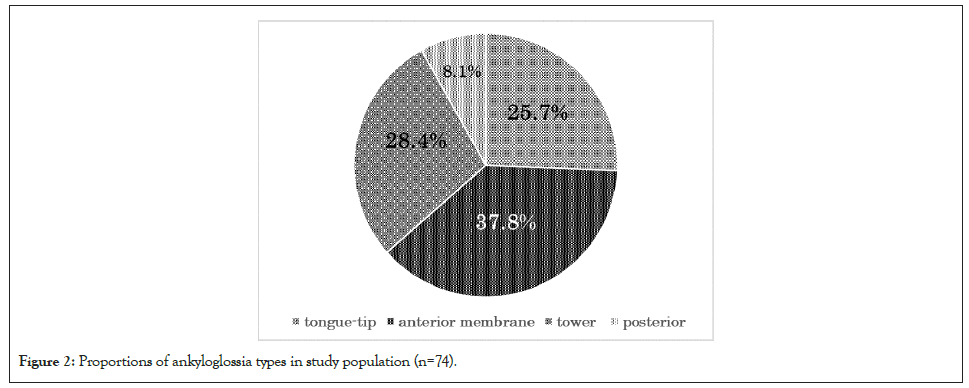
Figure 2: Proportions of ankyloglossia types in study population (n=74).
The outcomes of the articulation function tests are presented in the graphs. Preoperative word articulation test demonstrated better results in the tongue-tip type compared with other types, although there was no significant difference (Figure 3). At the completion of rehabilitation, the number of correctly articulated words showed a marked improvement. Similarly, the numbers of articulation errors omission, substitution, and distortion were analyzed by type before surgery and at the end of speech rehabilitation. In the preoperative assessment, the tongue-tip type showed better performance than other types in “omission” (Figure 4) and “substitution” (Figure 5), whereas it exhibited the poorest outcomes in “distortion” (Figure 6).
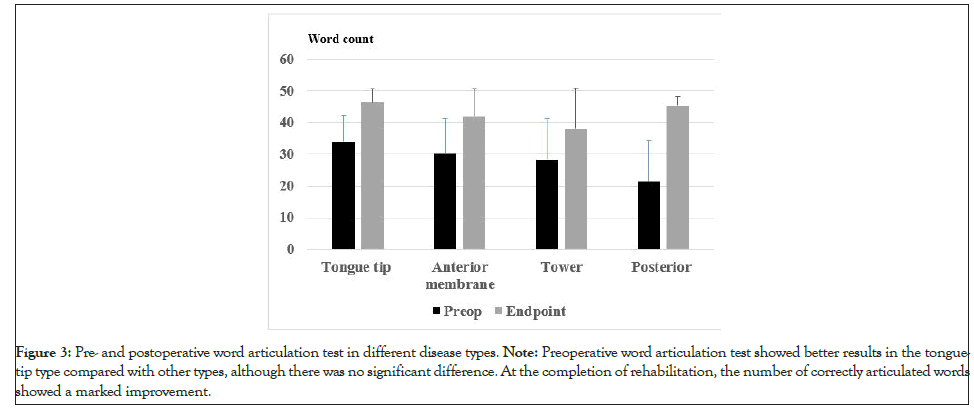
Figure 3: Pre- and postoperative word articulation test in different disease types. Note: Preoperative word articulation test showed better results in the tonguetip type compared with other types, although there was no significant difference. At the completion of rehabilitation, the number of correctly articulated words showed a marked improvement.
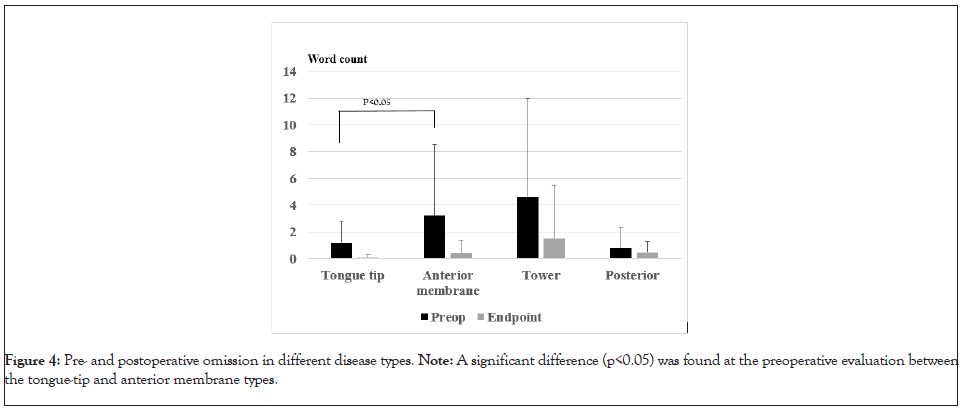
Figure 4: Pre- and postoperative omission in different disease types. Note: A significant difference (p<0.05) was found at the preoperative evaluation between the tongue-tip and anterior membrane types.
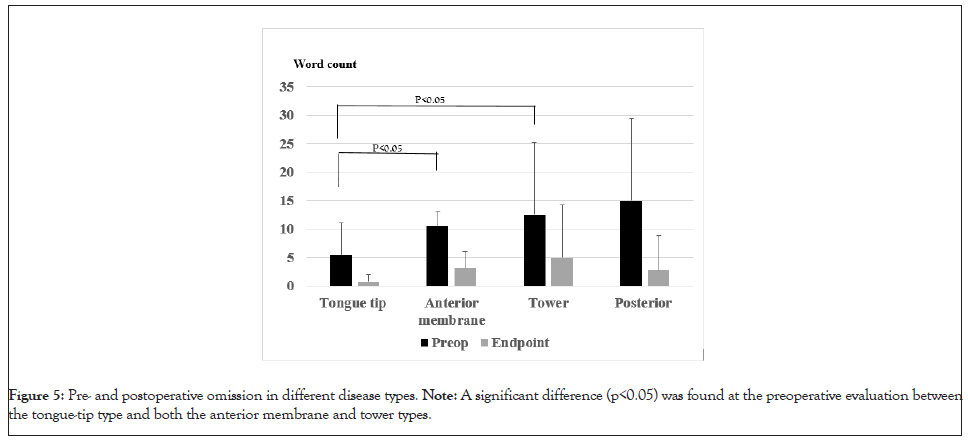
Figure 5: Pre- and postoperative omission in different disease types. Note: A significant difference (p<0.05) was found at the preoperative evaluation between the tongue-tip type and both the anterior membrane and tower types.
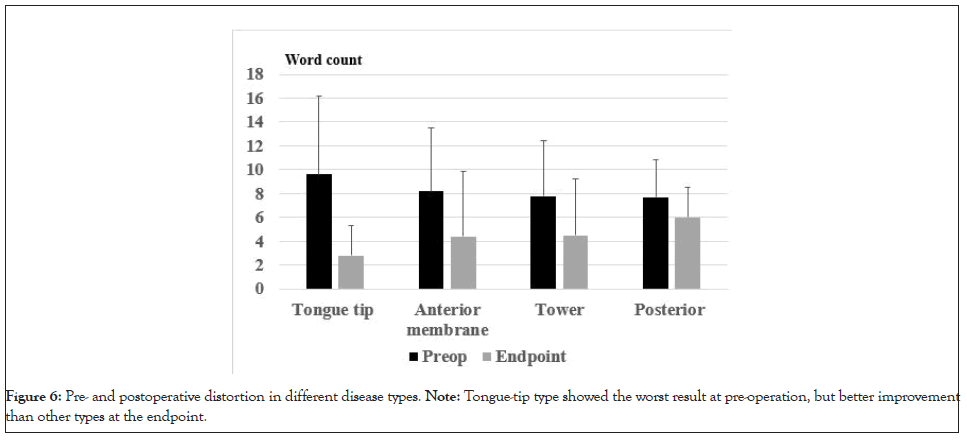
Figure 6: Pre- and postoperative distortion in different disease types. Note: Tongue-tip type showed the worst result at pre-operation, but better improvement than other types at the endpoint.
A significant difference (p<0.05) was found at the preoperative evaluation between the tongue-tip and anterior membrane types for omission, and between the tongue-tip type and both the anterior membrane and tower types for substitution. However, no significant differences were observed between the tongue-tip type and other groups in distortion. Although the tongue-tip type in distortion demonstrated the worst outcome at the preoperative evaluation, it showed better outcome than the other types at the endpoint.
Speech intelligibility in the tongue-tip type was superior to that in the other types from the preoperative stage (Figure 7). There was also a significant difference between tongue-tip type and anterior membrane type. As expected, tongue mobility before operation was the worst in the tongue-tip type (Figure 8). Significant difference was noted between the tongue-tip type and both the anterior membrane and tower types. However, the range of mobility markedly improved at the end of speech rehabilitation. At the endpoint, all types demonstrated remarkable improvements with scores of less than 1.5.
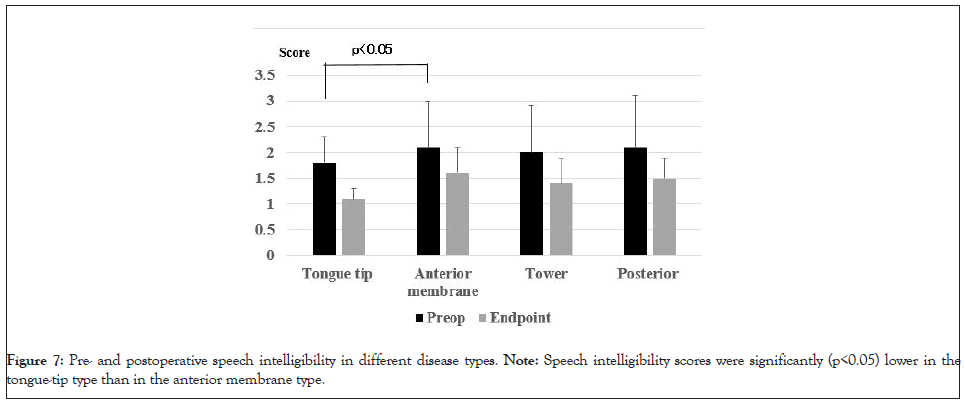
Figure 7: Pre- and postoperative speech intelligibility in different disease types. Note: Speech intelligibility scores were significantly (p<0.05) lower in the tongue-tip type than in the anterior membrane type.
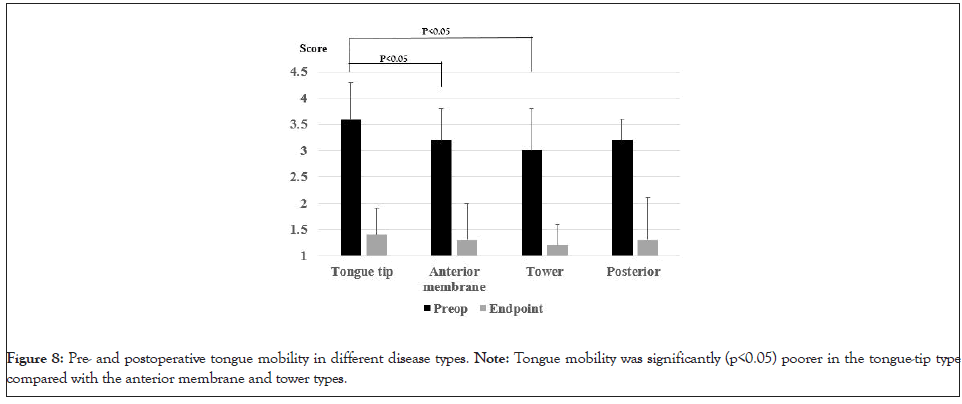
Figure 8: Pre- and postoperative tongue mobility in different disease types. Note: Tongue mobility was significantly (p<0.05) poorer in the tongue-tip type compared with the anterior membrane and tower types.
Overall, improvements were observed in all groups by the end of speech rehabilitation. Results of preoperative baseline and speech rehabilitation endpoint for each type are summarized in (Table 3). Patients who could not cooperate with the examination due to behavioral factors were excluded from the analysis.
| Test item | Disease type | Preoperative baseline | Rehabilitation endpoint | P value |
|---|---|---|---|---|
| Word articulation test | Tongue-tip | 34- ± 8.3 (19) | 46.5 ± 4.1 (19) | * |
| Anterior membrane | 30.2 ± 11.3 (28) | 42.1 ± 8.6 (28) | * | |
| Tower | 28.4 ± 13 (21) | 38 ± 13 (21) | ** | |
| Posterior | 21.5 ± 13 (6) | 45.5 ± 3 (6) | ** | |
| Omission | Tongue-tip | 1.2 ± 1.6 (19) | 0.1 ± 0.2 (19) | ** |
| Anterior membrane | 3.2 ± 5.3 (28) | 0.4 ± 1 (28) | ** | |
| Tower | 4.6 ± 7.4 (21) | 1.5 ± 4 (21) | ns | |
| Posterior | 0.8 ± 1.6 (6) | 0.5 ± 0.8 (6) | ns | |
| Substitution | Tongue- tip | 5.4 ± 5.7 (19) | 0.7 ± 1.3 (19) | * |
| Anterior membrane | 10.5 ± 9.7 (28) | 3.1 ± 5.4 (28) | * | |
| Tower | 12.5 ± 12.7 (21) | 5 ± 9.2 (21) | ns | |
| Posterior | 15 ± 14.4 (6) | 2.7 ± 6.1 (6) | ** | |
| Distortion | Tongue- tip | 9.6 ± 6.6 (19) | 2.8 ± 2.5 (19) | * |
| Anterior membrane | 8.2 ± 5.3 (28) | 4.4 ± 5.5 (28) | ** | |
| Tower | 7.8 ± 4.6 (21) | 4.5 ± 4.7 (21) | ** | |
| Posterior | 7.7 ± 3.1 (6) | 6 ± 2.5 (6) | ns | |
| Speech intelligibility† | Tongue- tip | 1.8 ± 0.5 (19) | 1.1 ± 0.2 (19) | * |
| Anterior membrane | 2.1 ± 0.9 (27) | 1.6 ± 0.5 (28) | ** | |
| Tower | 2 ± 0.9 (21) | 1.4 ± 0.5 (21) | ** | |
| Posterior | 2.1 ± 1 (6) | 1.5 ± 0.4 (6) | ns | |
| Range of tongue mobility† |
Tongue- tip | 3.6 ± 0.7 (17) | 1.4 ± 0.5 (17) | * |
| Anterior membrane | 3.2 ± 0.6 (26) | 1.3 ± 0.7 (26) | * | |
| Tower | 3 ± 0.8 (19) | 1.2 ± 0.4(19) | * | |
| Posterior | 3.2 ± 0.4 (6) | 1.3 ± 0.8(6) | ** |
Note: Test items quantified as counts or †scores, expressed as mean ± standard deviation values with patient totals (n) *<0.001; **<0.05; ns, not significant.
Table 3: Results of articulation function testing before surgery and at rehabilitation endpoints.
When comparing the outcomes of preoperative and speech rehabilitation endpoint, the tongue-tip type showed significant improvements in word articulation test, substitution, distortion, intelligibility, and tongue mobility (p<0.001), and a less significant improvement in omission (p<0.05). In the anterior membrane type, significant improvements were observed in the word articulation test, substitution, and tongue mobility (p<0.001), with additional improvements in omission, distortion and intelligibility (p<0.05). In the tower type, tongue mobility improved significantly (p<0.001), while improvements in the word articulation test, distortion and speech intelligibility were less significant at p<0.05; however, no significant changes were observed in omission or substitution. Although the posterior type had limited reliability because of small number of cases (n=6), significant improvements were found in the word articulation test, substitution and tongue mobility (p<0.05).
Our treatment protocol for ankyloglossia with speech disorders includes preoperative articulation assessment, frenuloplasty under general anesthesia, and postoperative speech rehabilitation by a speech language pathologist with regular follow-up assessments of articulation function. Our previously reported in Pediatric Surgery International showed significant improvement in articulation after speech rehabilitation lasting from six months to a maximum of two years [1]. Our analysis included effects of disease type in classification of ankyloglossia. When designing this study, we initially hypothesized that severer forms of ankyloglossia would be associated with poorer preoperative articulation and that postoperative recovery of articulation would require longer speech rehabilitation. Contrary to our initial hypothesis, this assumption was not supported by the findings. Children with the most severe type, the tongue-tip type, demonstrated better preoperative and postoperative articulation outcomes in word articulation tests than those with other types [1].
In this report, we aim to present the outcomes of other articulation tests in different types and provide a basis for further research. Few studies have examined the relationship between the severity of ankyloglossia and articulatory disorders. Dydyk A, et al. [5] reported that the proportion of subjects presenting with articulation disorders increased with the severity of ankyloglossia. These outcomes do not contradict with our findings that the severest form of tongue-tip type in speech disorders (25.7%) surpassed feeding disorders (14%) in known frequency [6]. It seems reasonable that severer tongue-tie would lead to high frequency of articulation disorders, but the severity of articulation in patients was not mentioned in the paper.
In this study, we therefore focused on the association between disease subtypes particularly the tongue-tip type and articulatory function, including word articulation test scores, types of articulatory errors (omission, substitution, distortion), speech intelligibility, and tongue mobility. The outcomes showed that, despite exhibiting the poorest tongue mobility, patients with the tongue-tip type achieved better outcomes in word production, substitution, distortion, and intelligibility compared with the other three groups. Regarding omission, their outcomes were better than those of the anterior membrane and tower types, and second only to the posterior type, which has the least tethering. Comparison of preoperative and post-speech rehabilitation assessments demonstrated significant improvements (p<0.05 or p<0.001) across all parameters, except for omission in the tower and posterior types, substitution in the tower type, and distortion and intelligibility in the posterior type.
Ito S. [7] reported that the degree of tongue-tie has little impact on articulatory disorders; however, our findings suggest that the tongue-tip type may in fact yield more favorable articulatory function compared with other subtypes. Furthermore, Daggumati S, et al. [8] reported that children with severe preoperative speech disorders showed significantly greater postoperative improvement following frenulotomy than those with milder impairments. Our outcomes are consistent with and support these findings.
To examine potential confounding factors, we analyzed the age distribution of patients across each morphological subtype. Compared with patients aged ≥ 5 years, the proportion of tonguetip type was approximately 11% higher in the 3- and 4-year-old group (Figure 9). Although younger children may exhibit better responsiveness to speech rehabilitation, this does not explain their superior preoperative outcomes. Ito S. [7] suggested that the weak association between the severity of ankyloglossia and the degree of articulation disorder may be due to differences in the localization of articulation errors. Specifically, articulation abnormalities in the tongue-tip type tend to occur predominantly in the anterior region of the tongue, whereas those in other subtypes are distributed across the mid-tongue and posterior tongue regions.
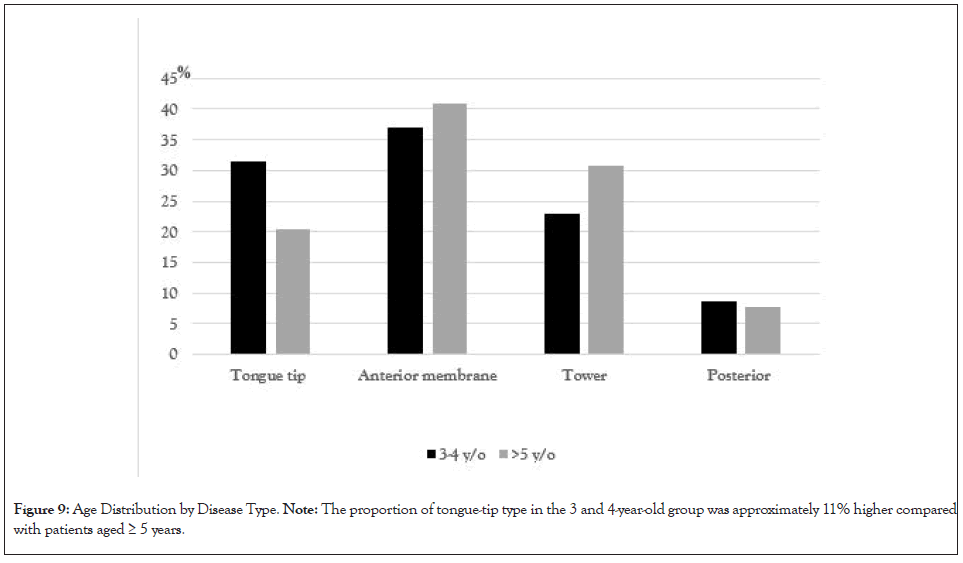
Figure 9: Age Distribution by Disease Type. Note: The proportion of tongue-tip type in the 3 and 4-year-old group was approximately 11% higher compared with patients aged ≥ 5 years.
Green J and Wang Y [9] analyzed tongue movements during speech using X-ray microbeam and reported that the anterior portion of the tongue exhibits a high degree of freedom and moves independently, whereas the posterior portion tends to move in a more coordinated and reinforced manner. The observation that articulation disorders confined to the anterior tongue region are more easily compensated for and corrected postoperatively, while those extending into the medial and posterior regions are more difficult to compensate and rehabilitate, may be attributable to this functional regionality of the tongue. Other potential factors, such as developmental disorders, malocclusion and hearing loss, may also contribute; however, in the present study, patients with developmental disorders or oral anomalies other than ankyloglossia were excluded.
Although these paradoxical findings have not yet been fully elucidated, it is plausible that in tongue-tip type ankyloglossia, where the tongue tip is fixed, compensatory articulation using other parts of the tongue to generate similar phonemes is more readily acquired. Future investigations will focus on analyzing which phonemes, and thus which tongue regions, are affected.
The authors have no conflicts of interest to declare.
[Crossref] [Google Scholar] [PubMed]
[Crossref] [Google Scholar] [PubMed]
[Crossref]
[Crossref] [Google Scholar] [PubMed]
[Crossref] [Google Scholar] [PubMed]
[Crossref] [Google Scholar] [PubMed]
Citation: Ito Y, Miyaguni K, Sugihara T, Kosugi G, Tookaichi N, Kaneko M (2025). Paradoxical Articulation Outcomes in Ankyloglossia: Superior Performance of the Tongue-Tip Type Despite Severe Mobility Restriction. Int J Phys Med Rehabil. S33:001.
Received: 21-Sep-2025, Manuscript No. JPMR-25-38747; Editor assigned: 23-Sep-2025, Pre QC No. JPMR-25-38747 (PQ); Reviewed: 06-Oct-2025, QC No. JPMR-25-38747; Revised: 13-Oct-2025, Manuscript No. JPMR-25-38747 (R); Published: 20-Oct-2025 , DOI: 10.35248/2329-9096.25.S33.001
Copyright: © 2025 Ito Y, et al. This is an open-access article distributed under the terms of the Creative Commons Attribution License, which permits unrestricted use, distribution, and reproduction in any medium, provided the original author and source are credited.