
Anatomy & Physiology: Current Research
Open Access
ISSN: 2161-0940
ISSN: 2161-0940
Research Article - (2025)Volume 15, Issue 1
Rohypnol, scientifically known as flunitrazepam, is a potent benzodiazepine medication primarily prescribed for the treatment of severe insomnia and as a pre-anesthetic medication. However, its reputation has been tarnished by its misuse as a recreational drug and its association with drug-facilitated crimes, particularly sexual assault. However, its potent sedative effects can lead to memory impairment, loss of motor coordination and respiratory depression, especially when combined with alcohol or other central nervous system depressants. This study aims to investigate and establish mechanism and novel potential of vitamin C and E on the myelin, oligodendrocytes and inflammatory markers of rohypnol exposed amygdala. Twenty-five male adult wistar rats were divided into five groups: The control group was exposed to normal atmospheric air, 1 mg/kg of rohypnol, 1 mg/kg of rohypnol+100 mg/kg of vitamin C, 1 mg/kg of rohypnol+100 mg/kg of vitamin E, 1 mg/kg of rohypnol+100 mg/kg of vitamin C and E and the test groups were exposed orally for 28 days. In the last three days of exposure, neurobehavioral tests were conducted. 24 hours after the last exposure, the animals were anesthetized using chloroform vapour. The brains were harvested by making an occipitofrontal incision for biochemical and histological assessment. The fixation was done in 10% neutral buffered formalin for 48 hrs following the brain mapping to isolate the brain tissue of interest. The vitamin C and Eexposed rats showed significant (p ≤ 0.05) progressive improvement in their behaviours including the oxidative stress markers when compared to the control, in conclusion, this study have shown that good antioxidants such as vitamin C and E are very much effective in reducing oxidative stress and thus, have great antioxidant ameliorative properties to the rohypnol induced amygdala of the wistar rats.
Flunitrazepam vitamin C and E (Rohypnol); Amygdala; Histoarchitecture; Benzodiazepine
Despite its classification as a controlled substance in numerous countries, Nigeria included, studies have demonstrated that the misuse of Rohypnol by adolescents is a recurrent occurrence Animal and human studies have demonstrated that Benzodiazepines (BZDs) have several side effects, including drowsiness, dizziness, tiredness, mental confusion, headache, anxiety, lethargy, ataxia, postural hypotension, retrograde amnesia, accidents, tolerance, dependence and increased frequency of falls. The major pharmacological effect of flunitrazepam (rohypnol) as a lipophilic drug is its enhancement of Gamma-Aminobutyric Acid (GABA) at the localized GABA receptors. Additionally, research shows a link to organ toxicity, a bad mental state and problems with muscle control and psychomotor abilities. Suppression of hypothalamic-pituitarytesticular axis [1].
Pharmacotherapeutic interventions are available for individuals experiencing withdrawal symptoms or desiring cessation of their persistent Benzodiazepine (BZD) utilization. Multiple alternative pharmacological treatments have been suggested to mitigate the severity of withdrawal, encompassing alpha-blockers (such as propranolol and clonidine), anticonvulsants (valproic acid, lamotrigine, carbamazepine and phenobarbital), progesterone, baclofen and trazodone. Nevertheless, the outcome of each of these investigations exhibited inconclusive findings, lacking statistically significant superiority over BZD therapy. Presently, the preferred course of treatment involves substituting the present short-acting BZD with a long-acting substitute, gradually decreasing the dosage to effectively wean the individual off BZD entirely.
There is growing evidence that each tocopherol molecule can donate two electrons before being “consumed”; the tocopherol molecule is then reduced to its previous state and can then be reused. Importantly, this reduction process is most likely carried out by ascorbic acid which is why there are many studies reporting the antioxidant capacity of vitamin E linked to vitamin C. A combination of different antioxidants, therefore, may offer additional benefit because antioxidants may together have different protective effects. Vitamin C is a nutrient of greatest importance for proper functioning of nervous system and its main role in the brain is its participation in the antioxidant defense. Apart from this role, it is involved in numerous non-oxidant processes like biosynthesis of collagen, carnitine, tyrosine and peptide hormones as well as of myelin. It plays the crucial role in neurotransmission and neuronal maturation and functions.
The increasing evidence on the potential neuroprotective roles of vitamin E have been well documented in both in vivo and in vitro studies. In vivo, vitamin E and other endogenous antioxidants work in concert or synergistically by maintaining a reduced environment. The effects of vitamin E on microglial cells have been studied in the short term, most studies, in line with the idea that microglial activation is a harmful process, have shown that vitamin E suppresses inflammatory activation of microglia, thus providing some neuroprotection.
There is an emerging model of the role of specific brain structures in anxiety and their relation to the mechanism of action of Benzodiazepine (BZD) anxiolytics. The presumption of this model is that there are structures in the brain, the activity of which mediate anxiety. Ben-zodiazepines are presumed to work via the BZD-GABA-C1-ionophore (BZD-GABA) complex such as to enhance the inhibitory effects of GABA upon these anxiety-mediating structures [2].
A number of such brain regions have been proposed as putative sites for the action of BZDs, including the nuclei of the raphe, the septo-hippocampal system and the amygdala. The amygdala is an almond-shaped structure that lies in the temporal lobe, the amygdala also functions in regulating anxiety, aggression, fear conditioning, emotional memory and social cognition.
The amygdala has been associated with many diseases, mainly neuropsychiatric. And various research suggests that amygdala neuro feedback may not only be therapeutic for this patient group (neuropsychiatric) but may also be used as a future adjunctive treatment. Given the aforementioned information, this study evaluates the effect of vitamin C and E on Rohypnol induced amygdala integrity.
Location and duration of the study
This study was carried out in animal house of the department of human anatomy, college of health sciences, Nnamdi Azikiwe University Nnewi campus, Anambra state, Nigeria. The rats were allowed to acclimatize for a period of 14 days after which the Rohypnol and vitamin C and E was administered for 28 days; the entire experiment lasted for six weeks.
Ethical approval
All the animals were treated following the approval of the ethical committee of college of health sciences, Nnamdi Azikiwe university, Nnewi campus with the number FBMS/EA/1020, in line with the “guide for the care and use of laboratory animals” (NRC 2011) [3].
Experimental animals: Twenty-five (25) male albino rats weighing 150-200 g were procured from a laboratory at Nnamdi Azikiwe university Nnewi campus and housed at the animal house of the department of anatomy, college of health sciences Nnamdi Azikiwe university Nnewi, Anambra state. The rats were marked with various colors peculiar with each group for the purpose of identification, and were housed in plastic cages with iron net in standard condition (a controlled room temperature of about 25-28°C, a relative humidity of about 60-80%, and a photoperiodicity of 12 h day and night). The rats were fed sufficiently with normal grower mesh produced by premier feed mills co. limited (A subsidiary of flour mills Nigeria Plc Lagos state, Nigeria). The animals were grouped into four; Group A represents the control group while groups B, C and D represents the test group. All rats were weighed prior to the commencement of administration and subsequently weighed weekly (once a week) using melter’s electronic weighing balance model PB303 (made by Monobloc in Switzerland).
Procurement of drug: Rohypnol was produced and marketed by SWISS Pharma Nigeria Ltd. No 5, Dopemu road, Agege, Lagos state. Under the license of Global healthcare Ltd., Basel Switzerland.
Experimental design: The animals were grouped at random into four with five animals in each of the groups. The test animals were administered Rohypnol for 28 days in graded doses of 1 mg/kg of rohypnol®, 1 mg/kg of rohypnol®+100 mg/kg of vitamin C, 1 mg/kg of Rohypnol®+100 mg/kg of vitamin E, 1 mg/kg of rohypnol®+100 mg/kg of vitamin C and E of Rohypnol and vitamin C and E respectively while group A which is the control group received only distilled water (Table 1).
| S/N | Group | Water+Rat feed | Duration |
| 1 | A (Control) | 28 days | |
| 2 | B | 1 mg/kg of rohypnol | 28 days |
| 3 | C | 1 mg/kg of rohypnol+100 mg/kg of vitamin C | 28 days |
| 4 | D | 1 mg/kg of rohypnol +100 mg/kg of vitamin E | 28 days |
| 5 | E | 1 mg/kg of rohypnol +100 mg/kg of vitamin C and E | 28 days |
Table 1: Experimental design.
Biomedical analysis
The brain tissues were analysed for oxidative stress markers namely; Malondialdehyde (MDA) for lipid peroxidation and Superoxide Dismutase (SOD) and reduced glutathione for antioxidants (GSH) at the department of biochemistry, Nnamdi Azikiwe university, Nnewi campus. One gram of each amygdala tissue was added to 10 mL of 0.9% normal saline and homogenized at room temperature. After this, each of the samples was centrifuged at 3,000 rpm for 20 min at room temperature. The supernatants were separated and stored for further analyses.
Elevated plus maze test
The Elevated Plus Maze (EPM) test assessed anxietyrelated behaviour in the rats on day 27 of exposure. The EPM apparatus consists of a plus-shaped maze elevated above the floor with two oppositely positioned closed arms, two oppositely positioned open arms and a centre area. Rats were allowed to freely explore the EPM for five (5) minutes, while their behaviours were recorded using video camera mounted above the maze and analysed using a video tracking system. The entry in and time spent in the open arms were regarded as direct measures of anxiety.
Wire suspension test
The motor activities were assessed using the wire suspension test protocol on day 28 of exposure. The rat’s forepaws were suspended on a two-millimetre diameter metal bar that was 30 cm above a soft, flat surface. The longest time until the rats lost their grip and fell on the soft surface in three consecutive trials was measured and used to assess their motor function. Complete acquisition of the reflex was assumed when the rat was able to hang on the bar for 30 s.
Organ collection: The rats were sacrificed after 28 days of administration of Rohypnol in graded doses. The Amygdala were then harvested and put in a normal saline to maintain normal physiological conditions after which they were weighed and fixed in 10% formal saline for histological processing.
Tissue processing: After weighing the organs, amygdala tissues were harvested and immediately fixed in 10% formal saline in order to preserve the various constituents of the cells in their normal micro anatomical position and to prevent autolysis and putrefaction. After fixation the tissues were dehydrated to remove water and other substances. This was carried out in different percentages of alcohol 50%, 70% and 95% absolute. In each grade of alcohol, tissues were changed twice for two (2) hours, one (1) hour for each change. After dehydration, tissues were cleared in xylene for two (2) hours after which infiltration was done in molten paraffin wax at a temperature of 60°C for two (2) hours, each in two changes. When the paraffin wax cools, it sets as a hard block which allows for easy sectioning of the tissues. The tissue sections were produced via normal histological methods of dehydration, clearing, impregnation, embedding, sectioning and staining (with H and E). The micrographs of the relevant stained sections were subsequently taken with the aid of a light microscope [4].
Statistical analysis: The data of the experiment were analyzed using SPSS version 23. Values were represented as MEAN and SEM, relative organ weight (brain) were analyzed using one-way ANOVA, followed by post hoc LSD multiple comparison. Body weight was analyzed using student dependent T-test. Values were considered significant at P<0.05.
Amygdala immune histochemical expression
Table 2 findings obtained from this experiment in showed a nonsignificant (p>0.05) decrease in the TNF test in groups, 1 mg/kg rohypnol+100 mg/kg vitamin C, 1 mg/kg rohypnol+100 mg/kg vitamin E and 1 mg/kg Rohypnol+100mg/kg vitamin C and E, when compared to group 1 mg/kg Rohypnol that shows a significant (p<0.05) increase. In the Bcl-2 test, there was a (p>0.05) non-significant increase in groups 1 mg/kg rohypnol+100 mg/kg vitamin C and 1 mg/kg rohypnol+100 mg/kg vitamin E, except group 1 mg/kg rohypnol+100 mg/kg vitamin C and E, that showed significance increase (p<0.05), when compared to group 1 mg/kg Rohypnol that showed (p>0.05) non-significant decrease. In the MBP-test, there was a (p>0.05) non-significant increase in groups 1 mg/kg rohypnol+100 mg/kg vitamin C, 1 mg/kg rohypnol+100 mg/kg vitamin E and 1 mg/kg rohypnol+100 mg/ kg vitamin C and E, when compared to group 1 mg/kg Rohypnol that showed (p>0.05) non- significant decrease. In the olig2-test, there was a (p>0.05) non-significant increase in group 1 mg/kg rohypnol+100 mg/kg vitamin C, 1 mg/kg rohypnol+100 mg/kg vitamin E and 1 mg/kg rohypnol+100 mg/kg vitamin C and E, when compared to group 1 mg/kg Rohypnol that showed a (p>0.05) non-significant decrease.
|
|
Groups |
Mean ± SEM |
p-value |
F-value |
|
TNF (µg/mL) |
Group A |
34.20 ± 6.24 |
|
2.154 |
|
Group B |
62.10 ± 8.76 |
0.202 |
||
|
Group C |
45.38 ± 6.89 |
0.901 |
||
|
Group D |
45.08 ± 6.14 |
0.885 |
||
|
Group E |
38.10 ± 9.10 |
1 |
||
|
Bcl-2 (µg/mL) |
Group A |
18.96 ± 3.31 |
|
6.386 |
|
Group B |
16.51 ± 3.68 |
1 |
||
|
Group C |
29.72 ± 3.23 |
0.266 |
||
|
Group D |
40.85 ± 7.36 |
0.14 |
||
|
Group E |
46.93 ± 3.51 |
0.001* |
||
|
MBP (µg/mL) |
Group A |
6.20 ± 1.88 |
|
5.224 |
|
Group B |
0.73 ± 0.05 |
0.228 |
||
|
Group C |
24.22 ± 5.15 |
0.132 |
||
|
Group D |
12.38 ± 3.99 |
0.797 |
||
|
Group E |
11.96 ± 4.30 |
0.876 |
||
|
Olig2 (µg/mL) |
Group A |
9.40 ± 1.29 |
|
2.845 |
|
Group B |
6.40 ± 1.86 |
0.838 |
||
|
Group C |
14.00 ± 2.02 |
0.513 |
||
|
Group D |
14.20 ± 1.88 |
0.415 |
||
|
Group E |
16.40 ± 4.04 |
0.667 |
Table 2: Amygdala expression count of the wistar.
Oxidative stress markers and antioxidants activity
Table 3 result showed a non-significant decrease in the MDA level in group 1 mg/kg Rohypnol compared to the control (group A) (p=0.97), groups 1 mg/kg rohypnol+100 mg/kg vitamin C and 1 mg/kg rohypnol+100 mg/kg vitamin E (p=0.97, p=0.45) had a non-significant decrease while group 1 mg/kg rohypnol+100 mg/kg vitamin C and E (p=0.79) had nonsignificant increase compared to group 1 mg/kg rohypnol. The SOD level result showed a non-significant decrease in group 1 mg/kg Rohypnol compared to control (p=0.95), groups 1 mg/kg rohypnol+100 mg/kg vitamin C, 1 mg/kg rohypnol+100 mg/kg vitamin E and 1 mg/kg rohypnol+100 mg/kg vitamin C and E (p=0.028, p=0.00, p= 0.00) had a significant decrease compared to group 1 mg/kg rohypnol. The GPx level result showed a nonsignificant increase in group 1 mg/kg Rohypnol compared to control group (p=0.24), while groups 1 mg/kg rohypnol+100 mg/kg vitamin C and 1 mg/kg rohypnol+100 mg/kg vitamin E (p=0.53, p=0.33) had a non-significant increase and group 1 mg/kg rohypnol+100 mg/kg vitamin C and E (p=0.00) had a significant increase compared to group 1 mg/kg rohypnol. The GSH result showed a non-significant increase in group 1 mg/kg Rohypnol compared to control group (p=1.00), while groups 1 mg/kg rohypnol+100 mg/kg vitamin C and 1 mg/kg rohypnol +100 mg/kg vitamin E (p=0.83, p=1.00) had a non-significant decrease and group 1 mg/kg rohypnol+100 mg/kg vitamin C and E (p=0.52) had a non-significant increase compared to group 1 mg/kg rohypnol.
|
|
Malondialdehyde level (um/L) Mean ± SEM |
Superoxide dismutase (U/ml) Mean ± SEM |
Glutathione peroxidase (Um/ml) Mean ± SEM |
Reduced glutathione (Um/ml) Mean ± SEM |
|
Group A (control) |
0.71 ± 0.11 |
23.39 ± 0.38 |
3.40 ± 0.79 |
10.17 ± 0.28 |
|
Group B (1 mg/kg of rohypnol) |
0.70 ± 0.20a |
23.34 ± 0.04a |
6.05 ± 0.79a |
10.20 ± 0.06a |
|
Group C (1 mg/kg of Rohypnol+100 mg/kg of vitamin C) |
0.69 ± 0.01a |
20.87 ± 0.81a |
6.06 ± 0.00a |
10.12 ± 0.22a |
|
Group D (1 mg/kg of Rohypnol+100 mg/kg of vitamin E) |
0.58 ± 0.01a |
11.14 ± 0.93a |
8.15 ± 0.26a |
10.17 ± 0.08a |
|
Group E (1 mg/kg of Rohypnol+100 mg/kg of vitamin C and E) |
0.74 ± 0.00a |
9.01 ± 0.04a |
18.68 ± 2.89* |
10.34 ± 0.11a |
|
F-value |
0.34 |
143.04 |
17.61 |
0.24 |
Table 3: Effect of vitamins C and E on oxidative stress marker and antioxidants activity following Rohypnol induced brain dysfunction.
Bar chart showing the effect of vitamin C and E on SOD, MDA, GPX and GSH levels on amygdala induced rohypnol
Figure 1 result showed a decrease in the SOD level in group 1 mg/kg Rohypnol compared to the control (p=0.95), groups 1 mg/kg rohypnol+100 mg/kg vitamin C, 1 mg/kg rohypnol+100 mg/kg vitamin E and 1 mg/kg rohypnol+100 mg/kg vitamin C and E (p=0.028, p=0.00, p=0.00) had a decrease compared to group 1 mg/kg rohypnol. The MDA level result showed a decrease in group 1 mg/kg Rohypnol compared to A (p=0.97), groups 1 mg/kg rohypnol+100 mg/kg vitamin C and 1 mg/kg rohypnol+100 mg/kg vitamin E (p=0.97, p=0.45) had a decrease while group 1 mg/kg Rohypnol+100 mg/kg vitamin C and E (p=0.79) had an increase compared to group 1 mg/kg rohypnol. The GPX level result showed an increase in group 1 mg/kg Rohypnol compared to the control (p=0.24), while groups 1 mg/kg rohypnol+100 mg/kg vitamin C and 1 mg/kg rohypnol +100 mg/kg vitamin E (p=0.53, p=0.33) had an increase and group 1 mg/kg rohypnol+100 mg/kg vitamin C and E (p=0.00) had an increase compared to group 1 mg/kg rohypnol. The GSH result showed an increase in group 1 mg/kg Rohypnol compared to the control (p=1.00), while groups 1 mg/kg rohypnol+100 mg/kg vitamin C and 1 mg/kg rohypnol+100 mg/kg vitamin E (p=0.83, p=1.00) had a decrease and group 1 mg/kg rohypnol+100 mg/kg vitamin C and E (p=0.52) had an increase compared to group B [5].
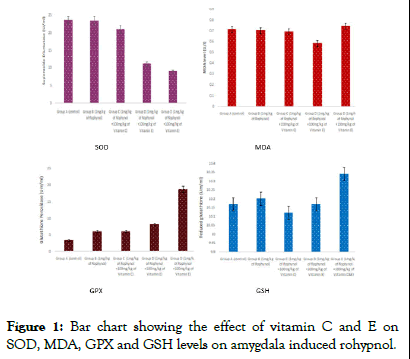
Figure 1: Bar chart showing the effect of vitamin C and E on SOD, MDA, GPX and GSH levels on amygdala induced rohypnol.
Effect of vitamin C and E on motor function using immobility time test following Rohypnol toxicity
Table 4 result revealed a significant decrease in time following immobility time test at day 1 in group 1 mg/kg Rohypnol compared to control group (p=0.001), while groups 1 mg/kg Rohypnol+100 mg/kg vitamin C, 1 mg/kg rohypnol+100 mg/kg vitamin E and 1 mg/kg rohypnol+100 mg/kg vitamin C and E compared to 1 mg/kg Rohypnol (p=0.001, p=0.012, p=0.002) showed a significant increase in the immobility time at day 1. Day 2, the immobility time test using wire test showed a significant decrease in group 1 mg/kg Rohypnol compared to control group (p=0.002), groups 1 mg/kg Rohypnol+100 mg/kg vitamin C, 1 mg/kg rohypnol+100 mg/kg vitamin E and 1 mg/kg rohypnol+100 mg/kg vitamin C and E showed a (p=0.002, p=0.010, p=0.002) showed a significant increase compared to group 1 mg/kg Rohypnol. At day 3, the immobility time test using wire test showed a significant decrease in group 1 mg/kg Rohypnol compared to control group (p=0.011), groups 1 mg/kg Rohypnol+100 mg/kg vitamin C, 1 mg/kg rohypnol+100 mg/kg vitamin E and 1 mg/kg rohypnol+100 mg/kg vitamin C and E showed a (p=0.012, p=0.013, p=0.014) showed a significant increase compared to group 1 mg/kg Rohypnol.
|
|
Time of immobility |
Time of immobility |
Time of immobility |
|
Group A (control) |
263.50 ± 10.50 |
214.00 ± 5.00 |
203.00 ± 9.00 |
|
Group B (1 mg/kg of Rohypnol) |
149.50 ± 38.50* |
159.50 ± 25.50* |
172.50 ± 8.50 |
|
Group C (1 mg/kg of Rohypnol+100 mg/kg of vitamin C) |
199.50 ± 9.50* |
236.50 ± 31.50* |
212.00 ± 3.50* |
|
Group D (1 mg/kg of Rohypnol+100 mg/kg of vitamin E) |
227.00 ± 31.00* |
258.00 ± 8.00* |
207.50 ± 5.00* |
|
Group E (1 mg/kg of Rohypnol+100 mg/kg of Vitamin C and E) |
247.00 ± 7.00* |
186.00 ± 52.00* |
218.00 ± 6.00* |
|
F-value |
1.4 |
1.36 |
0.62 |
Table 4: Effect of vitamin C and E on motor function using immobility time test following Rohypnol toxicity.
The effect of vitamin C and E on exploratory time following Rohypnol toxicity
Table 5 result showed a significant increase in exploratory time in control group compared to 1 mg/kg Rohypnol (p=0.000), while groups 1 mg/kg Rohypnol+100 mg/kg vitamin C, 1 mg/kg Rohypnol+100 mg/kg vitamin E and 1 mg/kg Rohypnol+100 mg/kg vitamin C and E (p=0.000, p=0.001, p=0.002) had a significant decrease when compared to group 1 mg/kg Rohypnol at day 1. At day 2, a significant increase in exploratory time in-group A compared to 1 mg/kg Rohypnol (p=0.000), while groups 1 mg/kg Rohypnol+100 mg/kg vitamin C, 1 mg/kg Rohypnol+100 mg/kg vitamin E and 1 mg/kg Rohypnol +100 mg/kg vitamin C and E (p=0.000, p=0.020, p=0.025) had a significant decrease when compared to group 1 mg/kg Rohypnol. At day 3, a significant increase in exploratory time in control group compared to 1 mg/kg Rohypnol (p=0.010), while groups 1 mg/kg Rohypnol+100 mg/kg vitamin C, 1 mg/kg Rohypnol+100 mg/kg vitamin E and 1 mg/kg Rohypnol+100 mg/kg vitamin C and E (p=0.010, p=0.021, p=0.005) had a significant decrease when compared to group 1 mg/kg Rohypnol [6].
|
|
Exploratory time Day 1 (Seconds) Mean ± SEM |
Exploratory time Day 2 (Seconds) Mean ± SEM |
Exploratory time Day 3 (Seconds) Mean ± SEM |
|
Group A (control) |
2.33 ± 1.33 |
3.33 ± 0.45 |
4.67 ± 1.33 |
|
Group B (1 mg/kg of Rohypnol) |
15.67 ± 10.80* |
10.00 ± 0.00* |
12.00 ± 0.00* |
|
Group C (1 mg/kg of Rohypnol+100 mg/kg of vitamin C) |
3.00 ± 2.00* |
5.10 ± 0.10* |
6.20 ± 0.00* |
|
Group D (1 mg/kg of Rohypnol+100 mg/kg of vitamin E) |
1.00 ± 0.00* |
4.50 ± 0.01* |
7.20 ± 0.01* |
|
Group E (1 mg/kg of Rohypnol+100 mg/kg of vitamin C and E) |
1.00 ± 0.00* |
4.67 ± 0.10* |
7.08 ± 0.07* |
|
F-value |
15.71 |
1.12 |
3.15 |
Table 5: Effect of vitamin C and E on exploratory time following Rohypnol toxicity.
Bar chart showing the effect of vitamin C and E on motor function using immobility time test and on exploratory time following Rohypnol toxicity
Figure 2 result revealed a significant decrease in time following immobility time test at day 1 in group 1 mg/kg Rohypnol compared to the control (p=0.001), while groups 1 mg/kg Rohypnol+100 mg/kg vitamin C, 1 mg/kg Rohypnol+100 mg/kg vitamin E and 1 mg/kg Rohypnol+100 mg/kg vitamin C and E compared to 1 mg/kg Rohypnol (p=0.001, p=0.012, p=0.002) showed a significant increase in the immobility time at day 1. Day 2, the immobility time test using wire test showed a significant decrease in group 1 mg/kg Rohypnol compared to the control (p=0.002), groups 1 mg/kg Rohypnol+100 mg/kg vitamin C, 1 mg/kg Rohypnol+100mg/kg vitamin E and 1 mg/kg Rohypnol+100 mg/kg vitamin C and E showed a (p=0.002, p=0.010, p=0.002) showed a significant increase compared to group 1 mg/kg Rohypnol. At day 3, the immobility time test using wire test showed a significant decrease in group 1 mg/kg Rohypnol compared to the control (p=0.011), groups 1 mg/kg Rohypnol+100mg/kg vitamin C, 1 mg/kg Rohypnol+100 mg/kg vitamin E and 1 mg/kg Rohypnol+100 mg/kg vitamin C and E showed a (p=0.012, p=0.013, p=0.014) showed a significant increase compared to group 1 mg/kg Rohypnol.
Result showed a significant increase in exploratory time in the control group compared to 1 mg/kg Rohypnol (p=0.000), while groups 1 mg/kg Rohypnol+100 mg/kg vitamin C, 1 mg/kg Rohypnol+100 mg/kg vitamin E and 1 mg/kg Rohypnol+100 mg/kg vitamin C and E (p=0.000, p=0.001, p=0.002) had a significant decrease when compared to group 1 mg/kg Rohypnol at day 1. At day 2, a significant increase in exploratory time in control group compared to 1 mg/kg Rohypnol (p=0.000), while groups 1 mg/kg Rohypnol+100 mg/kg vitamin C, 1 mg/kg Rohypnol+100 mg/kg vitamin E and 1 mg/kg Rohypnol+100 mg/kg vitamin C and E (p=0.000, p=0.020, p=0.025) had a significant decrease when compared to group 1 mg/kg Rohypnol. At day 3, a significant increase in exploratory time in the control group compared to 1 mg/kg Rohypnol E (p=0.010), while groups 1 mg/kg Rohypnol+100 mg/kg vitamin C, 1 mg/kg Rohypnol+100 mg/kg vitamin E and 1 mg/kg. Rohypnol +100 mg/kg vitamin C and E (p=0.010, p=0.021, p=0.005) had a significant decrease when compared to group 1 mg/kg Rohypnol.
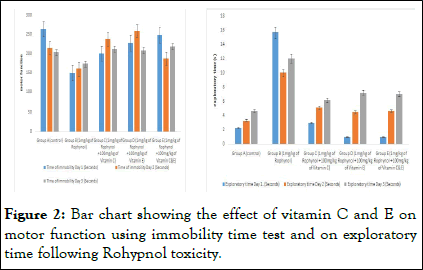
Figure 2: Bar chart showing the effect of vitamin C and E on motor function using immobility time test and on exploratory time following Rohypnol toxicity.
Histopathological findings
Amygdala Tumor Necrosis Factor Alpha (TNF) expression: Figure 3 the control group of Amygdala show an increase in the expression of Tumor Necrosis Factor Alpha (TNF) on the amygdala region of the brain, that of 1 mg/kg Rohypnol group of shows a decrease in the expression of Tumor Necrosis Factor Alpha (TNF), 1 mg/kg Rohypnol+100 mg/kg vitamin C group shows an increase in the expression of Tumor Necrosis Factor Alpha (TNF), 1 mg/kg Rohypnol+100 mg/kg vitamin E group shows an increase in the expression of Tumor Necrosis Factor Alpha (TNF) and 1 mg/kg Rohypnol+100 mg/kg vitamin C and E group of shows an increase in the expression of Tumor Necrosis Factor Alpha (TNF) on the amygdala region of the brain.
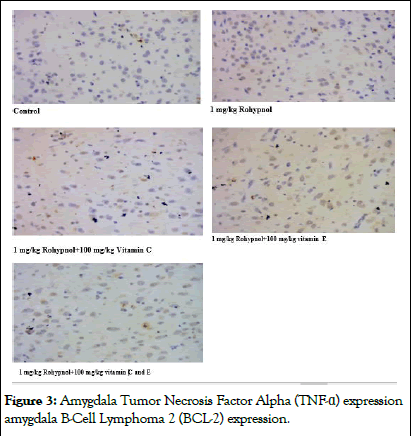
Figure 3: Amygdala Tumor Necrosis Factor Alpha (TNF) expression amygdala B-Cell Lymphoma 2 (BCL-2) expression.
Figure 4 shows the control group shows an increase in the expression of B-Cell Lymphoma 2 (BCL-2), 1 mg/kg Rohypnol group shows a decrease in the expression of B-Cell Lymphoma 2 (BCL-2), 1 mg/kg Rohypnol+100 mg/kg vitamin C group shows an inverse increase in the expression of B-Cell Lymphoma 2 (BCL-2), 1 mg/kg Rohypnol+100 mg/kg vitamin E group shows an inverse increase in the expression of B-Cell Lymphoma 2 (BCL-2), 1 mg/kg Rohypnol+100 mg/kg vitamin C and E group of Amygdala shows an inverse increase in the expression of B-Cell Lymphoma 2 (BCL-2) on the amygdala region of the brain [7].
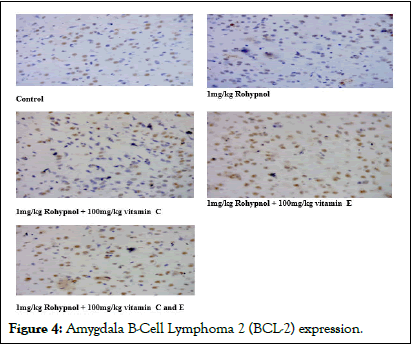
Figure 4: Amygdala B-Cell Lymphoma 2 (BCL-2) expression.
Amygdala Myelin Basic Protein (MBP) expression
Figure 5 shows the control group shows an increase in the expression of Myelin Basic Protein (MBP), 1 mg/kg Rohypnol group shows a decrease in the expression of Myelin Basic Protein (MBP), 1 mg/kg Rohypnol+100 mg/kg vitamin C group shows an inverse increase in the expression of Myelin Basic Protein (MBP), 1 mg/kg Rohypnol+100 mg/kg vitamin E group shows an inverse increase in the expression of Myelin Basic Protein (MBP), 1 mg/kg Rohypnol+100 mg/kg vitamin C and E group shows an inverse increase in the expression of Myelin Basic Protein (MBP) on the amygdala region of the brain.
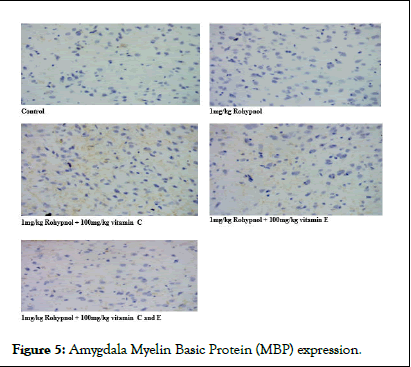
Figure 5: Amygdala Myelin Basic Protein (MBP) expression.
Amygdala Oligodendrocyte transcription factor 2 (Olig2) expression
Figure 6 shows the control group shows an increase in the expression of Oligodendrocyte transcription factor 2 (olig2), 1 mg/kg Rohypnol group shows a decrease in the expression of oligodendrocyte transcription factor 2 (olig2), 1 mg/kg Rohypnol+100 mg/kg vitamin C group shows an inverse increase in the expression of Oligodendrocyte transcription factor 2 (olig2) , 1 mg/kg Rohypnol+100 mg/kg vitamin E group shows an inverse increase in the expression of oligodendrocyte transcription factor 2 (olig2), 1 mg/kg Rohypnol+100 mg/kg vitamin C and E group shows an inverse increase in the expression of oligodendrocyte transcription factor 2 (olig2) [8].
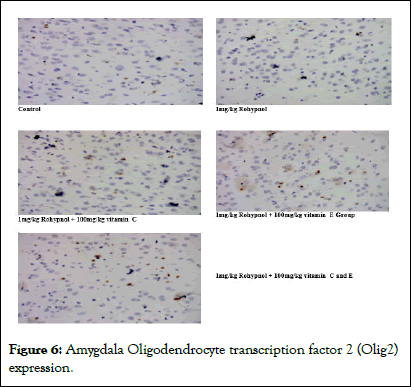
Figure 6: Amygdala Oligodendrocyte transcription factor 2 (Olig2) expression.
Rohypnol is a central nervous system depressant in a class of drugs called benzodiazepines. Rohypnol was discovered at Roche as part of the benzodiazepine work led by Leo Sternbach; the patent application was filed in 1962 and it was first marketed in 1974.
It has been reported that vitamin C ameliorates organophosphate pesticide-induced hematological and biochemical alterations in humans and animals. This readily available, cheap and relatively non-toxic antioxidant possesses great benefit in the amelioration of toxic effects by most xenobiotics. Vitamin E is known to have been proven beneficial in some disease processes. It protects the body’s biological systems by preventing lipid peroxidation.
Findings obtained from this experiment showed a nonsignificant decrease in the TNFÉ test in groups C, D and E when compared to group B that shows a significant increase. In the Bcl-2 test, there was a non-significant increase in groups C and D, except group E that showed significance increase, when compared to group B that showed non-significant decrease. In the MBP-test, there was a non-significant increase in groups C, D and E when compared to group B that showed nonsignificant decrease. In the olig2-test, there was a non-significant increase in group C, D and E when compared to group B that showed a non-significant decrease. This work is similar to the work of Osarobo, et al., that reported effects of alcohol and Rohypnol combination on the liver function of adult albino rats showed that alcohol and Rohypnol consumption caused significant increase in liver indicators as compared with control with an increase in weight by 1 kg [9].
Histological findings of amygdala Tumor Necrosis Factor Alpha (TNFÉ) expression for group A showed an increase in the expression of Tumor Necrosis Factor Alpha (TNFÉ) on the amygdala region of the brain. For group B shows a decrease in the expression of Tumor Necrosis Factor Alpha (TNFÉ) on the amygdala region of the brain. For group C shows an increase in the expression of Tumor Necrosis Factor Alpha (TNFÉ) on the amygdala region of the brain.
Group D shows an increase in the expression of Tumor Necrosis Factor Alpha (TNFÉ) on the amygdala region of the brain. Group E shows an increase in the expression of Tumor Necrosis Factor Alpha (TNFÉ) on the amygdala region of the brain.
Histological findings of amygdala b-cell lymphoma 2 (bcl-2) expression for group A shows an increase in the expression of Bcell lymphoma 2 (Bcl-2) on the amygdala region of the brain.
Group B shows a decrease in the expression of B-cell lymphoma 2 (Bcl-2) on the amygdala region of the brain. Group C shows an inverse increase in the expression of B-cell lymphoma 2 (Bcl-2) on the amygdala region of the brain. Group D shows an inverse increase in the expression of b-cell lymphoma 2 (BCL-2) on the amygdala region of the brain. For group E shows an inverse increase in the expression of b-cell lymphoma 2 (BCL-2) on the amygdala region of the brain.
Histological findings of amygdale Myelin Basic Protein (MBP) expression, group A shows an increase in the expression of Myelin Basic Protein (MBP) on the amygdala region of the brain. Group B shows a decrease in the expression of Myelin Basic Protein (MBP) on the amygdala region of the brain.
Group C shows an inverse increase in the expression of Myelin Basic Protein (MBP) on the amygdala region of the brain. Group D shows an inverse increase in the expression of Myelin Basic Protein (MBP) on the amygdala region of the brain. Group E shows an inverse increase in the expression of Myelin Basic Protein (MBP) on the amygdala region of the brain.
Histological findings of amygdala oligodendrocyte transcription factor 2 (olig2) expression group A shows an increase in the expression of oligodendrocyte transcription factor 2 (olig2) on the amygdala region of the brain. Group B shows a decrease in the expression of oligodendrocyte transcription factor 2 (olig2) on the amygdala region of the brain. Group C shows an inverse increase in the expression of oligodendrocyte transcription factor 2 (olig2) on the amygdala region of the brain. Group D shows an inverse increase in the expression of oligodendrocyte transcription factor 2 (olig2) on the amygdala region of the brain. Group E shows an inverse increase in the expression of Oligodendrocyte transcription factor 2 (olig2) on the amygdala region of the brain [10].
In conclusion, this study has shown that good antioxidants such as vitamins C and E are very effective in reducing oxidative stress and thus, have significant antioxidant ameliorative properties to the Rohypnol® Amygdala of the wistar rats.
None declared.
We appreciate the director of the histology laboratory, Nnamdi Azikiwe university, for availing us the space for this research work.
[Crossref] [Google Scholar] [PubMed]
[Crossref] [Google Scholar] [PubMed]
[Google Scholar] [PubMed]
[Crossref] [Google Scholar] [PubMed]
[Crossref] [Google Scholar] [PubMed]
[Crossref] [Google Scholar] [PubMed]
[Crossref] [Google Scholar] [PubMed]
[Crossref] [Google Scholar] [PubMed]
[Crossref] [Google Scholar] [PubMed]
[Google Scholar] [PubMed]
Citation: Nnabuihe ED, Udodi PS, Abugu JI, Ukwandu BK, Ijeoma E, Okafor CE, et al. (2025) Novel Potential of Vitamin C and E on the Myelin, Oligodendrocyte and Inflammatory Markers of Rohypnol Exposed Amygdala in Rats. Anat Physiol. 15:527.
Received: 18-Jun-2024, Manuscript No. apcr-24-32031; Editor assigned: 21-Jun-2024, Pre QC No. apcr-24-32031 (PQ); Reviewed: 05-Jul-2024, QC No. apcr-24-32031; Revised: 13-Feb-2025, Manuscript No. apcr-24-32031 (R); Published: 20-Feb-2025 , DOI: 10.35248/2161-0940.25.15.527
Copyright: © 2025 Nnabuihe ED, et al. This is an open-access article distributed under the terms of the Creative Commons Attribution License, which permits unrestricted use, distribution, and reproduction in any medium, provided the original author and source are credited.