
Clinical Pediatrics: Open Access
Open Access
ISSN: 2572-0775
ISSN: 2572-0775
Case Report - (2025)Volume 11, Issue 1
Background: Mycoplasma pneumoniae is a known factor for respiratory illnesses in children. However, extrapulmonary impact is being increasingly identified. Encephalitis, cerebellitis and rare immune-mediated syndromes caused by mycoplasma have been increasingly identified. Normal systemic inflammatory markers and nonspecific Cerebrospinal Fluid (CSF) findings often hinder diagnosis.
Methods: We reported eight cases of patients who presented with neurologic manifestations associated with Mycoplasma pneumoniae from 2023 to 2024 at a tertiary pediatric hospital. The diagnosis was established through clinical presentation, analysis of cerebrospinal fluid, neuroimaging findings, respiratory polymerase chain reaction PCR and serological assays. We evaluated management strategies, clinical pathways and outcomes.
Results: We identified eight pediatric cases (five males and three females; mean age 10 years, range 4-13 years) cases of Central Nervous System (CNS) involvement in association with Mycoplasma pneumoniae infection. Two children had encephalitis and no focal features. Another two were diagnosed with encephalitis with focal limbic presentation accompanied by neuropsychiatric signs. Acute cerebellitis was identified in two children. One child showed involvement of an Acute Disseminated Encephalomyelitis ADEM-like demyelinating syndrome and simultaneous optic neuritis and was additionally associated with pituitary hyperplasia and secondary adrenal insufficiency. The last case was a case of isolated meningitis.
CSF analysis revealed lymphocytic pleocytosis in seven children, accompanied by normal or mildly elevated inflammatory markers. All patients tested positive for Mycoplasma pneumoniae serology IgM and the respiratory PCR was positive in one child. Neuroimaging studies demonstrated a wide range starting from normal findings to cerebellar hyperintensities, demyelinating white matter lesions, optic nerve enhancement and pituitary hypertrophy. All patients were initially treated with empirical antimicrobials consisting of levofloxacin. Five children were treated with immunomodulatory therapy, including corticosteroids, Intravenous Immunoglobulin IVIG or a combination of both.
Complete (or near-complete) neurologic recovery was attained in seven children. One child had a visual impairment that persisted. These cases illustrate the neurological manifestations of Mycoplasma pneumoniae in pediatric patients, highlighting the importance of early identification and multidisciplinary care to achieve a favorable outcome.
Conclusion: Symptoms related to Mycoplasma pneumoniae infection are not confined to the respiratory system. Neurological conditions associated with this pathogen can present a wide range of symptoms, including rare occurrences such as pituitary dysfunction and optic neuritis. Early diagnosis and the initiation of appropriate therapy can significantly improve outcomes.
Mycoplasma pneumoniae; Pediatric encephalitis; Cerebellitis; Meningitis; ADEM; Levofloxacin; Intravenous immunoglobulin; Central nervous system infection; Serological diagnosis; Immune-mediated encephalitis
Mycoplasma pneumoniae, is a cell wall-deficient bacterium. It is a prevalent cause of community-acquired pneumonia in children. However, it is increasingly recognized as responsible for various extrapulmonary complications, particularly neurological disorders. Central Nervous System (CNS) involvement can include conditions such as meningoencephalitis, cerebellitis, transverse myelitis, Acute Disseminated Encephalomyelitis (ADEM), optic neuritis and neuroendocrine dysfunction. Interestingly, these neurological symptoms may occur without significant respiratory manifestation.
Diagnosing central nervous system disorders caused by Mycoplasma pneumoniae presents significant challenges. Gram stains and cultures of Cerebrospinal Fluid (CSF) are typically negative because of the organism's intracellular nature and transient bacteremia. Additionally, multiplex PCR panels often fail to detect it. Although delayed detection can hinder timely diagnosis, serologic testing remains the most accurate method for identifying the infection. Neuroimaging findings can vary, ranging from subtle abnormalities to highly suggestive signs of immune-mediated demyelination or encephalitis. This complexity in diagnosis can result in inappropriate or delayed treatment.
We presented a case series involving eight children who exhibited a range of neurological symptoms associated with Mycoplasma pneumoniae. These symptoms included encephalitis, cerebellitis, optic neuritis, meningoencephalitis and secondary adrenal insufficiency. These cases emphasize the diverse clinical manifestations of mycoplasma disease, the significance of imaging and serological testing and the benefits of timely multidisciplinary interventions, which may include immunomodulatory and antimicrobial treatments.
Between 2023 and 2024, we reviewed the medical records of eight pediatric patients diagnosed with neurologic complications associated with Mycoplasma pneumoniae at a tertiary care institution. The gathered data included demographic attributes, clinical symptoms, imaging results, cerebrospinal fluid analysis, mycoplasma test outcomes, treatment methods and results. Mycoplasma pneumoniae was confirmed by serological testing and respiratory PCR analysis.
Case 1: Encephalitis in an 11-year-old male caused by Mycoplasma pneumoniae
An 11-year-old previously healthy boy was admitted after 8 days of high-grade fever, productive cough, frontal headache and nonbilious vomiting. A Mycoplasma pneumoniae infection had been confirmed by PCR three days before admission and he was treated with azithromycin without improvement.
On admission, he exhibited fatique and had petechial lesions on the soft palate. After admission, he developed a generalized seizure. Brain CT and MRI were normal (Figure 1).
A lumbar puncture showed high pleocytosis, elevated protein, low glucose and high lactate, with negative cultures and PCR tests. Serology indicated increased Mycoplasma pneumoniae IgM (Tables 1-3).
He was diagnosed with Mycoplasma pneumoniae-associated encephalitis and treated with intravenous ceftriaxone, levofloxacin, and a 2-day course of intravenous immunoglobulin. By day four of hospitalization, his clinical condition significantly improved and he was prescribed a 10-day course of levofloxacin.
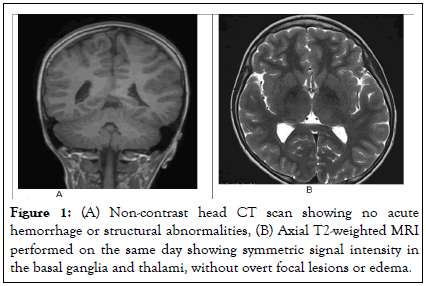
Figure 1: (A) Non-contrast head CT scan showing no acute hemorrhage or structural abnormalities, (B) Axial T2-weighted MRI performed on the same day showing symmetric signal intensity in the basal ganglia and thalami, without overt focal lesions or edema.
Case 2: Neuropsychiatric symptoms associated with mycoplasma encephalitis
An 11-year-old previously healthy boy presented with ataxia, confusion, jumbled speech and bizarre behavior during a febrile illness. He had an intermittent high fever for 3 days, neck pain, unsteady gait.
On examination, he was found to have a bilateral Babinski positive response, horizontal nystagmus, dysmetria and an altered sensorium with a varying Glasgow Coma Scale of 12-13/15. CSF examination revealed lymphocytic pleocytosis and hypoglycorrhachia, with negative cultures and PCR results (Tables 1-3). The brain imaging findings were unremarkable except for papilledema (Figure 2) and a normal electroencephalogram EEG confirmed nonconvulsive encephalopathy.
He was empirically administered intravenous ceftriaxone, vancomycin and acyclovir. Given the lack of improvement after five days, he was started on high-dose corticosteroids, assuming the diagnosis of autoimmune encephalitis. Subsequently, Mycoplasma pneumoniae IgM serology was positive and levofloxacin was instituted. He needed admission to the Pediatrics Intensive Care Unit (PICU) and intravenous immunoglobulin was administered. By day 8, he had a neurological recovery and was subsequently discharged on a steroid taper and levofloxacin with full resolution of his symptoms.
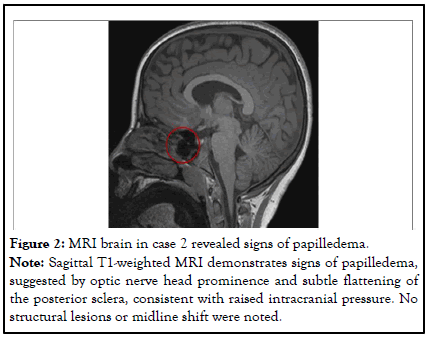
Figure 2: MRI brain in case 2 revealed signs of papilledema. Note: Sagittal T1-weighted MRI demonstrates signs of papilledema, suggested by optic nerve head prominence and subtle flattening of the posterior sclera, consistent with raised intracranial pressure. No structural lesions or midline shift were noted.
Case 3: Cerebellitis and mycoplasma-related meningoencephalitis
A previously well, 5-year-old girl was admitted after 6-day history of vomiting, loose stools, fever, headache and behavioural change. She was irritable, with photophobia, bilateral horizontal nystagmus and ataxia.
Initial blood tests were unremarkable (Tables 1-3). However, the CT venogram revealed a filling defect in the superior sagittal sinus, which is concerning for cerebral venous thrombosis (Figure 3). Lumbar puncture was withheld due to instability clinical situation. She was initiated on intravenous ceftriaxone, vancomycin, acyclovir and enoxaparin. Her cerebellar signs later worsened within 48 hours and MRI showed bilateral cerebellar hyperintensities with meningeal enhancement, consistent with acute cerebellitis; the venous sinus defect was subsequently found to be congenital. Mycoplasma serum IgM was positive. Hence, she was diagnosed with post-infectious cerebellitis secondary to Mycoplasma pneumoniae. She was given high-dose intravenous methylprednisolone for 5 days with subsequent improvement of neurological status. Antibiotics and antivirals were stopped on day 7 and she was discharged home on a 10-day course of oral levofloxacin with tapering steroids and near complete resolution of symptoms.
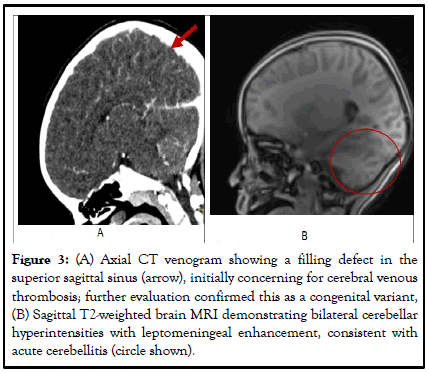
Figure 3: (A) Axial CT venogram showing a filling defect in the superior sagittal sinus (arrow), initially concerning for cerebral venous thrombosis; further evaluation confirmed this as a congenital variant, (B) Sagittal T2-weighted brain MRI demonstrating bilateral cerebellar hyperintensities with leptomeningeal enhancement, consistent with acute cerebellitis (circle shown).
Case 4: Mycoplasma pneumoniae associated with Acute Disseminated Encephalomyelitis (ADEM)
A 7-year-old boy, previously healthy, was admitted with fever, cough and vomiting. He also tested positive for M. pneumoniae IgM serology and was commenced on clarithromycin.
He became disoriented, atactic, aphasic and confusional within 2 days. Upon ICU admission, he was somnolent (Glasgow Coma Scale 11-13/15), with right-sided weakness and negative meningeal signs. Brain CT was normal. CSF analysis revealed increased white blood cells and red blood cells, increased protein, normal glucose levels, and a negative PCR result (Tables 1-3). He received empirical treatment with intravenous acyclovir, vancomycin and ceftriaxone. Within 48 hours the condition deteriorated, and the patient needed intubated. Hence, we asked for MRI which showed bilateral thalamic, basal ganglia and cerebellar peduncle hyperintensities on T2/FLAIR, suggestive of acute demyelination (Figure 4).
Post-infectious ADEM (result of infection with Mycoplasma pneumoniae) was considered. We initiated the treatment with highdose intravenous methylprednisolone (5 days), Intravenous Immunoglobulin (IVIG), and a 10-day course of intravenous levofloxacin. Autoimmune encephalitis workup was unremarkable.
He recovered quickly following immunotherapy and was extubated at 48 hours with complete neurological recovery.
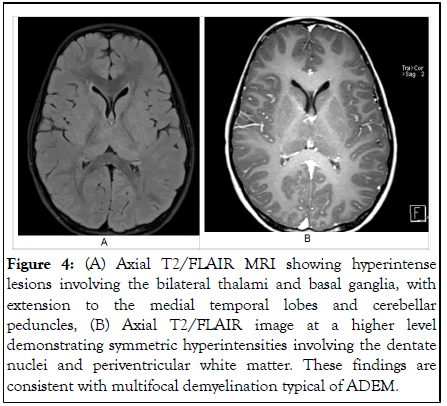
Figure 4: (A) Axial T2/FLAIR MRI showing hyperintense lesions involving the bilateral thalami and basal ganglia, with extension to the medial temporal lobes and cerebellar peduncles, (B) Axial T2/FLAIR image at a higher level demonstrating symmetric hyperintensities involving the dentate nuclei and periventricular white matter. These findings are consistent with multifocal demyelination typical of ADEM.
Case 5: Meningitis in a 10-year-old female positive for Mycoplasma pneumoniae
A 10-year-old girl presented with 10 days history of fever and gastrointestinal symptoms. Her condition didn’t improve despite a course of oral antibiotic treatment. On admission, the patient was febrile, restless, with neck stiffness. Inflammatory markers were within normal limits. A CSF sample showed neutrophilic pleocytosis, high protein levels and low glucose levels; cultures and PCR tests were negative (Tables 1-3). The brain CT scan with contrast revealed sulcal meningeal enhancement (Figure 5).
The result of Mycoplasma pneumoniae IgM was positive. IV levofloxacin was started instead of ceftriaxone, with resolution of fever within 48 hours. She received a 10-day course of treatment without neurological sequelae.
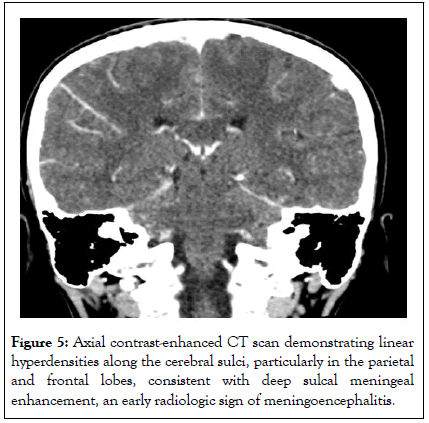
Figure 5: Axial contrast-enhanced CT scan demonstrating linear hyperdensities along the cerebral sulci, particularly in the parietal and frontal lobes, consistent with deep sulcal meningeal enhancement, an early radiologic sign of meningoencephalitis.
Case 6: Optic neuritis linked to mycoplasma in a pediatric patient
A 10-year-old girl presented with a 7-day history of an upper respiratory tract infection. She had been treated with several oral antibiotics but then developed a 4-day history of progressive vision loss in her right eye, accompanied by painful eye movements, headaches and periorbital pain.
On examination, she had no light perception, a relative afferent pupillary defect and swelling of the right optic disc. The MRI with contrast revealed multiple supratentorial and infratentorial T2/FLAIR hyperintensities in the optic nerves, chiasm, tracts and the left trigeminal nerve, which were consistent with a demyelinating process (Figure 6).
An extensive workup for autoimmune and infectious causes returned negative, except for a positive Mycoplasma pneumoniae IgM result. There was no evidence of aquaporin-4 IgG-positive Neuromyelitis Optic Spectrum Disorder (NMOSD), myelin oligodendrocyte glycoprotein antibodies or multiple sclerosis.
The patient received high-dose intravenous methylprednisolone and intravenous levofloxacin. Following treatment, her visual acuity improved. She was discharged with follow-up appointments scheduled with pediatric neurology and ophthalmology.
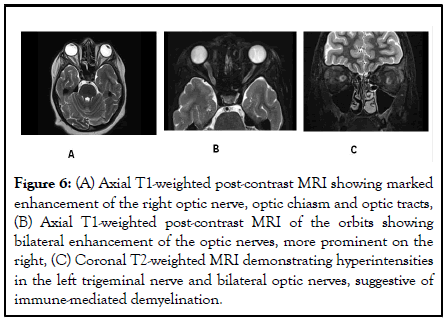
Figure 6: (A) Axial T1-weighted post-contrast MRI showing marked enhancement of the right optic nerve, optic chiasm and optic tracts, (B) Axial T1-weighted post-contrast MRI of the orbits showing bilateral enhancement of the optic nerves, more prominent on the right, (C) Coronal T2-weighted MRI demonstrating hyperintensities in the left trigeminal nerve and bilateral optic nerves, suggestive of immune-mediated demyelination.
Case 7: Mycoplasma infection led to meningoencephalitis in a13-year-old girl
A previously healthy 13-year-old girl was admitted after experiencing five days of fever. Fever associated with frontal headache, which progressed to confusion, slurred speech, unusual behavior, double vision and an unsteady gait.
Upon evaluation, she exhibited confusion and disorientation, with impaired attention and memory. The neurological examination revealed hyperreflexia, clonus and bilateral positive Kernig and Brudzinski signs. A lumbar puncture showed lymphocytic pleocytosis in the Cerebrospinal Fluid (CSF) along with elevated protein levels and normal glucose levels. Blood and urine cultures returned negative results, but a respiratory panel multiplex PCR test was positive for Mycoplasma pneumonia (Tables 1-3).
A CT scan of the brain indicated the presence of sinusitis and enlargement of the pituitary gland. An MRI of the brain showed hyperplasia of the pituitary gland and thrombosis of the cerebral venous sinus (Figure 7). Biochemical testing confirmed the patient's low morning cortisol levels, consistent with secondary adrenal insufficiency.
She was initially treated with parenteral ceftriaxone and vancomycin, which was later switched to intravenous levofloxacin. Hydrocortisone was administered. The patient showed significant improvement within three days and was discharged seven days after the initiation of appropriate therapy, with only mild leftsided hearing loss remaining.
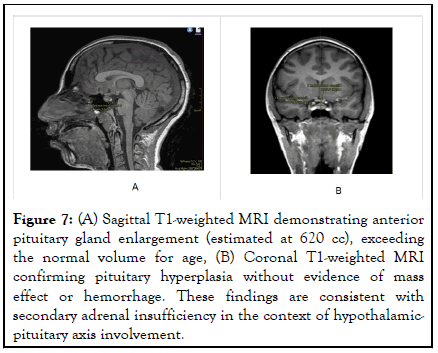
Figure 7: (A) Sagittal T1-weighted MRI demonstrating anterior pituitary gland enlargement (estimated at 620 cc), exceeding the normal volume for age, (B) Coronal T1-weighted MRI confirming pituitary hyperplasia without evidence of mass effect or hemorrhage. These findings are consistent with secondary adrenal insufficiency in the context of hypothalamicpituitary axis involvement.
Case 8: Acute cerebellar ataxia associated with mycoplasma infection
A 4-year-old boy with attention-deficit/hyperactivity disorder presented with a history of febrile upper respiratory illness for 2 days. Generalized abnormal movements and horizontal nystagmus followed his symptoms.
In the emergency room, the brain CT showed bilateral mastoid opacification and the MRI was normal (Figure 8). Cerebrospinal fluid analysis was normal, and multiplex PCR was negative. Laboratory testing were significant for leukocytosis, neutrophilia, thrombocytosis and mild anemia in the absence of elevated inflammatory markers (Tables 1-3).
He was started on ceftriaxone and acyclovir empirically, however when the Mycoplasma pneumoniae IgM tested positive, he received a course of levofloxacillin. He exhibit significant improvement in 3 days.
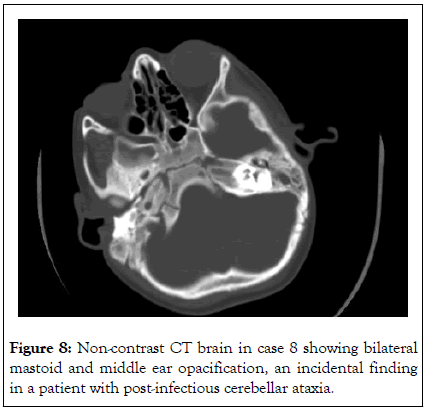
Figure 8: Non-contrast CT brain in case 8 showing bilateral mastoid and middle ear opacification, an incidental finding in a patient with post-infectious cerebellar ataxia.
| Parameter | Patient 1 | Patient 2 | Patient 3 | Patient 4 | Patient 5 | Patient 6 | Patient 7 | Patient 8 | Reference range |
| CRP (mg/L) | 3.8 | 2.9 | 2.1 | 3 | 2.4 | 2.6 | 3.3 | 1.7 | <10 |
| Procalcitonin (ng/mL) | 0.1 | 0.05 | 0.06 | 0.08 | 0.06 | 0.05 | 0.07 | 0.04 | <0.5 |
| Mycoplasma IgM | 27.5 | 23.6 | 20.7 | 22.1 | 24.8 | 25.5 | 26.4 | 21.3 | >1.1 positive |
| Mycoplasma IgG | 8.2 | 9.7 | 11.4 | 10.5 | 11 | 11.6 | 10.2 | 9.4 | <19.9 negative |
Table 1: Inflammatory markers and serology.
| Parameter | Patient 1 | Patient 2 | Patient 3 | Patient 4 | Patient 5 | Patient 6 | Patient 7 | Patient 8 | Reference range |
| CSF WBC (× 106/L) | 180 | 25 | ND | 26 | 420 | 13 | ND | 11 | 0-5 × 10⁶/L |
| Neutrophils (%) | 15 | 4 | ND | 2 | 65 | 1 | ND | 2 | 0-6% |
| Lymphocytes (%) | 85 | 95 | ND | 97 | 35 | 98 | ND | 98 | 40-80% |
| Protein (g/L) | 0.9 | 0.5 | ND | 0.42 | 1.2 | 0.36 | ND | 0.4 | 0.15-0.45 g/L |
| Glucose (mmol/L) | 2.2 | 3.5 | ND | 3.5 | 1.8 | 3.4 | ND | 3.8 | 2.5-4.5 mmol/L |
Table 2: CSF analysis results.
| Parameter | Patient 1 | Patient 2 | Patient 3 | Patient 4 | Patient 5 | Patient 6 | Patient 7 | Patient 8 | Reference range |
| White blood cells (× 103/uL) | 14.6 | 10.2 | 11.4 | 13.8 | 9.9 | 7.9 | 8.7 | 7.8 | 4.5-13.5 |
| Hemoglobin (g/dL) | 12.4 | 12.8 | 11.9 | 13.4 | 12.7 | 13 | 12.6 | 12.2 | 11.5-15.5 |
| Platelets (× 103/uL) | 375 | 342 | 295 | 304 | 385 | 276 | 248 | 282 | 150-450 |
| Neutrophils (%) | 82.3 | 76.5 | 69.1 | 74.2 | 68.4 | 63.2 | 58.3 | 61.1 | 30-60 |
| Lymphocytes (%) | 9.3 | 14.5 | 18.4 | 13.6 | 23.4 | 25.3 | 31.2 | 29.7 | 30-50 |
| Monocytes (%) | 7.1 | 6.8 | 8.1 | 7.4 | 6.4 | 9 | 6.1 | 7.5 | 2-10 |
| Eosinophils (%) | 1.1 | 2 | 3.2 | 3.5 | 1 | 2.2 | 3.4 | 1.4 | 1-6 |
| Basophils (%) | 0.2 | 0.2 | 1.2 | 1.3 | 0.1 | 0.3 | 1 | 0.3 | 0-1 |
Table 3: CBC results upon admission.
Mycoplasma pneumoniae causes common respiratory infections in children and can cause severe extrapulmonary complications, particularly of the Central Nervous System (CNS). These neurological presentations vary from encephalitis, meningitis, Acute Disseminated Encephalomyelitis (ADEM), optic neuritis, neuropsychiatric symptoms and uncommonly, endocrine disease [1].
The mechanism is predominantly of immune mediation, molecular mimicry, when mycoplasma antigens mimic neural tissue epitopes and thus initiate antibody production, which is cross-reactive. This, as well as cytokine release, in turn, could lead to a severe Central Nervous System (CNS) inflammation and lesion [2,4]. Crucially, neurologic manifestations can ensue in the absence of respiratory disease, thus rendering infection with Mycoplasma pneumoniae an essential cause of CNS-related signs, even if the patient has no respiratory complaints [1]. The immunological pathogenesis of neurologic complications of M. pneumoniae has been suggested by several studies. Christie et al. have documented that mycoplasma accounts for 6% of the pediatric encephalitis cases and it frequently occurs without pneumonia highlighting the importance of being vigilant to such cause [1]. Biswas et al. reported ADEM-like and optic neuritis presentations associated with mycoplasma infection, responding well to immunotherapy [3]. Similarly, our group revealed a case 6 which was affected by demyelination and optic neuritis. All patients had lymphocytic CSF pleocytosis with negative cultures and mycoplasma PCR, whereas neuroimaging had a decisive role in the detection of demyelinating lesions (case 6) and of pituitary involvement (case 7). Immunotherapy was successful in most patients, bolstering the immune theory and prior literature [1-4].
Mycoplasma pneumoniae should be included in the differential diagnosis of children with an unexplained neurologic presentation, particularly when optic neuritis or demyelinating findings are identified [3]. Our group is in line with literature and emphasise the importance of having a very low threshold for suspecting mycoplasma CNS disease in children with encephalopathy, acute movement disorder, ataxia, personality change, and visual deficits. All cases of our series were treated with IV levofloxacin, cases 1, 4, 5, 6 and 7 also received IV methylprednisolone and cases 4, 6 and 7 also received IVIG. They were introduced 48-72 hours and most patients showed marked clinical recovery. Early diagnosis through the use of neuroimaging and serology and timely delivery of antimicrobial and immunomodulatory treatment, is essential in limiting longterm neurologic sequelae and favoring full recovery (Table 4) [3-6].
| Case | Age/Sex | Presentation | Mycoplasma testing | Treatment | Outcome |
| 1 | 11/M | Encephalitis, mutism | IgM positive | Ceftriaxone, Levofloxacin, IVIG | Full recovery |
| 2 | 11/M | Encephalitis, neuropsychiatric symptoms | IgM positive | Ceftriaxone, Levofloxacin, IVIG, steroids | Full recovery |
| 3 | 5/F | Cerebellitis | IgM positive | Ceftriaxone, Levofloxacin, steroids | Full recovery |
| 4 | 7/M | ADEM-like demyelination | IgM positive | Ceftriaxone, Levofloxacin, IVIG, steroids | Full recovery |
| 5 | 10/F | Meningitis | IgM positive | Levofloxacin | Full recovery |
| 6 | 10/F | Optic neuritis | IgM positive | Levofloxacin, steroids | Improved vision |
| 7 | 13/F | Meningoencephalitis, pituitary enlargement, delirium | IgM and PCR positive | Levofloxacin | Full recovery |
| 8 | 4/M | Post-infectious cerebellar ataxia | IgM positive | Ceftriaxone | Full recovery |
Table 4: Summary of the cases.
Mycoplasma pneumoniae should be included in the differential diagnosis of pediatric encephalopathy with or without neuroendocrine or demyelinating imaging features. The clinical manifestations have great variability from the classic encephalitis to endocrine disfunctions, optic neuritis or mental symptoms. The diagnosis is lean towards a high index of suspicion and a combination of respiratory Polymerase Chain Reaction (PCR), serological analysis and neuroimaging after excluding other causes.
Adherence to multidisciplinary management and early diagnosis are keys to improving neurological outcomes with a proper use of immunomodulatory and antimicrobial strategies. Mycoplasma infection results in diverse acute inflammation sites including lungs with autoimmunity features, indicating the need of further investigation for the better understanding of its mechanism so that we can use them as an opposite therapeutic for immune-mediated diseases.
[Crossref] [Google Scholar] [PubMed]
[Crossref] [Google Scholar] [PubMed]
[Crossref] [Google Scholar] [PubMed]
[Crossref] [Google Scholar] [PubMed]
[Crossref] [Google Scholar] [PubMed]
[Crossref] [Google Scholar] [PubMed]
Citation: Abdulsalam T, Yavuz L, Al Dirawi M, Chicken S, Alhammadi M, AbuHammour W (2026) Neurological Manifestations of Mycoplasma pneumoniae in Children: A Series of Eight Cases. Clin Pediatr. 11:311.
Received: 29-Dec-2025, Manuscript No. CPOA-25-39902; Editor assigned: 01-Jan-2026, Pre QC No. CPOA-25-39902 (PQ); Reviewed: 15-Jan-2026, QC No. CPOA-25-39902; Revised: 22-Jan-2026, Manuscript No. CPOA-25-39902 (R); Published: 29-Jan-2026 , DOI: 10.35248/2572-0775.26.11.311
Copyright: © 2026 Abdulsalam T, et al. This is an open-access article distributed under the terms of the Creative Commons Attribution License, which permits unrestricted use, distribution, and reproduction in any medium, provided the original author and source are credited.