Cell & Developmental Biology
Open Access
ISSN: 2168-9296
ISSN: 2168-9296
Research Article - (2026)Volume 15, Issue 3
Objective: To comprehensively review the current evidence on the mechanisms of action, efficacy, delivery approaches and combination therapy prospects of sulforaphane for breast cancer management.
Background: Breast Cancer (BC) is a leading cause of cancer mortality worldwide. It needs improved prevention and treatment strategies because of the metastasis and drug resistant problems. Sulforaphane is a natural compound derived from cruciferous vegetables that has shown potent anticancer activity.
Methods: This narrative review was done by a systematic search across PubMed, Google Scholar, Scopus and Clinical Trials Government (CTG) from 2004 to 2023. Included articles were 31.
Results: Numerous studies demonstrated sulforaphane's antiproliferative and pro-apoptotic effects against breast cancer cells and cancer stem cells through epigenetic regulation, signaling pathway modulation and other mechanisms. Preclinical studies showed sulforaphane inhibited tumor growth and metastasis. Combining sulforaphane with chemotherapy enhanced efficacy and reduced toxicity. Nanoparticle formulations improved sulforaphane bioavailability and targeted delivery.
Conclusion: Sulforaphane exhibits promising therapeutic potential against breast cancer through multiple molecular mechanisms. Evidence supports its use as an adjunct to conventional treatments and warrants further exploration in clinical trials. Optimized delivery approaches may aid translation of these findings into effective breast cancer management strategies.
Breast cancer; Sulforaphane; Anticancer activity; Drug delivery
Breast Cancer (BC) is one of the most common causes of female mortality around the globe. It is the second prevalent cancer and the fifth leading cause of death from cancer in the world. It accounts for around 25% of all female cancers. The worldwide incidence of BC in 2012 was 1.67 million, which is alarming. The incidence may increase to 3.2 million by 2050. Men can also get breast cancer, but this is extremely uncommon, making up less than 1% of all diagnosed cases globally. Breast cancer may be hereditary. BRCA1 (breast cancer susceptibility gene 1) is the first cancer susceptibility gene discovered. Inherited mutations in the BRCA1 gene are behind an increase in the breast and ovarian cancer risk in women. Breast cancer is considered to be caused by a mix of genetic and lifestyle variables, but the extent to which an overall healthy lifestyle can reduce the influence of many genetic variations on the risk of invasive breast cancer is unclear [1]. Advances in epidemiological and clinical breast cancer research have allowed researchers to identify a number of risk factors linked to women’s re-productive history and lifestyle such as food, body weight and physical exercise. Obesity and being overweight in post-menopausal women have been associated with an increased risk of breast cancer. At the same time, protective factors such as physical exercise, breastfeeding and a well-balanced diet can significantly reduce the risk of breast cancer. Breast cancer can cause various symptoms. These include pain, numbness, fatigue, difficulty sleeping, loss of self-esteem, weight gain, loss of sexual interest and cognitive impairment. According to Centers for Disease Control (CDC), some warning signs of breast cancer are: new lump in the breast or underarm (armpit), thickening or swelling of part of the breast, irritation or dimpling of breast skin, redness or flaky skin in the nipple area or the breast, pulling in of the nipple or pain in the nipple area, nipple discharge other than breast milk, including blood, any change in the size or the shape of the breast and pain in any area of the breast. Survivors may also experience long-term symptoms such as hot flashes, sexual dysfunction, arthralgias, neuropathy and cognitive dysfunction. Behavioral symptoms, including disturbances in energy, sleep, mood and cognition, are common and can persist for years after treatment. The risk of breast cancer mortality varies by age. Younger women under 40 have a higher risk, especially if they have hormone receptor-positive, lower grade disease. This risk remains high after age 60 for BRCA1 and BRCA2 mutation carriers, suggesting the need for continued screening. There are different subtypes of BC, categorized by factors like cause, location and molecular features (Figure 1) [2].
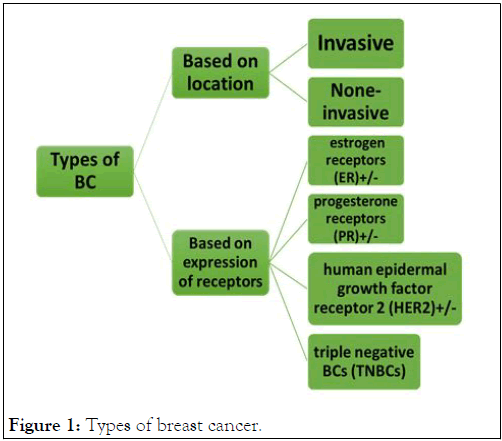
Figure 1: Types of breast cancer.
In terms of location, there are two main types: Non-invasive and invasive. Non-invasive BC stays within the milk ducts or lobules where it starts. Invasive BC, however, spreads beyond these structures into surrounding breast tissue. Another way to classify BC is by the presence of Estrogen Receptors (ER) on the cancer cells. This divides BC into two main groups: ER-positive and ER-negative. Additional molecular markers, like Progesterone Receptor (PR) and Human Epidermal growth factor Receptor 2 (HER2), are also used for classification. ER-positive BCs can often be treated with hormone therapy or aromatase inhibitors. In contrast, Triple-Negative Breast Cancer (TNBC) doesn't show increased levels of any of these three receptors. This makes TNBC non-responsive to hormonal therapy. Tests for diagnosis are include mammogram, ultrasound, Magnetic Resonance Imaging (MRI) and breast biopsy [3]. The common approaches used in the management of BCs include chemotherapy, radiotherapy and surgical interventions, which often results in significant side effects. Thus, researchers are continuously searching for novel complementary strategies for dealing with such conditions in a more effective way. Dietary factors play an important role in breast cancer etiology. Epidemiological studies show that a diet rich in fruit and vegetables significantly lowers the chance of getting several cancers, including lung, esophageal, laryngeal, pancreatic, colorectal, gastric and prostate cancers, as well as breast cancer. Vegetables from the Brassicaceae family are a rich source of chemopreventive substances. These include 350 plant species, such as cabbage, broccoli, cauliflower and Brussels sprouts. The anti-cancer effects of these plants are related to the Glucosinolates (GLS) they contain. When the enzyme myrosinase is active, the GLS undergo enzymatic breakdown into Isothiocyanates (ITC). The ITC that has been most extensively studied is Sulforaphane (SFN) (Figure 2). Broccoli sprout has the highest sulforaphane content at 1153 mg of sulforaphane per 100 g, whereas mature broccoli contains 44-171 mg of sulforaphane/100 g dry weight. SFN (4- methylsulfinybutyl isothiocyanate) has shown the ability to inhibit and reverse the development of cancer, as well as to induce apoptosis (programmed cell death) in cancer cells. There is now an increasing number of studies on natural and synthetic SFN analogs or derivatives that are used with conventional treatment or alone [4]. This narrative review offers a comprehensive analysis of the current research and critically discuss about its synergistic effects with common treatments or its delivery methods to optimize bioavailability within the body.
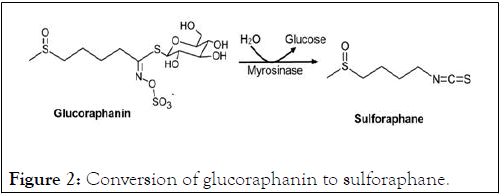
Figure 2: Conversion of glucoraphanin to sulforaphane.
This narrative review was done by a systematic search across PubMed, Google Scholar, Scopus, and Clinical Trials Government (CTG) in English from 2004 to 2023 by using “sulforaphane”, “glucoraphanin”, “isothiocyanate”, “BRCA”, “ER”, “PR”, “HER2”, “TNBC”, “cancer treatment”, “chemotherapy sensitization”, “apoptosis” as keywords. Duplicated articles, review articles, letter to editors and papers which included bioactive compounds except sulforaphane were deleted. Data extraction was done by 31 articles.
Mechanistic studies
Pledgie-Tracy et al. observed that SFN induced cell type-specific apoptosis in human breast cancer cell lines and hypothesized that SFN acts as a Histone Deacetylase (HDAC) inhibitor in these cells. Meeran et al. demonstrated that sulforaphane inhibited HDAC activity and induced cell cycle arrest, apoptosis and epigenetic regulation of Bax and Bcl-2 in breast cancer cells, suggesting its potential as an epigenetic modulator in cancer therapy. Keshandehghan et al. found that co-treatment with SFN and nano-metformin accelerated apoptosis in HER2+ cells by inhibiting key molecules like Akt, ERK1/2 and NF-κB. Li et al. explored the temporal efficacy of a sulforaphane-based broccoli sprout diet in the prevention of breast cancer through modulation of epigenetic mechanisms. They found that early-life exposure to the diet had a more significant impact on epigenetic regulation and breast cancer prevention compared to later-life exposure [5]. Jo et al. reported that sulforaphane's antiproliferative and anti-inflammatory effects in ER-positive breast cancer cells were mediated through p38 MAPK activation and caspase-7-dependent apoptosis induction. Vetto et al. demonstrated that sulforaphane inhibited proliferation and induced G2/M cell cycle arrest in MCF-7 breast cancer cells by disrupting microtubule polymerization and mitotic progression. They also observed similar effects in other ER-positive and ERnegative breast cancer cell lines. Li et al. demonstrated that sulforaphane inhibited the Wnt/β-catenin self-renewal pathway in breast cancer stem cells, providing insights into its potential mechanism of action in targeting and eliminating this therapyresistant subpopulation of cancer cells.
In vivo studies
Kanematsu et al. found that SFN suppressed the growth and metastasis of KPL-1 breast cancer cell xenografts in athymic mice. Pore et al. demonstrated that oral administration of SFN suppressed osteolytic bone resorption in a mouse model of breast cancer bone metastasis. Pogorzelska et al. evaluated the efficacy and safety of a liposomal formulation containing doxorubicin and sulforaphane in a Triple-Negative Breast Cancer (TNBC) animal model. They observed potent anticancer effects, reduced systemic toxicity and improved therapeutic outcomes compared to free drug treatments. Atwell et al. conducted a clinical study in women scheduled for breast biopsy and found that sulforaphane supplementation was welltolerated, with no significant adverse events reported. Burnett et al. demonstrated that combining sulforaphane with taxanes like docetaxel enhanced their anticancer activity against TNBC by targeting breast cancer stem cells in a mouse xenograft model. Fu et al. demonstrated that intrathecal injection of SFN alleviated hyperalgesia and enhanced the analgesic potency of morphine in rats with cancer-induced bone pain. Milczarek et al. evaluated the efficacy of sulforaphane-loaded solid lipid nanoparticles in a 4T1 murine breast cancer model. They found that the nanoparticle formulation significantly inhibited tumor growth and metastasis compared to free sulforaphane or control groups [6].
Combination therapy studies
Milczarek et al. tested the anticancer effects of a combination therapy involving 5-Fluorouracil (5-FU) and an organoselenium analogue of sulforaphane (ISC) in Triple-Negative Breast Cancer (TNBC) models. They found that the combination exhibited synergistic anticancer effects both in vitro and in vivo, suggesting the potential for developing new combinatorial therapies with reduced toxicity. Lubecka et al. reported that the combination of clofarabine and SFN inhibited breast cancer cell growth through epigenetically mediated CDKN2A upregulation. Mangla et al. formulated lipid-nanopotentiated combinatorial delivery of Tamoxifen (TAM) and SFN and conducted ex vivo, in vivo, and toxicity studies to assess their potential synergistic or additive effects. SFN significantly reduced TAM-associated toxicity in vivo. Kaczynska and Herman-Antosiewicz reported that sulforaphane overcame lapatinib resistance and inhibited migration in HER2- positive breast cancer cells by inducing apoptosis and modulating signaling pathways like Akt, ERK1/2 and NF-κB. Sehrawat and Singh found that sulforaphane induced apoptosis in breast cancer cells overexpressing a truncated form of the RON receptor tyrosine kinase, suggesting its potential in overcoming drug resistance mediated by RON overexpression. Sinha et al. found that the combination of sulforaphane and cisplatin inhibited the stemness and metastatic potential of triple-negative breast cancer cells by downregulating the expression of cancer stem cell markers and Epithelial-Mesenchymal Transition (EMT) markers. Bose et al. demonstrated that sulforaphane potentiated the anticancer effects of doxorubicin while attenuating its cardiotoxicity in a breast cancer model, suggesting potential benefits of combining sulforaphane with conventional chemotherapeutics. Huang et al. developed PLGA-hyaluronic acid nanoparticles for co-delivery of sulforaphane and docetaxel, simultaneously targeting differentiated breast cancer cells and breast cancer stem cells, leading to enhanced anticancer efficacy compared to monotherapies [7].
Pharmacokinetic and bioavailability studies
Kheiri Manjili et al. synthesized iron oxide-gold core-shell nanoparticles for sulforaphane delivery, reporting successful loading and sustained release, indicating potential for improved bioavailability and targeted delivery. Khan et al. developed folic acid-engineered SFN-loaded microbeads for targeting breast cancer and analyzed their release potential, permeation capability and in vivo anticancer activity. Danafar et al. formulated sulforaphane-loaded mPEG-PCL micelles with high encapsulation efficiency (~90%) and sustained drug release profile, suitable for sulforaphane delivery. Kamal and Nazzal developed sulforaphaneenabled Self-Microemulsifying Drug Delivery Systems (SMEDDS) for co-delivery of taxanes and sulforaphane, exhibiting improved solubility and cytotoxicity against breast cancer cells. Gu et al. synthesized mineralized hyaluronic acid-based nanocarriers with disulfide linkages for glutathione-responsive release of sulforaphane, demonstrating enhanced tumor-targeting ability and inhibitory effects on breast cancer stem cells. Milczarek et al. encapsulated sulforaphane and doxorubicin in liposomes, enhancing their intracellular accumulation and anticancer activity in triple-negative breast cancer cells (Table 1) [8].
| Study type | Author(s) | Type of sulforaphane | Anticancer mechanism |
| Mechanistic studies | Pledgie-Tracy, et al. | SFN | Induced cell type-specific apoptosis, hypothesized as a Histone Deacetylase (HDAC) inhibitor |
| Meeran, et al. | Sulforaphane | Inhibited HDAC activity, induced cell cycle arrest, apoptosis, and epigenetic regulation of Bax and Bcl-2 | |
| Keshandehghan, et al. | SFN and nano-metformin | Accelerated apoptosis in HER2+ cells by inhibiting Akt, ERK1/2, and NF-κB | |
| Li et al. | Broccoli sprout diet (sulforaphane-based) | Early-life exposure modulated epigenetic mechanisms for breast cancer prevention | |
| Jo, et al. | Sulforaphane | Anti-proliferative and anti-inflammatory effects mediated through p38 MAPK activation and caspase-7 | |
| Vetto, et al. | Sulforaphane | Inhibited proliferation and induced G2/M cell cycle arrest by disrupting microtubule polymerization | |
| Li, et al. | Sulforaphane | Inhibited the Wnt/β²-catenin self-renewal pathway in breast cancer stem cells | |
| In vivo studies | Kanematsu, et al. | SFN | Suppressed growth and metastasis of KPL-1 breast cancer cell xenografts |
| Pore, et al. | SFN | Suppressed osteolytic bone resorption in a mouse model of breast cancer bone metastasis | |
| Pogorzelska, et al. | Liposomal formulation with doxorubicin and SFN | Potent anticancer effects, reduced toxicity, and improved therapeutic outcomes in TNBC model | |
| Atwell, et al. | Sulforaphane | Well-tolerated with no significant adverse events in a clinical study | |
| Burnett, et al. | Sulforaphane with taxanes | Enhanced anticancer activity against TNBC by targeting breast cancer stem cells | |
| Fu, et al. | SFN | Alleviated hyperalgesia and enhanced analgesic potency of morphine in cancer-induced bone pain | |
| Milczarek, et al. | Sulforaphane-loaded solid lipid nanoparticles | Inhibited tumor growth and metastasis in a 4T1 murine breast cancer model | |
| Combination therapy | Milczarek, et al. | 5-FU and ISC (organoselenium analogue of SFN) | Synergistic anticancer effects in TNBC models |
| Lubecka, et al. | Clofarabine and SFN | Inhibited breast cancer cell growth via epigenetically mediated CDKN2A upregulation | |
| Mangla, et al. | Tamoxifen (TAM) and SFN | Lipid-nanopotentiated delivery reduced TAM-associated toxicity | |
| Kaczynska and Herman-Antosiewicz | Sulforaphane | Overcame lapatinib resistance and inhibited migration in HER2-positive breast cancer cells | |
| Sehrawat and Singh | Sulforaphane | Induced apoptosis in breast cancer cells overexpressing a truncated RON receptor tyrosine kinase | |
| Sinha, et al. | Sulforaphane and cisplatin | Inhibited stemness and metastatic potential of TNBC cells by downregulating cancer stem cell and EMT markers | |
| Bose, et al. | Sulforaphane with doxorubicin | Potentiated anticancer effects while attenuating cardiotoxicity | |
| Huang, et al. | PLGA-hyaluronic acid nanoparticles with SFN and docet |
Table 1: Results of the studies of anticancer effects of sulforaphane against breast cancer cells.
The studies summarized in this review highlight the promising anticancer effects of sulforaphane against breast cancer cells and Breast Cancer Stem Cells (BCSCs). Numerous in vitro and in vivo studies have demonstrated the antiproliferative, proapoptotic and anti-inflammatory activities of SFN in various breast cancer cell lines, including ER-positive, HER2-positive and triple-negative subtypes. Several mechanisms have been proposed to explain the anticancer effects of SFN, including modulation of epigenetic regulation, induction of cell cycle arrest, inhibition of tubulin polymerization, downregulation of the Wnt/β-catenin self-renewal pathway and suppression of NF- κB and RUNX2 signaling pathways. Additionally, SFN has been shown to target BCSCs, which are responsible for tumor initiation, metastasis and treatment resistance. Also, Calcabrini et al. discussed how SFN can potentiate the anticancer effects of chemotherapy drugs like doxorubicin and cisplatin while mitigating their side effects. To enhance the therapeutic efficacy and delivery of SFN, researchers have explored various nanocarrier systems, such as liposomes, polymeric nanoparticles, and Self-Microemulsifying Drug Delivery Systems (SMEDDS). These nanotechnology-based approaches aim to improve the bioavailability, targeted delivery and synergistic effects of SFN when combined with conventional chemotherapeutic agents, such as doxorubicin, taxanes and 5-fluorouracil. Importantly, several studies have demonstrated the potential of SFN to attenuate the adverse effects associated with chemotherapy, such as cardiotoxicity, nephrotoxicity and hepatotoxicity [9]. This suggests that SFN could potentially improve the safety profile of chemotherapeutic regimens while enhancing their efficacy. Despite these promising findings, there are limitations to the current research. Most studies have been conducted in vitro or in preclinical animal models and the translation of these results to human clinical trials remains to be established. Moreover, the bioavailability and stability of SFN in vivo remain a challenge. The development of effective delivery systems is crucial for maximizing its therapeutic potential. Ongoing research efforts are focused on optimizing nanocarrier formulations, exploring combinatorial approaches with other anticancer agents or other bioactive compounds and evaluating the safety and efficacy of SFN in clinical trials (Table 2).
Time period |
Methodology/Study design |
Findings | Limitations |
2004-2010 |
Cell culture, Western blot analysis, real-time PCR, and in vivo xenograft studies |
Sulforaphane (SFN) has potent chemopreventive effects in human breast cancer cells, inducing antioxidant enzyme expression and exhibiting antiproliferative and anti-inflammatory activity | The studies focused on the effects of SFN on specific aspects of breast cancer, such as cell proliferation, apoptosis and stem cell inhibition, but did not investigate other potential effects or mechanisms of action |
2015-2019 |
Randomized controlled trials, cell culture, flow cytometry, confocal microscopy and statistical analysis |
SFN supplementation was associated with reduced Peripheral Blood Mononuclear Cell (PBMC) Histone Deacetylase (HDAC) activity. SFN enhances the intracellular accumulation and anticancer action of doxorubicin encapsulated in liposomes in triple-negative breast cancer cells | The studies focused on the effects of SFN in specific settings, such as in combination with other drugs or in specific cell lines and did not investigate other potential effects or mechanisms of action |
2020-2023 |
In vitro and in vivo studies using cell lines and animal models |
The combination of 5-Fluorouracil (5-FU) and the sulforaphane analogue, 4-isoselenocyanato-1-butyl 4-fluorobenzyl sulfoxide (ISC), has promising anticancer activity against Triple-Negative Breast Cancer (TNBC) | The studies are ongoing and further research is needed to confirm the efficacy and safety of the combination therapy |
Table 2: Summarized the anticancer effects of sulforaphane against breast cancer cells.
The studies reviewed here provide compelling evidence for the anticancer potential of SFN against breast cancer, particularly in targeting BCSCs and overcoming treatment resistance. While further research is needed to address the limitations and translate these findings into clinical practice, SFN holds promise as a valuable addition to the arsenal of breast cancer therapies, either as a standalone agent or in combination with conventional chemotherapeutics.
This study did not involve any human participants or animals and thus ethics approval and consent to participate are not applicable.
Not applicable.
This research received no specific grant from any funding agency in the public, commercial or not-for-profit sectors.
This study is a narrative review and the data supporting its findings are derived from publicly available sources such as Google Scholar, PubMed, Scopus and Clinical Trials Government. All referenced materials are available through their respective publishers and repositories.
[Crossref] [Google Scholar] [PubMed]
[Crossref] [Google Scholar] [PubMed]
[Crossref] [Google Scholar] [PubMed]
[Crossref] [Google Scholar] [PubMed]
[Google Scholar] [PubMed]
[Crossref] [Google Scholar] [PubMed]
[Crossref] [Google Scholar] [PubMed]
[Crossref] [Google Scholar] [PubMed]
[Crossref] [Google Scholar] [PubMed]
Citation: Salim Z (2026) Narrative Review: Therapeutic Approach of Sulphorafane for Breast Cancer. Cell Dev Biol. 15:421.
Received: 13-Nov-2024, Manuscript No. CDB-24-35150; Editor assigned: 16-Nov-2024, Pre QC No. CDB-24-35150 (PQ); Reviewed: 30-Nov-2024, QC No. CDB-24-35150; Revised: 10-Feb-2026, Manuscript No. CDB-24-35150 (R); Published: 17-Feb-2026 , DOI: 10.35248/2168-9296.26.15.421
Copyright: © 2026 Salim Z. This is an open-access article distributed under the terms of the Creative Commons Attribution License, which permits unrestricted use, distribution, and reproduction in any medium, provided the original author and source are credited.