
Journal of Geography & Natural Disasters
Open Access
ISSN: 2167-0587
ISSN: 2167-0587
Research Article - (2021)Volume 11, Issue 10
Kuttanad wetland of Kerala located at the southern end of India’s largest Ramsar site- the Vembanad-Kol is famous for its unique system of land and water management, here below sea- level paddy cultivation along with pisciculture is practiced in reclaimed polders. But these polders are highly prone to flood hazards whose frequency is increasing due to anthropogenic activities and climate change. Flood hazards are associated with livelihood property and land loss which impact people differently as there is a direct link between poverty and exposure to hazards, this has caught the attention of social scientists and policymakers alike resulting in a shift in the approach to hazard and disaster management. Keeping this in view the present paper focuses on the different dimensions of vulnerability to floods at a micro-level between the farmers who own land and the inland fishermen community who represent the marginalized section having little access to land in this wetland. This paper is empirical where data has been generated through field investigation in Pulinkunnu Panchayat of Kuttanad located in Alappuzha district as this Panchayat is highly flood-prone. A vulnerability index has been computed to assess and compare the different dimensions of vulnerability between the farmers and fishermen households. These two communities have been selected as they represent two distinct socio-economic groups who derive their major livelihood directly from the natural resource viz. land and water.
The United Nations International Decade for Natural Disaster Reduction (IDNDR) in the 1990s highlights the social context of disaster risk to understand why similar hazards can lead to different impacts resulting in life and property loss as there is a direct link between poverty and exposure to hazards. The Hyogo Framework for Action to fight disasters, states the need for the development of indicator systems to assess disaster risk and vulnerability to enable decision-makers to mitigate the possible impacts of disaster and strengthen pro-active actions for disaster risk reduction. It is interesting to note that the terms hazard, risk, vulnerability, and disaster are interconnected. Hazard refers to a phenomenon or situation that has the potential to cause damage or disruption affecting human life and property, risk on the other hand refers to the negative consequences that may arise when hazards occur. The degree of risk is dependent on the interaction of the hazard with the vulnerable people- their demography and socio-economic characteristics. Consequently, vulnerability refers to the constraints due to economic social, physical, and geographic character that reduces the ability of the people to prepare for and cope with the negative impact of a hazard. The concept of vulnerability is multidimensional and complex to define, though it can be measured with the help of indicators and the different dimensions of vulnerability are – Social dimension of vulnerability which deals with justice, social differentiation, and social organization. Economic vulnerability refers to the specific occupation and livelihood pattern, economic assets of households at risk, while the environmental dimension of vulnerability refers to the likelihood of harm of disruption of livelihood and other societal processes due to the degradation of environmental services e.g., land degradation and degradation of water bodies, etc. that can have a severely detrimental impact on the population who are expose to the natural hazard. The Physical dimension of vulnerability refers to the physical location and structure of the dwellings which exposes a particular community or household or individual to the hazard.
It is interesting to note that the concept of vulnerability has two aspects the external aspect which includes the exposure and sensitivity of the individual/ households or a community to disasters that are defined by the social inequities, uneven distribution of assets demographic attributes, and environmental management capacity, the susceptibility of the population or the inability to obtain or manage assets by legitimate economic means. The internal aspect of vulnerability relates to the coping and adaptive strategies adopted by the population at an individual, household, or community level. This includes the capacity to foresee, cope with, resist and recover from the impact of a specific threat. Hence higher the preparedness, coping and adaptive strategies higher is the resilience to the hazard making the individual, household, or community less vulnerable to the hazard.
In this paper, the different dimensions of vulnerability to floods with special emphasis to the flood event of 2017 for two socio-economic groups living in the Kuttanad wetland have been measured and compared with the help of selected indicators. The Kuttanad wetland of Kerala experiences flood which is almost an annual affair due to its unique location separated from the Arabian Sea in the west by a stretch of land and the geographical character where men have reclaimed land in this wetland.
The four major rivers originating in the Western Ghats of India discharge excess water in this wetland during the southwest monsoon season and this excess water cannot easily drain out to the Arabian Sea (Fig.1). At the same time the pressure from the sea leads to saline water transgression and the polders are flooded as the free flow of floodwater is restricted to enter into the sea leading to a rise in flood level. The occurrence of recurrent flood hazards often turns into disaster especially during periods of high tides. Though the entire wetland is affected by such flood hazards, at a micro level the impact of such floods and associated life and property loss are felt more by the marginalized section of the society. Floodwater enters the settlements located in low lying areas where most of the weaker section of the society lives.
Kuttanad wetland of Kerala extends from 9°17' N to 9°40' N latitudes and 76°19' E to 76°33' E longitudes. This region is spread over three districts viz, Alappuzha, Kottayam, and Pathanamthitta. It is a unique landform separated from the Arabian Sea in the west by a narrow coastal stretch of land. The Vembanad Lake/Kol, whichstarts as a narrow strip from the Arabian Sea at Cochin gradually expands out towards the south and forms this wetland. Four rivers viz Manimala, Achankovil, Pampa, and Meenachil originating from the Western Ghats are
discharging their water into the Vembanad lake and they carry a lot of sediments on their way to the Arabian sea leading to the creation of this wetland which has a mosaic of landforms comprising of polders both naturally formed and reclaimed by human effort, rivers, canals, andvattakayals.The polders locally termed asKayalsare ideal for paddy cultivation pisciculture and duck farming, besides emerging as sites of human settlement and tourism activities thereby offering livelihoods leading to dense settlements. Hence Kuttanad reports a high density of population, exposing a large section of the population to flood hazards.
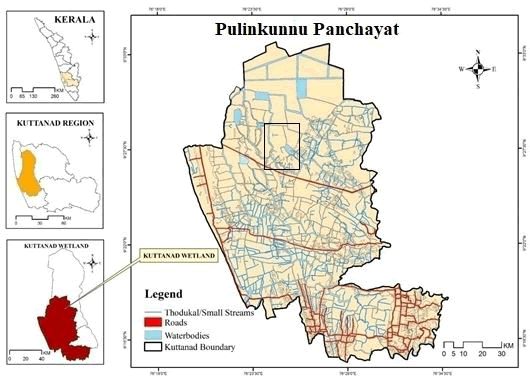
Figure 1: Location map of the study area
It is interesting to note that the historical process of land reclamation in Kuttanad suggests that in the past the landowners here, belonged to the higher castes while the labour force who reclaimed theKayal/polders comprisedof lower caste population leading to a caste divide. The upper castes historically occupied higher grounds and settled near the temples, main roads, market places while lower castes lived in marginal lands. After Indian Independence, the scenario has slightly changed due to social change and the state government has also brought in land reforms since 1963; yet the historical deprivation of the lower castes still gets reflected in the occupation they follow. It is interesting to note that in this wetland the inland fishermen communities belonging to the so-called lower castes have little access to land which is the ultimate wealth in a rural society. Hence there exists a socio-economic divide between the farmers/agriculturalists who own land and the inland fishermen community representing the marginalized section, thus the vulnerability to flooding hazard also differs as per their socio-economic condition. Consequently, this paper attempts to assess the different dimensions of vulnerability to flooding hazards by taking the opinion of the respondents on selected indicators on the flood event of 2017 of two sections of the society viz. the farmers or farmers who own land and the inland fishermen community representing the relatively marginalized section living in Pulinkunnu Panchayat of Kuttanad wetland.
Primary data has been generated from field observation and household surveys of the inland fishermen households and farm households living in PulinkunnuPanchayatlocated in the Alappuzha district of Kerala. The survey was carried out in Dec. 2017-Feb. 2018. This panchayat has been purposely selected for the micro-level study as it is prone to flood hazards. 5022 households are staying in thispanchayat, which is clustered as farm households, inland fishermen households, and others as per their major livelihood. Household survey of two groups viz. farm households having agricultural land representing relatively better socio-economic conditions and the inland fishermen households representing the marginalized section of the society consisting of mainly the so-called lower castes has been conducted. A total of 420 farm households were identified in this panchayat out of which 125 (30%) have been randomly selected for the household survey and among the 125 inland fishermen households all 125 have been selected for this survey. Opinion of 250 respondents (representing the two socio-economic groups) on the impact of the flood event of 2017 has been taken for the selected parameters/dimensions having 16 indicators and a vulnerability index has been computed as per Dixit, & Devkota [1-5].
The perception of farmers and inland fishermen regarding the impact of the flood on each indicator has been given a weight of 1 to 5 in which 1 represents very low impact, 2 represents low impact, 3 represents moderate, 4 represents high and 5 represents severe impact.
The vulnerability index has been computed by using the following formula (modified after Dixit &Devkota)
Mean Perceived Value 
Where,
D is total of the opinion of the respondents in the ith category
N is number of the head of the households
The indicator with the highest mean perceived value suggests the maximum vulnerability and vice versa (1-5 scale).
The resultant value of all 16 indicators of farmers and inland fishermen lies on a scale of 1-5 where 0-1 represents very low vulnerability, 1.1-2 represents low vulnerability, 2.1-3 represents moderate vulnerability, 3.1-4 represents high vulnerability and 4.1-5 represents severe vulnerability.
Further, an aggregate score of the parameters as per the perception of respondents has been computed by the following formula
Σ V ni =1 /n
Where,
n is the total number of indicators in the ith parameter
V is the mean perceived value for the ith indicator in the ith parameter
This helps in measuring which parameter/dimension has the highest vulnerability and which has lowest vulnerability. The aggregate index value for each parameter for both farmers and inland fishermen as per their perception helps in comparing which parameter/ dimension of vulnerability reports a higher level of vulnerability for both socio-economic groups under investigation ( developed by Dixit & Devkota)
The four dimensions of vulnerability to flooding hazard of the farmers and inland fishermen households suggest the following (Table 1.1).
Table 1.1: Vulnerability assessment of the inland fishermen and farmers on selected parameters having indicators.
| Parameters/Dimension | Indicators | Farm Households | Inland Fishermen households | ||
|---|---|---|---|---|---|
| Mean perceived value | Aggregate vulnerability score of parameters | Mean perceived value | Aggregate vulnerability score of parameters | ||
| Physical | Rate of damage due to floods in the last five years (excluding 2018 flood) | 4.5 | 2.9(Moderate vulnerability) | 4.6 | 3.8(High vulnerability) |
| Perception on the location of their houses and the impact of flood | 2.5 | 4 | |||
| intensity of 2017 flood event | 4.3 | 4.6 | |||
| damage on agriculture equipment’s /Pisciculture equipment’s during flood | 2.1 | 3.7 | |||
| damage of house during flood | 2.4 | 4.2 | |||
| damage to road, bridges/waterways during flood | 1.4 | 1.4 | |||
| Social and Access to amenities | Impact on drinking water sources during flood | 2.8 | 3(High vulnerability) | 4.7 | 4.1(Very high vulnerability) |
| Impact on water transport during flood | 2.2 | 3.3 | |||
| Impact on road connectivity during flood | 3.7 | 4.3 | |||
| Access to toilet/Sanitation during flood | 2.6 | 4.1 | |||
| Access to health centres during flood | 3.5 | 4.2 | |||
| Economic | Impact on the major livelihood of head of the household during flood | 3.6 | 3.1(High vulnerability) | 1.7 | 1.3(Low vulnerability) |
| Impact on agriculture/fishing during flood | 2.2 | 1.4 | |||
| Impacts of flood on garden land crops during flood | 4.8 | 1.1 | |||
| Impacts of flood on livestock during flood | 2.1 | 1.2 | |||
| Environmental | Impacts of flood on pollution of waterbodies | 5 | 5(Very High vulnerability | 5 | 5(Very high vulnerability) |
Based on the perception of farmers and inland fishermen of the surveyed households, it is observed that out of the four dimensions of vulnerability having 16 indicators suggest the following-
Pollution of water bodies suggests very high vulnerability (mean perceived scale of 5) exposing both the inland fishermen and farm households to the hazards of waterborne diseases during and aftermath of floods. This is because the water bodies in this wetland are highly polluted due to rampant disposal of waste including human excreta, waste from the septic tank are also directly dumped into this wetland, domestic garbage is also dumped in the water bodies as people here do not have access to the proper garbage disposal. The four rivers discharging water in this wetland carry a large volume of waste material and sediment from the upper reaches of Western Ghats causing havoc for the population living here especially during floods.
It is interesting to note that in case of the physical dimension of vulnerability the fishermen households are more exposed (score of 3.8 against farm households’ score of 2.9)to flood hazards in comparison to the farm households, the fishermen occupy low lying marginal land very close to the water bodies extremely prone to flooding. The mean perceived score for the farm households on the indicator –‘to what extent their houses can be damaged due to flood’ is 2.5 reflecting moderate vulnerability in comparison to the inland fishermen households which reports a mean score of 4 indicating a high degree of vulnerability. This signifies that inland fishermen's houses are more susceptible to flood hazards.
The social dimension of vulnerability measured by the proxy indicators of access to amenities - sanitation facility, (table 1.1) suggests a mean score of 2.6 (moderate vulnerability) for farm households as most of the farm households report having toilets within their homes as against the inland fishermen households which report a mean score 4.1 suggesting very high vulnerability as most of the toilets of the fishermen community are located outside their homes, hence their common toilet gets inundated during flood events. Likewise, the effect of flood on transportation/mobility for farm households suggests medium vulnerability(mean score of 3.7), and impact on drinking water sources for the farm household reports a mean score of 2.8 suggesting a low degree of vulnerability. This is because most of the farm households practice rainwater harvesting within the compound of their houses which are cemented structures protected from floodwaters. Whereas the effect of flood on access to drinking water sources for the inland fishermen households is very high as suggested by the mean score of 4.7 as most of the fishermen households are served by pipes or they have wells for drinking water, which gets inundated during flood events. Most of the fishermen's houses are close to the water bodies their mobility through roads gets restricted as they are cut off from the rest of the villages and their sole means of transportation and mobility are through boats which are often broken by the fury of floodwaters. The mean score on the impact of the flood on road transport is high for the inland fishermen households (3.3) against the farm households' mean score of 2.2 (moderate). This can be attributed to the fact that the farm households are located near to the main roads whereas the inland fishermen are living in the marginalized land very close to the water bodies. The fishermen households are not always falling within the route of public transport system which becomes more restricted during floods. It is observed that even in normal times the marginal area habited by the fishermen community is underserved by public transport networks. The effect of flood on accessibility to health centers for farm households is high (mean score of 3.5) but slightly lesser when compared to the inland fishermen households which report very high vulnerability (mean score4.2). This is since inland fishermen households are located away from the main roads and thereby have less accessibility to health centers which gets further hampered during flood events.
Interestingly the indicators for measuring the economic dimension of vulnerability for the fishermen are much lower in comparison to the farm households as the impact of a flood on the garden land crop is low for the inland fishermen households in comparison to farm households (1.1). The fishermen do not own much land and have negligible crops in their small homesteads subsequently floods do not impact much economic loss. The farm households on the other hand report very high vulnerability with a mean score of 4.4. The farmers own agricultural land and live-in bigger homesteads growing vegetables and other crops on their garden lands some of them have, banana plantations which are worse affected in comparison to the farm households having coconut plantations. Coconut plantations are less affected by inundation in comparison to banana plantations during flood events because of the greater height of the coconut trees in comparison to banana plantations which are wiped out by flood fury. The next indicator- damage on agriculture /fishing equipment is high (3.7) for the inland fishermen as every year they suffer from loss of local fishing boats and nets which gets severely damaged due to the flood fury as the fishing boats are left in the open. The farm households on the other hand - on this indicator report a mean score as low as 2.1 suggesting moderate vulnerability. This is because during the onset of floods the farmers are prepared and they store their farm equipment in the sheds. Most of the farmhouses are well built, having access to more space, and are in good condition when compared to the houses the inland fishermen, consequently, the respondents reporting damage of their houses due to the flood event of 2017 for the inland fishermen household is high with a mean score of 4.2 in comparison to the farm households which report a low mean score of 2.4.
The economic indicator- ‘effect of flood on the major livelihood of the head of the household’ it is interesting to note that in the case of the farm households, the mean score is high -3.6 against the inland fishermen households reporting a mean score as low as 1.7. This is attributed to the fact that the inland fishermen report better catch during the flood event, it is interesting to note that during flood events the breach of bunds in the polders practicing pisciculture leads to escape of the fishes into the surrounding water bodies resulting in a loss for the farm households which reports loss of production, therefore, their mean score is higher (3.6) in comparison to the inland fishermen score [6-9].
The effect of flood on livestock for the farm households is slightly higher (mean score of 2.1) in comparison to the inland fishermen households (mean score of 1.1) as the inland fishermen households do not own much livestock like cows and buffaloes, and are mainly rearing chicken and goats for self-consumption with a little surplus.
The opinion of the farm household and inland fishermen households on the impact of flood event 2017 on the different dimensions of flood viz. physical, social, economic, and environmental -suggests that the
environmental parameter having only one indicator impacts both the farm households and fishermen alike as both the socio-economic groups are exposed to severe pollution of water (score of 5) as reported for the flood event of 2017, this makes both the groups highly vulnerable to water-borne diseases during and immediately after floods. It is interesting to note that the economic dimension of flood vulnerability inland fishermen reports low vulnerability (1.3) in comparison to the farmers reporting high vulnerability (score-3.1) suggesting that the farm households incurred more loss especially in the flood event of 2017 making them more vulnerable to floods. As regards the social dimension of vulnerability to floods measured by proxy indicators viz. access to amenities, the inland fishermen report very high vulnerability (4.1) in comparison to the farm households reporting moderate vulnerability (mean score3). This suggests that the inland fishermen are more exposed to floods increasing their vulnerability. The fishermen households have limited access to amenities and enjoy a lower socio-economic status in comparison to the farm households.
The physical dimension to vulnerability reflects that the inland fishermen report high vulnerability (score 3.8) in comparison to the farm households (score 2.9) suggesting moderate vulnerability. The overall mean score for both the farm and fishermen households are high as the farm households reports a mean score of 3.1(suggesting high vulnerability) and fishermen households having a mean score of 3.3 Thus the inland fishermen households suggest a slightly higher degree of vulnerability to floods in comparison to farm households living in Pulinkunnu panchayat of Kuttanad wetland.
The rampant pollution of the Kuttanad wetland affects the population living in thispanchayat severely, exposing both the inland fishermen and farmers to health hazards. The score of economic parameter shows that the farmer's loss during floods is higher than the inland fishermen as inland fishermen report better catch during flood events and do not own much land or grow crops to be destroyed by floods. The inland fishermen having low socio-economic status in comparison to the farm household do not own much, their access to land is not limited nor do they own much livestock, etc. Hence their loss during the floods is less in comparison to the farm households. But the fishermen households score higher in the mean perception of physical and social dimensions of vulnerability to the flood event of 2017 in comparison to the farming community which can be attributed to the fact that the inland fishermen households have less access to proper housing, sanitation, and drinking water, Their access to road transport networks is also limited in comparison to the farm households The fishermen constitute the relatively marginalized section of the society and are more adversely impacted by floods. Consequently, field investigation suggests that the same hazard impacts people differently which varies as per their socioeconomic composition. Hence our approach to hazard management and mitigation efforts needs to take into consideration the socio-economic setup of the population especially at a micro-level to minimize the vulnerability to hazards, risk, leading to disasters.
Published: 19-Oct-2021
Copyright: This is an open access article distributed under the terms of the Creative Commons Attribution License, which permits unrestricted use, distribution, and reproduction in any medium, provided the original work is properly cited.