
Fisheries and Aquaculture Journal
Open Access
ISSN: 2150-3508
ISSN: 2150-3508
Research Article - (2025)Volume 16, Issue 1
Like other tropical rivers Gumara river in the Lake Tana Basin, faces considerable challenges due to agricultural runoff, pollutants and agro-pastoral activities. Despite these influences, there remains a lack of information regarding the relationship between aquatic macroinvertebrate distribution and environmental parameters within the Gumara Maksegnit watershed. This study, conducted on May 2023 during the pre-rainy season, aimed to address this gap by assessing the influence of water and habitat quality on the distribution and feeding traits of benthic macroinvertebrates across eight sampling sites. Water quality parameters were assessed both in situ and laboratory analysis. Benthic macroinvertebrates were collected using a kick net and habitat quality was evaluated by using Gitonga (2021). Statistical analyses, including Pearson's correlation, ANOVA and canonical correspondence analysis were employed. The current water quality parameters of the river were found to be within acceptable standards for aquatic life. A total of 831 macroinvertebrate individuals from 7 orders and 19 families were identified and counted in this study. The most dominant taxonomic group was Coleoptera, accounting for 58.47% of the total, followed by Mollusca (9.65%). Due to scarcity of stony substrates the presence of EPT taxa was relatively low in the study sites. In terms of abundance of functional feeding groups predators (Coleoptera, Hemiptera and Odonata) were the most abundant trophic group at most of the sites, with a proportion of 84. 71 %, followed by scrapers (13.83%) and collector-gatherers (1.32%) while collector-filters had the lowest representation across all sites with 0.72%. The study indicates the influence of physicochemical parameters and habitat quality on macroinvertebrate communities, emphasizing the need for measures to mitigate anthropogenic pressures to preserve freshwater ecosystems and their biota. Further research across different seasons and locations along the river is recommended to comprehensively assess its water quality status.
Biomonitoring; Functional feeding groups; Gumara river; Macroinvertebrates; Water quality
AIC: Available Instream Cover; BS: Bottom Substrate; DLP: Dimension of Largest Pool; NOR: Number of Riffles, WL: Water Level; CS: Channel Sinuosity; BS: Bank Stability; RBV: Riparian Buffer Vegetation; AOR: Aeshthetics of Reach
Freshwater ecosystems, including rivers, wetlands, lakes and ponds, are pivotal for human existence, supporting the livelihoods of billions. Regardless of comprising only 2.5% of earth's aquatic ecosystems, these surface waters are indispensable but increasingly degraded due to human activities. Rivers, in particular, are crucial for providing renewable water supply, supporting biodiversity and contribution of innumerable ecosystem services. Nevertheless, they are extremely vulnerable to anthropogenic stressors such as urbanization, agriculture, deforestation and climate change, which negatively impact their ecological integrity and biodiversity [1].
Human-induced threats, including deforestation, direct waste disposal and dam construction, hamper the ecological balance of rivers, induce loss of ecosystem services and biodiversity. Efforts to restore these ecosystems, such as afforestation and terracing, are in progress globally and in Ethiopia, particularly in the Lake Tana watershed, including the Gumara river. However, tools to assess the impact of these restoration attempts on river health are still lacking.
Biomonitoring, mostly using macroinvertebrate assemblages, is a commonly used approach for assessing freshwater ecosystem integrity. These assemblages respond to both natural variations and human disturbances, making them good indicators of ecological health. Understanding the functional composition of macroinvertebrates is important for assessing ecosystem processes and apprising management strategies. This study aims to develop conservation and management tools using benthic macroinvertebrate assemblages and their functional groups to monitor the ecological integrity of the Gumara river ecosystem.
Ethiopian rivers and streams face numerous threats, yet studies using benthic macroinvertebrates to assess these impacts are scanty. Prior research has emphasized the detrimental effects of industrial, urban, agricultural and grazing activities on river ecosystems. In addition, various studies on benthic macroinvertebrates have been carried out in many streams and rivers across Ethiopia, demonstrating their effectiveness in assessing water quality and ecological health. Although, persistent and detailed studies is essential to inform effective management and policy decisions, given the dynamic socio-economic and environmental conditions in Ethiopia.
Natural variations, human disturbances and habitat conditions significantly impact river ecosystems, requiring continuous monitoring and assessment. Benthic macroinvertebrates, sensitive to a range of ecological disturbance, are reliable indicators for tracking stream health. Understanding the impact of these factors along the altitudinal gradient of the Gumara- Makesegnit watershed would provide valuable insights for river ecosystem management and conservation. This study addresses the need for empirical research on river health assessment in the Gumara-Makesegnit watershed. It aims to elucidate the relationships between human disturbance, habitat condition, natural variation and macroinvertebrate assemblages, providing scientifically sound information for policy design and the development of river ecosystem health monitoring tools [2].
Thus, this study was designed to (i) Identify effect of habitat quality on macroinvertebrate assemblages; (ii) Determine the relationship of physicochemical parameters with macroinvertebrate assemblage; (iii) See the relationship between the Functional Feeding Groups (FFG) and other parameters in the river; (iv) Determine the relationships of environmental variations with macroinvertebrate assemblage and assess the health of Gumara river.
Description of the study area
Gumara-Maksegnit watershed is part of the Lake Tana Basin situated in the northeastern side of the lake crossing Gondar Zuriya and east Dembya Woreda. It lies between 12°17’06’’ to 12°30’53’’ latitude and 37°25’07’’ to 37°41’54’’ longitude an area of 37,051 ha. The altitude ranges between 1785 m Lake Tana (outlet) and 2848 m a.s.l. at headwaters. The agro-climatic zone of Gumara-Maksegnit watershed varies from low-altitude sub-tropical (Woyna Dega). High rainfall season in the watershed starts during summer in June and ends in September. Gumara river is one of the perennial rivers that flow into Lake Tana. Gumara river, contributes vital ecological and socioeconomic contributions in the Lake Tana watershed (Figure 1).
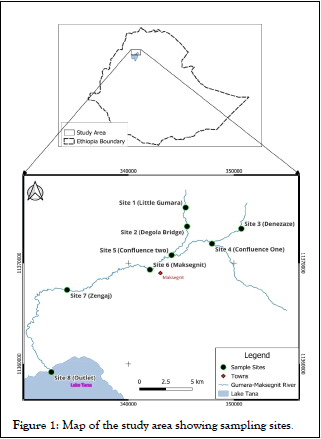
Figure 1: Map of the study area showing sampling sites.
Sampling design
A reconnaissance survey was conducted to identify the representative sampling station. Eight sampling sites were selected based on their intended use, accessibility, physical closeness, ecological richness and riparian land uses. each sampling station was marked with a Geographical Positioning System (GPS) and divided into the four biotopes of riffle, pool, run and marginal vegetation. Each station's unit for sampling macroinvertebrates and determining habitat quality were be a 100-meter stretch upstream of the river (Table 1).
| Sites | Latitude N | Longitude E | Major features and human activities |
| Site one (Little Gumara) | 12. °438835´ | 37.577908´ | Poor bank stability and the riparian vegetation mostly agricultural activities. |
| Site two | 12. °42187617´ | 37°33. 57925´ | Bridge, crop farming and sand mining |
| Site three (Denezaz) | 12°.420206´ | 37°.626323´ | Little anthropogenic activities, good riparian vegetation, near reference site |
| Site four (Confluence one) | 12°.406633´ | 37°.600945´ | Wide stream bank activities such as agriculture, cattle grazing and washing clothes. |
| Site five (Confluence two) | 12°.396200´ | 37°.565819´. | Sand mining, vegetation clearing, water abstraction |
| Site six | 12° .383066´ | 37° .547012´ | wastes from Maksegnit town households, hospital and slaughters houses |
| Site seven (Zenegaj) | 12 ° .364532´ | 37°. 474986´ | Intense agricultural activities and unstable river bank |
| Site eight (out let of the river) | 12° .290837´ | 37°. 461643 | Cattle grazing, crop farming and water abstraction |
Table 1: description of sampling sites.
Field sampling
Measurement of environmental variables: Environmental variables were measured both in the field and in the laboratory. Three categories of environmental factors were taken into account, including regional factors affecting the watershed, instream physical characteristics and water quality components. During field surveys. physical in-stream characteristics such as stream width, water depth and current velocity at riffles gliding runs using a current meter were measured. A flow meter and a tape measure were used, respectively, to measure the hydromorphological variables of river velocity, width and depth. Stream discharge was estimated using the velocity-area method [3].
Q=A × V (1)
Where, Q=stream discharge, in m3s-1
A=Cross sectional area, in m2
V=Average velocity, in ms-1 cross sectional area (A) can be estimated=wetted width × Average depth
Physicochemical parameters
Physicochemical parameters such as water temperature, pH, Dissolved oxygen, conductivity and total dissolved solids were measured in all sampling sites using in situ multi-probe system.
Due to their widespread use in aquatic ecology, nutrients such as nitrate, phosphorus, ammonia and nitrite were used for this study. For nutrient analysis, surface water was collected at a depth of 20 to 30 cm in the river, preserved in the field with four drops of 10% concentrated sulfuric acid. These samples were packaged, transported in a cooling box and kept in a refrigerator at 4°C until analysis. Laboratory measurements was conducted to determine, ammonia, nitrate, nitrite and phosphorus following standard methods [4].
Benthic macro invertebrates
Sampling was undertaken on one occasion at each site along the Gumara river: Pre rainy season . Benthic macroinvertebrates were sampled using a D-frame kick net (1 m2, 500 mm mesh size), which were dragged along the riverbank up to a distance of 1 m from all sampling stations while working against the flow of water. Different types of habitats were sampled in approximate proportion to their representation of surface area of the total macroinvertebrate habitat in the reach. Following the South African Scoring System (SASS) Version 5: Stone (S) biotopes, marginal vegetation and Gravel, Sand and Mud (GSM) biotopes were sampled quantitatively at each site. Kicks were employed for 3 minutes for stone biotopes, sweep marginal vegetation for 2 m total and stir and sweep gravel, sand, mud for 1 min total. The substrate with smaller stones was sampled for the final three minutes by disrupting a 1 m2 area for each microhabitat, including riffle, run, pool and marginal vegetation. Samples were sorted in a white plastic tray before being poured into vials in the lab after being washed through a 300 m mesh size sieve with tap water. Visible organisms were collected from the substrate using forceps, placed in specimen vials and samples was composted on site and were preserved in 95% ethanol for later sorting and identification and the number of benthic macroinvertebrates in the sample was counted. Macroinvertebrates was counted in order to determine their relative abundance, diversity, composition and percentage of functional feeding groups along the river. Using a dissecting microscope and common keys, the identification was done down to the family level. The field guide aquatic invertebrates of South African rivers were used for identifications [4].
Habitat quality assessment
The habitat quality index was estimated using the methodology described in Gitonga (2021). The method used 9 metrics in estimating HQI namely: Available instream cover, bottom substrate, dimension of largest pool, number of riffles, water level, channel sinuosity, bank stability, riparian buffer vegetation and aesthetics of reach. The total HQI for every station were obtained by summing up the rated scores and then characterized as exceptional, high, intermediate, limited and or minimal integrity index for 26-31, 20-25, 14-19, 8-13, <7, respectively.
Classification of macroinvertebrates into functional feeding groups
Classification into the functional feeding groups was done using the designation and criteria of Cummins, Merritt and Cummins, Rempel, et al., Mandaville and Arimoro. Functional feeding group method of analysis establishes linkages to basic aquatic food resource categories; Coarse Particulate Organic Matter (CPOM, particles >1 mm), Fine Particulate Organic Matter (FPOM, particles <1 mm and >0.45 μm). The major functional feeding groups are:
Data analysis
Descriptive statistics were used to examine the data for physicalchemical parameters, morphological factors and nutrients. The results were given as mean and standard error (mean ± SE). Kruskal-Wallis significance differences tests were runed to indicate pairwise differences. Moreover, tables and bar graphs were used to display the results for each sample station. A crucial point for every analysis were set at a 95% level of significance.
The correlation between macroinvertebrate structural and functional composition, water quality variables, nutrients and stream size factors were examined using the (PCA) method across the various disturbance gradients
Benthic macroinvertebrate assemblages
The benthic macroinvertebrates were identified to family level. Then different indices and metrics were calculated: Shannon Diversity Index (SDI) and composition measures.
The benthic macroinvertebrate diversity, richness, composition and abundance were determined from each sampling station and sampling occasion.
The Shannon-Weaver diversity index was calculated as follows:
H’=-ΣPiIn(Pi) (11)
where, H’=The Shannon-Weaver diversity index
Pi=The relative abundance of each group of organism’s
ln=Natural logarithm.
Functional feeding group ratios used as indicators of stream ecosystem attributes
The FFG ratios are also used as indicators of stream ecological attributes. Table 1 derived from Cummins, et al. represents the calculated ratios with their general criteria ratio levels. The ratio of Scrapers to (Shredders+Total collectors (Collector-Filters +Collector-Gatherers)) was used to calculate the balance between autotrophy and heterotrophy (production/respiration) index; the ratio of Shredders to total collectors (Collector-filters +Collector-gatherers) was used to calculate the linkage between riparian inputs and stream food webs (CPOM/FPOM). However, Shredder macroinvertebrates were not collected in this study, therefore the remaining four functional feeding groups ratios were used as indicators of stream ecosystem attributes (Table 2).
| Ecosystem attributes | Symbols | Functional feeding group ratios for attributes general criteria ratio levels |
| Autotrophy to heterotrophy index | P/R | Scrapers to shredders+Total collectors Autotrophic>0.75 |
| Predator-prey ratio | P/P | Predators to the total of all other functional groups<0.15 indicates a normal predator/prey ratio |
| FPOM in transport (suspended) to FPOM storage in sediments (deposited in benthos) | TFPOM/BFPOM | Collector-filters to Collector-gatherers FPOM transport (in suspension) enriched unusual particulate loading)>0.50 |
| Substrate (Channel) stability | Channel stability | Scrapers+Collector-filters to Shredders+ Collector-gatherers Stable substrates (e.g. cobbles, boulders, large woody debris, rooted vascular plants) plentiful > 0.50 |
Table 2: Functional feeding group ratios as indicators of stream ecosystem attributes.
Multivariate data analysis
The macroinvertebrate data and the environmental factors influencing their distribution were analyzed using a multivariate technique in CANOCO 5 software. To determine the appropriate response model (linear or unimodal), a Detrended Correspondence Analysis (DCA) was initially performed, which indicated that linear methods were suitable. Consequently, a Principal Component Analysis (PCA) was carried out to simplify the environmental variables into smaller linear patterns and to arrange the sampling sites based on the presence of macroinvertebrates [5].
All statistical analyses were conducted using Canoco version 5, SPSS version 23 and PAST version 4.03.
Physico-chemical parameters and nutrients
Temperature: There were significance differences of water temperature between the different sampling stations (P<0.05). The surface water temperature showed a range of 23.13 ± 0.25 to 27.77 ± 1.21°C. The highest temperature was recorded at site 5, while the lowest was observed at site 8.
Dissolved Oxygen (DO): Varied significantly among the sampling sites, ranging from 5.99 ± 0.21 to 8.23 ± 0.26 mg/L. The highest DO value was observed at site 3, while the lowest was recorded at site 8.
Electrical conductivity and pH: Conductivity ranged from 289 ± 6.93 to 472.33 ± 7.51 (μS/cm), with the highest conductivity recorded at site 6 and the lowest at site 8. there were significant differences in conductivity between the sampling points (P<0.05). In contrast, there were no significant differences in pH values among the sampling stations (P>0.05), with values ranging from 8.4 ± 0.15 to 9.10 ± 0.20. The highest pH value was found at site 6, while the lowest was observed at site 8. Total Dissolved Solids (TDS) also varied significantly, ranging from 142.9 ± 0.23 to 236.00 ± 3.46 mg/L. Site 6 had the highest TDS value, while site 8 had the lowest. Significant differences were found between the sampling sites (P<0.05).
Nutrients: Ammonium (NH4) concentration in the water samples ranged from a maximum of 0.62 ± 0.06 mg/L at site 2 to a minimum of 0.033 ± 0.005 mg/L at site 8. There were significant differences in ammonia concentration between the sampling stations (P<0.05). Similarly, the nitrate concentration varied from 0.18 ± 0.002 to 1.15 ± 0.06 mg/L, with the highest value observed at sampling point three in the upstream part of the river (Table 3).
| Sites | |||||||||
| Parameters | 1 | 2 | 3 | 4 | 5 | 6 | 7 | 8 | P-value |
| DO (mg/l) | 8.00 ± 0.17 | 6.92 ± 0.19 | 8.23 ± 0.26 | 6.91 ± 0.20 | 6.92 ± 0.45 | 7.49 ± 0.03 | 6.5 ± 0.15 | 5.99 ± 0.21 | 0.004 |
| Temp | 26.00 ± 0.51 | 27.30 ± 0.10 | 24.73 ± 1.00 | 27.13 ± 0.15 | 27.77 ± 1.21 | 26.83 ± 0.59 | 25.00 ± 1.40 | 23.13 ± 0.25 | 0.012 |
| pH | 8.70 ± 0.20 | 8.57 ± 0.15 | 8.63 ± 0.15 | 8.63 ± 0.31 | 8.70 ± 0.20 | 9.10 ± 0.20 | 8.93 ± 0.25 | 8.4 ± 0.15 | 0.058 |
| EC (µ cm) | 317.67 ± 11.72 | 325.33 ± 1.53 | 429.33 ± 1.53 | 446.00 ± 3.61 | 386.67 ± 1.53 | 472.33 ± 7.51 | 355.67 ± 0.58 | 28.00 ± 6.93 | 0.003 |
| TDS (mg/l) | 160.67 ± 9.37 | 177.57 ± 2.32 | 214.67 ± 0.58 | 222.00 ± 3.61 | 192.60 ± 0.00 | 236.00 ± 3.46 | 177.73 ± 0.23 | 142.9 ± 0.23 | 0.002 |
| NH4 (mg/l) | 0.15 ± 0.005 | 0.62 ± 0.06 | 0.62 ± 0.02 | 0.11 ± 0.01 | 0.093 ± 0.004 | 0.07 ± 0.003 | 0.11 ± 0.004 | 0.033 ± 0.005 | 0.043 |
| PO4 (mg/l) | 0.53 ± 0.021 | 0.42 ± 0.04 | 1.09 ± 0.05 | 0.83 ± 0.05 | 1.02 ± 0.06 | 1.58 ± 0.54 | 1.18 ± 0.08 | 0.54 ± 0.04 | 0.046 |
| NO3 (mg/l) | 0.6 ± 0.03 | 0.2 ± 0.01 | 1.15 ± 0.06 | 0.64 ± 0.04 | 0.82 ± 0.03 | 0.56 ± 0.02 | 0.9 ± 0.02 | 0.18 ± 0.002 | 0.045 |
| NO2 (mg/l) | 0.02 ± 0.01 | 0.004 ± 0.001 | 0.022 ± 0.013 | 0.3 ± 0.01 | 0.021 ± 0.003 | 0.4 ± 0.02 | 0.34 ± 0.037 | 0.003 ± 0.0003 | 0.051 |
| Turbidity (NTU) | 920.4 ± 1.45 | 439.3 ± 2.2 | 266.5 ± 2.72 | 343.5 ± 2.6 | 965.1 ± 3.4 | 684.9 ± 3.2 | 549.7 ± 2.68 | 992.4 ± 3.6 | 0.038 |
| Note: DO=Dissolved oxygen in mg/L, pH=Power of hydrogen in scale, TDS=Total dissolved solid, conductivity in µs/cm, nutrients in µg/L and temperature in °C. | |||||||||
Table 3: Shows means of water quality parameters for different stations.
Variations in mean temperature were observed across different sites, influenced by factors such as latitude, altitude, season, time of day, air circulation, cloud cover and water flow and depth. The highest temperature was recorded at site five, where the main river is formed by the convergence of two major streams near Maksegnit town. Stream water's optimal temperature ranges from 11-25°C and 12-25°C, with Gumara river falling within this range. Temperature plays a crucial role in regulating biological activities, metabolic rates and the growth of aquatic organisms, leading to variations in biotic features. Temperature changes impact biogeochemical processes in aquatic ecosystems, such as decreasing gas solubility, increasing organism metabolic rates and accelerating organic matter decomposition, ultimately depleting oxygen levels and harming aquatic life [6].
Dissolved oxygen is influenced by various factors such as temperature, turbulence, solute pressure, photosynthesis, respiration, organic matter availability and the presence of decomposer biota. As temperature and salinity increase, dissolved oxygen levels decrease. Additionally, high organic and nutrient loads lead to lower dissolved oxygen concentrations due to increased decomposer activities. Similar findings were reported by Zang, et al., who found that as pH decreases, dissolved oxygen also decreases. Kuligiewicz, et al. stated that dissolved oxygen levels in the river fluctuate due to temperaturedependent biological processes such as photosynthesis, respiration and decomposition of organic matter.
The range of electrical conductivity values varied from 289 ± 6.93 to 472.33 ± 7.51 (μS/cm), with the highest conductivity observed at site 6 and the lowest at site 8. The standard value set by EPA (2003) for EC was 1000 μs/cm for surface water. Gumara river's conductivity fell within the permissible limit compared to these standards. Modjo river had a maximum EC of 910.2 ± 186.6 μs/cm, higher than Gumara river.
Correlation between different physico-chemical parameters
The correlation of physicochemical parameters and nutrients along Gumara river are presented. Parameters that had very strong positive correlations were conductivity with TDS (mg/l) (r=0.9834), PO4 and NO2 and temperature with TDS. Similarly, TDS and conductivity had moderate positive correlations with DO (r=0.403, 0.429) respectively. the strongest negative correlation is between NH3(mg/l) and conductivity with a correlation coefficient of -0.75 [7].
Hydro-morphological variables
The mean depth of the river ranged from 0.07 ± 0.012 m at site 2 to 0.38 ± 0.08 m at site 8, with significant differences among sites (P<0.05). The river's width varied from 7.33 ± 0.58 m (site 5) to 3.67 ± 0.58 m (site 7), with significant differences (P<0.05). Velocity ranged from 0.05 ± 0.002 m/s at site 8 to 0.5 ± 0.1 m/s at site 5 and discharge was highest at site 5 (1.2 ± 0.25 m³/s) and lowest at site 2 (0.1 ± 0.003 m3/s) (Figure 2).
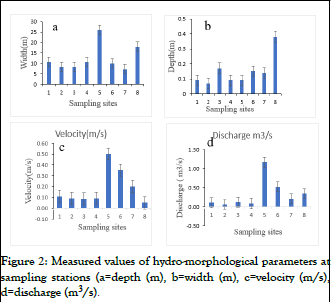
Figure 2: Measured values of hydro-morphological parameters at sampling stations (a=depth (m), b=width (m), c=velocity (m/s), d=discharge (m3/s).
There were statistically significant variations in depths between sampling sites. the main source for depth variation could be the availability of canopy cover to the topography, the bank stability, riparian vegetation protection, gradient of the area and types of substrate composition which is found. This is true in station eight which has higher canopy cover and bank stabilities than others. This agrees with Cunningham and Schalk, who proposed that the low water depth might be linked to significant water evaporation and low water input from rain and runoffs.
The highest width value (26 m) was measure in confluence of the river (site five) and the lowest (2.71 m) in headwater (site two and three). This result agrees with river continuum concept. This variation probably might be due to the status of channel stability, bank vegetation protection, various human activities and vulnerability to sedimentation deposition, slope differences and the contribution of other tributaries in the watersheds. The maximum (0.5 m/s) velocity value was measured at site five and minimum (0.05 m/s) in site eight. There were significant statistical differences among sampling sites (ANOVA, P<0.05). Differences in velocity could be because of the shape of channels, slope and the wideness of channels and the composition of substrates.
Benthic macroinvertebrates assemblages
Macroinvertebrates composition and abundance: In this study, a total of 831 macroinvertebrate individuals from 6 orders, 1 class and 19 families were identified and counted. Among the taxonomic groups, the most prominent one was Coleoptera, with 4 families and a total of 642 individuals, accounting for 58.47% of the total. This was followed by Mollusca with 106 individuals (9.65%), Odonata with 33 individuals (3.00%), Hemiptera with 21 individuals (1.91%), Diptera with 10 individuals (0.91%), Annelida with 3 individuals (0.27%) and Ephemeroptera with 4 individuals (0.36%).
When considering taxa richness, site 2 had the highest number of taxa with 9, while site 1 had the lowest with only 3. However, in terms of individual abundance, site 6 had the highest with 261 individuals, whereas site 8 had the lowest with only 7 individuals. Spatially, the sampling station 6, located below the town, had the highest relative abundance of Diptera, accounting for 79% of the total. Throughout the study period, the order Coleoptera (family Dysticidae) was found in all sampling sites, followed by the Planorbidae family of Mollusca, which was present in all sites except site one (Figure 3) [8].
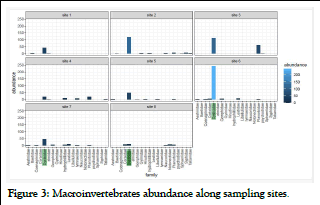
Figure 3: Macroinvertebrates abundance along sampling sites.
In the current study, the macro-invertebrate communities’ composition was higher when compared to findings by Gurmessa Tessema and Agumassie Tesfahun; that found 6 orders and 11 families at Teltele Stream, Ambo West Showa, Ethiopia. However, the macro-invertebrate communities composition in this study were lowest when compared to related findings, such as 10 orders and 37 families in the spring and stream sites of the upper Awash river, 10 orders and 34 families in Cheffa wetland from Borkena valley, 9 orders and 34 families in Wedech River in Debrezeit 12 orders and 33 families in a highland stream in Northern Ethiopia, 7 orders and 20 families in Northern highland of Ethiopia, 7 orders and 20 families in Enda Gabr stream in Mekele Northern Ethiopia, 20 families in Northern highland of Ethiopia and 9 orders and 36 families in Southwestern Ethiopia were recorded. Moreover, the results of study was lower than study done by Gizachew Teshome, et al., at Megech river found 33 families and nine orders. The difference of benthic macroinvertebrate communities in the present study was most probably either due to water quality or the differences in study locations, less anthropogenic activities, hydromorphological variables and duration of the study period. The majority of families identified in this study had moderate tolerance value, more particularly family Dysticidae. It indicated the presence of moderate pollution in the river, compared to many Ethiopian rivers.
Diversity of macroinvertebrates
The diversity of macroinvertebrates of Gumara river is indicated in Table 4. The value of Shannon-Wiener diversity index in the sampling station varied from 0.3443 to 1.53. The trend of evenness along the river was also high in site 8 and low in site 6 (Table 5).
| Diversity indices | Site 1 | Site 2 | Site 3 | Site 4 | Site 5 | site 6 | Site 7 | Site 8 | |
| Taxa S | 3 | 9 | 3 | 6 | 6 | 7 | 8 | 5 | |
| Shannon_H | 0.34 | 0.73 | 0.68 | 1.49 | 0.71 | 0.41 | 1.11 | 1.53 | |
| Evenness_e^H/S | 0.47 | 0.23 | 0.66 | 0.74 | 0.34 | 0.22 | 0.38 | 0.93 |
Table 4: Diversity and richness measures.
| 1 | 2 | 3 | 4 | 5 | 6 | 7 | 8 | |
| Total number of individuals | 50 | 163 | 239 | 97 | 75 | 291 | 89 | 54 |
| Total No. of taxa | 2 | 9 | 3 | 6 | 6 | 7 | 8 | 5 |
| No. of EOC taxa | 3 | 4 | 1 | 3 | 4 | 4 | 6 | 1 |
| No. Ephemeroptera Taxa | 1 | 1 | ||||||
| No. Hemiptera Taxa | 1 | 3 | ||||||
| No. Coleoptera Taxa | 2 | 3 | 1 | 3 | 1 | 1 | 1 | 1 |
| No. Diptera Taxa | 2 | 1 | 1 | |||||
| No. Odonata Taxa | 3 | 4 | 4 |
Table 5: Composition measures.
The Shannon-Wiener diversity index (H') values in the sampling stations ranged from 0.34 to 1. 53. This value is lower than the value reported by Mbaka, et al. According to Gencer and Nilgun, most values measured using the Shannon diversity index fall between 1.5 and 3.5, rarely exceeding 4.5. Values above 3.0 indicate a stable and balanced habitat structure, while values below 1.0 indicate pollution and degradation of the habitat structure. Based on these criteria, except for site eight, the other sampling sites in Gumara did not exceed a Shannon diversity index level of 1.5. Similarly, site one, two, three, five and six had Shannon diversity index values below one, indicating elevated levels of pollution and degradation of the habitat structure. The highest value of 1.53 was observed in site eight, followed by 1.49 in station four. The lowest value of 0.34 was recorded in site one. There were minimal variations in Shannon Wiener diversity between the sampling stations. This could be attributed to factors such as the availability of quality and quantity of food sources, trophic structure and the level of environmental stress at each site. This result is consistent with the findings of Morphin- Kani and Murugesan, who suggested that high macroinvertebrate diversity indicates a good environment, while low diversity indicates a lack of habitat availability.
Proportion and distribution of functional feeding groups
Four Functional Feeding Groups (FFGs) were recognized in this study. These include collectors-gatherers (c-g), predators (prd), collectors-filterers (c-f), scrapers (scr). The aquatic macro invertebrates obtained from the eight stations were listed as, predators (n=704), scrapers (115) collector-gatherers (n=10) and collector filters (n=2). Predators were the most common category in the entire study area with high abundance in S2 and S6. Scrapers were the second most common group amongst the sampled sites, with a high proportion in S3, followed by collector-gatherers and collector filters with a comparable abundance [9].
The results of this study revealed that there were many Functional Feeding Groups (FFGs) in the Gumara River, including gathering collectors, filter collectors, predators and scrapers. This is consistent with the findings of Boyero, et al., Brasil, et al. and Masese, et al., who studied that many tropical rivers had diverse feeding groups. This is because of the differential distribution of energy inputs and change in river morphology over time, which included variations in channel characteristics (presence of rapids, riffles, plant cover and water flow) and provided rise to a diversity of substrates and microhabitats, which in turn determined the arrangement of FFGs in lotic environments.
The results have shown that functional feeding groups in Gumara River were dominated by predators, scrappers and filterers, respectively. On the other hand, there is no abundance of shredder feeding groups in this study. Spatially, as indicated in Table 6 the highest predators’ composition (36.64%) was observed downstream (site six) and the lowest (2.27%) was in the outlet of the river (station eight). The difference in predators between sites could be due to the availability of prey and the presence or absence of riparian vegetation. fortunately, some predators, such as Odonata, use vegetation as a hunting ground (prey) and resting place, particularly for less mobile species. This is in agreement with the river continuum concept that the abundance of predators may depend on prey availability and in turn, predator abundance also affects prey populations. Favretto, et al., reported that the predator functional group can be found in high abundance in anthropogenic environments. The highest percentage of scrapers (53.04%) were recorded in the forested area (site three), but scarpers were not found at sampling site one and the lowest at sampling site five. The highest percentage of gatherers (57.14%) was observed in site one. Gatherers feed on small particles accumulated on the stream bottom. These fine particles are generated from the decomposition of organic matter by shredders. Hence, the abundance of gatherers was determined by the presence of shredders. The scraper feeder was highest in the forested site (site three) and lowest in the agricultural area. This might be due to the low periphyton productivity and the lack of macrophytes as food sources because of the greater depth and increased turbidity in agricultural areas since scrapers graze the macrophytes that are attached to the bedrock, stones and vegetation. Similar findings reported by Barbee, stated that the densities of scrapers are determined by the presence or absence of algal biomass and production. Families of Lymnaeidae, Planorbidae and Corixidae were the common scrapers in the river during the study period.
The low proportion of collectors in this river is thought to be related to the fact that in tropical areas, high temperatures increase the decomposition of litter and leaves by microbial activity. They do not have enough plant debris to be filtered and low presence of algae due to high turbidity of the river, hence their low proportion. Several studies have shown the low proportion of shredders in the tropics. The poor representation of collector gatherers and collector filterers at stations one and two, in addition to being absent from all other sampling sites, could be related to the discontinuities in seston supply and poor water circulation in the muddy sediment.
Generally, the benthic macroinvertebrates composition and the distribution of functional feeding groups showed variations between the different sampling areas. This is probably related to some environmental variation, anthropogenic activities, distribution of energy inputs and change in river morphology, which included variations in channel characteristics (presence of rapids, riffles, plant cover, presence of stable substrates, availability of food and water flow).
| Ecosystem attributes | 1 | 2 | 3 | 4 | 5 | 6 | 7 | 8 |
| P/R | 5 | 1.2 | 61 | 26 | 2 | 6 | 3 | 11 |
| P/P | 8.2 | 11.72 | 1.8 | 1.07 | 29 | 43 | 20 | 1.45 |
| TFPOM/BFPOM | 0.25 | 4 | 1 | 1 | 0 | 0 | 0 | 0 |
| Channel stability | 0.25 | 10 | 61 | 26 | 2 | 6 | 3 | 11 |
Table 6: Ecosystem attributes based on the ratio of FFG (Functional Feeding Group).
Based the above table all sampling sites of the river were autotrophic (P/R>0.75). With the exception of site one, the habitat stability index exceeded the threshold value of 0.5 at all sampling sites, conversely, site one exhibited a habitat stability index below 0.5, indicating an insufficiently stable habitat. During a study conducted in Gumara river, sampling sites two, three and four displayed abundant loading of fine particulate organic matter for filters (TFPOM (suspended)/BFPOM (sediment)>0.50. Predator-prey dynamics, the river's top-down predator control at all sampling stations was overwhelmed by an excessive number of predators (P/P>0.2), contributing to an overall predator burden throughout the river. Site six exhibited the highest predator-prey ratio, followed by site seven, site two and site one, while the remaining sampling sites displayed moderate predator-prey ratios [10].
The result has shown that in Table 6, the ratio of Production to Respiration (P/R) varied in the ranges of 1.2 and 61. This might be the shredders were almost underrepresented. this necessarily conform to the general belief that shredders are underrepresented in the tropics. Thus, according to this numerical value, all sampling stations were autotrophic (P/R>0.75. This result is contradicted to other studies as most flowing aquatic ecosystems such as rivers are heterotrophic done by many authors in in tropics. Unpresented of shredders might be due to the reduction of riparian forests to supply sufficient litter inputs, for instance, woody vegetation and the presence of various species of riparian plants yield litter. Removal of indigenous vegetation for agricultural and other purposes depletes the allochthonous resources of a river and hence reduces shredder abundances. Higher diversity of both mechanical and persistent chemical defence mechanisms, rapid nutrient leaching and high predation pressure reduce success of shredders in tropical waters. Agricultural activities like crop farming are common along the Gumara river at almost all sites except site three and could be a cause of the non-functional riparian zone. Sites one and three had adequate stable substrates like bedrock, boulders, cobbles and debris to provide stable substrates for filter feeding and scraping, hence the high filter FFG frequency obtained at site one. However, based on the calculated value, the remaining sites five, six, seven and eight had a lower habitat value than the threshold value (<0.5). Therefore, this tells us there wasn’t an adequate, stable habitat for functional feeding groups of macroinvertebrates. Using different ratios of macroinvertebrate functional groups as substitutes for these characteristics can provide important information with little work. The results of this study indicated that human activities have impact on both the physical and chemical properties as well as the biological features of the river. The assessed alterations in land use resulted in deteriorated riparian vegetation, causing a negative effect on the physical, chemical and biological characteristics of aquatic ecosystems. This is especially important in nations such as Ethiopia, where there is a common practice of substituting indigenous forests with deforestation, urban development and farming/pastoral practices. Macroinvertebrate communities were successfully utilized to evaluate the ecological effects of various land uses. The sampling stations in the semi-forested catchment area and the reference site showed the relatively variety of macroinvertebrates and presence of some sensitive species. On the other hand, sites located in agricultural and rural catchment areas exhibited decreased macroinvertebrate diversity and lacked specific sensitive species. Every site provides distinct observations on the present ecological status by assessing various factors. Thus, it is important to use these indicators in conjunction with biological and physicochemical evaluations in order to gain a thorough insight into aquatic and terrestrial environments.
Habitat quality assessment
Based on habitat quality index, site 3 had the highest score (28), indicating excellent habitat quality, while site 7 had the lowest score (18). Most habitat parameters showed significant differences among sites (P<0.05), except for embeddedness, bank stability and total habitat scoring.
Multivariate analysis of sampling sites
The impact of major environmental parameters on the community structure of benthic macroinvertebrates was analyzed using the multivariate analysis PCA ordination (Figure 4).
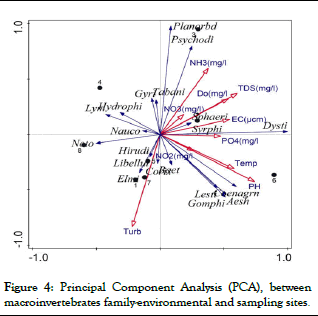
Figure 4: Principal Component Analysis (PCA), between macroinvertebrates family-environmental and sampling sites.
Circles indicate sampling sites. The arrow shows the major physicochemical parameters that structure the benthic community: DO=dissolved oxygen, Turb=turbidity, PO4=phosphate, NH3=ammonia, NO2=nitrate, NO3=nitrite, EC=electric conductivity, Temp=temperature. Macroinvertebratesareabbreviated as (Baet=Baetidae, Noto=Notonectidae, Nauco=Naucoridae, Corix=Corixidae, Dysti=Dystiscidae, Gyri=Gyrinidae, Hydrophi=Hydrophilidae, Lym=Lymnaeidae, Syrphi=Syrphidae, Psychodi=Psychodidae, Lesti=Lestidae, Gomphi=Gomphidae, Coenagrn=Coenagrionidae, Aesh=Aeshnidae, Elmi=Elmidae, Libellul=Libellulidae, Hirudi=Hirudinae, Sphaeri=Sphaeridae, Tabani=Tabanidae, Planorbd=Planorbidae).
Benthic macroinvertebrates exhibit sensitivity to changes in the environment and demonstrate rapid responses to various types of environmental changes, including alterations in physical, chemical and biological conditions within aquatic ecosystems. Likewise, the present study reveals that Dissolved Oxygen (DO), temperature, NH3 and NO3 exhibit a significant positive correlation with numerous macroinvertebrates, thereby influencing their distribution. The diversity, richness and spatial distribution of benthic macroinvertebrates are influenced by physicochemical parameters. Notably, the values of physicochemical parameters such as DO, pH and other physical parameters appear to support the survival of the majority of benthic invertebrate communities in the Gumara river.
The result on Principal Component Analysis (PCA) showed the relationship between benthic macroinvertebrates taxa (biological indexes) and water quality parameters. This showed that macroinvertebrates act as bio indicators. Furthermore, Ephemeroptera were found in site one and site two. This could be the presence of high dissolved oxygen in both sites and provide habitat suitable for very sensitive macroinvertebrates. This was in an agreement with Arimoro and Muller, Shelly, et al. who related that Ephemeroptera are always the mostly found benthic macroinvertebrates encountered at stations with high dissolved oxygen concentration. order Diptera and order Odonata found in a high abundance at degraded sites. In general, the study area is experiencing streambank erosion and human-caused disturbances primarily due to settlements, agriculture and grazing, resulting in a mixing of terrestrial soil with the water. Consequently, the river has become a suitable habitat for semiaquatic fauna such as Diving beetles (Dytiscidae) and Hydrophilidae, which prefer slow-flowing water with direct contact with terrestrial soil. Some sampling stations of the river are bordered by and close to preserved upland forests, providing an ideal environment for species that thrive in turbulent water, rocky substrate and leaf litter accumulation. Consequently, the majority of the Ephemeroptera (Baetidae), Diptera (Tabanidae), Coleoptera (Hydrophilidae) and Gyrinidae taxa have been supported by these sites.
The macroinvertebrate assemblages were differentiated based on their ecological preferences through Principal Component Analysis (PCA). Upstream sites were found to harbor sensitive and moderately sensitive taxa (such as Baetidae, Elmidae and Tabanidae) that prefer improved water conditions. Meanwhile, tolerant taxa like Corixidae, Gyrinidae and Notonectidae were recorded in intermittent sites. Additionally, downstream sites were dominated by taxa preferring slow-moving water with the availability of pools and hosts (Gomphidae, Dytiscidae Lestidae.). These observations in Gumara Maksegnit headwater streams are in line with reports from tropical and temperate regions.
In addition, according to Belmar, et al., the Ephemeroptera (EPT) is recognized for its preference for stable habitats in flowing water. In contrast, Odonata, Coleoptera, Diptera and other similar taxa are known for their ability to adapt to disturbed environments in stagnant water.
The relationship between habitat quality and benthic macroinvertebrates
As illustrated in Figure 5 the habitat quality parameters such as Aesthetics of reach, riparian buffer vegetation, water level, dimension of largest pool and bank stability combination had a significant positive relationship with family Notonectidae and Corixidae. Boottom substrate and number of riffles had correlation with Tabanidae, lymnaeidae, Syrphidae, Hydrophilllidae, Psychodidae, Baetidae, Elmidae while habitat parameter channel channel sinuosity had positive relationship with Gyrinidae, Sphaeridae, Planorbidae and Naucoridae. Moreover, Available instream cover habitat parameter had a correlation with Dysticidae, Hirudinae, Aeshnidae, Libellulidae, Gomphidae, Coenagrinidae and Lestidae.
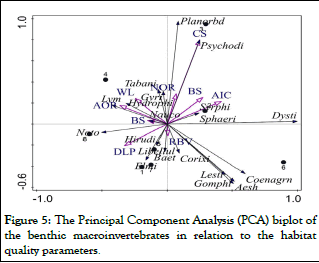
Figure 5: The Principal Component Analysis (PCA) biplot of the benthic macroinvertebrates in relation to the habitat quality parameters.
Habitat quality and physicochemical water quality characteristics play a crucial role in determining the presence or absence of benthic macroinvertebrates in aquatic environments. Parameters related to habitat quality, such as bottom substrate, water level, number of riffles and aesthetics of reach, showed a significant positive relationship with the families of Tabanidae, lymnaeidae, hydrophilllidae, Gyrinidae and Naucoridae in site four. This can be explained by the presence of suitable bottom substrate and water levels along the river's banks, providing abundant food resources, egg-laying sites and refuge zones from predators. On the other hand, families Corixidae, Lestidae, Gomphidae, Coenagrinidae and Aeshnidae showed a negative correlation with these habitat parameters. Similar results were found in Southeast Asian tropical streams.
Overall, these findings are consistent with previous studies by Brown, et al. and Masikini, et al., which highlighted the close relationship between the abundance, composition structure and aquatic insect communities with physical habitat attributes, substrate type and biological factors such as dispersal, competition and predation.
Human activities are altering aquatic environments in terms of their biological, physical and chemical characteristics. This study showed that most water quality parameters in Gumara river were within the acceptable limits for aquatic life. The river’s environmental factors had directly or indirectly affected macroinvertebrate assemblages, showing that macroinvertebrates were useful indicators of water quality in Gumara river. A total of 831 macroinvertebrates belonging to 6 orders, 1 class and 19 families were identified and counted. The dominant was Coleoptera, with 4 families and a total of 642 individuals, accounting for 58.47%, followed by Mollusca with 106 individuals (9.65%), Odonata with 33 individuals (3.00%), Hemiptera with 21 individuals (1.91%), Diptera with 10 individuals (0.91%), Annelida with 3 individuals (0.27%) and Ephemeroptera with 4 individuals (0.36%). Most of macroinvertebrates identified in this study were moderately tolerant except Mollusca, this indicates the river is moderately stressed. However, there were few pollution-sensitive and some moderately-sensitive families which imply that the upper sites were not as polluted as the downstream.
The results have shown also that there was diversity of FFGs namely: Predators, gathering-collectors, filtering-collectors and scrapers. Predators were the most dominant particularly in agricultural sites. However, shredders were not present. Functional feeding traits such as predators and scrapers were dominated in such turbid rivers, limiting the use of macroinvertebrates as indicators of ecological stress. Most macroinvertebrates are good indicators of hydro geomorphological stresses. Thus, this study also concluded that the composition of benthic macroinvertebrates functional feeding groups and ecosystem attributes were affected by the human activities near the river such as agriculture, grazing, deforestation and washing activities which lead to natural habitat quality deterioration and soil erosion.
According to the habitat quality index using the methodology described in Gitonga total habitat quality scores for all stations were generally classified as moderately modified, this suggests that there may have been relatively minimal loss and alteration of natural habitat and biota. In the same way, habitat degradation negatively impacts macroinvertebrate communities like high sedimentation problems. Functional feeding traits of macroinvertebrates has implication about the ecology of the rivers.
This study provides information about the ecological health of Gumara Maksegnit river using macroinvertebrates assemblage. However, it is important to conduct integrated studies along the Gumara river, taking into account seasonal variations, in order to assess the water quality during different seasons and establish its status. The study has demonstrated the effectiveness of using the benthic macroinvertebrate protocol to assess river pollution conditions. Therefore, environmental agencies have a viable option to use macroinvertebrates in their assessment and monitoring programs for rivers. Developing a multimetric index recommended to assess the overall health of ecosystems in a single value important for future research due to the varied nature of these indices.
[Crossref] [Google Scholar] [PubMed]
[Crossref] [Google Scholar] [PubMed]
[Crossref] [Google Scholar] [PubMed]
[Crossref] [Google Scholar] [PubMed]
[Crossref] [Google Scholar] [PubMed]
Citation: Mulat A, Mengistou S, Gizeb A (2025) Determining Ecological Status of Gumara-Maksegnit River Using Macroinvertebrate Assemblage Lake Tana Sub-Basin, Ethiopia. Fish Aqua J. 16:387.
Received: 12-Aug-2024, Manuscript No. faj-24-33469; Editor assigned: 15-Aug-2024, Pre QC No. faj-24-33469 (PQ); Reviewed: 29-Aug-2024, QC No. faj-24-33469; Revised: 22-Jan-2025, Manuscript No. faj-24-33469 (R); Published: 29-Jan-2025 , DOI: 10.35248/2150-3508.25.16.387
Copyright: © 2025 Mulat A, et al. This is an open-access article distributed under the terms of the Creative Commons Attribution License, which permits unrestricted use, distribution and reproduction in any medium, provided the original author and source are credited.