Journal of Aeronautics & Aerospace Engineering
Open Access
ISSN: 2168-9792
ISSN: 2168-9792
Research Article - (2025)Volume 14, Issue 2
The modern mode of transportation air transportation is considered as the safe and finest integration of
technologies. Its economic success depends on performance, low maintenance costs and high passenger appeal and
design plays a vital role in summing up all these factors. Conceptual design is the first step to design of an aircraft. In
this paper a commercial aircraft is designed to carry 150-180 passengers and to cover a range of 6500 km. The
conceptual design consisted of initial sizing, aerodynamics and performance analysis. Through marketing studies and
comparison with other commercial aircraft a final model of the aircraft was built to achieve the requirements.
The aim of this project is to design a commercial aircraft which can cater the need of emerging commercial aircraft
market. This aircraft is describing a passenger aircraft, for transporting group of passengers. This aircraft is designed
for STOL (Short Takeoff and Landing) strap hanger aircraft which runs on a turbofan engine, with a billet of 150-180
seater providing the comfort and the desired appliance level that a strap hanger aircraft is expected to provide while
incorporating the design specifications and performance parameters of a long-range commercial airline. This aircraft
allows for the wide range transport with better efficiency and reduce fuel consumption.
Commercial aircraft; Design; Sizing; STOL; Aerodynamic performance
Airplane design is an art with scientifically approach. It requires both the intellectual engineering and sensible assumptions. Aircraft design is actually done to meet certain specifications and requirements established by potential users or pioneer innovative, new ideas and technology. Now-a-days commercial aircraft is one of the most popular forms of transport aircraft. A commercial is a jet aircraft designed to transport passenger, groups of passenger and goods. It is also known as an airline. It is used to transport people and goods form one place to another, form one country to others. Nowadays commercial aircraft has become a very popular mode of transportation. They offer better comfort with many facilities and time saving. The commercial aircraft has become an emerging industry because most of people are preferring the flights to travel. Aircraft design is a complex and multidisciplinary field that integrates principles of aerodynamics, materials science, structural engineering, propulsion and avionics to create safe, efficient and highperformance flying machines. This fascinating discipline demands a deep understanding of physics and engineering, as well as creativity and innovation, to address the myriad challenges posed by the skies. From commercial airliners transporting millions of passengers annually to military jets securing national defense and from nimble private planes to cutting-edge Unmanned Aerial Vehicles (UAVs), aircraft design shapes the backbone of modern aviation [1].
The process begins with conceptual design, where engineers and designers outline the basic requirements and capabilities of the aircraft. This stage involves extensive research, feasibility studies and preliminary sketches to ensure the design meets the desired performance criteria. Following this, the design moves into detailed engineering, where every component is meticulously planned and analyzed using advanced computational tools and simulations. Structural integrity, aerodynamics, weight optimization and systems integration are scrutinized to ensure that the aircraft can withstand the rigors of flight and perform its intended functions reliably.
Material selection plays a crucial role in aircraft design, influencing factors such as strength, weight and durability. Advances in composite materials and alloys have revolutionized the industry, allowing for lighter and more resilient aircraft. Additionally, propulsion systems, whether jet engines or propellers, are tailored to meet specific thrust and efficiency requirements, taking into account environmental considerations like noise reduction and emissions [2].
Safety and regulatory compliance are paramount in aircraft design. Designers must adhere to stringent guidelines set by aviation authorities to ensure that each aircraft meets rigorous safety standards. This includes extensive testing and validation processes, from wind tunnel tests and structural load assessments to flight testing with prototypes. In summary, aircraft design is a dynamic and evolving field that combines engineering excellence with innovative thinking. As technology advances, the future of aircraft design promises even greater achievements in efficiency, sustainability and performance, heralding a new era of aviation that continues to captivate and inspire.
The main focus of this paper is to design a commercial aircraft transport aircraft conceptually. In conceptual design the configuration arrangement, size and weight and performance parameter will be calculated. The first thing required in a conceptual design is configuration arrangement. In this paper we have tried to design wing and tail geometry and some performance parameters with marketing study and market requirement. As nowadays air transport becomes very famous mode of transportation to travel form one place to another. For the safety of people and comfort market required various upgraded parameters aircraft with can travel long range, more passenger capacity, good endurance etc. As of market requirements and passenger comfort we designed a commercial aircraft [3].
The airplane model airbus A320 was investigated computationally and an experimental model was also prepared. Computational study was carried out on drag force and coefficient and lift force and coefficient. A small-scale model was fabricated and tested in a suitable wind tunnel for lift and drag measurements. This is a hands-on learning technique provide a better understanding of the effect of airplane shape on its aerodynamic performance.
The purpose of the NACA LTPT is to validate the RFOILcalculated airfoil properties for high Reynolds numbers using the NACA 63 and 64 6-digit series of airfoils. In the case of wrap-around roughness as well as the airfoil clean case, several irregularities were found in the zero-lift angles of the 15% and 18% thick airfoils from these series. RFOIL regularly underpredicts the Cmax for Reynolds numbers of 6 and 9 million, but it accurately predicts the maximum lift coefficient for a Reynolds number of 3 million. Roughness surrounding the wrap-around reduces the maximum lift coefficient by 18% to 20%. The six-digit NACA series outperformed other blades in terms of efficiency, according to the results [4].
A flight controller for a high-performance aircraft was introduced, able to follow randomly generated sequences of waypoints, at varying altitudes, in various types of scenarios. The study assumed a publicly available Six-Degree-of-Freedom (6- DoF) rigid aeroplane flight dynamics model of a military fighter jet. Consolidated results in artificial intelligence and Deep Reinforcement Learning (DRL) research are used to demonstrate the capability to make certain maneuvers AI-based fully automatic for a high-fidelity nonlinear model of a fixedwing aircraft.
Figure 1 shows the steps and the methodology adopted in the designing of a commercial aircraft. Extensive research survey revealed that a detailed design procedure has to followed to design and performance evaluation of the commercial aircraft [5].
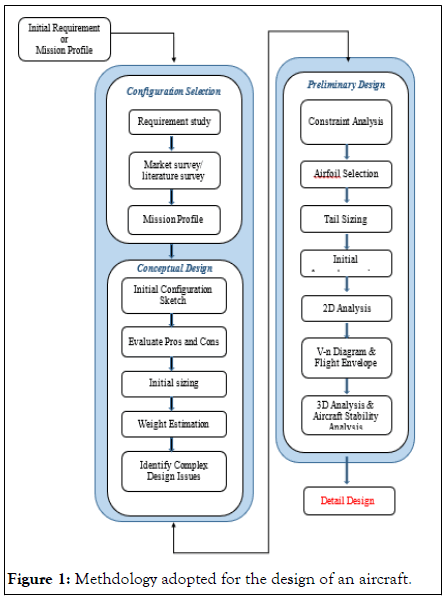
Figure 1: Methdology adopted for the design of an aircraft.
Collection of parameters
Numerous factors are taken into account during the design of commercial aircraft and each of these factors is crucial in deciding the aircraft's efficiency, safety and performance [6]. The following are some of the most crucial factors that need to be considered while designing commercial aircraft:
Payload: The payload refers to the total weight of people, cargo and fuel that an airplane is capable of transporting. The aircraft's design must guarantee that it can carry the necessary payload while still fulfilling performance standards.
Range: The range of an airplane is the furthest it can travel before needing to refuel. To reach the intended range, the design must consider elements like weight, engine power and fuel efficiency.
Speed: The intended speed of the aircraft may affect engine power and fuel economy, hence it is important to consider this when designing the aircraft.
Aerodynamics: To reduce drag and increase lift, which affects fuel efficiency and range, the aircraft must be constructed with the best possible aerodynamic properties.
One important factor that affects performance, fuel efficiency and safety of an airplane is its weight. The design must guarantee that the weight is kept to a minimum while still fulfilling all specifications [7].
All things considered, the parameters that go into the design of commercial aircraft are many and intricate, necessitating a thorough comprehension of a wide range of scientific, engineering and economic concepts. A commercial aircraft's successful design necessitates careful consideration of these factors as well as the capacity to balance competing.
Constraint analysis
Constraint analysis in the context of aircraft design refers to the process of identifying and analyzing the various limitations and requirements that must be considered during the design, development and operation of an aircraft. These constraints encompass a wide range of factors, including technical, regulatory, economic and environmental considerations. Given below are the requirements of the aircraft (Table 1) [8].
| Mission requirement | Required | Considered for simulation |
| MTOW (kg) | 77000 | 77000 |
| ETOW (kg) | 42220 | 42220 |
| Payload (kg) | 34780 | 34780 |
| Cruise Altitude (m) | 11900 | 11900 |
| CLmax | 0.336699 | 0.336699422 |
| Density | 0.364 | 0.364 |
| Cruise velocity (m/s) | 233.33 | 233.33 |
| Take off distance (feets) | 5997 | 5997 |
| Landing distance (feets) | 4500 | 4500 |
| Load factor N | 1.2 | 1.154700538 |
| Climb angle (gamma) | 5 | 5 |
| ROC (mps) | - | 20.33604946 |
| Acceleration due to gravity | - | 9.8 |
| Ground friction coefficient | - | 0.04 |
| Propellar efficiency | - | 0.9 |
| SFC (N/W.hr) | (Reference) | 0.00068 |
| Motor efficiency | - | 0.85 |
Table 1: Initial mission requirements.
NACA airfoil selection
The NACA (National Advisory Committee for Aeronautics) series comprises a systematic set of airfoil shapes developed through empirical research and wind tunnel testing. Each NACA airfoil is characterized by a specific numerical designation representing its camber, thickness and curvature distribution. Airfoil selection from the NACA series involves matching the desired aerodynamic performance characteristics, such as lift-to-drag ratio and stall behavior, with the requirements of the aircraft design. Engineers often choose NACA airfoils based on factors such as cruise efficiency, maneuverability and stability. Additionally, the NACA series provides a versatile range of airfoil profiles suitable for various flight conditions and mission requirements, making it a valuable resource in aircraft design and optimization (Figures 2 and 3) [9].
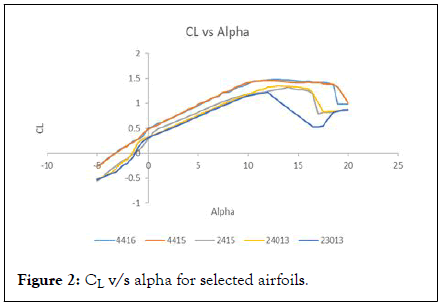
Figure 2: CL v/s alpha for selected airfoils.
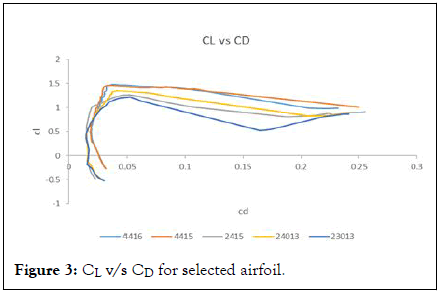
Figure 3: CL v/s CD for selected airfoil.
Design and modelling
Generation of multiple aircraft models: For the generation of the aircraft selected wing and tail as a design variable was selected. In wing, tapered wing and swept back wing are design alternatives and in tail, conventional tail and t-shape tail are design alternatives. The models using above mentioned design variables was generated and alternatives in CATIAV5. The selected design variables and design alternatives for different models are shown in Table 2 and Figures 4-6 [10].
| Aircraft model | Tapered wing | Swept back wing | Conventional tail | T-shape tail |
| Model-1 | X | ✓ | ✓ | X |
| Model-2 | X | ✓ | X | ✓ |
| Model-3 | ✓ | X | X | ✓ |
Table 2: Design variable and design alternative selection.
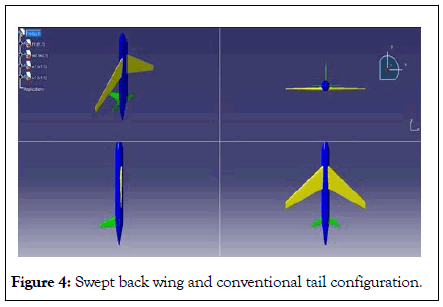
Figure 4: Swept back wing and conventional tail configuration.
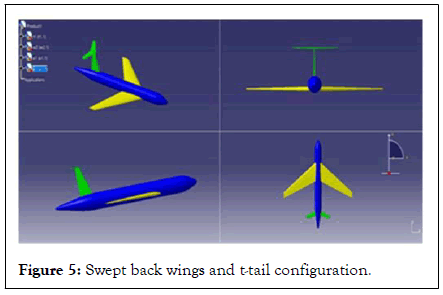
Figure 5: Swept back wings and t-tail configuration.
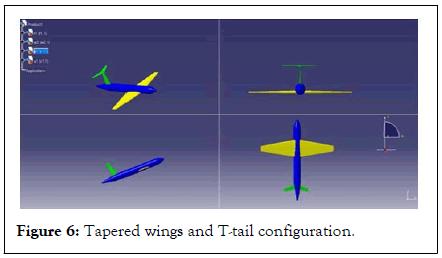
Figure 6: Tapered wings and T-tail configuration.
Load factor at various mission phase
The various load factor our designed aircraft is given in the Table 1 and even stall speed at various phase has given (Figure 7).
| S. no | Phases | Load factor | Stall speed (vs.) m/s |
| 1 | A | 1 | 54.62 |
| 2 | B | 3.5 | 102.185 |
| 3 | C | 3.5 | 127.73 |
| 4 | D | -1.5 | 66.89 |
| 5 | E | -1.5 | 160.12 |
| 6 | F | -1.5 | 83.11 |
| 7 | G | -1 | 68.47 |
Table 3: Load factor and stall speed at various mission phase.
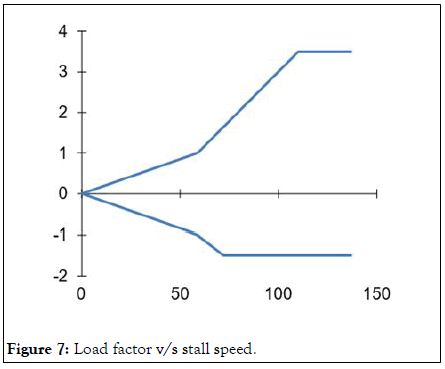
Figure 7: Load factor v/s stall speed.
The analysis is done by using VSPAERO which is the part of OPENVSP. So, to perform that there are certain takeaways that needed to know which are mentioned in the points below:
• The analysis is based on potential flow theory which means the flow is incompressible (constant pressure or density), Inviscid (zero viscosity) and irrotational (no vortex or circulation).
• The analysis can be done using two methods vortex lattice method and panel method. Each has its own advantages and disadvantages. In simpler way vortex lattice analyses based on 2-dimensional analysis or form so it takes shorter time to compute the results, whereas the panel computes on the basis of 3-dimensional geometry so it takes longer time to compute but the solution is more accurate to real world compared with the vortex lattice.
• The analysis is computed on the basis of geometry rather than the fluid's characteristics.
• The final outcome of this analysis will be the pressure contour at various angle of attack, the parasite drag coefficient at certain velocity and altitude, the lift and drag coefficient at various angle of attack (Figures 8-10).
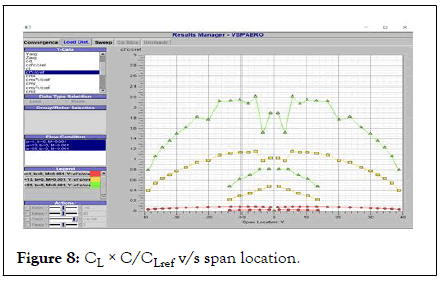
Figure 8: CL × C/CLref v/s span location.
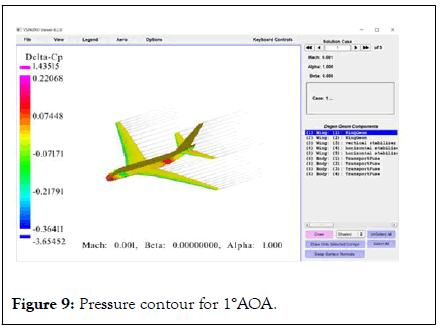
Figure 9: Pressure contour for 1°AOA.
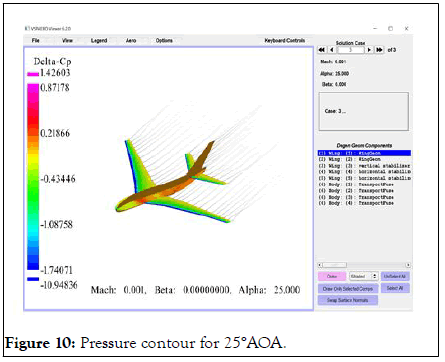
Figure 10: Pressure contour for 25°AOA.
The vertical (up and down) force operating on a wing is called lift. The center of pressure is the focal point of this lift force. The center of pressure oscillates along the wing's surface as the wing adjusts its angle to the approaching air flow. Here, we have used the vortex lattice approach to obtain the contour for various angles of attack. It can be concluded from the comparison of the two solutions that the panel technique provides a solution in a three-dimensional entity whereas the vortex lattice provides a solution based on a two-dimensional method. This is the primary cause of the time difference: Depending on the solution feasibility and time required to solve the problem, both the panel method and the vortex lattice approach have benefits and drawbacks. Use the panel approach for a more convergent and detailed solution, or the vortex lattice method for a speedier solution.
• A commercial aircraft's conceptual and preliminary design is completed and its many design factors and performance metrics are computed and established. After taking into account every design factor, it was determined that an aircraft with a swept back wing would be better for ours since it would be more aerodynamically efficient and have less induced drag. Additionally, we have chosen our aircraft's typical tail configuration, which makes it simple to construct.
• All necessary parameters were determined by computation. It was discovered that 174.84 N of thrust was needed to be produced by one engine.
• A dimensional drawing of the entire airplane is drawn.
• Different wing configurations were described, along with their benefits and drawbacks.
• The panel and vortex lattice methods are used to simulate, yielding graphs showing the relationship between CD and CL as well as CD and AL.
• From an aircraft's computation Drag coefficient is 0.00802.
• To sum up, the process of developing a commercial aircraft is difficult and complex, requiring a multidisciplinary approach, precision and a dedication to safety and innovation. The aviation industry has a bright future ahead of it, with more technological and design innovations in the works.
• This could entail investigating cutting-edge wing layouts, boundary layer control strategies and optimization techniques to lower drag and boost fuel economy.
• Alternative propulsion technologies, like hydrogen fuel cells, electric or hybrid-electric propulsion and sustainable aviation fuels.
• Aerodynamic design techniques to reduce aircraft noise, like improved engine nacelle forms, noise-reducing airframe changes and creative landing gear designs, could be the subject of future research.
• To create aircraft designs that are lightweight, structurally sound and aerodynamically efficient, future research could examine ways to integrate aerodynamic and structural optimization.
• The development of new airframe materials, aerodynamic heating and shockwave management are some of the aerodynamic issues related to supersonic and hypersonic flight that could be the subject of future research.
Citation: Deepa MS, Tamang B, Nikitha HN, Akhila M, Dhanyatha GM, Malkar AR (2025) Design and Multidisciplinary Analysis of Commercial Aircraft. J Aeronaut Aerospace Eng. 14:377.
Received: 26-Sep-2024, Manuscript No. JAAE-24-34317; Editor assigned: 30-Sep-2024, Pre QC No. JAAE-24-34317 (PQ); Reviewed: 14-Oct-2024, QC No. JAAE-24-34317; Revised: 12-Apr-2025, Manuscript No. JAAE-24-34317 (R); Published: 19-Apr-2025 , DOI: 10.35248/2168-9792.25.14.377
Copyright: © 2025 Deepa MS, et al. This is an open-access article distributed under the terms of the Creative Commons Attribution License, which permits unrestricted use, distribution, and reproduction in any medium, provided the original author and source are credited.