Journal of Applied Pharmacy
Open Access
ISSN: 1920-4159
ISSN: 1920-4159
Research Article - (2025)Volume 17, Issue 1
Background: Lymphatic filariasis is a chronic and debilitating neglected tropical disease targeted by the World Health Organization (WHO) for eradication by 2020 through the mass administration of two drugs (Albendazole and Diethylcarbamazine or Ivermectin). However, emphasizing compliance is crucial when aiming to eradicate a disease through mass drug administration. Therefore, this study aims to determine the compliance level of secondary school students with the program and to identify the factors influencing compliance.
Methods: This is a cross-sectional observational study based on the Knowledge, Attitudes and Practices (KAP) of secondary school students regarding the mass administration of medications in Haiti. Data were collected via an anonymous self-administered questionnaire. Data were entered and analyzed using excel 2013. A bivariate analysis was performed between variables and their statistical significance with compliance using the Chi-square test (χ2 test) with a P value<0.05
Results: In this study, being compliant with the program means having taken and swallowed the medications at least once during the distribution years. 144 questionnaires were distributed and collected. The results showed that females were more compliant than males, with 91.55% and 83.33% compliance, respectively, but the association was not statistically significant (p=0.19 (χ2=1.67; df:1)). Most students took the medications (87.49%) and very few did not swallow them (12.70%). The main reasons for students taking the medications were fear of contracting the disease (84.92%) and the fact that the ministry of public health and population is responsible for the program (18.25%). Lack of knowledge about lymphatic filariasis (p=0.41 (χ2=0.68; df:1)) and lymphatic filariasis elimination program (p=0.22 (χ2=1.49; df:1)). Did not influence compliance. Several students reported experiencing discomfort after taking the medications (56.35%) and only 67.46% of those who took the medications will take them again if the program continues.
Conclusion: The study indicates a high overall compliance rate among secondary school students in Delmas 2, Haiti, although a significant number experienced discomfort, which might affect future compliance. Gender differences in compliance were observed but were not statistically significant. The primary motivators for compliance were fear of disease and institutional trust, while knowledge about the disease and the eradication program did not significantly impact compliance. Continuous efforts to address discomfort and reinforce the importance of the program are crucial for achieving sustained compliance and successful eradication of lymphatic filariasis.
Lymphatic filariasis; Elimination; Compliance
Lymphatic filariasis is a neglected tropical disease, old and debilitating. The causative organisms include the parasitic worm Brugia malayi, Brugia timori and Wuchereria bancrofti. It is transmitted to humans by mosquitoes of the genus Culex, Anopheles and Aedes. This disease can cause stigmatizing and disabling clinical conditions such as lymphedema (elephantiasis), genitourinary edema, particularly scrotal hydrocele. In 2010, 120 million people were infected in 72 countries and 1.39 billion individuals were at risk of infection. In America, four countries had active foci (Brazil, Guyana, Haiti and the Dominican Republic). The number of people at risk of infection was highest in Haiti [1].
Following WHA50.29 resolutions in 1997, the World Health Organization (WHO) and its member states committed to eliminating lymphatic filariasis worldwide. The main goal of this program is to interrupt the transmission of infection. Two drugs (Albendazole and Diethylcarbamazine or Ivermectin) have been distributed to the entire at-risk population once a year for four to six years. These drugs were provided by GlaxoSmithKline and Merck and Co., Inc. The aim of this program is to eliminate lymphatic filariasis by 2020.
In Haiti, a study was conducted in various communes to determine the prevalence of lymphatic filariasis and assess the need to implement the Mass Drug Administration (MDA) program. The results showed that approximately 90% of communes required MDA. The prevalence of lymphatic filariasis was very high and the disease was considered endemic in the country.
To eradicate the disease, the Ministry of Public Health and Population (MSPP) established the National Program to Eliminate Lymphatic Filariasis (PNEFL) with three objectives: Interrupt transmission, reduce the suffering of individuals with clinical and chronic manifestations of lymphatic filariasis and encourage good health behaviors. The program started in 2000 in the commune of Léogâne and gradually expanded to cover various communes in the country.
The lymphatic filariasis elimination program, a large-scale initiative conducted over several years, aims to eliminate this debilitating disease through drug administration. Mass drug administration is an essential program that plays a major role in eradicating certain diseases. Such an initiative cannot solely involve drug distribution without considering the population's willingness to respond positively. Therefore, this study aims to highlight the compliance level of secondary school students with the lymphatic filariasis elimination program, determining both the compliance rate and the various factors influencing it within this subpopulation. Given that the Haitian population is very young, with over half under 21 years old, a study based on this subpopulation is highly important [2].
This is a cross-sectional observational study based on the Knowledge, Attitudes and Practices (KAP) of secondary school students regarding the mass administration of medications in Haiti. This study was conducted in two schools in Delmas 2, a neighborhood in the metropolitan area and included students from 3rd, 2nd, rhetoric and philosophy grades, respectively NS1, NS2, NS3, NS4, who responded positively to participate in the study. Systematic sampling was used to constitute the sample. An anonymous self-administered questionnaire was used to collect data. This questionnaire contains closed and some open questions, focusing on the student's socio-demographic characteristics such as gender, age, study level and compliance with the lymphatic filariasis elimination program. Collected data were entered and analyzed using excel 2013 and two types of analysis were performed: Univariate and bivariate analysis. To find the relationships between variables and their statistical significance with compliance, the chi-square test (χ2 test) was used with a significance level set at p<0.05 [3].
144 questionnaires were distributed and collected: 48 questionnaires in NS1, 41 in NS2, 27 in NS3, 25 in NS4 and 3 unspecified. Male students were slightly more numerous with 50% compared to 49.30% for females, with a sex ratio of M/F: 1.01/1. Nearly 75% of participants were aged 16-19 years and over 75% lived with one or both parents. 80.55% of students had heard of lymphatic filariasis and 13.88% had no knowledge of the subject. 65.27% had never seen anyone with lymphatic filariasis; 27.08% had seen at least one person with the disease. 71.53% of students were aware of the program and 20.14% were not. Regarding student compliance with the program, 87.49% took the medications; 11.80% never did. Females were more compliant (91.55%) than males (83.33%). Gender did not influence compliance with the lymphatic filariasis elimination program (p=0.19 (χ2=1.67; df:1)). Most students took the medications, regardless of household head. The only student living alone did not take the medications.
88.79% of the students who had heard about lymphatic filariasis took the medication and 80% of those who had no knowledge of lymphatic filariasis also took the medication. The lack of knowledge about lymphatic filariasis did not influence compliance with the lymphatic filariasis elimination program (p=0.22 (χ2=1.49; df:1)). Among the students who had never seen anyone affected by lymphatic filariasis, 88.30% took the medication, whereas 84.61% of those who had seen at least one person affected by lymphatic filariasis took the medication. 86.41% of the students who were aware of the program took the medication, as well as 79.31% of those who had no knowledge of the program. The lack of knowledge about the lymphatic filariasis elimination program did not influence compliance with the program (p=0.41 (χ2=0.68; df:1)).
Most of the students (88.19%) saw the distributors in their neighborhood and 9.72% did not. Neighborhoods and schools were identified as the two most appropriate distribution sites for the mass drug administration program [4]. Neighborhoods accounted for 41.26%, schools for 34.12% of the distribution sites and 15.07% of the students received the medication both in their neighborhood and at their school. Streets represented 1.58%; churches 0.79%, neighborhoods and streets 2.38% and schools and streets 0.79%. Most of the students (70.63%) took the medication out of fear of contracting lymphatic filariasis; 18.25% took it because the ministry of public health was responsible for the program (Figure 1). 47.62% of the students consistently took the medication, while 49.20% did not take it every year. 82.54% of the students took the medication and swallowed it; 17.70% had a habit of not swallowing it. Among the factors that influenced students not to take the medication, fear of side effects and a dislike of tablets each accounted for 7.93%; 7.14% feared the tablets; for 5.55%, the absence of distributors was the cause and 15.87% had other reasons: Lack of interest, negligence, disbelief in the efficacy and the size of the tablets. 56.35% of the students experienced discomfort, while 35.71% did not (Figure 2).
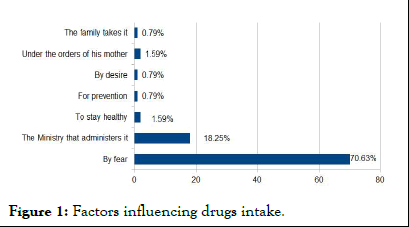
Figure 1: Factors influencing drugs intake.
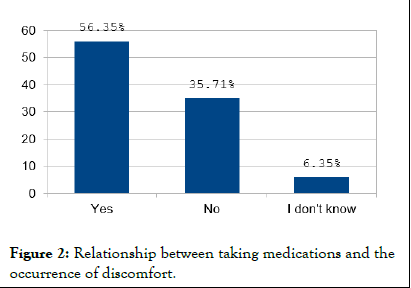
Figure 2: Relationship between taking medications and the occurrence of discomfort.
62.5% of the students would be interested in taking the medication in a future distribution; 20.83% were unsure and 8.33% would not be interested. Regarding the students who did not take the medication, several reasons were mentioned: 50% cited a lack of trust; 33.33% were afraid of the tablets; 27.77% believed they did not have lymphatic filariasis; for 22.22%, it was due to the absence of distributors and 16.66% did not like the tablets. Students who took the medication and would take it again in a future distribution represent 67.46%, whereas those who did not take the medication and would take it in a future distribution account for 29.41%. Among the respondents who took the medication, 32.54% would not take it again in a future distribution [5].
The necessary sample size was 222 students, but our study sample was 144. Thus, 144 questionnaires were distributed out of 222 available. The remaining questionnaires were not distributed due to non-consent from some students and the absence of others [6].
In this study, being compliant with the program means having taken and swallowed the medications at least once during the distribution years. Our findings showed that females students were more compliant than males students, with 65 out of 71 females students and 60 out of 71 males students. However, the difference was not significant and gender did not influence compliance (p=0.19 (χ 2=1.67; df:1)). In Brazil, a study showed that females were less compliant than males, 65% and 37%, respectively. Similarly, in Indonesia, the same observation was made. A study conducted in Kenya found that gender was not associated with compliance. A study in Haiti in 2000, when the program began, showed that age, gender, knowledge about lymphatic filariasis and the program were significantly associated with non-compliance. In 2007, another study showed that only gender was significantly associated; females were 2.74 times less compliant than males. Our study only concerned a subpopulation of a well-defined region [7].
In our study, most people took the drugs (87.49%) and very few did not swallow them (12.70%). In Indonesia too, 38% of people took the drugs, but they did not swallow. The main factors that pushed the pupils to take the drugs are the fear of contracting the disease (84.92%) and the fact that it is the ministry of public health and population that is responsible for the program (18.25%). Most students received medication in their neighborhoods and schools. These distribution locations seem to contribute to student compliance. In Egypt, a study has shown that door-to-door distribution is the most perfect model for having strong compliance of individuals, although it requires much more resources [8]. This method largely suppresses the possibility of not swallowing the drugs. For non-compliance with the program, several factors come into play: Lack of engagement, fear of tablets and side effects, absence of distributors and not having the disease. In other studies, conducted previously in Haiti, several factors were mentioned, such as fear of side effects, absence during deliveries, taking other drugs, pregnancy, but also lack of births on lymphatic filariasis and program. Other studies in other countries have shown the same results. Several students experienced discomfort after taking medication (56.35%). The types of pain felt were not sought in the study. Discomfort significantly reduces people’s compliance with the program. Studies in Haiti have also reported that individuals have experienced discomfort such as nausea (symptom predominant), headache, fever, gastrointestinal problems, scrotal pain, pruritus. Many students report that they will not resume medication if the program continues. Only 67.46% of students who have taken the medication will take it back if the program continues. This may be due to the discomfort felt and could have consequences on compliance in case of continuity of the program or even for another similar program.
According to our study, compliance was not influenced by gender. The lack of information also had no influence on compliance, while several studies have shown the opposite [9].
Limits
The study results should be interpreted with caution due to potential recall bias since the program started several years ago and ended before the survey. Additionally, the study could provide a better profile of the program if more schools participated and the sample size was larger [10].
Individual compliance and understanding the factors influencing it are vital to achieving the program's goals or any similar programs. Therefore, the ministry of public health and population and its partners should consider these factors when designing intervention strategies. Compliance can be enhanced by improving information dissemination and addressing fears related to side effects.
The distribution of drugs in schools was a good strategy. It would be essential to explore the possibility of distributing in the workplace, if this has not been done, so that those who work during the distribution period can benefit fully. Also, door-todoor distribution would be very beneficial for such a program.
Awareness campaigns would have a greater impact by using, among other things, gathering places such as churches, schools and encouraging religious leaders and teachers to participate in the campaigns. In addition, inform individuals a little more about the program as well as about the possible undesirable effects of the drugs.
[Crossref] [Google Scholar] [PubMed]
[Google Scholar] [PubMed]
[Crossref] [Google Scholar] [PubMed]
[Crossref] [Google Scholar] [PubMed]
[Google Scholar] [PubMed]
[Crossref] [Google Scholar] [PubMed]
[Google Scholar] [PubMed]
[Crossref] [Google Scholar] [PubMed]
Citation: Clerge D, David B, Raphael S (2025) Compliance of Secondary School Students with the Lymphatic Filariasis Elimination Program in Delmas 2, Haiti. J Appl Pharm. 17:458.
Received: 12-Jul-2024, Manuscript No. JAP-24-32876; Editor assigned: 17-Jul-2024, Pre QC No. JAP-24-32876 (PQ); Reviewed: 31-Jul-2024, QC No. JAP-24-32876; Revised: 11-Jan-2025, Manuscript No. JAP-24-32876 (R); Published: 18-Jan-2025 , DOI: 10.35248/1920-4159.25.17.458
Copyright: © 2025 Clerge D, et al. This is an open-access article distributed under the terms of the Creative Commons Attribution License, which permits unrestricted use, distribution and reproduction in any medium, provided the original author and source are credited.