International Journal of Physical Medicine & Rehabilitation
Open Access
ISSN: 2329-9096
ISSN: 2329-9096
Research Article - (2025)Volume 13, Issue 6
Background: Medical costs are spiraling out of control in the United States (US), consuming approximately 5 trillion dollars annually. About 30% of this, or 1.5 trillion dollars, is consumed in hospitals. To combat this, there are ongoing efforts to find and implement novel, low-cost, safe solutions to reduce the Hospital Length of Stay (HLOS). On average, a single day of hospitalization in the US costs about $3,000.00. Therefore, even relatively minor reduction in HLOS can generate significant savings if deployed at scale. Most data suggest that the average HLOS for acute ischemic stroke is from 6-11 days, with newer data indicating a HLOS of about 7-9 days overall.
Purpose: To assess whether bimanual neurorehabilitation during acute hospitalization may reduce the length of hospital stay. Study Design: Secondary analysis of a single-center observational cohort study. Methods: Retrospective analysis of hospital length of stay was analyzed and compared against the average length of stay.
Results: Patients who performed bimanual neurorehabilitation with a novel polyform device had an average length of stay of 6 days. This is inflated by a single outlier who had a length of stay of 15 days for non-medical reasons, and excluding this outlier, the average is reduced to 4.5 days.
Conclusion: Incorporating bimanual neurorehabilitation using a polyform device may shorten hospital length of stay by 1-3 days, on average, after acute ischemic stroke. In the United States this can reduce hospital costs by $3,000.00 $9,000.00, per stroke, per day, on average. At approximately 695,000 acute ischemic strokes per year, this can save between 2.1 billion and 6.3 billion dollars yearly. For a large hospital system, this may be several million dollars per year.
In the United States (US), stroke costs approach 60 billion dollars per year. The direct costs are estimated at close to 37 billion dollars and are expected to increase to close to 95 billion dollars by 2035 [1]. According to 2024 CDC estimates, approximately 695,000 acute ischemic strokes occur each year [2]. Overall, the cost of healthcare in the US consume about 5 trillion dollars annually, with about a third, or 1.5 trillion dollars, being spent on hospital care [3]. The average cost in the USA per day of hospitalization is about $3,000.00 [4,5]. As costs continue to expand, there are ongoing efforts to deploy novel, lost-cost and safe strategies to mitigate this. Reducing HLOS is potentially a key factor in driving down overall healthcare expenditure. Due to the cost per Day of Stay (DOS) and the volume of inpatient admissions, even modest reductions in HLOS can realize large savings if deployed at the population level. The average HLOS for acute ischemic stroke is about 7-9 days globally, and about 5-7 days in the US. A recent study using a novel polyform device for bimanual neurorehabilitation after acute ischemic stroke showed promise for improving outcomes. The presumed mechanism is improved neuroplasticity from bimanual neurorehabilitation exercises [6- 12]. Currency is US Dollars unless otherwise specified.
We performed a secondary analysis on an existing data set of eight patients admitted with acute ischemic stroke. These patients were part of a pilot study assessing bimanual neurorehabilitation using a novel polyform device and its effect on functional recovery in the compromised hand and upper extremity. Patients were noted to significantly improve, with all patients returning to normal or near-normal hand function within three months, a notable improvement compared to conventional methods [12]. In view of this result, it was questioned if the improvement in hand function may have also been associated with reduced HLOS. The HLOS was calculated for each person and compared to US and global averages. It was also compared to a random sample with a mean HLOS of 7.3 days (Figure 1 and Figure 2).
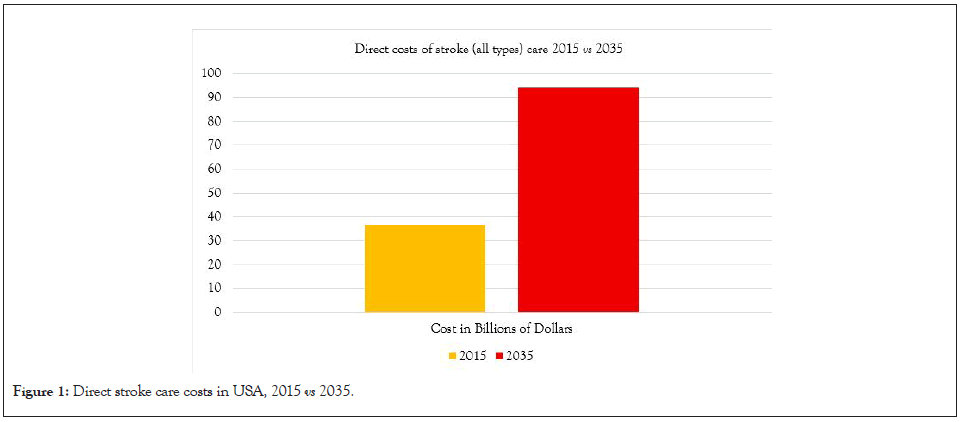
Figure 1: Direct stroke care costs in USA, 2015 vs 2035.
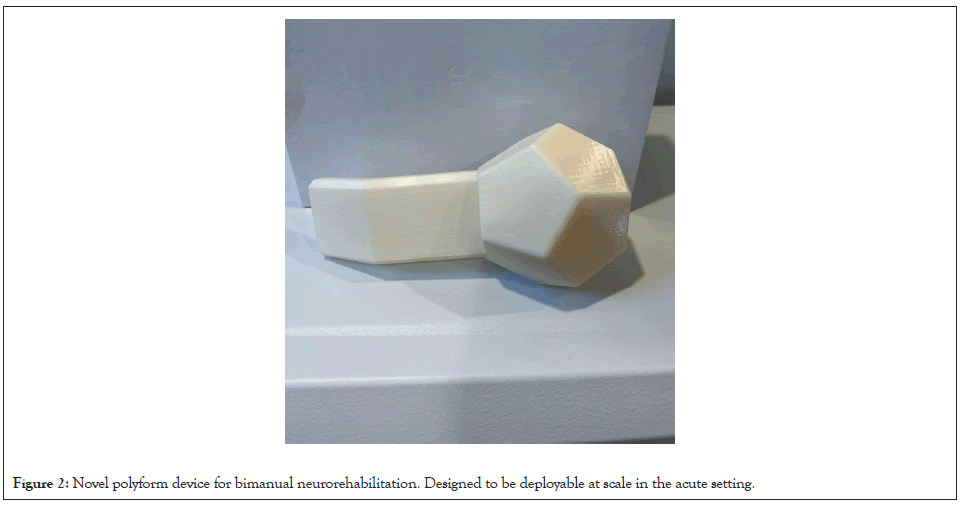
Figure 2: Novel polyform device for bimanual neurorehabilitation. Designed to be deployable at scale in the acute setting.
A total of eight hospital admissions for acute ischemic stroke were analyzed (men: 3; mean age: 67 years; mean National Institutes of Health Stroke Scale score (NIHSS): 7 [range: 4-11]; average HLOS: 6 [range: 3-15] days). One patient had an inordinately prolonged HLOS of 15 days due to non-medical reasons. Excluding this outlier and the mean HLOS is reduced to 4.5. Compared to averages, this could represent a reduction of HLOS of 1-3 days on average. A z-test gives a z-value of -63.63, corresponding to a p-value <0.05. This strongly suggest that there is a statistical difference in HLOS when using the polyform device for bimanual neurorehabilitation in the acute setting. When compared to a random sample of patients hospitalized with acute ischemic stroke at the same facility (Age: 71.25 [44-94] p-value >0.05, NIHSS: 7.87 [range 3-15] p-value >0.05; HLOS: 7.3 [range 5-12] days, 3 men,) and excluding the outlier, a two-sample t-test yields a t-statistic of -1.83, corresponding to a p-value of 0.04.
This secondary analysis sought to assess for any association between improved hand and upper extremity function after use of a novel polyform device for bimanual neurorehabilitation and HLOS. An implicit assumption is made that HLOS is at least partially influenced by patient functional status. This may of course be incorrect and indeed in this sample one outlier had a prolonged medical stay due to non-medical reasons. Limitations of this study include the small sample size and single-center population. Also, the comparator sample, although randomly gathered, was not done concurrently with the original study. Additional studies associating outcome, HLOS and functional independence may be fruitful. In addition, novel ways of assessing overall economic impact of improved function may be considered. Regardless, even minimal reductions in HLOS can yield substantial savings to payors such as medicare. With the direct cost of stroke expected to more than double by 2035, practical measures for reducing HLOS and driving down costs, potentially including deployment of bimanual neurorehabilitation therapy with a novel polyform device, need to be assessed and implemented quickly (Figure 3-5).
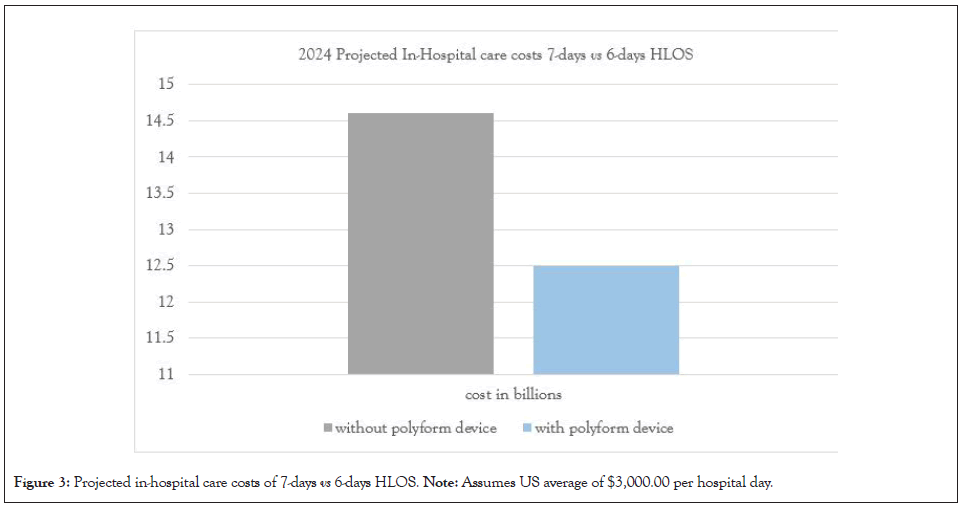
Figure 3: Projected in-hospital care costs of 7-days vs 6-days HLOS. Note: Assumes US average of $3,000.00 per hospital day.
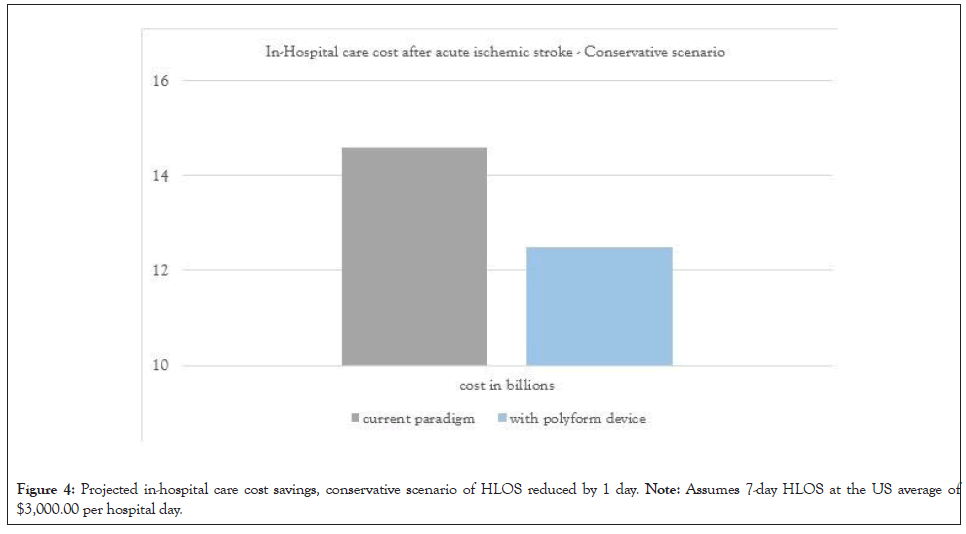
Figure 4: Projected in-hospital care cost savings, conservative scenario of HLOS reduced by 1 day. Note: Assumes 7-day HLOS at the US average of $3,000.00 per hospital day.
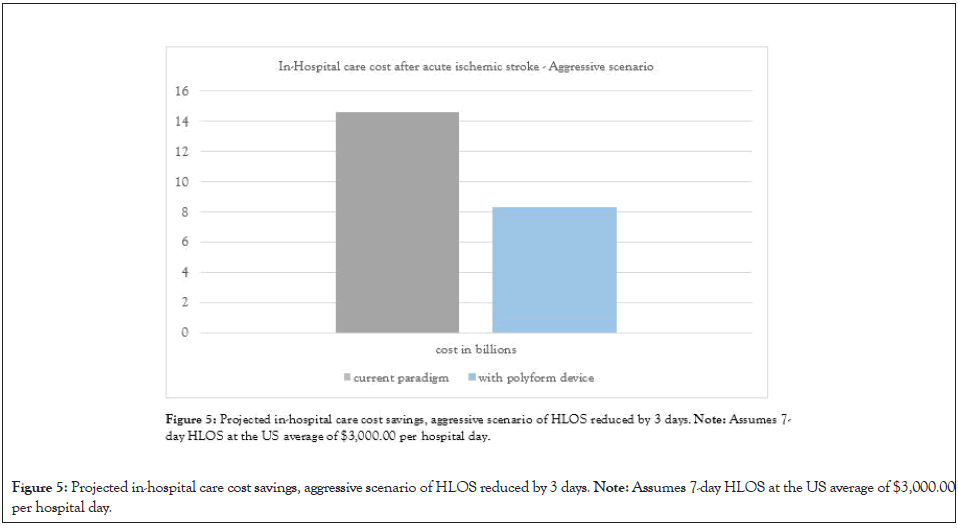
Figure 5: Projected in-hospital care cost savings, aggressive scenario of HLOS reduced by 3 days. Note: Assumes 7-day HLOS at the US average of $3,000.00 per hospital day.
Use of a novel polyform device to incorporate bimanual neurorehabilitation during hospitalization for acute ischemic stroke resulting in compromise of the hand and upper extremity may reduce HLOS by 1-3 days, on average. This could save (approximately) 2.1 billion to 6.3 billion dollars per year in hospital costs alone for acute ischemic stroke care. Additional economic benefits may also occur from increased work participation poststroke, further offsetting care costs during the acute phase.
Dr. Barr is the inventor of the polyform bimanual assisted neurorehabilitation device. A commercially available upper extremity rehabilitation system utilizing a device based on this concept is marketed through his company, Plasticity Neurorehabilitation, LLC, under the trade name Polyform-1h. Plasticity Neurorehabilitation paid the processing charges for submission.
We would like to express our gratitude to all the participants in this study.
Plasticity Neurorehabilitation provided devices, training, and any publishing fees
During the preparation of this work the authors used commonly available artificial intelligence tools to edit grammar, syntax, and formatting. After using this tool/service, the authors reviewed and edited the content as needed and take full responsibility for the content of the publication.
[Crossref] [Google Scholar] [PubMed]
[Crossref] [Google Scholar] [PubMed]
[Crossref] [Google Scholar] [PubMed]
[Crossref] [Google Scholar] [PubMed]
Citation: Barr L (2025). Bimanual Neurorehabilitation with a Novel Polyform Device Reduces Hospital Length of Stay after Acute Ischemic Stroke. Int J Phys Med Rehabil. 13:767.
Received: 04-Nov-2025, Manuscript No. JPMR-25-39059; Editor assigned: 06-Nov-2025, Pre QC No. JPMR-25-39059 (PQ); Reviewed: 19-Nov-2025, QC No. JPMR-25-39059; Revised: 26-Nov-2025, Manuscript No. JPMR-25-39059 (R); Published: 03-Dec-2025 , DOI: 10.35248/2329-9096.25.13.767
Copyright: © 2025 Barr L. This is an open-access article distributed under the terms of the Creative Commons Attribution License, which permits unrestricted use, distribution, and reproduction in any medium, provided the original author and source are credited.