
Journal of Leukemia
Open Access
ISSN: 2329-6917
ISSN: 2329-6917
Review Article - (2025)Volume 13, Issue 3
Acute Myelogenous Leukemia (AML) is an aggressive hematologic malignancy characterized by clonal proliferation of myeloid precursors with impaired differentiation. This review provides a comprehensive overview of AML etiology, molecular pathophysiology, current treatment strategies, and emerging therapies, with a focus on United States clinical practice. We detail known risk factors for AML, including antecedent hematologic disorders, genetic predispositions, environmental and iatrogenic exposures, while noting most cases are de novo without a clear cause. The complex molecular biology of AML is discussed, highlighting key cytogenetic abnormalities and mutations (FLT3, NPM1, TP53, IDH1/2, DNMT3A, etc.) that drive leukemogenesis and inform prognostic risk stratification. Standard induction chemotherapy (e.g. 7+3 cytarabine plus anthracycline) and consolidation with high-dose cytarabine or allogeneic Hematopoietic Stem Cell Transplant (HSCT) remain central to therapy for fit patients. Supportive care measures are crucial for managing cytopenias and treatment complications. We review recent therapeutic advances, including targeted small molecules (FLT3 and IDH inhibitors, BCL-2 inhibitor venetoclax) and immunotherapies (antibody-drug conjugates, bispecific T-cell engagers, CAR-T cells, checkpoint inhibitors), as well as experimental radioimmunotherapy approaches. Five-year survival outcomes are presented by age and genetic risk, underscoring the disparity between younger patients (~40%-45% survival) and older adults (<15%), and between favorable-risk (~70%) and adverse-risk (~20%-25%) disease. Ongoing clinical trials and investigational agents in the AML pipeline are reviewed, such as novel epigenetic modifiers and immune-based therapies. We also provide tables comparing therapeutic regimens, risk stratification, and survival outcomes, and include figures illustrating key molecular pathways and treatment algorithms. Through extensive literature review and up-to-date data, we aim to inform clinicians and researchers about the current state of AML management and future directions in this rapidly evolving field.
Acute Myelogenous Leukemia (AML); Immunotherapy; Radiation therapy; Targeted therapy; Clinical trials
Acute Myelogenous Leukemia (AML) is a clonal malignancy of the myeloid line characterized by uncontrolled proliferation of immature myeloblasts in the bone marrow, blood and other tissues. AML is biologically and clinically heterogeneous, comprising multiple subtypes defined by distinct cytogenetic and molecular abnormalities. It is primarily an adult disease (median age at diagnosis ~68-70 years), with incidence rising in older populations. In the United States, AML is relatively uncommon (approximately 20,000 new cases annually) but is the most frequent acute leukemia in adults and remains challenging to treat, with overall five-year survival around 30%. Outcomes are highly variable based on patient age, comorbidities and disease biology.
Despite intensive research and incremental progress over past decades, AML still carries a high mortality, especially in the elderly and in high-risk genetic subsets. Conventional chemotherapy has achieved long-term remission in a subset of younger patients (cure rates ~30-40% with standard regimens), but cures in patients over 60 are infrequent (5-year survival <15%). Until recently, therapeutic advances were stagnant; however, since 2017 numerous new agents have been approved for AML, reflecting a paradigm shift in therapy. These include targeted inhibitors (against FLT3, IDH1/2, BCL-2), monoclonal antibodies, and other novel approaches that have expanded treatment options. Optimizing therapy requires understanding AML’s diverse etiologies and molecular drivers, risk stratification to guide intensity of therapy, and appropriate use of emerging treatments alongside standard chemotherapy and transplant.
This article provides a comprehensive review of AML tailored to a medical readership of clinicians and researchers. We detail the etiology of AML, including known genetic predisposition syndromes, environmental and therapy-related risk factors, and antecedent hematologic diseases. We then describe pathophysiology and molecular mechanisms, highlighting how cytogenetic aberrations and gene mutations drive leukemogenesis and are used to classify risk. A thorough overview of current treatment practices is given, including induction and consolidation chemotherapy, the role of allogeneic HSCT and supportive care principles. We further elaborate on newer therapies, with an emphasis on immunotherapies (antibody-based treatments, CAR-T cells, bispecific T-cell engagers, immune checkpoint inhibitors) and investigational radiopharmaceuticals. We present current data on outcomes, including five-year survival statistics by age and risk category and discuss how risk stratification informs therapy. Finally, we survey the landscape of ongoing clinical trials and novel agents in development (such as next-generation FLT3 inhibitors, IDH inhibitors, menin inhibitors and other epigenetic or immunotherapeutic strategies) that promise to shape future AML management. Throughout, we include summary tables and illustrative figures (e.g. molecular pathway diagrams, treatment algorithms, prognostic models) to enhance clarity. Our goal is to synthesize up-to-date knowledge of AML biology and treatment, providing insights into how burgeoning therapies are being integrated into U.S. clinical practice and what advances may lie ahead.
Etiology and risk factors
De novo AML and lack of identifiable risk factors: The majority of AML cases arise de novo, meaning without a clearly identifiable environmental or inherited predisposition. Most patients diagnosed with AML have no known risk factor or pre-existing condition. Nevertheless, epidemiologic and clinical studies have established several factors associated with increased AML risk. These risk factors can be broadly categorized into: (1) antecedent hematologic disorders, (2) genetic predisposition syndromes, (3) environmental exposures (chemical or radiation) and (4) iatrogenic causes (prior chemotherapy/radiation therapy). Importantly, having a risk factor does not guarantee AML will occur, but it contributes to overall risk.
Antecedent hematologic disorders: The most common precursor to AML is an antecedent Myelodysplastic Syndrome (MDS). Patients with high-risk MDS (especially those with excess blasts or certain poor-risk cytogenetics) often progress to secondary AML if not treated. Other chronic bone marrow disorders that can evolve into AML include the Myeloproliferative Neoplasms (MPN) particularly primary myelofibrosis, polycythemia vera and essential thrombocythemia, which can transform into AML after accumulating additional mutations (sometimes termed “blast phase” of MPN). Aplastic anemia, especially severe aplastic anemia untreated or treated with certain therapies, is another antecedent condition associated with eventual AML transformation in some cases. Patients with these pre-leukemic disorders typically have a history of cytopenias or abnormal blood counts preceding the onset of AML. When AML arises from an established antecedent disorder or as a late effect of therapy, it is often classified as secondary or therapy-related AML, which carries distinct genetic features and a poorer prognosis.
Inherited genetic predispositions: Although most AML cases are sporadic, a small subset result from inherited genetic syndromes that confer a predisposition to hematologic malignancies. These syndromes are typically caused by germline mutations in DNA repair genes, tumor suppressors, or hematopoietic transcription factors. Notable examples include Fanconi anemia, Bloom syndrome, Diamond-Blackfan anemia, Shwachman-Diamond syndrome, Li-Fraumeni syndrome, severe congenital neutropenia (Kostmann syndrome), neurofibromatosis type 1 and ataxia- telangiectasia, all of which have been linked to higher AML incidence. Patients with these disorders often develop AML at younger ages (childhood, adolescence, or early adulthood). For instance, children with Down syndrome (trisomy 21) have an increased risk of acute leukemia, particularly acute megakaryoblastic leukemia, thought to result from cooperation between trisomy 21 and additional mutations. Another example is germline RUNX1 mutation (Familial Platelet Disorder with propensity to AML), which leads to autosomal dominant transmission of AML risk. Familial AML cases (with first-degree relatives affected) are rare but documented; having a close relative with AML modestly elevates one’s risk. Recognition of hereditary AML predisposition is important, as it may influence donor selection for HSCT and warrants genetic counseling.
Environmental and occupational exposures: Several environmental agents are established leukemogens. Ionizing radiation exposure increases the risk of leukemia (including AML). Historical evidence comes from early radiologists (who worked before modern radiation shielding) and survivors of atomic bomb detonations, who showed significantly elevated leukemia rates years after exposure. Therapeutic radiation (e.g. for ankylosing spondylitis in the past) has also been linked to later AML. Chemical exposure is another contributor. The solvent benzene is a well-known cause of bone marrow failure and AML; chronic benzene exposure (e.g. in rubber manufacturing, oil refineries, gasoline industry, or from cigarette smoke) can lead to aplastic anemia or MDS that evolves into AML. Epidemiologic studies have found higher AML rates among workers with long- term benzene exposure, as well as possible links to other organic solvents, certain pesticides and petrochemicals. For example, occupational contact with soot, coal tar, creosote, inks, dyes and paints has been associated with increased AML risk. Tobacco smoking, though primarily linked to solid tumors, also confers a small but measurable increase in AML incidence. Smokers have about 1.3-2× the risk of AML compared to never-smokers, likely due to hematotoxic carcinogens absorbed from smoke (e.g. benzene). In fact, cigarette smoke is a significant source of benzene exposure in the general population. While smoking is considered the only proven lifestyle-related risk factor for AML, it accounts for only a minority of cases. Overall, environmental risk factors underline the importance of reducing exposures to radiation and known chemical carcinogens as part of AML prevention.
Therapy-related (iatrogenic) AML: Prior exposure to cytotoxic chemotherapy or radiation for a different malignancy is a well- recognized cause of secondary AML. Therapy-related AML (t-AML) accounts for an increasing proportion of cases as more cancer patients survive long term after chemotherapy. Two major etiologic subgroups are described, correlating with the type of agent received:
Alkylating agent–related AML: Patients treated with alkylating chemotherapy (and/or therapeutic radiation) can develop t-AML after a latency of about 3-7 years. Often, there is an intervening MDS phase before progression to AML. These leukemias commonly show unbalanced cytogenetic abnormalities involving chromosomes 5 or 7 (such as deletion 5q or monosomy 7). For example, survivors of Hodgkin lymphoma treated with older MOPP-like regimens (which contained alkylators) or women treated with adjuvant cyclophosphamide for breast cancer have a small but definite risk of developing MDS/AML within a decade of therapy. The prognosis of alkylator-related AML is typically poor, in part due to adverse cytogenetics and underlying marrow damage.
Topoisomerase II inhibitor-related AML: Exposure to topoisomerase II inhibitors (such as etoposide, teniposide, mitoxantrone or anthracyclines like doxorubicin) can lead to AML after a shorter latency, often only 1-3 years after therapy. Unlike alkylator AML, these cases usually do not go through an MDS prodrome and present directly as acute leukemia. They characteristically feature balanced chromosome translocations involving the MLL gene at 11q23 (or less commonly other rearrangements such as t(15;17) or inv(16)). For instance, therapy-related acute promyelocytic leukemia with t(15;17) has been observed in patients who received mitoxantrone for breast cancer. MLL-rearranged t-AML following etoposide is another classic scenario. These leukemias often have an aggressive course but occasionally respond to targeted therapies (e.g., acute promyelocytic t-AML can respond to ATRA and arsenic as typical APL). Overall, t-AML (whether alkylator- or topo II-associated) is considered an adverse-risk AML category due to historically low response rates to standard therapy.
In summary, AML can arise via diverse pathways. (Table 1) summarizes common etiologic factors for AML. Notably, advanced age itself is the single strongest risk factor for AML reflecting accumulation of hematopoietic mutations over time, but age is also confounded by increased exposures and higher prevalence of antecedent conditions in older populations. A significant proportion of AML cases (>50%) have no clear precipitant, highlighting the role of stochastic (random) mutations and currently unknown influences in leukemogenesis. Improved understanding of clonal hematopoiesis in aging (CHIP/ARCH) suggests that age-related clonal mutations (e.g. in DNMT3A, TET2, ASXL1) may form a fertile soil for AML to develop, even in the absence of an obvious external trigger. The integration of genetic screening for predisposition syndromes and monitoring of pre-leukemic clones is an evolving aspect of AML risk assessment.
Pathophysiology and molecular genetics of AML
Clonal hematopoiesis and leukemogenesis: The pathogenesis of AML involves a multistep process in which normal hematopoietic stem or progenitor cells acquire genetic and epigenetic alterations that confer a growth advantage and impair differentiation. The result is clonal expansion of malignant myeloblasts that overrun the bone marrow and peripheral blood, while normal hematopoiesis is suppressed. Foundational experiments led to the “two-hit” model of AML leukemogenesis. In this classic schema, at least two classes of mutations collaborate: Class I mutations which activate signal transduction pathways and drive proliferation (providing a survival/growth advantage) and Class II mutations which affect hematopoietic transcription factors or epigenetic regulators, causing impaired differentiation and maturation arrest. A leukemia-initiating cell that acquires both types of “hits” can clonally expand as AML. Examples of class I mutations include activating mutations in tyrosine kinase or RAS signaling pathways for instance, FLT3 Internal Tandem Duplications (ITD), FLT3 Tyrosine Kinase Domain (TKD) point mutations, KIT mutations, KRAS/NRAS mutations, or activating mutations in JAK2. These lesions drive constitutive cell proliferation and survival signaling. Class II lesions include chromosomal translocations creating fusion genes (which often encode aberrant transcription factors or co-factors) such as t(8;21)(q22;q22) generating RUNX1-RUNX1T1 inv(16)(p13q22) or t(16;16) producing CBFB-MYH11 and t(15;17)(q22;q21) producing PML-RARA; as well as mutations in transcription factor genes like CEBPA or RUNX1. These cause a block in differentiation. Classical Core-Binding Factor (CBF) leukemias, for instance, feature a translocation that impairs a master regulator of differentiation (RUNX1 or CBFβ) while often concurrently harboring a signaling mutation like KIT or RAS that promotes proliferation-exemplifying the synergy of class II and class I events. Indeed, cooperative mutations are common: FLT3, NRAS or KIT mutations frequently accompany RUNX1-RUNX1T1 or CBFβ-MYH11 fusions. Similarly, FLT3-ITD mutations co-occur in ~40% of NPM1-mutated AML, representing a common pathogenic tandem in adult AML.
Risk factor category Examples Notes on risk
| Risk factor category | Examples | Notes on risk |
|---|---|---|
| Antecedent hematologic disorder | Myelodysplastic syndrome (especially high-grade); Myeloproliferative neoplasms (e.g., myelofibrosis); Aplastic anemia (severe acquired) | Highest AML risk in high-risk MDS (up to 40% transform); MPN blast transformation in 5-20% over time; often evolves to secondary AML |
| Inherited genetic syndrome | Fanconi anemia, Bloom syndrome, Diamond-Blackfan anemia, Shwachman-Diamond syndrome; Down syndrome (trisomy 21); Li-Fraumeni (TP53 germline); Severe congenital neutropenia (Kostmann); Familial platelet disorder with RUNX1 mutation; Neurofibromatosis type 1, etc. | Germline DNA repair or hematopoiesis gene mutations confer elevated lifetime AML risk. Often AML occurs at a younger age; consider genetic counseling and specialized monitoring. |
| Environmental exposure | Ionizing radiation (atomic bomb survivors, high-dose occupational exposure); Benzene (industrial solvent, gasoline fumes, cigarette smoke); Long-term exposure to pesticides, herbicides, or petrochemicals; Tobacco smoking (active) | Significant radiation exposure markedly increases leukemia risk (seen in historical cohorts). Benzene is a proven leukemogen causing marrow DNA damage. Smoking confers ~1.5×risk of AML. Many exposed individuals do not develop AML, indicating multifactorial causation. |
| Prior cytotoxic therapy (t-AML) | Alkylating agents ± radiation: e.g., cyclophosphamide, melphalan, platinum drugs, etc., often for lymphoma, breast cancer, etc. Topoisomerase II inhibitors: e.g., etoposide, anthracyclines, mitoxantrone, often for lymphoma, breast cancer, sarcoma, etc. | Therapy-related AML comprises ~5-10% of cases. Alkylator-related: ~5 year latency, MDS phase common, cytogenetics often -5, -7. Topo II-related: ~1-3 year latency, often MLL (11q23) translocations. Carries adverse prognosis and distinct management considerations. |
| Other factors | Older age (≥ 60 years); Male sex; Obesity (possible slight risk); Family history of AML (rare familial clusters) | AML incidence rises with age (median ~70). Men have somewhat higher rates than women for unclear reasons (possibly occupational exposures). Most familial AML cases have an identifiable hereditary syndrome; true idiopathic familial AML is very uncommon. |
Table 1: Key risk factors and precipitating conditions in AML.
Modern genomic studies have revealed that AML often involves more than two mutations in fact, the median AML case has several driver mutations. In a large sequencing study of 1,540 AML patients, 5234 driver mutations were identified across 76 genes, and 86% of patients had at least two driver mutations (average of ~3-5 per case). These findings expand the two-hit model to a more complex, multi-hit model of leukemogenesis. While the class I/II framework is conceptually useful, many commonly mutated genes in AML do not fit neatly into those categories. For instance, mutations in DNMT3A, TET2, ASXL1, IDH1, IDH2 and other epigenetic modifiers are frequent, especially in cytogenetically normal AML. These mutations (sometimes termed “class III” or epigenetic mutations) alter DNA methylation or chromatin state, contributing to leukemic transformation by affecting gene expression programs and stem cell self-renewal. NPM1 mutation, present in ~30% of adult AML, causes abnormal cytoplasmic localization of the nucleophosmin protein and is associated with differentiation arrest; it does not directly activate a growth pathway, so NPM1-mutated AML typically requires a cooperating signaling mutation (FLT3-ITD being most common). Another example is IDH1/2 mutations (seen in ~15-20% of AML) which produce the oncometabolite 2-hydroxyglutarate, leading to DNA hypermethylation and a block in differentiation. These epigenetic and metabolic mutations often occur in conjunction with classical class I or II lesions and can influence disease behavior and therapy response.
Cytogenetic abnormalities: Karyotypic abnormalities in the leukemic blasts are observed in about 50-60% of AML cases (the remainder being cytogenetically normal). Certain chromosomal translocations define distinct AML subtypes with characteristic clinical features:
t(15;17)(q22;q21), PML-RARA fusion: Pathognomonic for Acute Promyelocytic Leukemia (APL), this fusion protein blocks retinoic acid receptor signaling and promyelocyte differentiation, leading to APL. It is uniquely responsive to differentiation therapy with All-Trans Retinoic Acid (ATRA) and arsenic trioxide, resulting in cure rates ~90%.
t(8;21)(q22;q22), RUNX1-RUNX1T1 fusion: Found in ~5-8% of AML, usually with French-American-British (FAB) M2 morphology. It impairs core-binding factor function. Prognosis is relatively favorable with high remission rates, especially when treated with intensive chemotherapy and gemtuzumab ozogamicin as shown in trials.
inv(16)(p13q22) or t(16;16), CBFB-MYH11 fusion: Present in acute myelomonocytic leukemia with abnormal eosinophils (FAB M4EO). Like t(8;21), it is a CBF leukemia with favorable prognosis; these patients benefit from high-dose cytarabine consolidation and sometimes gemtuzumab.
11q23 translocations involving KMT2A (MLL gene): Various partners (MLL rearrangements) occur, often in monocytic leukemias (FAB M5) or therapy-related cases. Outcomes vary by partner gene but are generally intermediate to poor. The t(9;11)(p21;q23) involving MLLT3-KMT2A is classified as intermediate risk, whereas other MLL translocations are often adverse risk.
t(6;9)(p23;q34), DEK-NUP214: An infrequent aberration associated with marrow basophilia and often FLT3-ITD co-mutation. It confers adverse prognosis.
inv(3)(q21q26.2) or t(3;3)(q21;q26.2), GATA2 and MECOM(EVI1) involvement: This abnormality leads to overexpression of EVI1 and is associated with distinctive dysmegakaryopoiesis. It carries a very poor prognosis (sometimes considered “very adverse” risk).
Complex karyotype: Defined as ≥ 3 chromosomal abnormalities in the absence of a defining translocation, complex karyotypes (especially with chromosome 5, 7, and 17 abnormalities) are typically associated with TP53 mutations and a very poor outcome. A subset termed “monosomal karyotype” (presence of ≥ 2 monosomies or one monosomy plus structural abnormalities) is particularly dire.
Cytogenetic findings at diagnosis remain one of the strongest predictors of outcome and form the basis of AML risk stratification systems (Table 2). Favorable-risk AML is largely defined by the presence of the core-binding factor translocations or biallelic CEBPA mutation or NPM1 mutation without adverse markers. Adverse-risk cytogenetics include -5/5q-, -7, abnormal 17p (TP53), 3q21q26 abnormalities, t(6;9), complex karyotype and most MLL rearrangements. The integration of molecular mutations with cytogenetics has refined these categories (discussed below under Risk Stratification).
Molecular mutations: In addition to cytogenetics, specific gene mutations have critical impact on prognosis and therapy in AML. (Table 2) highlights some of the most common and clinically significant mutations:
FLT3: FMS-like tyrosine kinase 3 is mutated in ~30% of adult AML cases. The most common mutation is an internal tandem duplication in the juxtamembrane domain (FLT3-ITD), which causes constitutive activation of FLT3 signaling (driving STAT5, RAS/MAPK, and PI3K/AKT pathways). FLT3-ITD is associated with aggressive disease - a high leukocyte count, propensity for early relapse, and adverse prognosis, especially when the allelic ratio (mutant vs wild-type) is high. A smaller subset have point mutations in the tyrosine kinase domain (FLT3-TKD, often at D835) which also activate the kinase, though their prognostic impact is less dire than ITD. FLT3 mutations are targetable with tyrosine kinase inhibitors (discussed later). The presence of FLT3-ITD is now incorporated into risk stratification FLT3-ITD with high allelic burden is adverse risk, whereas FLT3-ITD with low allelic burden (especially if concurrent NPM1 mutation) may be considered intermediate risk.
NPM1: Mutations in the NPM1 gene (encoding nucleophosmin) occur in ~25-30% of AML, particularly in those with normal karyotype. NPM1 mutations cause an aberrant nuclear export signal, leading to cytoplasmic accumulation of NPM1. Clinically, NPM1-mutated AML often presents with high blast counts but tends to have a higher response to induction chemotherapy. In the absence of FLT3-ITD or other adverse mutations, NPM1 mutation is a favorable prognostic marker. However, if a high FLT3-ITD co-occurs, the favorable impact is neutralized. NPM1-mutated AML often exhibits distinctive gene expression profiles and may benefit from certain novel therapies (like menin inhibitors in trials targeting NPM1-mutant leukemia).
TP53: Mutations in the TP53 tumor suppressor gene (~5- 10% of AML) are usually associated with complex cytogenetics (chromosomal aneuploidies including -5/7/17). TP53-mutant AML is uniformly considered adverse risk. Outcomes with standard therapy are poor (complete remission rates <50% and short remissions). TP53-mutant leukemias often exhibit primary chemotherapy resistance. Special approaches (like investigational TP53-targeting agents or allogeneic transplant) are being explored to improve outcomes in this subgroup.
CEBPA: Mutations in the CEBPA gene (encoding CCAAT/ enhancer-binding protein alpha, a myeloid transcription factor) occur in ~5-10% of AML, typically in younger patients with normal cytogenetics. If biallelic CEBPA mutations (both alleles hit) are present, the prognosis is favorable. AML with biallelic CEBPA mutations is recognized as a distinct entity with high response rates to chemo. Single-allele CEBPA mutations, in contrast, do not confer the same favorable risk (and are often categorized as intermediate risk).
| Risk category | Genetic abnormalities (Examples) | Prognostic implications |
|---|---|---|
| Favorable | - t(8;21)(q22;q22.1); RUNX1-RUNX1T1 jhoonline.biomedcentral.com - inv(16)(p13.1q22) or t(16;16)(p13.1;q22); CBFB-MYH11 jhoonline.biomedcentral.com - PML-RARA (t(15;17)) – APL (treated with ATRA/ATO) - Mutated NPM1 without FLT3-ITD (or with FLT3-ITD low allelic ratio) - Biallelic mutated CEBPA (double CEBPA mutations). |
Generally higher remission rates and survival. Standard chemo often sufficient; consider consolidation with chemotherapy (transplant usually reserved for relapse). APL cure rate ~90% with ATRA/ATO nature.com. CBF leukemias ~50-75% cure with intensive chemo+gemtuzumab. |
| Intermediate | - Mutated NPM1 with FLT3-ITD high allelic ratio (≥ 0.5) - Wild-type NPM1 with FLT3-ITD low ratio (<0.5) (if no adverse mutations) - t(9;11)(p21.3;q23.3); MLLT3-KMT2A (MLL) - Cytogenetic abnormalities not classified as favorable or adverse (e.g., normal karyotype with no favorable mutations and no adverse mutations) - Other single-gene mutations (e.g., isolated DNMT3A or IDH mutations) without adverse genetic features. |
Outcomes intermediate between favorable and adverse. Many patients in this group benefit from allogeneic transplant in first remission, especially younger patients, to prevent relapse. Careful monitoring of MRD (minimal residual disease) often used to guide consolidation. |
| Adverse | - Complex karyotype (≥ 3 unrelated chromosomal abnormalities) pmc.ncbi.nlm.nih.gov - Chromosome 5 deletions (-5, 5q-) or -7-17p abnormalities: TP53 mutation or deletion (often part of complex karyotype) - t(6;9)(p23;q34); DEK-NUP214 - inv(3)(q21q26.2) or t(3;3)(q21;q26.2); GATA2, MECOM (EVI1) - t(v;11)(v;q23.3); MLL rearrangements other than t(9;11) (e.g., t(6;11), t(10;11), etc.) - RUNX1 mutation (sporadic, in absence of favorable-risk cytogenetics) - ASXL1 mutation (in absence of favorable-risk cytogenetics) - TP53 mutation (even without cytogenetic abnormalities). |
Highest risk of induction failure or relapse. Allogeneic HSCT is generally recommended in first CR if achieved. Novel or experimental therapies should be considered. Long-term survival in this group is <20-25% and <10% in TP53 or complex cases. Clinical trials for new therapies are often appropriate. |
Significance: This table is adapted from the European LeukemiaNet (ELN) 2017 recommendations for AML genetic risk stratification, which combine cytogenetic and molecular findings. The Favorable category includes core-binding factor leukemias and others with relatively good prognosis. Intermediate serves as a catch-all for cases not meeting favorable or adverse criteria (including many normal karyotype AMLs without high-risk mutations). Adverse includes complex karyotypes, certain translocations, and mutations known to confer poor outcomes. The presence of any one adverse genetic feature usually assigns a patient to adverse risk, even if other mutations are favorable. These risk groups correlate with overall survival: for example, in one series 5-year survival was ~70% in favorable, ~40-50% in intermediate, and ~20% in adverse risk patients. Risk stratification guides therapy: adverse-risk younger patients are often transplanted in first remission, whereas favorable-risk patients may be managed with chemotherapy alone. It’s important to reassess risk if new data (like unknown mutations from extended sequencing) emerge during treatment. Updated classifications (ELN 2022 and WHO 2022) have made minor changes (e.g., recognizing “very adverse” subsets like TP53-mutated or inv(3) AML explicitly, and moving some mutations between categories), but the 2017 scheme remains a cornerstone for therapeutic decision-making.
Table 2: Cytogenetic and molecular risk stratification in AML (ELN 2017 Criteria).
IDH1 and IDH2: Mutations in the metabolic enzymes isocitrate dehydrogenase 1 and 2 occur in ~15-20% of adult AML (IDH2 slightly more common than IDH1). These mutations produce an abnormal metabolite (2-hydroxyglutarate) that leads to DNA and histone hypermethylation, impairing normal differentiation. IDH-mutant AML often presents with increased myelomonocytic cells and can have co-mutations in NPM1 or DNMT3A. Prognosis of IDH-mutant AML is considered intermediate overall. The major significance is therapeutic small-molecule inhibitors of mutant IDH1 (ivosidenib) and IDH2 (enasidenib) can induce remissions by restoring differentiation in refractory AML. These drugs are now incorporated in treatment of relapsed IDH-mutant AML and in frontline therapy for older patients.
DNMT3A: DNA methyltransferase 3A is mutated in ~20% of AML, most often a specific missense mutation (R882H). DNMT3A mutations are also common in age-related clonal hematopoiesis and tend to precede AML (found in the founding clone). They are associated with increased relapse risk and were historically adverse markers, though current risk models consider DNMT3A intermediate-risk unless accompanied by other adverse features. No targeted therapy exists yet for DNMT3A mutations, but their presence highlights clonal evolution (often co-mutated with NPM1 or FLT3 in normal karyotype AML).
Additional frequent mutations: TET2 (~10%), ASXL1 (~5-10%), WT1 (~5-10%), RUNX1 (~10%), KIT (in CBF AML), RAS (~10-15%), and PTPN11, among others. ASXL1 and RUNX1 mutations, when identified, are adverse prognostic markers per ELN 2017 criteria, particularly in otherwise intermediate-risk patients. RAS mutations (KRAS or NRAS) often co-occur with other mutations; they may predict sensitivity to MEK inhibitors in trials, but currently do not independently change risk category (except perhaps in CBF AML, KIT or RAS mutations can increase relapse risk).
The interplay of these mutations determines the biology of each patient’s leukemia. Modern sequencing panels can identify a constellation of mutations in each AML case, allowing classification into molecular subgroups. For instance, a patient might have “AML with mutated NPM1 and FLT3- ITD, DNMT3A, and IDH2”, each mutation informs prognosis and potentially therapy. In 2022, an updated classification by European Leukemia Net (ELN) and others has proposed defining AML categories by primary genetic drivers (e.g. AML with NPM1 mutation; AML with biallelic CEBPA; AML with TP53 mutation; etc.), emphasizing the importance of genetic diagnostics. These advances underscore that AML is not a single disease but a collection of molecularly defined entities.
Leukemic stem cells and microenvironment: AML is organized as a cellular hierarchy with Leukemic Stem Cells (LSCs) or initiating cells at its apex. These LSCs, which often harbor the founding mutations, possess self-renewal capacity and are capable of reinitiating disease. Eradication of LSCs is thought to be necessary for cure. The bone marrow microenvironment (niche) also plays a role in AML pathophysiology—for example, niche-derived signals (cytokines, stromal interactions) can confer drug resistance. An example noted in FLT3-mutated AML is bone marrow stromal cells secreting cytokines like FLT3 ligand and FGF2, which can induce resistance to FLT3 inhibitors. Additionally, LSCs can reside in protective niches and enter quiescence, evading chemotherapeutic killing. Therapeutic strategies to overcome microenvironment-mediated resistance (such as combining FLT3 inhibitors with agents targeting the niche or adding CXCR4 inhibitors to mobilize blasts) are areas of active research.
Disease biology correlates with clinical syndrome: The heterogeneous genetic abnormalities in AML manifest as varied clinical pictures. For instance, patients with Acute Promyelocytic Leukemia (PML-RARA fusion) present with coagulopathy (disseminated intravascular coagulation) due to tissue factor and protease release from leukemic promyelocytes, but they achieve cures with differentiation therapy. Core-binding factor leukemias often present with high eosinophil counts (inv(16)) or with extra-medullary granulocytic sarcomas (t(8;21)) and respond well to chemo plus targeted antibody therapy. In contrast, TP53- mutated, complex karyotype AML frequently presents as therapy- related or secondary AML in older patients, with multilineage dysplasia and chemoresistance—a clinical scenario with poor outcomes. Understanding the molecular drivers allows clinicians to anticipate prognosis and choose appropriate therapy intensity (e.g., moving straight to transplant in high-risk cases, or using targeted agents up front when indicated).
Risk stratification by genetics: Given the prognostic impact of cytogenetic and molecular features, contemporary practice uses a risk stratification system at diagnosis to categorize patients as favorable, intermediate, or adverse risk. The European LeukemiaNet (ELN) 2017 classification is commonly cited and similar to NCCN guidelines. (Table 2) provides a summary of risk categories defined by key cytogenetic and molecular findings. Patients with favorable-risk AML are expected to respond well to standard chemotherapy (many can be cured without transplant), whereas adverse risk patients have a high risk of relapse and are typically slated for early allogeneic transplant or novel therapies if available. Intermediate-risk encompasses cases with intermediate outcomes, often requiring individualized judgement. Accurate risk assignment requires comprehensive diagnostic workup, including karyotype and a panel of molecular tests for mutations like FLT3, NPM1, CEBPA, TP53, RUNX1, ASXL1, etc. It should be noted that ongoing research (e.g., ELN 2022 update) continues to refine these categories as new prognostic data emerge.
Bone marrow failure and clinical consequences: The expansion of leukemic blasts in AML leads to bone marrow failure—the replacement of normal marrow elements results in impaired production of healthy red cells, white cells and platelets. Consequently, patients typically present with symptoms related to cytopenias: anemia (fatigue, pallor), neutropenia (infections, fever) and thrombocytopenia (bleeding, bruising). Leukemic blasts may also infiltrate organs (e.g., gingival hypertrophy in monocytic AML, leukemia cutis of the skin, or CNS involvement in some cases). A high leukocyte count can cause leukostasis (symptomatic hyperleukocytosis). Understanding the patient’s disease burden (blast count, cytopenias any organ infiltration) is critical for prompt supportive care while definitive therapy is initiated.
In summary, AML pathophysiology is driven by a spectrum of genetic changes that dysregulate cell growth and differentiation. Prognosis and treatment are increasingly individualized based on these molecular features. The next sections will translate how these biologic insights inform current treatment strategies and how they have opened the door to targeted therapies that are improving outcomes in AML.
Current treatment strategies
Management of AML requires timely, aggressive therapy to induce remission, combined with consolidation strategies to eradicate residual disease and prevent relapse. Here we outline the standard of care approaches in the U.S., including induction chemotherapy, post-remission therapy (Consolidation chemotherapy or hematopoietic stem cell transplantation) and supportive care. Treatment must be tailored to the patient’s age, comorbidities and AML risk features.
Principles of AML therapy: The traditional treatment paradigm for medically fit patients is divided into two phases: induction (to achieve a complete remission by clearing visible leukemia) and consolidation (to eliminate minimal residual disease and secure the remission). For patients unfit for intensive therapy (due to advanced age or comorbidities), lower-intensity regimens are used with a goal of disease control and improving survival, though remission is still a goal if possible. A separate approach is taken for acute promyelocytic leukemia due to its unique sensitivity to differentiation agents.
Induction chemotherapy
For decades, the backbone of AML induction has been the “7+3” regimen: continuous infusion cytarabine for 7 days combined with an anthracycline (most commonly daunorubicin or idarubicin) for 3 days. This regimen (cytarabine 100-200 mg/m2/day×7 days+daunorubicin 60-90 mg/m2×3 days) was developed in the 1970s and remains the standard of care for fit adult patients. It produces Complete Remission (CR) in ~60-80% of younger adults and ~40-60% of older adults (the lower end for those >60). Long-term cure rates with 7+3 alone are 30-50% in patients <60, but under 15% in those >60, reflecting both patient-related factors and adverse biology in older AML. Induction aims to reduce the leukemic blast population below cytologically detectable levels (<5% blasts in marrow) and restore normal hematopoiesis.
Anthracycline dose intensification: Studies have compared higher daunorubicin doses (90 mg/m2) versus standard (45-60 mg/m2) in induction for younger and older patients. Trials like the ECOG E1900 demonstrated higher CR rates and improved survival with daunorubicin 90 mg/m2 in patients ≤ 50, establishing 60-90 mg/m2 as the contemporary standard for induction in adults.
Alternative anthracyclines: Idarubicin (12 mg/m2×3 days) is often used interchangeably with daunorubicin, particularly in European protocols, with similar efficacy. Mitoxantrone is another anthracycline analogue sometimes used in induction, especially for salvage or in combinations.
HiDAC-based induction: Some regimens in younger patients incorporate higher-dose cytarabine even during induction (e.g., 1.5-3 g/m2 twice daily on days 1-3, with an anthracycline, known as “3+7” or “Schematic sequential high-dose Ara-C”). However, this is not routine first-line in the U.S. outside of clinical trials due to toxicity.
Addition of targeted agents: In recent years, induction regimens have begun to incorporate newly approved targeted drugs for specific patient subsets
FLT3 inhibitors: For patients with FLT3-mutated AML, the addition of the FLT3 inhibitor midostaurin (50 mg twice daily on days 8-21) to standard 7+3 induction and consolidation significantly improved overall survival (RATIFY trial). Midostaurin is now standard for FLT3-ITD or -TKD positive AML during induction (and consolidation) in patients fit for chemo. Newer FLT3 inhibitors (gilteritinib, quizartinib) are also being studied in the upfront setting.
Gemtuzumab Ozogamicin (GO): This CD33-targeted antibody-drug conjugate can be added to induction in CD33-positive AML. Particularly, in favorable-risk (core-binding factor) AML, low-dose GO added to 7+3 showed improved survival (as demonstrated in ALFA-0701 and meta-analyses). GO is FDA-approved for newly diagnosed AML in adults (especially those favorable-risk) and is often considered in younger patients with CBF AML to reduce relapse.
Venetoclax: Though primarily used in unfit patients, venetoclax (BCL-2 inhibitor) is under investigation in combination with intensive induction for fit patients as well. Early trials combining venetoclax with 7+3 or with high-dose cytarabine in younger adults have shown high response rates, but with added myelosuppression. This approach is not yet standard but may become part of future induction regimens, pending trial results.
Other additions: Clinical trials are evaluating agents like IDH1/2 inhibitors for IDH-mutant AML in induction (e.g., adding ivosidenib for IDH1-mutant AML showed improved outcomes in a recent phase 3). However, outside trials, targeted IDH inhibitors are typically used post-induction or in unfit patients rather than concurrently with 7+3.
Liposomal cytarabine-daunorubicin (CPX-351): CPX-351 is a fixed 5:1 molar ratio of cytarabine:daunorubicin encapsulated in a liposome. It was developed to optimize drug delivery to marrow and maintain synergy. In a pivotal trial for therapy-related AML and AML with myelodysplasia-related changes (mostly older patients), CPX-351 showed superior survival compared to conventional 7+3. It is FDA-approved for these high-risk secondary AML subsets. CPX-351 induction is given as 3 doses (days 1, 3, 5) of 100 units/m2. It often results in prolonged cytopenias, but improved remission rates and median survival in the secondary AML population. Many U.S. centers use CPX-351 instead of 7+3 for patients with MDS-related or therapy-related AML, especially if over 60, due to the evidence of benefit.
Other induction regimens: For fit patients who relapse or have refractory disease, or as trial regimens, there are many induction variations (e.g., FLAG-IDA: Fludarabine, Cytarabine, G-CSF and Idarubicin; MEC: Mitoxantrone, Etoposide, Cytarabine; CLAG-M, etc.). These are beyond the scope of this review, but generally incorporate cytarabine plus an anthracycline or other anti-leukemic agents. In frontline therapy, 7+3 (with or without the aforementioned additions) remains the standard comparator.
Special case-induction for older/unfit patients: A substantial fraction of AML patients (particularly those >75 or with multiple comorbidities) cannot tolerate intensive chemotherapy due to high risk of treatment-related mortality. For these patients, the paradigm has shifted in recent years. Traditionally, options were low-dose cytarabine or hypomethylating agents, which yielded modest responses. Since about 2018, the combination of a Hypomethylating Agent (HMA) with venetoclax has become a new standard for older/unfit AML. In the pivotal VIALE-A trial, azacitidine and venetoclax produced a composite remission rate of ~66% and improved median overall survival (14.7 months) compared to azacitidine alone (remission 28%, OS 9.6 months) in newly diagnosed AML patients ≥ 75 or with comorbidities. This regimen (Azacitidine 75 mg/m2 days 1-7 plus venetoclax 400 mg daily, 28-day cycles) is now widely used in the U.S. for patients who cannot receive intensive induction. A similar regimen pairs venetoclax with decitabine and also shows high response rates. Venetoclax works by inhibiting BCL-2 and sensitizing blasts to apoptosis, dramatically enhancing the effectiveness of HMAs even in adverse genotypes (with the notable exception of TP53-mutated AML, which still has poor outcomes). Remissions with HMA + venetoclax can often be achieved after 1-2 cycles and can be bridged to transplant or continued as maintenance. Low-Dose Cytarabine (LDAC) + venetoclax is another option, albeit used less frequently after HMAs largely supplanted LDAC. For very frail patients, venetoclax alone or single-agent HMAs may be considered, though outcomes are inferior.
Response assessment: After induction (usually ~14-21 days after starting therapy), a bone marrow biopsy is performed to assess response. If residual leukemia is present (>5% blasts) and blood counts have not recovered, a second induction (re-induction) is often given (commonly another 7+3 or a modified regimen). Patients achieving a morphologic Complete Remission (CR) are defined by <5% blasts in marrow, recovery of neutrophils (>1×10⁹/L) and platelets (>100×109/L) and no extramedullary leukemia. Attaining CR is a crucial milestone, as it is associated with better survival and is necessary for potential cure. Minimal Residual Disease (MRD) assessment by flow cytometry or molecular methods is increasingly performed at CR to gauge depth of remission; MRD-positive remission carries a higher risk of relapse and might prompt augmented post-remission therapy.
Post-remission therapy (Consolidation)
Without further therapy, an AML patient in CR will almost invariably relapse due to residual leukemic cells below the level of detection. Thus, consolidation therapy is required to eradicate remaining disease. Two main approaches are used, often in sequence or as alternatives: intensive chemotherapy consolidation and hematopoietic stem cell transplantation.
Consolidation chemotherapy: For younger patients with favorable or intermediate-risk AML who achieve first CR, the standard post-remission treatment is High-Dose Cytarabine (HiDAC) chemotherapy. The classical regimen is cytarabine 3 g/m2 intravenously every 12 hours on days 1, 3, 5 (total 6 doses per cycle) for 3-4 cycles. This high-dose Ara-C regimen emerged from CALGB studies that showed dose escalation of cytarabine in consolidation improved disease-free survival in younger adults with favorable-risk AML. HiDAC causes profound but short-lived myelosuppression (typically ~2-3 weeks to recover counts) and has specific toxicity (notably cerebellar toxicity and conjunctivitis, requiring steroid eye drops prophylaxis). Patients over 60 often cannot tolerate 3 g/m2 dosing due to neurotoxicity risk; doses of 0.5-1.0 g/m2 are used in older patients if consolidation chemo is given. With 3-4 cycles of HiDAC, long-term remission can be achieved in a significant fraction of patients, particularly those with favorable genetics like CBF or NPM1-mutated AML. Sometimes, other multi-agent chemo regimens are used for consolidation, especially in intermediate-risk or if part of a clinical trial. Examples: Intermediate-dose cytarabine with anthracyclines, or the addition of gemtuzumab ozogamicin in consolidation for CBF AML (per ALFA-0701 protocol). The optimal consolidation for each risk group is an area of ongoing research; for instance, some trials combine targeted inhibitors (like midostaurin for FLT3-mutant AML) during consolidation chemotherapy cycles. (Table 3) compares typical outcomes of consolidation approaches across risk groups.
| Patient subgroup | 5-year overall survival (approx.) | Notes |
|---|---|---|
| Younger adults (<60 years), overall | ~35-45% | With intensive chemo ± HSCT. Outcomes improving over time; favorable genetics higher, adverse lower. |
| Older adults (≥ 60 years), overall | ~10-15% | Markedly worse due to high early mortality and relapse; novel low-intensity therapies (HMA+venetoclax) show improvement but long-term cure remains rare. |
| Favorable-risk AML (all ages) | ~55-70% | Includes CBF AML and NPM1-mutated/FLT3-negative. Many cured with chemo alone; transplant usually not needed in CR1. |
| Intermediate-risk AML (all ages) | ~30-50% | Outcomes vary widely. Allo-HSCT in CR1 often recommended for younger patients to improve cure rate. |
| Adverse-risk AML (all ages) | ~10-25% | Very high relapse rates. Allo-HSCT indicated if remission achieved, but many relapse before or shortly after transplant. New therapies needed to improve this. |
| APL (Acute Promyelocytic Leukemia) | ~80-90% | With ATRA + arsenic ± GO therapy; most treatment-related deaths occur early (bleeding/ATRA syndrome), hence long-term survivors approach 90%. |
| Secondary AML (t-AML or from MDS) | ~20% (with transplant) | Historically poor (5–10%), but with CPX-351 and transplant, some improvement. TP53-mutated secondary AML <10% survival. |
Significance: Outcomes are approximate and assume patients received appropriate therapy including transplant when indicated. Younger patients have substantially better survival than older patients. Favorable genetic features portend higher cure rates. Adverse genetics (e.g. complex karyotype, TP53) fare poorly even with aggressive therapy. Notably, these numbers continue to evolve as new therapies (e.g., FLT3 and IDH inhibitors, HMA+venetoclax) are applied - early data suggest improvements particularly in older patients that may shift the survival statistics upward in coming years.
Table 3: Five-year survival outcomes in AML by age and risk category.
Allogeneic Hematopoietic Stem Cell Transplant (HSCT): Allotransplant is the most potent post-remission therapy in AML, offering the lowest risk of relapse due to Graft-Versus-Leukemia (GVL) effect, at the cost of transplant-related morbidity and mortality. The decision to proceed to transplant in first remission depends on AML risk category, patient fitness, and donor availability. In general, adverse-risk AML patients are strongly recommended to undergo allogeneic HSCT in first CR if possible, because their relapse risk with chemotherapy alone is unacceptably high (>70%). Intermediate-risk AML is often considered for transplant in CR1 as well, especially if MRD is positive or other high-risk features exist. In favorable-risk AML, transplant in first remission is usually not indicated upfront, since cure rates with chemotherapy are high and transplant could add unnecessary risk; transplantation is reserved for those who relapse. Transplant involves conditioning chemotherapy (with or without total body irradiation) followed by infusion of stem cells from a compatible donor. The standard donors are HLA-matched siblings or unrelated donors; haploidentical (half-matched) donors or cord blood can be used if no full match is available. The intensity of conditioning can be myeloablative (for younger, fit patients) or reduced-intensity (RIC, often used for older patients to reduce toxicity). The graft’s immune cells can eradicate residual leukemia, but also can cause Graft-Versus-Host Disease (GVHD). The transplant-related mortality in AML first CR has improved over time and is in the range of 10-20% at 1-2 years in experienced centers, depending on patient age and conditioning intensity.
Studies show that for patients with adverse-risk cytogenetics or certain high-risk mutations, transplant in CR1 significantly improves leukemia-free survival compared to consolidation chemo alone. On the other hand, for favorable-risk, chemo can be equally curative without the risks of GVHD. Therefore, upfront risk stratification is essential in transplant decision-making. Measurable Residual Disease (MRD) status post-induction is emerging as another important factor - MRD-positive CR patients are often steered toward transplant due to higher relapse risk.
Autologous transplant, where the patient’s own stem cells (harvested during remission) are infused after high-dose conditioning, has been explored in AML consolidation, but its use has declined. While autologous HSCT can be effective consolidation (no GVHD, and relapse risk intermediate between chemo and alloHSCT), it lacks a graft-versus-leukemia effect. In the modern era, autologous transplant is not commonly employed for AML except in certain cases (e.g., some centers use it for intermediate-risk patients without a donor).
Special cases: For APL, the consolidation differs patients receive additional cycles of ATRA plus arsenic trioxide (and sometimes minimal chemo) rather than HiDAC, according to APL-specific protocols. For core-binding factor AML, consolidation often includes HiDAC (e.g., 4 cycles) and sometimes low-dose gemtuzumab, given the very good outcomes (many groups report >60% long-term survival). For therapy-related or secondary AML in remission after CPX-351, many will still proceed to allo-transplant as consolidation, especially if they had adverse-risk features.
Supportive care during induction and consolidation
Intensive AML therapy causes profound pancytopenia for weeks, during which meticulous supportive care is crucial. Key supportive measures include:
Infection prophylaxis: Broad-spectrum antibiotics, antifungals (e.g., fluconazole or mold-active agents) and often antivirals are used prophylactically or preemptively, since prolonged neutropenia confers high infection risk. Febrile neutropenia is managed with prompt empiric antibiotics. Growth Factor Support (G-CSF) is sometimes used after induction to hasten neutrophil recovery, though its impact on outcomes is unclear (it is routine in some regimens like FLAG but not with 7+3).
Transfusion support: Red blood cell transfusions maintain hemoglobin, and platelet transfusions are given to keep platelets generally ≥ 10,000-20,000/μL to prevent spontaneous bleeding. Coagulation parameters are monitored, especially in APL where coagulopathy must be aggressively corrected with fibrinogen and platelet support.
Tumor lysis syndrome prophylaxis: In patients with high blast counts, hydration, allopurinol (or rasburicase if uric acid is elevated) are used to prevent renal failure from tumor lysis.
Symptomatic care: Patients often require IV fluids, nutritional support, management of mucositis (common after chemotherapy), and medications for nausea, etc.
Monitoring and early complication management: Daily blood counts, infection monitoring, and organ function tests are standard. Complications such as differentiation syndrome (in APL or in IDH-inhibitor therapy) or leukostasis are managed with specific measures (e.g., steroids for differentiation syndrome, leukapheresis or hydroxyurea for leukostasis).
Therapeutic outcome metrics: The effectiveness of initial therapy is gauged by the achievement of CR and MRD negativity. For those who achieve CR, the duration of remission and overall survival are the ultimate metrics. With modern therapy, the goal in younger patients is cure (long-term leukemia-free survival), whereas in older/unfit patients, goals may include prolonged survival and improved quality of life even if cure rates are low. Response to induction also provides prognostic information: patients who need more than one induction cycle to attain CR (“CR2” or “CRi” after salvage) have worse outcomes than those who attain CR after one cycle. These patients may be funneled to transplant or novel therapies more readily.
New and emerging therapies in AML
In recent years, there has been an explosion of novel therapies for AML, moving beyond traditional cytotoxic chemotherapy. Between 2017 and 2023, several targeted agents have been approved, and numerous others are in late-stage clinical trials. These therapies aim to exploit specific vulnerabilities of leukemia cells. whether cell-surface antigens, mutant proteins, anti-apoptotic dependencies, or immune evasion mechanisms. Below we review major categories of new treatments with an emphasis on immunotherapy and targeted radiotherapy, as requested, and also discuss other promising agents in the pipeline.
Immunotherapy approaches
Monoclonal Antibodies and Antibody-Drug Conjugates (ADCs): AML cells express surface antigens that can be targeted by monoclonal antibodies. The prototypical example is Gemtuzumab Ozogamicin (GO), an antibody-drug conjugate targeting CD33 (present on >80% of AML blasts). GO delivers a toxin (calicheamicin) to CD33-positive cells. Initially approved in 2000 for relapsed AML, GO was withdrawn due to toxicity concerns but later re-approved at lower doses after showing survival benefit when added to induction in favorable-risk AML. GO is now used in specific scenarios as discussed (e.g., CBF AML).
Other ADCs have been explored: Vadastuximab talirine (SGN-CD33A) targeting CD33 showed potent activity but caused high myelosuppression and fatal toxicity when combined with chemo, halting its development. IMGN632 is an anti-CD123 ADC under investigation in trials, especially for blastic plasmacytoid dendritic cell neoplasm and AML.
Naked unconjugated antibodies have had limited success in AML as single agents (unlike in some lymphoid malignancies). For instance, anti-CD33 or anti-CD123 antibodies alone did not produce dramatic responses, likely because AML is less inherently susceptible to immune-mediated killing. However, antibodies that modulate immune checkpoints or enhance phagocytosis are promising (see below for magrolimab).
Bispecific T-cell Engagers (BiTEs) and dual-antigen therapies: BiTEs are engineered antibodies that bind two targets - one end attaches to a tumor antigen on AML cells, the other end to CD3 on T-cells - thereby bringing T-cells in contact to kill the leukemia cell. These are a form of bispecific antibody. A leading example is AMG 330, a CD33×CD3 BiTE, which in early clinical trials has induced some remissions in relapsed AML but also Cytokine Release Syndrome (CRS) and requiring continuous infusion. Newer iterations (AMG 673, AMV564) targeting CD33 or CD123 are in development to improve efficacy and reduce CRS. Similarly, bispecific or dual-antigen targeting CAR-T cell approaches are being tested to mitigate the antigen escape and toxicity issues of single-target therapy.
CAR-T cells and other cellular therapies: Chimeric antigen receptor T-cell therapy (CAR-T), which has revolutionized B-ALL treatment, faces unique challenges in AML. The difficulty is identifying an antigen present on leukemic blasts (and ideally leukemic stem cells) that is absent on normal hematopoietic stem cells, to avoid permanently ablating normal marrow. Most AML antigens (CD33, CD123, etc.) are also expressed on normal progenitors, meaning CAR-T cells against these could cause prolonged aplasia requiring stem cell rescue. Despite this, CAR-T trials in AML are ongoing. Targets include CD33, CD123, CLL-1 (CLL1, also known as CLEC12A), and others like FLT3 or CD7 in specific subtypes. Early-phase studies have shown some anti-leukemic activity but also expected myeloablation; for instance, CD33 CAR-T cells can clear leukemia but necessitate subsequent HSCT due to loss of normal myelopoiesis. Novel CAR designs are attempting to improve selectivity, such as using combinatorial antigen sensing (CARs that require two antigens on the target to activate, aiming to discriminate leukemic cells from normal). Another strategy is “armored” CAR-T or CARs secreting cytokines to overcome the AML suppressive microenvironment. CAR-NK cells and CAR-macrophages are also under exploration, which might carry different toxicity profiles. As of 2025, CAR-T for AML is still experimental; none are yet approved. The most investigated targets - CD33, CD123 and CLL-1 - each present on normal myelomonocytic cells, so any CAR-T approach likely requires either a planned allo-transplant afterward or an “on/off switch” for the CAR-T. Still, given some successes in clinical trials (transient remissions), there is optimism that CAR or other cellular therapies could be adapted for AML in the future.
Checkpoint inhibitors: The success of PD-1/PD-L1 and CTLA-4 checkpoint blockade in solid tumors and some lymphomas has prompted trials in AML. AML blasts often create an immunosuppressive marrow microenvironment (e.g., upregulating PD-L1, inducing regulatory T-cells, etc.), which can dampen T-cell attack. Single-agent checkpoint inhibitors like nivolumab (anti-PD-1) or ipilimumab (anti-CTLA4) have had limited effect in active AML, but some responses were seen in trials as maintenance or post-transplant relapse therapy. For example, ipilimumab has induced remissions in some post-transplant relapses by boosting graft-versus-leukemia. The more promising application is combining checkpoint inhibitors with other therapies: trials combining PD-1 blockers with hypomethylating agents in older AML showed improved response rates in phase II (e.g., azacitidine + nivolumab had a CR/CRi ~33% vs 22% with azacitidine alone in a small study). Hypomethylating agents may upregulate tumor antigens and PD-L1, so adding checkpoint blockade can enhance immune-mediated clearance of leukemia. Another checkpoint target is TIM-3 (expressed on AML cells and various immune cells); a TIM-3 antibody (sabatolimab) is in trials combined with HMAs. Early data did not show dramatic improvements in response, but follow-up is ongoing. Overall, checkpoint inhibitors in AML have to be used judiciously since AML patients are often immunosuppressed or post-transplant (risking graft-versus-host disease if used after transplant). The immunotherapy review literature describes the path of checkpoint inhibitors in AML as “bumpy” and thus far not as transformative as in other cancers.
Macrophage immune checkpoints (CD47 blockers): A very active area is targeting the “don’t eat me” signal CD47. CD47 is overexpressed on AML blasts (especially in TP53-mutant and elderly AML) to evade phagocytosis by macrophages. Magrolimab is an anti-CD47 monoclonal antibody that enables the patient’s macrophages to recognize and ingest leukemia cells by blocking CD47’s interaction with SIRPα on macrophages. Magrolimab combined with azacitidine showed high initial response rates in a phase Ib trial for untreated AML, particularly in TP53-mutated patients (who historically do poorly). About 50% of TP53-mutant AML patients achieved CR/CRi in early data. This generated considerable excitement, leading to randomized trials of azacitidine ± magrolimab. However, as of late 2022, those trials were temporarily paused due to an unexpected imbalance in early deaths (cause under investigation). Research continues, as the concept is strong and other CD47/SIRPα targeting agents exist. If proven safe and beneficial, magrolimab could become a valuable therapy, especially for adverse-risk AML where conventional treatments fall short.
Vaccines and others: AML vaccine approaches (e.g., WT1 peptide vaccines, dendritic cell vaccines) have been explored, mostly as post-remission therapy to prevent relapse. Thus far, no vaccine has definitively shown improved survival in a phase III trial, but research is ongoing, especially using neoantigens or leukemia-specific antigens. Donor Lymphocyte Infusions (DLIs) post-transplant can be seen as a form of immunotherapy to induce graft-versus-leukemia, used typically in relapse or high MRD cases after transplant.
In summary, immunotherapy for AML is a burgeoning field. (Figures 1 and 2) would illustrate some of these concepts - for example, how a bispecific antibody redirects T-cells to AML blasts, or how a CAR T-cell recognizes an AML antigen, or how blocking CD47 allows macrophages to phagocytose a leukemic cell. The main challenge remains the lack of leukemia-specific antigens. Nonetheless, combinations of immune therapies with conventional treatments are showing synergy (e.g., HMA + venetoclax + magrolimab triple combinations are being tested). As our understanding of AML immune evasion improves, immunotherapy is expected to play an increasing role in AML management.
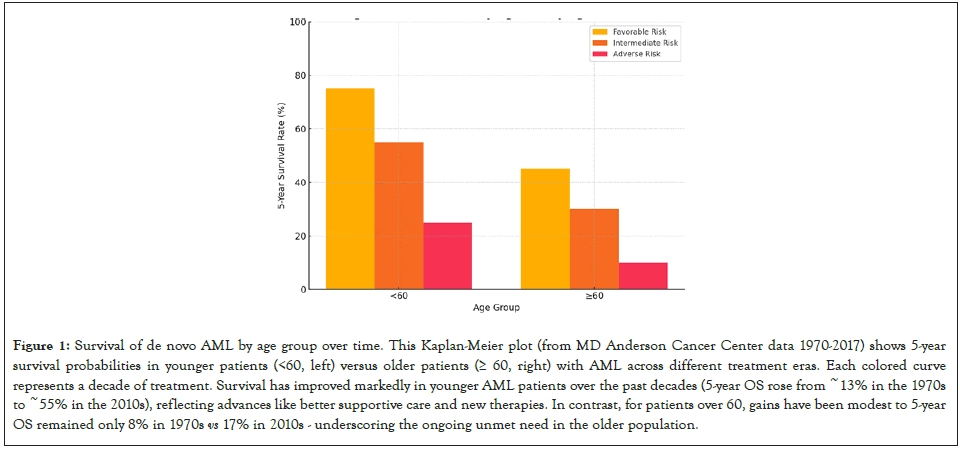
Figure 1: Survival of de novo AML by age group over time. This Kaplan-Meier plot (from MD Anderson Cancer Center data 1970-2017) shows 5-year survival probabilities in younger patients (<60, left) versus older patients (≥ 60, right) with AML across different treatment eras. Each colored curve represents a decade of treatment. Survival has improved markedly in younger AML patients over the past decades (5-year OS rose from ~13% in the 1970s to ~55% in the 2010s), reflecting advances like better supportive care and new therapies. In contrast, for patients over 60, gains have been modest to 5-year OS remained only 8% in 1970s vs 17% in 2010s - underscoring the ongoing unmet need in the older population.
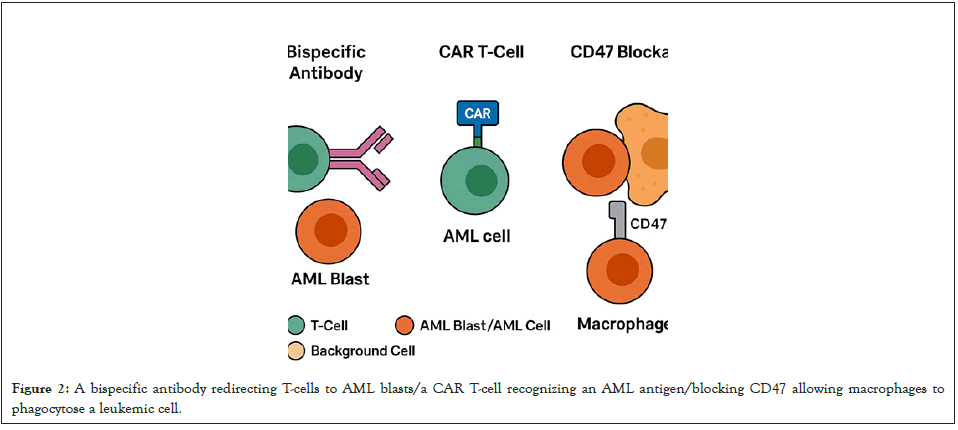
Figure 2: A bispecific antibody redirecting T-cells to AML blasts/a CAR T-cell recognizing an AML antigen/blocking CD47 allowing macrophages to phagocytose a leukemic cell.
Targeted therapies and novel agents
The term “targeted therapy” in AML refers to drugs that specifically inhibit oncogenic proteins or pathways, as opposed to non-specific cytotoxics. We’ve already touched on some: FLT3 inhibitors, IDH inhibitors, BCL-2 inhibitor (venetoclax), and others like hedgehog inhibitors. Here we give more detail on these and additional novel agents in development, including epigenetic therapies and pathway inhibitors.
FLT3 inhibitors: With FLT3 being one of the most common mutations in AML, multiple Tyrosine Kinase Inhibitors (TKIs) have been developed:
Midostaurin: A first-generation FLT3 inhibitor that, when added to induction and consolidation chemo in FLT3-mutant AML, improved overall survival (median OS 74.7 vs 25.6 months in RATIFY trial) and is now standard in newly diagnosed FLT3+ patients. Midostaurin is a broad kinase inhibitor (type I inhibitor, targets active and inactive FLT3).
Gilteritinib: A second-generation FLT3 inhibitor (type I) approved for relapsed/refractory FLT3-mutant AML based on the ADMIRAL trial, which showed superior survival vs salvage chemo (median OS ~9 vs 5 months) and a CR/CRi rate ~34%. Gilteritinib is now the preferred salvage monotherapy for FLT3+ relapses. It is being tested in combinations up front and in post-transplant maintenance.
Quizartinib: A second-generation, type II FLT3 inhibitor (binds only inactive FLT3) recently demonstrated an overall survival benefit when added to standard chemo in newly diagnosed FLT3-ITD AML (Quantum-First trial: 5-year OS ~50% vs 43%, HR 0.78). Quizartinib received FDA approval (2023) for FLT3-ITD positive AML in first remission (as continuation therapy after induction/consolidation). It had previously shown benefit in relapsed AML (Quantum-R trial). The drug’s notable toxicity is QT prolongation, but it’s generally manageable.
Crenolanib: Another FLT3 inhibitor (type I) tested in trials, including an ongoing phase III vs midostaurin in newly diagnosed patients. Not yet approved for AML, but it has activity against FLT3-TKD mutations as well.
Others: Lestaurtinib and sorafenib were earlier FLT3 inhibitors; sorafenib (a multi-kinase inhibitor) is sometimes used off-label in combination or maintenance, especially post-transplant FLT3^+ cases, with some evidence of improved relapse-free survival in FLT3-ITD AML post-transplant. New agents like FF-10101 (covalent FLT3 inhibitor) are in trials to overcome resistance like the F691 gatekeeper mutation.
Despite these advances, FLT3 inhibitors face resistance mechanisms - secondary FLT3 mutations (e.g., FLT3-D835 or F691) can emerge, as can parallel pathway activation (RAS/MAPK upregulation). Combination strategies (FLT3 inhibitor + HMA + venetoclax, or FLT3 inhibitor + novel signaling inhibitors) are being investigated to deepen and prolong remissions. FLT3 inhibitors are a clear example of how molecular knowledge (FLT3 mutation) has led to tangible improvements in AML outcomes.
IDH1/2 inhibitors
Ivosidenib (IDH1 inhibitor) and Enasidenib (IDH2 inhibitor) induce differentiation of leukemic cells by blocking the production of 2-HG. They were first approved for relapsed/refractory AML with IDH1 or IDH2 mutation, respectively, where they produce ~20-40% response rates (often differentiation syndrome as a side effect). More recently, ivosidenib was tested in the frontline setting: the AGILE trial combined ivosidenib + azacitidine for newly diagnosed IDH1-mutant AML and showed significantly improved event-free and overall survival versus azacitidine alone. This has led to approval of ivosidenib + HMA as an option for older IDH1-mutant patients. Enasidenib is likewise being combined with azacitidine in trials (IDH2 cohort). Although IDH inhibitors may not eradicate disease completely, they can achieve lasting remissions in a subset and can serve as a bridge to transplant. They have relatively mild toxicity (main risk is differentiation syndrome, manageable with steroids).
BCL-2 inhibitor (Venetoclax): Venetoclax’s impact on AML therapy, especially for unfit patients, has been paradigm-shifting. By neutralizing BCL-2, venetoclax primes AML cells for apoptosis. It’s used with low-dose chemo or HMAs as discussed, but also studied in combination with intensive chemo in fit patients and in high-risk subgroups. The major toxicities are myelosuppression and risk of tumor lysis (hence venetoclax is often given for 21-28 days per cycle in combination, with dose adjustments for drug interactions). Resistance to venetoclax can occur via upregulation of alternative anti-apoptotic proteins (like MCL1, BCL-XL) or other mechanisms. Trials are combining venetoclax with agents that inhibit those pathways (e.g., MCL1 inhibitors - though those are still early in development and have cardiac toxicity concerns).
Hedgehog pathway inhibitor (Glasdegib): Glasdegib targets the Smoothened receptor in the hedgehog signaling pathway, which is involved in stem cell self-renewal. A phase II trial (BRIGHT AML) found that adding glasdegib to low-dose cytarabine improved survival in older unfit AML (median OS 8.8 vs 4.9 months with LDAC alone). On that basis, glasdegib was approved. However, its use has been limited in practice since HMA + venetoclax showed much higher efficacy in the same population. Glasdegib may still have a role for patients who cannot tolerate venetoclax or as part of combination strategies (e.g., with intensive chemo in trials). Common side effects include dysgeusia (taste changes), muscle spasms and QT prolongation.
Menin inhibitors: A very exciting new class targets the menin-MLL interaction. Menin is a protein that helps MLL-fusion oncoproteins bind DNA and drive leukemogenesis; it also is required for the oncogenic activity of mutant NPM1. Menin inhibitors (e.g. SNDX-5613 (revumenib) and KO-539 (ziftomenib)) have shown notable activity in early trials for relapsed/refractory AML with MLL rearrangements or NPM1 mutations. Revumenib reported a ~30% CR/CRh (CR with partial hematologic recovery) rate in these patients, including some MRD-negative remissions, which is remarkable in refractory settings. These drugs cause differentiation of blasts; differentiation syndrome has been observed. Both agents have received FDA Breakthrough Therapy designation and are in ongoing phase II/III trials. If results hold, menin inhibitors could soon become standard for those molecular subsets, and potentially could be moved up to frontline (e.g., adding a menin inhibitor to induction for NPM1-mutant AML to reduce relapse).
Other epigenetic therapies: Beyond HMAs (azacitidine/ decitabine) and HDAC inhibitors (which have had limited AML success), there are novel agents:
PRC2/EZH2 inhibitors: Being tried in AML, especially those with epigenetic mutations.
LSD1 (KDM1A) inhibitors: Since LSD1 helps maintain the undifferentiated state of AML blasts, inhibiting it might induce differentiation. Some LSD1 inhibitors (iadademstat, tamibarotene in RARα-high AML, etc.) are in early trials.
Protein arginine methyltransferase 5 (PRMT5) inhibitors: For AML with spliceosome mutations (e.g., SRSF2), which are synthetically lethal with PRMT5 inhibition - an interesting precision therapy approach.
Histone methylation modifiers: DOT1L inhibitors (targeting MLL fusion leukemias) were tested but had modest efficacy.
RAS/MAPK Pathway Inhibitors: Since a substantial subset of AML have mutations activating RAS/MAPK (via FLT3, KIT, RAS, PTPN11, NF1, etc.), attempts to target downstream pathways are ongoing. MEK inhibitors (e.g., trametinib) have minimal single-agent activity but could synergize with other drugs. SYK inhibitors (entospletinib) and JAK inhibitors (ruxolitinib) were studied in certain AML subsets (like FLT3-WT monocytic AML and in combination with HMAs), but results were not practice- changing. An exception might be in Juvenile Myelomonocytic Leukemia (JMML, a RASopathy), where farnesyltransferase inhibitors or MEK inhibitors show promise. For adult AML, the approach is often to target the primary driver (FLT3, KIT) rather than downstream.
Novel agents for TP53-mutant AML: TP53-mutated AML is one of the hardest nuts to crack. APR-246 (Eprenetapopt), a molecule that aims to refold mutant p53 to restore its function, showed some activity in TP53-mutant MDS/AML in phase II (with high initial response rates when combined with azacitidine), but a phase III in TP53-mutant MDS was negative. Ongoing trials in TP53-mutant AML/MDS are testing APR-246 with azacitidine or with venetoclax. Another avenue is anti-CD47 (magrolimab) which we described - it had seemingly positive results in TP53 AML combined with azacitidine, making it a frontrunner if issues are resolved. Additionally, therapies like venetoclax have somewhat lower efficacy in TP53 AML, but still many TP53- mutant patients respond to HMA + venetoclax (though often short-lived remissions). Allogeneic transplant outcomes in TP53 AML are dismal (<10% long-term survival), so new treatments are desperately needed. Some newer immunotherapies, such as CD70-targeted agents (CD70 is highly expressed in TP53 AML) or others, are under investigation.
Maintenance therapy: Historically, AML (unlike ALL) did not include prolonged maintenance therapy after intensive treatment (except APL). However, recent data support maintenance in certain contexts. Oral azacitidine (CC-486) given as post- consolidation maintenance in older patients who achieved CR improved median overall survival (from 15 to 25 months compared to placebo) in a phase III trial. Oral azacitidine is now approved as maintenance for AML patients ≥ 55 in CR who are not proceeding to transplant. Some debates remain about its benefit in the modern era of HMA+venetoclax induction (since many will already have had HMAs). Other maintenance strategies include FLT3 inhibitors for FLT3^+ AML after chemo (the SORMAIN trial with sorafenib maintenance post-transplant showed improved survival, and gilteritinib is being tested in a similar setting). Gilteritinib maintenance post-transplant in FLT3 AML is an emerging standard if not contraindicated. Immunotherapy approaches like IL-2, WT1 vaccines, or DLI as maintenance have not entered routine use but are of research interest.
Radiopharmaceuticals and targeted radiation: Traditional external beam radiation has a limited role in AML (mainly for conditioning before transplant or treating isolated chloromas/ CNS leukemia). However, targeted delivery of radiation via radioisotope-labeled antibodies (radioimmunotherapy, RIT) is an innovative approach to selectively irradiate leukemia cells. One example, already discussed, is Iomab-B (^[131]I-anti- CD45). CD45 is expressed on nearly all leukocytes (including AML blasts) and on normal blood cells (except RBCs). Iomab-B delivers targeted radiation (iodine-131) to the bone marrow. The phase III SIERRA trial in relapsed/refractory older AML is testing Iomab-B followed by transplant vs. conventional care. Preliminary results from SIERRA are promising: Iomab-B enabled successful transplant in virtually all patients assigned to it, with high engraftment rates and acceptable safety. If SIERRA is positive, Iomab-B could become the first approved radioimmunotherapy for AML, specifically to bridge patients with active disease to transplant who otherwise could not achieve remission for transplant. This would be paradigm-changing for refractory AML in the elderly (e.g., patient with chemo-refractory AML in their 60s could receive Iomab-B, get transplanted, and potentially be cured).
Another approach is targeting CD33 with radioisotopes:^[225] Ac-lintuzumab, an anti-CD33 antibody labeled with actinium-225 (an alpha-particle emitter), has been studied in R/R AML. Alpha particles have high linear energy transfer and a very short path length, causing potent, localized cytotoxicity. Early-phase trials of Actinium-225 lintuzumab showed anti-leukemic activity even in heavily pretreated patients, though myelosuppression was significant (as expected, since normal myeloid progenitors express CD33). Actinium-225 is also being combined with reduced- intensity conditioning to serve a similar purpose to Iomab-B (targeting residual leukemia before transplant).
Other radioisotopes and targets:^[90]Yttrium and ^[188] Rhenium labeled anti-CD33 have been tried; ^[211] Astatine labeled anti-CD45 is in research. These are mostly in early trials or preclinical stages. The general concept is to use RIT either as part of conditioning (i.e., targeted radiotherapy in lieu of or in addition to TBI) or as standalone therapy in frail patients who cannot tolerate chemo. RIT can also potentially kill dormant LSCs in niches because radiation crossfire can cover areas that chemo might not penetrate.
One challenge is toxicity to normal marrow - but if the patient is heading to transplant anyway, ablation of marrow is permissible. Another challenge is dosimetry (ensuring organs like liver, which may capture some radioantibody, don’t get excessive radiation). In Iomab-B studies, personalized dosing based on desired marrow dose and liver constraint is done. RIT for AML is on the cusp of broader application, pending trial outcomes. Experts are optimistic that at least for transplant conditioning, an anti-CD45 antibody like Iomab-B could “propel further work to develop RIT- based treatments for AML”. The “crossfire” effect of beta emitters could help overcome issues of leukemia cell heterogeneity and distribution.
In terms of external beam radiotherapy, it is mainly used in specific scenarios:
CNS leukemia: Focal CNS radiation can be used for CNS disease refractory to intrathecal chemo, though nowadays intrathecal or systemic therapy is preferred to avoid late neurotoxicity.
Chloromas (isolated granulocytic sarcomas): Localized radiation can help control a myeloid sarcoma (e.g., spinal cord compression by a chloroma).
Total Body Irradiation (TBI): as part of myeloablative transplant conditioning (typically combined with high-dose cyclophosphamide or fludarabine). TBI at doses like 12 Gy is standard in some transplant protocols for AML in CR1, especially for younger patients. Higher doses of TBI (e.g., 15- 18 Gy) historically reduced relapses but had more toxicity. TBI is effective but contributes to long-term complications; hence, targeted radioimmunotherapy seeks to replace TBI with more specific radiation delivery.
Other small molecule pathway inhibitors: A few additional agents worth noting:
XPO1 inhibitor (Selinexor): A selective inhibitor of nuclear export (approved in myeloma) tested in R/R AML, modest single-agent activity but possible synergy with chemo or HMAs.
BRD4 inhibitor (BET inhibitors): Being studied to suppress c-Myc and other transcriptional programs in AML.
Proteasome inhibitors: Bortezomib have been added to some AML regimens (especially for AML with monocytic features) with limited success.
CXCR4 antagonists: Plerixafor used to mobilize blasts out of marrow and sensitize them to chemo, in trials as adjunct to induction.
Clinical trials and future directions
The therapeutic landscape in AML is dynamic, with numerous clinical trials exploring combinations of the aforementioned agents and entirely new therapies. As of early 2025, key ongoing trial areas include:
Triplet therapies for older AML: e.g., azacitidine + venetoclax plus a third drug such as magrolimab (NCT04435691) or mito (menin inhibitor) for molecular subsets. The goal is to further increase depth of remission in unfit patients.
Maintenance and MRD-directed therapy: Trials are assessing if targeted therapies (FLT3, IDH inhibitors) or immunotherapy (checkpoint inhibitors, vaccines) given as maintenance in MRD- positive remission can prolong survival. MRD-adapted approaches (intensifying therapy if MRD is detected post-consolidation) are being tested.
New immunotherapies: Several CAR-T and BiTE trials as noted (e.g., a CD33 CAR-T trial NCT03971799; CD123 CARs; CD33 x CLL1 dual CARs; AMG 673 (shorter half-life CD33 BiTE) trial, etc.). Also, NK cell therapies like FT538 (an off-the-shelf CAR-NK targeting various antigens) are in early phase for AML.
Targeting LSC vulnerabilities: Approaches like inhibiting amino acid metabolism (e.g., glutaminase inhibitors), or exploiting reactive oxygen species
The landscape of acute myelogenous leukemia management has evolved substantially, integrating decades of insight into disease biology with a new generation of targeted therapies. Clinicians now approach AML with refined risk stratification tools and an expanding armamentarium that extends beyond cytotoxic chemotherapy. Cure rates have improved in younger patients and specific genetic subtypes, yet outcomes in older adults and high-risk disease remain unsatisfactory. Ongoing clinical trials and research - including novel immunotherapies, precision medicines targeting molecular mutations and innovative conditioning regimens like radioimmunotherapy - offer hope that these gaps will continue to close. By staying abreast of these developments, practitioners can optimize individualized care for AML patients. In parallel, multidisciplinary supportive care and prompt referral to trials or transplant centers when appropriate ensure patients benefit from all available strategies. In summary, AML exemplifies how translational science can drive progress in a historically resistant cancer and continued research will be critical to further enhance survival and quality of life for affected patients.
Abhit Singh MD MHA is the Chief Medical Advisor of the WeHeal Foundation based out of Los Gatos, CA, USA- which is a patient-advocacy platform guiding patients to the most optimal therapies for their particular disease, including assisting folks with myeloid malignancies. The author declares no conflicts of interest. This review was exclusively enabled by the personal resources of the author.
The author declares no conflicts of interest.
Abhit Singh performed the literature search, analyzed data and wrote the manuscript. The author has approved the final version.
[Crossref] [Google Scholar] [PubMed]
[Crossref] [Google Scholar] [PubMed]
[Crossref] [Google Scholar] [PubMed]
[Crossref] [Google Scholar] [PubMed]
[Crossref] [Google Scholar] [PubMed]
[Crossref] [Google Scholar] [PubMed]
[Crossref] [Google Scholar] [PubMed]
[Crossref] [Google Scholar] [PubMed]
[Crossref] [Google Scholar] [PubMed]
[Crossref] [Google Scholar] [PubMed]
[Crossref] [Google Scholar] [PubMed]
[Crossref] [Google Scholar] [PubMed]
[Crossref] [Google Scholar] [PubMed]
[Crossref] [Google Scholar] [PubMed]
[Crossref] [Google Scholar] [PubMed]
[Crossref] [Google Scholar] [PubMed]
Citation: Singh A (2025). Acute Myelogenous Leukemia: Pathogenesis, Modern Therapies, and Future Directions. J Leuk. 13:444.
Received: 25-Apr-2025, Manuscript No. JLU-25-37375; Editor assigned: 28-Apr-2025, Pre QC No. JLU-25-37375 (PQ); Reviewed: 12-May-2025, QC No. JLU-25-37375; Revised: 12-May-2025, Manuscript No. JLU-25-37375 (R); Published: 26-May-2025 , DOI: 10.35248/2165-7556-25.13.444
Copyright: © 2025 Singh A. This is an open-access article distributed under the terms of the Creative Commons Attribution License, which permits unrestricted use, distribution and reproduction in any medium, provided the original author and source are credited.