
Cell & Developmental Biology
Open Access
ISSN: 2168-9296
ISSN: 2168-9296
Research Article - (2025)Volume 14, Issue 2
Background: People living with HIV have a greater prevalence of type 2 diabetes than the overall general population. This increasing occurrence can be attributed to a variety of causes, including the use of specific antiretroviral drugs, chronic metabolic dysfunction associated with HIV infection and lifestyle choices such as poor diet and physical inactivity. The growing number of people living with HIV and developing type 2 diabetes underscores the importance of identifying genetic factors that may influence the disease’s development. When blood glucose rises after a meal, the pancreas secretes insulin. Insulin then binds to its receptor causing translocation of GLUT4 from intracellular vesicles. This leads to blood glucose uptake into the cell's cytoplasm, inside the cell, glucose is converted to energy and stored as glycogen for future use. Dysregulation of this process may lead to insulin resistance and impaired glucose tolerance and ultimately cause type 2 diabetes.
Aim of the study: During the screening of the published data in a variety of journals, the review will encompass observational and molecular studies that explore the connection between GLUT4, risk factors for developing type 2 diabetes, HIV persons and prevalence. We will select studies published in English between now and January 2010, including research involving participants of every age, gender, race or stage of HIV infection.
Materials and methods: A comprehensive search will be conducted using exact search terms such as GLUT4 gene, polymorphism, type 2 diabetes, HIV, prevalence and risk factors. The method will include searching electronic databases such as PubMed, Embase, Google Scholar and Scopus to get articles for the study. The Prisma 2020 flow diagram will be utilized in the study to record screened articles, included articles and article identifications. Titles, abstracts and full-text publications will be evaluated for eligibility by two impartial reviewers and discrepancies will be settled by discussion. The quality of the studies such as case-control and cohorts will be done using the Newcastle-Ottawa scale based on the selection of study groups, compatibility of study groups and ascertaining the outcomes.
Conclusion: This systematic review procedure provides a structured framework for performing a complete examination of the literature on GLUT4 polymorphisms and T2D risk in HIV-positive persons, to improve our understanding of the genetic factors influencing metabolic problems in this population.
GLUT4 polymorphism; Type 2 diabetes; HIV; Prevalence; Risk factors
The confluence of HIV infection with metabolic diseases is a complex and developing issue in modern healthcare. Over the last few decades, as advances in Antiretroviral Therapy (ART) have resulted in higher survival rates among HIV patients, attention has shifted to the long-term effects of HIV and its treatment [1]. One such result is the increased prevalence of Type 2 Diabetes (T2D) among HIV-positive people. Historically, HIV was linked to wasting syndrome and cachexia, resulting in a paradoxical decline in the frequency of obesity and other metabolic disorders. However, the situation has changed with the introduction of ART, which has transformed HIV infection into a chronically controlled disease. While ART has increased the longevity of HIV-positive persons, it has also been associated with metabolic problems, including dyslipidemia, insulin resistance and T2D. The two main characteristics of Type 2 Diabetes Mellitus (T2DM) are insulin resistance and hyperglycemia, a chronic metabolic disease. With an estimated 400 million cases worldwide, it is a serious public health concern (Roglic and World Health Organization, 2022). In humans, the prevalence of T2DM is higher in People Living with HIV (PLHIV) as a result of additional risk factors, chronic inflammation and Antiretroviral Medication (ART) side effects [2].
Glucose Transporter Type 4 protein (GLUT4) is an essential transporter involved in glucose absorption in skeletal muscle, adipose tissue and the heart. SLC2A4 (GLUT4), a sugar transporter protein, is responsible for this absorption. It is insulin-controlled and alterations in its function may contribute to T2DM and insulin resistance. Several studies in the general population have connected the GLUT4 polymorphism to T2DM. The polymorphisms rs5435, rs5418 and rs222852 are discovered in the GLUT4 gene on chromosome 17q12-21. Changes in GLUT4 expression and function have been linked to certain polymorphisms, which could potentially play a role in developing T2DM. The Glucose Transporter 4 (GLUT4), a protein found largely in insulin-sensitive tissues such as adipose tissue and skeletal muscle, is critical to understanding glucose metabolism and insulin sensitivity. GLUT4 plays an important function in glucose homeostasis by promoting glucose absorption into cells in response to insulin signaling. Dysfunction of GLUT4-mediated glucose transport plays an important role in developing insulin resistance and type 2 diabetes [3].
Given the complex interplay between HIV infection, ART and metabolic dysregulation, there is an urgent need to understand the genetic basis of T2D vulnerability in HIV-positive people. Genetic differences in the GLUT4 gene (SLC2A4) have been linked to changes in glucose metabolism and insulin sensitivity in various ethnicities. However, the precise impact of GLUT4 polymorphisms on T2D risk in the context of HIV infection remains unknown.
Understanding how genetic differences in GLUT4 affect T2D susceptibility in HIV-positive populations is critical for various reasons. For starters, it can shed light on the molecular linkages between HIV infection, ART exposure and metabolic abnormalities, potentially leading to new avenues of management and prevention. Second, identifying genetic risk factors for T2D in HIV-positive patients may allow for the creation of tailored screening programs and targeted therapeutic interventions, ultimately improving clinical outcomes and quality of life for this vulnerable population.
In this systematic review protocol, we hope to synthesize available evidence on the link between GLUT4 transporter polymorphisms and the probability of developing T2D in HIVpositive people. By thoroughly reviewing the literature on this subject, we hope to increase our understanding of the genetic determinants of metabolic problems in HIV-infected people and inform strategies for reducing the burden of T2D in this setting [4].
Relationship between HIV infection and metabolic complications
HIV infection and treatment with Antiretroviral Therapy (ART) have converted HIV from a lethal sickness to a chronic, treatable condition; nonetheless, this transition has resulted in metabolic consequences such as insulin resistance and Type 2 diabetes. Before widespread ART usage, HIV-infected people were more likely to have wasting syndrome and malnutrition, which resulted in a reduced prevalence of obesity and related metabolic problems. However, some ART medicines, particularly protease inhibitors and nucleoside reverse transcriptase inhibitors, have been linked to dyslipidemia, insulin resistance and lipodystrophy by affecting lipid metabolism, mitochondrial function and adipocyte differentiation. HIV infection, even with effective ART, causes persistent inflammation and immunological activation, leading to the release of proinflammatory cytokines such as TNF-α and interleukin-6 (IL-6), which disrupts glucose homeostasis and exacerbates insulin resistance.
Pathophysiological mechanisms underlying T2DM
Insulin resistance is a defining feature of Type 2 Diabetes (T2D), in which target tissues such as skeletal muscle, liver and adipose tissue respond less to insulin-mediated glucose absorption and utilization. Insulin resistance causes compensatory hyperinsulinemia as pancreatic beta cells try to maintain normal glucose levels. Over time, however, beta cell malfunction and insufficient insulin secretion develop, resulting in hyperglycemia and type 2 diabetes. Impaired glucose transport into insulinsensitive tissues is central to the pathophysiology of type 2 diabetes. Glucose transporter proteins primarily mediate glucose absorption into cells, with GLUT4 being the major isoform responsible for insulin-stimulated glucose uptake in adipose tissue and skeletal muscle. The dysregulation of GLUT4 expression and translocation to the plasma membrane leads to insulin resistance and decreased glucose absorption, both of which are hallmarks of T2D [5].
Importance of GLUT4 in facilitating the uptake of glucose from blood
GLUT4 is a glucose transporter protein found mostly in insulinsensitive tissues such as adipose tissue and skeletal muscle. In response to insulin stimulation, GLUT4 is transported from intracellular vesicles to the plasma membrane, aiding in glucose uptake into cells. This mechanism maintains glucose homeostasis because it regulates postprandial glucose clearance and insulin sensitivity. The precise regulation of GLUT4 trafficking and activity is critical for optimal glucose metabolism. Dysregulation of GLUT4 expression or inefficient translocation to the plasma membrane can cause insulin resistance and glucose intolerance, which contributes to the development of type 2 diabetes.
Review of existing literature on GLUT 4 polymorphism and T2DM risk factors
Numerous research has looked into the relationship between genetic variants in the GLUT4 gene (SLC2A4) and the risk of T2D in non-HIV populations. Polymorphisms in the GLUT4 gene, including Single Nucleotide Polymorphisms (SNPs) and insertion or deletion variations, have been linked to altered glucose metabolism, insulin sensitivity and susceptibility to type 2 diabetes. Certain GLUT4 polymorphisms, for example, have been linked to altered GLUT4 expression levels, glucose absorption kinetics and insulin signaling pathways, all of which could influence T2D risk. However, the results of these investigations have been inconsistent, with some variations having significant relationships with T2D risk in specific populations but not in others. In the context of HIV infection, there has been little investigation into the impact of GLUT4 polymorphisms in regulating T2D vulnerability. Given the particular metabolic problems that HIV-positive patients encounter, including the impact of ART and chronic inflammation, it is critical to study whether genetic variants in GLUT4 contribute to T2D risk in this population. Understanding the genetic factors of T2D vulnerability in HIVpositive patients may offer insights into tailored approaches for prevention and management, ultimately enhancing clinical outcomes and quality of life for this vulnerable population [6].
Review questions
The review questions for this systematic review protocol are:
What is the influence of Glucose Transporter Type 4 (GLUT4) polymorphism on the onset of Type 2 Diabetes Mellitus (T2DM) in HIV-Positive individuals?
What are the main risk factors for the development of type 2 diabetes or its higher prevalence in Persons Living with HIV (PLWHIV) as opposed to those who do not have these risk factors? [7].
Inclusion criteria
This systematic review will include studies looking at how GLUT4 polymorphism affects the onset of type 2 diabetes in HIV-positive individuals. The following categories of research will be examined:
•Research that describes the association between GLUT4 polymorphism, the start of type 2 diabetes, risk factors and prevalence in HIV-positive individuals. These studies include cross-sectional, cohort and case-control studies.
•Molecular research examining the functional influence of GLUT4 polymorphism on T2DM and insulin resistance in people living with HIV.
•Research that examines the impact of GLUT4 polymorphismtargeting medications on the onset of type 2 diabetes in HIVpositive individuals.
Studies that demonstrate no correlation between GLUT4 polymorphism and the start of T2DM in PLHIV or those that concentrate on unrelated aspects of T2DM in PLHIV will not be included in our analysis. Additionally, studies that are not published in English or that are conference abstracts or unpublished data will not be included [8].
Guidelines for reviewing GLUT4, polymorphism, T2DM, HIV literature and risk factors
This systematic review protocol describes a comprehensive technique for synthesizing current literature on the complicated interrelationships between GLUT4 polymorphism, Type 2 Diabetes Mellitus (T2DM), HIV literature and associated risk factors. This review aims to elucidate the roles of GLUT4 in glucose metabolism, genetic polymorphisms in disease susceptibility and epidemiological factors contributing to T2DM and HIV/AIDS by employing a rigorous search strategy across multiple electronic databases and inclusion criteria that focus on relevant studies spanning from 2010-2023. This protocol aims to provide insights into the molecular mechanisms underlying type 2 diabetes in PLWHIV by systematically extracting, categorizing and synthesizing data from eligible studies. It will also inform future research directions, clinical practice and public health interventions aimed at mitigating the global burden. Furthermore, the methodology would include quality evaluation tools to ensure the reliability and validity of included papers were assessed, establishing the framework for evidence-based recommendations and possible meta-analyses to quantitatively quantify connections and highlight knowledge gaps that needed to be addressed.
The evaluation of the study quality is critical for assuring the reliability and validity of systematic reviews and meta-analyses. Several technologies will be used for this goal, with each one customized to various study designs and biases retrieved. The Newcastle-Ottawa Scale (NOS) will be used to assess the quality of non-randomized research, including cohort and case-control studies. The study will evaluate the major criteria such as research group selection, group comparability and result determination, assigning stars to each category to indicate the study's overall quality. The Cochrane risk of bias tool will also be used in Randomized Controlled Trials (RCTs). This tool investigates several types of potential bias, including random sequence creation, allocation concealment, blinding, inadequate outcome data and selective reporting. Additionally, observational research, such as cohort and cross-sectional designs, will be assessed using specialized quality tools. These tools will evaluate study design, sample representativeness, exposure and outcome assessment, control for confounding variables and statistical analyses. By using these quality evaluation techniques systematically, the independent reviewers will assure methodological rigor and reliability when synthesizing information to inform healthcare decisions and policy recommendations [9].
Prism 2020 flow chart is seen in Figure 1.

Figure 1: Adopted from McKenzie et al 2021.
Newcastle Ottawa scale
When evaluating the quality of articles for inclusion in the systematic review, the study will establish research comparability, which is crucial to ensuring the findings' integrity and validity. The Newcastle-Ottawa Scale (NOS) is a valuable tool for evaluating the methodological quality of case-control and cohort studies. The NOS considers various study design aspects, including group selection, group comparability and outcome evaluation. The reviewers will consistently use the NOS criteria to assess the extent to which studies have reduced potential biases and confounding factors, improving comparability among included papers. Furthermore, by using identical criteria for evaluating study quality, such as adherence to the stated methodology and rigorous data-gathering procedures, the review will ensure that the selected studies have equivalent methodological rigor and trustworthiness. This comprehensive approach to quality assessment will assist in laying the groundwork for synthesizing information and generating meaningful conclusions about the link between GLUT4 polymorphisms, type 2 diabetes risk and HIV infection [10].
•Articles will be rated based on achieving four stars, this will include exposure, if the study utilized cohort or cross-sectional and control selection or case-control methods.
•The study's comparability based on 2 stars, will be assessed by adjusting for major confounders such as age, obesity, smoking, alcohol, cholesterol, exercise, nutrition, SNPs and hypertension.
•The outcome and exposure will be examined on achieving 3 stars. The appropriateness of outcomes from articles should contain the following: GLUT 4 polymorphism, risk factors, incidence and prevalence of type 2 diabetes. Exposure will include GLUT4 polymorphism, HIV infection, demographic and clinical variables and metabolic factors.
Proposed scoring system
When evaluating the quality of publications for inclusion in a systematic review, it is critical to guarantee comparability across different types of research and populations. Given the wide diversity of study designs and populations used to investigate GLUT4 polymorphisms, Type 2 Diabetes (T2DM) risk factors and prevalence, a systematic strategy for assessing comparability is required. Cross-sectional studies shed light on the prevalence and relationships between GLUT4 polymorphisms and T2DM in various populations, allowing for the investigation of prevalence rates and potential risk factors. Cohort studies provide longitudinal data on the incidence of T2DM in HIVpositive and HIV-negative persons, allowing for the examination of temporal correlations and probable causality. Molecular investigations provide insights into the genetic pathways that underpin T2DM risk, specifically the existence of GLUT4 polymorphisms and their relationship with illness outcomes. Case-control studies enable the comparison of GLUT4 polymorphism rates in HIV-positive and non-HIV populations, as well as in people with and without T2DM.
Given the different groups involved, which include HIV-positive and non-HIV persons, as well as those with and without T2DM, comparability will be evaluated using demographic and clinical characteristics such as age, gender, race/ethnicity and comorbidities. Furthermore, exposure variables such as GLUT4 polymorphisms, HIV infection status and metabolic parameters will be thoroughly assessed for consistency between trials. Outcome metrics, such as the relationship between GLUT4 polymorphisms and T2DM risk, incidence and prevalence rates among HIV-positive people, will be rigorously examined to guarantee consistency across studies. The systematic review intends to provide a thorough synthesis of the literature by adopting standardized criteria and methodology for evaluating study quality and comparability. This will enhance our understanding of the association between GLUT4 polymorphisms, T2DM risk factors and prevalence among HIV positive and non-HIV populations. In summary, the study will look for the following:
Type of studies: GLUT4 polymorphism, type 2 diabetes, risk factors and prevalence of type 2 diabetes. Studies include crosssectional, cohort, molecular and case-control.
Population: HIV-positive and non-HIV, type 2 diabetes and nondiabetes individuals.
Exposure: Presence of GLUT4 polymorphism, HIV infection, demographic and clinical factors, metabolic factors.
Outcome: Studies reporting on the association of GLUT 4 polymorphism and T2DM and or risk factors, incidence and prevalence of type 2 diabetes in HIV persons [11].
Scoring system
Table 1 shows scoring system from different articles.
| S.no | Authors | Study design | Selection | Comparability | Outcome |
| 1. | Longo, et al., 2019 | CS/P | **** | ** | ** |
| 2. | Kusari, et al., 1991 | CS/Analytical | **** | ** | * |
| 3. | Tucker et al., 2017 | Molecular | **** | ** | *** |
| 4. | Frasco, et al., 2014 | Prospective cohort | **** | ** | *** |
| 5. | Xi, et al., 2012 | CS analytical | **** | * | *** |
| 6. | Bodhini, et al., 2011 | CS analytical | **** | ** | *** |
| 7. | Nair, et al., 2010 | Case-control | **** | ** | * |
| 8. | Mayer, et al., 2018 | Retrospective cohort | **** | ** | * |
| 9. | Correa-Giannella, et al., 2013 | Molecular | *** | ** | *** |
| 10. | Kampmann, et al., 2011 | CS analytical | *** | ** | *** |
| 11. | Bratt, et al., 2021 | Prospective cohort | *** | ** | *** |
| 12. | Belay, et al., 2021 | Systematic review | ** | ** | *** |
| 13. | Abebe, et al., 2016 | CS | *** | ** | ** |
| 14. | Monroe, et al., 2014 | Systematic review | ** | ** | *** |
| 15. | Eshete, et al., 2015 | Systematic review | ** | ** | *** |
| 16. | Khan, et al., 2019 | Retrospective observation study | ** | ** | *** |
| 17. | Garvey, et al., 1998 | molecular | *** | ** | *** |
| 18. | Hulgan, 2018 | Systematic review | ** | * | ** |
| 19. | Ledergerber, et al., 2007 | PC | ** | ** | *** |
| 20. | Samad, et al., 2017 | Retrospective cohort | *** | ** | *** |
| 21. | Fiseha, et al., 2019 | CS | **** | ** | *** |
| 22. | Frank B Hu, 2011 | Article | ** | ** | *** |
| 23. | Huang, et al., 2007 | Systematic review | ** | ** | *** |
| 24. | Favaretto, et al., 2014 | Molecular | ** | ** | *** |
| 25. | Mohan, et al., 2010 | Molecular | ** | ** | *** |
| 26. | Yu, et al., 2022 | CS and analytical | **** | ** | *** |
| 27. | Isa, et al., 2016 | Cohort | **** | ** | *** |
| 28. | Ban, et al., 2010 | Molecular | ** | ** | *** |
| 29. | Cassenote, et al., 2021 | Cohort | **** | ** | *** |
| 30. | Paengsai, et al., 2018 | Retrospective cohort | **** | ** | *** |
| 31. | Prioreschi et al., 2016 | Systematic revie | ** | ** | *** |
| 32. | de Wit, et al., 2008 | Prospective observation | **** | ** | *** |
| 33. | Hsu, et al., 2021 | Longitudinal cohort study | **** | ** | *** |
| 34. | Han, et al., 2019 | Observational cohort | **** | ** | *** |
| 35. | Kalra, et al., 2011 | Review | ** | ** | *** |
| 36. | Karnieli, et al., 2008 | Article | ** | ** | *** |
| 37. | Katoh, et al., 2019 | Molecular | * | * | ** |
| 38. | Labhardt et al., 2017 | Cross-sectional | **** | ** | *** |
| 39. | Husain, et al., 2017 | Systematic review | ** | ** | *** |
| 40. | Wand, et al., 2007 | Cohort | **** | ** | *** |
| 41. | Jerico, et al., 2005 | Cross-sectional | **** | ** | *** |
| 42. | Esteves, et al., 2016 | Molecular | *** | ** | *** |
| 43. | Yan, et al., 2014 | Molecular | **** | ** | ** |
| 44. | Solaimani, et al., 2014 | Molecular | ** | ** | *** |
| 45. | Li, et al., 2019 | Cohort | **** | ** | *** |
| 46. | Mohan, et al., 2010 | CS analytical | **** | ** | *** |
| 47. | Choi, et al., 1991 | Molecular | **** | ** | *** |
| 48. | WHO, 2020 | Article | ** | ** | *** |
| 49. | Chimbetete, et al., 2017 | Retrospective cohort | **** | ** | *** |
| 50. | Laukkanen, et al., 2006 | Molecular | *** | ** | *** |
| 51. | Frasco, et al., 2014 | Prospective cohort | **** | ** | *** |
| 52. | Carlson, et al., 2002 | Cross-sectional analytical | **** | ** | *** |
| 53. | Nsakashalo-Senkwe, et al., 2011 | Cross-sectional | **** | ** | *** |
| 54. | Duncan, et al., 2018 | Cross-sectional | **** | ** | *** |
| 55. | Mobasseri, et al., 2020 | Systematic review | ** | ** | *** |
| 56. | Njuguna, et al., 2018 | Systematic review | ** | ** | *** |
| 57. | Ye, et al., 2020 | Cohort | **** | ** | *** |
| 58. | Watson, et al., 2004 | Review article | ** | ** | *** |
| 59. | Leto, et al., 2012 | Review article | ** | ** | *** |
| 60. | Tiozzo, et al., 2021 | Cross-sectional analytical | **** | ** | *** |
| 61. | Alcolado, et al., 1992 | Molecular | **** | ** | *** |
| 62. | Samaras, et al., 2008 | Cohort | **** | ** | *** |
| 63. | Rasmussen, et al., 2012 | Cohort | **** | ** | *** |
| 64. | Lin, et al., 2018 | Observational cohort | **** | ** | *** |
| 65. | Kadam, et al., 2010 | Article | * | * | * |
| 66. | Shankalala, et al., 2017 | CS | **** | ** | *** |
| 67. | Hasse et al., 2022 | Cohort | **** | ** | *** |
| 68. | Bresciani, et al., 2019 | Molecular | ** | ** | *** |
| 69. | Zyriax, et al., 2013 | CS | **** | ** | *** |
| 70. | Li, et al., 2000 | CS analytical | **** | ** | *** |
| 71. | Klip, et al., 2019 | Review article | ** | ** | *** |
| 72. | Tripathi, et al., 2014 | Cohort | **** | ** | *** |
| 73. | Labhardt, et al., 2017 | CS | **** | ** | *** |
| 74. | Garrib, et al., 2019 | Review article | ** | ** | *** |
| 75. | Zimmermann, et al., 2018 | Review article | ** | ** | *** |
| 76. | Masenga, et al., 2019 | CS | **** | ** | *** |
| 77. | WHO, 2019 | Review article | ** | ** | *** |
| 78. | Fiseha T and Belete A G (2019) | CS | **** | ** | *** |
| 79. | Bodhini, et al., 2011 | Cohort | **** | ** | *** |
| 80. | Nair AK, et al., 2010 | Case-control | **** | ** | *** |
| 81. | Kouznetsov, et al., 2017 | Review article | ** | ** | *** |
Table 1: Shows quality assurance data from selected articles.
LR search engines
Literature Review (LR) search engines are extremely useful in the early stages of doing systematic literature reviews or metaanalyses on a variety of academic subjects. These specialized platforms are powerful tools for rapidly sifting through enormous collections of scholarly material across multiple fields. LR search engines, which use complex algorithms and comprehensive databases, allow researchers to systematically find, access and retrieve relevant scientific material related to their research questions. In essence, they act as virtual portals to the richness of information contained in academic publications, journals, conference proceedings and other intellectual sources. LR search engines enable researchers to navigate the complex world of academic literature by accelerating the search process and giving advanced search functions including Boolean operators, filters and citation tracking.
The suggested search strategy takes a methodical approach to identifying relevant literature across several databases and repositories. PubMed, Web of Science, Scopus, Cochrane and Google Scholar are the primary databases to be searched, assuring complete coverage of peer-reviewed papers, conference proceedings and grey literature. Studies will be included or excluded depending on preset eligibility criteria such as publication date, study design, language and relevance to the research topic. Keywords and search phrases will be carefully chosen to reflect the breadth and depth of the study area, including terminology relating to the research objectives, population, interventions, comparisons, Outcomes (PICO), synonyms and variations. Specific search filters, such as publication type, study design and geographic area, will be used to refine search results and enhance relevance.
The databases for this literature review were carefully chosen based on various criteria, including coverage, accessibility and relevance to the research issue. PubMed was chosen due to its comprehensive coverage of biomedical literature, which includes a diverse spectrum of peer-reviewed publications and clinical studies relevant to the study issue. Web of Science and Scopus were chosen because they provide broad coverage across numerous disciplines, making it easier to retrieve scholarly literature from various academic domains. Furthermore, Google Scholar was used to acquire grey literature, conference proceedings and non-traditional sources, broadening the scope of the literature search. While each database offers unique advantages in terms of coverage and accessibility, they also bring significant drawbacks such as the possibility of publication bias, varied indexing procedures and the inclusion of non-peerreviewed sources. However, by deliberately merging different databases, we hope to reduce these limitations while increasing the comprehensiveness and relevance of the literature collected, which aligns nicely with the review's objectives of synthesizing existing evidence and informing evidence-based practice in the field.
Types of data to collect
Following a detailed literature analysis, several forms of data will be gathered and documented to ensure a thorough grasp of the research landscape. First, bibliographic information such as author names, publication titles, journal names, publication years and Digital Object Identifiers (DOIs) will be captured to aid in appropriate citation and referencing. In addition, significant study features such as study design, sample size, participant demographics, intervention details, outcome measures and major findings will be retrieved to assess the quality and relevance of the included studies. Furthermore, data on methodological issues such as study limits, biases and confounding variables will be documented to objectively assess the strength of the evidence. Any conflicts or inconsistencies between research will be carefully documented for future review. Furthermore, additional information such as funding sources, conflicts of interest and ethical issues will be gathered to ensure transparency and integrity in the assessment process. By gathering and arranging these many data sources systematically, we hope to produce a comprehensive synthesis of the existing literature, fill research gaps and give significant insights for future studies and evidence-based decision-making in the area.
Relationship between literature review retrieved and GLUT 4 polymorphism, T2DM, HIV, risk factors and prevalence studies
The link between literature review findings and the GLUT4 polymorphism, Type 2 Diabetes Mellitus (T2DM), HIV, risk factors and prevalence studies is complex and important for understanding the complex interplay of genetic predisposition, disease susceptibility and environmental variables. The literature on the GLUT4 polymorphism gives insights into the genetic differences related to glucose metabolism, which may influence an individual's vulnerability to T2DM. Furthermore, studies looking into the link between T2DM and HIV shed insight into the complex relationship between the two disorders, as HIV infection might exacerbate insulin resistance and raise the risk of diabetes. Furthermore, comprehensive literature evaluations that include risk factors for both T2DM and HIV, such as lifestyle, socioeconomic position and access to healthcare, provide useful insights into disease genesis and progression.
Furthermore, prevalence studies provide critical epidemiological data for determining the burden of T2DM and HIV in specific populations and identifying at-risk groups for targeted interventions. Integrating data from literature studies across these categories is critical for improving our understanding of the complicated etiology and epidemiology of T2DM and HIV, which will ultimately impact prevention, diagnosis and management methods.
Data for meta-analysis in STATA
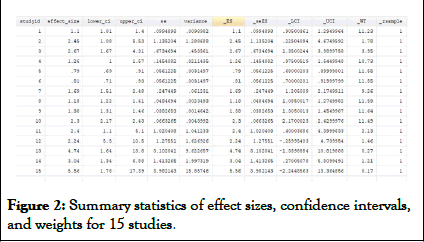
Figure 2: Summary statistics of effect sizes, confidence intervals, and weights for 15 studies

Figure 3: Forest plot of 15 studies showing effect estimates (exp(b)), 95% confidence intervals, and weights under a random-effects model.
Interpretation of meta-analysis
For example: Study 1 shows an effect size of 1.1 with ci of 1.01 to 1.4, suggesting a positive effect (increased risk).
Study 5 shows an effect size of 0.79 with a ci of 0.69 to 0.91, suggesting a negative effect (reduced risk).
Overall, the diamond indicates an overall significant positive effect.
Heterogeneity: I² (96.6%, p<0.000001), indicates high heterogeneity, suggesting a significant heterogeneity among studies.
Applications of the protocol
The protocol will make the scientific community understand how genetic variants, specifically the GLUT 4 gene, contribute to the development of T2DM in HIVpositive people. This protocol will also provide insights into the molecular mechanisms by which GLUT 4 polymorphisms affect diabetes risk and allow the evaluation of nonrandomized research. The protocol will be valid, repeatable and easy to follow. It also incorporates assessments into the interpretation of meta-analytic results.
This protocol for a systematic review describes an organized strategy to investigate the relationship between GLUT4 polymorphisms and the likelihood of developing Type 2 Diabetes Mellitus (T2DM) in people living with HIV. By consolidating current literature from 2010 to 2023, we hope to gain a better knowledge of the genetic variables that contribute to metabolic problems in PLHIV, with a particular emphasis on the role of GLUT4 in glucose metabolism and insulin sensitivity. We want to uncover observational and molecular studies that elucidate the molecular pathways behind T2DM susceptibility in this susceptible population using a comprehensive search strategy spanning several electronic databases and rigorous inclusion criteria. The comprehensive evaluation of study quality using known techniques such as the Newcastle-Ottawa Scale and the cochrane risk of bias tool will ensure that the included studies are methodologically rigorous and reliable. By systematically extracting, categorizing and synthesizing data from eligible studies, this protocol aims to provide valuable insights into the molecular links between HIV infection, GLUT4 polymorphisms and T2DM risk, ultimately informing future research directions, clinical practice and public health interventions aimed at mitigating the global burden of metabolic diseases in PLHIV.
[Crossref] [Google Scholar] [PubMed]
[Crossref] [Google Scholar] [PubMed]
[Crossref] [Google Scholar] [PubMed]
[Crossref] [Google Scholar] [PubMed]
[Crossref] [Google Scholar] [PubMed]
[Crossref] [Google Scholar] [PubMed]
[Crossref] [Google Scholar] [PubMed]
[Crossref] [Google Scholar] [PubMed]
[Crossref] [Google Scholar] [PubMed]
Citation: John CL, Mercy WM, Sody M, Kalungia A, Kamanga B, Muzandu K, et al. (2025) A Systematic Protocol for Reviewing and Publishing Papers on the GLUT4 Transporters Polymorphism Influence on the Onset of Type 2 Diabetes in HIV-Positive Persons. Cell Dev Biol. 14:391.
Received: 01-Aug-2024, Manuscript No. cdb-24-33301; Editor assigned: 06-Aug-2024, Pre QC No. cdb-24-33301 (PQ); Reviewed: 20-Aug-2024, QC No. cdb-24-33301; Revised: 11-Apr-2025, Manuscript No. cdb-24-33301 (R); Published: 18-Apr-2025 , DOI: 10.35248/2168-9296.25.14.391
Copyright: © 2025 John CL. This is an open-access article distributed under the terms of the Creative Commons Attribution License, which permits unrestricted use, distribution and reproduction in any medium, provided the original author and source are credited.