
Journal of Clinical & Experimental Dermatology Research
Open Access
ISSN: 2155-9554
ISSN: 2155-9554
Clinical image - (2019)Volume 10, Issue 6
A 70-year-old man with no notable medical history presented to our department with a huge tumor on his pubic area that had been evolving for over 20 years causing itching and foul smelling discharge. Physical examination revealed a cauliflower-like voluminous tumor on the patient’s pubis with extension to the penoscrotal area and the lower abdomen (Figure 1).
A 70-year-old man with no notable medical history presented to our department with a huge tumor on his pubic area that had been evolving for over 20 years causing itching and foul smelling discharge. Physical examination revealed a cauliflower-like voluminous tumor on the patient’s pubis with extension to the penoscrotal area and the lower abdomen (Figure 1). A giant condyloma acuminate was suspected and extensive surgical excision was performed. Histopathological examination revealed hyperkeratosis, acanthosis, marked papillomatosis and koilocytes; confirming the diagnosis of Buschke-Löwenstein tumor (Figure 2). There were no features of malignant transformation [1-3].
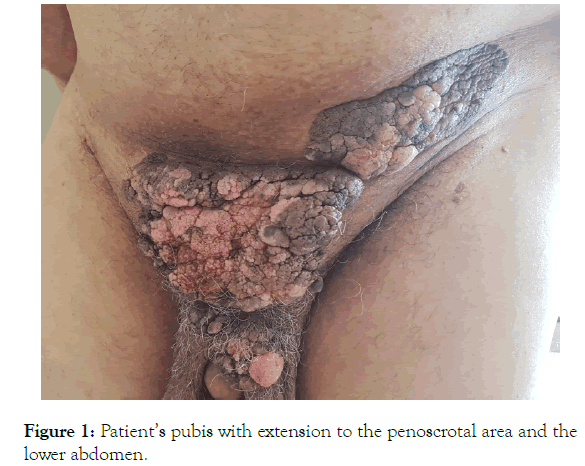
Figure 1. Patient’s pubis with extension to the penoscrotal area and the lower abdomen.
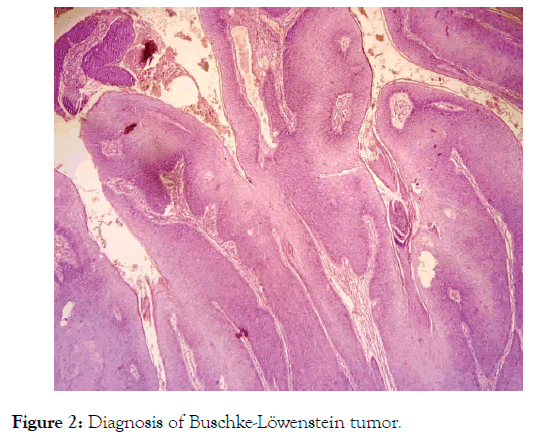
Figure 2. Diagnosis of Buschke-Löwenstein tumor.
Buschke-Löwenstein tumor or giant condyloma acuminatum is a rare sexually transmitted disease, caused by human papillomavirus; genotypes 6 and 11 in most cases. It’s incidence of about 0.1% in the general population, predominantly young men. Clinically it presents as a large, cauliflower-like tumor with papillomatous or verrucous surface. Radical excision of the entire lesion with histopathological examination of the whole lesions is recommended to confirm the diagnosis and detect a malignant transformation. Post-operative surveillance is necessary to identify potential recurrences [4,5].
Nil.
The authors declare that they have no competing interest.
Citation: Mai S, Baya S, Maouni S, Znati K, Hafidi J, Abbassi A, et al (2019). A Giant Buschke-Löwenstein Tumor. J Clin Exp Dermatol Res. 10: 512. DOI: 10.35248/2155-9554.19.10.512
Received: 01-Nov-2019 Accepted: 14-Nov-2019 Published: 20-Nov-2019
Copyright: © 2019 Mai S, et al. This is an open-access article distributed under the terms of the Creative Commons Attribution License, which permits unrestricted use, distribution, and reproduction in any medium, provided the original author and source are credited.