
International Journal of Advancements in Technology
Open Access
ISSN: 0976-4860
ISSN: 0976-4860
Research Article - (2025)Volume 16, Issue 2
The exponential growth of data has transformed information into a vital asset, driving innovation and strategic decision-making. This paper explores the profound impact of data analytics on education, emphasizing its role in enhancing teaching, learning and institutional operations. By leveraging predictive modelling, educational institutions can make informed decisions, improve performance and optimize processes. The shift from print to digital literacy is crucial, necessitating the creation, maintenance and secure management of extensive digital databases. While data analytics presents challenges such as data digitization and long-term investment, its benefits in decision-making, efficiency and cost-effectiveness are undeniable. The integration of data analytics in Electronic Theses and Dissertations (ETDs) has revolutionized data management, enabled, automated, accurate analysis and fostered a collaborative research environment. This paper examines the life cycle of analytics, highlighting its stages from data preparation to AI-driven predictions. The application of analytics in ETDs allows for efficient data processing, retrojection studies and algorithmic historiography, leading to insightful, transparent and unbiased research outcomes. However, the adoption of analytics requires careful consideration of consistency, technical challenges and ethical standards. Despite these hurdles, the potential of analytics to transform educational research and institutional strategies is immense. As we transition into the fourth industrial revolution, characterized by AI and big data, the strategic use of analytics in ETDs is paramount for future readiness and innovation.
This paper underscores the necessity for educational institutions to embrace data analytics, outlining the benefits, challenges and strategic importance of this transformative tool in navigating contemporary educational and research landscapes.
Data analytics; ETDs; Algorithmic historiography
Information is the new gold and how we exploit this treasure trove will define the prosperity of our future. The process of churning out information from data and transforming it in to insights that further enhance decision making and consequently impacts results. That is the power of analytics. It is an automated scientific method of making sense out of data harvested over a period of time and matching it against complex problems of our times and bring out smart solutions swiftly and accurately. In short, Analytics helps achieve business objectives by analysing both structured and unstructured data to create predictive models for forecasting and optimizing business processes for enhanced performance. The outcome is intertwined with simulation, optimization, probability and statistics. This in turn cascades into making informed decisions and strategies, enhances operations, designs better policies, procedure and guidelines and much more. When powered by the electronic form, it breathes life into formulas and brings the future right to our doorsteps (Figure 1).
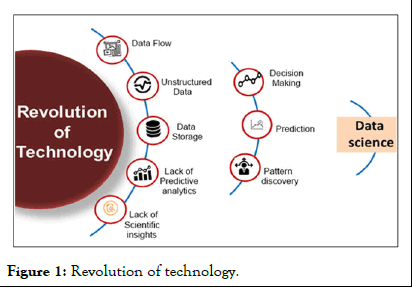
Figure 1: Revolution of technology.
The emergence of data analytics in education has profoundly impacted the traditional way of teaching, learning and achieving. It has brought in creativity in learning and has infused excitement and hunger to know and do more. Understanding the mammoth power analytics has to transform any challenge in to opportunity by exploring new possibilities [1]. A simple example is the experience we have gained during the pandemic and the possibility of analysing trends collected during the period to make wiser and informed decisions especially in the field of online classes and create methods of evaluation and assessment as in the form of research documents submitted by learners right at the primary level of education. Educational institutions have acknowledged the power of analytics by leveraging predictive modelling, which has had a huge impact on not only what the institution teaches but also on how the institution works.
At the senior level of education, the recent breakthroughs in the domain of commerce, medicine, agriculture and health, powered by data analytics has helped researches come up with brilliant ideas and varied accurate solutions to make life more comfortable and healthier.
Acknowledging this abundant potency and accuracy that analytic can offer, educational institutions across the globe have embraced this opportunity to learn how to implement analytics effectively inside their own structures and have harvested ground breaking returns in record time. With this strategy, institutes have encouraged creation of predictive models to recognize potential risk of failure and to bring in timely interventions that not only augments the rate of success drastically but also boosts the learning experience. In short, analytics brings in higher efficiency, elevated decisiveness in decision making, greater insight in minute anomalies and a better perception of the problem with a dependable prediction of the future [2].
Like all scientific methods, analytics too has its side effect. It predicts human behaviour to the extent that it undermines the potency of change, brings in bias and profiles humans into successful and the rest. Our endeavour therefore is to tread cautiously with calculated risk and focus on the great good of society. Our effort in this article therefore is to take an objective view of analytics and the repercussion of adopting it as a tool for ETDs (Electronic Theses and Dissertations) (Figure 2).
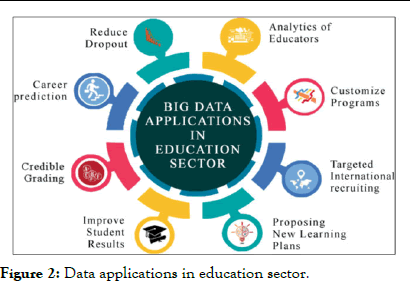
Figure 2: Data applications in education sector.
The life cycle of analytics
Analytics hinges on the need to collect data over a period. But today the need of the hour is to shift from print to digital literacy. In other words, solving problems electronically, using analytics calls for the creation, indexing, classification, data structuring, updating and maintenance of a massive digital bank consisting of a universal, approved research content infrastructure. Making this database available, sustainable, accessible, authentic, measurable, manageable and secure is THE challenge of our times (Figure 3).
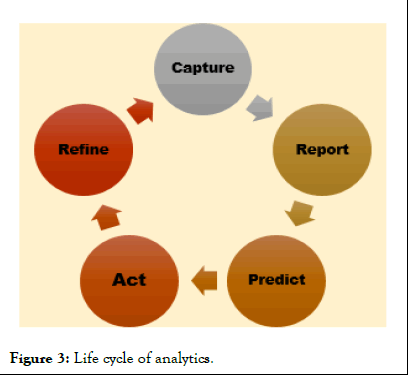
Figure 3: Life cycle of analytics.
Further, for the solution to be cost effective and efficient it has also to have capabilities such that it is easy to use, quickly accessible and monitored for non-repudiation. A usage policy for both the researcher and the writers needs to be in place to protect authenticity and their rights. Here the use of Artificial Intelligence would be of immense help. As it would identify copyright infringements quickly and efficiently. And would help in taking remedial action.
Studying electronic data using analytics has been quite a journey. Investing in such an infrastructure today, is an absolute necessity for any organization or country to take that quantum leap into the future.
Earlier the focus of gathering data hinged on descriptive behaviour type. That is to say popularity, performance and the monitory perspective. But that has further evolved with the anvil of AI and ML, into predictive and prescriptive analytics which is shifting ground zero from the here and now to the future. Thus, optimizing and preparing for the journey beyond the curve. Hence shifting from vision to reality is quite a task and needs immense effort, dedication and support from all and sundry and especially in the field of ETDs [3].
Many organizations are investing and developing a vision for data-led value creation as they see the opportunity and significance of real-time analytics, artificial intelligence and big data in navigating through the current crisis brought in by the pandemic. It is lucrative both from a monitory and innovation perspective and is in vogue for business across the spectrum of society. Another reason to strengthen our focus on using this effective tool for ETDs.
Challenges of leaning towards analytics in ETDS
Analytics in ETDs has to do a lot with data management. The primary task is to focus on how to shift from a manual to an automated from of efficient data management; what we call digitalization of data. With the large amount of data still in physical print form, converting it to electronic would be tedious, error prone, time consuming and very expensive.
Further, this stream of work needs a long-term plan and a longterm dedication from a team of specialist who are fluent in their task and have an end goal in mind. And are willing to walk the extra mile. Such an activity requires robust financial backing as it is an investment, which organizations are apprehensive in coming to a decision, based on the impeding financial crunch lurking in our backyard.
Next set of granular challenges for ETD analytics includes overly focused on external compliance-creating statistical reports to satisfy operational, regulatory or statutory compliance. Whereas the exercise should be focused on supporting strategic, data-driven decision making. From past experiences, most of the ETD analytical study is isolated and confined to a certain agenda of a department. This limits the reach, potency and impact of the study. Thus, diluting the value of the work done. And gets lost among the pages of the research papers piled up in our libraries.
Consequences of using analytics in ETD
Analytics is a field of computer science that uses math, statistics and machine learning to find meaningful patterns in data. Analytics or data analytics involves sifting through massive data sets to discover, interpret and share new insights and knowledge. Analytics allows professionals to make sense of the information data provides. Data analytics helps individuals and organizations make sense of data. Data analysts typically analyse raw data for insights and trends. They use various tools and techniques to help organizations make decisions and succeed. In short analytics is the process of storing, organizing and analysing information. These functions help organizations explore and use data to enable profitable and efficient decision-making. They also help in collaboration and interoperability by breaking down technical and organizational silos to better collaborate, share information, gain insights from data and ultimately collectively achieve greater impact on the challenges and opportunities of our time [4].
Hence if academical institution aspire to venture in to the future, armed with better numbers that is backed with historical evidence, then analytics is the route to reach there. This not only brings in speed and precision but also simplifies the decision-making process and is immensely cost effective in the long run.
Further, adopting analytics in ETDs is focused on future oriented writing. And future oriented writing is used to encourage discussion, inspire thinking, explore imagination and challenge the status quo to consider various views of chaos in relation to strategic planning. It is a systematic methodology that harnesses chaos and creativity in reaching towards sustainable solutions that are thought out of the box.
But what if you ignore the technicalities and look at the stories backed by data? global enterprises used their learning analytics platform to improve, adapt and transform areas of their business in very different circumstances. From responding to a crisis situation to demonstrating tangible results, all of these scenarios have one thing in common: Informed decisions were made from the stories told by learning ecosystem data. Informed decisionmaking is the key guiding force that successful industries vouch for when they adopted analytics. The same could become our guiding force for ETDs.
Analytics enables a global enterprise to pivot, respond and flourish in a crisis scenario. It helps to spot exceptional content (good and bad) using data, the lessons learned and how to adapt and streamline your learning design as a result. It helps organizations decipher what tangible; Real-world insights look like in action. And gives you the power of seeing your learning and performance data through a single lens. It highlights the areas of the ecosystem that is being used and segregates the areas that are performing from those that are not. That is informed decision making powered by analytics [5].
How can analytics be a catalyst for ETDS
Analytics works on a principal component call artificial intelligence that is coupled with machine learning which is the core tool that does all the processing and churning of data and suggest models to work with and possibilities to choose from. Analytics has a reputation of being complex and challenging but the outcome is worth the effort.
This is very evident from what we seem in the field of commerce where artificial intelligence has conquered almost every industry. In the coming years emerging technologies will be based strongly rooted in AI. Machine learning, especially deep learning, which is the most important aspect of artificial intelligence, is used from AI-powered recommender systems (Chatbots) as in the case of ChatGpt and Search engines that are ever evolving in giving accurate feedback.
A learning analytics platform typically collects your learning ecosystem data and turns it into insights that inform customers about our learning and business strategy. These data-driven insights are broadly grouped by learner analytics, learning content analytics and learning program analytics. And once we have invested in them, we will wonder how we ever made decisions that weren't informed by data. But for most organizations, a learning analytics platform is a new system. And while you may be absorbed by the vision, you may need a little impetus from the stake holders in shift to this effective and efficient tool that has become a success story for many startups today.
Foundation of data analytics
The pillars of data science are domain knowledge, math and statistics skills, computer science, communication and visualization. Each is essential for the success of any data analytical process. This is furthered dependent on the four steps of data analytics the process of data analysis or alternately, data analysis steps, involves gathering all the information, processing it, exploring the data and using it to find patterns and other insights. But domain knowledge is critical to understanding and making sense of the reports generated from the processed data. And hence needs experts to both run the system and to interpret the output.
In this article we suggest four types of analytics that we can use to drive decision making; descriptive analytics, which tell us what has already happened; diagnostic analytics that is focused on the cause, predictive analytics, which show us what could happen and finally, prescriptive analytics, which informs us about what should happen in the future if we adopted a set of mitigation steps.
We can further split the process into its life stages, including creation, testing, processing, consumption and reuse. These stages are mapped out in the data analytics life cycle for professionals working on data analytics initiatives. Each stage has its significance and characteristics.
We have data preparation stage that covers data design, experiments, formulating business problems. Followed by data analytics though storytelling and visualization of data through dashboards. This leads us to the stage of machine learning algorithms where both structure and unstructured data is clustered and classified. This process is also called data mining, using data mining tools. And finally, predictions are made reading anomalous behaviour using AI simulation [6].
Referring back to the four main types of data analytics: Descriptive which means describe big data in a simple interpretation or to figure out what happed to the data through graphs and charts representation. The question asked here is what happened. Large quantity of data is crunched into charts and patters that describe the event. Diagnostic data analysis tries to answer the question why a certain event happened. The tools used here use drill down and corelation methods. The goal is to find the root cause. Predictive analytics is more complex and tries to interpret data from a future perspective. It is a complex process where in a variety of statistical techniques from data mining, predictive modelling, machine learning and artificial intelligence are used to analyse current and historical facts and make predictions about future or otherwise unknown events. And finally prescriptive analysis tries to answer the question how can we make it happen to drive desired outcomes to a goal or how can we accelerate results. In short, prescriptive analysis makes use of machine learning to help businesses decide a course of action based on a computer program’s predictions.
This is the foundation of any data analytic venture. Applying the same for ETDs hence can bring in immense profits in the form of corelations and suggestions from the field of research and exploration [7].
Algorithmic historiography for ETDS
Applying this process to the data harvested from ETDs, one can envision a library of electronically collected thesis and dissertations from across the country and world at large. This data is first classified, electronic file formatting is done for easy data extraction. Data is then harmonized and tagged to maintain its uniqueness, identity and source. This data is then converted to graph and charts, now ready for interpretation from specialist. Retrojection studies are conducted to understand the cause of the event or the point of origination, backed by facts. Looking at the moment and the speed or spread of the event a prediction is made using algorithms and controls are put in place to monitor and modify its evolution and course of action.
Right through this journey, the participants or specialist will design goals and break up the process into smaller iterations to achieve the set final goal. Using these predictive data models and algorithms, they will derive data from time to time and deduce them in to insights for further processing.
The advantage of electronically storing the process data and its outcomes brings in a lot of saving of time, human effort and financial spending. Preservers the authenticity of the research process and most of all keeps the data transparent and unbiased. And making the findings available all in one place. This helps in data comparison from a geographical, demographical or time period perspective. We could add many more dimensions to it, as the data is rich and can be interpreted and elucidated according to the scope and structure of the study. This process helps in identifying gaps both in the collected data and in the study methodology, thus helping in finetuning the end results and better alignment with the goal of the study (Figure 4) [8].
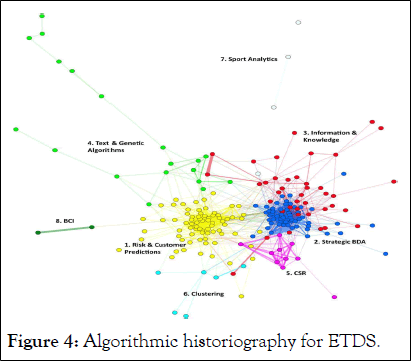
Figure 4: Algorithmic historiography for ETDS.
Key points of caution while deliberating on adopting analytics of ETDS
Maintaining the same understanding of nomenclatures and keywords used in the exercise is paramount for correct interpretation of data and to reach accurate results. Secondly consistency and dedication from both the researchers and investor is very important for the program to succeed. Next, data formatting, file formatting and other technical glitches needs to be foreseen and provision for; proper data backup and sync is needed to keep the data updated, authentic and relevant. An objective review of data collection is required to avoid underrepresentation of specific data sources. Key performance indicators and key risk indictors need to be defined and signed off at the beginning of the exercise. What constitutes an actionable insight and its measurable impact needs to be defined and evolved as the research progresses. Openness of the participants to adopt and adapt to the fast-changing technological advances is required for a better faster and more accurate study. Cross functional bridging of research process and outcomes is required to be considered with similar studies carried out at other universities or countries. And finally, ethics is paramount to avoid biased views and practices. This process also entails respecting intellectual property rights and formulas of authors and organizations to avoid litigations and stalling of promising programs.
While the industrial revolution was seen as a watershed moment in the history of the capitalist world, it has been debated that the material forces of production have since undergone several industrial iterations. If the first industrial revolution was characterized by the development of steam power and mechanization and the second industrial revolution was marked by the electrification of production while the third industrial evolution was identified by the computerization and automation of production. Then the current wave of technological development that involves the development of advanced networked automation technologies comprised of cyber-physical systems, internet of things, artificial intelligence, big data and cloud computing, is transitioning to the fourth industrial revolution powered by Analytics. Hence the need to become part of this movement and to make ourselves fit for the future, especially from the point of view of aptly using analytics for ETDs.
Citation: Mathew S (2025) Unleashing the Power of Data: Transforming Academics and Research with Analytics. Int J Adv Technol. 16:346.
Received: 25-Jun-2024, Manuscript No. ijoat-24-32325; Editor assigned: 28-Jun-2024, Pre QC No. ijoat-24-32325 (PQ); Reviewed: 12-Jul-2024, QC No. ijoat-24-32325; Revised: 09-Apr-2025, Manuscript No. ijoat-24-32325 (R); Published: 16-Apr-2025 , DOI: 10.35841/0976-4860.25.16.346
Copyright: © 2025 Mathew S. This is an open-access article distributed under the terms of the Creative Commons Attribution License, which permits unrestricted use, distribution and reproduction in any medium, provided the original author and source are credited.