jct
Open Access
ISSN: 2161-0495
ISSN: 2161-0495
Short Communication - (2025)Volume 15, Issue 5
Metal phosphides (aluminum or zinc) are fumigant used in agricultural communities for the purpose of killing insects and small rodents in crops containers. Poisoning by these substances in humans is a life threatening condition that is seen in rural areas in many developing countries. Most victims are young people who take them for the purpose of committing suicide. The prognosis is determined by many factors such as the ingested dose and timing of presentation to medical care. The treatment aims at removing the substance from the gastrointestinal tract and supportive measures including provision in critical care units in many instances. No antidote is available and mortality can approach 100% in severe cases. Shock and metabolic acidosis are signs of a poor prognosis.
When placed in a crop container metal phosphides interact with water vapor from the atmosphere and release a gas called Phosphine (H3P). It exerts its toxic effect on the insects mainly by poisoning mitochondria[1]. When ingested by humans and animals the reaction with water and hydrochloric acid in the stomach release the phosphine gas which is rapidly absorbed into the circulation resulting a shocky state with lactic acidosis and multiorgan failure [1]. Physicians practicing in Northwestern Syria (NW) recently reported improved survival with the introduction of early hemodialysis in the management of metal phosphide poisoning. An analysis of 11 cases of critically ill patients encountered between July 2022 and June 2023 who were treated with early conventional hemodialysis in addition to usual care suggested a beneficial survival advantage. Ten of these patients (91%) were in shock and their mean arterial pH at presentation was 7.23+/-SD .11. Nine patients survived (mortality rate of 18%). This mortality rate is lower compared to similar cases reported in the literature where it exceeds 50% [2].
While these findings are suggestive of a favorable response to early dialytic intervention the data had many limitations including the small number of subjects, the retrospective nature of the study, lack of a historic control group, poor quality of the medical records system and lack of some essential laboratory tests availability such as the measurement of lactic acid level in some instances. The diagnosis in all cases was based on clinical criteria, testing for co-intake of other substances was rarely available.
The indications for dialysis and other forms of extracorporeal therapies in poisoning are detailed elsewhere. Dialysis is potentially beneficial when certain conditions are met. The exposure has serious morbid and mortal consequences, the toxicity could not be reversed by an antidote or measures that prevent absorption and enhance elimination. A large volume of distribution of the substance and a high endogenous clearance make extracorporeal therapies relatively ineffective. High protein affinity and high molecular weight of the substance require extracorporeal methods other than conventional hemodialysis [3].
In the case of phosphine some of these conditions such as the grave prognosis in severe poisoning, lack of adequate antidote and low molecular weight of the phosphine gas meet these conditions. It is not clear however if other conditions including low protein binding and low volume of distribution are met in phosphine poisoning. Another potential benefit of dialysis here may stem from facilitating the aggressive management of lactic acidosis [4].
The context of limited resources, ongoing conflict and sanctions imposed on Syria interfered with the ability to perform additional mechanistic and confirmatory studies. We were able however, to show that phosphine is present in the dialysate of patients treated by hemodialysis. We performed the silver nitrate test (meant originally to be done on gastric aspirate for the diagnosis of metal phosphide poisoning) on the dialysate of subsequent patients dialyzed for the management of aluminum phosphide poisoning and patients dialyzed for the management of End Stage Kidney Disease (ESKD) [5]. The test was positive in all the poisoned patients and negative on all the ESKD patients. These findings do not confirm benefit mainly because the volume of distribution of phosphine is not known as shown in Table 1 and Figure 1.
| Date | Diagnosis | Age | Sex | Minute* | Outcome | Result |
|---|---|---|---|---|---|---|
| 8/20/23 | ESKD | 44 | F | 30 | survival | Negative |
| 8/20/23 | ESKD | 60 | F | 45 | survival | Negative |
| 8/29/23 | ESKD | 31 | M | 30 | survival | Negative |
| 8/29/23 | Pre-dialysis fluid | NA | NA | 0 | NA | Negative |
| 8/15/23 | Poisoned | 25 | M | 50 | survival | positive |
| 8/29/23 | Poisoned | 19 | F | 60 | Death | positive |
| 9/7/23 | Poisoned | 32 | M | 33 | survival | positive |
| 9/13/23 | Poisoned | 27 | M | 48 | survival | positive |
Table 1: Results of the silver nitrate test on the dialysate.
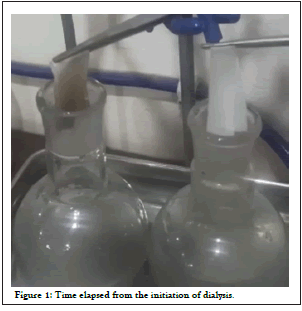
Figure 1: Time elapsed from the initiation of dialysis.
The authors propose that kinetic tests on the volume of distribution of phosphine and quantitative dialyzability of the gas be performed at specialized laboratories. We also propose conducting a randomized clinical trials testing the hypothesis that hemodialysis in this context is beneficial.
None.
None of the authors report any conflict of interest.
Citation: Sekkarie M (2025). Hemodialysis in Metal Phosphide Poisoning. J Clin Toxicol. 15:560.
Received: 22-Oct-2025, Manuscript No. JCT-25-38857; Editor assigned: 24-Oct-2025, Pre QC No. JCT-25-38857 (PQ); Reviewed: 07-Nov-2025, QC No. JCT-25-38857; Revised: 13-Nov-2025, Manuscript No. JCT-25-38857 (R); Published: 20-Nov-2025 , DOI: 10.35248/2475-3181.25.15.607
Copyright: © 2025 Sekkarie M. This is an open-access article distributed under the terms of the Creative Commons Attribution License, which permits unrestricted use, distribution, and reproduction in any medium, provided the original author and source are credited.