Endocrinology & Metabolic Syndrome
Open Access
ISSN: 2161-1017
ISSN: 2161-1017
Research Article - (2025)Volume 14, Issue 1
In recent years, riboflavin has garnered extensive attention in the field of research on maintaining sperm quality and fertility. However, a comprehensive understanding and prediction of future development trends in this area are still relatively lacking. This study employs bibliometric methods to provide a macroscopic review of the relevant research, aiming to reveal the current state, hotspots and evolutionary trends of the field. The study is based on the Web of Science core collection database, retrieving documents from 1944 to 2024 and utilizes Cite space (version 5.7.R7), VOS viewer (version 1.6.18.0) and an online bibliometric analysis platform for quantitative and visual analysis. Through in-depth analysis of this study, we have constructed a knowledge map of the relevant research, identifying the development history, knowledge structure, research hotspots and potential trends in the field. The research covers 265 articles published in 161 journals by 1,365 authors from 427 institutions across 55 countries, which have been cited 7,794 times. This study provides new perspectives and data support for understanding the role of riboflavin in reproductive health. With the rise of personalized medicine and precision nutrition, as well as the integration of interdisciplinary technologies, future research will focus more on the individualized application of riboflavin and the comprehensive influence of social environmental factors. This will not only help to develop more effective intervention strategies to improve global fertility health but also lay the foundation for the continuous development and innovative breakthroughs in this field.
Riboflavin; Sperm quality; Bibliometrics; Male fertility; Interdisciplinary fertility research
Riboflavin, also known as vitamin B2, is an essential micronutrient that plays a fundamental role in numerous biochemical processes. It serves as a direct precursor to Flavin Mononucleotide (FMN) and Flavin Adenine Dinucleotide (FAD), which are coenzymes crucial for redox reactions and energy metabolism. Beyond its established function in the citric acid cycle, riboflavin is also vital for maintaining cellular respiration, amino acid synthesis and DNA repair. Its antioxidant properties contribute to the prevention of oxidative damage and the preservation of cellular integrity. Moreover, research into its role in reproductive functions has revealed its key impact on the fertility of both males and females particularly in the maturation and vitality of sperm. Although the precise mechanisms by which riboflavin influences gene expression related to sperm development require further investigation, its antioxidant capacity is believed to protect sperm from the effects of oxidative stress, a common factor contributing to male infertility [1].
The decline in male sperm quality has garnered widespread concern in recent years, with multiple studies consistently reporting a downward trend in sperm count, motility and morphology over the past decades. This trend is considered the result of multiple factors, including lifestyle factors, environmental exposures and genetic predispositions. For instance, sedentary behavior, poor dietary habits, smoking and alcohol consumption are lifestyle factors associated with the decline in sperm quality. Environmental exposures, such as endocrine disruptors, heavy metals and pesticides, are also linked to spermatogenesis disruption and sperm DNA damage. Additionally, obesity, increased stress levels and the aging of the male population contribute to the deterioration of sperm quality.
The decline in sperm quality is a complex and interrelated issue involving epigenetic changes, oxidative stress and inflammation. Oxidative stress is considered a key factor as it leads to sperm DNA breaks and reduced sperm motility. Furthermore, the proliferation of electronic devices and the consequent increase in electromagnetic radiation exposure is another emerging issue affecting sperm quality.
The potential impact on global fertility rates and reproductive health highlights the severity of this issue. As the trend of declining sperm quality continues, there is an urgent need to identify modifiable factors and interventions to mitigate this trend. In this context, riboflavin emerges as a promising candidate due to its potential in supporting sperm quality and enhancing fertility. Preliminary studies indicate that riboflavin can counteract some of the negative effects of oxidative stress and improve sperm parameters offering a glimmer of hope for addressing this pressing issue. However, our understanding of how riboflavin specifically maintains sperm quality and enhances fertility is still in its infancy and its mechanisms of action in the reproductive field are complex, necessitating further research to uncover its impact on reproductive health and fertility [2].
This study employs bibliometric methods to conduct a comprehensive review of academic literature on riboflavin in the field of reproductive health and fertility. Through quantitative analysis and the construction of a knowledge map, this study aims to reveal research trends, core themes and the trajectory of knowledge evolution in this field. This not only provides a macro academic context for the field but also offers references for future research directions and innovation points.
Data sources
This bibliometric study is based on literature searches from the core collection of the Web of Science database, focusing solely on the Science Citation Index Expanded (SCI-Expanded) and the Social Sciences Citation Index (SSCI) databases.
Search strategy
The search method employed was "(TS=(Riboflavin) or TS=(Vitamin B2)) or (TS=(Vitamin G)) and (TS=(sperm))", with a search time span from 1944 to the present and the final search date was August 13, 2024 (Table 1).
| Item | Description |
| Study type | Bibliometric study |
| Database source | Web of Science |
| Databases used | Science Citation Index Expanded (SCI-Expanded), Social Sciences Citation Index (SSCI) |
| Search subjects | (TS=(Riboflavin) or TS=(Vitamin B2)) or (TS=(Vitamin G)) and (TS=(sperm)) |
| Time interval | 1944 to present |
| Last search date | 45517 |
Table 1: Search strategy of this study.
Research methods
This study selected the Web of Science (WoS) as the primary platform for data collection and statistical analysis, grounded in an in-depth literature review that has identified the continuous development of the field of research on riboflavin's role in maintaining sperm quality and enhancing fertility since 1944. Therefore, we established the time frame from 1944 to 2024 for our study, comprehensively covering 80 years of research evolution. Leveraging the powerful capabilities of the WOS database, we successfully identified and filtered relevant academic literature from this period.
To thoroughly explore the main trends, core domain shifts and emerging research hotspots in the field of riboflavin's role in maintaining sperm quality and enhancing fertility, this study employed multidimensional analysis methods, including countries, research institutions, authors, publication sources and keywords. The collected data were subjected to descriptive statistical analysis using Excel software to ensure the accuracy and reliability of the data. Additionally, all bibliographic entries were integrated into the WOS tagged results list and underwent meticulous statistical processing [3].
To further deepen the literature analysis, all obtained and cited literature were stored in plain text (txt) format and analyzed indepth using the complementary software tools VOS viewer and Cite space, as well as the free online bibliometric analysis website https://bibliometric.com/com/, to construct a knowledge map of the research on riboflavin's role in maintaining sperm quality and enhancing fertility. Furthermore, Scimago Graphica was utilized for the visualization of countries and regions. Through these methods, we not only revealed the current state of development in this field of research but also predicted its future trends, providing the academic community with valuable insights and data support. The methodology and analytical framework of this study comply with the standards of the Science Citation Index (SCI), ensuring the professionalism and academic rigor of the research.
Global trends in citations and publications
A total of 265 articles were retrieved and after deduplication and exclusion of retracted publications, 259 articles were found to be suitable for analysis using bibliometric tools. Among them, 250 were experimental papers (94.34%) and 9 were review papers (5.66%). Research in this field has become increasingly active since the year 1996 (Figure 1A). The total citation count for these articles is 7,794, with an average citation rate of 29.41 per article and an h-index of 45 (Figure 1B). Although China started its research in this area later than other countries, it has developed rapidly in recent years (Figure 2A). There is close collaboration between Iran, China, the United States and Spain. It is noteworthy that Turkey's research on the impact of riboflavin on sperm is essentially conducted independently (Figure 2B). Additionally, Figure 2 suggests the importance of international cooperation in promoting research on the role of riboflavin in maintaining sperm quality and improving fertility. Such cooperation is instrumental in tackling complex scientific issues and fostering the collaborative development of global scientific research [4].
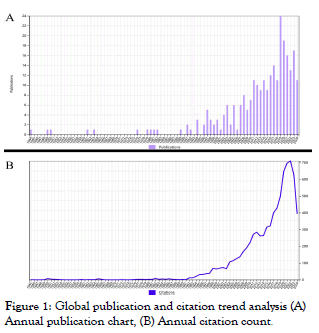
Figure 1: Global publication and citation trend analysis (A) Annual publication chart, (B) Annual citation count.

Figure 2: Analysis of articles from different countries (A) Number of articles per year, (B) Collaboration among countries.
Contributions by countries/regions
The field of research on the impact of riboflavin on sperm quality and fertility exhibits a dynamic and diverse global landscape. The research contributions from countries like Iran, China, the United States and Italy not only reflect their respective scientific strengths and unique characteristics but also highlight the complexity of global scientific cooperation and competition.
Iran tops the list with the highest number of publications, 41, yet its average citations per article (18.07) are not the highest. This could be related to the specific areas of research, methodologies employed or limitations in international collaborations. Iranian research is concentrated on the fundamental biological effects of riboflavin, offering important foundational data for understanding its role in reproductive health.
China's research has experienced rapid growth, with 26 publications and a total of 338 citations, indicating that its research is progressively gaining international recognition. This growth is attributed to national policy support and scientific investment in the field of reproductive health, particularly in clinical applications and population studies [5].
The United States demonstrates its substantial research depth in this area with 23 publications and an average citation rate of 52.04 per article. U.S. research excels in basic science and technological innovation, closely linked to its strong research infrastructure, funding support and an interdisciplinary research environment.
Italy stands out with an average citation rate of 57.89 per article, reflecting the high quality and depth of its research. Italian studies, with a special focus on the molecular mechanisms of riboflavin's impact on sperm quality and clinical applications, are widely recognized in the international academic community for their innovation and scientific rigor.
The visualization map in Figure 3 reveals the collaboration network among countries, with frequent partnerships observed between China, Iran and the United States, which have facilitated the exchange of knowledge and the blending of research methodologies. Although Italy is less involved in international collaborations, its high citation rate indicates that Italian research has made significant breakthroughs in specific areas.

Figure 3: Visualization map.
Note: In this study, 19 countries with 5 or more publications were visualized using VOS viewer and Scimago, Graphica. In the map, the size of the circular nodes indicates the volume of publications per country, the thickness of the connecting lines represents the strength of collaboration between two countries (thicker lines signify more frequent collaborative publications) and nodes of different colors represent distinct clusters.
The scientific achievements of these countries are the result of a combination of factors, including research capabilities, policy support, international cooperation and research innovation. Future research should continue to optimize these factors, strengthen international collaboration, promote resource sharing and focus on enhancing the depth and quality of research to drive sustained development and innovative breakthroughs in this field.
The global research endeavor not only provides valuable data for understanding the role of riboflavin in reproductive health but also offers a platform for cooperation and exchange within the global scientific community. Through international cooperation and academic exchange, we can better comprehend the role of riboflavin in reproductive health and how to apply this knowledge to improve human fertility health. This collective scientific effort will help us address challenges in the field of reproductive health and contribute to the well-being of humanity. Moreover, by deeply analyzing the motivations and characteristics of research from various countries, we can discover the potential and opportunities for global scientific cooperation, as well as the creation and innovation of knowledge within different cultural and scientific systems. This not only promotes the accumulation of scientific knowledge but also exemplifies the diversity and inclusivity in global scientific research.
Institutional productivity and co-authorship analysis
Institutional productivity is a key metric for measuring the contribution of research institutions within a specific academic field. According to Table 2, the University of Tehran (Univ Tehran) in Iran leads with 10 publications in the field of riboflavin's impact on sperm quality and fertility, accumulating a total of 224 citations, with an average of 22.40 citations per publication. This indicates that the University of Tehran not only excels in output quantity but also demonstrates significant academic influence [6].
Rank |
Country |
Documents |
Citations |
Average citation/Publication |
1 |
Iran |
41 |
741 |
18.07 |
2 |
China |
26 |
338 |
13 |
3 |
USA |
23 |
1197 |
52.04 |
4 |
Brazil |
19 |
315 |
16.58 |
5 |
Italy |
18 |
1042 |
57.89 |
6 |
Turkey |
17 |
470 |
27.65 |
7 |
Egypt |
15 |
405 |
27 |
8 |
India |
13 |
317 |
24.38 |
9 |
Poland |
13 |
169 |
13 |
10 |
Spain |
11 |
1320 |
120 |
Table 2: Top ten countries by publication volume.
The Islamic Azad University (Islamic Azad Univ) ranks second, with 8 publications and a total of 123 citations, averaging 15.38 citations per publication. This reflects the stable output and scholarly contributions of the Islamic Azad University in this domain.
Following closely is Firat University (Firat Univ) in Turkey, with 6 publications and a notably high total of 251 citations, averaging 41.83 citations per publication, which reflects the high recognition and impact of Firat University's research within the academic community.
Table 2 also reveals that although the University of Milan (Univ Milan) in Italy ranks only ninth in terms of publication volume, its average citations per publication reach 19.50, indicating highquality research that has garnered widespread attention and recognition in academia.
Figure 4 presents a visualization of the collaboration network among 86 institutions with two or more publications, analyzed using VOS viewer software. In the visualization, the size of the nodes represents the number of publications by an institution, while the thickness of the lines between nodes indicates the strength of collaboration between them. This visualization allows us to observe patterns of cooperation and clusters among different institutions.
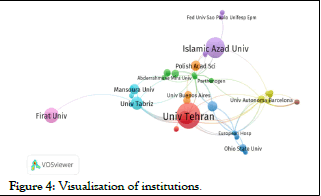
Figure 4: Visualization of institutions.
Note: A visualization analysis was conducted using VOS viewer on 86 institutions with two or more publications, generating a visualization map where the size of the circular nodes corresponds to the number of publications per institution. The thickness of the lines connecting the nodes indicates the degree of collaboration between institutions (thicker lines signify stronger collaboration). Nodes of different colors represent different clusters, with a total of 9 clusters displayed in the figure.
Notably, the University of Tehran and the Islamic Azad University, as two major research institutions in Iran, exhibit close collaboration in the diagram, a result of geographical proximity and resource sharing. Additionally, the diagram reveals the existence of multiple clusters, each representing a group of institutions with shared interests and collaborations on specific research topics.
In summary, the analysis of Table 2 and Figure 4 shows that the institutional productivity and co-authorship in the field of riboflavin's impact on sperm quality and fertility are characterized by diversity and internationalization. Iranian research institutions stand out in this area, while the University of Milan is particularly noted for its high-quality research. Collaboration between institutions plays a significant role in advancing scientific progress and knowledge innovation and future research should continue to strengthen international cooperation to further develop this field [7].
Author productivity and co-authorship analysis
Analyzing the authors of scholarly literature can help identify key research focuses and pivotal scholars within a specific domain. According to Price's law, half of the publications are typically authored by a group of prolific writers, which is roughly equivalent to the square root of all authors, a principle known as Lotka's law. In this study, we utilized VOS viewer for visualizing authors, with the maximum number of publications by a single author being three. Consequently, authors with two publications (inclusive of two) are considered core authors in this research, totaling ninety (Table 3).
Table 4 presents the top ten authors by publication volume in this field of study. Among them, Castellini, C, Dal Bosco, A and Lattaioli, P share the top rank with three publications each and their average citation count per publication reached 39, indicating that their research is not only productive but also highly influential in academia. Their research focuses on specific areas of riboflavin's impact on sperm quality and fertility, involving the biological effects of riboflavin, nutritional supplementation and reproductive health.
| Rank | Institutions | Documents | Citations | Average Citation/Publication |
| 1 | Univ Tehran | 10 | 224 | 22.4 |
| 2 | Islamic Azad Univ | 8 | 123 | 15.38 |
| 3 | Firat Univ | 6 | 251 | 41.83 |
| 4 | Acecr | 5 | 50 | 10 |
| 5 | Univ Tabriz | 5 | 178 | 35.6 |
| 6 | Mansoura Univ | 4 | 88 | 22 |
| 7 | Polish Acad Sci | 4 | 101 | 25.25 |
| 8 | Tarbiat Modares Univ | 4 | 92 | 23 |
| 9 | Univ Milan | 4 | 78 | 19.5 |
| 10 | Dsm Nutr Prod | 3 | 18 | 6 |
Table 3: Top ten countries by publication volume.
| Rank | Autor | Documents | Citations | Average citation/Publication |
| 1 | Castellini C | 3 | 117 | 39 |
| 2 | Dal Bosco A | 3 | 117 | 39 |
| 3 | Lattaioli P | 3 | 117 | 39 |
| 4 | Kohram Hamid | 3 | 107 | 35.67 |
| 5 | Sharideh Hossein | 3 | 107 | 35.67 |
| 6 | Zhandi Mandi | 3 | 87 | 29 |
| 7 | Sharafi Mohsen | 3 | 74 | 24.67 |
| 8 | Ferrero S | 2 | 491 | 245.5 |
| 9 | Greco E | 2 | 491 | 245.5 |
| 10 | Iacobelli M | 2 | 491 | 245.5 |
Table 4: Top ten authors by publication volume.
Authors Kohram, Hamid and Sharideh, Hossein rank second with three publications each, but their average citation count is slightly lower at 35.67. This reflects the acceptance and influence of their research areas or methodologies in the academic community. Their research concentrates on cuttingedge areas of riboflavin research, involving novel molecular mechanisms, therapeutic approaches, or clinical applications.
Although Castellini, C, Dal Bosco, A and Lattaioli, P are tied for the highest publication volume, in terms of citation frequency, Ferrero, S, Greco, E and Iacobelli, M lead by a significant margin with an average of 491 citations per publication, indicating their research enjoys an extremely high level of recognition and influence in academia. Notably, these three authors have each published only two papers, but the citation frequency of their research outcomes is exceptionally high, related to the innovation, significance or advancement of their research methodologies. Their research is concentrated on exploring the biological role and potential therapeutic applications of riboflavin in sperm development, function and human fertility.
Figure 5, through the visualization analysis by VOSviewer software, displays the collaboration network among the 90 core authors who have published two or more papers. In the visualization map, the size of the nodes represents the number of publications by an author and the thickness of the lines between nodes indicates the strength of collaboration between authors. This visualization allows us to observe patterns of cooperation and clusters among different authors [8].
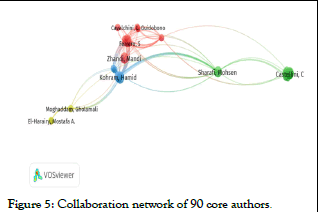
Figure 5: Collaboration network of 90 core authors.
Note: VOS viewer was used to visualize the authors who have published two or more papers, creating a visualization map. The thickness of the lines connecting the nodes indicates the degree of collaboration among the core authors (thicker lines signify stronger collaboration). Nodes of different colors represent different clusters, with a total of four clusters displayed in the figure.
Specifically, the diagram shows four distinct clusters, representing groups of authors with common interests and close collaboration on specific subfields or research topics. Such collaboration not only facilitates the exchange of knowledge and the development of research methodologies but also contributes to enhancing the quality and impact of research.
The analysis of Table 4 and Figure 5 reveals that author productivity and co-authorship in the field of riboflavin's impact on sperm quality and fertility exhibit a high degree of specialization and internationalization. The presence of prolific and highly-cited authors provides strong academic support for the development of this field. Future research should continue to encourage and promote collaboration among authors to drive further development and innovation in this area.
Analysis of high-impact journals
When analyzing the impact of journals in the field of riboflavin's effects on sperm quality and fertility, based on the data from Table 5, we find that the journals Andrologia, Theriogenology and Animal Reproduction Science have made significant academic contributions and demonstrated notable influence in this area. Andrologia has established its academic standing in this field with 13 publications and an average citation frequency of 17.31 per paper. Theriogenology has also published 13 papers, with an average citation frequency of 35.69 times, indicating the depth and breadth of its research. Animal Reproduction Science stands out with the highest average citation frequency of 43.78 times per paper, reflecting the high level of academic recognition its published research receives [9].
| Rank | Journal | Documents | Citations | Average citation/Publication |
| 1 | Andrologia | 13 | 225 | 17.31 |
| 2 | Theriogenology | 13 | 464 | 35.69 |
| 3 | Animal Reproduction Science | 9 | 394 | 43.78 |
| 4 | Poultry Science | 5 | 177 | 35.4 |
| 5 | Scientific Reports | 5 | 42 | 8.4 |
| 6 | Archives of Andrology | 4 | 224 | 56 |
| 7 | Human Reproduction | 4 | 627 | 156.75 |
| 8 | Reproduction in Domestic Animals | 4 | 25 | 6.25 |
| 9 | Small Ruminant Research | 4 | 218 | 54.5 |
| 10 | Biology of Reproduction | 3 | 124 | 41.33 |
Table 5: Top ten journals by publication volume.
It is particularly noteworthy that the journal human reproduction, despite publishing only 4 papers, has achieved a total citation count of 627, with an average of 156.75 citations per paper, which is extremely rare among all journals and highlights the journal's authority and the innovative nature of its research in this field.
Through the visualization analysis depicted in Figure 6, we further observe the collaboration network among journals, which not only reveals academic exchanges and knowledge sharing between journals but also reflects close cooperative relationships in specific subfields or research directions. The clustering phenomenon of these high-impact journals demonstrates their central role in promoting academic development and innovation in the field.

Figure 6: Visualization of journals.
Note: A visualization analysis was conducted using VOS viewer on 42 journals with two or more publications, generating a visualization map where the size of the circular nodes corresponds to the number of publications per journal. The thickness of the lines connecting the nodes indicates the degree of collaboration between journals (thicker lines signify stronger collaboration). Nodes of different colors represent different clusters, with a total of four clusters displayed in the figure.
Overall, the high citation frequencies and academic contributions of these journals not only provide a high-quality platform for academic exchange in the field of riboflavin's effects on sperm quality and fertility but also, by promoting widespread recognition and citation in the academic community, accelerate the dissemination of knowledge and scientific progress in this field. Future research should continue to monitor the trends of these journals and their ongoing contributions to driving academic innovation in this field.
Co-occurrence keyword analysis
When delving into the co-occurrence of keywords, we can extract the main trends and themes in the field of riboflavin's impact on sperm quality and fertility from the visualized data in Figures 7 and 8. These keywords not only represent the current focus of research but also foreshadow future directions.

Figure 7: Keyword burst detection map.
Note: The map lists the top 8 keywords with the strongest burst strength since their first appearance, based on the number of citations. This figure displays the co-occurring keyword network identified and clustered using Cite Space. Each node represents a keyword that meets the filtering threshold, with the size of the node being related to the number of articles in which the keyword appears. The lines between nodes indicate the cooccurrence relationships between the keywords.

Figure 8: Keyword overlay visualization view.
Note: The analysis involved using VOS viewer to inspect the source files and identified a total of 1,507 unique keywords. A keyword visualization network was created by selecting 100 keywords that appeared five or more times.
Firstly, riboflavin itself, as a keyword, reveals its multifaceted role in reproductive health through its co-occurrence with other keywords. The co-occurrence of riboflavin with keywords such as "sperm motility," "sperm morphology," and "sperm DNA integrity" emphasizes the potential impact of riboflavin on sperm quality. This connection suggests that riboflavin affects the function and structure of sperm through various mechanisms, thereby influencing male fertility.
Secondly, the emergence of the keyword "molecular mechanisms" points to in-depth research on the pathways of riboflavin's action. This involves how riboflavin influences specific gene expressions, signal transduction pathways, or metabolic processes. With the development of systems biology and omics technologies, researchers can more comprehensively understand the role of riboflavin in spermatogenesis and function.
Furthermore, the co-occurrence of "nutritional supplementation" and "clinical application" indicates the potential application of riboflavin supplements in improving sperm quality and fertility. This involves optimizing the dosage, formulation and timing of supplements, as well as personalized treatment strategies for different populations, such as patients with specific diseases or people with certain lifestyles.
Additionally, the co-occurrence of keywords like "personalized medicine" and "precision nutrition" suggests that future research will pay more attention to individual differences. This involves personalized nutritional recommendations based on genotype, phenotype, or other biomarkers to achieve optimal reproductive health outcomes [10].
The co-occurrence of societal and environmental factors, such as "lifestyle," "environmental exposure," and "socioeconomic status," with riboflavin research underscores the potential impact of these factors on sperm quality and fertility. This indicates that future research needs to consider a broader range of contextual factors for a more comprehensive understanding of the role of riboflavin.
Lastly, with the rise of interdisciplinary research, the cooccurrence of keywords such as "systems biology," "bioinformatics," and "genomics" indicates the application of methods and techniques from different disciplines in riboflavin research. This interdisciplinary integration provides new perspectives and tools for revealing the complex mechanisms of action of riboflavin.
The co-occurrence keyword analysis reveals the depth and breadth of the field of riboflavin research, as well as potential directions for future research. As research continues to advance, we look forward to a more comprehensive understanding of the role of riboflavin in reproductive health and the development of more effective intervention strategies to improve global fertility health.
This article employs bibliometric software including Cite space, VOS viewer, Web of Science and the free online bibliometric analysis website to conduct a bibliometric analysis of research hotspots in NMN. Utilizing various indicators, we analyzed the publication year, authors, sources, keywords, countries/regions, research directions and citation circumstances of the target literature to identify current hotspots and future trends.
The study's findings reveal a significant increase in the volume of publications and citation frequency related to riboflavin since 1944, particularly after 1996, reflecting the research activity and academic interest in this field. The analysis in this study not only covers global trends, major contributing countries, prolific institutions and authors but also includes the identification of high-impact journals, providing an important perspective for understanding the academic landscape of this field.
The mechanisms by which riboflavin maintains sperm quality and improves fertility are multifaceted. Firstly, the antioxidant role of riboflavin is crucial for protecting sperm from oxidative stress, involving its coenzyme function in antioxidant enzymes such as glutathione reductase. Secondly, the role of riboflavin in energy metabolism cannot be overlooked, especially in supporting the energy production process in sperm mitochondria. Additionally, riboflavin affects sperm maturation and function by participating in intracellular signal transduction pathways, such as influencing cyclin-dependent kinases.
The results of this study are closely connected to research on the maintenance of sperm quality and the improvement of fertility by riboflavin. In the past, research has mainly focused on the basic biological effects of riboflavin; now, as research deepens, the molecular mechanisms and clinical applications of riboflavin are gradually becoming research hotspots. Looking ahead, research will pay more attention to personalized medicine and precision nutrition, while considering the comprehensive impact of social and environmental factors. The integration of interdisciplinary approaches, such as the application of systems biology and omics technologies, will provide new perspectives for revealing the complex mechanisms of action of riboflavin.
However, despite providing an in-depth analysis of the field of riboflavin research, this study also has some limitations. Firstly, the data sources of this study are limited to the Web of Science database, with the potential omission of relevant literature in other databases. Secondly, this study mainly focused on the volume of publications and citation frequency, with insufficient in-depth analysis and evaluation of the content of the literature. In addition, this study did not cover all social and environmental factors affecting riboflavin research and future research should further expand this area.
Despite these limitations, the strength of this study lies in providing a comprehensive bibliometric perspective, revealing the global trends and academic landscape of riboflavin research. By identifying prolific institutions, authors and high-impact journals, this study provides valuable information and direction for future research. At the same time, this study emphasizes the important role of international cooperation in promoting the resolution of scientific issues and the collaborative development of global scientific research.
In summary, this study provides a new perspective and data support for the research of riboflavin in the field of reproductive health, looking forward to more breakthrough progress in future research to contribute to the well-being of all humanity. Future research should continue to optimize these factors, strengthen international cooperation, promote resource sharing and focus on enhancing the depth and quality of research to promote the continuous development and innovative breakthroughs in this field.
This study applied bibliometric methods to conduct an in-depth analysis of research on riboflavin's role in sperm quality and fertility, revealing the academic evolution and knowledge growth trajectory of this field since 1944. The findings highlight the global trends in riboflavin research, particularly the notable increase in research activity after 1996, reflecting the scientific community's heightened interest in the potential role of riboflavin in reproductive health. The study revealed significant contributions from multiple countries in this field, especially Iran, China, the United States and Italy, whose research not only reflects their scientific capabilities but also mirrors the complexity and dynamics of global scientific cooperation. Additionally, this study identified the multifaceted mechanisms of action of riboflavin in sperm quality and fertility, including its antioxidant properties, support for energy metabolism, cellular signal transduction and gene expression regulation. Although this study adhered to strict scientific standards in methodology and data collection, limitations remain, including the restrictiveness of data sources and a lack of in-depth analysis of the content of the literature. Future research should expand the scope of data sources, deepen the analysis of the content of the literature and consider a broader range of social and environmental factors.
This study provides a new perspective and data support for research on riboflavin in the field of reproductive health, indicating directions for future research and laying the foundation for the continuous development and innovative breakthroughs in this field.
Rutong Wang: Data curation; investigation; resources; data organization; writing-original draft (lead author); conceptualization; formal analysis.
Yanhong Wei: Data organization; investigation; writing-original draft.
Bingsheng Huang: Investigation; writing-original draft.
Weihua Nong and Xiaocan Lei: Conceptualization; methodology; project administration; supervision; writing-review and editing.
Not applicable.
No animals/humans were used in this study.
The data and supportive information are available in the article.
This work was supported by the 2022 scientific research and technology development program of Baise city (no. 20224124) and hunan province innovation and entrepreneurship training program for college students (no. s202410555233).
The authors declare no financial or other conflicts of interest.
Thanks are extended to Clinical Anatomy and Reproductive Medicine Application Institute, Hengyang Medical School, University of South China, for their assistance.
[Crossref] [Google Scholar] [PubMed]
[Crossref] [Google Scholar] [PubMed]
[Crossref] [Google Scholar] [PubMed]
[Crossref] [Google Scholar] [PubMed]
[Crossref] [Google Scholar] [PubMed]
[Crossref] [Google Scholar] [PubMed]
[Crossref] [Google Scholar] [PubMed]
[Crossref] [Google Scholar] [PubMed]
[Crossref] [Google Scholar] [PubMed]
Citation: Wang R, Wei Y, Zhu Y, Huang B, Lei X (2025) Bibliometric Insights into Riboflavin's Impact on Sperm Quality and Fertility Research. Endocrinol Metab Syndr. 14:442.
Received: 16-Aug-2024, Manuscript No. EMS-24-33504; Editor assigned: 21-Aug-2024, Pre QC No. EMS-24-33504 (PQ); Reviewed: 04-Sep-2024, QC No. EMS-24-33504; Revised: 03-Apr-2025, Manuscript No. EMS-24-33504 (R); Published: 10-Apr-2025 , DOI: 10.35248/2161-1017.25.14.442
Copyright: © 2025 Wang R, et al. This is an open-access article distributed under the terms of the Creative Commons Attribution License, which permits unrestricted use, distribution and reproduction in any medium, provided the original author and source are credited.