
Journal of Pharmaceutical Care & Health Systems
Open Access
ISSN: 2376-0419
ISSN: 2376-0419
Research Article - (2025)Volume 12, Issue 1
Background: Electronic prescribing is defined by the US Centers for Medicare and Medicaid Services (CMS) as the transmission using electronic media, of prescription or prescription related information between prescriber, dispenser, pharmacy benefit manager or health plan, either directly or through an intermediary, including an eprescribing network.
Objective: This study was designed to assess attitude towards e-prescription and associated factors among physicians at university of Gondar comprehensive specialized hospital 2021. Gondar, Ethiopia.
Methods: A institution based cross-sectional study was carried out among (n=152) physicians were participated with a response rate of 88.8%. Data were collected using structured self-administered questionnaires from August 1 to September 1/2021. The collected data were entered into Epi-info version 7 and exported to SPSS version 20 software for analysis. Bivariate and multivariable logistic regression was employed to identify factors associated with dependent variables. Odds Ratio (OR), with 95% CI and p value<0.05 were computed to determine the level of significance.
Results: Based on the operational definition the overall score of attitudes to e-prescription of physicians from the university of Gondar compressive specialized hospital was 76.8% (95% CI: 66.7-84.2). Among the candidate variables for multi variable analysis two variables like age of the respondents (AOR: 2.48 (1.055-5.830)) and monthly salary of the respondents (AOR: 8.29 (3.002-22.89)) had having significantly association with e-prescription.
Conclusion and recommendation: The overall score of attitudes to e-prescription of physicians from the university of Gondar compressive specialized hospital was 76.8% (95% CI: 66.7-84.2). Age of the respondents and monthly salary of the respondents were significantly associated with e-prescription from the working organization university of Gondar comprehensive specialized hospital and health care policy makers and hospital managers need to develop and institutionalize evidence based extensive training of stakeholders especially prescribers and infrastructure development before its adoption to make it successful and fruitful.
Attitude; Ethiopia; Gondar physician; Prescription
BSc: Bachelors of Science; CHMS: College of Medicine and Health Science; E-prescription: Electronic Prescription; EPS: Electronic Prescription System; FMOH: Federal Ministry of Health; HER: Electronic Health Record; HIT: Health Information Technology; HI: Health Informatics; IT: Information Technology; IRB: Institutional Review Board; M and E: Monitoring and Evaluation; SPSS: Statistical Package for Social Science; UOG: University of Gondar; UGCSH: University of Gondar Comprehensive Specialized Hospital
Background of the study
For hundreds of years, the written prescription has been the method of choice for physicians to communicate decisions on drug therapy and pharmacists to dispense medication, while at the same time being a source for the patient about how to use the medication in order to maximize its benefit. Presently the medical prescription is at the transitional stage between paper and electronic state. When adopting a traditional process to the new electronic era, unique opportunities and challenges are offered the involved actors like prescribers, patients, pharmacists and also health care and EHR-system providers and other stockholders. Prescription is a written order by the doctor to pharmacist. It has a status of a legal document. Re dispensing with repeated use of same prescription is illegal [1].
Electronic prescribing is defined by the US Centers for Medicare and Medicaid services (CMS) as the transmission using electronic media, of prescription or prescription related information between prescriber, dispenser, pharmacy benefit manager or health plan, either directly or through an intermediary, including an e-prescribing network.
Electronic prescribing is the evolution of traditional method to technological advancement. It is an integral component the Health Information Technology (HIT) system, an interoperational platform, bridging communication gaps among doctors, patients, nurses and pharmacists. It has the potential to enhance the safety of pharmacological treatment to reduce the morbidity associated with the medication errors by eliminating illegible handwriting, provide alerts by drug-drug interaction and drug allergy. By offering access to medication history, including prescriptions issued by other prescribers it helps to identify “doctor’s shopper”. The time spends handling the prescription renewal requests considerably reduced. Electronic prescribing for controlled substances curbs the abuse and diversion of prescription drugs. This is by substantially reducing prescription fraud associated with paper prescriptions like falsifying prescription, prescription pad theft and forgery.
E-prescription is a tool for prescribers to electronically send an accurate, error free and understandable prescription directly to a pharmacy from the point of care. It allows the patient to improve the safety through electronically checking patient allergies contraindication etc. security and accuracy of his prescriptions, save his time during handling prescription renewals by making it electronically with his pharmacy [2].
Errors with e-prescribing are seen to be on the rise soon after its implementation. It may be attributed to technology factors like poor user interface design like auto-populate features and dropdown menus, end-user factors like poor knowledge of the eprescribing platforms or inadvertently entering incorrect information and environmental factors such as lack of time or poor location of computer.
Study area and period
The study was conducted in Gondar (University of Gondar Comprehensive Specialized Hospital) physicians, from August 15/2021 to September 2021.
Study design
An institution-based cross-sectional study was conducted.
Sources population
All physicians ≥ 6 month of work experience were the source population for this study.
Study population
All physicians in Gondar comprehensive specialized hospital and who fulfill the inclusion criteria were the study population.
Sampling unit
Households which found in the selected 02 urban and 03 rural kebeles were the sampling unit that the samples had been taken [3].
Sample size determination and sampling technique
The sample size of the study was the total population of physicians who were working in university of Gondar compressive specialized hospital and the sampling technique was total census.
Data collection tools and procedures
Data collection were supervised for correct implementation of procedures by supervisors and the investigator. Completeness and consistency of the questionnaire was also being checked at the end of data collection with the local language (Amharic) for its consistency and understandability to the community in which this research conducted. During translation, all the concerns and the local linguistic had been put into consideration and the local language (Amharic) was translated back to English for the appropriateness and conformability of analysis the finding of the research. SPSS version 20 also was used for data analysis. Frequency and percentage were calculated to all variables which are related to objective of the study and Bivariate and multivariable logistic regression was employed to identify factors associated with dependent variables. Odds Ratio (OR), with 95% CI and p value <0.05 were computed to determine the level of significance.
Variables of the study
Dependent variables: Attitude towards e-prescription (positive or negative).
Independent variables: Socio-demographic factors: Age, sex, experience, profession, monthly income.
Behavioral factors: Attitude, by preparing question and ask who scores mean and above have good attitude, who scores less than the mean have poor attitude.
Technical factors: EPS training, past EPS experience, computer skill (literacy), computer at home.
Organizational factors: Computer access at office, internet access at office, presence of IT department in the organization, availability of IT technical person.
Operational definitions
• Attitude is persistent disposition to act either positive or negative towards e-prescription score will categorized <50%” negative” and>=50% positive attitude.
• Electronic prescription defined as a technology applies on drug prescription either online or offline used to computer, tablet and hand phone systems used to prescribe by physicians.
Data processing and analysis
Primarily the data was checked for its completeness, consistency and validity. After checking the collected data, then the data entered into EPI-info version 7.2.1 and transferred to SPSS version 20 statistical software for analysis. Data will be cleaned and coded for completeness, consistency and to minimized errors. Both bivariable and multivariable logistic regression was used to identify factors and variables with a p-value of 0.20 and less that would fit the logistic model for multivariable analysis. Spss version 20 statistical software was used and frequencies and odds ratio was determined. Factors associated with the outcome variable at bivariable analysis had been identified and the variables with a p-value of 0.20 and less would fit the logistic model for multivariable analysis to determine the relative prediction level of independent variables to the outcome variable. P-value less than 0.05 at 95% confidence interval had been considered as statistically significant. Model goodness-of-fit would be checked by Hosmer Lemeshow test. Multi collinearity was checked by Durbin-Watson, tolerance and variance inflation factors [4]. Chi-square has also been calculated to test any association between dependent and independent variables. Lastly the result was presented in the form of texts, figures and tables by using frequency and summary statics such as mean, standard deviation and percentage to relevant variables.
Data quality control
The quality of data was done and the questioner was assessed for its clarity; the completeness and evaluate the validity and content of the questionnaire and modified accordingly. Close supervision was also made during the data collection and appropriate feedback was provided. The training was given to the data collectors for one day by the principal investigator and the training was focused on the objective, how to obtain consent, keeping the confidentiality of the information they gathered. The collected data has been cheeked for its completeness every day before the following day of data collection by supervisors and the principal investigator and corrective measures had been taken according to the finding during supervision.
Data presentations
After the data analyzed the findings of the result were presented in descriptive and analytic forms. Descriptive analyzed statistical results were presented by texts, graphs, diagrams and tables but the analytic form of findings was presented by text form of the odds ratio.
Ethical consideration
Ethical clearance was obtained from the ethical review committee of Debre Tabor University College of Medicine and Health Sciences and the department of medicine. After obtained permission from those organizations, the data collectors were going to house to house and starting data collection. The data also was collected after clearly explained the purpose of the study to the participants and after obtained informed consent was got from each study participant [5].
Socio-demographic characteristics of the respondents
Out of 171 study participants, 152 were involved in this study and it produces a response rate of 88.8 %. The mean age of the study participants were 34.5 years which ranges from.
Majority of respondents, 95 (62.5%) were male and more than half of the respondents, 75 (49.3%) were those age between (20-35) and the majority of the respondents, 65 (42.8%) had degree holders. Majority of the respondents, 59 (38.8%) were there professions are general practitioner (GP) and the mean monthly salary of the respondents was 12,214.43 Ethiopian birr, majority of respondents 72 (46.7%) were work practicing at this university of Gondar comprehensive and specialized hospital (Figure 1 and Table 1).
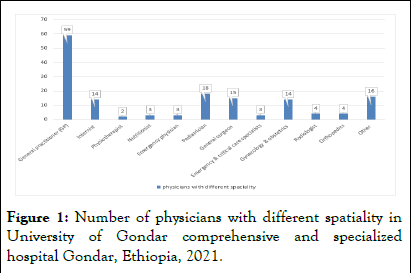
Figure 1: Number of physicians with different spatiality in University of Gondar comprehensive and specialized hospital Gondar, Ethiopia, 2021.
| Variable | Category | (n=152) | % |
| Age | 20-35 | 83 | 54.6% |
| 36-45 | 57 | 37.5% | |
| 45+ | 12 | 7.9% | |
| Sex | Male | 95 | 62.5% |
| Female | 57 | 37.5% | |
| Education status | Degree | 65 | 42.8% |
| MSc and above | 87 | 57.2% | |
| Profession | General Practitioner (GP) | 59 | 38.8% |
| Internist | 13 | 9.2% | |
| Physiotherapist | 2 | 1.3% | |
| Nutritionist | 3 | 1.97% | |
| Emergency physician | 3 | 1.97% | |
| Pediatrician | 18 | 11.8% | |
| General surgeon | 15 | 9.86% | |
| Emergency and critical care specialists | 2 | 1.97% | |
| Gynecology and obstetrics | 14 | 9.2% | |
| Radiologist | 4 | 2.63% | |
| Orthopedics | 4 | 2.63% | |
| Other | 16 | 10.5% | |
| Working experience | <5 | 80 | 52.6% |
| 45571 | 51 | 33.6% | |
| 10+ | 21 | 13.8% | |
| Work practicing at this hospital | <1 year | 18 | 11.9% |
| 1-5 year | 71 | 46.7% | |
| 5+ year | 63 | 41.4% | |
| Monthly salary | <9056 | 41 | 27% |
| 9056-11305 | 43 | 28.3% | |
| 11305+ | 68 | 44.7% |
Table 1: Socio-demographic characteristics of physicians working in University of Gondar compressive and specialized hospital Gondar, Ethiopia, 2021, (n=152).
Attitudes of physicians towards e-prescription
Based on the operational definition the overall score of attitudes to e-prescription of physicians from the university of Gondar compressive and specialized hospital was 76.8% (95% CI: 66.7-84.2). The findings of physicians to e-prescription was consistent with the operational definition. The findings of eprescription of physicians showed that, physicians expressed high level of satisfaction with improve quality of care and reduce error 150 (98.6%), Improve quality of work life 150 (98.6%), give benefits outweigh the cost 152 (100%) [6]. On the other hand, administrative rigidity is possible barrier 38 (25%), not feasible 82 (53.9%), improve patient’s satisfaction 20 (13.2 %) were reported as unsatisfied (Table 2).
| Variable | Category | (n=152) | % |
| Improve quality of care and reduce error | Satisfied | 150 | 98.6% |
| Dissatisfied | 2 | 1.3% | |
| Improve quality of work life | Satisfied | 150 | 98.6% |
| Dissatisfied | 2 | 1.3% | |
| Improve patients satisfaction | Satisfied | 132 | 86.8% |
| Dissatisfied | 20 | 13.2% | |
| The benefits outweigh the cost | Satisfied | 152 | 100% |
| Dissatisfied | 0 | 0% | |
| Decrease burden on physicians | Satisfied | 149 | 98% |
| Dissatisfied | 3 | 1.97% | |
| Feasible of electronic system | Satisfied | 70 | 46.05% |
| Dissatisfied | 82 | 53.9% | |
| Administrative rigidity is possible barrier | Satisfied | 114 | 75% |
| Dissatisfied | 38 | 25% | |
| Cannot be used without the availability of skilled resources and support | Satisfied | 146 | 96.05% |
| Dissatisfied | 6 | 3.9% | |
| Proper training would be required | Satisfied | 149 | 98% |
| Dissatisfied | 3 | 1.97% | |
| I would devote time to training for its implementation | Satisfied | 150 | 98.6% |
| Dissatisfied | 2 | 1.3% | |
| An e-prescribing system should be implemented in UOGCSH hospital | Satisfied | 143 | 94.04% |
| Dissatisfied | 9 | 5.92% |
Table 2: Level of attitudes of physicians towards e-prescription by different dimensions among physicians in university Gondar compressive and specialized hospital Gondar, Ethiopia, 2021 (n=152).
Organizational and technical characteristics of respondents
Majority of respondents 111 (73.02%) were having their own personal computer, half of respondents 67 (44.07%) of them reported that they have computer at their office, 35 (23.02%) respondents were having internet at office, 36 (23.6%) respond that have computer at home (Figure 2).
8 (5.2%) were response that organization have stand by generator, 117 (76.9%)were reported organization have active or functional IT department and 90 (59.2%) were organization have IT technical person, on the other hand 152 (100%) of respondents were not taking training on e-prescription and working with e-prescribing ever before and the study subjects were used computer for the purpose of data recording, report generating, reading and video accessing are 142 (93.4%), 147 (96.7%), 69 (45.4%) and 118 (77.6%) respectively (Table 3).
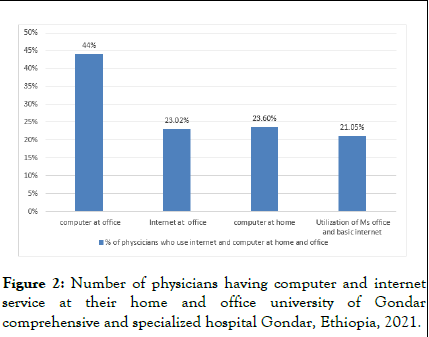
Figure 2: Number of physicians having computer and internet service at their home and office university of Gondar comprehensive and specialized hospital Gondar, Ethiopia, 2021.
|
Variable |
Category |
(n=152) |
% |
|
Computer at your office |
Yes |
67 |
SS |
|
No |
85 |
55.9% |
|
|
How use it |
I have my own computer |
111 |
73.02% |
|
I shared one computer with one other staff |
37 |
24.34% |
|
|
I shared one computer with two other staff |
4 |
2.6% |
|
|
Internet at your office |
Yes |
35 |
23.02% |
|
No |
117 |
76.9% |
|
|
Organization have active or functional IT department |
Yes |
117 |
76.9% |
|
No |
1 |
0.65% |
|
|
I don’t know |
34 |
22.3% |
|
|
Organization have IT technical person |
Yes |
90 |
59.2% |
|
No |
8 |
5.26% |
|
|
I don’t know |
54 |
35.5% |
|
|
Organization have stand by generator |
Yes |
8 |
5.2% |
|
ÃÂÂ No |
98 |
64.4% |
|
|
I don’t know |
46 |
30.26% |
|
|
Computer at home |
Yes |
36 |
23.6% |
|
No |
116 |
76.3% |
|
|
Computer literate performing office and basic internet |
Yes |
32 |
21.05% |
|
No |
120 |
78.9% |
|
|
Working with e-prescribing ever before |
Yes |
0 |
0.00% |
|
No |
152 |
100% |
|
|
e-prescription training before |
Yes |
0 |
0.00% |
|
No |
152 |
100% |
|
|
I don’t know |
1 |
0.65% |
|
|
Data recording |
Yes |
142 |
93.4% |
|
No |
10 |
6.5% |
|
|
Report generating |
Yes |
147 |
96.7% |
|
No |
5 |
3.28% |
|
|
Reading |
Yes |
69 |
45.4% |
|
No |
83 |
54.6% |
|
|
Video accessing |
Yes |
118 |
77.6% |
|
No |
34 |
22.36% |
|
|
Others purpose |
Yes |
137 |
90.13% |
|
No |
15 |
9.86% |
Table 3: Organizational and technical characteristics of respondents at university of Gondar compressive and specialized hospital Gondar, Ethiopia, 2021 (n=152).
Factors associated with e-prescription
Findings based on the analytical part, which results variables such as sex of the respondents (OR: 2.696 (1.194-6.091)), age of the respondents (OR: 0.421 (0.073-2.437)), profession of the respondents (OR: 3.7 (.561-24.42)), educational status of the respondents (OR: 1.878 (.0.8744.033)), monthly salary (OR: 7.0 (2.66-18.45)), working experience of the respondents (OR: 1.82 (.845-3.918)), working practice at this hospital of the respondents (OR: .245 (.029-2.060)), decrease burden on physicians (OR: 447 (.783-3.513)) were having p-value less than 0.2, but variables such as sex, profession of the respondents, educational status of the respondents, work experience of the respondents, working practice at this hospital and decrease burden on physicians were disappeared from the final stage of multivariable analysis. Among the candidate variables for multi variable analysis 2 variables like age of the respondents (AOR: 2.48 (1.055-5.830)) and monthly salary of the respondents (AOR: 8.29 (3.002-22.89)) had having significantly association with e-prescription, but, all the above variables with p-value of less than 0.2 are exported to multivariable conditional forward analysis [7]. From the above result scenario monthly salary of the respondents were significantly associated 8.29 times (AOR:8.29 (3.002-22.89)) with e-prescription of monthly salary less than 9,056.00 of the respondents from the Gondar compressive and specialized hospital compared with those who had monthly salary more than 11,305.00 (Table 4).
| Variables | Attitude towards e-prescription | COR (95% CI) | AOR (95% CI) | |
| Yes | No | |||
| Sex | ||||
| Male | 43 (28.2%) | 36 (23.6%) | (OR: 2.696 (1.1946.091)) | |
| Female | 51 (41.8%) | 22 (18%) | 1 | |
| Age | ||||
| <35 | 32 (26.23%) | 25 (20.5%) | (OR: 0.49 (0.231-1.042)) | *(AOR:0.40349 (.172-.948)) |
| 36-45 | 47 (38.5%) | 18 (14.8%) | ||
| >45 | 25 (16.4%) | 5 (3.2%) | 1 | 1 |
| Monthly salary | ||||
| <9056 | 17 (11.2%) | 18 (11.8%) | (OR: 3.7 (.561 -24.42)) | *(AOR: 8.29 (3.002-22.89)) |
| 9056-11305 | 40 (32.9%) | 25 (20.5%) | (OR: 2.4 (.374 -15.38)) | |
| >11305 | 37 (30.33%) | 15 (12.3%) | 1 | |
| Feasibility | ||||
| Satisfied | 55 (36.2%) | 43 (28.3%) | (OR:1.82 (.845-3.918)) | |
| Dissatisfied | 39 (31.97%) | 15 (12.3%) | 1 | |
| Improve patients satisfaction | ||||
| Satisfied | 72 (59%) | 42 (34.43%) | (OR: .245 (.029-2.060)) | |
| Dissatisfied | 22 (14.5%) | 16 (10.5%) | 1 | |
| Decrease burden on physicians | ||||
| Satisfied | 56 (36.8%) | 44 (28.9%) | (OR:.447 (.783-3.513)) | |
| Dissatisfied | 38 (31.14%) | 14 (14.48%) | 1 | |
| Proper training would be required | ||||
| Satisfied | 36 (29.5%) | 25 (20.49%) | (OR: 1.659 (.206-.972)) | |
| Dissatisfied | 43 (35.25%) | 18 (14.75%) | 1 | |
| Notes: 1=Reference group, *significant p-value<0.05, CI: Confidence Interval; COR: Crude Odds Ratio; AOR: Adjusted Odds Ratio | ||||
Table 4: Factors associated with e-prescription among physicians in university of Gondar compressive and specialized hospital. Gondar, Ethiopia, 2021 (n=152).
The current study tried to assess the magnitude of e-prescription among physicians and the overall score attitudes of physicians on e-prescription from the organization in the study area was 76.8% (95% CI: 66.7-84.2). Also attitudes of physicians on eprescription majority of professionals had high level of satisfaction with improve quality of care and reduce error 150 (98.6%), improve quality of work life 150 (98.6%), give benefits outweigh the cost 152 (100%). On the other hand, administrative rigidity is possible barrier 38 (25%), Not feasible 82 (53.9%), improve patient’s satisfaction 20 (13.2%) were reported as unsatisfied.
The total magnitude of physicians for attitudes of e-prescription from their organization was 76.8% (95% CI: 66.7-84.2). concurrent and similar study conducted in Sweden shows we demonstrated a relationship between the country of residence of physicians and their attitude towards e-prescribing for all the responses of Swedish physicians 82% regarded e-prescribing as time saving, 88.1% as being safer and 96% as providing a batter service for patients.
The current study conducted out of 171 study participants, majority of respondents, 95 (62.5%) were male and more than half of the respondents, 75 (49.3%) were those age between (20-35), with response rate of 88.8% were A cross sectional study conducted at Kottayam, Kerala, INDIA. Of Kerala has started the e-health initiative shows two hundred and fifty-seven prescribing doctors of age range 22-60 years participated of which 49% were females and 51% males with response rate was 73% (257/350). The current study is lower than study conducted at chain to assess attididues of physicians on eprescription hundred physicians were approached with the help of the consultancy, out of which 90 physician responded the result shows that majority of the physicians (86%) had positive attitude towards e-prescription the experience of the physician and e-prescribing facility helps to spend lesser time on prescribing the drugs when compared to hand written prescribing (P<0.05). The two studies showed that to assess the attitudes of physicians on e-prescription of physicians among chain found to be this may be in the current study area absence of different initiatives to exercise e-health technologies, lack of motives, bad working environment.
From the current study majority of respondents 111 (73.02%) were having their own personal computer, half of respondents 67 (44.07%) of them reported that they have computer at their office, 35 (23.02%) respondents were have internet at office, 36 (23.6%) respond that have computer at home, 8 (5.2%) were response that organization have stand by generator, 117 (76.9%) were reported organization have active or functional IT department and 90 (59.2%) were organization have IT technical person, on the other hand 152 (100%) of respondents were not taking training on e-prescription and working with e-prescribing ever before and the study subjects were used computer for the purpose of data recording, report generating, reading and video accessing are 142 (93.4%), 147 (96.7%), 69 (45.4%) and 118 (77.6%) respectively.
The study analyzed e-prescription from the physicians’ view in the public sector at University of Oulu user experience, acceptance of technology, success in implementing and using information system with the help of five themes forming a framework (information quality, service quality, system quality, perceived ease-of-use, perceived usefulness and intention to use). A survey was conducted in four hospitals in Nigeria to determine the economic, technical and organizational feasibility of adopting e-prescribing included 42 medical practitioner’s doctors, pharmacists, pharmacy technicians and assistants working at the hospitals at the time of the survey so, respondents felt that implementation of an EP system is economically feasible (p=0.031) and organizationally feasible (p=0.032).
The current study revealed that higher numbers of physicians were dissatisfied than the above study. The possibility of dissatisfaction would be due to lack of computer at their office and home, absence of internet accesses at office as well as at their home, lack of training related to e-prescription those who perform better.
Factors like monthly salary of the respondents were significantly associated 8.29 times with physicians to adapt e-prescription. The findings of the current study are inversely related with above study that in Nigeria to determine the economic, technical and organizational feasibility of adopting e-prescribing so, respondents felt that implementation of an EP system is economically feasible (p=0.031) and organizationally feasible (p=0.032). The possible difference may be due to inadequate funding by the government does not provide for the health sector to acquire the necessary resources and training to enhance the skills of physicians in health care industry.
Generally, the magnitude of attitudes of physicians on eprescription from the current study is higher and influenced with factor like monthly salary and age of respondents [8].
Limitation of the study
•The current study has some limitations.
•Related literatures
•Using small sample size
•As data were collected based on self-reported information, the possibility of recording errors and recall biases [9].
The overall score attitudes of physicians on e-prescription from the organization in the study area was 76.8% (95% CI: 66.7-84.2). In Gondar university comprehensive and specialized hospital. variables for multi variable analysis variables like age of the respondents (AOR: 2.48 (1.055-5.830)) and monthly salary of the respondents (AOR: 8.29 (3.002-22.89)) had having significantly association with e-prescription. monthly salary of the respondents was significantly associated 8.29 times (AOR: 8.29 (3.002-22.89)) with e-prescription of monthly salary less than 9,056.00 of the respondents from the Gondar university compressive and specialized hospital compared with those who had monthly salary more than 11,305.00 with attitudes ready to adapt e-prescription of the respondents from the working organization.
Recommendations were given for the responsible bodies based on the findings of the research and conclusions. The followings are the appropriate recommendations for different responsible bodies.
To hospital administrators
•Since the majority of physicians had a dissatisfy with to implement e-prescription from their organization due to lack of computer at their office and home, absence of internet accesses at office as well as at their home, lack of training related to e-prescription those who perform better. so, the hospital administrates better to alleviate the above problems.
•Information technology training and infrastructure development should go hand in hand with implementation of e-prescribing. To researchers
•Since there was no adequate research done in Ethiopia on this topic the findings of the research expected to be used by another researcher who want to conduct similar research.
Ethical clearance was obtained from Institutional Review Committee Debre Tabor University’s College of Medicine and Health Sciences (study protocol number-0158/2021). Then, officials at different levels in the hospitals were communicated through letters from College of Medicine and Health Science. Before any attempt at an interview, informed verbal consent from all participants were obtained. Confidentiality of the information was secured throughout the study process. Finally, the results of study was used only for study purpose.
Not applicable.
Data will be available upon request from the corresponding author.
We would like to thank Debre Tabor University, College of Medicine and Health Science to support this research project. The authors would also like to extend their gratitude to university of Gondar comprehensive and specialized hospital, study participants, data collectors and supervisors for their valuable contribution.
All authors made substantial contributions to the conception, design, acquisition of data or analysis and interpretation of data. And took part in drafting the article or revising it critically for important intellectual content; agreed to submit to the current journal; gave final approval of the version to be published and agree to be accountable for all aspects of the work. All authors have read and approved the final manuscript.
The authors report no conflicts of interest.
This research didn’t receive any grant from any funding agency in the public, commercial or not-for-profit sectors.
[Crossref] [Google Scholar] [PubMed]
[Crossref] [Google Scholar] [PubMed]
[Crossref] [Google Scholar] [PubMed]
[Crossref] [Google Scholar] [PubMed]
[Crossref] [Google Scholar] [PubMed]
[Crossref] [Google Scholar] [PubMed]
Citation: Zimamu LY, Wubet GM, Shiferaw DA, Tarekegn TT, Adal GM, Mulat B (2025) Attitude Towards E-Prescription and Associated Factors among Physicians at University of Gondar Comprehensive Specialized Hospital 2021: Institution Based Cross-Sectional Study. J Pharm Care Health Syst. 11: 370.
Received: 18-Jul-2024, Manuscript No. JPCHS-24-32999; Editor assigned: 23-Jul-2024, Pre QC No. JPCHS-24-32999 (PQ); Reviewed: 06-Jul-2024, QC No. JPCHS-24-32999; Revised: 14-Jan-2025, Manuscript No. JPCHS-24-32999 (R); Published: 21-Jan-2025 , DOI: 10.35248/2376-0419.25.12.370
Copyright: © 2025 Zimamu LY, et al. This is an open-access article distributed under the terms of the Creative Commons Attribution License, which permits unrestricted use, distribution and reproduction in any medium, provided the original author and source are credited.