
Journal of Clinical Toxicology
Open Access
ISSN: 2161-0495
ISSN: 2161-0495
Commentary Article - (2026)Volume 16, Issue 2
Amanita muscaria poisoning; GABA-mimetics; Neurotoxicity; Toxic encephalopathy; Mushroom intoxication
We report the clinical presentation, diagnostic workup and course of a 50-year-old male who was found in a state of altered consciousness, motor abnormalities, and autonomic dysfunction, later determined to be a result of Amanita muscaria (Fly agaric) poisoning.
Amanita muscaria, commonly known as the fly agaric, is a psychoactive mushroom that has been used for centuries in various shamanic rituals, particularly in Siberian and other indigenous cultures. Despite its historical use, it is a highly toxic species of mushroom and is associated with a range of neurological and systemic effects due to the presence of two main active compounds: Ibotenic acid and muscimol. These substances are Gamma-aminobutyric Acid-mimetics, leading to altered mental status, hallucinations, motor disturbances, and in some cases, life-threatening toxicity.
While acute poisoning from Amanita muscaria is relatively rare, its effects are often severe, particularly when ingested in large quantities. The symptoms can vary widely depending on the dose consumed, the individual's sensitivity, and the method of preparation. The clinical onset of intoxication typically occurs within 30 minutes to 3 hours of ingestion, with the peak of symptoms manifesting during this period. The duration can last from 10 to 15 hours, often ending in a deep sleep state that is frequently accompanied by vivid dreams or amnesia.
A 50-year-old male was found in a changed mental state at home by his son. The son noted that his father exhibited significant cognitive and behavioral changes, prompting the emergency call to the medical services. Upon arrival of the emergency physician, the patient was observed to have severe speech disturbances, motor restlessness, facial automatisms, bizarre choreiform movements, urinary incontinence, and non-reactive dilated pupils. Initial management included the administration of 20 mg of midazolam intravenously, after which the patient’s oxygen saturation decreased, necessitating endotracheal intubation in the ambulance. The patient was subsequently transported to the emergency department in an intubated and mechanically ventilated state. On arrival, the following parameters were recorded:
• Blood pressure: 130/80 mmHg
• Heart rate: 125 bpm
• Pupils: Dilated and non-reactive
• Body temperature: 37.2°C
• Skin: No erythema
• Bilateral lung ventilation was normal with equal breath sounds.
• Venous blood gas (BGA) results were unremarkable.
• Electrocardiogram (ECG) showed tachycardia.
• FAST ultrasound and transthoracic echocardiogram demonstrated normal cardiac function with no evidence of valvular pathology or free fluid.
A CT scan (CT with CTA) of the brain revealed no signs of bleeding, ischemia, or vascular occlusion. Laboratory investigations revealed a leukocytosis of 16.9 G/L, but other infection markers, such as C-reactive protein (CRP), procalcitonin (PCT), and interleukin-6 (IL-6), were within normal limits. No alcohol was detected in the serum, but the urine toxicology screen tested positive for THC. A lumbar puncture was performed, and cerebrospinal fluid (CSF) analysis showed normal findings: 1 cell/μL, protein 28 mg/dL, and glucose 66 mg/dL (serum glucose 112 mg/dL).
According to the patient's wife he had a long history of regular THC use for the past 20 years, but no other drug or medication use. She also mentioned that her husband had occasionally foraged for mushrooms, and on the morning of the incident, he had been collecting mushrooms in the forest. She found a canister of collected fly agaric mushrooms at home, raising the suspicion of a mushroom intoxication. After this detailed information, the diagnosis of Amanita muscaria poisoning became more plausible. This toxin, which contains ibotenic acid and muscimol, is known to cause confusion, speech disturbances, ataxia, motor restlessness, hallucinations, tachycardia, mydriasis, and mood fluctuations, including anxiety and euphoria. The clinical features aligned with the typical presentation of “Pantherina syndrome”, a mushroom poisoning syndrome with a short latency period and predominant central nervous system symptoms as shown in Figure 1 [1].
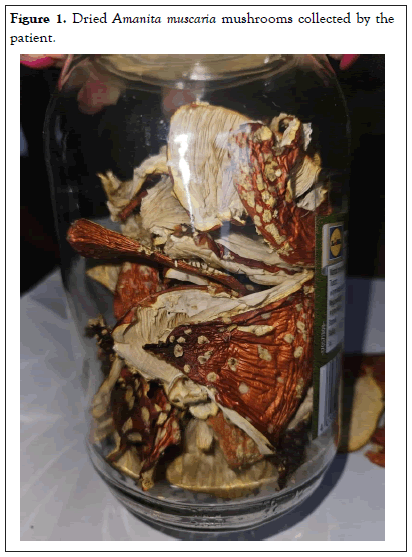
Figure 1: Dried Amanita muscaria mushrooms collected by the patient.
We administered activated charcoal via a nasogastric tube and admitted the patient to the intensive care unit for close monitoring. The following morning, he was successfully extubated. After 48 hours, we rechecked the liver and kidney function tests, and as these remained persistently normal, we were able to discharge him without any limitations.
The patient's clinical presentation, characterized by confusion, hyperkinetic movements, urinary incontinence and mydriasis raised the immediate concern of a neurotoxicological etiology. Careful history taking was of utmost importance to corroborate that, avoid misdiagnosis and ensure appropriate management.
Given the patient's acute onset of symptoms, he also received a non-contrast CT scan of the brain which expectedly revealed no signs of acute ischemia, bleeding, or vascular occlusion. Clinically, the “encephalopathic” presentation with bilateral and autonomic symptoms had already pointed away from a stroke or other focal pathology.
Alternatively, the patient's altered mental status and neurological abnormalities (e.g., motor restlessness, speech disturbances) could have suggested an encephalitic process. However, his Cerebrospinal Fluid (CSF) was normal, without elevated white blood cell count or abnormal protein levels. This finding, coupled with the absence of fever or any other signs of infection, made encephalitis an unlikely cause of the symptoms.
Anticholinergic toxicity, typically associated with medications like atropine, scopolamine, and certain antidepressants (e.g., amitriptyline), was another key consideration. This syndrome is marked by dry skin, hyperthermia, mydriasis, hallucinations, and urinary retention.
While some features of anticholinergic syndrome were present, such as the dilated, non-reactive pupils and confusion, the absence of hyperthermia, anhidrosis, and urinary retention made this diagnosis less likely. Also, anticholinergic toxicity often results in more prominent signs of autonomic dysfunction, which were not observed here.
Also serotonine syndrome is a potentially life-threatening condition characterized by agitation, hyperreflexia, myoclonus, fever, tachycardia, and gastrointestinal symptoms such as diarrhea. It is typically induced by drugs that increase serotonine levels, such as selective serotonine reuptake inhibitors (SSRIs), certain recreational drugs (e.g., ecstasy), and other serotonergic agents. While the patient's tachycardia and agitation were consistent with serotonine syndrome, the absence of hyperreflexia, myoclonus, fever, or gastrointestinal symptoms made this diagnosis less likely [2].
Moreover, the patient’s clinical features did not match the typical presentation of serotonine syndrome, especially in the context of the lack of any serotonergic drug use.
Given the patient’s symptoms and the detailed history provided by his wife, including the discovery of fly agaric mushrooms at home, Amanita muscaria poisoning became the most likely diagnosis.
Amanita muscaria, commonly known as the fly agaric mushroom, contains psychoactive compounds, primarily muscimol and ibotenic acid, which act as GABA agonists (GABA-mimetics). These compounds exert central nervous system effects, leading to alterations in consciousness, hallucinations, and motor disturbances [3,4].
The highest concentration of the toxins is found under the cap and in the gills of the mushroom. The typical dynamics of intoxication occur in two phases: Symptoms generally begin within 30 minutes to 3 hours after ingestion. They can last 10-15 hours, and typically end with a period of deep sleep, often accompanied by vivid dreams and sometimes amnesia.
For individuals intentionally seeking to experience the effects of Amanita muscaria, it is common to dry the mushrooms, which can be consumed in various forms, such as in mushroom-based spirits (note: combining this with alcohol can be dangerous) or as powdered mushrooms that can be smoked, ingested, or mixed into drinks.
Despite its cultural and ritualistic use in some shamanic practices, particularly among Siberian tribes, Amanita muscaria can be highly toxic. The typical dose for intoxication is relatively low, but the critical dose can vary significantly between individuals, and the risk of overdose is considerable. The lethal dose of muscimol is estimated to be around 1 gram, which can be found in approximately 100 grams of dried mushrooms (equivalent to about 10 mushrooms). This is about 40-45 times the "normal" dose for recreational intoxication.
Ingestion of Amanita muscaria can cause severe toxicity, including confusion, hallucinations, agitation, tachycardia, and mydriasis, as well as potential liver and kidney damage. There is also the risk of severe psychological distress, and in extreme cases, death. This case emphasizes the critical need for prompt recognition of mushroom poisoning in patients with altered mental status and motor abnormalities [5-7].
Although the incidence of Amanita muscaria poisoning is relatively low, its effects can be severe and unpredictable, making it essential for healthcare providers to consider this diagnosis when confronted with unexplained encephalopathic symptoms, particularly in patients with a history of mushroom foraging. The management of Amanita muscaria poisoning is primarily supportive, as there are no specific antidotes for muscimol or ibotenic acid. Treatment focuses on airway management, fluid resuscitation, and close monitoring for complications, such as respiratory depression or cardiovascular instability [7].
In this case, the patient was successfully intubated and monitored in the intensive care unit, where he received appropriate supportive care, including activated charcoal to limit further absorption of the toxin.
This case underscores the importance of a careful differential diagnosis when dealing with acute neurotoxic-appearing presentations. While many conditions can cause altered mental status and motor disturbances, the presence of non-reactive dilated pupils, choreiform movements, and a history of mushroom foraging helped steer the diagnosis toward Amanita muscaria poisoning. Timely recognition of the poisoning allowed for appropriate supportive treatment, and the patient made a full recovery without long-term sequelae. This case also highlights the importance of obtaining a detailed patient history, particularly when exposure to potentially harmful substances, such as psychoactive mushrooms, is suspected. Early intervention and supportive care are key to favorable outcomes in cases of Amanita muscaria intoxication.
Citation: Steinmetz K, Heck S, Birk D, Klein M (2026).Case Report: Acute Toxic Encephalopathy Due to Amanita muscaria Poisoning. J Clin Toxicol. 16:617.
Received: 19-Jan-2026, Manuscript No. JCT-26-40396 ; Editor assigned: 20-Dec-0026, Pre QC No. JCT-26-40396 (PQ); Reviewed: 03-Feb-2026, QC No. JCT-26-40396 ; Revised: 10-Feb-2026, Manuscript No. JCT-26-40396 (R); Published: 17-Feb-2026 , DOI: 10.35248/2475-3181.25.15.617
Copyright: © 2026 Steinmetz K. This is an open-access article distributed under the terms of the Creative Commons Attribution License, which permits unrestricted use, distribution, and reproduction in any medium, provided the original author and source are credited.